
Reviewed · SAMURAI & NINJA EXPERIENCES
Tokyo 2-Hour Genuine Samurai Experience: Kendo in Japan
The best part of this activity is that it treats Kendo as a real martial art, not a costume photo opportunity. You put on the keikogi, hakama, and bogu armor, learn proper movements, and use a bamboo sword under an instructor’s eye. The session also explains the manners and discipline behind the sport, so you get more than a quick swing at a target.
I like the hands-on training and the fact that every participant receives the equipment needed to take part. I also like the final tournament-style combat game, which gives the lesson a clear goal and adds a bit of friendly pressure. The main thing to consider is the physical demand: the clothing and armor are warm, kneeling can bother sore knees, and the activity calls for a strong level of fitness.
In This Review
- Key points to know before booking
- What this Kendo session really offers
- Getting to the dojo in Higashinippori
- Dressing for the first lesson
- Learning the manners before the strikes
- The tournament-style combat game
- A real class atmosphere, not a staged performance
- What is included for the $118.92 price
- Who will enjoy this most
- Timing, group size, and cancellation
- Is this Tokyo Kendo experience worth booking?
- FAQ
- Where does the Kendo experience take place?
- How long does the activity last?
- What time does the morning session begin?
- Is hotel pickup included?
- Is Kendo equipment provided?
- Can beginners and children participate?
- What happens if I need to cancel?
Key points to know before booking
- Real dojo training: This is an active Kendo class, not a staged samurai show.
- Full equipment included: You use rented Kendo armor and gear, with a Japanese hand towel and bottled water provided.
- English instruction: The instructor explains the basics in English and demonstrates the movements before you try them.
- Tournament finish: After practicing forms and striking techniques, you test your skills in mock combat.
- Family-friendly age range: Children from age 9 can join, provided they meet the physical demands.
- Northern Tokyo setting: You make your own way to the dojo in Higashinippori, Arakawa City.
What this Kendo session really offers
Kendo means the way of the sword. It developed from Japanese swordsmanship and preserves the formal movement, respect, and discipline associated with the samurai tradition. You are not learning to handle a sharp sword here. The training uses a bamboo sword, called a shinai, along with protective armor.
That distinction matters. The experience gives you a taste of traditional sword training without pretending that two hours can turn you into a samurai. You learn basic strikes, footwork, posture, shouting, and etiquette. Then you use those skills in a controlled combat game.
The English-speaking instructor is described as easy to understand, and the class includes demonstrations before you practice. Instructor Keshi is named in one account, while the teaching team may include a second instructor and local dojo students. That local setting adds useful context because you may see regular students practicing alongside you.
I would choose this activity for anyone who wants an active cultural experience in Tokyo. It suits families with older children, couples, adult parent-child groups, and solo visitors who do not mind joining a small class. It is less suitable if you want a quiet historical talk, have serious mobility limits, or dislike heat and strenuous movement.
More dojo sessions:
- Tokyo: Samurai Sword & Archery Class from Samurai Descendant
★ 5.0 · 603 reviews - Tokyo:Samurai sword and archery class from a samurai descendant
★ 5.0 · 121 reviews - Tokyo: Samurai Kendo Practice Experience
★ 4.7 · 102 reviews
Getting to the dojo in Higashinippori
The meeting point is at 誠道館ビル, 4 Chome-7 Higashinippori, Arakawa City, Tokyo 116-0014. The activity begins at 10:00 am for the listed morning session, with an afternoon option also available according to the schedule.
You are expected to make your own way to the dojo. Hotel pickup and drop-off are not included, and transport costs between activities are your responsibility. The location is near public transportation, so allow enough time to find the building and arrive ready for a prompt start.
Some booking information describes pickup as offered, but the practical meeting instructions say to go to the dojo yourself. I would follow the stated meeting-point details rather than assume a hotel transfer is included. One account found station pickup easy, but you should confirm the exact arrival instructions before setting out.
The northern Tokyo location can work well as part of a day in Arakawa City. After Kendo, you might continue to nearby shrines or food stalls, as the dojo is close enough to make a few-hour outing of the visit. Do not plan a tightly timed attraction immediately afterward, though. The class is only about two hours, but changing clothes, cooling down, and reaching your next stop take additional time.
Dressing for the first lesson
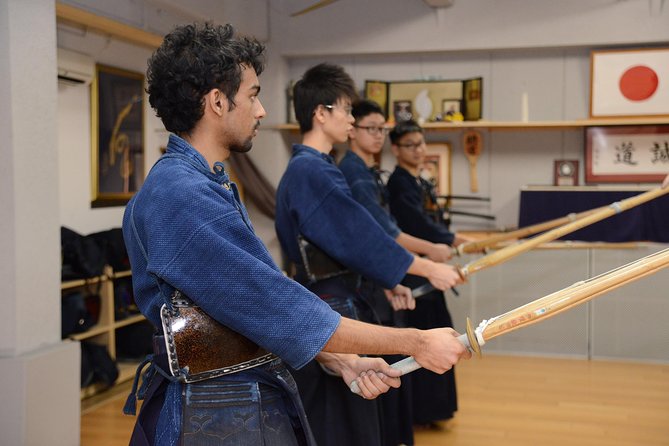
You should wear athletic clothing that allows free movement. One of the most practical details here is that you learn how to put on the Kendo uniform, including the keikogi jacket and hakama trousers. This is part of the experience, not just a dressing-up step.
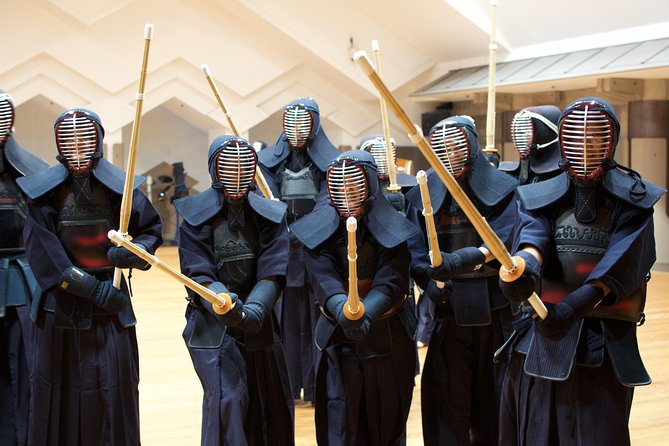
The protective bogu armor comes afterward. Full gear can feel heavy and warm, especially when you are not used to exercising in thick fabric. Drink water before the class begins, and use the water break provided during the session.
Tell the instructor about bad knees before the physical work starts. Kneeling may be part of the etiquette and training, but one participant specifically noted that the instructor allowed knee-sensitive students to skip movements that caused pain. You should not push through an injury just to copy the rest of the group.
The minimum age is 9. That makes this a possible family activity, but age alone does not tell you if a child will enjoy it. Your child needs to manage a warm uniform, listen to instructions, move actively, and accept that this is a martial arts lesson rather than a short photo session.
Learning the manners before the strikes
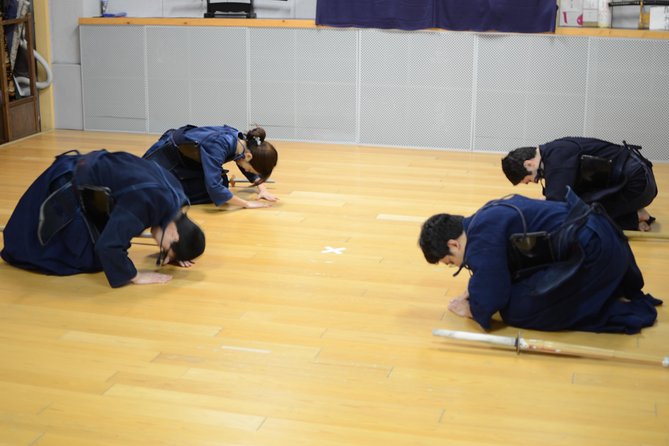
Kendo begins with form and respect. Before you start hitting, the instructor explains samurai culture, basic etiquette, and the correct way to hold and move with the sword. That background gives purpose to the formal bows, stances, and commands.
You also watch a demonstration. This is useful for beginners because Kendo movements can look simple until you try to coordinate your grip, stance, footwork, and timing. The instructor’s demonstration gives you a clear model to copy.
Expect the lesson to focus on fundamentals rather than a long lecture. You learn practical striking techniques and the basic forms needed to perform them correctly. The emphasis is on control and proper movement, not on swinging as hard as possible.
The instructors are described as patient and accommodating, including with children and first-time participants. The English explanations are intended to be easy to follow. Still, Kendo has its own vocabulary and rhythm, so pay close attention to the demonstrations and do not worry if the first attempts feel awkward.
One especially rewarding detail is the sound of approval when you make a correct strike with proper form. The instructor may call out when the movement is right, then ask you to try again when your timing or position is off. That instant correction makes the lesson feel like genuine training.
More samurai and ninja sessions:
- Tokyo: Samurai Ninja Museum Guided tour and Experience
★ 4.6 · 1,010 reviews - Best Samurai Experience in Tokyo
★ 5.0 · 458 reviews - Ninja Experience (Family Friendly) at Samurai Ninja Museum TOKYO
★ 5.0 · 441 reviews - Tokyo: Samurai Entertainment Night Show in Kanda Shrine
★ 4.6 · 417 reviews
The tournament-style combat game
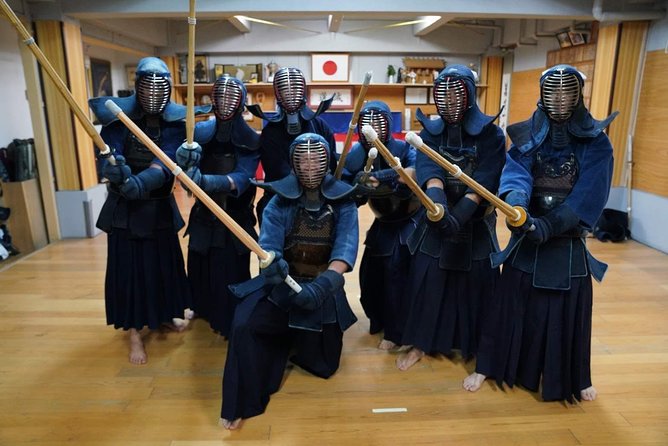
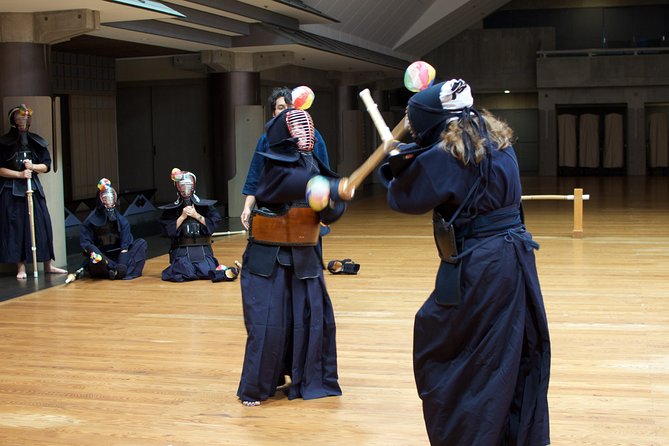
The mock tournament is the payoff. Once you have practiced the main movements, you face an opponent in a controlled game using the protective armor and bamboo swords. It gives you a chance to apply the lesson instead of simply repeating drills.
This is not presented as a free-for-all. The class teaches the techniques first, and the instructor guides the combat. You will need to listen carefully, move with purpose, and wait for the right opening. One account describes hearing calls such as kote-men during sparring, which shows how the instructor may keep the action moving and point out scoring opportunities.
The combat game can be exciting, but it also makes the fitness warning important. You may shout, step quickly, bend, strike, and wear warm armor while doing it. The session is fun, yet it can leave you tired.
For families, this final section adds a playful edge. Children can practice concentration and confidence while adults get a clear sense of how difficult timing and distance can be. For adults with an interest in martial arts, the game gives the class more substance than a one-time demonstration.
You should keep your expectations realistic. A two-hour class will not teach advanced Kendo, and the match is designed for beginners and mixed experience levels. Its value comes from feeling the structure of the sport and trying the basics under supervision.
A real class atmosphere, not a staged performance
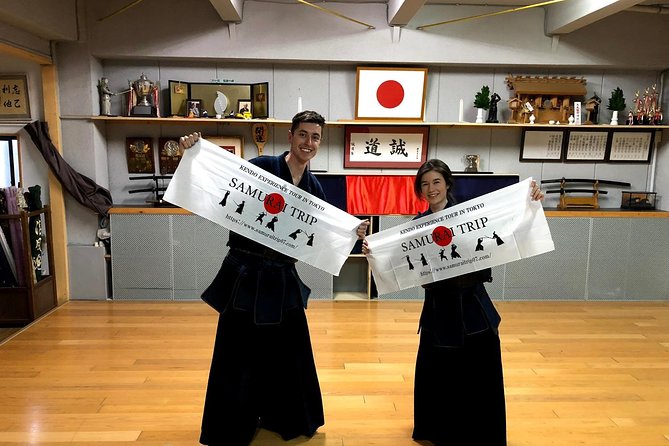
The experience takes place in a dojo, and local trainees may be practicing during the session. That can be one of the most interesting parts for you because you see how Kendo looks when practiced regularly, beyond the short introduction prepared for visitors.
At the same time, a real dojo has a different feel from a polished theater attraction. The class may be active, formal, and focused. You need to follow instructions, respect the space, and accept that the setting is built for training first.
The maximum group size is 15 people. That is small enough for the instructor to offer personal guidance, though the amount of one-on-one attention can vary with the final group size. Some accounts describe a personalized lesson for a parent and child, while others joined a class with local students.
That range is worth keeping in mind when you book. You may receive close correction, or you may be one member of a lively group. Either way, the format gives you more direct participation than a museum visit or a samurai-themed photo stop.
What is included for the $118.92 price
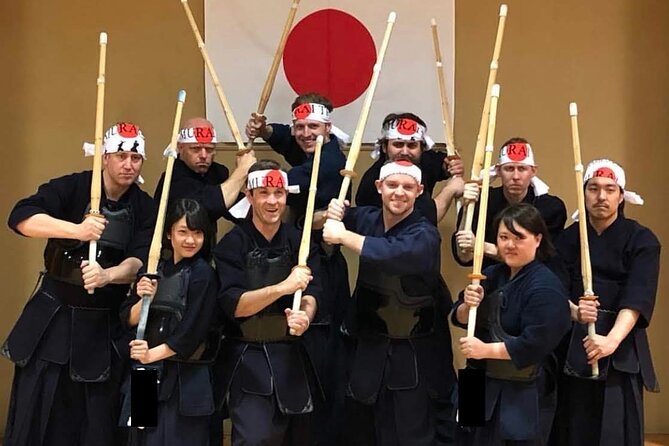
The listed cost is $118.92 per person. That is not a low-cost activity, especially for a two-hour session, but the price includes the professional instructor, Kendo armor and equipment rental, bottled mineral water, and a Japanese hand towel.
The equipment makes a real difference in the value. Buying or arranging suitable protective gear would be impractical for a short visit, and the class lets you use the full setup without carrying anything across Tokyo. You also receive instruction in how to wear the uniform and armor, not just a quick turn with a prop sword.
The price makes the most sense if you want active participation and a cultural lesson in one package. It is less compelling if you only want to see samurai armor or hear a short talk, since Tokyo offers cheaper ways to learn about Japanese history.
The souvenir towel is a small extra rather than a reason to book. The main value is the instructor’s time, the dojo setting, and the chance to practice and spar in proper gear.
Food and drinks beyond the bottled water are not included. Plan to eat before or after the session, particularly if you choose the morning start. Kendo can be tiring, and going in without water or a meal is a poor idea.
Who will enjoy this most
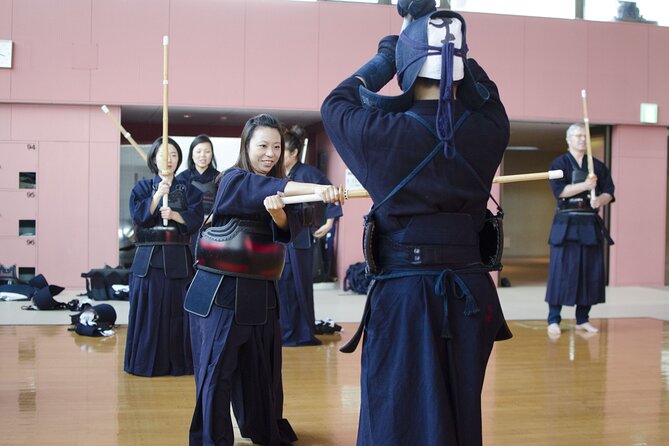
I would recommend this class to you if you enjoy activities where you learn by doing. It is a good match for:
- Families with children aged 9 and older who enjoy sports
- Adults who want a serious introduction to Japanese martial arts
- Couples looking for something more active than sightseeing
- Visitors curious about etiquette, discipline, and traditional training
- People who have seen Kendo before and want to try the basic movements
You should think twice if you have a strong dislike of physical contact, warm protective clothing, or structured instruction. The match involves striking with bamboo swords, even though armor is provided. Anyone with knee problems, limited fitness, or an injury should explain this to the instructor and decide if the activity is appropriate.
The class welcomes all experience levels, so you do not need previous martial arts training. You do need to arrive ready to listen, move, and take part.
Timing, group size, and cancellation
The activity lasts about two hours and offers morning or afternoon scheduling, which makes it easier to fit around a Tokyo sightseeing plan. The listed meeting time is 10:00 am for the morning session.
Confirmation is provided at booking. A minimum of two people per booking is required, and the maximum group size is 15. This is important for solo visitors, who may need to book with another person rather than reserve a single place alone.
Free cancellation is available until 24 hours before the local start time. Cancellations or changes made less than 24 hours ahead are not accepted for a refund. Keep that deadline in mind if your Tokyo schedule is still changing.
Is this Tokyo Kendo experience worth booking?
Book it if you want to work, sweat, learn basic swordsmanship, and take part in a real Kendo-style class. The strongest features are the patient English instruction, full armor and equipment, samurai etiquette, and the tournament finish. The activity also gives you a look at how local dojo training feels.
I would not book it simply because the word samurai sounds appealing. This is an active class, not a relaxed show. Wear athletic clothes, hydrate, allow time for the journey to Higashinippori, and tell the instructor about any knee trouble.
For the right person, $118.92 buys a memorable two hours of participation rather than another view from a sightseeing platform. If you want one Tokyo activity that combines exercise, Japanese culture, and a little friendly competition, this is a strong choice.
FAQ
Where does the Kendo experience take place?
The meeting point is at 誠道館ビル, 4 Chome-7 Higashinippori, Arakawa City, Tokyo 116-0014, Japan. The activity ends back at the same meeting point.
How long does the activity last?
The session lasts approximately two hours.
What time does the morning session begin?
The listed morning start time is 10:00 am. Morning and afternoon sessions are available according to the schedule.
Is hotel pickup included?
No. Hotel pickup and drop-off are not included. You make your own way to the dojo, which is near public transportation.
Is Kendo equipment provided?
Yes. Rental Kendo armor and equipment are included, along with bottled mineral water and a Japanese hand towel.
Can beginners and children participate?
All experience levels are welcome, and the minimum age is 9. Participants should have a strong level of physical fitness.
What happens if I need to cancel?
You can receive a full refund if you cancel at least 24 hours before the experience start time. Cancellations and changes made less than 24 hours before the start are not accepted for a refund.
More 2-Hour Experiences in Tokyo
- Ninja Samurai 2-hour hands-on lesson by Japanese master in Tokyo
★ 5.0 · 194 reviews - Tokyo: Flagship 2-Hour Street Go-Kart Tour by Street Kart
★ 4.9 · 94 reviews - Tokyo: Shinjuku Izakaya and Golden Gai Bar Hopping Tour (2h)
★ 4.9 · 67 reviews - Tokyo: 2-Hour Vegan and Vegetarian Ramen Guided Walking Tour
★ 4.8 · 33 reviews
New on our Tokyo list
- From Tokyo: Mount Fuji & Hakone Full Day Private Tour★ 4.9 · 25 reviews
- Tokyo Spectacular View Day-Cruise in 90 Minutes★ 5.0 · 25 reviews
- Real Tokyo Runner Club : Daikoku Car Meet Night Tour with JDM Car★ 5.0 · 25 reviews
- 2.5 Hour-Guided Cycle Tour in the Central Tokyo★ 5.0 · 25 reviews
- Ramen Making from Scratch +Akihabara Tour –Cooking Class★ 5.0 · 25 reviews
- [Self-Drive] Tokyo & Daikoku Custom Car Driving Tour★ 4.9 · 25 reviews
- Tokyo: 2-Hour Night Bike Tour of the City’s Hidden Gems★ 4.9 · 25 reviews
- Samurai themed Entertainment show in Shinjuku★ 4.5 · 25 reviews
Samurai & Ninja Experiences, compared.
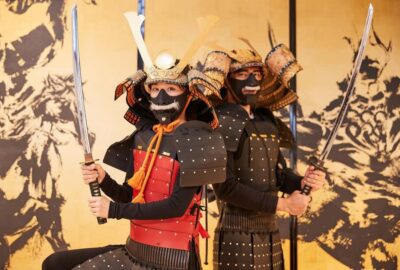
Samurai Ninja Museum Guided tour and Experience
Read our review →
Samurai Sword & Archery Class from Samurai Descendant
Read our review →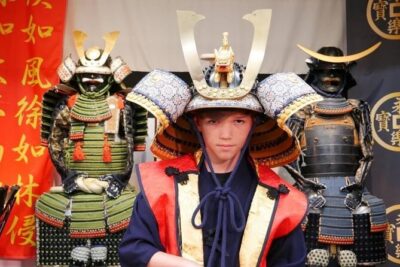
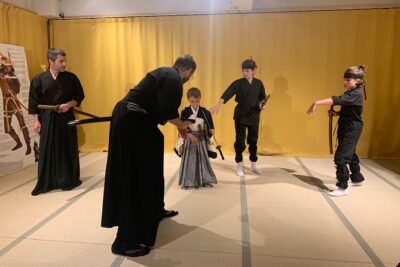
Ninja Experience (Family Friendly) at Samurai Ninja Museum TOKYO
Read our review →
Samurai Entertainment Night Show in Kanda Shrine
Read our review →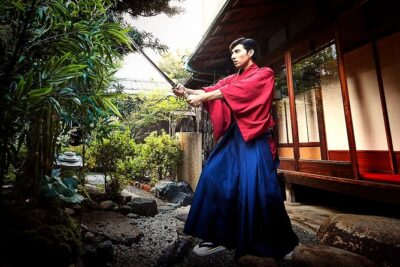
Tokyo Sword Experience – includes Museum Ticket/Ninja Experience
Read our review →
Samurai Ninja Museum Asakusa: Samurai Sword Lesson & Tour
Read our review →
Ninja Samurai 2-hour hands-on lesson by Japanese master in Tokyo
Read our review →Browse the lists this tour appears in