
Reviewed · JAPANESE CULTURE WORKSHOPS
Tokyo: Learn about Japanese Traditional art KABUKI in Ginza
Kabuki is one of Japan’s best-known traditional arts, but seeing a full performance takes time, planning, and a willingness to sit through a long program. This 90-minute Ginza tour offers a shorter way to get oriented. You visit the Kabukiza building and its gallery, then browse specialty shops before finishing at Mitsukoshi, a department store with more than 350 years of history.
I like the focused route and the small group size, capped at nine people. I also like the chance to buy Kabukiza-only souvenirs, Japanese accessories, sweets, and traditional crafts without spending half a day figuring out where to go. The main catch is simple: there is no Kabuki performance included. One guest expected a short show and felt badly let down, so read the description with care.
In This Review
- Key points before you book
- What this Ginza Kabuki experience really offers
- Meeting at NISSAN CROSSING
- Seeing the Kabukiza building from the inside
- Kabukiza souvenirs worth leaving room for
- Mitsukoshi Ginza and more than 350 years of retail tradition
- Why the 90-minute length works
- The missing performance is the key warning
- Guide quality and the level of information
- Who should book this experience
- Is this $51 Ginza tour worth it?
- FAQ
- How long does the Kabuki and Ginza experience last?
- How much does the activity cost?
- Is a Kabuki performance included?
- Where is the meeting point?
- Is the tour conducted in English?
- How large is the group?
- What will I see at Kabukiza?
- Are shopping purchases included?
- Can I cancel for a refund?
Key points before you book
- Kabukiza Gallery visit: Learn about Kabuki through exhibits inside or connected with the famous Kabukiza theater complex.
- No live performance: The price covers an introduction and gallery visit, not Kabuki viewing.
- English-speaking guide: The tour is led in English, with Nori receiving especially warm praise for being a good guide.
- Small group format: With no more than nine participants, you should have a better chance to ask questions than on a large walking tour.
- Ginza shopping stops: Look for Kabuki goods, Japanese accessories, sweets, and crafts that are difficult to find elsewhere.
- Historic Mitsukoshi finish: The route ends at the Ginza branch of a department store with over 350 years of history.
What this Ginza Kabuki experience really offers
This is best understood as a cultural introduction, not a theater ticket. You will learn about Kabuki by touring exhibits with a guide, seeing the Kabukiza building, and visiting shops linked to the area’s traditional arts.
That distinction matters. Kabuki can seem mysterious if you only see a poster, a painted face, or a grand theater facade. A guide can give those sights some context in a short space of time. You will not get the full power of a staged performance, but you can come away with a clearer idea of why Kabuki matters and how it fits into Ginza’s long connection with Japanese entertainment.
The activity costs $51 per person. I see that as a fair price only if you want guided interpretation and a tidy route through central Ginza. If you mainly want to look at the building and shop on your own, the price becomes harder to justify. Since shopping purchases are extra, you should also treat the $51 as the cost of the guide and cultural visit, not a shopping package.
More craft workshops in Tokyo:
- Tokyo Shinjuku Chopsticks Making Class
★ 5.0 · 1,763 reviews - Kintsugi Experience: Art of Golden Joinery in Tokyo
★ 5.0 · 467 reviews - Authentic Pure Gold Kintsugi Workshop with Master Taku in Tokyo
★ 5.0 · 217 reviews
Meeting at NISSAN CROSSING
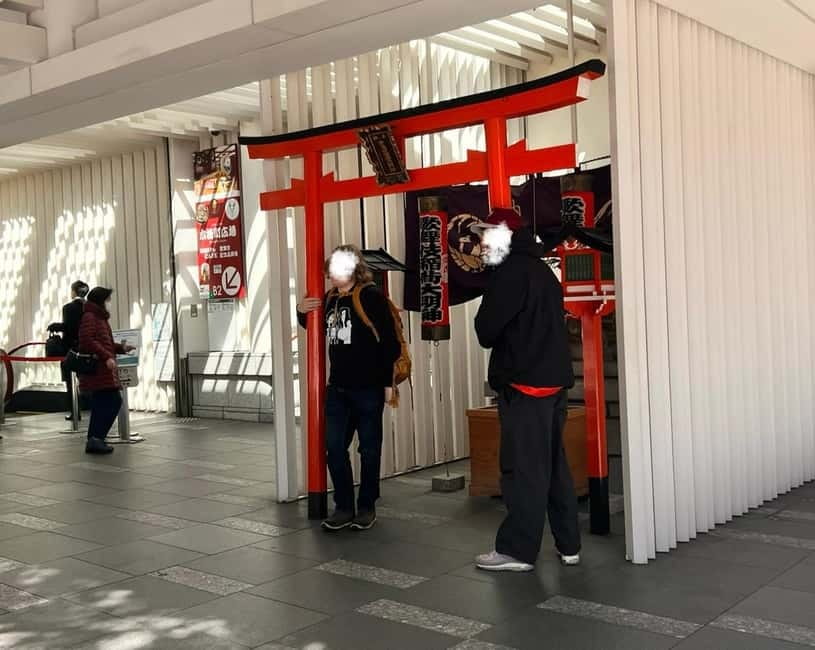
The meeting point is in front of NISSAN CROSSING, a recognizable spot in Ginza. You will need to make your own way there, since transportation is not listed as part of the experience.
This is a useful starting point for a short city tour because the route stays in one of Tokyo’s most central commercial districts. Still, give yourself time to find the meeting point. Ginza has large streets, busy crossings, and several major buildings close together. Arriving a little early is sensible, especially if you are unfamiliar with the area.
The tour is offered with an English-speaking guide. The small group limit of nine is one of its stronger practical features. A group this size should feel more personal than a coach tour, and it gives you a reasonable chance to stop and ask about unfamiliar terms or objects.
The guide quality may shape your experience quite a bit. Nori was singled out for being friendly and helpful, while another guest found the information too basic and felt that language made some explanations less effective. That tells me to expect a pleasant orientation, but not a university lecture on Kabuki.
Seeing the Kabukiza building from the inside
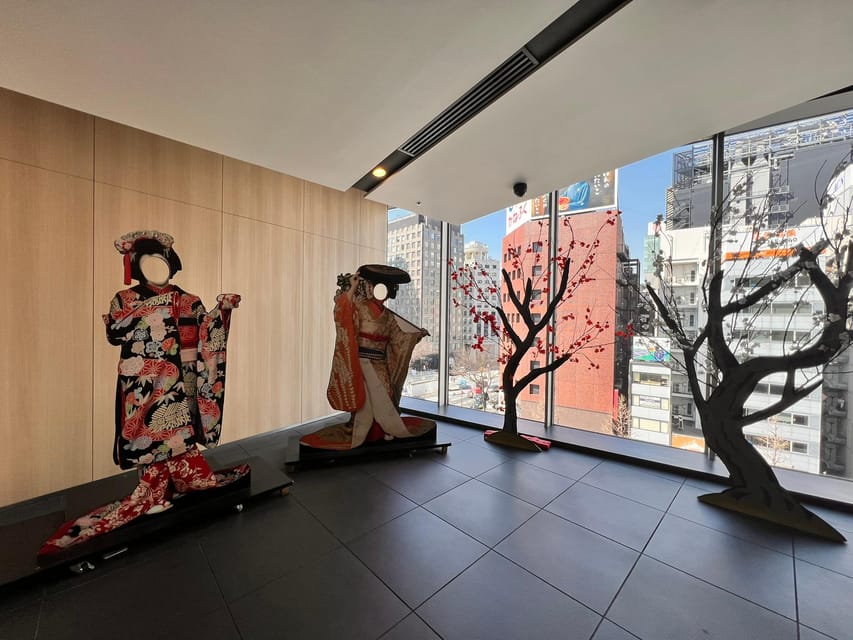
The Kabukiza building is the heart of the experience. Even if you do not attend a performance, visiting the theater complex gives you a physical connection to Kabuki rather than just a general talk about Japanese culture.
The plan includes a guided look at Kabuki exhibits in the gallery. These displays are meant to help you understand the art form through objects and presentation. The supplied details do not specify the exact exhibits on display, so the content may vary. Think of this as a compact museum-style visit rather than a full theater tour.
The guide’s role is important here. A display can be hard to read if you do not know what you are looking at, and Kabuki has its own vocabulary and traditions. The tour gives you someone to point out the main ideas and help you connect the exhibits to the building around you.
Keep your expectations measured. One guest described the historical introduction as basic, and that is the fairest way to approach it. You may get a useful first layer of information, but you should not book this expecting a detailed study of Kabuki performance, stagecraft, actors, or theater history.
The gallery stop should suit you if you are curious but short on time. It also works well as a first step before deciding if you want to return to Ginza for a full Kabuki performance later. If you already know a lot about Kabuki, the material may feel too light.
Kabukiza souvenirs worth leaving room for
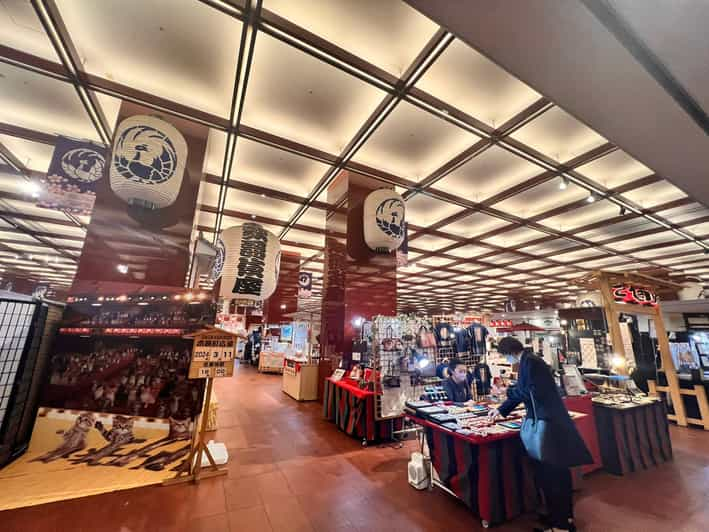
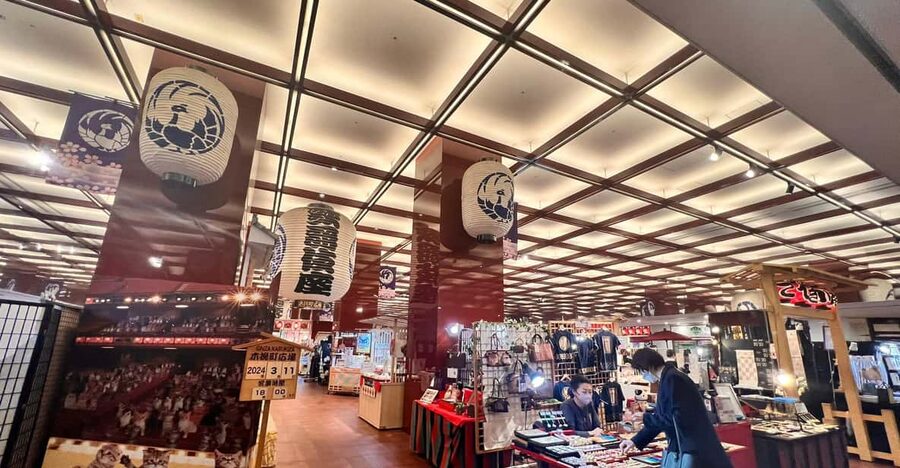
After the gallery, the tour stops at souvenir shops found in the Kabukiza area. This is one of the most appealing parts for many people because the choices go beyond generic Tokyo gifts.
You might find Kabuki goods, Japanese accessories, and Japanese sweets. The emphasis is on items connected with the theater and traditional Japanese style. Some products are described as available only at Kabukiza, which gives the shopping stop a stronger sense of place than a standard airport or chain-store purchase.
I like this part because souvenirs can help carry an experience home. A small Kabuki-themed item or traditional accessory may remind you of the theater more clearly than a broad Tokyo souvenir. The shops also let you see how Japanese design and performance culture meet in everyday products.
The important practical point is that shopping is not included. You pay for anything you buy, and the amount depends entirely on your choices. If you are watching your budget, set a limit before the tour begins. If you enjoy gifts and small specialty items, bring enough time and spending room to browse without rushing.
The information does not say how long the shopping stops last or name the individual shops. That means you should not plan your entire Ginza shopping day around a specific store. Treat these stops as a guided introduction to the area’s Kabuki-related retail options.
A few more Tokyo bookings worth comparing
- Mt Fuji and Hakone 1-Day Bus Tour Return by Bullet Train
★ 5.0 · 26,383 reviews - 1-Day Tokyo Bus Tour
★ 5.0 · 14,250 reviews - Tokyo: TOKYO SKYTREE® Admission ticket
★ 4.5 · 11,192 reviews - Tokyo: teamLab Planets TOKYO Digital Art Museum Entry Ticket
★ 4.6 · 9,779 reviews
Mitsukoshi Ginza and more than 350 years of retail tradition
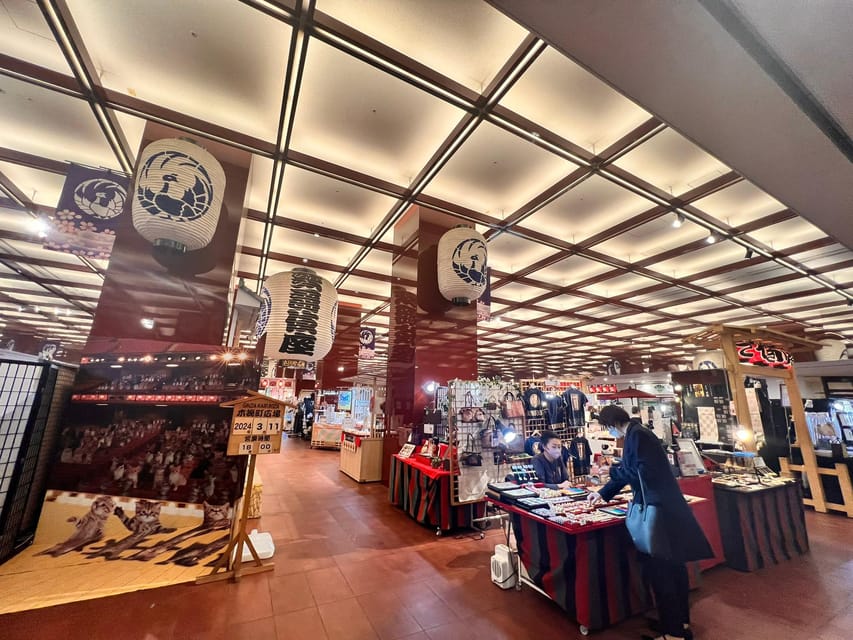
The final stop is the Ginza branch of Mitsukoshi, described as Japan’s oldest department store, with over 350 years of history. You will encounter high-quality traditional crafts and other goods there.
This adds a useful second angle to the tour. Kabukiza gives you a look at traditional performing arts, while Mitsukoshi shows how Japanese craftsmanship and formal retail culture are presented today. You are not just moving from one shop to another. You are seeing two different ways Ginza connects old Japanese traditions with modern city life.
Mitsukoshi is also a practical stop if you want to compare the style and quality of Japanese goods in a department-store setting. The tour information does not promise a particular craft demonstration or a fixed product list, so your experience will depend on what is available when you visit.
I would not book this activity only for Mitsukoshi. You can visit the department store without a tour. Its value here comes from the sequence: Kabuki exhibits, specialty goods, then a major historic department store. In 90 minutes, that gives you a compact look at several sides of Ginza.
Why the 90-minute length works
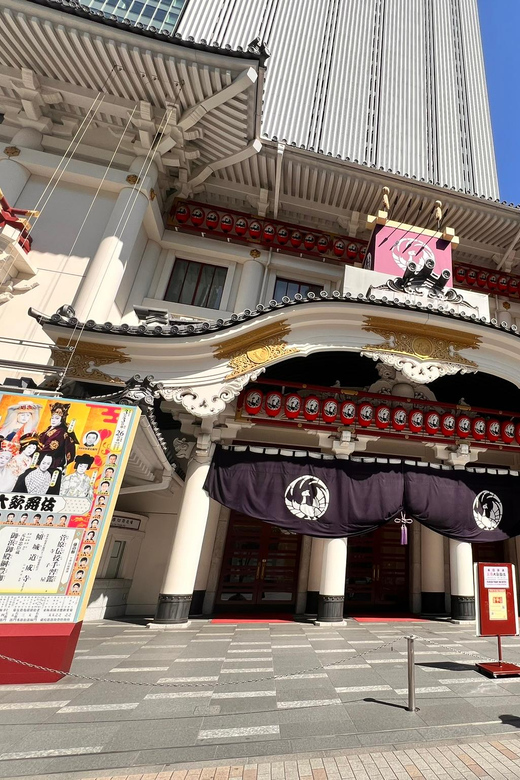
The short duration is a clear advantage for some schedules. You can fit the tour between other Ginza plans, use it as a gentle introduction after arriving in Tokyo, or add it to a day built around shopping and central-city sights.
You will not spend an entire morning or afternoon on the activity. That makes it a good choice if you want a taste of Kabuki but do not have time for a performance. It also suits people who prefer a short guided walk over a long lecture or formal museum visit.
The same length creates the main limitation. There is only so much a guide can explain in an hour and a half, especially with several stops. The historical introduction may feel light, and you should not expect time for extended discussion or a full picture of Kabuki culture.
The tour moves through exhibits and shops, so wear comfortable shoes and keep your schedule realistic. The supplied information does not state the exact walking distance, so I would avoid placing a tight appointment immediately afterward.
The missing performance is the key warning
This point deserves its own section because it is the easiest way to book the wrong activity. The experience does not include Kabuki viewing.
You will see the Kabukiza building, learn through gallery exhibits, and browse related shops. You will not watch a short Kabuki show as part of the $51 price. One guest booked expecting a performance and rated the experience very poorly despite liking the guide, Nori.
If your main goal is to watch actors perform, this is not the right product by itself. Look for a separate Kabuki ticket or performance experience. If your goal is simply to learn a little, see the theater setting, and shop for related goods, the plan makes more sense.
This is also why the wording matters when you compare activities. A tour about Kabuki and a tour with Kabuki are two different things. This one is firmly in the first category.
Guide quality and the level of information
The strongest personal praise available for this experience goes to the guides. Nori was described as friendly, and another guest found the guide very informative. Those are encouraging signs, especially for a tour built around explanation rather than a major attraction ticket.
At the same time, the experience may not go equally deep with every guide or group. One guest felt the Kabuki history section was not impressive and that the information stayed basic. Language may also affect how much detail comes across in English.
I would book this expecting clear, useful orientation rather than expert-level instruction. Prepare a few questions if you want more from the visit. With a group of nine or fewer, you may have a better chance to ask them directly than you would on a crowded city walk.
The overall rating provided is 3.2 out of 5 from five ratings. That is a mixed result, not a reason to avoid the activity automatically. It points to a tour whose success depends heavily on matching expectations: people wanting a friendly introduction may be satisfied, while people expecting a performance or advanced history may not be.
Who should book this experience
I would consider this tour for:
- First-time visitors who want a short introduction to Kabuki
- People staying or spending time in Ginza
- Shoppers looking for Kabuki-related goods and Japanese accessories
- Visitors who prefer a small English-speaking group
- Anyone without time for a full Kabuki performance
- Travelers who enjoy traditional crafts and department-store culture
I would think twice if you already have strong Kabuki knowledge. The historical explanation may be too basic for you. I would also skip it if you want a live show, a long theater visit, or a detailed academic discussion.
Families and mixed-interest groups may find the 90-minute format manageable, but the provided information does not give a recommended minimum age or a specific accessibility description. If those details matter to you, confirm them before booking.
The activity allows free cancellation up to 24 hours before the start for a full refund. You can also reserve now and pay later, which helps if your Tokyo schedule is still taking shape.
Is this $51 Ginza tour worth it?
I see the value in the route, not in any single stop. For $51, you get an English-speaking guide, a small group capped at nine, a Kabukiza gallery visit, access to specialty shopping stops, and a guided finish at historic Mitsukoshi.
That is a reasonable package if you want structure and context. You are paying to have the area explained and organized for you, not simply to enter a major attraction. The value drops if you planned to shop independently or only wanted a quick photograph outside Kabukiza.
Book it if you want a short, guided taste of Kabuki culture and understand that no performance is included. Skip it if seeing actors on stage is essential, or if you want detailed historical instruction. For the right person, it is a tidy way to connect Ginza shopping with one of Japan’s traditional arts.
FAQ
How long does the Kabuki and Ginza experience last?
The experience lasts 90 minutes.
How much does the activity cost?
The listed price is $51 per person.
Is a Kabuki performance included?
No. Kabuki viewing is not included. The experience covers the Kabukiza building, gallery exhibits, and related shopping stops.
Where is the meeting point?
You meet in front of NISSAN CROSSING.
Is the tour conducted in English?
Yes. The tour has a live English-speaking guide.
How large is the group?
The activity is a small-group tour limited to nine participants.
What will I see at Kabukiza?
You will see the Kabukiza building and tour Kabuki exhibits in the gallery with a guide.
Are shopping purchases included?
No. You pay separately for anything you buy at the shops.
Can I cancel for a refund?
Yes. You can cancel up to 24 hours in advance for a full refund. You can also reserve now and pay later.
New on our Tokyo list
- Sumi-e Experience in a relaxing green tea shop in Tokyo★ 5.0 · 3 reviews
- Tokyo : Kamikaze Street Drift Ride★ 5.0 · 3 reviews
- Private Zen Meditation in English in Shinjuku, Tokyo★ 5.0 · 3 reviews
- Onsen Spa in Tokyo and Asakusa Bar Hopping with Local Guide★ 5.0 · 3 reviews
- Easy for everyone! Now you can play handmade mini shamisen and show off to everyone! Musical instruments, sweets and live music★ 5.0 · 3 reviews
- Tokyo: Private Tsukiji Street Food & Sake with Local Guide★ 5.0 · 3 reviews
- Mt Fuji Exploration Tour with Free Japanese Kusa Mochi from Tokyo★ 4.5 · 3 reviews
- Tokyo Tsukiji Fish Market Walking and Exploring Hidden Gems Tour★ 5.0 · 3 reviews
Japanese Culture Workshops, compared.
Kintsugi Experience: Art of Golden Joinery in Tokyo
Read our review →
Authentic Pure Gold Kintsugi Workshop with Master Taku in Tokyo
Read our review →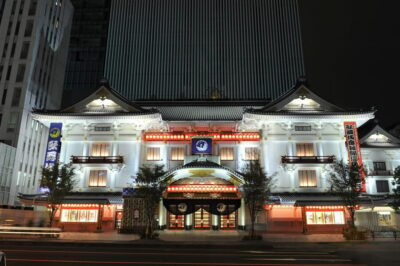
KABUKI Show at Kabukiza Theatre Admission Ticket
Read our review →
KABUKI, BUNRAKU, etc. presented by National Theatre
Read our review →
Kintsugi Workshop Class in Shibuya, Tokyo with mon cadeau
Read our review →
Browse the lists this tour appears in