
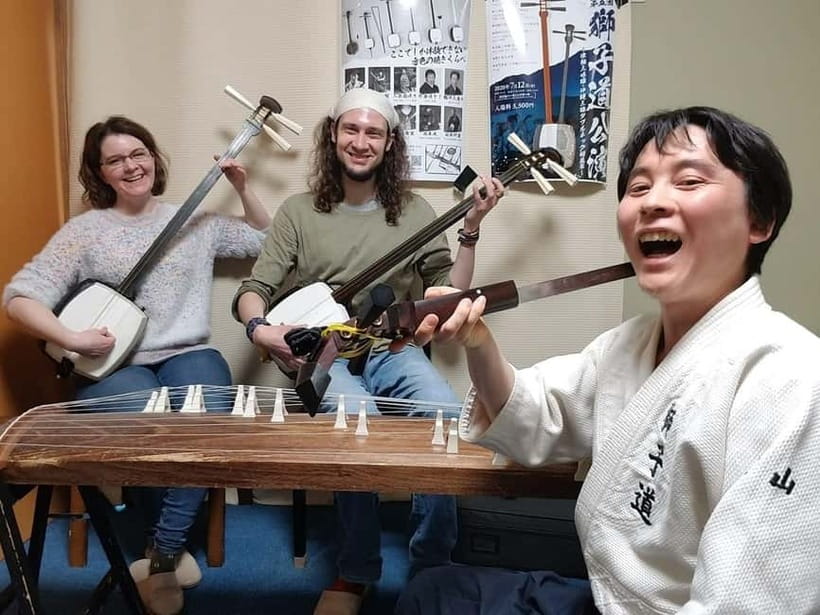
Reviewed · JAPANESE CULTURE WORKSHOPS
Tokyo: Learn to play traditonal songs on Tsugaru Shamisen
The surprising part of this Tokyo lesson is how quickly a beginner can make a real sound on a three-string shamisen. Master musician Kouzan Oyama, a two-time Tsugaru Shamisen World Cup champion, uses his own teaching books to help you play a song before the hour ends. I like the private format, and I like that the lesson includes both playing and a close look at how Japanese instruments create sound. The main drawback is time: one hour gives you a satisfying first taste, not command of the instrument.
I especially like the chance to request a song at the start. If you have no preference, you can work on a traditional folk song, and Sakura has already proved a reachable goal for a first lesson. Oyama also plays koto and can introduce you to Okinawa sanshin, but the session moves quickly, so prepare your questions and musical wishes before you arrive.
In This Review
- Key points to know before booking
- Why the Tsugaru shamisen sounds so different
- Meeting Kouzan Oyama near Shinjuku
- The first minutes: learning the shamisen itself
- Working toward your chosen song
- A fast style that rewards attention
- Photos, videos, and the final performance
- What the $59 price gets you
- Who will enjoy this Tokyo lesson most
- Practical details for fitting it into Tokyo
- Should you book the Tsugaru shamisen experience?
- FAQ
- How long does the Tsugaru shamisen lesson last?
- How much does the experience cost?
- Is the lesson taught in English?
- Can I request a particular song?
- Can a beginner learn a song during the lesson?
- Is the activity private?
- Can I take photos or videos?
Key points to know before booking
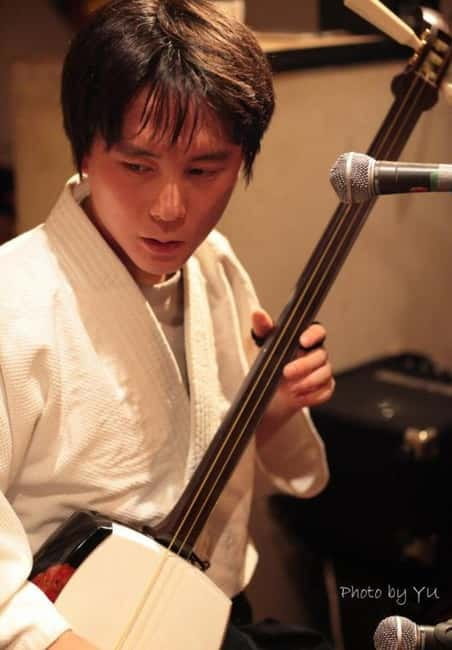
- Play a song in one hour: You work toward a complete short piece, with Sakura available as a beginner-friendly choice.
- Learn from a champion: Kouzan Oyama won the Tsugaru Shamisen World Cup in 2018 and 2019.
- Hear the difference between instruments: The lesson can include several shamisen types, Okinawa sanshin, and a short koto demonstration.
- Private and English-language: Your group receives direct instruction rather than joining a large class.
- Near Shinjuku: The central Tokyo setting makes this easy to fit into a day of sightseeing.
- Record the moment: You can take photos and videos of your performance with Oyama.
Why the Tsugaru shamisen sounds so different
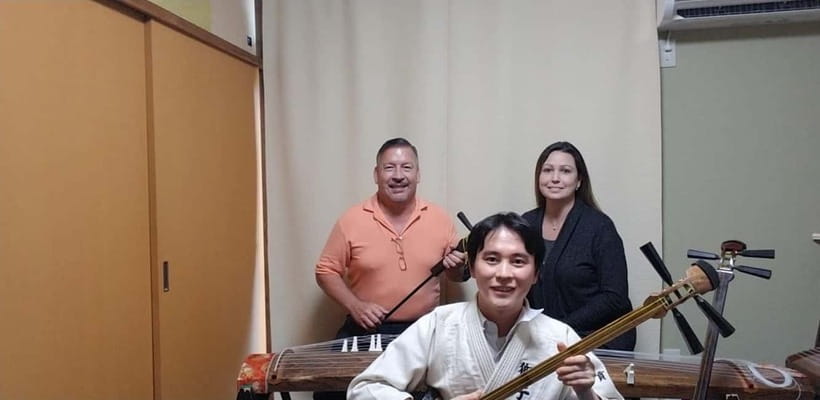
The shamisen looks a little like a banjo, but its voice is sharper and more percussive. It has three strings, a long neck, and a skin-covered body. You play it with a large plectrum called a bachi, which helps create the crisp attack that defines the instrument.
Tsugaru shamisen is the most forceful of the main shamisen styles. It came from the Tsugaru area in northern Japan, where traveling musicians and ordinary people developed a lively form built for strong rhythm and expressive solo playing. The music can suggest waves, wind, and the hard weather of northern Japan without needing a large ensemble.
That setting gives the lesson more weight than a simple novelty class. You are not just handling an unusual instrument for a photo. You are learning one small piece of a musical tradition that grew outside the formal court and concert worlds.
The sound can be startling at first. Western beginners often expect a soft plucked instrument, then discover that even a basic strike has a firm snap. Oyama’s job is to help you control that force instead of treating the shamisen like a guitar.
More craft workshops in Tokyo:
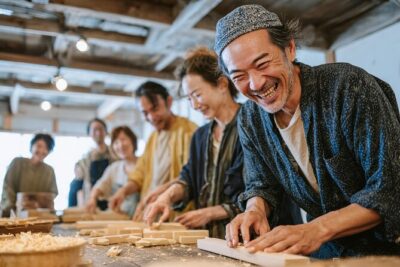
- Tokyo Shinjuku Chopsticks Making Class
★ 5.0 · 1,763 reviews - Kintsugi Experience: Art of Golden Joinery in Tokyo
★ 5.0 · 467 reviews - Authentic Pure Gold Kintsugi Workshop with Master Taku in Tokyo
★ 5.0 · 217 reviews
Meeting Kouzan Oyama near Shinjuku
The instructor is Kouzan Oyama, a master of the Oyama style, described as the leading school of Tsugaru shamisen. His competition record matters here because the lesson is not being taught by someone who only knows a few tourist-friendly notes. He has performed at a high level and has built his own instructional books for beginners.
His teaching style is patient and practical. The lesson includes demonstrations, explanations in English, and repeated chances for you to try the technique yourself. That combination matters because shamisen technique is not easy to understand from spoken instructions alone. You need to see the movement, hear the sound, and then copy it.
Oyama can also answer questions about the instrument and its background in English. One useful feature of the class is that he performs examples while explaining different techniques. You hear what a finished passage should sound like before trying to produce it.
The experience has a personal feel because it is offered as a private group. If you book with a companion, the lesson can focus on your pace and interests. It is also wheelchair accessible, an important practical point for anyone checking Tokyo activities with access needs.
The first minutes: learning the shamisen itself
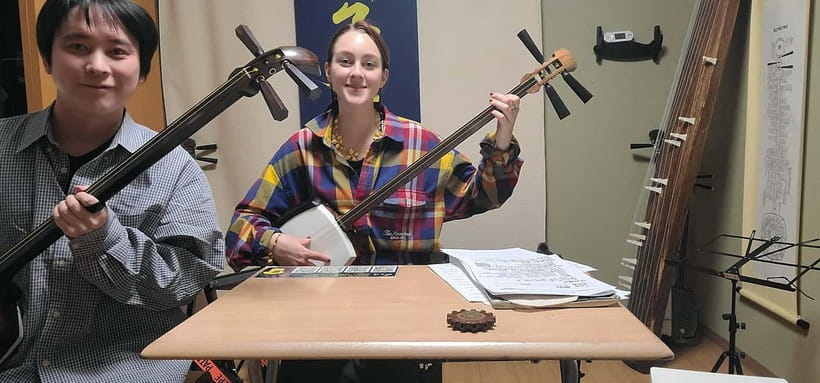
The lesson begins with an introduction to the shamisen and its construction. You learn what the parts are made of and how the instrument produces its sound. This is not filler. Understanding the skin body, strings, neck, and bachi helps explain why the shamisen responds differently from a guitar, ukulele, or banjo.
Expect to spend some early time getting comfortable with the basic grip and striking motion. The aim is to produce a clear tone, not to rush into a complicated melody. The bachi is larger and less forgiving than a small guitar pick, so your first attempts may sound blunt or uneven.
That is where a patient instructor makes a real difference. Oyama can show the motion at full speed, then break it into smaller parts. You will probably find that the right sound comes more from a controlled strike than from pressing hard.
The class also gives you a chance to compare Japanese instruments. You may hear various shamisen types, including Okinawa sanshin, whose sound and design differ from Tsugaru shamisen. Oyama can also play the koto, a traditional Japanese zither, and teach a short tune on it. These comparisons help you hear that Japanese music is not one single sound.
Working toward your chosen song
Tell Oyama at the beginning if there is a particular song you want to attempt. This matters because the lesson is short, and the instructor can shape the practice around that choice. If you arrive without a plan, the traditional Japanese folk song is the natural fallback.
Sakura is another sensible target. A first-time participant was able to learn the song in one session, which suggests that the class is structured around a small, achievable result rather than an abstract lecture.
You should keep your expectations realistic. Playing one song after an hour does not mean you have mastered Tsugaru shamisen. It means you have learned enough of the grip, rhythm, and notes to perform a short piece with help. That is a good result for a one-hour cultural activity.
The satisfaction comes from the contrast between the first sound and the final attempt. At the start, you are figuring out how to hold an unfamiliar instrument. By the end, you can connect several notes and rhythms into something recognizable. The lesson gives you a clear before-and-after moment.
A few more Tokyo bookings worth comparing
- Mt Fuji and Hakone 1-Day Bus Tour Return by Bullet Train
★ 5.0 · 26,383 reviews - 1-Day Tokyo Bus Tour
★ 5.0 · 14,250 reviews - Tokyo: TOKYO SKYTREE® Admission ticket
★ 4.5 · 11,192 reviews - Tokyo: teamLab Planets TOKYO Digital Art Museum Entry Ticket
★ 4.6 · 9,779 reviews
A fast style that rewards attention
Tsugaru music is known for its powerful energy and quick pace. You do not need to play at concert speed in a beginner lesson, but the style still shapes the way Oyama teaches. Rhythm, attack, and clean strikes matter as much as simply finding the right notes.
I like this because it keeps the session active. You are not only memorizing facts about Japanese culture. You are listening closely and making decisions with your hands. The work can feel demanding, especially if you have no musical background, but the difficulty is part of the appeal.
The class also shows the difference between Western and Japanese sound production. Western string instruments often rely on a familiar finger-picking or strumming approach. Shamisen playing uses its own physical language, with a strong relationship between the bachi, the strings, and the instrument’s skin-covered body.
You may not produce a polished Tsugaru performance in an hour. Still, you will understand why the style has attracted attention outside Japan. Its direct, bright sound is easy to recognize, and even a short demonstration can make the instrument memorable.
Photos, videos, and the final performance
The lesson includes opportunities to take photos and videos of your performance with Oyama. This is useful because the final recording gives you more than a souvenir snapshot. You can hear the difference between your first attempts and your last song, and you can share a rare activity from your Tokyo visit.
Ask for the recording opportunity before the final minutes rather than assuming it will happen automatically. The lesson has a lot to cover, and you want enough time to settle your hands before someone starts filming.
A photograph with the instructor and instrument also helps mark the personal nature of the class. This is not a stage show where you sit in the audience. You are part of the musical exchange, even as a beginner.
One participant described the class as the highlight of a Japan trip, while another found that the hour passed very quickly. Those reactions point to the experience’s main strength and its main limitation. It can make a strong impression, but the schedule is compact.
What the $59 price gets you
At $59 per person, the value depends on what you want from a Tokyo activity. You are paying for a private, English-language lesson with a champion performer, access to a traditional instrument, guided practice, demonstrations, and the chance to record your result.
That is a fair price if you want direct instruction rather than a passive cultural show. A private class also gives you more attention than a large workshop, and the instructor can adapt the song choice and pace to your group.
The price does not include a longer course, an instrument to take home, or a full concert. You should book this for the quality of the encounter and the chance to make music, not because you expect a professional-level performance after one session.
For two people, the value improves if you enjoy learning together. You can compare your attempts, encourage each other, and share the final photos and videos. Solo participants can also benefit from the private setup, but a companion adds a social side to the hour.
Who will enjoy this Tokyo lesson most
This is a strong pick for anyone who wants a hands-on cultural activity near Shinjuku. It suits music fans, curious beginners, couples, friends, and families looking for something different from temples, shopping, and observation decks.
You do not need prior shamisen experience. The lesson is built for first-time learners, and the teaching books help you reach a song quickly. A basic interest in rhythm will help, but you do not need to read music based on the information provided.
It is also a good choice for someone who has already seen traditional performances and wants to understand the physical work behind the sound. Hearing Oyama demonstrate a technique, then attempting it yourself, changes how you listen to shamisen music afterward.
I would think twice if you want a slow, extended craft workshop or a full historical lecture. The history and instrument background are part of the hour, but the main purpose is to play. The pace may feel brisk for someone who wants long explanations between attempts.
Practical details for fitting it into Tokyo
The session lasts one hour and takes place near Shinjuku, so it is easy to pair with other central Tokyo plans. Check the available starting times before booking, then leave yourself enough time to reach the meeting point without hurrying.
English instruction is provided. Since the class is private, you can make your song request and questions clear at the start. I would prepare the name of your preferred song in advance, especially if you want to attempt something other than the traditional folk song.
The activity is wheelchair accessible. It also allows free cancellation up to 24 hours ahead for a full refund, and you can reserve now and pay later. Those terms make it easier to place the lesson into a changing Tokyo schedule.
The one-hour length is a practical advantage for a packed itinerary. You get a real activity without giving up half a day. At the same time, keep the short format in mind when deciding how much you expect to cover.
Should you book the Tsugaru shamisen experience?
Book it if you want to do something active, distinctly Japanese, and small in scale. The champion instructor, private format, English teaching, song practice, and instrument demonstrations give the $59 price solid value.
I would especially recommend it as a final-day activity, when you want a personal memory instead of another major sight. You can leave with a better ear for Japanese music, a short performance, and photos or video to remember the lesson.
Skip it if you want a long masterclass or a polished concert. For everyone else, this is a focused and unusual hour near Shinjuku, with enough history to add meaning and enough hands-on time to make the shamisen feel like more than a museum object.
FAQ
How long does the Tsugaru shamisen lesson last?
The lesson lasts one hour.
How much does the experience cost?
The price is $59 per person.
Is the lesson taught in English?
Yes. The instructor teaches in English.
Can I request a particular song?
Yes. Tell the instructor at the beginning if you have a preferred song. Otherwise, you will practice a traditional Japanese folk song.
Can a beginner learn a song during the lesson?
Yes. The class uses teaching books to help first-time learners play a song, and Sakura can be learned in one session.
Is the activity private?
Yes. It is offered as a private group experience.
Can I take photos or videos?
Yes. You have opportunities to take photos and videos of your performance with the instructor.
New on our Tokyo list
- Sumi-e Experience in a relaxing green tea shop in Tokyo★ 5.0 · 3 reviews
- Tokyo : Kamikaze Street Drift Ride★ 5.0 · 3 reviews
- Private Zen Meditation in English in Shinjuku, Tokyo★ 5.0 · 3 reviews
- Onsen Spa in Tokyo and Asakusa Bar Hopping with Local Guide★ 5.0 · 3 reviews
- Easy for everyone! Now you can play handmade mini shamisen and show off to everyone! Musical instruments, sweets and live music★ 5.0 · 3 reviews
- Tokyo: Private Tsukiji Street Food & Sake with Local Guide★ 5.0 · 3 reviews
- Mt Fuji Exploration Tour with Free Japanese Kusa Mochi from Tokyo★ 4.5 · 3 reviews
- Tokyo Tsukiji Fish Market Walking and Exploring Hidden Gems Tour★ 5.0 · 3 reviews
Japanese Culture Workshops, compared.
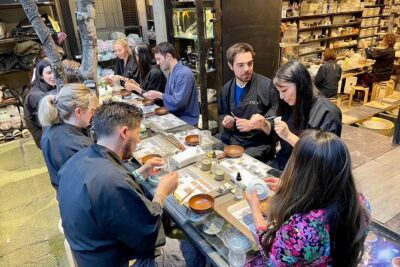
Kintsugi Experience: Art of Golden Joinery in Tokyo
Read our review →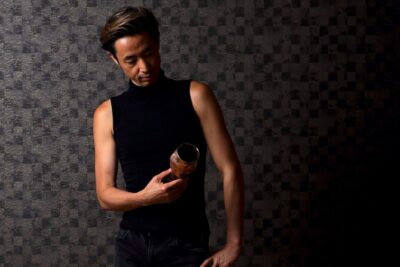
Authentic Pure Gold Kintsugi Workshop with Master Taku in Tokyo
Read our review →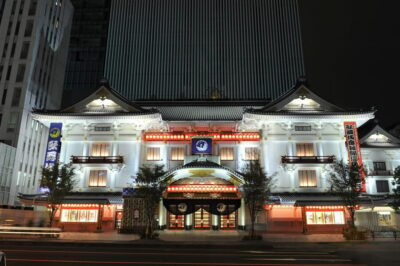
KABUKI Show at Kabukiza Theatre Admission Ticket
Read our review →
KABUKI, BUNRAKU, etc. presented by National Theatre
Read our review →
Kintsugi Workshop Class in Shibuya, Tokyo with mon cadeau
Read our review →
Browse the lists this tour appears in