
Reviewed · ANIME & POP CULTURE TOURS
Tokyo Manga Drawing Experience Pro Artist Workshop & MangaHistory
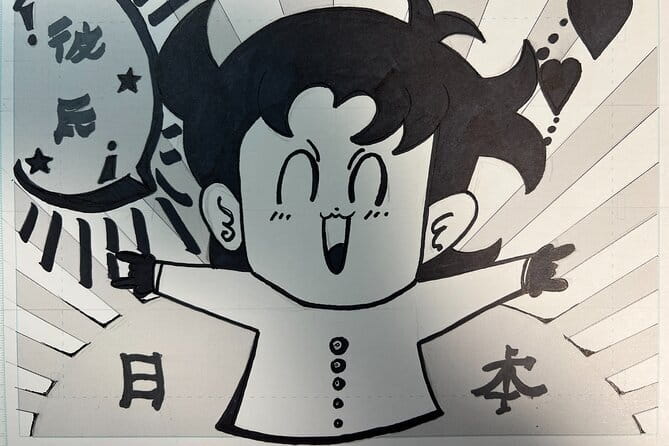
The best part of this Tokyo workshop is that you do not simply watch someone draw. You build a manga piece from the first pencil lines through inking and shading, with a professional artist close by to help. The class also explains manga history, famous artists, and notable works, so your drawing has some cultural context behind it.
I like the six-person maximum, which gives you a fair chance to ask questions instead of waiting behind a large classroom. I also like that all tools are supplied and beginners are welcome. The one drawback is the fixed three-hour commitment: if you only want a quick souvenir sketch, this class may feel longer and more involved than necessary.
In This Review
- Key points
- Starting at Lawson in Hiroo
- The opening lesson: manga beyond the finished page
- Choosing an original character or familiar favorite
- Pencil sketching, inking, and shading
- Why the six-person limit matters
- What the three-hour schedule means
- Drinks, snacks, and a hands-free start
- The finished artwork as a Tokyo souvenir
- Is $100 a fair price?
- Who will enjoy this Hiroo workshop most?
- Should you book the manga drawing workshop?
- FAQ
- Where does the Tokyo manga workshop start?
- Where does the activity finish?
- How long does the manga drawing experience last?
- How many people can join the workshop?
- Do I need previous manga drawing experience?
- Are drawing tools and materials included?
- Are drinks and snacks provided?
- Can I choose what to draw?
- Are different class times available?
- Is cancellation free?
Key points
- Small group of up to six: Expect more direct help while you develop your drawing.
- A full manga-making process: Move from pencil sketch to inking, shading, and added depth.
- Your choice of subject: Create an original story or draw a favorite character.
- Manga culture included: Learn about the form’s history, famous artists, and well-known works.
- No preparation needed: Drawing tools, materials, drinks, and snacks are provided.
- Flexible class times: Morning, afternoon, and evening options make the workshop easier to fit into a Tokyo schedule.
Starting at Lawson in Hiroo
The workshop begins at Lawson, 1-chōme-16-3 Hiroo, Shibuya, Tokyo 150-0012. The meeting point is near public transportation, and the activity finishes back there, so you are not left figuring out a separate return point at the end.
That simple start and finish matter in Tokyo. You can plan the class around other sightseeing without arranging private transport. Private transportation is not included, so you will need to make your own way to Hiroo and back using public transit or another option.
Check your confirmation carefully before setting out. The meeting point is specific, and a Tokyo address can be easy to misread when you are moving between stations and neighborhoods. A mobile ticket is provided, which means you can keep the booking details on your phone rather than carrying printed paperwork.
More anime and pop-culture days:
- Official Street Go-Kart Tour – Akihabara
★ 5.0 · 1,578 reviews - Tokyo Go Kart: Asakusa, Skytree, and Akihabara **IDP MUST**
★ 5.0 · 988 reviews - Akihabara Anime & Game Adventure Walking Tour (Group or Private)
★ 5.0 · 404 reviews
The opening lesson: manga beyond the finished page
The class begins with an introduction to manga history, famous artists, and important works. This is more useful than it may sound. Manga is not only a drawing style. It is also a way of arranging a story through panels, expressions, movement, and visual timing.
You will gain a better sense of why certain lines, poses, and facial expressions matter before you begin working on your own page. The lesson gives the practical drawing instruction a wider setting, especially if your interest in manga comes from reading it or watching anime rather than making art yourself.
The instructor also explains the tools used in manga work. One of the most useful parts of the class is the chance to test professional drawing equipment with guidance. If you have only used ordinary pencils and pens, the materials can make the session feel like a real introduction to a working artist’s process.
The information supplied for the class does not name the instructor, so you should not expect to book a particular artist. What is clear is that instruction comes from a professional manga artist, with time set aside for questions and one-to-one help within the small group.
Choosing an original character or familiar favorite
Once the introduction is complete, you decide what to draw. You can create an original character and story, or work from a character you already know and enjoy.
That choice makes the workshop suit different kinds of participants. A manga fan may want to draw a favorite figure, while someone who has never tried manga may find it easier to begin with a simple personal idea. You are not required to arrive with a finished concept.
The instructor helps you develop the idea and think about composition, expressions, and poses. These are the parts that turn a figure into a character with a purpose. A face can show emotion, a pose can suggest action, and the position of a character on the page can help tell the story.
If you tend to freeze when faced with a blank sheet, this support is important. You can ask questions as the idea takes shape rather than spending the first hour wondering where to begin. At the same time, the class leaves room for your own choices, so the finished work should feel more personal than a simple coloring exercise.
Pencil sketching, inking, and shading
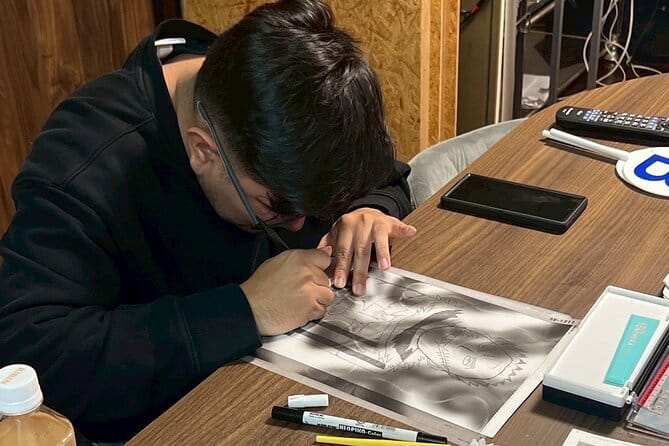
The practical section follows the traditional sequence of manga creation. You begin with a pencil sketch, then move to inking, and finish by adding shading and depth.
Starting with pencil gives you room to shape the character before committing to darker lines. The inking stage requires more care, since the marks become a stronger part of the final image. Shading then adds form and contrast, helping the drawing look less flat.
The instructor stays available throughout these steps. You can ask about the tools, the way a line should be built, or how to make a pose and expression clearer. The class is not presented as a race, and the three-hour length allows time for careful instruction.
That does not mean you will leave as a professional manga artist. Three hours can teach the basic sequence and give you a satisfying introduction, but mastery takes much longer. The value is in learning a process you can repeat later, with a finished page to remind you how the steps fit together.
A few more Tokyo bookings worth comparing
- Sushi Making Tokyo Roll and Authentic Japanese Sushi Class
★ 5.0 · 3,971 reviews - Tokyo: Roll and Authentic Sushi Making Class in Asakusa
★ 4.9 · 1,957 reviews - Tokyo Shinjuku Chopsticks Making Class
★ 5.0 · 1,763 reviews - Tokyo: Sushi Making Class in a Happi Coat near a Famous Spot
★ 4.9 · 1,377 reviews
Why the six-person limit matters
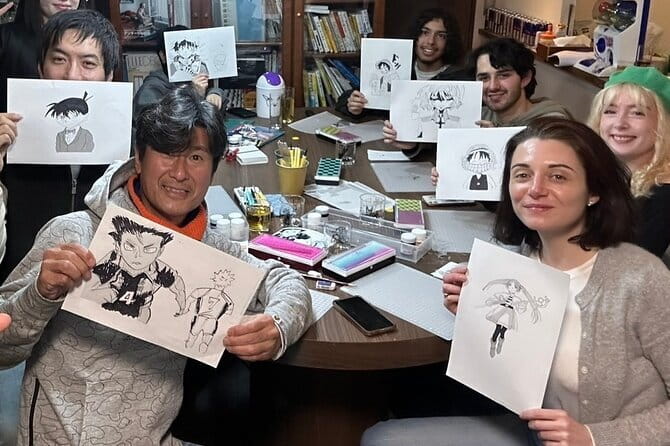
A maximum of six participants is one of the strongest features here. Drawing instruction works best when the instructor can see what you are doing and respond to the problem in front of you.
In a large group, a beginner may hesitate to ask for help or wait while the instructor moves around the room. With six people, you have a better chance of receiving personal attention during the sketching, inking, and shading stages.
The small setting also makes it easier to compare ideas and share the room with other manga fans. You are not placed in a private lesson, so the atmosphere can include some group interaction. That is a benefit if you enjoy creating alongside other people, though anyone seeking total privacy should note that this is a small-group activity rather than a private booking.
The available feedback strongly emphasizes the friendly and courteous approach of the team. That matters for a creative class, where a rushed or intimidating instructor could make a beginner reluctant to show unfinished work. Here, the stated format is supportive and question-friendly.
What the three-hour schedule means
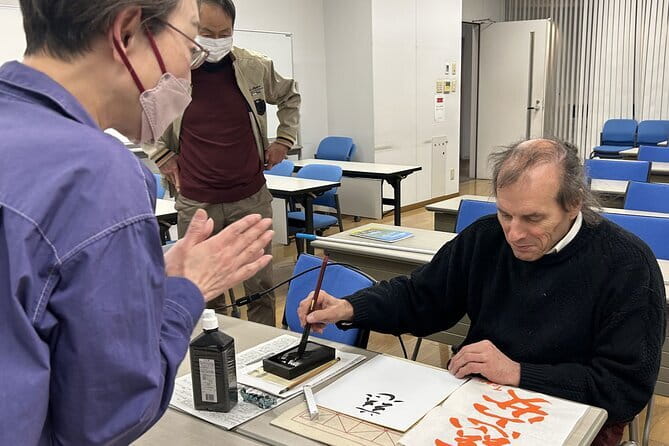
The workshop lasts about three hours. That is long enough to cover the cultural introduction, planning, guided drawing, and final details without reducing the activity to a quick demonstration.
I would reserve this for a day when you can slow down. A morning session can start a creative day in Tokyo, an afternoon option can offer a break from sightseeing, and an evening class can give you a seated activity after visiting other parts of the city.
The choice of morning, afternoon, or evening is useful, but the exact class times are not provided here. Confirm the available departure time when booking, then allow enough time to reach Hiroo. The class ends at the meeting point, which makes it easier to continue nearby or return to your accommodation.
The three-hour length is also the main consideration for families or groups with very young children. The activity is described as suitable for most people, but no specific child age policy is given. If you are booking for a child, confirm the age details before paying.
Drinks, snacks, and a hands-free start
All drawing tools and materials are included. You do not need to pack pens, paper, pencils, or other art supplies, which is helpful when your Tokyo luggage is already full.
Drinks and snacks are included as well. They are small comforts, but they make a difference during a seated creative session. You can concentrate on the drawing rather than arranging refreshments during the class.
The practical advice is simple: bring your booking details, enthusiasm, and any personal idea you may want to draw. You do not need experience or advance preparation. If you already have a favorite character or a rough story in mind, it may help you decide quickly once the creative part begins, but the class is designed to help you develop an idea on the spot.
The finished artwork as a Tokyo souvenir
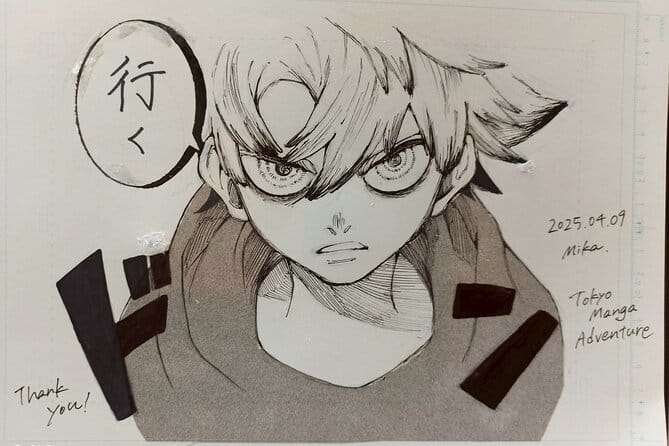
At the end, you take your completed manga artwork home. This is a more personal souvenir than a purchased print because you have created it through the full process.
The quality will depend on your own drawing experience and how much detail you attempt. A beginner should not judge the class by expecting a professional-level page after one session. The better measure is whether you finish with a clear understanding of manga’s basic workflow and a piece that records your time in Tokyo.
The finished work can also help you continue at home. You will have tried composition, expressions, poses, line work, and shading in one session. Those ideas are easier to remember when connected to something you made yourself.
For serious manga fans, the artwork is only part of the value. The class also provides a look at the tools and working methods behind the finished images you normally see on a page or screen.
Is $100 a fair price?
The price is $100 per person. That is not a casual drop-in art lesson, so value depends on how much you want from the experience.
For the money, you receive about three hours of instruction, a professional artist’s guidance, all drawing materials, drinks, snacks, the manga history introduction, and a finished piece to take home. The six-person maximum strengthens the value because you are paying for more than a one-way demonstration.
I would consider it good value for someone who already likes manga and wants an activity connected to Japanese culture. It is also a sensible choice for a first drawing class because you do not need to buy supplies or know the tools in advance.
The price is harder to justify if your main goal is simply to buy manga merchandise or obtain a polished illustration made by someone else. This is a hands-on workshop. You pay for instruction, time, and the chance to make the page yourself.
The free cancellation policy adds some booking flexibility. You can cancel for a full refund at least 24 hours before the start time. Changes or cancellations inside that period are not accepted for a refund, and the cut-off follows local Tokyo time.
Who will enjoy this Hiroo workshop most?
I would recommend this activity to:
- Manga and anime fans who want to make something rather than only shop for it
- Beginners who appreciate clear, step-by-step guidance
- Families or friends looking for a creative Tokyo activity
- Solo participants who enjoy small-group classes
- Anyone wanting a personal souvenir with a story behind it
- Visitors who want a break from museums, temples, and long days on their feet
It may be less suitable for someone who dislikes seated activities or wants a fast, highly polished result. It also may not suit a visitor with only a narrow gap between other bookings, since the class takes about three hours and requires transport to Hiroo.
Most people can participate, according to the activity details. Still, the available information does not specify accessibility arrangements, age limits, or whether the venue has any special facilities. Ask the provider directly if those points are important for your booking.
Should you book the manga drawing workshop?
Book it if you want a personal Tokyo memory and like the idea of learning by doing. The small group, patient step-by-step format, and access to manga tools give the session more substance than a simple craft souvenir.
I especially like the balance between cultural background and practical work. You learn where manga fits into Japanese creative culture, then put the basic ideas into practice through your own character, pose, and page.
Skip it if you want a brief activity, a private lesson, or a guaranteed professional-looking illustration. For everyone else, $100 is a reasonable price for three hours of instruction, supplies, refreshments, and artwork you create yourself.
FAQ
Where does the Tokyo manga workshop start?
It starts at Lawson, 1-chōme-16-3 Hiroo, Shibuya, Tokyo 150-0012, Japan.
Where does the activity finish?
The workshop ends back at the meeting point.
How long does the manga drawing experience last?
The experience lasts approximately three hours.
How many people can join the workshop?
The maximum group size is six participants.
Do I need previous manga drawing experience?
No. Beginners are welcome, and all tools and instructions are provided.
Are drawing tools and materials included?
Yes. The tools needed for drawing manga are included.
Are drinks and snacks provided?
Yes. Drinks and snacks are included in the activity.
Can I choose what to draw?
Yes. You can create an original story or drawing, or draw one of your favorite characters.
Are different class times available?
Yes. You can choose from morning, afternoon, or evening classes, subject to availability.
Is cancellation free?
You can cancel for a full refund at least 24 hours before the experience start time. Cancellations or changes made less than 24 hours before the start time are not accepted for a refund.
New on our Tokyo list
- From Tokyo: Mount Fuji & Hakone Full Day Private Tour★ 4.9 · 25 reviews
- Tokyo Spectacular View Day-Cruise in 90 Minutes★ 5.0 · 25 reviews
- Real Tokyo Runner Club : Daikoku Car Meet Night Tour with JDM Car★ 5.0 · 25 reviews
- 2.5 Hour-Guided Cycle Tour in the Central Tokyo★ 5.0 · 25 reviews
- Ramen Making from Scratch +Akihabara Tour –Cooking Class★ 5.0 · 25 reviews
- [Self-Drive] Tokyo & Daikoku Custom Car Driving Tour★ 4.9 · 25 reviews
- Tokyo: 2-Hour Night Bike Tour of the City’s Hidden Gems★ 4.9 · 25 reviews
- Samurai themed Entertainment show in Shinjuku★ 4.5 · 25 reviews
Anime & Pop Culture Tours, compared.

Tokyo Go Kart: Asakusa, Skytree, and Akihabara **IDP MUST**
Read our review →
Akihabara Anime & Game Adventure Walking Tour (Group or Private)
Read our review →

Akihabara Tailor-made Private Tour for Anime Fans
Read our review →
Ramen Making from Scratch +Akihabara Tour –Tokyo Cooking Class
Read our review →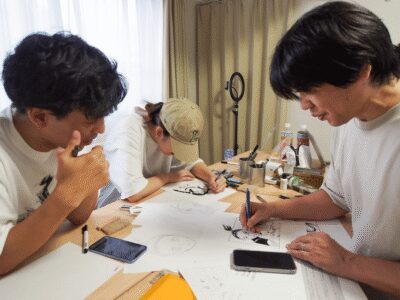
Manga Drawing Workshop Guided by Pro Manga Artist
Read our review →Browse the lists this tour appears in