
Reviewed · TSUKIJI & TOYOSU MARKET TOURS
Tokyo’s Must-Sees: 5-hour Tsukiji, Akihabara & Asakusa Tour
Tokyo packs several very different worlds into a small area, and this five-hour walking tour links three of the city’s most recognizable neighborhoods. You begin at Tsukiji Honganji Temple, taste seafood at Tsukiji Market, browse Akihabara’s game and anime shops, then finish in old Tokyo at Asakusa.
I like the small group size, capped at seven people, and the fact that lunch, food tastings, a certified guide, and tour photos are included. The main drawback is the pace: you cover a lot of ground, use trains between areas, and walk for much of the morning. This is not the right pick if you need frequent rests or dislike a tight schedule.
In This Review
- Key Points to Know
- Three Tokyo Districts in Five Hours
- Tsukiji Honganji Temple Sets the Tone
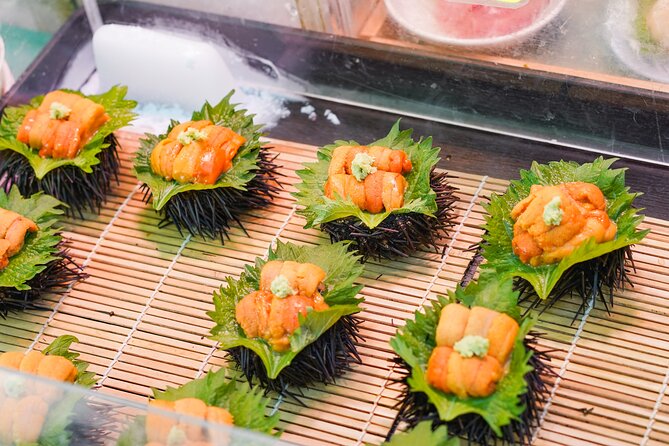
- Tsukiji Market, With Two or Three Tastings
- Akihabara: Super Potato and Tokyo’s Game Culture
- A Short Ride and a Change of Mood
- Kaminarimon Gate and Asakusa’s Old Tokyo
- Lunch in Asakusa
- What the Guide Adds
- Is $101.74 a Fair Price?
- Pace, Weather, and Practical Comfort
- Who Should Book This Tokyo Tour?
- FAQ
- Where does the tour start?
- What time does the experience begin?
- Where does the tour end?
- Are train fares included?
- Are vegetarian and vegan meals available?
- Is the tour suitable for people with mobility issues?
Key Points to Know
- Three very different Tokyo districts: Move from Tsukiji’s food stalls to Akihabara’s pop culture shops, then to Asakusa’s temples and old streets.
- Small groups of up to seven: The size allows more room for questions and makes city travel easier than with a large coach group.
- Food is part of the experience: You receive two or three market tastings and lunch in Asakusa, with vegetarian and vegan options available if requested ahead of time.
- Akihabara gets the most time: About two hours and 10 minutes are set aside for Super Potato, Akiba Cultures Zone, and nearby sights.
- Photos are handled for you: The guide takes tour photos and sends them to you, so you can focus on the walk.
- Budget an extra 390 yen: Train fares are not included, though an IC card can be used.
Three Tokyo Districts in Five Hours
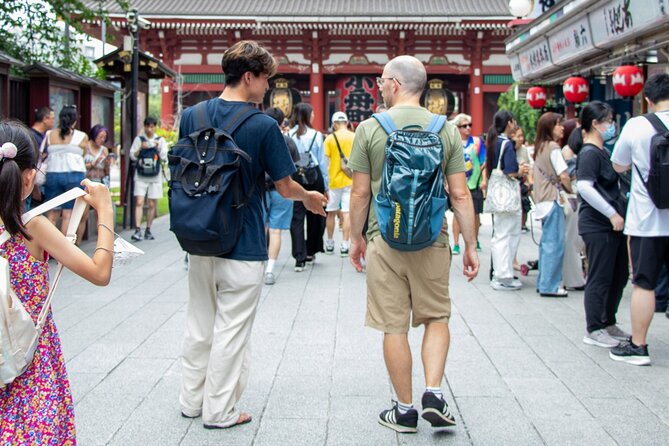
The clever idea here is not simply seeing famous sights. It is seeing how sharply Tokyo changes from one neighborhood to the next.
Tsukiji gives you food, temples, and market culture. Akihabara shifts the mood to video games, anime, and electronics-related pop culture. Asakusa brings you back to traditional temple grounds and the older side of the city. If you have only a short stay in Tokyo, this route gives you a quick orientation without asking you to plan every train ride and meeting point yourself.
The tour starts at 9:30 am and ends in Asakusa after lunch. That ending is useful. You are left in one of Tokyo’s major sightseeing districts, rather than sent back to the morning starting point. You can continue exploring on your own or return to your hotel from Asakusa.
The tradeoff is that this is an introduction, not a slow neighborhood study. You will get a taste of each place, but you will not have hours to shop, linger over meals, or visit every temple building.
More market mornings in Tokyo:
- Tokyo Tsukiji Fish Market Food and Culture Walking Tour
★ 5.0 · 3,184 reviews - Tokyo: Tsukiji Fish Market Food and Walking tour
★ 5.0 · 1,724 reviews - Tokyo: Tsukiji Fish Market Guided Walking Tour
★ 4.9 · 1,397 reviews
Tsukiji Honganji Temple Sets the Tone
Meet your guide at the main gate of Tsukiji Honganji Temple, at 3-chome-15-1 Tsukiji. This is a practical meeting point near public transportation and gives the morning a calm start before the market crowds and shop-lined streets.
The temple is under the jurisdiction of Nishi Honganji in Kyoto. Its role in the tour is brief, about 20 minutes, but it gives your guide a chance to explain the setting and basic Buddhist temple customs before you begin eating and walking through Tsukiji.
You do not pay an admission fee here. The short stop also helps the group gather before moving into the market area. Arrive early. The tour begins on time, and if you miss the group, you cannot join later, receive a refund, or reschedule.
Tsukiji Market, With Two or Three Tastings
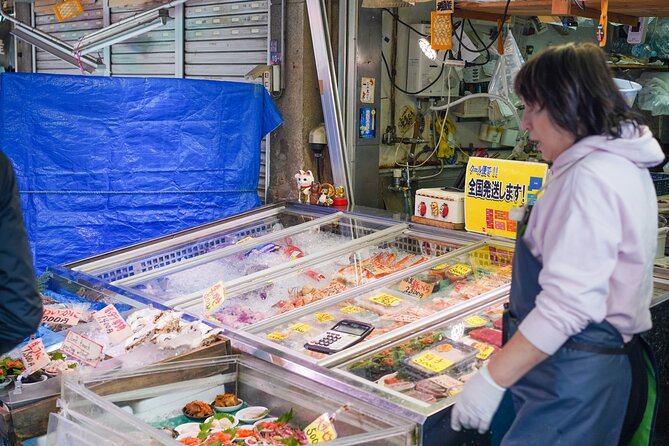
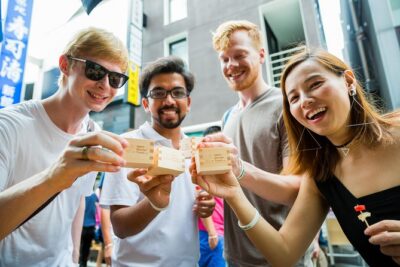
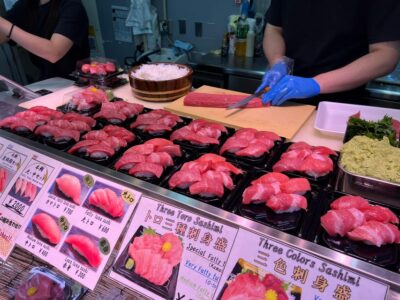
From the temple, you walk through Tsukiji Fish Market for about an hour. The focus is on the market’s food stalls and local specialties, with two or three tastings included in the tour price.
This is a good place to have a guide. Tsukiji can feel like a maze of small shops and food counters, and the best way to enjoy it is to follow someone who can explain what you are seeing and help keep the group moving. Your guide will point out market foods and arrange the included samples, while you get a chance to taste fresh seafood and other local items.
Keep your expectations in check. The experience is a market walk with tastings, not a full food crawl. Additional food and drinks cost extra, which is sensible because you may want to buy something else once you see the choices.
Tsukiji is also one of the more crowded sections of the route. The walk uses your eyes, ears, nose, and appetite all at once, but it can feel hectic. Stay close to your guide and keep your belongings secure. The schedule allows about an hour, so you should not count on sitting down for a long meal here.
Akihabara: Super Potato and Tokyo’s Game Culture
The tour then heads to Akihabara, where you spend about two hours and 10 minutes. That is the longest stop, and it makes sense. Akihabara is best understood by walking through its shops and side streets rather than by ticking off one monument.
The guide introduces you to Tokyo’s game and anime culture, with stops including Super Potato and Akiba Cultures Zone. These names matter if you are interested in retro games, Japanese animation, character goods, or the visual side of modern Tokyo. Even if you are not a serious collector, Akihabara gives you a clear look at a part of city life that is hard to understand from a standard sightseeing bus.
I especially like the time allocation here. Many short Tokyo tours rush through Akihabara in 30 minutes, which is barely enough to get oriented. More than two hours gives you room to look around and ask questions.
Still, this is not a shopping expedition with unlimited free time. The group has to stay together, and the guide controls the route. If you already know exactly which store or item you want, a self-guided visit might suit you better. If you want context and a first introduction, the guided walk is more useful.
The route includes train travel, including the move toward Ueno before the Asakusa portion. Train fares are not included. The total train cost is listed as 390 yen, and you can pay with cash or use an IC card. Bring enough cash if you do not have a rechargeable transit card.
More anime and pop-culture days:
- Official Street Go-Kart Tour – Akihabara
★ 5.0 · 1,578 reviews - Tokyo Go Kart: Asakusa, Skytree, and Akihabara **IDP MUST**
★ 5.0 · 988 reviews - Akihabara Anime & Game Adventure Walking Tour (Group or Private)
★ 5.0 · 404 reviews - Tokyo: Gameboy Mod Workshop at Akihabara
★ 5.0 · 253 reviews
A Short Ride and a Change of Mood
One of the pleasures of this tour is the change between districts. You begin with a market and temple, move into gaming and anime culture, then reach Asakusa, where the atmosphere turns toward Tokyo’s older religious and shopping traditions.
The train segment also lets you experience the city as a local does, rather than spending the full tour in a private vehicle. That keeps the price lower and makes the route feel more connected to everyday Tokyo. The downside is simple: stations and trains add walking, stairs, and a little time pressure.
For that reason, I would wear comfortable shoes and travel light. The route is manageable for most people, but it is not designed around mobility limitations. People of all ages can join, yet the operator does not recommend this activity for people with walking difficulty. A private tour is suggested if your group needs a slower pace or more flexibility.
Kaminarimon Gate and Asakusa’s Old Tokyo
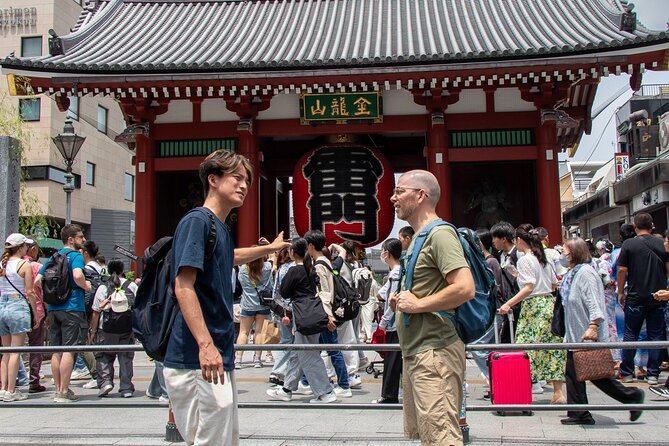
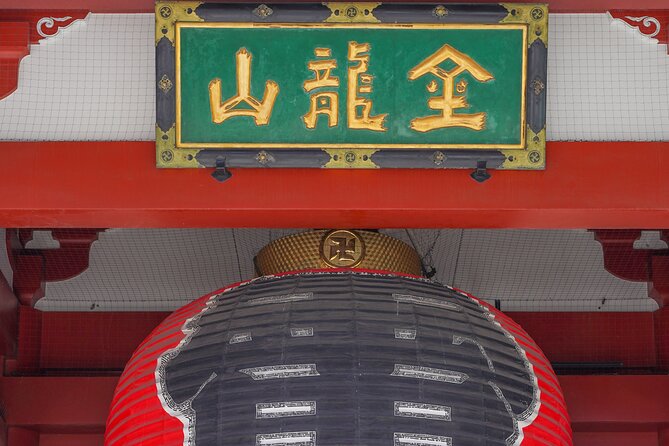
The final area is Asakusa, with about 40 minutes for the district and another 30 minutes around Kaminarimon Gate. This is where the tour’s historical side comes forward.
Kaminarimon, or the Thunder Gate, is one of Asakusa’s best-known entrances. From there, you enter an older part of Tokyo, with much of the area preserved in the form people expect from a traditional city visit. The guide gives you a simple way to read the district instead of leaving you to wander without context.
Asakusa can be crowded, especially around the gate and temple approach. That is part of its appeal, but it also means you should not expect a quiet temple visit. The tour is about seeing the main sights and learning how the area fits together.
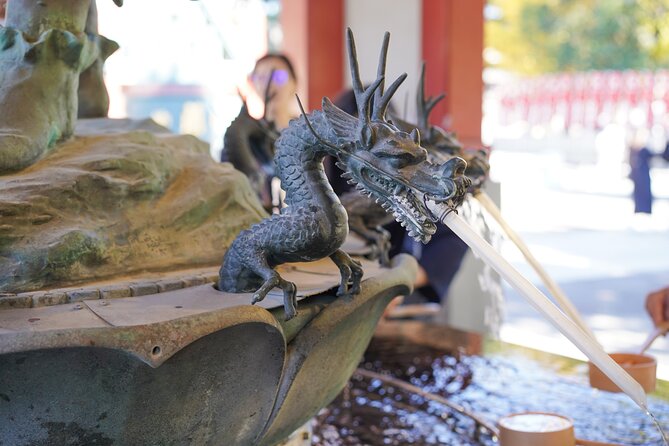
The group ends the sightseeing portion near Senso-ji Temple, Japan’s oldest temple. You will walk around the grounds and learn how to pray at a Japanese temple. That practical instruction is valuable because temple etiquette can seem mysterious when you are on your own. You get a chance to observe respectfully rather than simply take photos and move on.
The temple stop itself is listed at about 20 minutes, so it is a primer, not a detailed religious tour. If Senso-ji is a top priority for you, return later on your own for more time.
Lunch in Asakusa
Lunch is included and comes at the end of the tour in Asakusa. This is a welcome arrangement after a morning of walking and tasting. You do not need to search for a restaurant while trying to keep up with the schedule, and you can finish the activity with the guide’s help nearby.
Vegetarian and vegan options are available by advance request. Tell the operator at least one day before the tour if you have dietary needs or allergies. Requests made on the day cannot be accommodated, and allergy-free meals cannot be guaranteed because the food is prepared in kitchens the tour company does not control.
Additional drinks and food are not included. That gives you some flexibility, but keep a little spending money available if you want something beyond the planned lunch and market samples.
What the Guide Adds
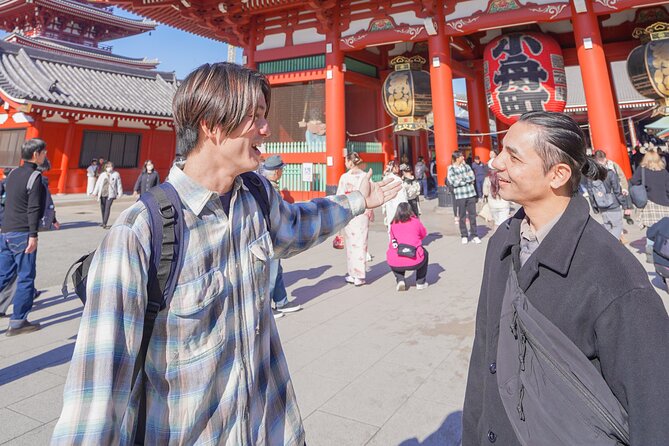
A certified MagicalTrip guide leads the experience. The guide’s role is more than pointing out buildings. You receive explanations at the temple, help with market tastings, an introduction to Akihabara’s niche culture, and guidance on temple prayer customs.
The small group limit matters here. With no more than seven people, you have a better chance of hearing the guide in crowded areas and asking a question without holding up a large crowd. It also makes the train transfers less awkward.
Guides named Kenji and Hana have led this experience. Kenji has been described as friendly, generous, and informative, while Hana has been praised for clear explanations and a warm manner. The specific guide depends on the date, so treat those names as examples rather than a promise.
A thoughtful extra is the photo service. The guide takes pictures during the day and sends them to you afterward. You will still want to take your own photos, but this removes some pressure, especially during the market walk and group transitions.
Is $101.74 a Fair Price?

At $101.74 per person, this is not a bargain-priced walking tour. It is also more than a simple guide-led neighborhood stroll because the price includes a certified guide, two or three food samples, lunch, and tour photos.
The value improves if you would otherwise pay for separate food stops and need help planning three areas across Tokyo. You are also paying for convenience: one meeting point, a fixed route, a guide who handles the transitions, and an ending in Asakusa rather than a return trip to Tsukiji.
You should add 390 yen for trains, plus money for extra food and drinks. Even with those costs, the tour can make sense for a first day in Tokyo or a short visit when your planning time is limited.
The price is harder to justify if you are comfortable using Tokyo’s trains, already know which Akihabara shops you want, or prefer to spend an entire morning in one district. In that case, self-guided visits will give you more freedom for less money.
Pace, Weather, and Practical Comfort
Plan for a full five hours of walking with a few short breaks. The operator says most people can participate, but the tour is not recommended for people with mobility issues. Let the company know beforehand if anyone in your group has health concerns.
Tokyo weather can be severe. Summer temperatures may reach 40°C, while winter temperatures can fall to -5°C. Wear suitable clothing, carry water in hot weather, and prepare for cold conditions in winter. The tour may be canceled for unsafe weather, with a different date or full refund offered.
The activity is generally family-friendly because all ages can join, but the pace may be tiring for young children or anyone who needs long rest periods. A private tour is the better option if your group needs changes to the route or schedule.
Free cancellation is available up to 24 hours before the 9:30 am start time. If you cancel later, the payment is not refunded. The same 24-hour limit applies to changes.
Who Should Book This Tokyo Tour?
I would choose this tour if you want a fast first look at Tokyo and care more about seeing several distinct areas than spending a whole day in one place. It is especially useful during a short stay, when Tsukiji, Akihabara, and Asakusa are all on your list but you do not want to work out the route yourself.
Food lovers get a useful introduction to Tsukiji, while anime and game fans benefit from the long Akihabara stop. The temple visits give the day a traditional counterweight, and lunch keeps the schedule simple.
I would skip it if you need a slow pace, have significant walking limitations, or want long, unstructured time for shopping and photography. You should also look elsewhere if you want a deep visit to Senso-ji or a full market lunch rather than a few tastings.
For most first-time visitors with limited time, the combination is smart. You see three sides of Tokyo, eat along the way, use public transportation, and finish in a district worth exploring after the tour ends.
FAQ
Where does the tour start?
The tour starts at the main gate of Tsukiji Honganji Temple, at 3-chome-15-1 Tsukiji, Chuo City, Tokyo 104-0045, Japan.
What time does the experience begin?
The tour begins at 9:30 am. You must arrive on time because late arrivals who miss the group cannot join, receive a refund, or reschedule.
Where does the tour end?
The tour ends in Asakusa, Taito City, Tokyo 111-0032, after lunch.
Are train fares included?
No. Train fees are not included. The listed train cost is 390 yen, and you can use cash or an IC card.
Are vegetarian and vegan meals available?
Yes. Vegetarian and vegan options are available if requested in advance. Dietary requests and allergies must be provided at least one day before the tour, and allergy-free meals cannot be guaranteed.
Is the tour suitable for people with mobility issues?
The tour includes considerable walking and only a few short breaks. Most people can participate, but it is not recommended for people with mobility issues. A private tour is suggested if walking is difficult.
More Asakusa Visits
- Tokyo: Japanese Dance Cabaret Theater Asakusa-Kaguwa Ticket
★ 4.8 · 2,270 reviews - Tokyo: Meiji Shrine, Asakusa, Skytree Bus Tour and Cruise
★ 4.7 · 1,986 reviews - Tokyo: Roll and Authentic Sushi Making Class in Asakusa
★ 4.9 · 1,957 reviews - Tokyo: Asakusa Walking Tour with Sensoji Temple Visit
★ 4.8 · 1,583 reviews
New on our Tokyo list
- From Tokyo: Mount Fuji & Hakone Full Day Private Tour★ 4.9 · 25 reviews
- Tokyo Spectacular View Day-Cruise in 90 Minutes★ 5.0 · 25 reviews
- Real Tokyo Runner Club : Daikoku Car Meet Night Tour with JDM Car★ 5.0 · 25 reviews
- 2.5 Hour-Guided Cycle Tour in the Central Tokyo★ 5.0 · 25 reviews
- Ramen Making from Scratch +Akihabara Tour –Cooking Class★ 5.0 · 25 reviews
- [Self-Drive] Tokyo & Daikoku Custom Car Driving Tour★ 4.9 · 25 reviews
- Tokyo: 2-Hour Night Bike Tour of the City’s Hidden Gems★ 4.9 · 25 reviews
- Samurai themed Entertainment show in Shinjuku★ 4.5 · 25 reviews
Tsukiji & Toyosu Market Tours, compared.
Tokyo Tsukiji Fish Market Food and Culture Walking Tour
Read our review →

Tokyo Sushi Making Class in Tsukiji with Professional Chef
Read our review →
Tsukiji Fish Market Guided Tour and Sushi Making with Pro Chef
Read our review →Tsukiji Fish Market Food and Culture Walking Tour
Read our review →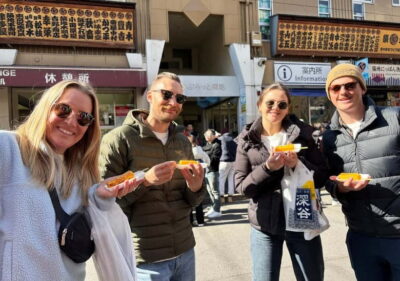
Tsukiji Fish Market: Street Food & Culture Walking Tour
Read our review →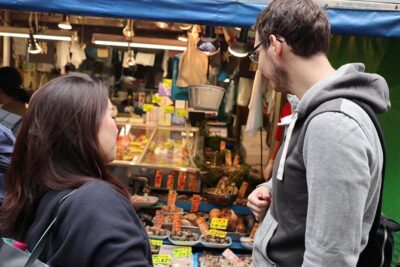
Tsukiji Fish Market Small-Group Food Walking Tour
Read our review →Browse the lists this tour appears in