
Reviewed · TEMPLE & SHRINE TOURS
Tokyo: Meiji Jingu Cultural Walking Tour with Japanese Historian
Meiji Jingu is not just a quiet patch of trees beside Harajuku. It is a living Shinto shrine with links to Emperor Meiji, Japanese ideas about nature, and the rituals you will see all over Japan. This tour helps you read the place rather than simply photograph it. I like the clear English explanations and the chance to ask questions. I also like the small private format, which keeps the pace relaxed.
The main thing to consider is that this is a cultural walking tour, not a fast checklist of Tokyo sights. You will spend most of the time on foot, and visitors looking mainly for photo stops may find the explanations more detailed than they need.
In This Review
- Key points at a glance
- Why Meiji Jingu makes a good classroom
- Entering through the torii and forest
- Learning what kami means at Meiji Jingu
- The story of Emperor Meiji and the shrine
- Reading the rituals, water, and sacred spaces
- Why the private format changes the experience
- What the $19.55 price really gives you
- Who will get the most from this walk
- Practical details before you reserve
- Should you book the Meiji Jingu cultural walk?
- FAQ
- How long does the Meiji Jingu cultural walking tour last?
- How much does the tour cost?
- Is admission to Meiji Jingu included?
- Is the tour conducted in English?
- Who leads the tour?
- Is this a private tour?
- Where does the tour start and finish?
- Can most people participate?
- Can I cancel for a full refund?
Key points at a glance
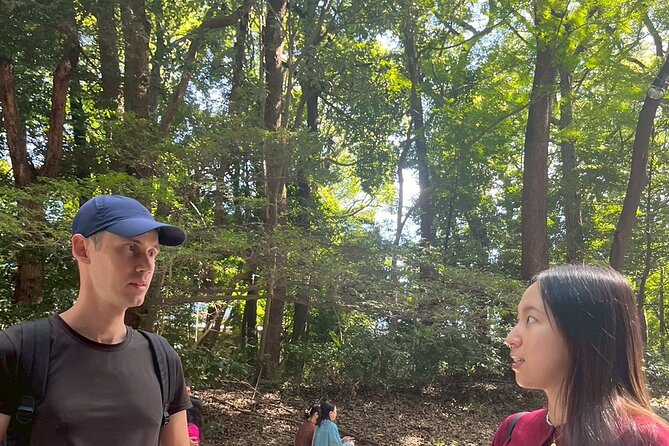
- Japanese student historians lead the walk: Guides such as Noriko and Shota have explained Meiji Jingu in both Japanese and English.
- Shinto is explained in plain terms: You learn about kami, nature, ancestors, shrine spaces, and everyday Japanese values.
- The shrine itself is the main attraction: Expect grand torii gates, forested paths, pure water, sacred areas, and the history of Emperor Meiji.
- Private format keeps it personal: Only your group takes part, so questions and discussion fit naturally into the walk.
- About two hours for $19.55: Shrine admission is included, making this a modestly priced way to add context to a major Tokyo sight.
- Good for first visits to Japan: The tour gives you a useful guide to shrine behavior and cultural meaning before you visit other sacred sites.
Why Meiji Jingu makes a good classroom
The most useful thing about this experience is its setting. Meiji Jingu gives you a real place in which to understand Shinto, rather than a lecture in a classroom or a museum room. As you move through the grounds, the guide can connect what you see with ideas about kami, nature, ancestors, ritual, and national identity.
That matters because many first-time visitors can spot a torii gate or a purification fountain but may not know what those features mean. A guide helps turn familiar-looking objects into part of a larger system. You learn why a shrine has certain spaces, how people behave there, and why Shinto is not limited to formal worship.
I especially like the way this approach fits Meiji Jingu. The shrine is large, peaceful, and full of symbolic details. Without context, you may simply notice the trees and the broad paths. With an English-speaking Japanese guide, those same details can open a discussion about Japan’s past and present.
The guides are Japanese student historians, and the experience is also described as being led by a certified volunteer guide trained by Meiji Jingu. That combination gives the walk a useful balance: you get structured information about the shrine while still having room for a friendly conversation. Guides named Noriko and Shota have led walks in both Japanese and English, and the English explanations have been praised for being easy to follow.
More temples and shrines near Tokyo:
- Tokyo: Meiji Shrine, Asakusa, Skytree Bus Tour and Cruise
★ 4.7 · 1,986 reviews - Tokyo: Asakusa Walking Tour with Sensoji Temple Visit
★ 4.8 · 1,583 reviews - Nikko: Kegon Falls, Lake Chuzenji & Toshogu Temple
★ 4.6 · 1,577 reviews
Entering through the torii and forest
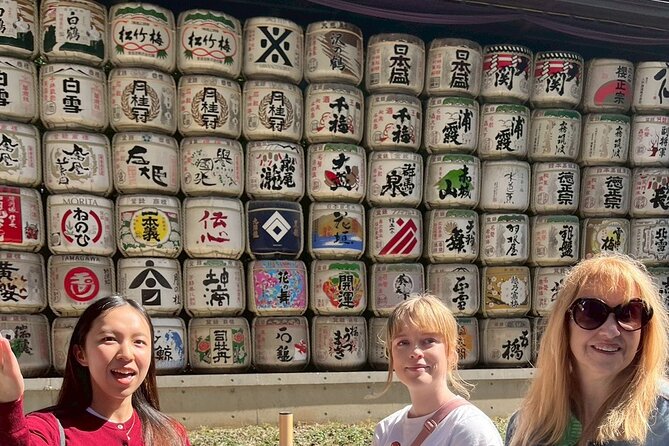
The walk takes place at Meiji Jingu Shrine, beginning from the meeting point at 1-chōme-14-30 Jingūmae in Shibuya. The exact meeting address matters in this part of Tokyo, where several major attractions and busy streets sit close together. Check the address carefully before setting out, and allow enough time to reach it by public transportation.
Once inside the shrine grounds, the mood changes quickly. The tour brings you away from the noisy energy associated with Harajuku and into a broad, green setting. The quiet is part of the experience, not just a pleasant background. It helps you notice that a shrine can function as a place of calm, ceremony, memory, and contact with the natural world.
Your guide introduces the basic role of a Japanese shrine and explains what Shinto is. This foundation is important. If you have never visited Japan, you may otherwise treat shrine customs as a series of rules with no obvious reason. The walk gives those customs a cultural frame before moving to individual features.
The tour is not built around rushing from one landmark to the next. The emphasis is on understanding. That makes the pace especially useful if you are curious about Japanese society and identity, but less useful if you want to cover several unrelated sights in a short morning.
Learning what kami means at Meiji Jingu
One of the central themes is kami. The guide explains the idea in connection with nature and ancestors, helping you understand why Shinto does not fit neatly into the categories many Western visitors bring with them. The point is not simply to memorize a definition. It is to see how the idea affects the way sacred places are treated.
You also learn how Shinto can shape everyday values, not only formal religious practice. This is a valuable distinction. Many visitors see shrine visits as a special activity, yet the ideas behind them can also connect with respect for place, family, nature, purity, and community.
The guide can then connect these broad ideas to what is in front of you. The path, trees, water, gates, and shrine buildings are not random design choices. They help create a gradual movement from ordinary city life into a sacred space. You may find that the tour changes the way you look at every shrine you visit afterward.
Because the activity is private, you can ask questions without worrying about slowing down a large group. That is a real advantage here. Shinto has concepts that can be hard to translate into a single English word, and a personal exchange gives the guide time to explain an idea from another angle.
The story of Emperor Meiji and the shrine
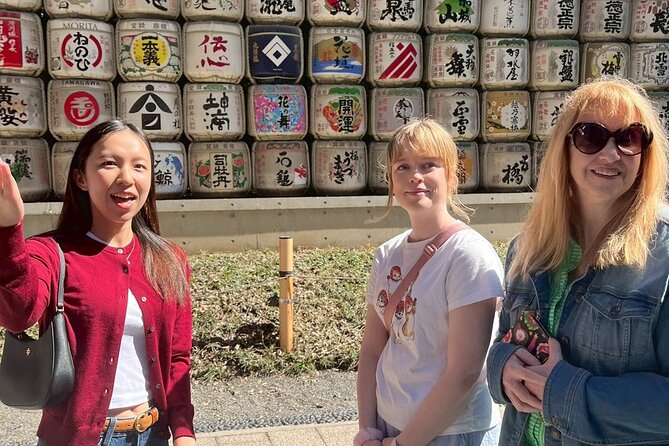
Meiji Jingu is also tied to Emperor Meiji, and the tour explains why the shrine was built and whom it enshrines. This gives the visit a strong historical focus in addition to its religious one.
The guide discusses Emperor Meiji and the period associated with him, along with the shrine’s place in Japan’s national story. That context helps you understand why Meiji Jingu is more than an old religious site. It also reflects the way modern Japan has remembered its imperial past.
This part may be especially useful if your knowledge of Japanese history is limited to a few familiar names. You do not need to arrive with background reading. The tour is designed for first-time visitors as well as people already interested in history, tradition, and society.
At the same time, it is worth keeping your expectations sensible. The experience lasts about two hours, so it cannot provide a full history of the Meiji period or Japan’s imperial system. You get a focused explanation of Meiji Jingu, Emperor Meiji, and the cultural questions surrounding the shrine.
The strength is the connection between place and story. Instead of hearing dates in isolation, you hear why this site was created and why it still matters. That makes the information easier to remember once you leave the grounds.
More walking routes in Tokyo:
- Tokyo Tsukiji Fish Market Food and Culture Walking Tour
★ 5.0 · 3,184 reviews - Tokyo: Imperial Palace and Shogun Historical Walking Tour
★ 5.0 · 2,251 reviews - Tokyo: Shinjuku Local Bar and Izakaya Guided Walking Tour
★ 4.9 · 1,794 reviews - Tokyo: Tsukiji Fish Market Food and Walking tour
★ 5.0 · 1,724 reviews
Reading the rituals, water, and sacred spaces
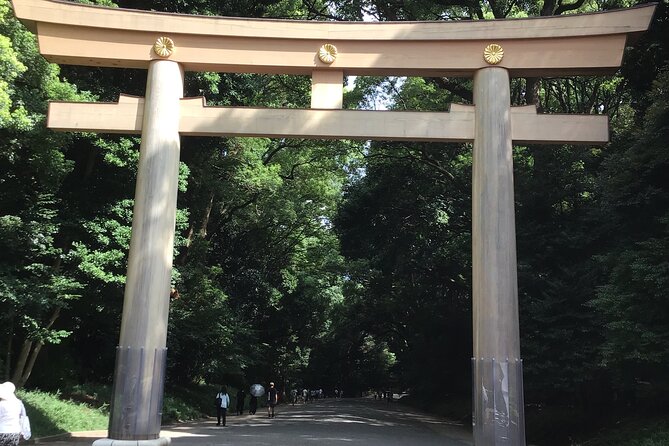
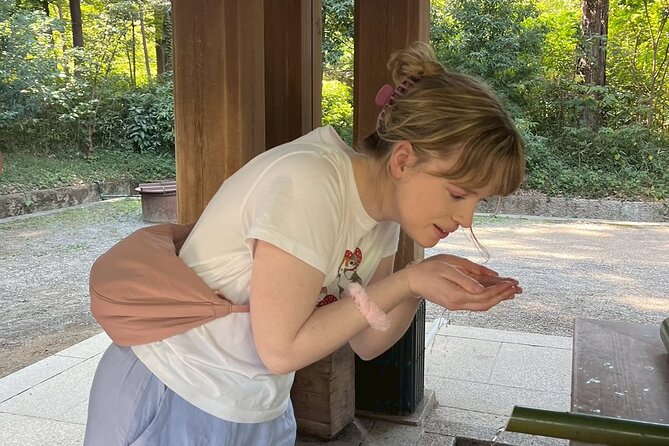
The walk also explains the meaning behind rituals and shrine architecture. You may hear about the role of water and the importance of purity, as well as the way visitors approach and move through a shrine. The supplied details specifically point to pure water, sacred spaces, and the ritual side of the visit.
This is where a guide can save you from the common mistake of treating a shrine like a monument. You are not only looking at buildings. You are entering a place with expected forms of conduct and a different sense of space.
The guide can explain what you are seeing at the right moment, which is more useful than reading a general description later. A question about a gate, a ritual, or a building can lead into a wider explanation of Shinto practice.
The tour also includes unusual museum exhibits among the things you may encounter. The details do not promise a separate museum visit or a guaranteed amount of time inside an exhibit area, so I would not book this specifically as a museum tour. Still, the mention adds another layer to the visit beyond paths and architecture.
The walk lasts about one hour and 30 minutes at the shrine, while the overall experience is listed at approximately two hours. That leaves room for the meeting and return to the starting point. Wear comfortable shoes and expect a walking-based visit, though most people can take part.
Why the private format changes the experience
This is a private activity, so only your group participates. That setup is one of the strongest reasons to choose it over a large sightseeing walk. You can ask about a detail that catches your eye, pause to clarify a term, or steer part of the conversation toward history or daily life.
The small format also suits families, couples, and solo visitors who prefer a quieter exchange. It does not guarantee that every question will receive a long answer, but the structure gives you a better chance to have a real conversation than a crowded group tour usually allows.
The guides are student historians, which shapes the tone. You can expect a youthful, energetic approach rather than a formal lecture. Several guide experiences have included practical advice for the rest of a Japan trip, so you may get useful suggestions alongside the shrine interpretation.
I would still remember that a student guide may have a different style from a professional historian or a licensed national guide. One guide may focus more on rituals, another on Emperor Meiji, and another on contemporary culture. That variety can be a strength, but visitors seeking an academic seminar should choose with realistic expectations.
What the $19.55 price really gives you
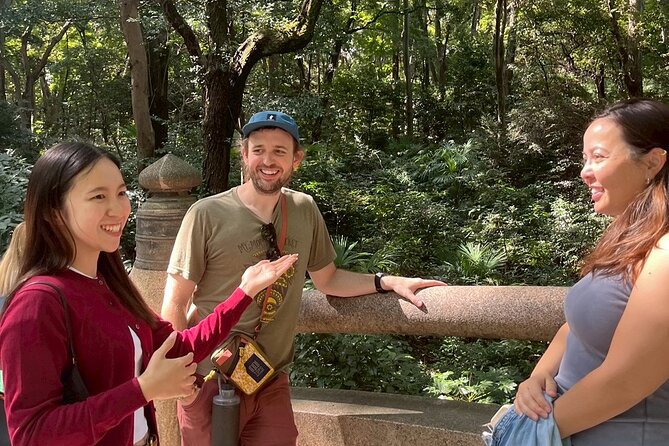
At $19.55 per person, this is a low-cost way to add meaning to one of Tokyo’s major cultural sites. Admission to Meiji Jingu is included, and the activity provides about two hours of English-guided time in a private setting.
The value is not in the number of places covered. You visit one shrine. The value comes from having someone explain what you are looking at and why it matters. If you would otherwise walk through Meiji Jingu, take photographs, and leave with only a general impression, the guide can make the same visit much more memorable.
The price also compares well with the personal format. A private tour often costs much more, especially in Tokyo. Here, the modest fee gives you direct access to a guide and space for questions.
The tradeoff is scope. You are not getting a full-day Tokyo tour, transportation between sights, or a long list of included attractions. If you want a broad introduction to the city, spend your money elsewhere. If you want a focused cultural explanation at Meiji Jingu, the fee is easy to justify.
The activity is commonly booked well in advance, with an average lead time of about 42 days. That suggests you should reserve ahead if the tour fits a fixed Tokyo schedule, especially since the private format may limit available times.
Who will get the most from this walk
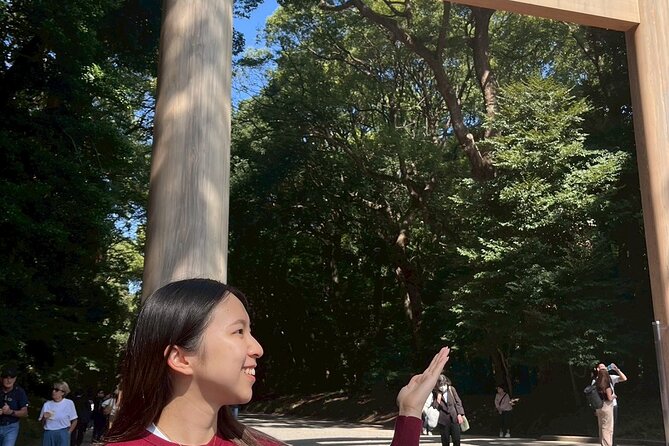
I would recommend the experience most strongly to:
- First-time visitors who want to understand shrine customs
- People interested in Japanese history, tradition, and society
- Visitors who prefer discussion to a stream of photo stops
- Solo visitors or small groups who value a private guide
- Anyone planning to visit more shrines during a Japan trip
It is also a good choice if you are beginning your Tokyo visit in the Harajuku area. The tour can give you cultural context before you encounter other shrines and temples elsewhere in the country.
You may want to skip it if you have very little time and only want a quick look at Meiji Jingu. It may also be less suitable if you dislike walking or prefer sightseeing without explanation. The tour’s success depends on your interest in asking questions and thinking about what you see.
The tone is friendly and personal. Guide feedback has highlighted clear English, bright energy, patience, and useful advice for the rest of a Japan trip. Noriko and Shota have been praised for combining Japanese and English knowledge with a warm welcome. Those are meaningful strengths for a visitor who wants cultural information without a stiff presentation.
Practical details before you reserve
You receive confirmation at the time of booking, and the ticket is mobile, so you do not need a paper voucher. The meeting point is near public transportation, and the activity returns to that same meeting point at the end.
The experience is described as suitable for most people. Since it is a walking tour through shrine grounds, comfortable footwear is the sensible choice. The available information does not give a detailed route, step count, or specific accessibility plan, so contact the provider if you have mobility needs that require precise answers.
Free cancellation is available up to 24 hours before the start time for a full refund. Changes or cancellations made less than 24 hours before the start are not accepted for a refund, and the cut-off follows local Tokyo time.
The provider is Ryota. The walk is conducted in English, with Japanese student historians and a certified volunteer guide trained by Meiji Jingu described as part of the guiding team.
Should you book the Meiji Jingu cultural walk?
Book it if you want to understand what you are seeing, not just pass through a famous shrine. For $19.55, the combination of admission, a private format, and roughly two hours of cultural explanation is strong value.
I would especially choose it early in a Japan trip. Learning about kami, purification, sacred space, Emperor Meiji, and shrine etiquette at Meiji Jingu can make later visits more rewarding. You will have a better sense of what deserves your attention.
Skip it if your plan is a rapid Harajuku photo stop or if you want a wide-ranging Tokyo tour. This is a focused walk, and its success depends on your interest in history and conversation. For curious first-time visitors, though, it offers a friendly and affordable way to see one of Tokyo’s best-known shrines with much more understanding.
FAQ
How long does the Meiji Jingu cultural walking tour last?
The experience lasts approximately two hours. The main shrine visit is listed as about one hour and 30 minutes, with the activity ending back at the meeting point.
How much does the tour cost?
The listed price is $19.55 per person.
Is admission to Meiji Jingu included?
Yes. Admission to Meiji Jingu Shrine is included.
Is the tour conducted in English?
Yes. It is an English-guided walking tour led by Japanese student historians.
Who leads the tour?
The experience is provided by Ryota. Japanese student historians and a certified volunteer guide trained by Meiji Jingu are described as the guiding team. Guides named Noriko and Shota have led tours in Japanese and English.
Is this a private tour?
Yes. Only your group participates in the activity.
Where does the tour start and finish?
It starts at 1-chōme-14-30 Jingūmae, Shibuya, Tokyo 150-0001, Japan, and ends back at the same meeting point.
Can most people participate?
Yes. The activity information says most people can participate, and the meeting point is near public transportation.
Can I cancel for a full refund?
Yes, if you cancel at least 24 hours before the experience start time. Cancellations or changes made less than 24 hours before the start are not accepted for a refund.
New on our Tokyo list
- Sumi-e Experience in a relaxing green tea shop in Tokyo★ 5.0 · 3 reviews
- Tokyo : Kamikaze Street Drift Ride★ 5.0 · 3 reviews
- Private Zen Meditation in English in Shinjuku, Tokyo★ 5.0 · 3 reviews
- Onsen Spa in Tokyo and Asakusa Bar Hopping with Local Guide★ 5.0 · 3 reviews
- Easy for everyone! Now you can play handmade mini shamisen and show off to everyone! Musical instruments, sweets and live music★ 5.0 · 3 reviews
- Tokyo: Private Tsukiji Street Food & Sake with Local Guide★ 5.0 · 3 reviews
- Mt Fuji Exploration Tour with Free Japanese Kusa Mochi from Tokyo★ 4.5 · 3 reviews
- Tokyo Tsukiji Fish Market Walking and Exploring Hidden Gems Tour★ 5.0 · 3 reviews
Temple & Shrine Tours, compared.
Meiji Shrine, Asakusa, Skytree Bus Tour and Cruise
Read our review →
Asakusa Walking Tour with Sensoji Temple Visit
Read our review →

Kamakura & Enoshima Day Trip including Temple Tickets
Read our review →
Nikko Toshogu Shrine and Kegon Waterfall Tour
Read our review →
Tokyo Panoramic 1 Day: Meiji Shrine, Asakusa, Odaiba and SKYTREE®
Read our review →
Mt. Fuji Heritage Tour: Traditional Villages, Lakes & Shrine
Read our review →Browse the lists this tour appears in