
Reviewed · TEMPLE & SHRINE TOURS
Tokyo: Meiji Jingu Shrine & Inner Garden Guided Tour (2h)
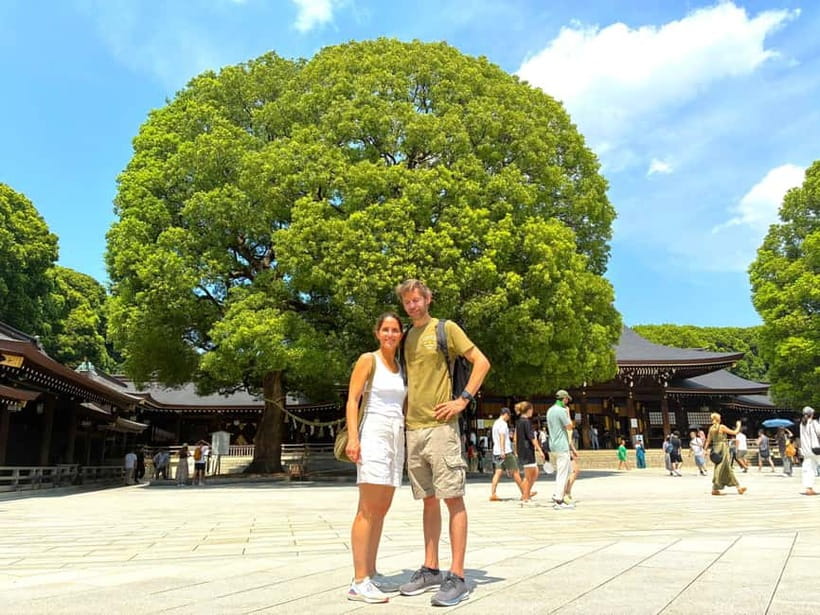
Meiji Jingu feels far removed from Tokyo’s traffic, even though Harajuku is just outside the gates. This two-hour walk takes you under towering torii, past colorful sake barrels, and into a wooded shrine precinct where Japanese Shinto customs become easier to understand. The best part is the chance to learn the small actions that make a shrine visit meaningful, rather than simply taking photos and moving on.
I like the clear cultural guidance, especially the handwashing ritual and the proper way to pray. I also like that the price includes Meiji Jingu Garden, omikuji fortune-telling, and other experience fees. The main consideration is time: the garden and Kiyomasa’s Well may receive only a brief visit if the group spends longer at the shrine.
In This Review
- Key points to know before you book
- Why Meiji Jingu works so well as a first cultural stop
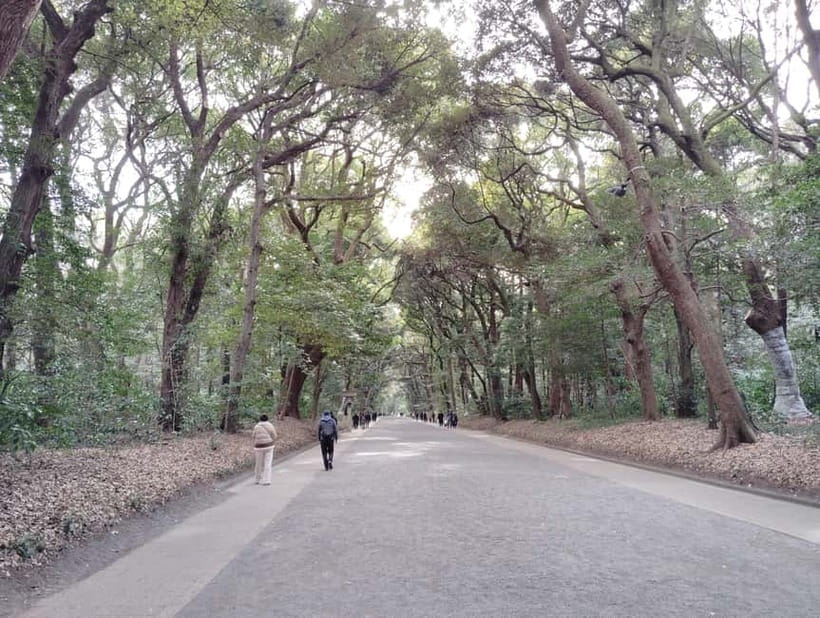
- Starting at the first torii and walking through the Eternal Forest
- Sake barrels and the meaning of the offerings
- The handwashing ritual before prayer
- Meiji Jingu and the value of a live explanation
- Omikuji, fortune-telling, and protective charms
- Shinen Garden, South Pond, and Kiyomasa’s Well
- What $48 includes and what it does not
- Timing, group style, and who will enjoy it most
- Simple preparation for a better visit
- Should you book this Meiji Jingu tour?
- FAQ
- Where does the Meiji Jingu tour meet?
- How long does the activity last?
- What language is the live tour conducted in?
- Is entry to Meiji Jingu Garden included?
- Is omikuji fortune-telling included?
- Will the tour visit Kiyomasa’s Well?
- Can I cancel the tour for a full refund?
Key points to know before you book
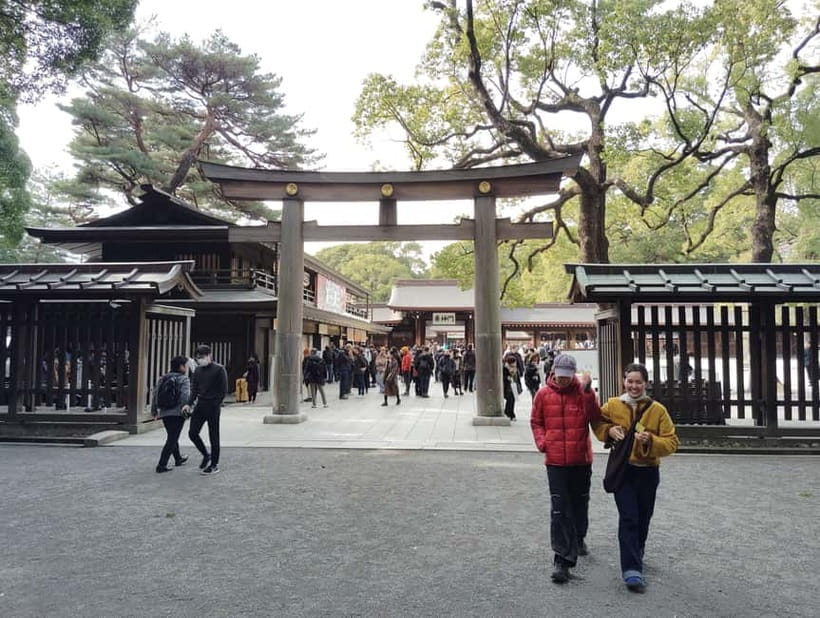
- The walk begins at the first torii: Meet your guide in front of Meiji Jingu’s Ichinotorii, marked by a yellow DeepExperience sign.
- The Eternal Forest gives the shrine its calm: You’ll walk through a broad wooded setting and learn why the forest matters to Meiji Jingu.
- You learn shrine manners in real time: The guide shows you how to wash your hands and pray, so you can continue visiting Japanese shrines with confidence.
- The garden visit is included: South Pond and, if time allows, Kiyomasa’s Well add a quieter natural side to the shrine visit.
- Guide quality is central to the experience: Minoru, Kai, Kyo, and Takashi have each been praised for clear explanations, warmth, humor, and useful cultural context.
- Small groups or private tours are available: This matters if you want more room for questions or a slower conversation.
Why Meiji Jingu works so well as a first cultural stop
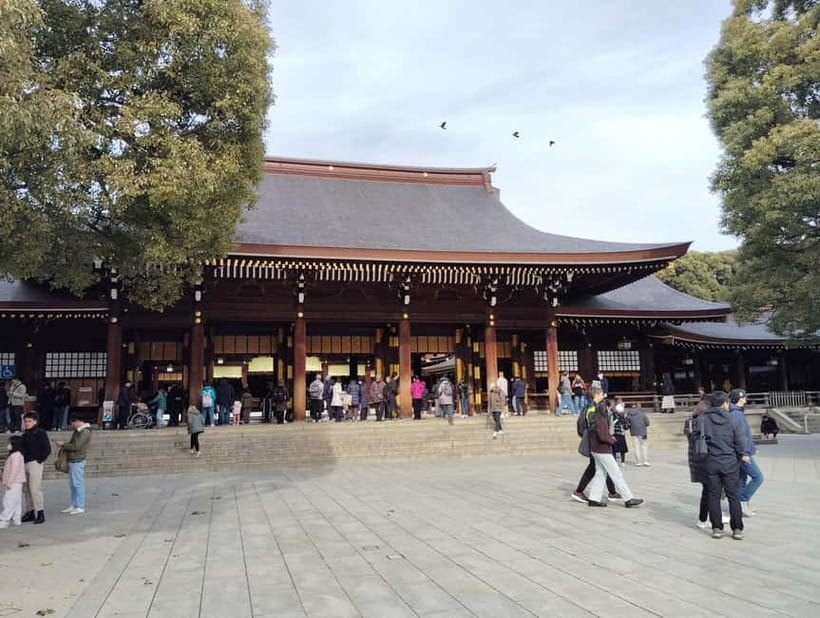
Meiji Jingu is one of the easiest places in Tokyo to feel a change of pace. You start near the first torii, close to the city, then walk into the shrine’s wooded approach. The route helps you put some distance between yourself and Tokyo’s constant movement.
The setting is not an untouched forest. The Eternal Forest was planned as part of the shrine grounds, and that idea gives the walk an important lesson in Japanese landscape design and religious space. Your guide explains the forest as more than scenery. It helps create the quiet setting needed for prayer and reflection.
I would not book this tour only for a fast checklist of famous sights. The real value is the explanation of what you are seeing. A large wooden gate, a row of sake barrels, a water basin, or a prayer hall can look attractive in a photograph while remaining hard to understand. The guide connects these details to everyday religious practice.
That makes the tour useful early in a Japan trip. Once you know how a shrine visit works, you can handle later visits on your own without wondering which customs are expected.
More temples and shrines near Tokyo:
- Tokyo: Meiji Shrine, Asakusa, Skytree Bus Tour and Cruise
★ 4.7 · 1,986 reviews - Tokyo: Asakusa Walking Tour with Sensoji Temple Visit
★ 4.8 · 1,583 reviews - Nikko: Kegon Falls, Lake Chuzenji & Toshogu Temple
★ 4.6 · 1,577 reviews
Starting at the first torii and walking through the Eternal Forest
The meeting point is in front of Meiji Jingu’s first torii. Look for the guide holding the yellow DeepExperience sign. This is a practical meeting place because the tour begins at the actual entrance rather than asking you to find a room, office, or shop nearby.
The opening introduction sets out the route and gives you a little context before the walk begins. You then follow the shrine approach through the trees. Allow yourself to settle into a slower pace here. The tour is only two hours, but this first section is part of the experience, not dead time between stops.
The forest filters the city out of view and sound. Sunlight through the trees gives the approach a calm feel, though the path can still have other people on it. You are visiting one of Tokyo’s best-known religious sites, so quiet does not mean total solitude.
The guide’s role is especially useful here. Kyo, for example, was praised for offering fresh perspectives, contemporary context, and an easygoing sense of humor. That kind of conversation can help you link shrine customs to present-day Japan instead of treating them as museum pieces.
Sake barrels and the meaning of the offerings
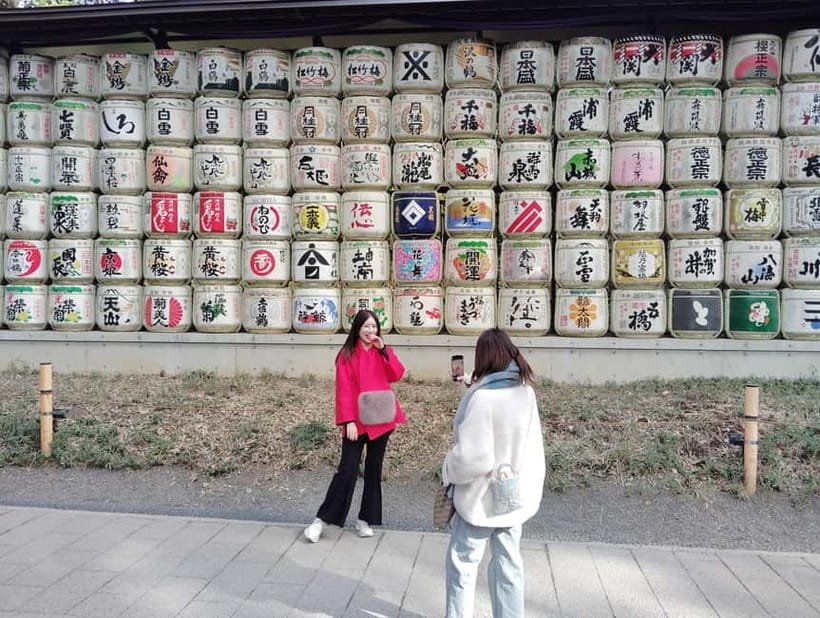
One of the first planned stops is the sake barrel offering area. The barrels make an excellent photo stop, but the explanation is more useful than the picture. You learn why sake appears as an offering and how these displays fit into shrine culture.
This is also where the Eternal Forest comes back into the conversation. The stop gives you a simple visual anchor for understanding how Meiji Jingu combines worship, tradition, and a carefully maintained natural setting.
You will have time for photos, but do not expect a long independent break. The group then continues toward the grand torii and the main shrine area. If photography matters to you, have your camera ready before the guide moves on.
The sake barrels are a small part of the visit, yet they help make the customs visible. A good guide turns an attractive object into a clue about how the shrine functions.
The handwashing ritual before prayer
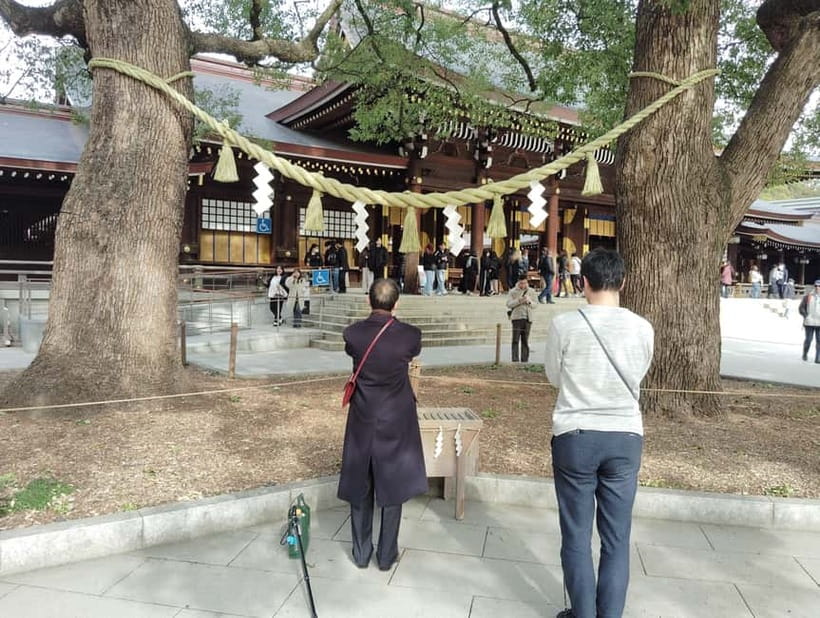
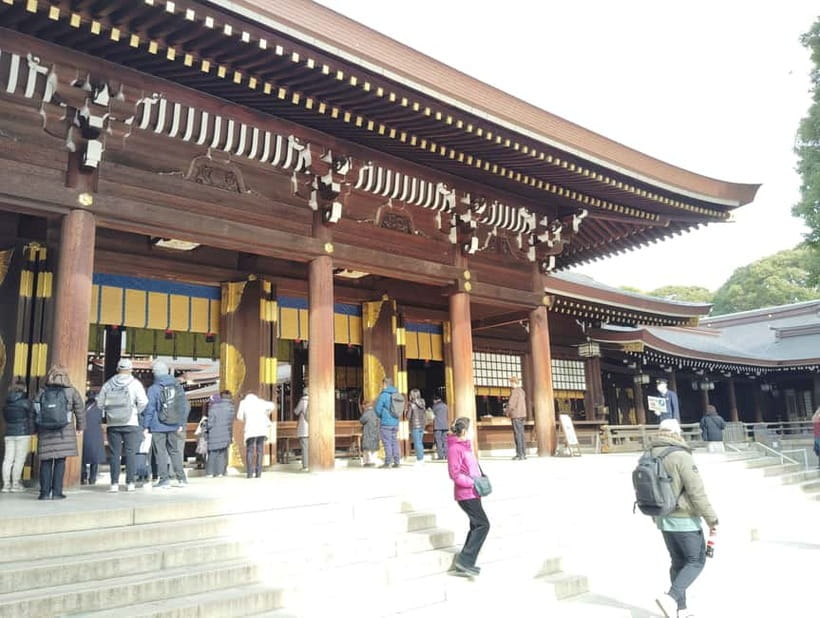
Before entering the shrine area, you have the chance to take part in the traditional handwashing ritual. This is one of the most practical parts of the tour because the guide demonstrates the order and purpose of the actions instead of leaving you to copy someone nearby.
The ritual is a preparation for approaching the shrine. It is not simply a way to rinse your hands. Your guide explains how the act fits into the respectful behavior expected at a Shinto site.
This is where a guided visit feels more valuable than a solo walk. You can watch other people, but you may not know which movements matter or why they are done. The instruction is short, easy to follow, and useful at other shrines in Japan.
The group then proceeds to Meiji Jingu, where you learn how to pray. Expect guidance on the basic form and a chance to pause afterward. The tour does not treat prayer as a performance for a camera. You are given room for a quiet moment of reflection.
That balance matters. You receive enough explanation to understand the custom, but the visit still leaves space for your own response to the place.
A few more Tokyo bookings worth comparing
- Ninja Samurai 2-hour hands-on lesson by Japanese master in Tokyo
★ 5.0 · 194 reviews - Tokyo 2-Hour Genuine Samurai Experience: Kendo in Japan
★ 5.0 · 112 reviews - Tokyo: Flagship 2-Hour Street Go-Kart Tour by Street Kart
★ 4.9 · 94 reviews - Tokyo: Shinjuku Izakaya and Golden Gai Bar Hopping Tour (2h)
★ 4.9 · 67 reviews
Meiji Jingu and the value of a live explanation
The shrine itself is the central stop and receives about an hour in the planned schedule, with the remaining hour covering the other sections of the route. You will have time for sightseeing, photographs, and guided explanation.
The historical context is one reason the guide makes a difference. Takashi was praised for giving a strong background that helped make Meiji Jingu easier to understand, while Minoru was described as kind and thorough in explaining what the group was seeing. Those strengths matter at a site where a short plaque cannot explain every custom.
Kai was also described as friendly and willing to discuss Japanese culture beyond the shrine itself. That can be helpful if you have questions about customs you notice elsewhere in Tokyo. Kyo’s contemporary perspective and good humor suggest a less formal conversation for people who prefer a relaxed style.
Guide assignments can change, so you should not book on the assumption that one particular person will lead your departure. Still, the available guide feedback points to a consistent strength: the experience depends on human explanation, and that explanation appears to be the product’s main asset.
Omikuji, fortune-telling, and protective charms
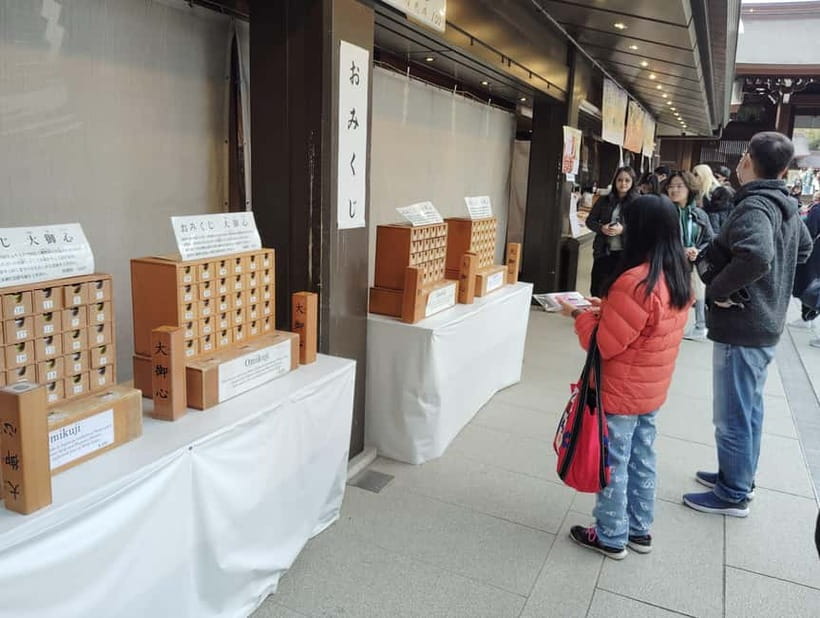
After the shrine visit, the tour includes an omikuji fortune-telling experience. This adds a light, playful moment after the more formal prayer instruction.
Omikuji are fortune slips associated with Japanese shrines and temples. Here, the activity gives you a direct way to try one of the customs you might otherwise notice only from a distance. The fee is included, so you do not need to budget separately for this part.
You may also receive a protective charm if you would like one. The charm is optional, which is useful if you prefer not to buy or carry souvenirs. If you enjoy small cultural rituals, this may be one of the most memorable parts of the walk. If you prefer a strictly historical tour, it may feel less important than the shrine and garden explanation.
I like the change of mood. The tour moves from observation and etiquette to participation, without making the experience feel like a staged show.
Shinen Garden, South Pond, and Kiyomasa’s Well
The final major section leads into Meiji Jingu Garden, also called Shinen Garden. The entrance fee is included, which improves the value of the $48 price. You are not paying for a shrine walk and then discovering that the garden requires another ticket.
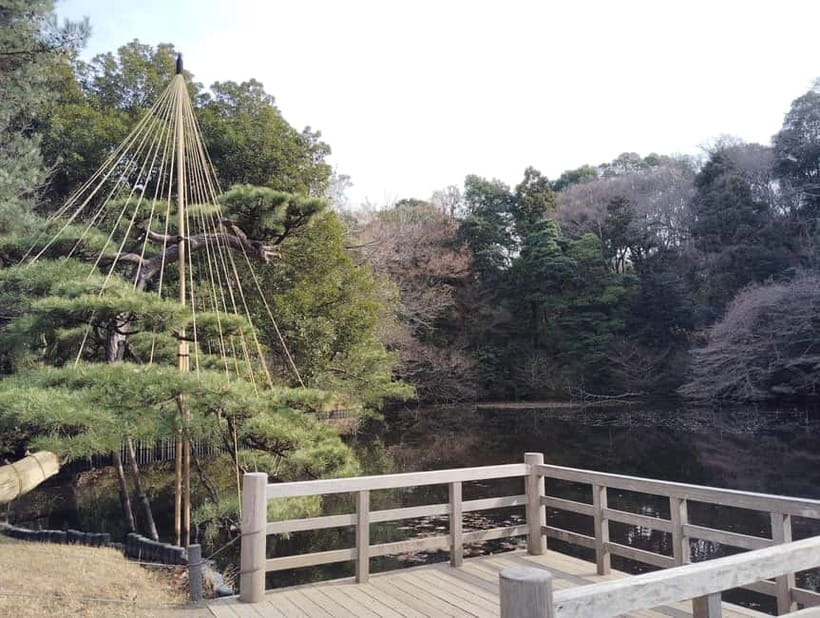
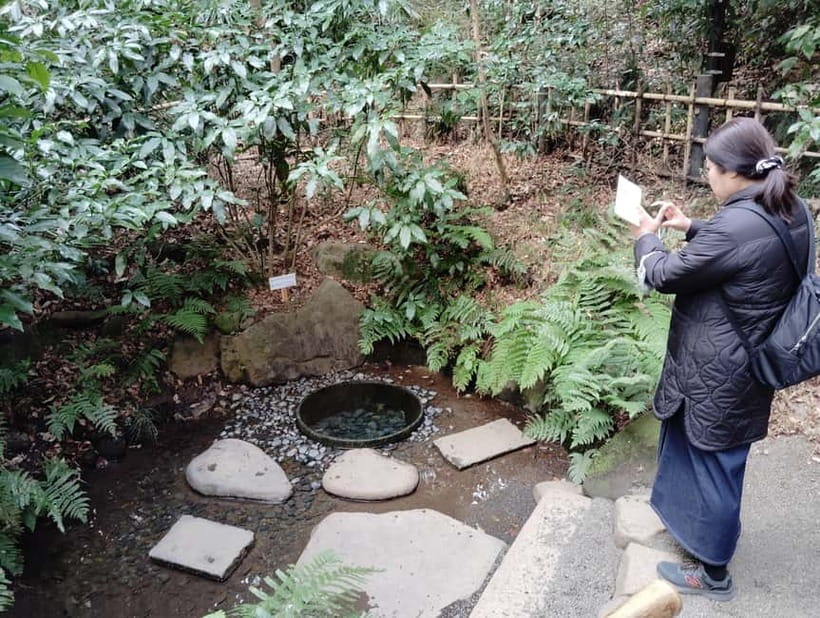
The route focuses on South Pond. This gives you a calmer side of Meiji Jingu, with water and garden views replacing the grand scale of the torii and shrine buildings. The garden helps round out the visit by showing how nature and religious space work together here.
If the schedule permits, you may also visit Kiyomasa’s Well. The wording matters: this stop is time dependent, not guaranteed. The tour includes one hour for the latter portion, but the exact pace will depend on the group and the time spent at the shrine.
I would treat the well as a pleasant bonus rather than the reason to book. If it is important to you, ask the guide early about the day’s timing. Do not expect a long garden stroll. This is a focused visit designed to fit the shrine, rituals, fortune-telling, and garden into two hours.
The walk eventually returns to the first torii. That finish is convenient because you end where you began, rather than having to work out a new meeting point or find your way back through the grounds.
What $48 includes and what it does not
At $48 per person, this is not the cheapest way to see Meiji Jingu. You can enter the shrine grounds independently, and many elements of the visit are free. The price needs to earn its value through interpretation and included extras.
Here, the fee covers the guide, entrance to Meiji Jingu Garden, omikuji, and other experience fees. That makes the comparison fairer. You are paying for an organized cultural lesson, not simply admission to a shrine.
I think the price is reasonable for someone who wants a compact introduction and plans to ask questions. It is especially useful if this is your first shrine visit in Japan, or if you want a private or small-group setting. You get help with customs that are easy to miss, plus access to the garden within the same two-hour plan.
The value is weaker if you already know shrine etiquette, have visited Meiji Jingu before, or mainly want to wander alone. The guide’s explanations are the heart of the tour, so independent explorers may prefer to spend the $48 elsewhere.
Food and drinks are not included. Private transportation is also not included, though this route begins and ends at the first torii, making separate transport unnecessary during the activity.
Timing, group style, and who will enjoy it most
The experience lasts two hours, with starting times available according to the booking calendar. That length works well in Tokyo. It is long enough for proper explanations but short enough to fit before lunch, after breakfast, or alongside a Harajuku and Shibuya day.
Private and small-group options are available. If you want to ask about religion, culture, or modern Japanese life, a smaller group will give you more room. It may also help the guide adjust the pace, especially if you care more about the garden than photography.
English is the live tour language listed for the activity, and English and Japanese are listed among the guide languages. Confirm the language option you need when booking, especially if you are considering a departure with a specific guide.
The tour suits first-time visitors, couples, families with older children, and anyone who wants cultural context without spending half a day in a museum. It also suits people who like a peaceful walk but still want a clear structure.
It may not suit you if you need a fully flexible schedule. The garden visit can be shortened by the pace of the shrine section, and Kiyomasa’s Well is available only if time allows.
Simple preparation for a better visit
Wear shoes you can walk in comfortably. The experience is a walking tour through shrine grounds and garden paths, and you will get more from it if you are not focused on sore feet.
Arrive at the first torii with enough time to find the yellow sign. The meeting point is specific, but the shrine grounds are large, so do not wait until the last second to locate the guide.
Bring questions. The strongest part of this experience is the chance to ask about customs, symbols, and daily Japanese life. Minoru, Kai, Kyo, and Takashi have each been praised for warmth and clear explanations, but your own questions will help shape the conversation.
Keep your camera ready at the sake barrels and grand torii, then put it away during the prayer instruction if you want to give the ritual your full attention. The tour makes room for photos, but it is not only a photo walk.
Cancellation is free up to 24 hours before the start for a full refund, and you can reserve now and pay later. That gives you some useful flexibility when building a Tokyo schedule.
Should you book this Meiji Jingu tour?
Book it if you want to understand what you are doing at a Japanese shrine, not just see the buildings. The handwashing lesson, prayer guidance, omikuji, sake barrel explanation, and garden access make the two hours feel purposeful.
The strongest reason to choose it is the guide. The praise for Minoru, Kai, Kyo, and Takashi focuses on kindness, clear cultural explanations, historical background, humor, and fresh perspectives. Those are exactly the qualities that can turn a familiar sightseeing stop into a meaningful visit.
Skip it if you prefer total independence or already feel comfortable with shrine customs. Also keep your expectations realistic about the garden: South Pond is part of the plan, but Kiyomasa’s Well depends on available time.
For most first-time visitors, I would consider the $48 worthwhile, especially with the garden entrance and omikuji included. It offers a calm, practical introduction to Japanese spirituality in a part of Tokyo that is easy to reach and easy to remember.
FAQ
Where does the Meiji Jingu tour meet?
The meeting point is in front of Ichinotorii, the first torii of Meiji Jingu Shrine. The guide will hold a yellow sign with the DeepExperience logo.
How long does the activity last?
The guided experience lasts two hours and returns to the first torii at the end.
What language is the live tour conducted in?
English is listed as the live tour language. English and Japanese are listed among the guide languages.
Is entry to Meiji Jingu Garden included?
Yes. The entrance fee to Meiji Jingu Garden is included in the activity price.
Is omikuji fortune-telling included?
Yes. Omikuji and other experience fees are included.
Will the tour visit Kiyomasa’s Well?
The tour may visit Kiyomasa’s Well if time allows. The South Pond area is the main focus of the garden portion.
Can I cancel the tour for a full refund?
Yes. You can cancel up to 24 hours in advance for a full refund. You can also reserve now and pay later.
New on our Tokyo list
- Sumi-e Experience in a relaxing green tea shop in Tokyo★ 5.0 · 3 reviews
- Tokyo : Kamikaze Street Drift Ride★ 5.0 · 3 reviews
- Private Zen Meditation in English in Shinjuku, Tokyo★ 5.0 · 3 reviews
- Onsen Spa in Tokyo and Asakusa Bar Hopping with Local Guide★ 5.0 · 3 reviews
- Easy for everyone! Now you can play handmade mini shamisen and show off to everyone! Musical instruments, sweets and live music★ 5.0 · 3 reviews
- Tokyo: Private Tsukiji Street Food & Sake with Local Guide★ 5.0 · 3 reviews
- Mt Fuji Exploration Tour with Free Japanese Kusa Mochi from Tokyo★ 4.5 · 3 reviews
- Tokyo Tsukiji Fish Market Walking and Exploring Hidden Gems Tour★ 5.0 · 3 reviews
Temple & Shrine Tours, compared.
Meiji Shrine, Asakusa, Skytree Bus Tour and Cruise
Read our review →
Asakusa Walking Tour with Sensoji Temple Visit
Read our review →

Kamakura & Enoshima Day Trip including Temple Tickets
Read our review →
Nikko Toshogu Shrine and Kegon Waterfall Tour
Read our review →
Tokyo Panoramic 1 Day: Meiji Shrine, Asakusa, Odaiba and SKYTREE®
Read our review →
Mt. Fuji Heritage Tour: Traditional Villages, Lakes & Shrine
Read our review →Browse the lists this tour appears in