
Reviewed · TEMPLE & SHRINE TOURS
Tokyo: Meiji Shrine and Shinto Culture Walking Tour
Meiji Jingu is one of Tokyo’s best places to see how a major city can make room for quiet. You pass beneath a huge wooden torii, follow a broad forest path, and reach a shrine tied to Emperor Meiji and Empress Shoken. The forest setting is the star, but a guide helps you understand what your eyes alone cannot.
I like the small group of no more than 15 and the clear two-hour format. I also like the practical teaching: you learn how to bow, clean your hands, and approach the shrine respectfully instead of guessing your way through the rituals. The possible drawback is that much of the experience is outdoors, so rain can make the long walk less comfortable.
In This Review
- Key points to know before you book
- Why Meiji Jingu works so well as a first Tokyo shrine
- Meeting at With Harajuku and setting off
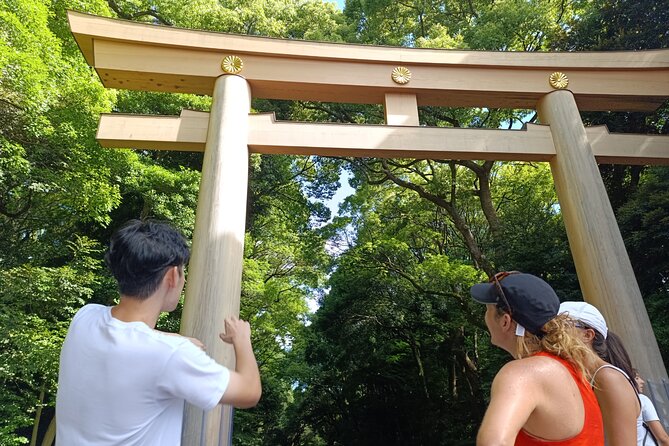
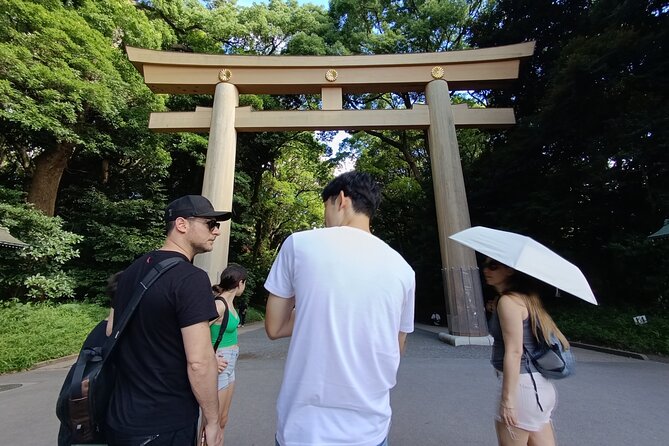
- Walking beneath the largest torii
- The forest walk through central Tokyo
- Learning Shinto customs instead of guessing
- Connecting the shrine to Emperor Meiji
- What the guides add to the experience
- Is $18 a fair price?
- Who should book this walking tour
- The final call on Meiji Jingu
- FAQ
- How long does the Meiji Jingu walking tour last?
- How much does the tour cost?
- Is admission to Meiji Jingu included?
- Where does the tour start?
- Where does the tour end?
- How many people can join the tour?
- What does the guide explain?
- Is the tour available with a mobile ticket?
- Can I cancel for a full refund?
Key points to know before you book
- The giant wooden torii: The first gate is about 12 meters tall and 17.1 meters wide, an impressive start to the visit.
- Shinto made practical: Your guide explains bowing, ritual cleansing, prayer customs, and the meaning behind shrine behavior.
- A forest in central Tokyo: Meiji Jingu occupies a large planted forest near Harajuku, giving the walk a calm setting.
- Guides vary by departure: Guides named in the tour information include Yumi, Sara, Haydn, Matt-san, and Benjamin.
- A useful two-hour stop: At $18 per person, this is a reasonably priced way to add cultural context to a Harajuku visit.
- Simple meeting point: The tour starts at Starbucks Coffee at With Harajuku and returns there.
Why Meiji Jingu works so well as a first Tokyo shrine
You do not need to be an expert in Japanese religion to enjoy Meiji Jingu. The visit works because the setting gives you time to slow down, while the guide explains the customs in plain terms.
The shrine is dedicated to the deified spirits of Emperor Meiji and Empress Shoken. It was established in 1920, after Emperor Meiji’s reign helped move Japan into the modern era. That connection gives the site a different feel from an old Buddhist temple or a small neighborhood shrine. Meiji Jingu is tied to modern Japanese national history, yet it uses traditional Shinto forms.
I find that contrast especially useful. Tokyo can feel packed with neon, trains, concrete, and advertising. Then you enter the shrine grounds and walk through a large artificial forest. The change is quick and striking.
The forest is not wilderness. It was created as part of the shrine grounds, and it forms a quiet setting around the paths and buildings. That detail matters because the walk is not just a transfer from gate to shrine. The path gives your guide room to explain the site, its customs, and the relationship between nature and Shinto practice.
More temples and shrines near Tokyo:
- Tokyo: Meiji Shrine, Asakusa, Skytree Bus Tour and Cruise
★ 4.7 · 1,986 reviews - Tokyo: Asakusa Walking Tour with Sensoji Temple Visit
★ 4.8 · 1,583 reviews - Nikko: Kegon Falls, Lake Chuzenji & Toshogu Temple
★ 4.6 · 1,577 reviews
Meeting at With Harajuku and setting off
The meeting point is Starbucks Coffee at With Harajuku, at 1-chome 14-30 Jingumae, Shibuya, Tokyo 150-0001. This is a practical place to begin because the tour is near public transportation and in the Harajuku area, one of Tokyo’s easiest bases for combining shopping, street culture, and Meiji Jingu.
I would arrive with enough time to locate the correct Starbucks and check the mobile ticket on your phone. The experience uses a mobile ticket, and confirmation is provided when you book. You should also note that the tour returns to this same meeting point, so you do not need to work out a separate end location.
The walk lasts about two hours. That is long enough to cover the shrine’s main approach and explain its customs, but short enough to fit before or after another Harajuku plan. If you are building a full day, you can pair it with nearby activities without giving up half your schedule.
The group can include up to 15 people. That is not a private tour, but it is small enough for questions and for a guide to keep the group together on the forest paths. The size also affects how personal the explanations feel. A group of 15 is easier to hear and manage than a large coach party, though you should not expect an entirely private conversation.
Walking beneath the largest torii
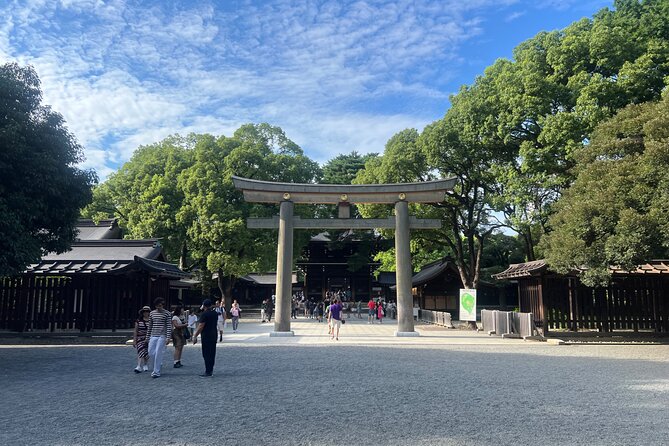
The first major sight is the great wooden torii. It is described as the largest wooden myojin-style torii of its kind in Japan, measuring about 12 meters high and 17.1 meters wide.
That scale gives you an immediate sense that Meiji Jingu is not a minor local shrine. The gate marks a change from ordinary city space to sacred ground. Your guide can explain how to approach the gate and how shrine etiquette begins before you reach the main buildings.
This is one of the places where a guide adds real value. You may notice that people bow as they pass through, but you might not know when to bow or why. You may also see visitors walk along the side of the approach rather than directly through the center. A guide can explain these customs as part of the walk, so you are not left copying people without understanding the reason.
The torii is also a good point for photographs, but the tour is not simply a photo stop. Its size, material, and position help introduce the ideas that shape the rest of the visit. I would pay attention to the explanation before reaching for your phone.
The forest walk through central Tokyo
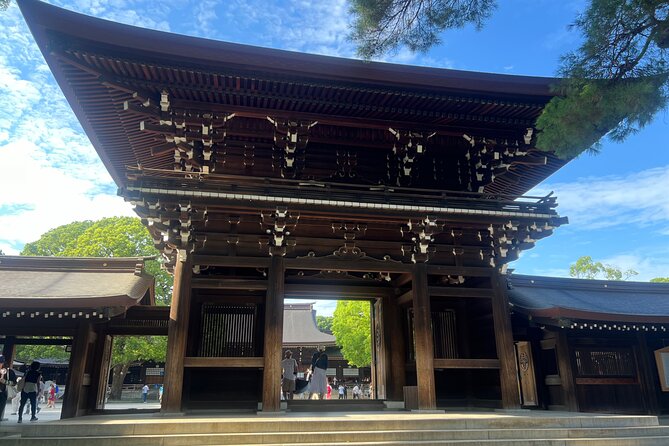
After the gate, the route continues along a forested approach. Meiji Jingu sits within a large planted forest of roughly 70 hectares, a remarkable amount of greenery for a shrine so close to Harajuku.
The path can feel surprisingly removed from the city. You remain in one of Tokyo’s busiest districts, but the trees soften the noise and create a steady walking rhythm. This is where the two-hour length makes sense. The guide has time to explain the site without rushing from one building to another.
The walk is also the most physically active part of the experience. The tour is described as a walking tour, and much of the visit takes place outside. Most people can participate, but you should be prepared to walk for the full session and to deal with changing weather.
Rain does not necessarily ruin the experience. Matt-san’s guidance helped one group enjoy the walk despite wet conditions, with explanations of the Meiji Restoration and Emperor Meiji’s achievements. Still, rain can make paths less pleasant and can affect how long you want to linger. Comfortable shoes and weather-appropriate clothing are sensible choices.
The forest itself is valuable even if you have limited interest in religion. It offers a pause from Tokyo’s hard surfaces and crowds. I would not treat this part as filler between the entrance and shrine. It is a central part of what makes Meiji Jingu different from a quick urban monument visit.
More walking routes in Tokyo:
- Tokyo Tsukiji Fish Market Food and Culture Walking Tour
★ 5.0 · 3,184 reviews - Tokyo: Imperial Palace and Shogun Historical Walking Tour
★ 5.0 · 2,251 reviews - Tokyo: Shinjuku Local Bar and Izakaya Guided Walking Tour
★ 4.9 · 1,794 reviews - Tokyo: Tsukiji Fish Market Food and Walking tour
★ 5.0 · 1,724 reviews
Learning Shinto customs instead of guessing
The strongest reason to book this tour is the explanation of ritual. Meiji Jingu is easy to enter on your own, but the meaning of what happens there is less obvious.
Your guide explains customs such as bowing at the gates, ritually cleaning your hands, and approaching the main shrine. These actions are simple to perform, yet small mistakes are easy to make when you are unfamiliar with Shinto practice. Clear instructions let you participate with respect.
The cleansing area is especially useful. You may see people rinse their hands and mouth before praying, but the order and purpose are not immediately clear. A guide can show you how the process works and explain that it is a symbolic act of preparation.
At the main shrine, you can learn how prayer is approached and why people follow particular movements. The point is not to turn a spiritual place into a classroom. The point is to understand what you are seeing and to give local worshippers space while you take part appropriately.
I also value the distinction between observing and participating. You are not required to adopt a belief or perform every ritual. The guide’s role is to explain the custom so you can decide how to engage with it respectfully.
Benjamin, one of the guides named in the tour information, is described as explaining Japanese customs with a calm and considerate manner. That approach suits Meiji Jingu. The subject calls for a guide who can explain without turning the visit into a loud performance.
Connecting the shrine to Emperor Meiji
Meiji Jingu is dedicated to Emperor Meiji and Empress Shoken, and the guide places the shrine within the story of Japan’s modernization.
Emperor Meiji is associated with the Meiji Restoration, a period of major political and social change. That background helps explain why this shrine carries national importance. You are not simply looking at a beautiful gate and forest. You are visiting a place linked to the figures who represent Japan’s move into the modern era.
Matt-san’s explanation of the Meiji Restoration and Emperor Meiji’s achievements was particularly useful for visitors who wanted more than ritual instructions. I would listen carefully during this part, since the historical context helps the shrine make sense.
The guide also connects the site to Japanese spirituality. Shinto is not presented only as a set of rules. You learn how the gate, forest, cleansing area, and prayer customs fit together. That connection is the main difference between a guided visit and a solo walk with a few photographs.
The shrine was established in 1920, which also corrects a common assumption. The place looks old and traditional, but the shrine itself is not an ancient surviving structure. Its importance comes from its association with Emperor Meiji and Empress Shoken, its design, its forest, and its role in modern Japanese identity.
What the guides add to the experience
The quality of a short cultural tour depends heavily on the person leading it. Here, the named guides include Yumi, Sara, Haydn, Matt-san, and Benjamin, so your exact style may vary by departure.
Yumi is described as both informative and accommodating, with useful tips for navigating Tokyo in addition to shrine history. That can be a bonus if this is early in your visit and you still need help understanding the city.
Sara is presented as friendly and interactive, with clear explanations of Shinto religion and customs. That style may work well for families or first-time visitors who want the chance to ask questions rather than listen to a long lecture.
Haydn led a small group through the shrine and explained Shinto culture in detail. His visit was valued for showing how peaceful the park-like grounds feel in one of Tokyo’s busiest areas.
The common thread is not a scripted show. It is the chance to ask why people bow, what the cleansing ritual means, and how the shrine connects to Japanese history. Because the group is capped at 15, you have a better chance of being heard than on a large sightseeing tour.
Is $18 a fair price?
At $18 per person, this is a modestly priced guided experience for Tokyo. Admission to Meiji Jingu is included, and the cost covers a guide plus historical insight into the district.
The value depends on what you want from the visit. If you only want to walk through the forest and see the shrine, you can visit without a tour. The grounds are the main attraction, and you do not need a ticket simply to appreciate the setting.
If you want to understand Shinto customs, the $18 fee is easier to justify. You are paying for context, not just entry. The guide helps you avoid missing the meaning of the gate etiquette, cleansing ritual, and prayer customs.
The price also works well for a short Tokyo schedule. Two hours is not a major commitment, and the tour begins and ends in Harajuku. You can use it as a focused cultural stop rather than reserving an entire day for a formal excursion.
Tips are not included. The cancellation policy allows a full refund if you cancel at least 24 hours before the start time. Changes or cancellations within 24 hours are not accepted for a refund, so keep that deadline in mind when planning around Tokyo weather or other timed activities.
Who should book this walking tour
I would recommend this tour to a first-time Tokyo visitor who wants a gentle introduction to Shinto. It is also a good fit if you enjoy history but prefer it explained while you walk rather than through a museum display.
Families can benefit from the interactive format, especially if children are curious about why people wash their hands, bow, or pray in a certain way. The forest path also gives the visit more variety than a stop inside a single building.
This tour suits anyone staying around Harajuku or planning to visit the neighborhood. The meeting point is straightforward, the duration is limited, and the end point is the same as the start.
You may prefer to visit independently if you want to move at your own pace, spend a long time taking photographs, or avoid a fixed departure. The group limit of 15 keeps things manageable, but it still means following the guide’s timing.
I would also think about weather. The tour runs outdoors, and rain can make the walk less comfortable. A wet day does not remove the shrine’s appeal, but it may reduce your enjoyment if you dislike walking in poor conditions.
The final call on Meiji Jingu
Book this tour if you want Meiji Jingu to mean more than a large torii, a tree-lined path, and a quick photograph. The guide-led explanation of bowing, cleansing, prayer, Shinto ideas, and the Meiji Restoration is the real reason to pay the $18.
Skip it if you are happy exploring alone and already understand Japanese shrine customs. For most first-time visitors, though, the price, short duration, central meeting point, and small group make this an easy cultural addition to a Tokyo day.
FAQ
How long does the Meiji Jingu walking tour last?
The tour lasts approximately two hours.
How much does the tour cost?
The listed price is $18 per person.
Is admission to Meiji Jingu included?
Yes, admission to Meiji Jingu Shrine is included.
Where does the tour start?
The tour starts at Starbucks Coffee at With Harajuku, 1-chome 14-30 Jingumae, Shibuya, Tokyo 150-0001.
Where does the tour end?
The activity ends back at the meeting point.
How many people can join the tour?
The tour has a maximum of 15 participants.
What does the guide explain?
The guide explains Meiji Jingu’s history, Shinto culture, shrine rituals, bowing, ritual cleansing, and prayer customs.
Is the tour available with a mobile ticket?
Yes, the experience features a mobile ticket.
Can I cancel for a full refund?
Yes. You can cancel at least 24 hours before the experience start time for a full refund. Cancellations or changes made less than 24 hours before the start time are not refunded.
New on our Tokyo list
- From Tokyo: Mount Fuji & Hakone Full Day Private Tour★ 4.9 · 25 reviews
- Tokyo Spectacular View Day-Cruise in 90 Minutes★ 5.0 · 25 reviews
- Real Tokyo Runner Club : Daikoku Car Meet Night Tour with JDM Car★ 5.0 · 25 reviews
- 2.5 Hour-Guided Cycle Tour in the Central Tokyo★ 5.0 · 25 reviews
- Tokyo: 2-Hour Night Bike Tour of the City’s Hidden Gems★ 4.9 · 25 reviews
- Ramen Making from Scratch +Akihabara Tour –Cooking Class★ 5.0 · 25 reviews
- [Self-Drive] Tokyo & Daikoku Custom Car Driving Tour★ 4.9 · 25 reviews
- Samurai themed Entertainment show in Shinjuku★ 4.5 · 25 reviews
Temple & Shrine Tours, compared.
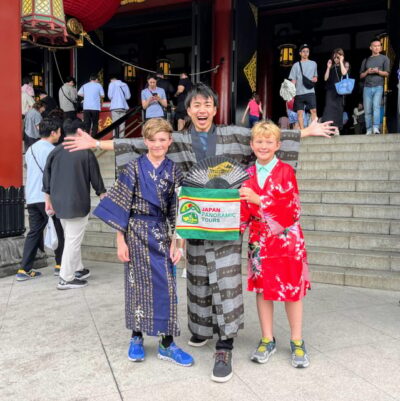
Meiji Shrine, Asakusa, Skytree Bus Tour and Cruise
Read our review →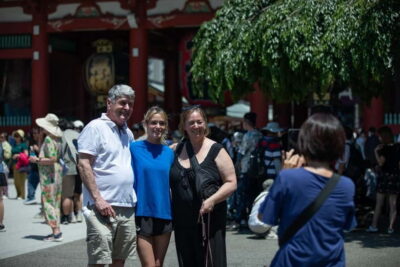
Asakusa Walking Tour with Sensoji Temple Visit
Read our review →

Kamakura & Enoshima Day Trip including Temple Tickets
Read our review →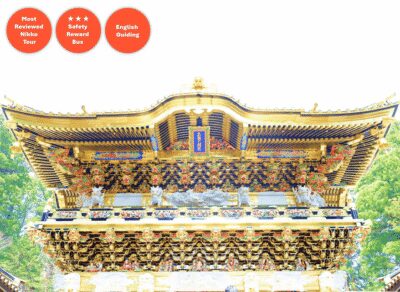
Nikko Toshogu Shrine and Kegon Waterfall Tour
Read our review →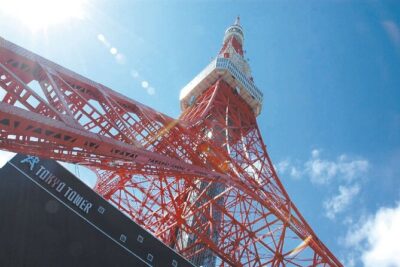
Tokyo Panoramic 1 Day: Meiji Shrine, Asakusa, Odaiba and SKYTREE®
Read our review →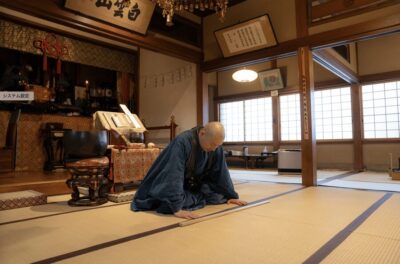
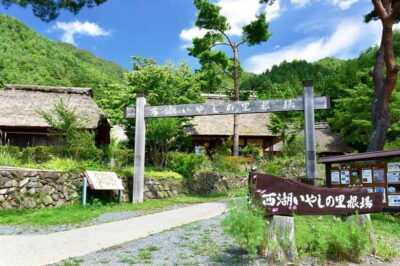
Mt. Fuji Heritage Tour: Traditional Villages, Lakes & Shrine
Read our review →Browse the lists this tour appears in