
Reviewed · ANIME & POP CULTURE TOURS
Tokyo: Private Manga Drawing Class with Professional Artist
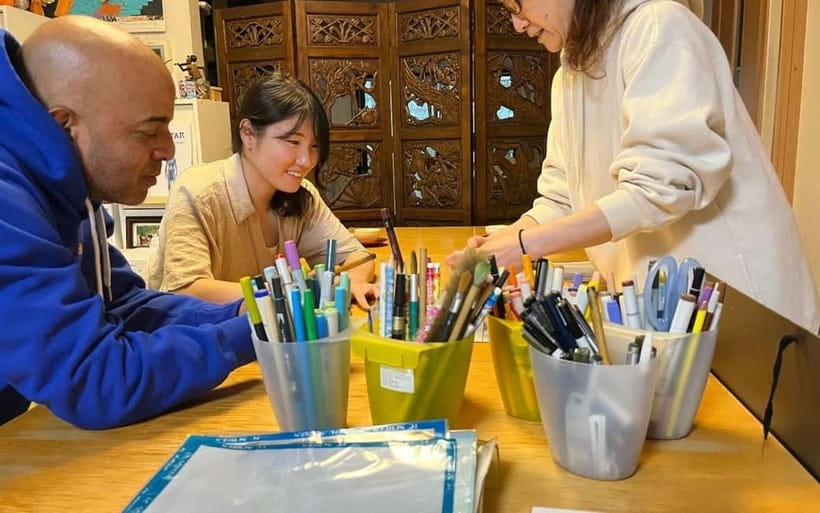
Tokyo’s manga scene comes to life at the drawing table, where you work beside Yumiko sensei, a published artist whose stories have appeared in Japanese magazines. You’ll handle the same types of pens, ink, paper, and screentone used in professional manga production, then leave with your own finished page and a portrait drawn by the artist.
I especially like the small maximum group of six, which gives Yumiko time to fix hand angles, line weight, and proportions. I also like the choice of three difficulty levels, from basic inking to a new character design. The main thing to consider is the price: at $141 per person, this is a specialist workshop, not a quick souvenir activity.
In This Review
- Key Points
- Inside a Tokyo Manga Studio Near Shindaita
- Pick the Right Difficulty Level Before You Start
- G-Pens, Maru-Pens, and Brush Pens on the Table
- Building a Character with Shapes and Balance Lines
- Learning Classic Screentone Without a Computer
- Final Ink, White Highlights, and Your Signed Artwork
- What $141 Buys You in 150 Minutes
- Who Will Get the Most from This Class
- Practical Details for a Smooth Visit
- Should You Book the Tokyo Manga Drawing Class?
- FAQ
- Where does the manga drawing class meet?
- How long does the activity last?
- How much does the experience cost?
- Is the class taught in English?
- Do I need previous drawing experience?
- What drawing tools will I use?
- Can children take part?
- How many people can join the group?
- What do I take home?
- Is transportation or food included?
- Can I cancel the booking?
Key Points
- Work with published manga artist Yumiko sensei, with English instruction and Japanese support available.
- Choose your own level, from simple inking practice to a full character design.
- Use real manga tools, including G-pens, maru-pens, brush pens, dip ink, and halftone sheets.
- Learn classic screentone techniques, cutting and burnishing sheets for shadows, texture, and effects.
- Receive one-on-one feedback, plus original artwork, practice sheets, a mini tool handbook, and an artist-drawn portrait.
- Meet outside Shindaita Station, then spend 150 minutes in a private studio group of no more than six people.
Inside a Tokyo Manga Studio Near Shindaita
This is not a sightseeing tour with a quick sketch at the end. It is a hands-on studio lesson built around the working methods of Japanese manga artists.
You meet your guide outside the ticket gates at Shindaita Station on the Keio Inokashira Line. The station has one exit, so the meeting point is easy to find: walk through the gates and step outside. From there, the session moves into a manga studio for 150 minutes of drawing, inking, shading, and questions.
Your instructor is Yumiko sensei, a professional manga artist with serial work in Japanese magazines. Early in the session, you can look through her portfolio and ask about the genres she works in, including shōnen, shōjo, and seinen. Tell her which series or characters you like. That gives her a useful starting point for shaping the lesson around your interests.
English is the main teaching language, with Japanese support available. A translator has also helped with station arrival on past sessions, which is useful if you are nervous about finding the meeting point or explaining a detailed question.
More anime and pop-culture days:
- Official Street Go-Kart Tour – Akihabara
★ 5.0 · 1,578 reviews - Tokyo Go Kart: Asakusa, Skytree, and Akihabara **IDP MUST**
★ 5.0 · 988 reviews - Akihabara Anime & Game Adventure Walking Tour (Group or Private)
★ 5.0 · 404 reviews
Pick the Right Difficulty Level Before You Start
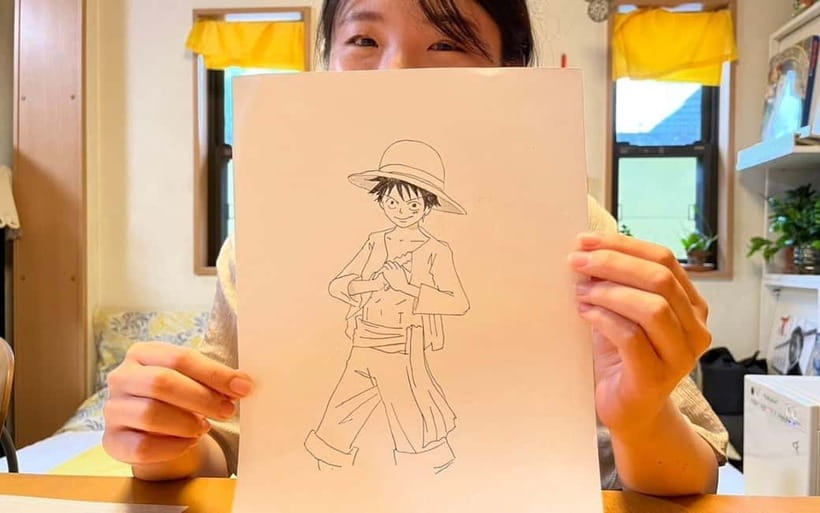
You do not need drawing experience. The class provides printed guideline sheets in three levels, so you can choose a task that feels challenging without becoming frustrating.
The easiest option focuses on inking practice. This works well if you want to learn how a G-pen behaves or simply want a clear first step. You can also work from a character outline, which gives you more room to practice anatomy, proportions, and line control.
The most advanced choice is a full character design. Here, you build a new figure rather than only tracing or finishing an existing guide. You can also request a chibi style, an action pose, or an expression sheet. Those options make the class suitable for children from age six, teens, anime fans, and adults who have always wanted to try manga but never knew how to begin.
I would choose the level based on your goal. If you want a polished souvenir, start with the guided sheet. If you already sketch often, use the session to work on a character, pose, or expression that gives you trouble.
G-Pens, Maru-Pens, and Brush Pens on the Table
The tools are a major reason to book this class. You try G-pens, maru-pens, and brush pens rather than watching a demonstration from a distance.
Each tool has a different feel. The G-pen helps create varied line weight, while the maru-pen is useful for finer detail. Brush pens offer another kind of control, especially when you want a line to widen or narrow with pressure. The lesson shows how these tools fit into actual manga work, not just how they look in a pencil case.
You also compare premium Kent paper with ordinary copy paper. This small test explains why paper choice matters. The tooth and weight of the sheet affect how ink spreads, how cleanly a line sits, and how much control you have over detail.
The session also introduces dip ink, alcohol markers, screentone, and digital tablets as parts of a modern manga workflow. You are not limited to one old-fashioned method. Instead, you see how traditional tools and newer equipment can sit side by side.
That practical comparison is helpful if you plan to keep drawing after your holiday. You can identify which tools suit your hand before spending money at an art shop in Tokyo.
Building a Character with Shapes and Balance Lines
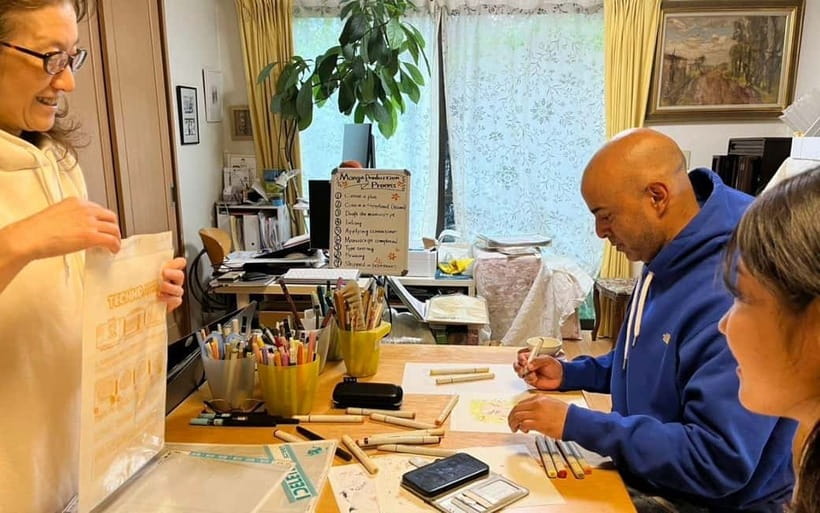
Once you select your sheet, Yumiko works through the basic structure of the figure. You use simple shapes to establish the head, body, limbs, and overall balance before adding details.
This is where a beginner can make real progress. Manga characters may look simple, but a small error in head-to-body ratio or posture can make the figure feel stiff. You learn to think about proportions, the balance line, and the position of the body before adding hair, clothing, eyes, or accessories.
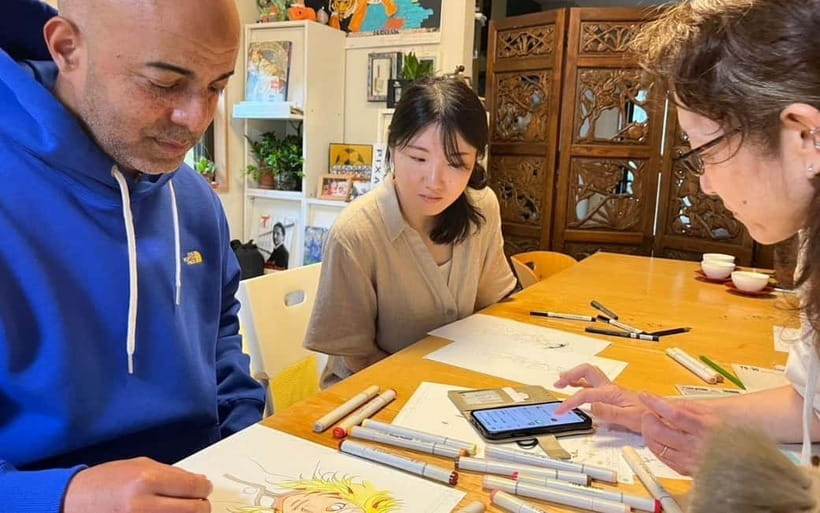
Yumiko moves around the room and checks posture and hand position. If you need help, she can demonstrate directly on your page. That personal correction matters more than a general lecture because it addresses the exact habit causing your problem.
You also practice line-weight theory. A thicker line can give a form more volume, while a lighter or tapered line can keep detail from looking heavy. For hair, you may work on feathering to suggest shine. For action scenes, speed lines help create motion.
One of the most useful practical tips is to rotate the page instead of forcing your wrist to make an awkward curve. It is a small change, but it can help you draw cleaner arcs and reduce hand strain.
A few more Tokyo bookings worth comparing
- Sushi Making Tokyo Roll and Authentic Japanese Sushi Class
★ 5.0 · 3,971 reviews - Tokyo: Roll and Authentic Sushi Making Class in Asakusa
★ 4.9 · 1,957 reviews - Tokyo Shinjuku Chopsticks Making Class
★ 5.0 · 1,763 reviews - Tokyo: Sushi Making Class in a Happi Coat near a Famous Spot
★ 4.9 · 1,377 reviews
Learning Classic Screentone Without a Computer
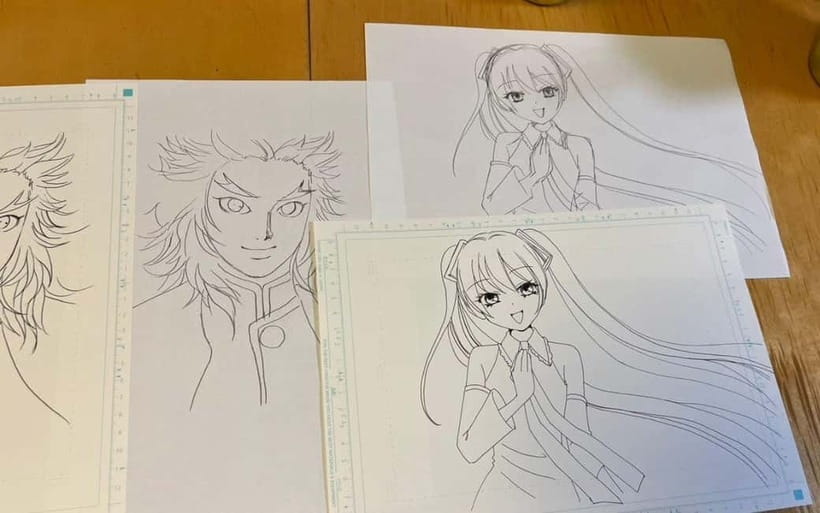
Screentone is one of the most distinctive parts of the workshop. You cut and apply halftone sheets by hand, using dots, lines, and other patterns to create shadows, backgrounds, sparkle, and texture.
The process is more physical than many first-time students expect. You place the sheet, trim the area with an art knife, and use a burnishing spoon to press and blend the edges. Done well, the tone looks like part of the original drawing rather than a sticker laid on top.
The class also shows why screentone can be tricky. You need to decide where the shadow belongs, cut accurately, and avoid rough edges. It rewards patience, so do not rush this part to reach the final photo.
If you are especially interested in screentone, tell the instructor early. You may want to choose a design that leaves enough room for shading and background work. One participant who had already taken another manga class planned to return to learn more about this technique, which tells you that the 150-minute session gives you an introduction rather than mastery.
Final Ink, White Highlights, and Your Signed Artwork
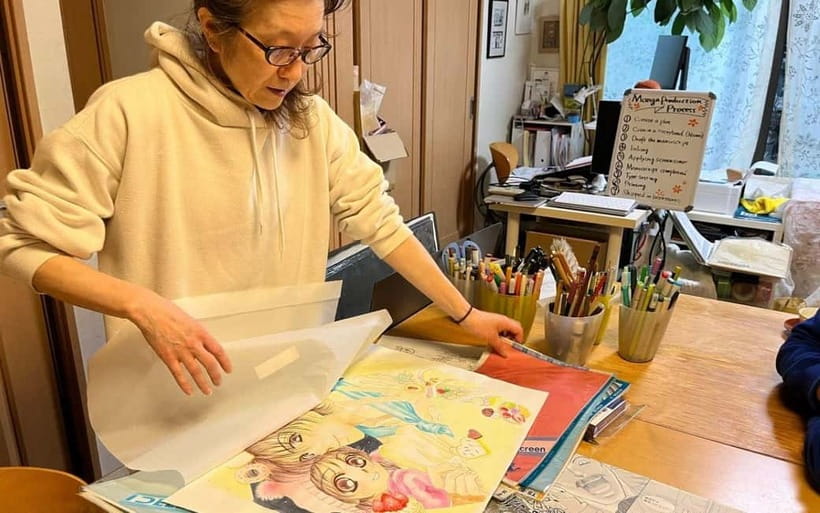
The last stage brings the page together. You can add white-ink highlights and use correction fluid for mistakes. These finishing tools show how manga artists clean up a page without starting over every time a line goes wrong.
You then receive personal feedback on the finished work. Yumiko can mark areas to improve, point out where line weight could be stronger, and sign the page. You take home the original artwork, practice sheets, and a small handbook listing the tools used in the workshop and where to buy them in Tokyo.
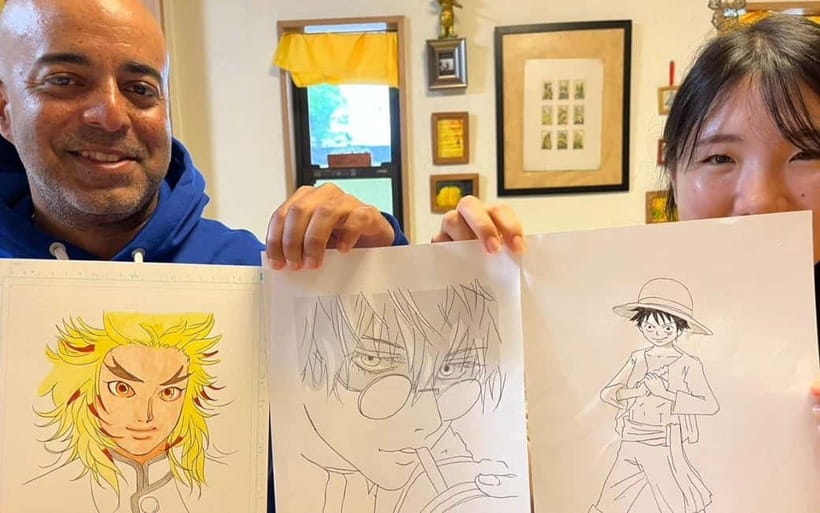
You also receive a portrait drawn by the manga artist. The exact subject can reflect the session and your interests. One participant was able to draw Tanjiro from Demon Slayer from scratch and received a similar Tanjiro drawing signed by Yumiko. If you have a favorite character, mention it when you meet the artist, though you should still expect the main lesson to focus on your own work.
There is time for photographs with Yumiko and your finished piece. Bring a camera if you want a record for social media or a keepsake beyond the artwork itself.
What $141 Buys You in 150 Minutes
At $141 per person, the cost is high compared with a casual craft class. The value comes from the combination of a published instructor, professional materials, a private group format, and a take-home result.
You are not paying only for a blank page and a short demonstration. The price includes use of manga tools and materials, personal feedback, practice sheets, your original artwork, a mini handbook, and the artist-drawn portrait. The small group limit of six also changes the feel of the lesson. You are more likely to get a correction when you need one instead of waiting through a crowded class.
The experience makes the most sense if manga is a serious interest, if you want to understand the traditional production process, or if you are looking for a creative Tokyo activity with a clear souvenir. It is less convincing for someone who only wants a cheap drawing lesson or a quick anime-themed photo opportunity.
Food is not included, and you arrange your own transportation to the studio. Comfortable clothes are sensible because you will spend the session drawing at a table. Bring a camera, but keep your hands free for the tools during the lesson.
Who Will Get the Most from This Class
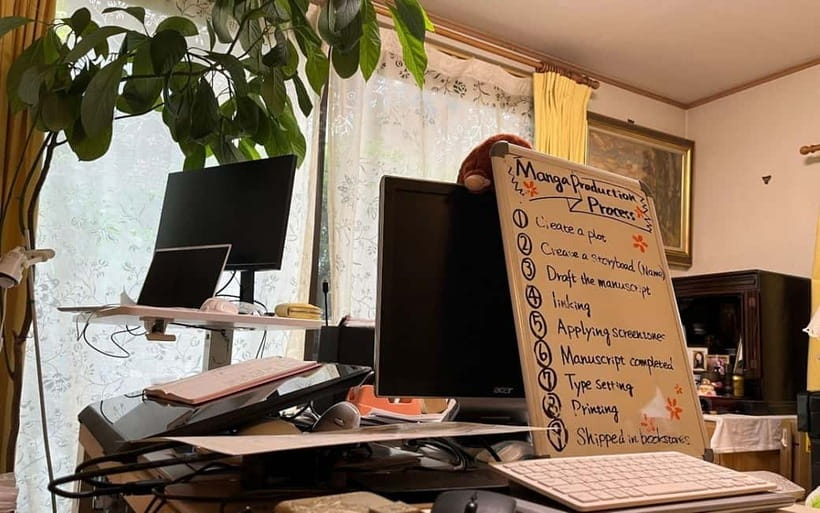
I would recommend this workshop to an anime or manga fan who wants more than a character-themed gift shop. It suits beginners because the printed sheets and basic shapes keep the work manageable. It also suits experienced hobby artists who want to ask focused questions about line weight, screentone, anatomy, or professional workflows.
Families should note the age rule. Children six and older can take part, but children under five are not accepted. A parent should consider the child’s ability to focus through a 150-minute art session, even though chibi designs and expression sheets can make the class more approachable.
The class also worked well for an 18-year-old who wanted tools and ideas to practice at home. That is a good sign for teenagers and young adults who may prefer an active creative session over another museum visit.
You will get more from the workshop if you arrive with a few ideas. Think of a favorite series, character, pose, or genre before the class. You do not need to prepare a drawing, but knowing what you like helps Yumiko shape the advice.
Practical Details for a Smooth Visit
Plan your route to Shindaita Station on the Keio Inokashira Line. Meet just outside the ticket gates. Since the station has a single exit, the arrival point is simpler than many Tokyo meeting spots, but leave enough time to avoid rushing into the lesson.
The session is a private group with a maximum of six people, not necessarily a one-person class. That means you share the instructor’s attention, but the group remains small enough for individual help.
The activity is wheelchair accessible. Instruction is in English, with Japanese support available. You do not need prior drawing experience, and the class supplies the manga drawing materials.
The activity permits free cancellation up to 24 hours before the start time for a full refund. You can also reserve and pay later, which helps if your Tokyo schedule may change. Check the available start times before booking, since the exact session time is not fixed in the activity details.
Should You Book the Tokyo Manga Drawing Class?
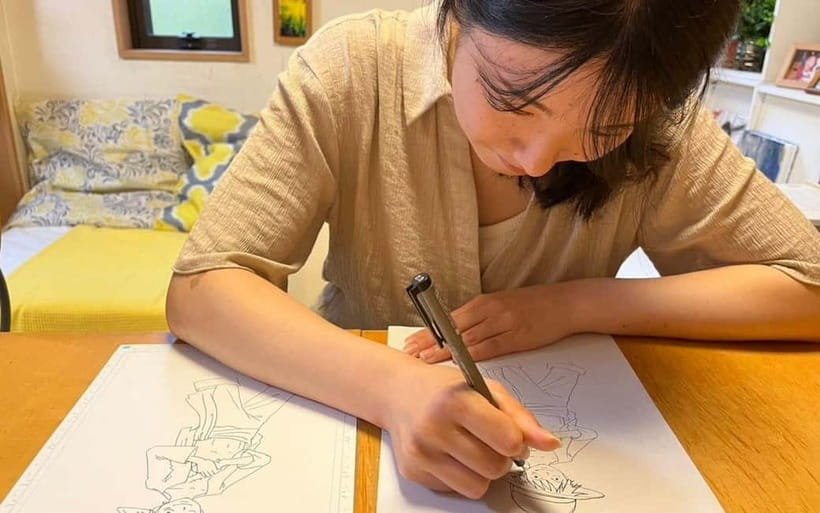
Book it if you want to understand how manga is actually drawn, especially the parts that rarely appear in a quick tourist workshop: choosing the right pen, controlling line weight, cutting screentone, correcting ink, and building a character from simple shapes.
The strongest reasons to go are Yumiko’s professional background, the small group size, and the useful take-home materials. You leave with more than a souvenir. You leave with a set of techniques and tools you can continue using, plus a signed piece connected to your time in Tokyo.
Skip it if your budget is tight, you dislike seated craft activities, or you only want a fast introduction to anime art. At $141, the class needs to match a real interest in manga.
For fans of Demon Slayer, Naruto, shōnen, shōjo, or Japanese illustration in general, this is a focused and personal way to spend an afternoon. Bring a favorite character in mind, keep your expectations realistic about what 150 minutes can teach, and you should come away with both a finished drawing and a better sense of how manga artists work.
FAQ
Where does the manga drawing class meet?
Meet your guide just outside the ticket gates of Shindaita Station on the Keio Inokashira Line. The station has a single exit.
How long does the activity last?
The workshop lasts 150 minutes.
How much does the experience cost?
The listed price is $141 per person.
Is the class taught in English?
Yes. The main language is English, and Japanese support is available.
Do I need previous drawing experience?
No. Prior drawing experience is not required.
What drawing tools will I use?
You can use G-pens, maru-pens, brush pens, dip ink, alcohol markers, screentone sheets, and other manga drawing materials provided during the session.
Can children take part?
Children age six and older can participate. Children under five are not suitable for the activity.
How many people can join the group?
The maximum group size is six people, allowing for personalized attention from the instructor.
What do I take home?
You take home your original artwork, practice sheets, a mini handbook listing the tools and where to buy them in Tokyo, and a portrait drawn by the manga artist.
Is transportation or food included?
No. Meals and transportation to the studio are not included.
Can I cancel the booking?
Yes. You can cancel up to 24 hours in advance for a full refund. The activity also allows you to reserve now and pay later.
New on our Tokyo list
- Sumi-e Experience in a relaxing green tea shop in Tokyo★ 5.0 · 3 reviews
- Tokyo : Kamikaze Street Drift Ride★ 5.0 · 3 reviews
- Private Zen Meditation in English in Shinjuku, Tokyo★ 5.0 · 3 reviews
- Onsen Spa in Tokyo and Asakusa Bar Hopping with Local Guide★ 5.0 · 3 reviews
- Easy for everyone! Now you can play handmade mini shamisen and show off to everyone! Musical instruments, sweets and live music★ 5.0 · 3 reviews
- Tokyo: Private Tsukiji Street Food & Sake with Local Guide★ 5.0 · 3 reviews
- Mt Fuji Exploration Tour with Free Japanese Kusa Mochi from Tokyo★ 4.5 · 3 reviews
- Tokyo Tsukiji Fish Market Walking and Exploring Hidden Gems Tour★ 5.0 · 3 reviews
Anime & Pop Culture Tours, compared.

Tokyo Go Kart: Asakusa, Skytree, and Akihabara **IDP MUST**
Read our review →
Akihabara Anime & Game Adventure Walking Tour (Group or Private)
Read our review →

Akihabara Tailor-made Private Tour for Anime Fans
Read our review →
Ramen Making from Scratch +Akihabara Tour –Tokyo Cooking Class
Read our review →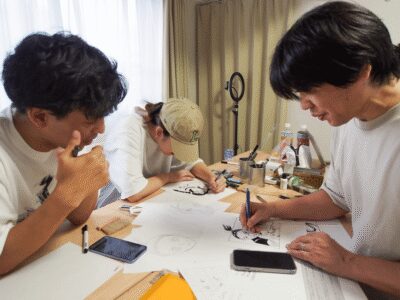
Manga Drawing Workshop Guided by Pro Manga Artist
Read our review →Browse the lists this tour appears in