Reviewed · PRIVATE
Tokyo Private Sightseeing Tour by Car and English Speaking Driver
Tokyo Private Sightseeing Tour by Car and English Speaking Driver
Tokyo is enormous, and this private car tour gives you a useful shortcut through its many districts. In about nine hours, you can move from the lanterns of Senso-ji Temple to the neon rush of Shibuya, with your driver waiting while you explore each stop.
I like the hotel pickup and drop-off, and I like the freedom to change the pace. Drivers including Ken, Bek, Aki, and Louis have been praised for being patient and helpful. The main catch is time: ten stops in one day is ambitious, especially if you go up Tokyo Skytree.
In This Review
- Key points
- Why a Private Car Makes Sense in Tokyo
- Senso-ji and Tokyo Skytree: Old Tokyo, New Tokyo
- Tsukiji’s Outer Market and Ginza’s Polished Streets
- Imperial Palace Gardens and Tokyo Tower
- Meiji Jingu, Harajuku, and Omotesando
- Shibuya Crossing as the Grand Finale
- What the Driver Adds to the Day
- The Nine-Hour Schedule Needs Realistic Planning
- Comfort, Mobility, and What Is Included
- Who Will Get the Most From This Tour
- Should You Book the Tokyo Private Sightseeing Tour?
- FAQ
- How long does the Tokyo private sightseeing tour last?
- How many people can join the private tour?
- Is hotel pickup and drop-off included?
- Are Tokyo Skytree and Tokyo Tower admission tickets included?
- Does the tour include a walking guide?
- What happens if I cancel the tour?
Key points
- A true private tour: Your group of up to three people has its own air-conditioned vehicle and driver.
- Hotel pickup and drop-off: You avoid changing trains between far-flung districts.
- Flexible timing: You can stay longer at a favorite stop and shorten one that interests you less.
- A full Tokyo sampler: The route covers temples, shrines, markets, shopping districts, towers, and city crossroads.
- Good help for limited mobility: Drivers can drop you close to sights and return to the same pickup point when possible.
- Plan for trade-offs: The advertised stops work best as a broad overview, not as ten full visits.
Why a Private Car Makes Sense in Tokyo
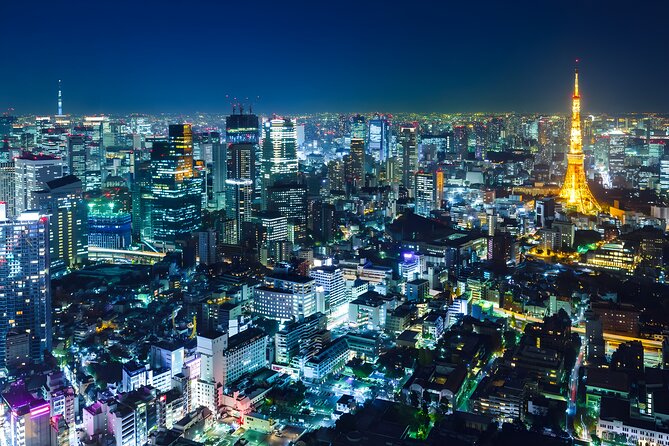
Tokyo’s train system is excellent, but the city spreads across a wide area. Asakusa, Sumida, Tsukiji, Ginza, the Imperial Palace, Minato, Harajuku, and Shibuya are not all next door to one another. On public transport, you would spend much of the day finding stations, changing lines, and walking between platforms and attractions.
Here, the driver handles the movement between districts. You step out, see what matters to you, and return to a car that is ready for the next stop. That convenience is the central value of the experience.
The tour costs $273.90 per group of up to three people. That is not a cheap solo excursion, but split three ways it works out to about $91.30 per person before food and optional admissions. For a small family or couple who wants door-to-door transport, the price can be sensible. You are paying for a private vehicle, fuel, parking, tolls, an English-speaking chauffeur, and a full day of saved transit time.
The driver is not a walking guide. You receive most explanations in the car between destinations, with the sightseeing itself done independently at each stop. That arrangement suits you if you want transport and local assistance more than a formal lecture at every monument.
A few more Tokyo bookings worth comparing
- Mt Fuji and Hakone 1-Day Bus Tour Return by Bullet Train
★ 5.0 · 26,383 reviews - 1-Day Tokyo Bus Tour
★ 5.0 · 14,250 reviews - Tokyo: TOKYO SKYTREE® Admission ticket
★ 4.5 · 11,192 reviews
Senso-ji and Tokyo Skytree: Old Tokyo, New Tokyo
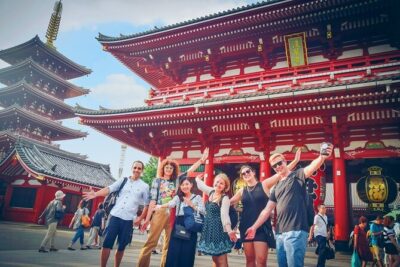
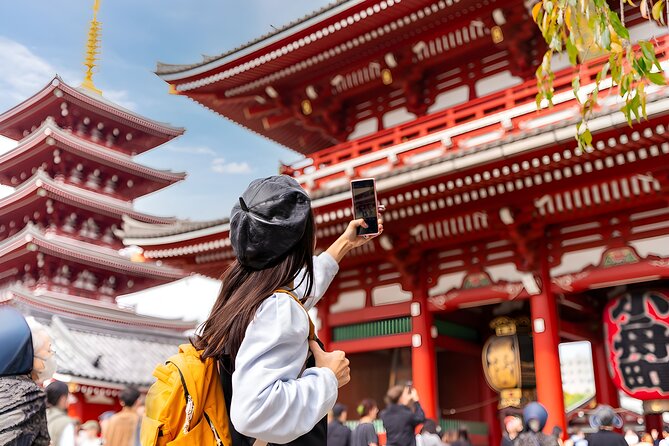
The day begins well in Asakusa, home to Senso-ji, Tokyo’s oldest and best-known Buddhist temple. The Kaminarimon, or Thunder Gate, is the grand entrance, with its enormous lantern and dramatic guardian figures. From there, Nakamise shopping street leads toward the temple grounds, lined with small shops selling snacks, souvenirs, and traditional goods.
You have about an hour here, which gives you time to see the gate, walk the shopping street, and visit the main temple area. It is enough for a first look, but not enough for a slow exploration of every side lane. Go early if you prefer a calmer visit, though the tour’s exact start time is not specified.
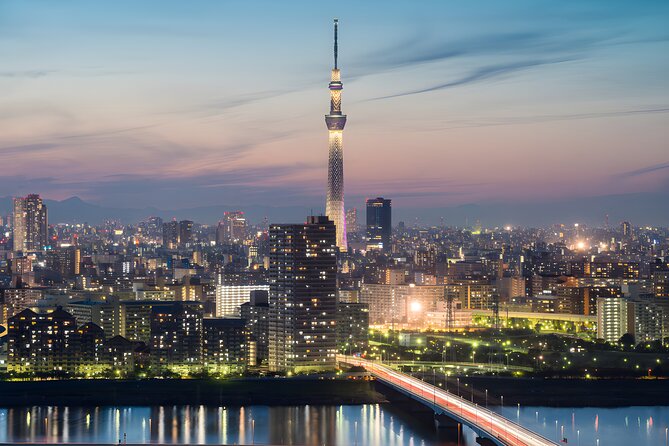
Next comes Tokyo Skytree, rising 634 meters above Sumida. The tower has two observation areas, the Tembo Deck and Tembo Galleria, plus a shopping complex below. Admission is not included, so you will need to decide if the view is worth the extra cost and time.
This is the first major scheduling choice of the day. The stop is listed as one hour, but going up the tower can take longer once you allow for tickets, elevators, views, and the return to the car. If Skytree is a priority, tell your driver early and accept that another stop may need to be shortened or skipped.
I would choose Skytree for clear, wide views over Tokyo, especially if this is your first visit. If you prefer street life and historic atmosphere, spend more time around Senso-ji instead. Trying to give both stops equal attention, then complete every later stop, is where the schedule becomes tight.
Tsukiji’s Outer Market and Ginza’s Polished Streets
Tsukiji is no longer the city’s main wholesale fish market, but its outer market remains a popular place for food. You can browse stalls offering seafood, Wagyu, local snacks, and street food. Admission is free, but you should budget separately for anything you eat.
The market is a good change of pace after the towers and temples. You can sample something small, look at the food displays, and get a sense of Tokyo’s everyday shopping culture. The one-hour stop is useful for a quick taste, not a long meal with several courses.
Food choices and stall opening times can vary, so keep your plans loose. The tour does not include food, and bottled water is provided, which is helpful during a long day of walking.
Ginza follows, bringing a sharp contrast. This is Tokyo’s premier shopping and entertainment district, with luxury boutiques, department stores, fine dining, and modern buildings. You may find the area more interesting for architecture, window-shopping, and a polished city atmosphere than for low-cost purchases.
The free stop gives you a chance to walk a little and see the district without committing to a shop or restaurant. If you are not interested in luxury shopping, ask your driver to keep this stop brief and preserve time for a temple, shrine, or observation deck.
Imperial Palace Gardens and Tokyo Tower
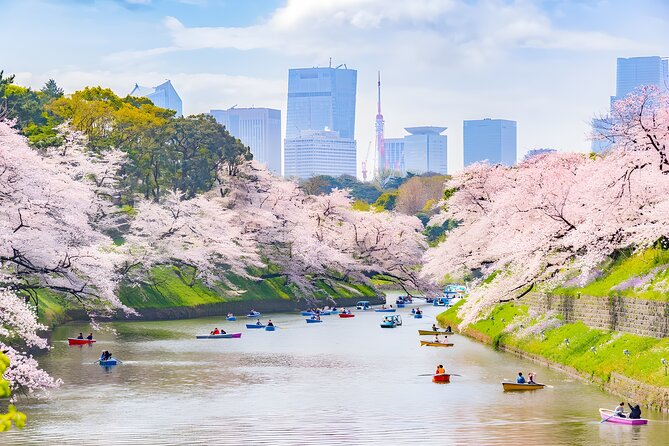
The Imperial Palace Gardens offer a quieter hour in the middle of the city. Public areas around the palace include old stone walls, moats, and seasonal flowers. The setting gives you a break from traffic and commercial districts, with views toward the palace grounds.
Do not expect a full palace tour from this stop. The information provided describes public garden areas, not entry into private imperial buildings. I would use this hour for a calm walk and photos rather than expecting a long guided visit.
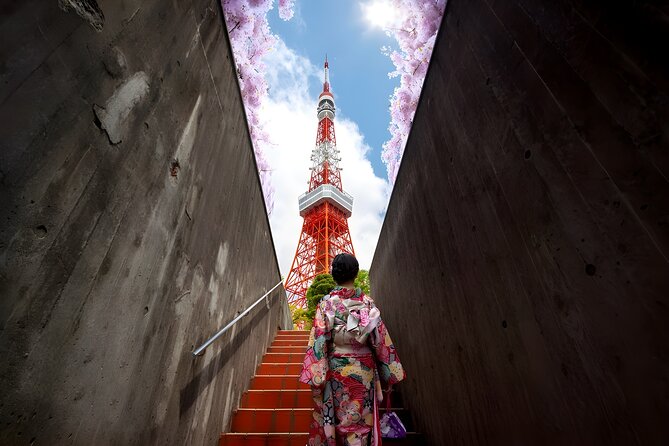
Tokyo Tower then returns you to the city’s high-rise character. The 333-meter communications and observation tower was inspired by the Eiffel Tower and includes observation areas, shops, and restaurants. Admission is not included.
Like Skytree, Tokyo Tower can take more than the scheduled hour if you go up. The two towers also serve a similar purpose, so you should decide if you need both. Tokyo Tower has a classic place in the city’s visual identity, while Skytree offers greater height. Seeing both can be worthwhile for architecture fans, but doing so makes the already full schedule even more demanding.
If you want one paid tower visit, choose based on your priorities and the day’s timing. You can also view Tokyo Tower from outside and use the saved time elsewhere, though the tour does not promise a particular viewpoint.
Same corner of Tokyo, a completely different plan:
- Tokyo: teamLab Planets TOKYO Digital Art Museum Entry Ticket
★ 4.6 · 9,779 reviews - Mt Fuji & Hakone Cruise, Drum Show Bullet Train 1 Day from Tokyo
★ 4.0 · 7,413 reviews - Tokyo: Sumo Show Experience with Chicken Hot Pot and a Photo
★ 4.8 · 6,678 reviews - Tokyo: Shinjuku Food Tour (13 Dishes at 4 Local Eateries)
★ 5.0 · 6,603 reviews
Meiji Jingu, Harajuku, and Omotesando
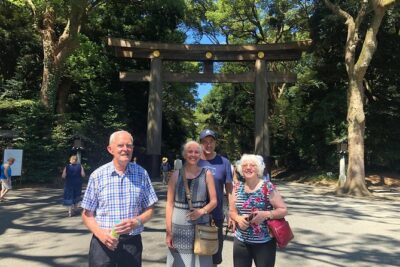
Meiji Jingu provides the day’s strongest dose of quiet. This major Shinto shrine honors Emperor Meiji and Empress Shoken and sits within a forested setting near Harajuku. Large torii gates mark the approach, and the grounds offer a calm contrast to the surrounding city.
The visit is free and scheduled for about an hour. Wear comfortable shoes, since shrine grounds usually involve walking, and remember that this is a place of worship rather than only a photo stop. The driver can explain customs while you are in the car, but you should not expect a guide to accompany you through every part of the shrine.
Takeshita Street, a short distance away, changes the mood completely. This pedestrian street is known for youth fashion, colorful shops, street food, pet cafes, and unusual boutiques. It can be crowded, so allow extra patience when moving through the narrow, busy shopping area.
The one-hour stop works if you want a quick look and perhaps a snack. It is less useful if you hope to shop carefully, visit a cafe, and explore side streets. Harajuku has more to offer than a single main street, but this tour is designed to show you a wide range of Tokyo rather than focus on one neighborhood.
Omotesando is scheduled for 30 minutes. Often compared with the Champs-Élysées, it has luxury brands, modern architecture, and elegant cafes. It is a good short walk after Takeshita Street, showing the more restrained and design-focused side of Harajuku.
You may find the contrast between Takeshita and Omotesando especially useful. One is youthful and playful, the other is upscale and architectural. If shopping is not your goal, 30 minutes here should be enough.
Shibuya Crossing as the Grand Finale
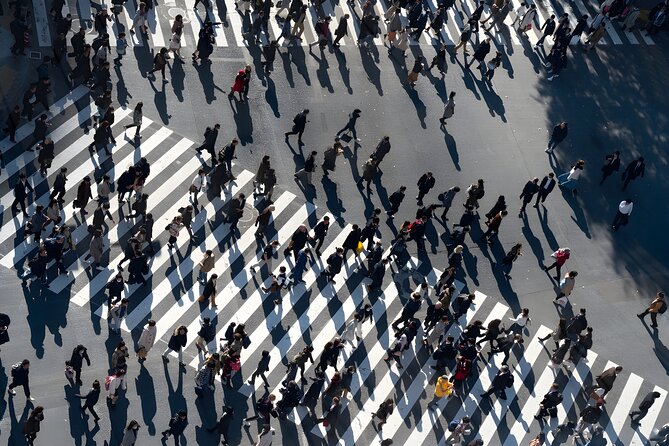
The final stop is Shibuya Crossing, one of Tokyo’s most famous intersections. When the signals change, people cross from several directions in front of Shibuya Station, surrounded by large signs and city noise.
The planned 30 minutes is enough to watch the crossing and take photos, but not enough for a serious exploration of Shibuya. You might want to see the crossing from an upper-floor cafe or explore nearby streets, but those options would require more time than the basic stop allows.
This is a fitting final snapshot of modern Tokyo. After a day of temples, gardens, markets, and towers, Shibuya gives you the city’s fast, crowded energy in one concentrated scene. If you are tired, it is also a sensible place to end before returning to the hotel.
What the Driver Adds to the Day
The driver is the key difference between this tour and a standard hired car. You have an English-speaking chauffeur who can offer information between stops, help shape the route, and wait for you while you visit each place.
Several named drivers have earned particularly warm praise. Ken is described as friendly, entertaining, and professional, and he has offered an itinerary that first-time visitors were happy to follow. Bek has been praised for punctuality, flexibility, and kindness, including dropping a passenger with walking trouble close to each sight. Aki is noted for clear English and strong local help, while Louis is described as polite and informative.
Drivers are not all necessarily the same person, so you should not book expecting a particular chauffeur unless the provider confirms one. Still, the pattern is clear: the strongest part of the service is the combination of patience, safe driving, and willingness to adjust the day.
One useful example of that flexibility involved a boat ride from Odaiba to Asakusa, arranged with help from a driver. The supplied tour does not promise this add-on, and it may not fit every schedule, but it shows why it pays to discuss your interests at the start rather than simply follow every listed stop.
The Nine-Hour Schedule Needs Realistic Planning
The stops add up to eight and a half hours: nine stops of one hour or less, plus travel between them. The advertised duration is approximately nine hours, so the plan leaves very little room for traffic, meals, queues, longer walks, or a paid tower visit.
That does not make the tour a poor choice. It means you should treat the route as a menu. Pick your top priorities and let the driver help arrange the order.
A practical plan might look like this:
- Keep Senso-ji, Meiji Jingu, and Shibuya if you want three different sides of Tokyo.
- Choose either Skytree or Tokyo Tower if you want to go up one observation deck.
- Combine Takeshita Street and Omotesando as one Harajuku visit.
- Use Tsukiji for a quick food stop rather than a long lunch.
- Shorten Ginza or the Imperial Palace if shopping or gardens are less important to you.
The private format makes this possible. You are not waiting for a large group, and the driver can pick you up at the agreed point after each stop. Still, traffic in Tokyo can affect the day, and no private vehicle can remove that basic city reality.
Comfort, Mobility, and What Is Included
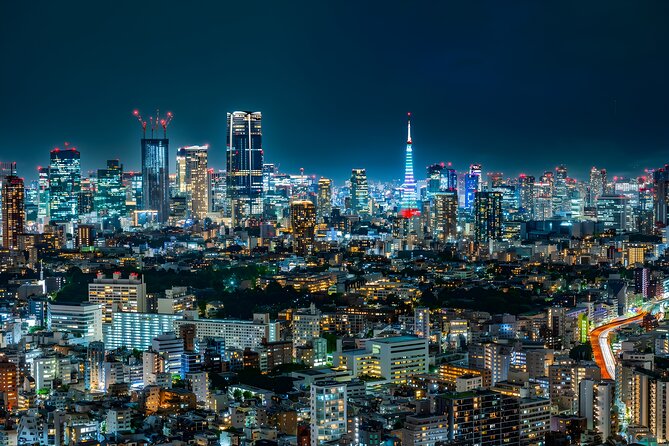
The air-conditioned vehicle matters during a nine-hour outing. Tokyo sightseeing can involve heat, rain, crowds, and long walks, so having a place to sit between districts is a real comfort.
Fuel, parking, and toll fees are included, along with bottled water. That makes the price easier to judge because common road costs are not added as surprises. Food, tower admissions, and any other personal purchases are extra.
Pickup and drop-off are offered at hotels in Tokyo. The tour is private for your group, with a maximum of three people. The vehicle size and exact seating arrangement are not specified, so confirm that your group and luggage needs fit before booking.
Most people can participate, but the day still involves walking at temples, shrines, markets, shopping streets, and gardens. The experience can work well for someone with limited mobility because drivers have helped passengers get close to entrances and pickup points. You should explain mobility needs in advance so the route can be handled sensibly.
Who Will Get the Most From This Tour
I would recommend this outing to first-time visitors who want a broad introduction to Tokyo in one day. It is also a strong fit for couples, families, and small groups who value privacy and do not want to manage a complicated rail route.
It works especially well if your list includes both old and new Tokyo. You can see a Buddhist temple, a Shinto shrine, a food market, luxury shopping streets, imperial gardens, observation towers, and Shibuya Crossing without arranging separate transport for each district.
I would be more cautious if you want deep visits at every site. The tour gives you access and flexibility, but it does not provide a walking guide at each attraction. It is also not ideal for a slow food-focused day, a serious shopping day, or a detailed temple and shrine study.
The recommendation rate is 99 percent, with a 5 out of 5 rating from 155 published ratings. That strong record fits the tour’s main strengths: convenience, friendly drivers, flexible timing, and the ability to see far more of Tokyo than you might manage alone in one day.
Should You Book the Tokyo Private Sightseeing Tour?
Book it if you want maximum coverage with minimum transport hassle. For up to three people, $273.90 can offer fair value when you consider the private vehicle, driver, hotel transfers, road costs, and the time saved between districts.
Before the day begins, choose your three or four must-see stops. Tell the driver if Skytree or Tokyo Tower is a priority, and do not assume you can spend an hour at every location and still fit in paid tower visits, lunch, and traffic delays.
Skip it if you want a slow, deeply guided experience at each attraction. For everyone else, this is a practical Tokyo overview, especially for a first visit, a short stay, or a group that needs door-to-door comfort. Free cancellation is available when you cancel at least 24 hours before the local start time.
FAQ
How long does the Tokyo private sightseeing tour last?
The tour lasts approximately nine hours.
How many people can join the private tour?
The tour is private for your group and allows up to three people.
Is hotel pickup and drop-off included?
Yes. Hotel pickup and drop-off in Tokyo are offered.
Are Tokyo Skytree and Tokyo Tower admission tickets included?
No. Admission tickets for Tokyo Skytree and Tokyo Tower are not included.
Does the tour include a walking guide?
No. The tour includes an English-speaking chauffeur, but not a separate walking guide. Information is given mainly in the car between destinations.
What happens if I cancel the tour?
You can receive a full refund if you cancel at least 24 hours before the experience start time. Cancellations or changes made less than 24 hours before the start time are not accepted for a refund.
New on our Tokyo list
- From Tokyo: Mount Fuji & Hakone Full Day Private Tour★ 4.9 · 25 reviews
- Tokyo Spectacular View Day-Cruise in 90 Minutes★ 5.0 · 25 reviews
- Real Tokyo Runner Club : Daikoku Car Meet Night Tour with JDM Car★ 5.0 · 25 reviews
- 2.5 Hour-Guided Cycle Tour in the Central Tokyo★ 5.0 · 25 reviews
- Ramen Making from Scratch +Akihabara Tour –Cooking Class★ 5.0 · 25 reviews
- [Self-Drive] Tokyo & Daikoku Custom Car Driving Tour★ 4.9 · 25 reviews
- Tokyo: 2-Hour Night Bike Tour of the City’s Hidden Gems★ 4.9 · 25 reviews
- Buddha, Bamboo & Zen – Bespoke Kamakura Private Walking Tours★ 5.0 · 25 reviews
Private, compared.
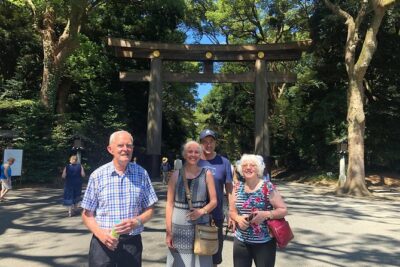
Tokyo 6hr Private Tour with Government-Licensed Guide
Read our review →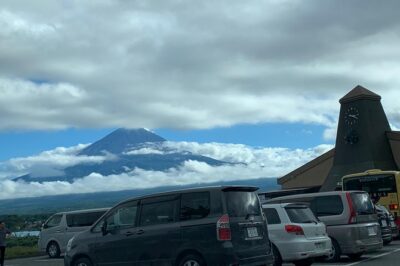
Private Tour to Mt. Fuji and Hakone (Fully Licenced Operator)
Read our review →
Tokyo Customized Private Tour (Must See Places in 1 Day)
Read our review →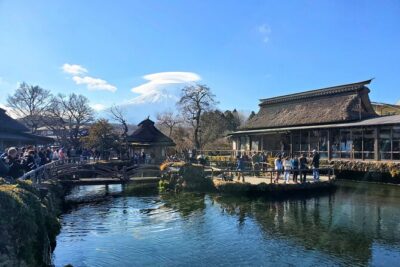
Mount Fuji Full-Day Private Tour from Tokyo (Customizable)
Read our review →
Private City Highlights Tour with Local Guide
Read our review →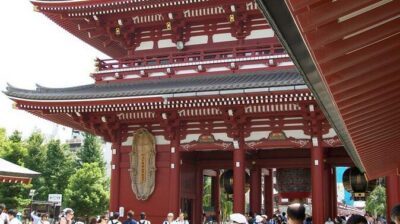
Tokyo 4hr Private Tour with Government-Licensed Guide
Read our review →