
Reviewed · TSUKIJI & TOYOSU MARKET TOURS
Tokyo: Private Tsukiji Fish Market Tour with 3 Food Stops
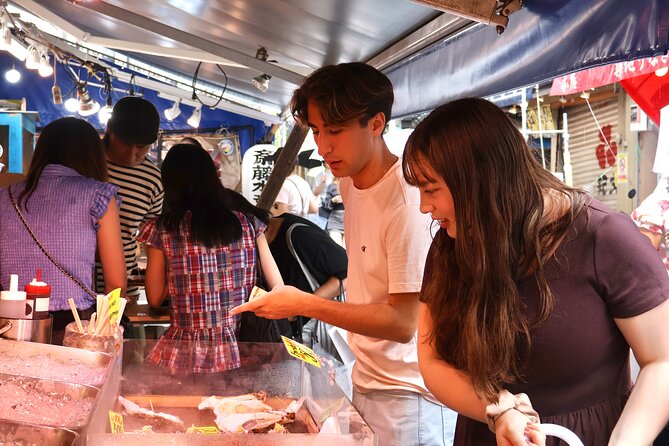
Tsukiji is best understood on foot, one food stall and prayer site at a time. This private tour links the market’s seafood culture with Namiyoke Inari Shrine, known for its large lion heads, and Tsukiji Hongwanji Temple, whose Indian-inspired design feels unlike most temples in Tokyo. You get three local foods along the way, with a guide explaining what you are seeing.
I like the private format, since your group can ask questions and set the pace. I also like the useful cultural mix: this is not only a food crawl, but a short look at Shinto and Buddhist traditions in the same neighborhood. The main drawback is the fixed two-hour schedule. Three foods, two religious sites, and a market walk make for a full outing, not a slow, sit-down tasting.
In This Review
- Key points at a glance
- Why Tsukiji works so well for a short food tour
- Three included foods, chosen by your guide
- Namiyoke Inari Shrine and the lion heads
- Hongwanji Temple’s unusual architecture
- What the private format changes
- Price and what you receive for $52.12
- Meeting point, timing, and the walking route
- Who will get the most from this experience
- Small details that improve the outing
- Should you book this Tsukiji tour?
- FAQ
- How long is the Tokyo Tsukiji tour?
- What is the price?
- Is this a private tour?
- Where does the tour start?
- Where does the tour end?
- How many foods are included?
- Are additional foods included?
- Which exact foods will be served?
- Does the tour visit a shrine and a temple?
- Is the ticket available on a phone?
- Can I cancel for a full refund?
Key points at a glance
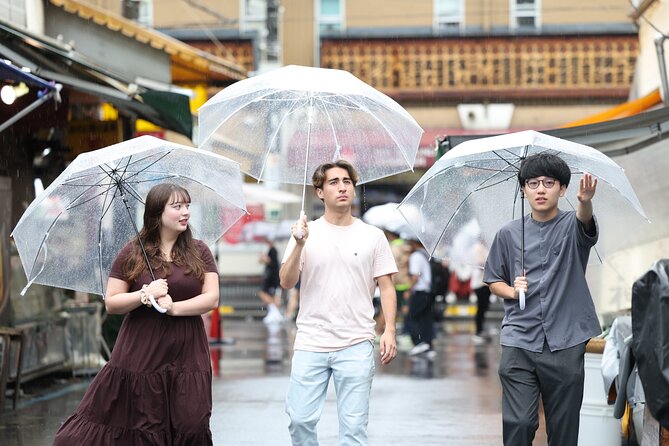
- Three foods are included: Your guide chooses three local favorites, while extra food and purchases cost more.
- The market walk lasts about 75 minutes in total: You spend 30 minutes exploring Tsukiji, then another 45 minutes sampling food and visiting lesser-known corners.
- Two major traditions appear in one short route: Namiyoke Inari Shrine introduces Shinto customs, while Hongwanji Temple offers a Buddhist contrast.
- The tour is private: Only your group participates, which makes questions and personal attention easier.
- Cass may be your guide: One especially positive account praises Cass for explaining the market and shrine history clearly.
- The meeting point is practical: Start and finish at the Lawson Tsukiji 4 Chome Store, near public transportation.
Why Tsukiji works so well for a short food tour
Tsukiji remains one of Tokyo’s best places to see how food fits into daily life. The former inner wholesale market moved to Toyosu, but Tsukiji’s outer market continues with seafood shops, produce sellers, kitchen goods, and traditional ingredients.
That distinction matters. You are not heading into the wholesale auction area on this walk. Instead, you explore the lively public streets where you can see the ingredients and food traditions that shape Japanese cooking.
I like that the guide gives the market a frame. Without context, Tsukiji can feel like a maze of tempting stalls. With a local guide, you can learn why the area matters, how it developed, and which corners deserve your limited time.
The market portion begins with about 30 minutes of walking and orientation. Later, you return to the market for roughly 45 minutes of food tasting and further exploration. That split gives you a chance to get your bearings before eating, rather than trying to understand the neighborhood while juggling food.
Still, keep your expectations sensible. Two hours is enough for an introduction, not a complete survey of Tsukiji. You will not cover every lane or sample every specialty. The value lies in having someone select a manageable route and explain the customs behind what you see.
More market mornings in Tokyo:
- Tokyo Tsukiji Fish Market Food and Culture Walking Tour
★ 5.0 · 3,184 reviews - Tokyo: Tsukiji Fish Market Food and Walking tour
★ 5.0 · 1,724 reviews - Tokyo: Tsukiji Fish Market Guided Walking Tour
★ 4.9 · 1,397 reviews
Three included foods, chosen by your guide
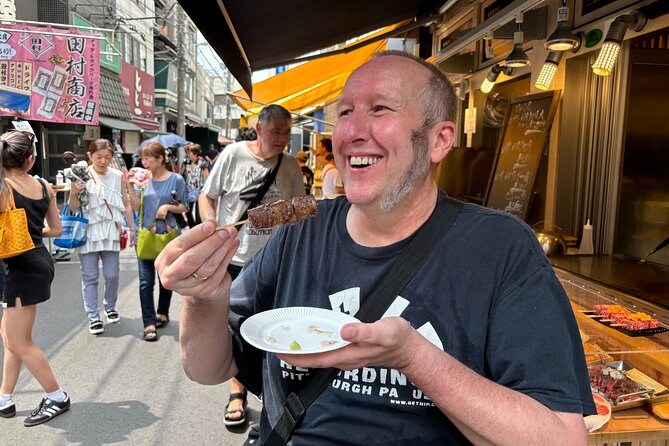
The central practical benefit is simple: three must-try foods are included in the price. The exact foods are not specified in advance, so you should expect the guide to make the selections rather than choose from a printed tasting menu.
That arrangement has advantages. A Japanese guide can point you toward local favorites and explain how each item fits into Tsukiji’s food culture. You also avoid spending the first part of your visit guessing which stall is worth your time.
The tradeoff is less control. If you have strong food preferences, allergies, or dietary restrictions, you should raise them when booking or before the tasting begins. The supplied details do not promise substitutions or list the foods, so do not assume every item will suit you.
The three tastings are also not a full meal guarantee. They are described as must-try foods, and extra food and drinks are not included. If you arrive hungry or want to keep sampling afterward, budget for additional purchases.
I see this as a good introduction for first-time visitors. You get enough food to understand the neighborhood, but you are not locked into a large meal or a long restaurant stop. The guide can keep the route moving while still giving you time to notice the market’s smells, displays, and everyday rhythm.
Namiyoke Inari Shrine and the lion heads
After the first market walk, the route reaches Namiyoke Inari Shrine. This shrine has protected Tsukiji since the Edo period and is known for its powerful lion-head decorations.
The stop lasts about 15 minutes, so expect a compact visit rather than a long religious tour. Your guide explains how locals pray for safety and good fortune, giving you a simple way to understand what happens at a Shinto shrine.
This is one of the tour’s strongest features. Food markets can easily become a string of purchases, but the shrine adds a sense of place and purpose. It shows that Tsukiji is not only a commercial district. Local work, faith, and neighborhood identity have developed alongside one another.
You do not need prior knowledge of Shinto customs to appreciate the visit. The guide can explain the basic actions and the role of the shrine in everyday life. The details provided do not specify a formal ceremony or special access, so think of this as a guided cultural stop in a functioning place of worship.
The short timing is both useful and limiting. Fifteen minutes keeps the tour on schedule, but it leaves little room for a slow look if you are especially interested in shrine architecture or photography. If the lion heads catch your attention, you may want to return independently after the tour.
Hongwanji Temple’s unusual architecture
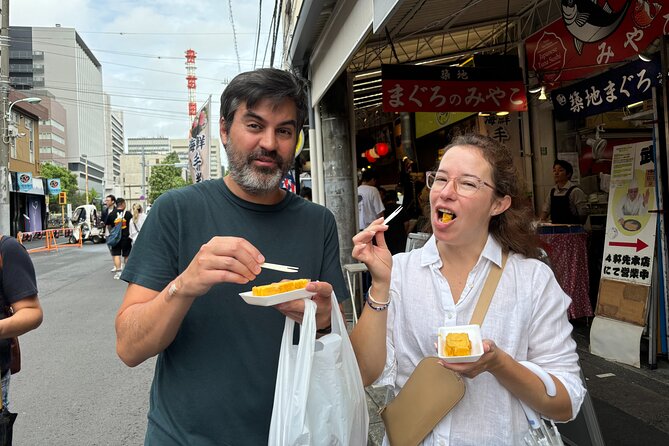
The final major stop is Tsukiji Hongwanji Temple, also called Tsukiji Honganji. Its Indian-inspired architecture gives it a very different appearance from the traditional wooden temples many people expect in Tokyo.
You have about 20 minutes here. The guide explains the temple’s background and discusses religious views commonly held in Japan. Paired with the shrine visit, this gives you a concise introduction to the country’s two major spiritual traditions.
I like the contrast. Namiyoke Inari represents Shinto practice in a neighborhood setting, while Hongwanji presents Buddhism through a striking architectural landmark. Seeing both in one route helps you understand that Japanese religious life is not neatly divided into one tradition per person or one type of building per district.
Again, this is an overview rather than a specialist architecture visit. The temple stop is free, and the tour does not promise a ceremony, an inside tour of every area, or extended time for quiet reflection. You will get the most from it if you listen for the connection between the building, the temple’s history, and the guide’s explanation of religious practice.
A few more Tokyo bookings worth comparing
- Tsukiji Fish Market Guided Tour and Sushi Making with Pro Chef
★ 5.0 · 775 reviews - Tokyo: Tsukiji Fish Market Food and Culture Walking Tour
★ 4.7 · 757 reviews - Tsukiji Fish Market: Street Food & Culture Walking Tour
★ 5.0 · 669 reviews - Tsukiji Fish Market Small-Group Food Walking Tour
★ 5.0 · 621 reviews
What the private format changes
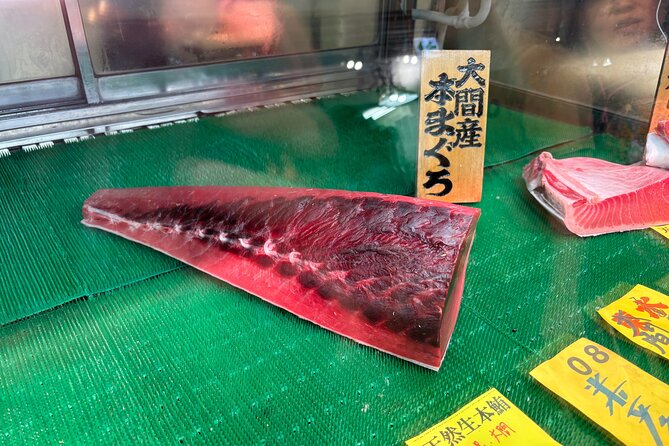
A private tour means only your group takes part. That matters in Tsukiji, where narrow streets and busy food stalls can make a large group awkward.
You can ask why a particular ingredient matters, how to approach a shrine, or where to return later for more food. A private guide can also adjust the conversation to your interests, though the route still has a set two-hour structure.
One account specifically praises Cass for sharing insight into the market and shrine history. If Cass leads your outing, that personal connection may add a lot to the experience. Guide assignments can vary, so I would treat Cass as a helpful example rather than a guarantee.
The private format also helps families and small groups who prefer not to keep pace with strangers. The tour states that most people can participate, but the supplied information does not give detailed accessibility notes. Since this is a walking tour through market streets, ask the operator directly if you have mobility concerns or need specific accommodations.
Price and what you receive for $52.12
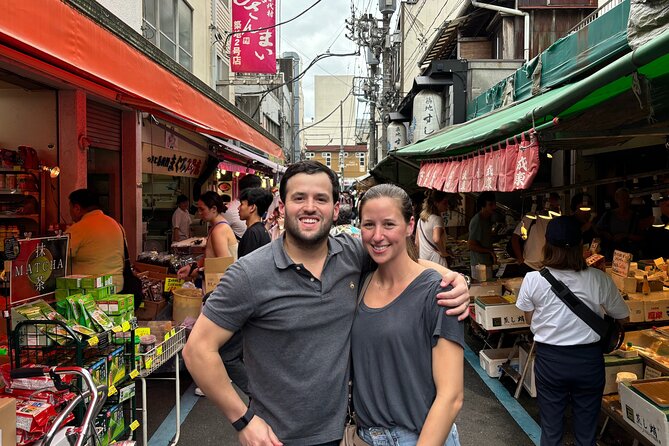
At $52.12 per person, the tour sits in the reasonable middle range for a private Tokyo food walk. You are paying for a guide, a two-hour route, three included foods, and photos sent after the tour.
The value depends on how much direction you want. If you already know Tsukiji well and are comfortable choosing stalls on your own, you may prefer to spend the money directly on food. But if this is your first visit, the guide’s route planning and cultural explanations can prevent a short stop from becoming random wandering.
The private setup is the key factor in the price. A shared group tour might cost less, but it would not offer the same one-group format. You are also not paying for a large meal, so compare the experience with a guided introduction rather than with a restaurant tasting menu.
Three foods are included, but additional foods and items are not. Drinks are not listed as included, and food and drinks for infants aged one to three are specifically excluded. Bring a little extra spending money if you want to continue eating or shopping.
The tour is booked, on average, 38 days ahead. That suggests you should reserve before your trip if the timing matters, especially since private capacity is naturally limited. You receive confirmation at booking and use a mobile ticket.
Meeting point, timing, and the walking route
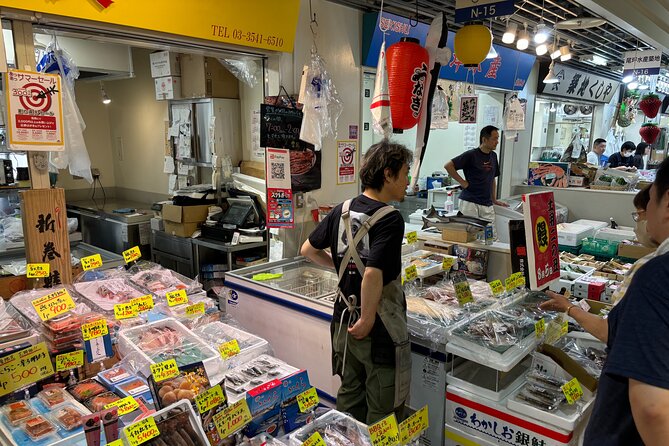
The tour starts at the Lawson Tsukiji 4 Chome Store, 4-chōme-8-1 Tsukiji, Chuo City, Tokyo 104-0045. It ends back at the same meeting point.
That makes planning easier. You do not need to work out a second pickup location or arrange transport from the final temple. The start is near public transportation, though the provided details do not name a particular station or give a recommended train route.
The advertised duration is about two hours. The scheduled portions add up to roughly 110 minutes:
- Tsukiji market exploration: 30 minutes
- Namiyoke Inari Shrine: 15 minutes
- Food stops and more market walking: 45 minutes
- Tsukiji Hongwanji Temple: 20 minutes
That leaves a small cushion for walking between stops, questions, and food service. You should arrive ready to walk and eat at a steady pace. The route is compact enough for a short morning or afternoon activity, but it is not designed as a leisurely half-day outing.
The mobile ticket is convenient for a Tokyo itinerary. Keep the confirmation available on your phone and check the meeting details before setting out. Free cancellation is available up to 24 hours before the local start time. Changes or cancellations inside that window are not accepted for a refund.
Who will get the most from this experience
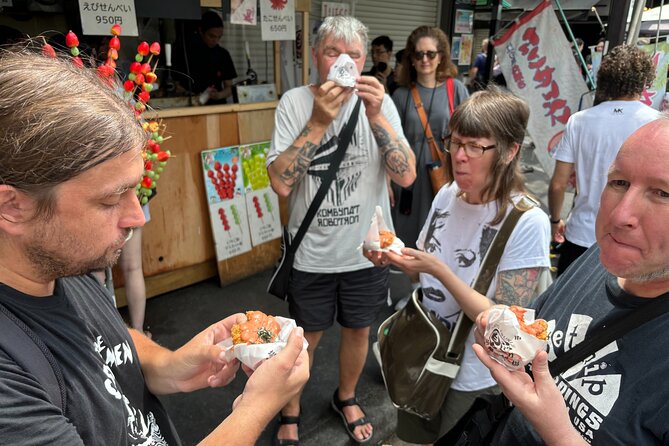
I would choose this tour for a first visit to Tokyo, especially if you want food and culture in one compact outing. It suits you if you prefer a local guide to explain customs instead of simply handing you a list of stalls.
It is also a good fit for couples, families, and small private groups who want to ask questions without a shared-tour crowd. The mix of market food, Shinto, and Buddhism gives you more variety than a food-only walk.
You may want something else if your main goal is a long tasting session. Three included foods is a useful sampler, but you will need to pay for extras if you want a full meal or more extensive market eating.
I would also look elsewhere if you want a detailed architectural or religious tour. The shrine and temple stops are short and designed to fit within a food-focused route. Their purpose is to give you context, not specialist study.
Small details that improve the outing
Start with a clear idea of what you want from the guide. If you care most about food, ask for explanations of the ingredients and stalls. If culture interests you more, use the private format to ask about prayer customs, temple practice, and the difference between the two traditions.
Do not assume the three foods will be announced ahead of time. The experience leaves the choices to the Japanese guide, which is part of its local character. If you have dietary limits, make them known early.
Plan extra time after the tour if you want to shop or eat more. Since you finish where you began, it is easy to continue exploring Tsukiji independently, though any further purchases are your responsibility.
The photos sent at the end are a pleasant extra, especially if you would rather stay present during the walk than stop often for pictures. They are included, but the details do not state how many photos you receive or when they arrive.
Should you book this Tsukiji tour?
Book it if you want a short, private introduction to Tsukiji that goes beyond food. The three tastings, Namiyoke Inari Shrine, and Hongwanji Temple create a well-shaped two-hour route, and the guide gives you useful context in a neighborhood that can otherwise feel confusing.
At $52.12, the price makes the most sense when you value personal guidance and the included food. It is less compelling if you want a large meal, a long market visit, or complete control over every tasting.
For a first morning in Tokyo, I think it is a smart way to get oriented. Reserve ahead if your schedule is fixed, ask about food needs before the start, and leave room afterward for more Tsukiji on your own.
FAQ
How long is the Tokyo Tsukiji tour?
The tour lasts approximately two hours.
What is the price?
The listed price is $52.12 per person.
Is this a private tour?
Yes. Only your group participates in the activity.
Where does the tour start?
It starts at the Lawson Tsukiji 4 Chome Store, 4-chōme-8-1 Tsukiji, Chuo City, Tokyo 104-0045, Japan.
Where does the tour end?
The activity ends back at the meeting point.
How many foods are included?
Three must-try local foods are included.
Are additional foods included?
No. Additional foods and items are not included.
Which exact foods will be served?
The supplied details do not name the three foods. They are selected by the local Japanese guide.
Does the tour visit a shrine and a temple?
Yes. It visits Namiyoke Inari Shrine and Tsukiji Hongwanji Temple.
Is the ticket available on a phone?
Yes. The experience includes a mobile ticket.
Can I cancel for a full refund?
Yes, if you cancel at least 24 hours before the experience start time. Cancellations made less than 24 hours in advance are not refunded.
More Shopping Tours in Tokyo
- Tokyo: Tsukiji Fish Market Sushi Making Class with Pro Chef
★ 4.9 · 506 reviews - Tokyo Food Tour Taste Fresh Delights at Tsukiji Market
★ 5.0 · 429 reviews - Tokyo Tsukiji Fish Market Tour and Sushi Making Lesson
★ 5.0 · 390 reviews - Tsukiji Fish Market: Street Food & Culture Walking Tour
★ 4.8 · 259 reviews
New on our Tokyo list
- Sumi-e Experience in a relaxing green tea shop in Tokyo★ 5.0 · 3 reviews
- Tokyo : Kamikaze Street Drift Ride★ 5.0 · 3 reviews
- Private Zen Meditation in English in Shinjuku, Tokyo★ 5.0 · 3 reviews
- Onsen Spa in Tokyo and Asakusa Bar Hopping with Local Guide★ 5.0 · 3 reviews
- Easy for everyone! Now you can play handmade mini shamisen and show off to everyone! Musical instruments, sweets and live music★ 5.0 · 3 reviews
- Tokyo Tsukiji Fish Market Walking and Exploring Hidden Gems Tour★ 5.0 · 3 reviews
- Tokyo: Private Tsukiji Street Food & Sake with Local Guide★ 5.0 · 3 reviews
- Mt Fuji Exploration Tour with Free Japanese Kusa Mochi from Tokyo★ 4.5 · 3 reviews
Tsukiji & Toyosu Market Tours, compared.
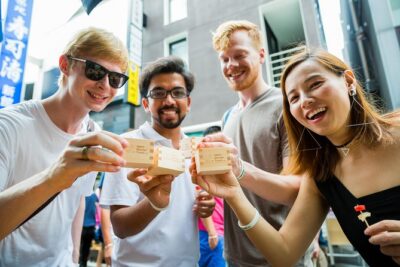
Tokyo Tsukiji Fish Market Food and Culture Walking Tour
Read our review →
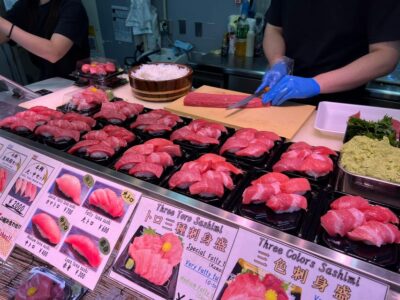

Tokyo Sushi Making Class in Tsukiji with Professional Chef
Read our review →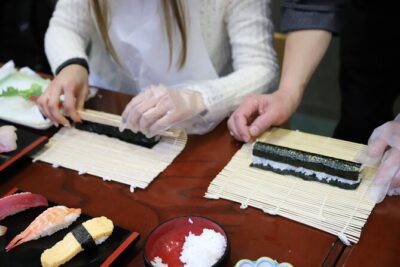
Tsukiji Fish Market Guided Tour and Sushi Making with Pro Chef
Read our review →Tsukiji Fish Market Food and Culture Walking Tour
Read our review →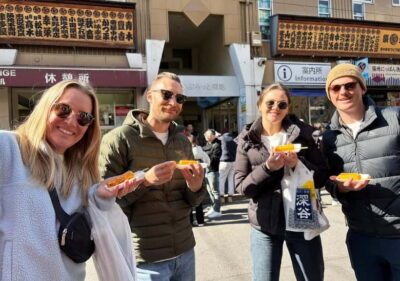
Tsukiji Fish Market: Street Food & Culture Walking Tour
Read our review →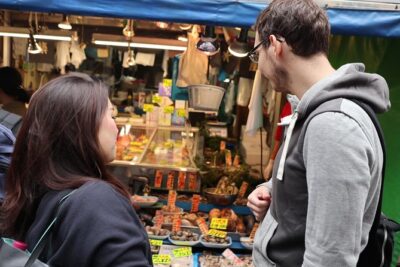
Tsukiji Fish Market Small-Group Food Walking Tour
Read our review →Browse the lists this tour appears in