
Reviewed · WALKING TOURS
Tokyo: Private Walking Tour With Fresh Eyes, Local Hearts
Tokyo is too large for a single checklist tour, and that is exactly why this private walk can work so well. You choose the area, the pace, and the theme, then let a local guide connect the sights. Toko has helped first-time visitors learn the train system, while Momo has even walked guests to a favorite omakase restaurant after the tour.
I especially like the chance to use the tour as a gentle first-day introduction to Tokyo, and I like that a guide can adjust for an infant, elevator needs, bathroom breaks, or a short visit. The main catch is that transportation fees and meals are extra, and a short one or two-hour booking cannot sensibly cover more than one neighborhood.
In This Review
- Key points
- A private start to Tokyo that avoids the usual rush
- Choosing between one and eight hours
- Shibuya, Meiji Shrine, and the western side of Tokyo
- Tsukiji, Hama-rikyu, and the Imperial Palace
- Asakusa and Tokyo’s traditional side
- Shinjuku, Golden Gai, and the garden option
- Akihabara for games, electronics, and pop culture
- Tokyo gardens and quieter walking routes
- What the guides add beyond directions
- Meeting points, pickup, and practical planning
- Who gets the best value from this tour
- Should you book Tokyo: Private Walking Tour With Fresh Eyes, Local Hearts?
- FAQ
- How much does the private Tokyo walking tour cost?
- How long can the tour last?
- Is this a private tour?
- Can the itinerary be customized?
- Where does the tour meet?
- Are transportation costs included?
- Are meals and drinks included?
- What languages are available?
- Can I cancel for a full refund?
Key points
- Your itinerary is built around your interests, not a fixed citywide route.
- Toko can meet you at the airport, according to one booking account, and explain Tokyo’s train system from the start.
- You can focus on one area, such as Shibuya, Shinjuku, Tsukiji, Asakusa, or Akihabara.
- The tour works well for families, with flexibility for breaks and elevator detours.
- You pay $25 per person, while transport, food, and drinks are not included.
- You can book one, two, four, six, or eight hours, with a private group and optional pickup.
A private start to Tokyo that avoids the usual rush
This experience is best understood as a local orientation service with walking at its center. You do not simply follow a guide through a prewritten route. You discuss what interests you, then meet at a suitable point in an area such as Shibuya, Shinjuku, or Tsukiji.
The guide contacts you by WhatsApp or email before the tour to discuss your plans and arrange the route. The timing listed for that contact is within the two weeks before the tour, so give yourself enough room to explain your interests clearly.
For a first visit, I would use the tour to answer practical questions: How do I use the trains? Which neighborhoods fit my style? Where can I find a shrine without spending half the day in transit? For a return visit, I would ask for a narrower subject, such as Japanese gardens, traditional worship, Tokyo food markets, or the city’s game culture.
The tour is private, so only your group takes part. That matters in Tokyo, where a slow crossing, a crowded station, or a child who needs a break can throw off a rigid group schedule. Your guide can adjust the pace rather than leaving you to catch up.
More walking routes in Tokyo:
- Tokyo Tsukiji Fish Market Food and Culture Walking Tour
★ 5.0 · 3,184 reviews - Tokyo: Imperial Palace and Shogun Historical Walking Tour
★ 5.0 · 2,251 reviews - Tokyo: Shinjuku Local Bar and Izakaya Guided Walking Tour
★ 4.9 · 1,794 reviews
Choosing between one and eight hours
The price is listed at $25 per person, which is attractive for a private guide, especially if you are traveling with several people. Still, judge the value by the time you select. A one-hour booking is an introduction, not a full city tour. A two-hour option can cover a compact district, while four hours gives you room for two nearby areas if public transport is efficient.
The six and eight-hour choices offer the best chance to connect several parts of Tokyo, but transport takes time and costs extra. You should not expect to walk from the Imperial Palace to Asakusa, Shibuya, or Akihabara in a single outing. A good plan groups nearby stops and avoids wasting your paid time crossing the city.
The available choices are listed as one, two, four, six, and eight hours. The general duration is described as one to eight hours. Check the booking calendar for exact starting times and the option available on your date.
I would choose:
- One hour for a quick orientation near your hotel or station.
- Two hours for one focused neighborhood.
- Four hours for a useful half-day introduction with some train practice.
- Six hours for a broader city overview at a manageable pace.
- Eight hours for a full day built around several connected areas.
The tour does not include private transportation. You will walk and use public transport, with fares paid separately. That is not a flaw for most people. Tokyo’s train and subway system is part of daily life, and learning to use it with a local can make the rest of your trip less stressful.
Shibuya, Meiji Shrine, and the western side of Tokyo
A Shibuya-focused route gives you Tokyo’s most famous crossing, but the crossing itself takes only a few minutes. The real value comes from understanding the surrounding district and learning how to move through it.
You can pair Shibuya Crossing with Meiji Shrine and Yoyogi Park. Meiji Shrine offers a quieter setting near one of Tokyo’s busiest districts, while Yoyogi Park provides open space and a break from dense streets. Takeshita Street adds a very different mood, with youth fashion and an energetic shopping scene.
This combination works best in four hours or more, depending on the meeting point and how long you spend walking. I would not try to force Shibuya, Meiji Shrine, Takeshita Street, and a distant neighborhood into a short booking.
The guide can also add Nezu Shrine or the Nezu Museum if your interests lean toward art, design, or older Tokyo neighborhoods. Those are better choices for a tailored cultural route than for someone who wants a quick list of famous sights.
One practical point: the itinerary calls each location a visit, guided tour, sightseeing stop, and walk. That does not mean every site is entered or given the same amount of time. Ask your guide what you want to see inside and what can be treated as a brief exterior stop.
Tsukiji, Hama-rikyu, and the Imperial Palace
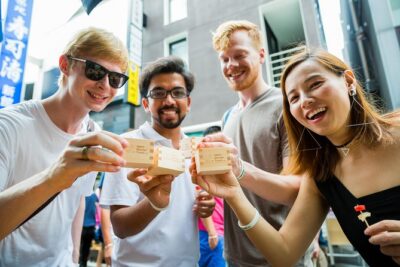
Tsukiji Outer Market is a strong choice for an introduction to Tokyo food culture. You can walk through the market area, ask about Japanese ingredients and eating customs, and get local guidance before choosing where to eat. Meals and drinks are not included, so budget separately for anything you purchase.
Hama-rikyu Gardens pair naturally with Tsukiji. The garden gives you a change of pace after the market and offers a traditional setting within central Tokyo. If you select this route, confirm how much time you want for food, since market browsing can easily take over a short tour.
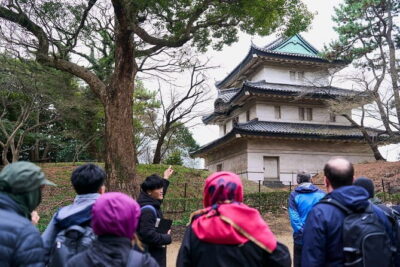
The Imperial Palace is another central stop. A guide can help place the palace grounds and surrounding streets within the city’s story, but do not assume that a short booking covers every palace area. Your guide will need to shape the visit around access, timing, and your chosen route.
This is one of the most useful combinations for first-time visitors who want food, gardens, and a major Tokyo landmark without spending the day on opposite sides of the city. It also suits people who prefer a calmer start than the neon-heavy districts.
A few more Tokyo bookings worth comparing
- Mt Fuji and Hakone 1-Day Bus Tour Return by Bullet Train
★ 5.0 · 26,383 reviews - 1-Day Tokyo Bus Tour
★ 5.0 · 14,250 reviews - Tokyo: TOKYO SKYTREE® Admission ticket
★ 4.5 · 11,192 reviews - Tokyo: teamLab Planets TOKYO Digital Art Museum Entry Ticket
★ 4.6 · 9,779 reviews
Asakusa and Tokyo’s traditional side
Asakusa gives you a strong contrast with modern Shibuya. The route can include the Asakusa Culture Tourist Information Center and Asakusa Shrine, with time for walking through the surrounding district.
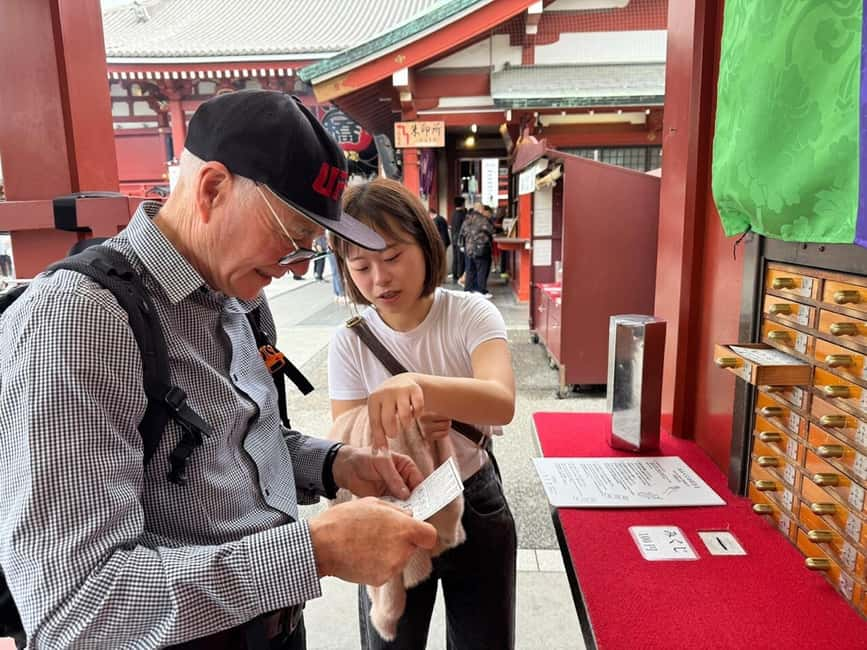
The information center is a practical meeting or orientation point. Asakusa Shrine offers a chance to ask about shrine customs and local religious practice rather than simply photographing the entrance. A private guide can explain what you are seeing and how to behave, which is especially useful if this is your first visit to Japan.
I would pair Asakusa with Ueno if you have at least four hours and are comfortable using public transport. Ueno Park, Ueno Toshogu Shrine, and Ueno Ameyoko Shopping Street each offer a different experience. The park gives you room to walk, the shrine adds a more formal religious stop, and Ameyoko brings shopping and street life.
The drawback is simple: Asakusa and Ueno can become crowded, and a short tour may feel rushed if you linger at every stop. Tell the guide your priority before setting out. You might prefer one careful neighborhood walk over a hurried sweep of both.
Shinjuku, Golden Gai, and the garden option
Shinjuku can be planned in several ways. You may want an introduction to the district itself, a visit to Shinjuku Gyoen National Garden, or an evening-oriented walk that includes Golden Gai.
Shinjuku Gyoen offers a welcome pause from the station area and works well for anyone who wants gardens rather than shopping. Golden Gai is a more compact district known for its small bars and narrow lanes. The tour information does not include meals or drinks, so any stop for food or a beverage is at your own cost.
I would make Golden Gai a specific request rather than assuming it will be part of a daytime route. You should also tell the guide if you want a family-friendly walk, since the mood and purpose of Golden Gai differ from a garden visit.
Shinjuku is a good choice when you are staying nearby and want to reduce transport time. It is less suitable as one stop among many on a short tour. Tokyo rewards focus, and Shinjuku has enough variety to fill a substantial part of the day.
Akihabara for games, electronics, and pop culture
Akihabara Electric Town gives the tour a completely different subject. You can focus on electronics, Japanese games, and the district’s well-known pop-culture shops.
Super Potato Akihabara is specifically included as a possible stop, making this a useful choice for anyone interested in retro gaming. The guide can help you understand what you are looking at and direct the route according to your interests, though purchases are not part of the tour.
Akihabara pairs well with Kanda Shrine, which offers a cultural contrast nearby. The shrine route can help you move from modern entertainment to a place of worship without treating Tokyo as a collection of disconnected photo stops.
I would choose Akihabara for a themed half-day, especially if your group has one person who does not want a standard shrine-and-garden route. A private guide makes it easier to spend more time on games and less time on sights that do not interest you.
Tokyo gardens and quieter walking routes
The tour includes several gardens, and that is a useful feature for repeat visitors or anyone who needs a break from major districts. Hama-rikyu, Kiyosumi, Koishikawa Korakuen, and Rikugien can each support a garden-focused itinerary.
These locations are spread across Tokyo, so they should not be treated as one automatic route. Choose one or two based on your meeting point and interests. Your guide can explain the differences in atmosphere and help you decide which garden fits your schedule.
A garden tour is also a good option for photographers, older adults, or families who prefer a slower pace. Wheelchair access is listed for the activity, but Tokyo’s streets, stations, and individual sites can vary. If accessibility matters to your group, raise it when arranging the route so the guide can plan around elevators and suitable paths.
What the guides add beyond directions
The strongest part of this experience is not the list of stops. It is the chance to ask questions as you go.
Toko has helped a first-time visitor begin the trip at the airport, learn the train system, understand how to reach major neighborhoods, and find places to eat near the hotel. That makes this tour especially useful on day one. Instead of spending your first evening decoding transit signs alone, you can practice with someone who knows the route.
Toko also built a specialized itinerary on short notice for a family with an infant. The pace included bathroom breaks and elevator detours, while still fitting a lot into a short period. That is a useful sign for families who worry that a private walking tour will be too rigid.
Momo’s approach appears more food-focused. After showing guests around, Momo walked them to a favorite omakase restaurant. The restaurant meal was not included, but that kind of local suggestion can be more valuable than another generic landmark.
The guides speak English and Japanese. Their role is not just translation. You can ask about customs, food, neighborhoods, transport, and the meaning of places as you encounter them.
Meeting points, pickup, and practical planning
The meeting point is selected in an area that interests you, with Shibuya, Shinjuku, and Tsukiji offered as examples. Hotel pickup is included as an option, and the guide can also meet you at another requested location. One account describes an airport meeting, so ask about that possibility when arranging your booking.
You should provide three details before the tour:
- The neighborhood or subject you care about most.
- Your preferred pace and any mobility needs.
- Whether you want help with trains, food, temples, shopping, gardens, or landmarks.
Do not plan a packed route of all 27 listed places. That list is a menu of possible stops, not a realistic one-day walking itinerary. A thoughtful route might cover Asakusa and Ueno, Tsukiji and Hama-rikyu, or Shibuya and Meiji Shrine.
Bring money for train or subway fares, food, and drinks. Since private transportation is not included, you should be comfortable walking and using public transport. The activity is wheelchair accessible, and the private format allows the guide to discuss practical adjustments in advance.
Free cancellation is available up to 24 hours before the tour for a full refund. You can also reserve now and pay later, which helps if your Tokyo schedule is still changing.
Who gets the best value from this tour
I would recommend this experience most strongly to first-time visitors, families, and people who want help getting oriented quickly. It is also a smart choice if you have only one free day and cannot decide which part of Tokyo deserves your attention.
The tour suits you if:
- You want a private guide rather than a fixed group route.
- You need help learning Tokyo’s public transport.
- You prefer local neighborhoods and context over a simple photo checklist.
- You have a particular interest in food, gardens, shrines, games, or shopping.
- You need a flexible pace for an infant or a family member with mobility concerns.
It may not suit you if you want a fully preplanned luxury tour with a private vehicle, included meals, or guaranteed entry to every listed site. Those extras are not part of the package.
Should you book Tokyo: Private Walking Tour With Fresh Eyes, Local Hearts?
Book it if you want Tokyo to make more sense from the first day. At $25 per person, the private format offers good value, especially when a guide such as Toko can teach you the train system and help shape the rest of your trip.
Choose a shorter option for one neighborhood, and choose four hours or more if you want real breathing room. Before confirming, tell the guide exactly what matters to you and remember that transport, meals, and drinks cost extra.
For many visitors, the best use is not trying to see everything. It is learning how to move through Tokyo, asking better questions, and finding the part of the city that fits your own interests.
FAQ
How much does the private Tokyo walking tour cost?
The listed price is $25 per person.
How long can the tour last?
You can choose one, two, four, six, or eight hours. The general duration is listed as one to eight hours.
Is this a private tour?
Yes. Only your group participates in the activity.
Can the itinerary be customized?
Yes. The tour includes customization, and the guide contacts you by WhatsApp or email before the tour to discuss your interests and schedule.
Where does the tour meet?
The meeting point is selected in an area that interests you, such as Shibuya, Shinjuku, or Tsukiji. Hotel pickup or pickup from another requested location is also available.
Are transportation costs included?
No. Transportation fees are not included, and private transportation is not provided. The activity uses walking and public transport.
Are meals and drinks included?
No. Meals and drinks are not included.
What languages are available?
The live guide service is available in English and Japanese.
Can I cancel for a full refund?
Yes. You can cancel up to 24 hours in advance for a full refund.
New on our Tokyo list
- Sumi-e Experience in a relaxing green tea shop in Tokyo★ 5.0 · 3 reviews
- Tokyo : Kamikaze Street Drift Ride★ 5.0 · 3 reviews
- Private Zen Meditation in English in Shinjuku, Tokyo★ 5.0 · 3 reviews
- Onsen Spa in Tokyo and Asakusa Bar Hopping with Local Guide★ 5.0 · 3 reviews
- Easy for everyone! Now you can play handmade mini shamisen and show off to everyone! Musical instruments, sweets and live music★ 5.0 · 3 reviews
- Tokyo: Private Tsukiji Street Food & Sake with Local Guide★ 5.0 · 3 reviews
- Mt Fuji Exploration Tour with Free Japanese Kusa Mochi from Tokyo★ 4.5 · 3 reviews
- Tokyo Tsukiji Fish Market Walking and Exploring Hidden Gems Tour★ 5.0 · 3 reviews
Walking Tours, compared.
Tokyo Tsukiji Fish Market Food and Culture Walking Tour
Read our review →
Imperial Palace and Shogun Historical Walking Tour
Read our review →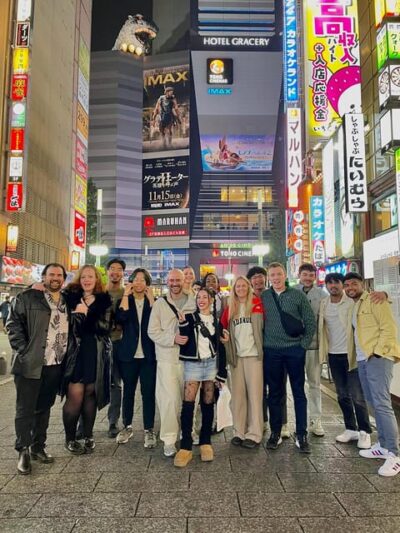
Shinjuku Local Bar and Izakaya Guided Walking Tour
Read our review →

Asakusa Walking Tour with Sensoji Temple Visit
Read our review →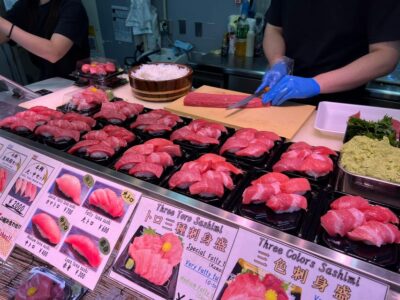
Tokyo Castle & Imperial PalaceーShogun Walking Tour
Read our review →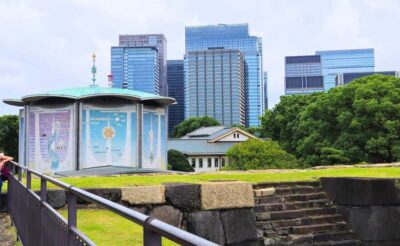
Browse the lists this tour appears in