
Reviewed · SAMURAI & NINJA EXPERIENCES
Tokyo Samurai Experience: Kyudo (Archery) and Swordsmanship
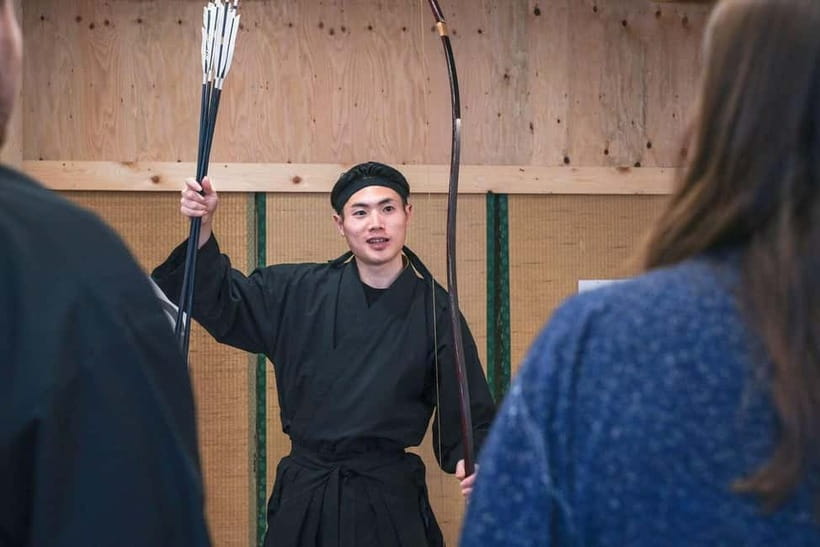
The first thing you do here is trade modern Tokyo clothes for a hakama samurai outfit. Then you learn to handle a traditional bow and a single-edged katana, all in a one-hour session at BUB Activity Center in Asakusa.
I like the mix of kyudo and swordsmanship, since it gives you two very different views of Japanese martial arts. I also like the easygoing staff, with instructors such as Joe and Mori offering patient help and taking plenty of photos. The main drawback is time: one hour goes quickly, so this is an entertaining introduction, not serious martial-arts training.
In This Review
- Key points to know before booking
- Changing into a samurai in Asakusa
- A quick history lesson with a samurai ranking game
- Trying kyudo with a traditional Japanese bow
- Learning the katana pose and grip
- Snacks, photos, and the value of the short format
- Who will enjoy this samurai experience
- Practical planning for your Asakusa visit
- Should you book the BUB Activity Center session?
- FAQ
- Where does the Tokyo Samurai Experience take place?
- How long does the activity last?
- Do I need previous archery or sword experience?
- Is the activity taught in English?
- What is included in the price?
- What should I wear and when should I arrive?
Key points to know before booking
- You dress in a hakama outfit: A range of heights and sizes is available, making the costume part practical as well as fun.
- You try two samurai skills: The session covers Japanese archery, called kyudo, and basic katana handling.
- The mini-game sets your rank: A short history introduction leads into a playful contest to decide your samurai position.
- Joe and Mori are among the named instructors: English-speaking staff explain each step in simple terms and adjust to your level.
- Snacks and photos are included: You leave with a few Japanese treats and staff-assisted pictures of your samurai poses.
- The activity suits families and beginners: No prior experience is needed, and the venue is wheelchair accessible.
Changing into a samurai in Asakusa
The activity takes place at the BUB Activity Center in Asakusa, one of Tokyo’s best areas for old-town atmosphere, temples, shopping streets, and casual food. The address is Heiwa Building, 2 Chome 6-11, Taito-ku. Take the elevator to the fifth floor, rather than looking for a street-level shopfront.
Arrive about 10 minutes early. That matters because your one-hour booking includes changing clothes and instruction, not just time with the bow and sword. Comfortable clothes and shoes will make the changeover easier, and alcohol and drugs are not allowed.
The hakama set is the visual hook. You change from ordinary sightseeing clothes into traditional Japanese dress, with different sizes available for many heights and builds. This is more than a costume photo stop. The outfit helps you shift your attention from Tokyo sightseeing to the posture and manners expected in the lesson.
You should still keep expectations sensible. This is a short cultural activity, not a historical reenactment or a course in samurai combat. The clothes set the scene, while the staff give you a friendly introduction to samurai customs and ideas.
More dojo sessions:
- Tokyo: Samurai Sword & Archery Class from Samurai Descendant
★ 5.0 · 603 reviews - Tokyo:Samurai sword and archery class from a samurai descendant
★ 5.0 · 121 reviews - Tokyo 2-Hour Genuine Samurai Experience: Kendo in Japan
★ 5.0 · 112 reviews
A quick history lesson with a samurai ranking game
Once dressed, you receive a brief explanation of samurai history and traditions. It is designed for a general audience, so you will not need prior knowledge of Japanese history or martial arts.
The fun mini-game follows the introduction. Its purpose is to assign a samurai rank, and you can compete for the top position, including the role of shogun. The game gives the group an immediate reason to pay attention, while taking some pressure out of the lesson.
I like this format because it avoids a long lecture. You learn a little context, then use it right away in a light competition. Even if you lose the ranking game, the real practice starts afterward, so nobody is pushed to the sidelines.
The competitive element may work especially well for children, teenagers, couples, and friends. It also gives a solo participant an easy way to join the mood of the group. Just remember that the ranking is part of the fun, not a serious test of historical knowledge or physical skill.
Trying kyudo with a traditional Japanese bow
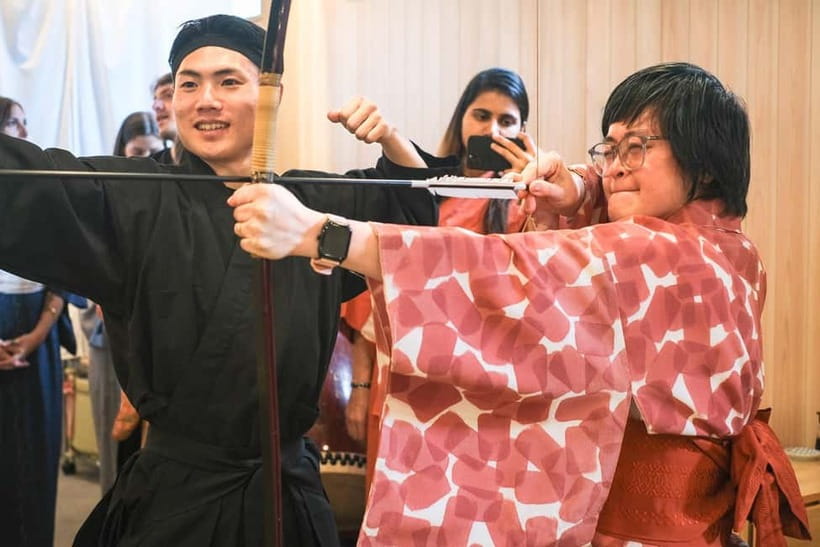
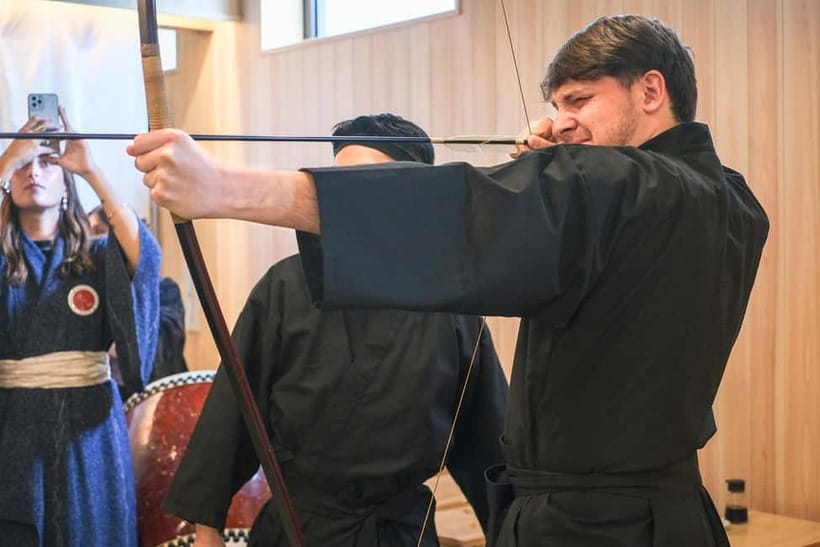
The archery section introduces you to kyudo, a Japanese martial art with a long tradition. You use a traditional Japanese bow and compete with your companions for the shogun position.
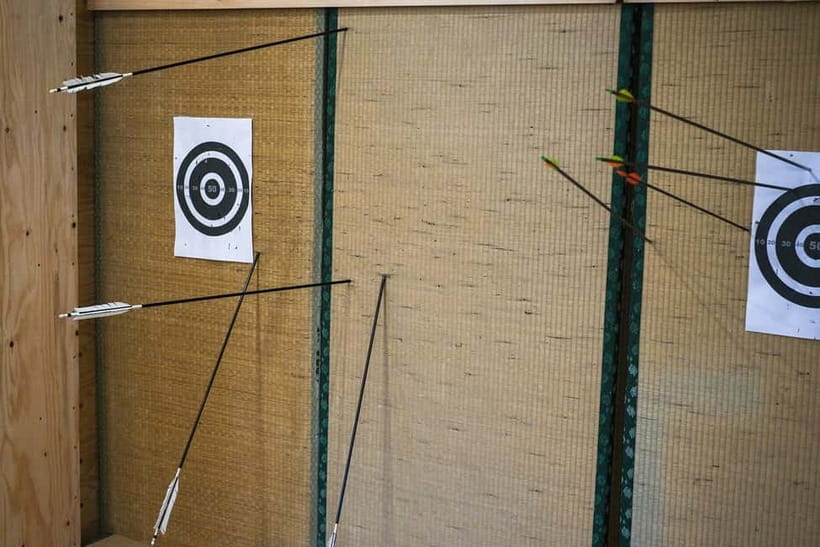
Kyudo is not simply Western archery with Japanese clothing. The posture, grip, movement, and mental focus are different, and the instructor will show you the basic form. Pay attention to the sequence rather than worrying only about hitting a target. With a one-hour class, the value is in learning how the art feels and why its method differs from the archery you may have seen elsewhere.
The bow can look impressive in the hands of an expert, but no prior experience is required. Bilingual English-speaking staff explain the activity in clear language and can adapt to your level of English. Instructor Mori is described as patient and friendly, which is useful when your hands and feet do not seem to know where they belong.
You should expect guidance rather than advanced coaching. There is not enough time to study kyudo in depth, and the session is built around trying the activity, not perfecting every movement. Still, the bow section gives you a genuine taste of a Japanese martial art rather than a simple photo opportunity.
Learning the katana pose and grip
The sword portion focuses on how to hold a single-edged katana and how to take the correct pose. The instructor helps you present yourself as a strong samurai, with attention to stance and position.
This part is less about speed or fighting and more about controlled movement. You learn where to place your hands, how to stand, and how to create the right posture for a photograph. It is a sensible approach for a family-friendly activity because it keeps the focus on form and presentation.
The katana work pairs well with kyudo. The bow asks you to follow a careful sequence, while the sword lesson gives you a clear physical pose to remember. Together, they help you see that samurai training involved discipline and control, not just weapons.
Instructor Joe has been praised for being friendly and instructive, and that tone fits this section. You can ask for help without feeling that you need to look experienced. Staff also take photos and videos, so you can concentrate on the pose instead of handing your phone to another participant.
The sword is part of a supervised activity. Follow the instructor’s directions and treat it as a training prop for the session. Do not expect a full sword-fighting performance or a lesson in advanced cuts. The advertised focus is the grip, stance, and samurai image.
More samurai and ninja sessions:
- Tokyo: Samurai Ninja Museum Guided tour and Experience
★ 4.6 · 1,010 reviews - Best Samurai Experience in Tokyo
★ 5.0 · 458 reviews - Ninja Experience (Family Friendly) at Samurai Ninja Museum TOKYO
★ 5.0 · 441 reviews - Tokyo: Samurai Entertainment Night Show in Kanda Shrine
★ 4.6 · 417 reviews
Snacks, photos, and the value of the short format
Traditional clothes and Japanese snacks are included. The food adds a small cultural touch after the active parts, while the photographs help preserve the experience beyond the one-hour appointment.
The photo help is especially useful here. A samurai pose is difficult to capture when you are also trying to hold the bow or katana correctly. Staff can take pictures and videos, giving you a record of the costume, the posture, and the activity.
At $96 per person, this is not the cheapest one-hour attraction in Tokyo. The price makes more sense if you value a guided activity with costume rental, both martial-arts introductions, snacks, English instruction, and staff photos in one package.
It is less convincing if you want a long, technical lesson. You are paying for a compact cultural experience with several parts, not for repeated practice or a full afternoon of training. For a first visit to Tokyo, the combination can work well because it gives you a clear activity to pair with sightseeing in Asakusa.
The five-star score from 14 reviews reflects a strong response to the friendly teaching and playful format. Specific comments highlight Joe’s instruction, Mori’s patience, and the staff’s willingness to offer practical suggestions about other experiences and shopping in the area. Treat that as a clue about the mood, not a promise that every group will have the same instructor.
Who will enjoy this samurai experience
This activity is a good match for families, young adults, couples, and friends who want something active but not demanding. Children and beginners can take part because no previous experience is necessary, and the competition gives the hour a simple structure.
You will also like it if you enjoy Japanese pop culture but want a hands-on activity rather than another museum display. Wearing the hakama, handling the bow, and learning the katana pose create a stronger memory than simply reading about samurai customs.
English is the teaching language, and bilingual staff keep the explanations simple. That makes the session suitable for people who do not speak much English, as well as for mixed-language groups.
The activity is wheelchair accessible, which is an important practical point. Contact the provider if you have trouble finding the fifth-floor entrance or need to confirm any specific access concern before arrival.
This may not suit you if you want quiet, private instruction or serious martial-arts study. The mini-game and competition make the tone social and playful. You should also be comfortable with the fact that photos are part of the experience and that the session moves at a brisk pace.
Practical planning for your Asakusa visit
Allow time to reach the Heiwa Building and find the elevator. The meeting point is in Asakusa, at 2 Chome 6-11 in Taito-ku, and the activity is on the fifth floor. Arriving 10 minutes early protects your costume and practice time.
Wear comfortable clothes under the hakama and choose comfortable shoes. You do not need to bring equipment, since the traditional bow and katana are provided.
The booking lasts one hour, and starting times depend on availability. Since the schedule is short, avoid arriving late or planning a tight connection afterward. A little extra time also lets you settle into the costume before the lesson begins.
You can cancel up to 24 hours in advance for a full refund. The reserve-now, pay-later option keeps your plans flexible, which helps if you are still arranging a Tokyo itinerary.
Asakusa makes a natural pairing with this experience. You can place it before or after exploring the district, but keep the activity itself as the main appointment. The costume change, mini-game, kyudo lesson, katana practice, snacks, and photographs fill the hour.
Should you book the BUB Activity Center session?
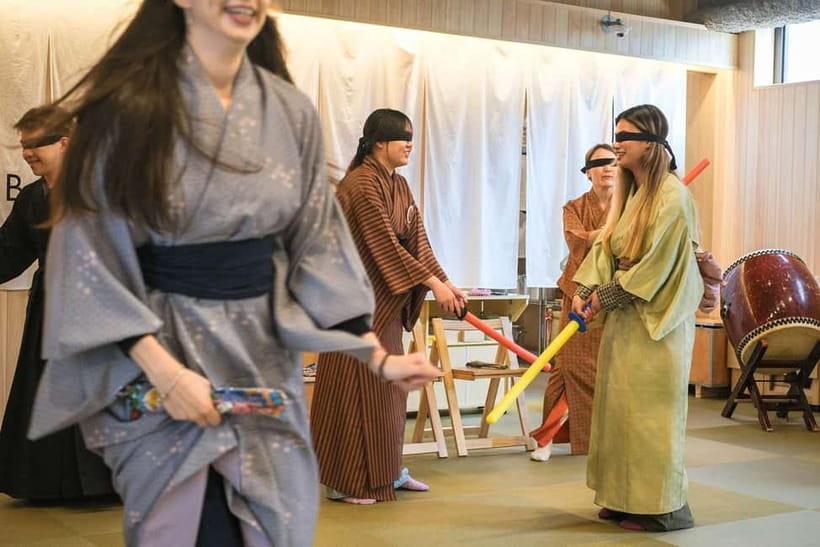
Book it if you want a short, social introduction to samurai culture with real participation rather than a passive demonstration. The strongest reasons are the two-part format, the simple English instruction, the helpful staff, and the photos that capture the costume and poses.
I would be more cautious if your main goal is advanced kyudo, detailed sword training, or a long historical lesson. At $96, the value depends on enjoying the complete package: dress-up, context, games, basic practice, snacks, and pictures.
For a first-time visitor, a family, or a group of friends in Asakusa, it is an easy activity to fit into a busy Tokyo day. Arrive early, wear comfortable clothes, and book it for the fun of trying two Japanese martial arts in one well-paced hour.
FAQ
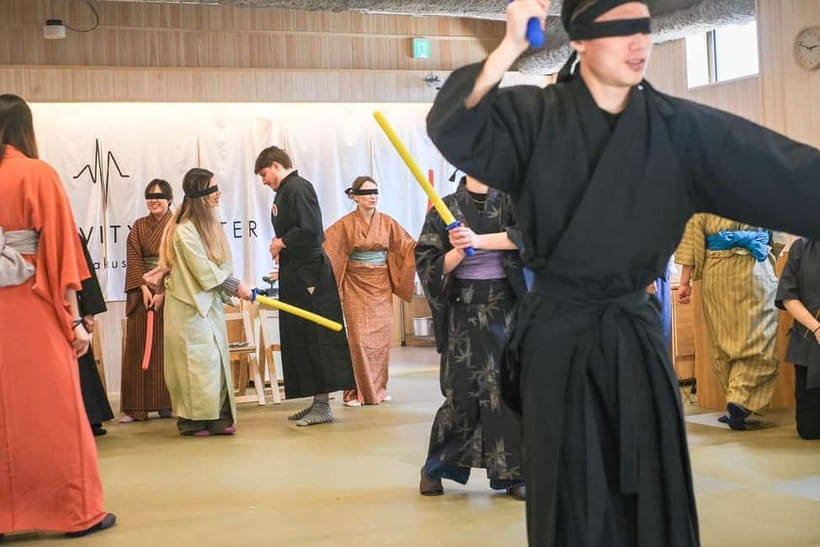
Where does the Tokyo Samurai Experience take place?
It takes place at BUB Activity Center in Asakusa, Tokyo, at Heiwa Building, 2 Chome 6-11, Taito-ku. Take the elevator to the fifth floor.
How long does the activity last?
The experience lasts one hour. Check availability for the available starting times.
Do I need previous archery or sword experience?
No. Prior experience is not necessary. The staff explain the basic kyudo and katana techniques during the session.
Is the activity taught in English?
Yes. The instructor language is English, and bilingual staff give simple explanations adapted to your level of English.
What is included in the price?
The $96 price includes use of a traditional Japanese bow and katana, traditional clothes, Japanese snacks, and bilingual staff.
What should I wear and when should I arrive?
Wear comfortable clothes and shoes, and arrive 10 minutes before the activity starts. Take the elevator to the fifth floor of the Heiwa Building.
New on our Tokyo list
- Sumi-e Experience in a relaxing green tea shop in Tokyo★ 5.0 · 3 reviews
- Tokyo : Kamikaze Street Drift Ride★ 5.0 · 3 reviews
- Private Zen Meditation in English in Shinjuku, Tokyo★ 5.0 · 3 reviews
- Onsen Spa in Tokyo and Asakusa Bar Hopping with Local Guide★ 5.0 · 3 reviews
- Easy for everyone! Now you can play handmade mini shamisen and show off to everyone! Musical instruments, sweets and live music★ 5.0 · 3 reviews
- Tokyo: Private Tsukiji Street Food & Sake with Local Guide★ 5.0 · 3 reviews
- Mt Fuji Exploration Tour with Free Japanese Kusa Mochi from Tokyo★ 4.5 · 3 reviews
- Tokyo Tsukiji Fish Market Walking and Exploring Hidden Gems Tour★ 5.0 · 3 reviews
Samurai & Ninja Experiences, compared.
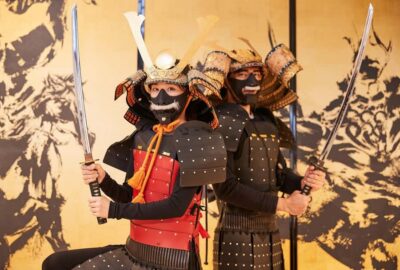
Samurai Ninja Museum Guided tour and Experience
Read our review →
Samurai Sword & Archery Class from Samurai Descendant
Read our review →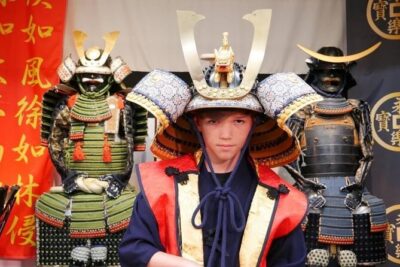
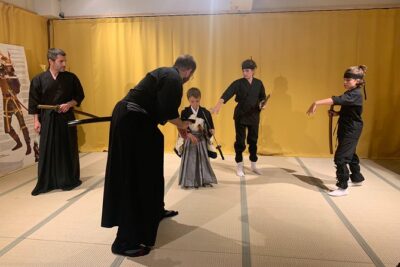
Ninja Experience (Family Friendly) at Samurai Ninja Museum TOKYO
Read our review →
Samurai Entertainment Night Show in Kanda Shrine
Read our review →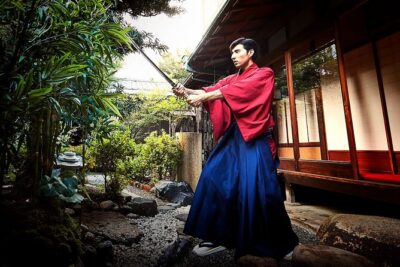
Tokyo Sword Experience – includes Museum Ticket/Ninja Experience
Read our review →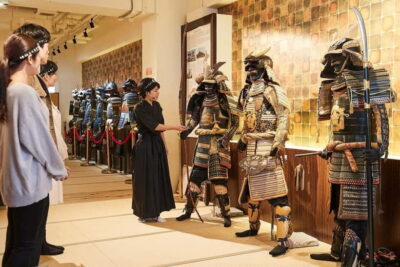
Samurai Ninja Museum Asakusa: Samurai Sword Lesson & Tour
Read our review →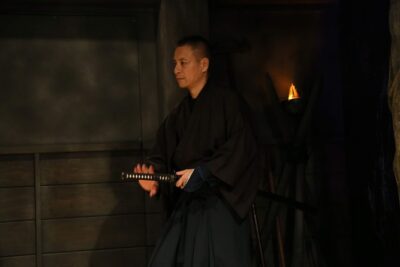
Ninja Samurai 2-hour hands-on lesson by Japanese master in Tokyo
Read our review →Browse the lists this tour appears in