
Reviewed · SAMURAI & NINJA EXPERIENCES
Tokyo: Samurai Experience with Lunch and Guided Tour
Tokyo’s samurai past feels most vivid in Kagurazaka, where narrow lanes, old homes, shrines, and former geisha quarters give the walking portion a real sense of place. You do not simply watch a staged sword show. You learn basic movements, wear a kimono, and practice with help from professional samurai instructors.
I like the mix of local history and hands-on training, and I like that lunch takes place in a more than 70-year-old Japanese house that was once a teahouse. The main consideration is food: vegan, gluten-free, and shellfish-free arrangements are not available, and vegetarian meals must be requested by the day before.
In This Review
- Key points before you book
- Why Kagurazaka makes a better setting than a stage
- Zenkokuji and the religious side of samurai culture
- The samurai performance and one hour of training
- Kagurazaka lunch in a former teahouse
- A local snack and the quieter side of the district
- What the guides add to the experience
- Is $162 a fair price?
- Timing, pace, and practical fit
- Who will enjoy this most?
- Should you book the Kagurazaka samurai experience?
- FAQ
- How long does the samurai experience last?
- What is included in the price?
- Where is the meeting point?
- Is the tour conducted in English?
- How large is the group?
- Can children join the tour?
- Is a vegetarian meal available?
- Can the tour accommodate vegan or gluten-free diets?
- Is hotel pickup included?
Key points before you book
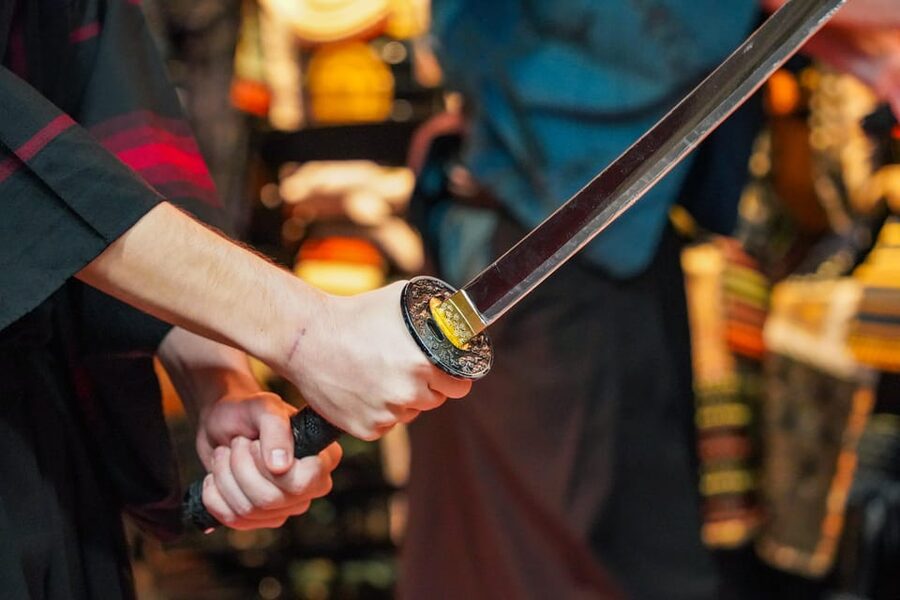
- Samurai training in a kimono: One hour of beginner-friendly instruction covers basic samurai movements and fighting techniques.
- Kagurazaka beyond the main road: You walk old lanes, visit Zenkokuji, and see areas connected with samurai homes and geisha culture.
- Lunch in a former teahouse: The meal is served in a traditional Japanese house more than 70 years old.
- Small English-speaking group: The group is limited to nine people, with about three and a half hours of guiding.
- A local snack included: Choose one traditional food or sweet, such as chimaki, a steamed bun, or a modern Japanese treat.
- Arrive early: The tour starts on time. If you are more than 15 minutes late, you cannot join, reschedule, or receive a refund.
Why Kagurazaka makes a better setting than a stage
Many samurai activities in Tokyo happen in a theater or studio. This one begins in Kagurazaka, a district where the setting does much of the teaching.
Meet in front of Aoyama Flower Market at the Ecute Edition Iidabashi store, just outside the West Exit of JR Iidabashi Station. After leaving the station, the shop is on your right. This is a useful meeting point, but give yourself extra time to find the correct exit. Tokyo stations can be confusing, and the tour does not wait long.
Your guide leads you through Kagurazaka, once associated with Edo-era samurai homes. The walk is not only a transfer between activities. It sets up the samurai lesson by explaining how warrior culture connected with Shinto shrines, Buddhism, and Zen practice.
That context matters. Samurai are often reduced to swords and dramatic poses. The walking tour gives you a broader picture of the values and religious ideas that shaped the image of the samurai. You hear about the area’s past while moving through streets that still feel more intimate than the large avenues of central Tokyo.
The route includes a visit to Zenkokuji, followed by additional walks through Kagurazaka. The exact character of the streets matters more than a long list of monuments. You might pass quiet lanes, old-style buildings, small shrines, and corners that suggest the district’s former role as a place for samurai and geisha.
The walking sections are broken into manageable stretches of about 10 to 15 minutes, with a longer visit and lunch period in Kagurazaka. That keeps the day from feeling like a nonstop history lecture.
More samurai and ninja sessions:
- Tokyo: Samurai Ninja Museum Guided tour and Experience
★ 4.6 · 1,010 reviews - Tokyo: Samurai Sword & Archery Class from Samurai Descendant
★ 5.0 · 603 reviews - Best Samurai Experience in Tokyo
★ 5.0 · 458 reviews
Zenkokuji and the religious side of samurai culture
Zenkokuji gives the tour a clear early stop. Here, your guide discusses the connection between Japanese spiritual traditions and samurai life.
The tour does not present Shinto and Zen as decorative background. They are part of the explanation of samurai philosophy. That is one of the better reasons to choose this experience over a simple sword demonstration. You get a little help understanding the ideas behind the gestures and discipline you later practice.
The religious material will not turn the tour into a formal academic lecture. It is a walking introduction, designed for people who want useful context without spending half a day in a museum.
If you have already studied Japanese history, you may find the information familiar. Still, the location gives those themes more weight than a classroom explanation. If you know little about the samurai, the guide’s interpretation should make the training session more meaningful.
The samurai performance and one hour of training
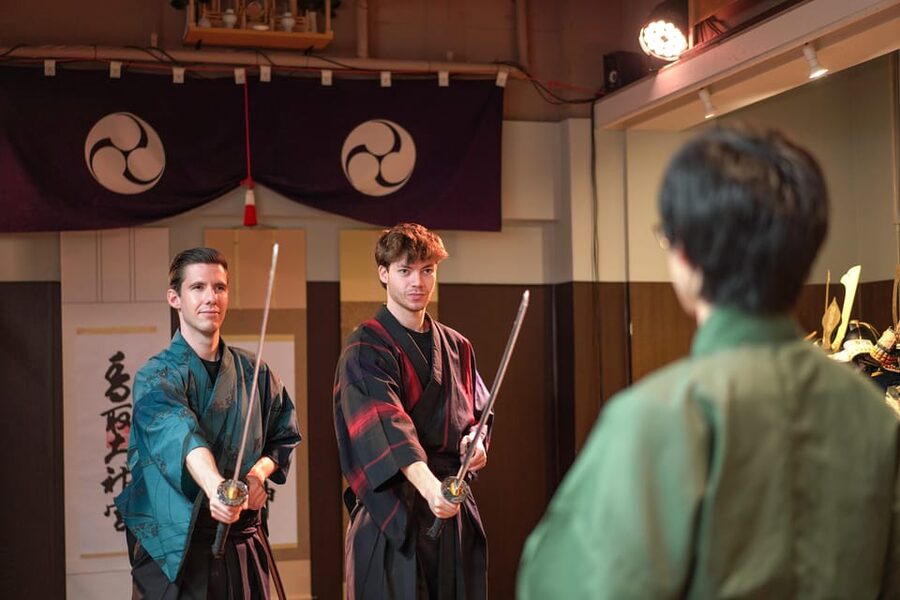
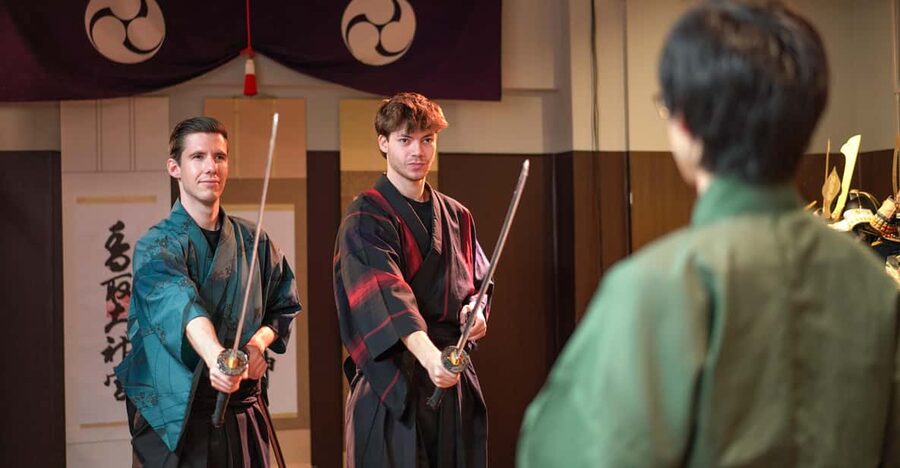
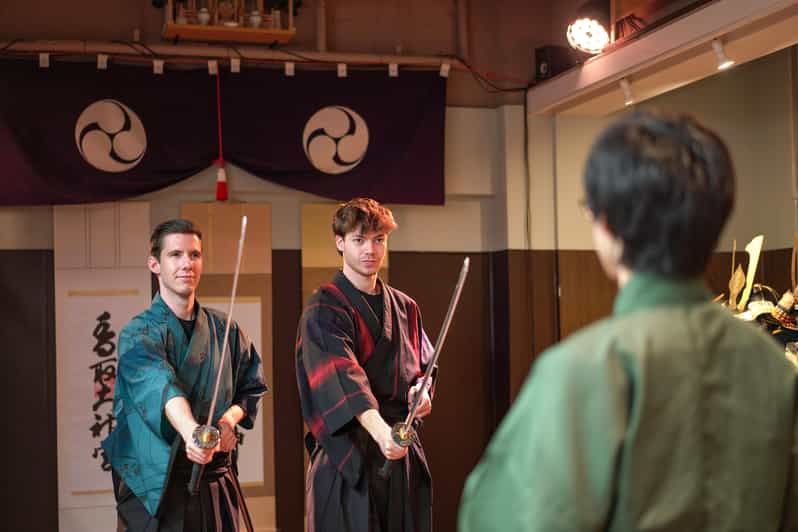
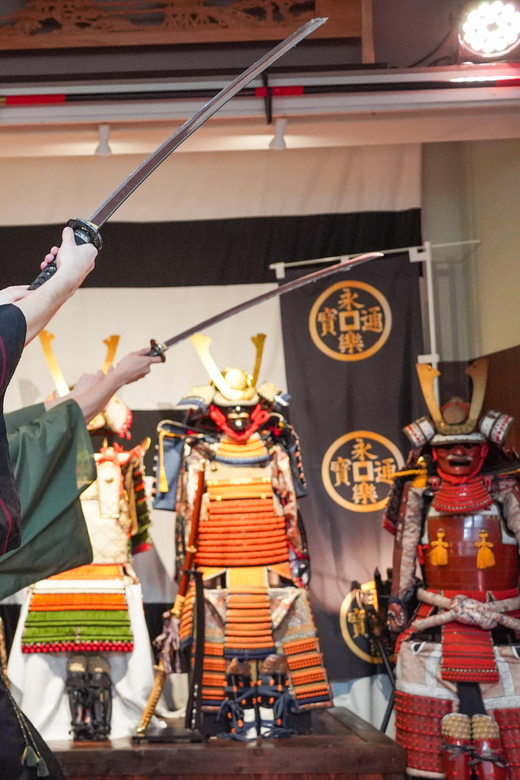
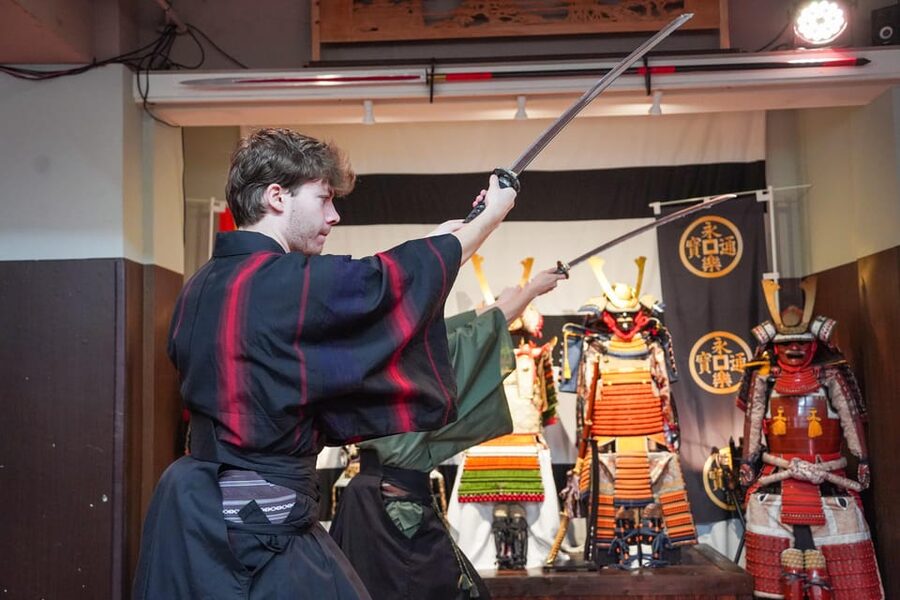
The central activity combines a professional samurai performance with practical instruction. First, samurai actors demonstrate movements and fighting techniques. Then you learn the basics yourself.
The performance adds energy and theater. Fans of action scenes will enjoy seeing trained performers handle the movements with precision. It also gives you a clear model to follow before you try the techniques.
The lesson is designed for beginners. You do not need martial arts experience, and the instructions are broken into simple steps. The guide supports the process, while the professional instructors teach the samurai movements.
You will wear a kimono during the one-hour samurai experience. That makes the activity more memorable and gives you the photographs many people want from a samurai-themed outing. The kimono is included in the price, so you do not need to arrange a separate rental.
The training is meant to be fun rather than physically punishing. Still, you should expect to move, follow instructions, and pay attention to safe handling. Smoking, alcohol, and drugs are not allowed during the activity.
Families can bring children aged four and older. The activity offers a strong photo opportunity for children, though parents should decide if their child can follow directions during a structured lesson. Children under four cannot take part.
Wheelchair users cannot be accommodated. The route includes walking through old streets and entering traditional buildings, so anyone with mobility concerns should ask the operator for current details before booking.
Kagurazaka lunch in a former teahouse
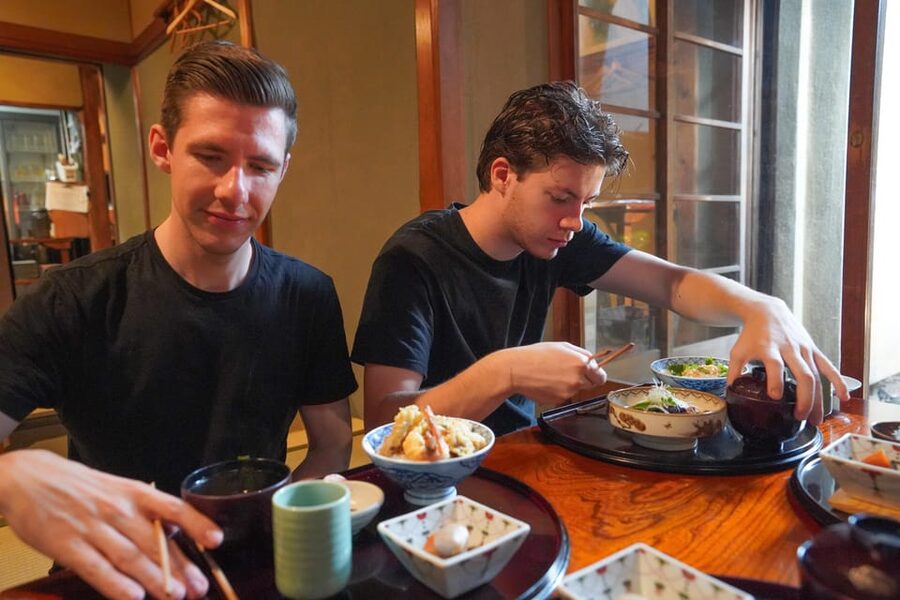
Lunch is one of the tour’s strongest features because the setting is part of the meal. You eat in a traditional Japanese house more than 70 years old. The building was once a teahouse and was connected with geisha culture.
That setting gives you a quieter pause after the training. You can sit down, eat a Japanese meal, and think over the morning without rushing straight back into Tokyo’s busy center.
A vegetarian course is available, but you must request it by the day before the tour. The operator cannot provide vegan or gluten-free meals, and shellfish allergy requests cannot be accommodated. Food is prepared in kitchens outside the tour company, so an allergy-free meal cannot be guaranteed.
This is not a small detail. If you have serious allergies or strict dietary needs, I would choose another experience. If you eat a normal Japanese diet, the meal is a useful part of the package and saves you the trouble of finding lunch afterward.
You do not need to pay for the guide’s food or drinks. That is a modest practical benefit, especially in a small group where everyone is dining together.
A few more Tokyo bookings worth comparing
- Tokyo: Mt.Fuji & Lake Kawaguchiko 1-Day Bus Tour w/Optional Lunch
★ 4.5 · 839 reviews - Tokyo: Sumo Experience and Chanko Nabe Lunch
★ 4.8 · 257 reviews - Tokyo: Tsukiji Fish Market Tour with 6 Stops & Seafood Lunch
★ 4.5 · 165 reviews - Tokyo: 1 Day Bus Tour with Meiji-Jingu,Odaiba,lunch&Skytree
★ 4.6 · 156 reviews
A local snack and the quieter side of the district
The tour also includes one traditional food or sweet during the Kagurazaka walk. Depending on availability and your choice, this could be chimaki, a steamed bun, or a modern Japanese sweet.
This stop gives the tour a different flavor from the formal lunch. Kagurazaka has a long connection with food, entertainment, and old neighborhood customs, so trying a local treat fits the district well.
You also have time for shopping and a final walk through the area. Do not expect a long shopping session. The listed time is about 30 minutes, so it is better viewed as a chance to browse local shops and enjoy the streets than as a dedicated retail outing.
The walk through former geisha lanes is especially useful for people who want Tokyo away from the big-name sights. One confirmed experience described the geisha alley as a highlight, along with the restaurant and the ease of finding the meeting point.
What the guides add to the experience
The guide stays with you for about three and a half hours and conducts the tour in English. The group is limited to nine people, which is small enough for questions and basic help with photographs.
Guide names can vary. Mark has been singled out for being fun and well-informed, while Taka and Naoki have led the historical and food portions. You should not book expecting one specific guide unless the operator confirms that person for your date.
The best guides on this kind of tour do more than point out buildings. They explain why Kagurazaka matters, connect the religious sites with samurai ideas, keep the walk moving, and help you feel comfortable during the training.
The small group size helps here. A large crowd would make the movement practice less personal and would make photographs harder. With nine or fewer participants, you have a better chance of hearing instructions and getting help with your stance or pose.
It also means you will be spending several hours with the same group. That can make the meal and class more social, but it gives you less privacy than a private tour. The activity is designed for shared participation.
Is $162 a fair price?
At $162 per person, this is not a budget walking tour. The value comes from the number of separate pieces included: a local guide, a three-and-a-half-hour guided program, a kimono rental, a one-hour samurai class, a professional performance, lunch, and one traditional snack.
A cheaper activity might give you only a short sword demonstration or a basic costume photograph. This tour adds a historic neighborhood walk and a sit-down meal in an old Japanese house.
I think the price makes the most sense if you want several experiences in one booking. You are paying for cultural explanation, an activity, food, and access to a setting you would not normally enter as part of a standard sightseeing route.
The value is weaker if you already have a full day planned around Kagurazaka, dislike group activities, or only want a quick samurai photograph. In those cases, the four-hour commitment may feel long.
There is also no hotel pickup or drop-off. You need to reach Iidabashi Station yourself and make your way back from the meeting point at the end. For most Tokyo visitors, that is a reasonable arrangement, but it should be part of your timing plan.
Timing, pace, and practical fit
The full activity lasts four hours. It includes walking, sightseeing, a class, lunch, a snack, and the samurai session, so wear comfortable clothing under the kimono and shoes suitable for walking.
The tour starts at a specific time and takes punctuality seriously. Arrive well before the meeting time, especially if you are unfamiliar with JR Iidabashi Station. The stated rule is strict: more than 15 minutes late means you cannot join, reschedule, or receive a refund.
The route is not suitable for wheelchair users. The activity is also not suitable for children under four. Families with older children may find the combination of costumes, movement practice, food, and photos easier to enjoy than a museum-heavy history tour.
The small-group format helps the pace. You are not being moved through a large crowd, and the guide can explain the neighborhood as you walk. Still, this is a scheduled group outing, not a flexible private stroll. You should be ready to keep to the group’s timetable.
Free cancellation is available up to 24 hours in advance for a full refund. You can also reserve now and pay later, which helps if you are arranging several Tokyo activities before your schedule is final.
Who will enjoy this most?
I would recommend the tour to first-time Tokyo visitors who want a cultural activity with some action. It works particularly well for families with children aged four and up, couples looking for a memorable shared activity, and anyone interested in Japanese history, martial arts, theater, or traditional clothing.
It also suits people who prefer a neighborhood experience over a single indoor attraction. Kagurazaka gives the tour an everyday Tokyo setting, while the samurai class supplies the special event.
You should think twice if you need vegan or gluten-free food, have a serious shellfish allergy, use a wheelchair, or dislike walking and group instruction. The tour is also not ideal if you want a private lesson or a long, technical study of swordsmanship. The training is beginner-friendly and introductory.
The most praised elements are clear: the guides, the historic streets, the restaurant, and the samurai lesson. Mark, Taka, and Naoki are names worth noting, but guide assignments can change. The strongest reason to book is the way the parts support each other: you learn about samurai life, walk through a district linked with that world, practice basic movements, and then eat in a historic setting.
Should you book the Kagurazaka samurai experience?
Book it if you want more than a costume photo. The samurai performance and beginner lesson provide the fun, while the Kagurazaka walk, Zenkokuji visit, religious context, local snack, and traditional lunch give the day substance.
At $162, it is best treated as a half-day cultural package rather than a simple attraction. Check the food rules carefully, request vegetarian lunch by the day before, and arrive early at the Iidabashi meeting point.
If those conditions suit you, this is a well-balanced Tokyo activity. It offers history without becoming dry, training without requiring prior skill, and lunch in a place with genuine local character.
FAQ
How long does the samurai experience last?
The full tour lasts four hours. The samurai experience itself, including kimono rental, lasts one hour.
What is included in the price?
The price includes the samurai experience, kimono rental, Japanese lunch, about three and a half hours with an English-speaking local guide, and one traditional food or sweet.
Where is the meeting point?
Meet in front of Aoyama Flower Market at the Ecute Edition Iidabashi store. It is near the West Exit of JR Iidabashi Station, on your right after leaving the station.
Is the tour conducted in English?
Yes. The tour includes a live English-speaking guide.
How large is the group?
The tour is limited to nine participants.
Can children join the tour?
Children aged four and older can participate. Children under four are not permitted.
Is a vegetarian meal available?
Yes, a vegetarian course can be arranged if you request it by the day before the tour. Vegetarian requests cannot be made on the day itself.
Can the tour accommodate vegan or gluten-free diets?
No. Vegan and gluten-free options are not available. Shellfish allergy requests also cannot be accommodated, and an allergy-free meal cannot be guaranteed.
Is hotel pickup included?
No. You need to reach the meeting point yourself, and hotel pickup and drop-off are not included.
New on our Tokyo list
- Sumi-e Experience in a relaxing green tea shop in Tokyo★ 5.0 · 3 reviews
- Tokyo : Kamikaze Street Drift Ride★ 5.0 · 3 reviews
- Private Zen Meditation in English in Shinjuku, Tokyo★ 5.0 · 3 reviews
- Onsen Spa in Tokyo and Asakusa Bar Hopping with Local Guide★ 5.0 · 3 reviews
- Easy for everyone! Now you can play handmade mini shamisen and show off to everyone! Musical instruments, sweets and live music★ 5.0 · 3 reviews
- Tokyo: Private Tsukiji Street Food & Sake with Local Guide★ 5.0 · 3 reviews
- Mt Fuji Exploration Tour with Free Japanese Kusa Mochi from Tokyo★ 4.5 · 3 reviews
- Tokyo Tsukiji Fish Market Walking and Exploring Hidden Gems Tour★ 5.0 · 3 reviews
Samurai & Ninja Experiences, compared.
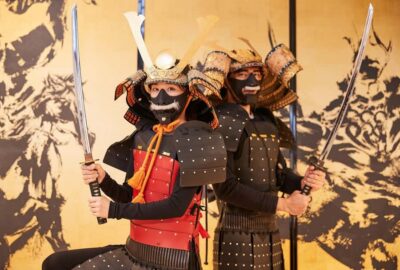
Samurai Ninja Museum Guided tour and Experience
Read our review →
Samurai Sword & Archery Class from Samurai Descendant
Read our review →
Ninja Experience (Family Friendly) at Samurai Ninja Museum TOKYO
Read our review →
Samurai Entertainment Night Show in Kanda Shrine
Read our review →
Tokyo Sword Experience – includes Museum Ticket/Ninja Experience
Read our review →
Samurai Ninja Museum Asakusa: Samurai Sword Lesson & Tour
Read our review →
Ninja Samurai 2-hour hands-on lesson by Japanese master in Tokyo
Read our review →Browse the lists this tour appears in