
Reviewed · HISTORICAL TOURS
Tokyo Shinjuku: History, Culture & Hidden Alleys Walking Tour
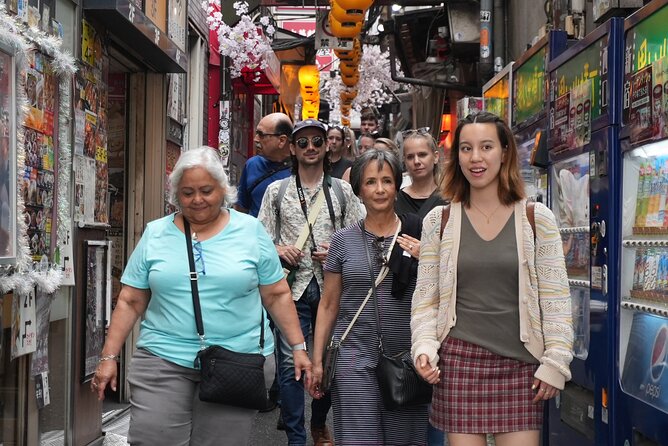
Shinjuku changes character as daylight fades. This two-hour walk takes you from Kabukicho’s neon streets to postwar drinking lanes, a quiet shrine, and the tiny bars of Golden Gai. It is a useful way to make sense of a district that can feel like several cities packed into one.
I like the route for two clear reasons: it gets you into narrow alleys that buses cannot reach, and it gives you practical Tokyo advice while you walk. Guides including Haydn and Kane have been praised for answering questions and suggesting places to visit after the tour.
The main consideration is timing. At 5 p.m., you will see Shinjuku shifting into its evening life, but the tour is still a brisk overview, not a long stop at each site. Food and drinks cost extra, and the group can include up to 15 people.
In This Review
- Key points at a glance
- Why this Shinjuku walk works well
- Kabukicho: Tokyo nightlife with a guide
- Omoide Yokocho and the postwar city
- Hanazono Shrine: a quieter pause
- Golden Gai and its tiny bars
- What the guide adds
- Is $24 a fair price?
- Timing, meeting point, and practical details
- Who should book this walk?
- Should you book the Shinjuku History, Culture & Hidden Alleys Walking Tour?
- FAQ
- How long is the Shinjuku walking tour?
- What time does the tour begin?
- Where does the tour meet?
- Where does the tour end?
- Which places are included in the route?
- Are food and drinks included?
- How many people can join the tour?
Key points at a glance
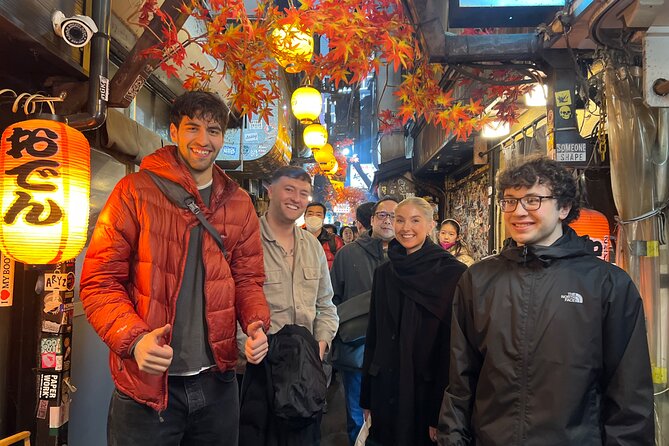
- Four contrasting Shinjuku stops: See Kabukicho, Omoide Yokocho, Hanazono Shrine, and Golden Gai in one compact route.
- A useful first-evening orientation: Start at 5 p.m., when neon signs and nightlife begin to shape the district.
- Small-group format: The maximum group size is 15, giving you more access to the guide than a large coach tour.
- Local context, not just photographs: Hear about postwar Tokyo, shrine customs, nightlife, and the changing face of Shinjuku.
- Good value at $24: You pay for two hours of guiding and navigation, while food, drinks, and personal spending remain your choice.
Why this Shinjuku walk works well
Shinjuku is easy to underestimate. On a map, the main sights look close together. On foot, the district is a maze of station exits, broad avenues, back streets, signs, bars, restaurants, and entertainment venues. A guide saves you from spending your first evening simply trying to work out where you are.
This tour keeps the focus on walking. That matters here because some of the most interesting parts of Shinjuku are too tight for a bus and too easy to miss if you follow only the biggest streets. You get a guided route through places with very different moods, rather than a general city tour that skims the surface.
The timing is smart. Meeting at 5 p.m. gives you daylight or fading light for the shrine and older streets, then brings you toward the neon-lit nightlife areas as the evening gathers pace. You are not signing up for a pub crawl, though. Food and drinks are not included, and the tour ends back at the meeting point.
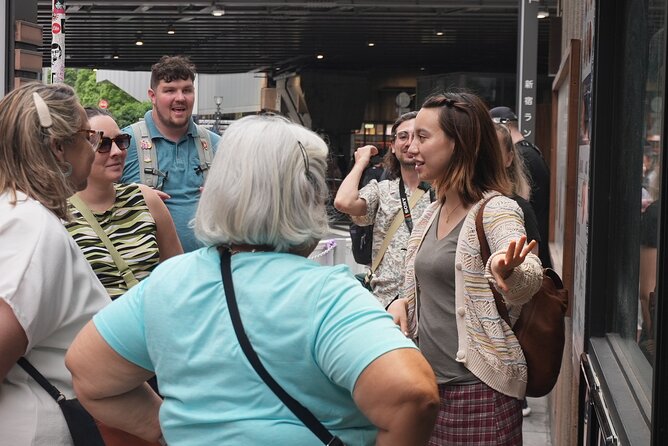
The format is intimate by city-tour standards, with no more than 15 people. That is large enough to feel social but small enough for questions to reach the guide. The strongest practical benefit is simple: you can ask what a sign means, how a shrine works, or where to go next while the answer relates directly to the street in front of you.
More Shinjuku nights and walks:
- Tokyo: Shinjuku Food Tour (13 Dishes at 4 Local Eateries)
★ 5.0 · 6,603 reviews - Tokyo Bar Hopping Tour in Shinjuku (All-You-Can-Drink + Dinner)
★ 5.0 · 3,587 reviews - Tokyo: Shinjuku Food Tour (15 Dishes and 4 Eateries)
★ 4.9 · 2,033 reviews
Kabukicho: Tokyo nightlife with a guide
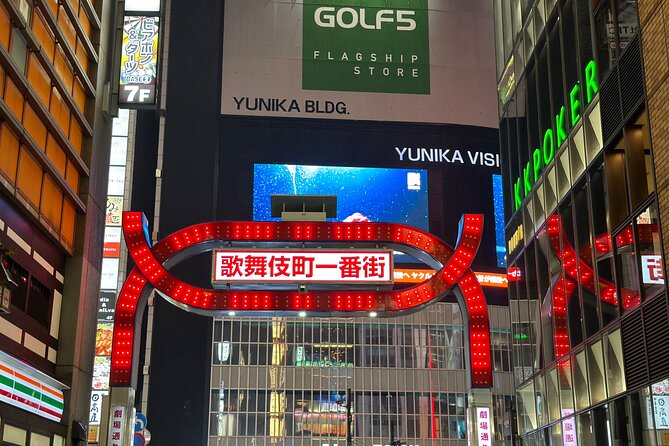
The walk begins with about 30 minutes in Kabukicho, known as Japan’s red-light district. This is not presented as a visit to a single attraction. Instead, the guide provides an overview of the area, helping you understand its place in Shinjuku and how to read the streets around you.
Kabukicho can feel confusing to a first-time visitor. Bright signs compete for attention, and the district contains far more than one type of nightlife. A guide is useful here because context helps you distinguish between an area to observe, a place to eat, and a venue where you may want to think carefully before entering.
I would treat this stop as an orientation rather than a major photo stop. The value lies in learning how the area fits into Tokyo’s culture and evening economy. You also have a chance to ask direct questions, which is more useful than trying to decode every sign by yourself.
The 5 p.m. start gives this part of the walk a changing atmosphere. You may see the district before its busiest hours, then notice more lights and activity as the route continues. The tour does not promise entry to nightlife venues, and it should not be booked if you expect a full evening of entertainment inside bars or clubs.
Omoide Yokocho and the postwar city
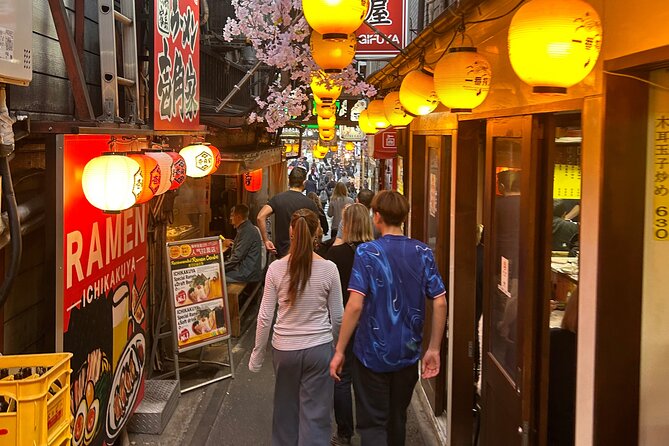
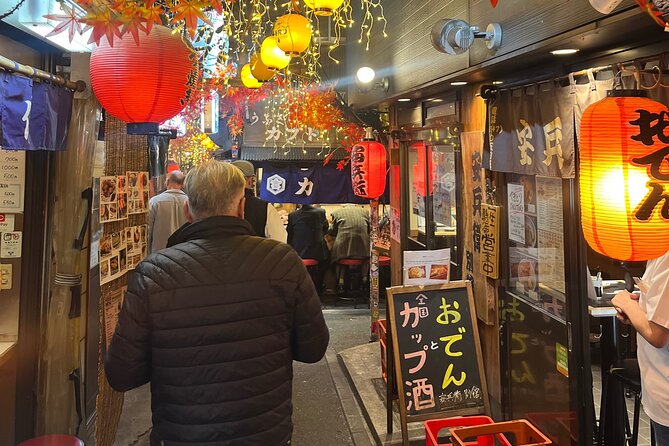
The next stop is Omoide Yokocho, a narrow alley of small bars built in the postwar period of the 1950s. It is also known by the blunt nickname Piss Alley, a name that reflects its rough historical image rather than a polished tourist brand.
This is one of the route’s most distinctive stops. Omoide Yokocho shows a compact, older side of Shinjuku, with closely packed eating and drinking spots that feel very different from the district’s high-rise streets. The alley’s importance is not only visual. It gives you a sense of how postwar Tokyo made use of limited space and how casual food and drink districts grew around major stations.
The tour allows about 30 minutes here. That is enough time to look around and hear the story of the alley, but not necessarily enough for a relaxed meal. Since food and drinks are excluded, you can decide later if you want to return and spend more time there.
That separation is useful. You get an introduction without being locked into a set restaurant or menu. If you are unsure about dining in a tiny bar, the guide can give you cultural context before you make that choice on your own.
Still, keep your expectations realistic. This is a compact alley, not a large historic quarter. Its appeal comes from atmosphere, scale, and the story of its postwar beginnings. You will get more from the stop if you pay attention to the contrast between the old lanes and the modern district around them.
Hanazono Shrine: a quieter pause
Hanazono Shrine provides the tour’s sharpest change of pace. After the nightlife streets and packed alleyways, you spend about 30 minutes at one of the oldest shrines in Shinjuku. The stop is also described as an introduction to Japanese shrines, making it useful if this is your first visit to one.
A shrine visit can be hard to interpret without guidance. You may recognize a gate, a purification area, or an offering space, but not know what people are doing or why. The guide can explain the basic cultural points as you move through the site, giving you a clearer framework for other shrines you may visit in Japan.
I like the balance this stop adds to the route. Shinjuku is often reduced to neon, shopping, and nightlife, yet Hanazono Shrine reminds you that the district has a quieter spiritual side. The contrast is exactly what makes the walk feel more worthwhile than a simple hunt for bright signs.
The itinerary lists admission as included, with no extra ticket cost. You should think of this as a respectful cultural visit, not a staged show. The guide’s explanation is the main feature, and your questions can help shape how much you learn about shrine customs.
A few more Tokyo bookings worth comparing
- Tokyo: Imperial Palace and Shogun Historical Walking Tour
★ 5.0 · 2,251 reviews - Tokyo: Imperial Palace Japanese History Walking Tour
★ 4.9 · 987 reviews - Tokyo: Shinjuku Historical Walking Tour & Secret Backstreets
★ 5.0 · 530 reviews - Yanaka Walking Tour: Historic and Traditional District of Tokyo
★ 5.0 · 530 reviews
Golden Gai and its tiny bars
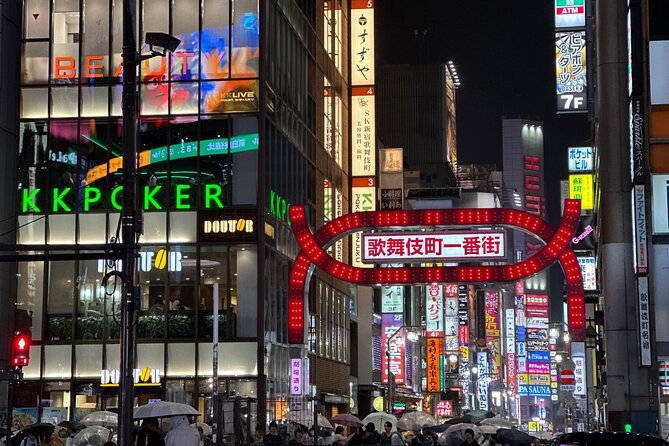
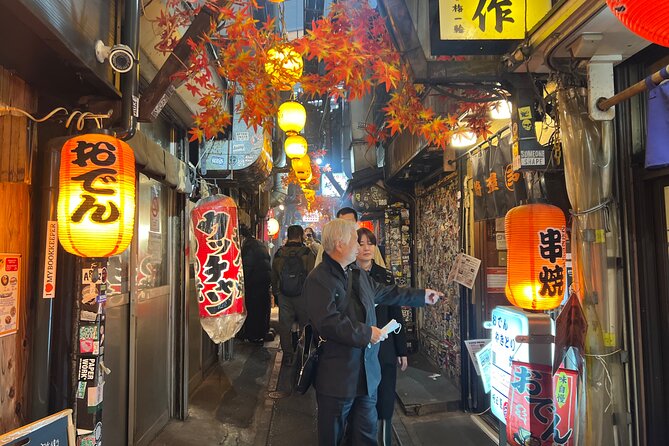
The final major stop is Shinjuku Golden Gai, with about 20 minutes set aside for its streets and small bars. Golden Gai is known for some of Tokyo’s oldest bars, many of which are notably small. The area is famous because of its tight scale and long connection to Shinjuku nightlife.
A guide matters here. Golden Gai can be easy to walk through without understanding what makes it different. The lanes are packed with doors and signs, and the small size of the bars means they may not operate like the larger restaurants or pubs you know at home.
The tour does not include drinks or promise entry into a bar. That is an important distinction. You are getting an introduction to the area, not a reserved seat or a nightlife package. Afterward, you can decide if you want to return, but any purchase is your responsibility.
Twenty minutes is a short visit, yet it may be the right length for a first look. Golden Gai is best understood as one piece of Shinjuku’s evening character, not as a complete night out. The guide can also point you toward options for later, and that follow-on advice is one of the tour’s more useful extras.
What the guide adds
The route itself is appealing, but the guiding is what turns four locations into a coherent experience. You are not simply ticking off Kabukicho, Omoide Yokocho, Hanazono Shrine, and Golden Gai. You are moving between nightlife, postwar urban culture, shrine traditions, and older bar streets.
Specific guide names connected with the experience include Haydn and Kane. Haydn is noted for showing both expected Shinjuku sights and extra places that would be difficult to find alone. Kane is described as especially willing to answer questions and explain both the immediate area and wider parts of Tokyo and Japan.
That kind of guide makes a difference for first-time arrivals. You can ask about customs as they come up, rather than trying to remember questions for a formal lecture. You also leave with ideas for what to do after the walk, which helps the $24 fee stretch beyond the two-hour route.
The phrase knowledge guide in the tour details is best understood as a guided cultural walk, not a museum lecture. The strength is informal explanation on location. If you want dates, academic detail, or long historical talks, this may feel light. If you want useful background while seeing the streets, it is a better fit.
Is $24 a fair price?
At $24 per person, this is a reasonable price for a two-hour guided walk in central Tokyo. You are paying for route planning, local explanation, and the time saved by not searching for each area yourself. You also get four distinct stops rather than one single attraction.
The value is strongest if you are new to Shinjuku. A first visit can easily lose an hour to navigation, especially around the station and the nightlife districts. Having someone lead you from one area to the next lets you focus on what you are seeing.
The price does not cover food, drinks, or other personal costs. That keeps the base fee clear, but you should budget separately if Omoide Yokocho or Golden Gai makes you want to stop for a meal or drink afterward.
You should also note the group limit of 15. This is not a private tour, but it is smaller than a mass sightseeing group. The final value depends on what you want: for a short introduction and local orientation, the cost is modest. For extensive time inside bars, the price does not include what you may actually want to spend later.
Timing, meeting point, and practical details
The tour starts at 5 p.m. at Happy Lemon Keio Shinjuku Shop, at 1-chōme-1-4 Nishishinjuku, Shinjuku City, Tokyo 160-0023. It ends back at the same meeting point, so you are not left to find a distant final stop after dark.
The meeting point is near public transportation, which is useful in a district served by major rail lines. Give yourself enough time to locate the shop and arrive ready to walk. The listed duration is about two hours, so expect a steady outing rather than a long stop-and-sit program.
Most people can participate, according to the tour information. No special admission tickets are needed for the listed stops, and mobile ticketing keeps the booking simple. Confirmation arrives when you book.
Free cancellation is available if you cancel at least 24 hours before the local start time. Cancellations or changes inside that window are not accepted for a refund. The tour also requires a minimum number of participants, so if that number is not reached, you will be offered another date or experience, or receive a full refund.
Who should book this walk?
I would recommend it most strongly to first-time visitors staying in or near Shinjuku, especially if you want to understand the district before exploring it alone. It also suits anyone who likes city walks, local history, shrine culture, and evening street scenes more than formal sightseeing attractions.
It is a good choice after arriving from another part of Japan. The route shows a side of Tokyo that feels quite different from Kyoto, and the guide can help explain that contrast while you are seeing it firsthand.
The tour is less suited to visitors who want a food tour, a bar crawl, or a private experience. Drinks and meals are not included, the group can reach 15 people, and the Golden Gai stop is only about 20 minutes. You will see the nightlife districts, but you are not signing up for a full night inside them.
Should you book the Shinjuku History, Culture & Hidden Alleys Walking Tour?
Book it if you want a short, affordable introduction to Shinjuku that combines famous nightlife areas with a shrine and a postwar alley. The route gives you practical bearings, cultural background, and ideas for the rest of your evening.
Skip it if you already know Shinjuku well or want long, detailed time at each stop. For most first visits, though, $24 is a fair trade for a guide who can connect the neon streets, old drinking lanes, and Hanazono Shrine into one clear story.
FAQ
How long is the Shinjuku walking tour?
The tour lasts approximately two hours.
What time does the tour begin?
The tour begins at 5 p.m.
Where does the tour meet?
The meeting point is Happy Lemon Keio Shinjuku Shop, 1-chōme-1-4 Nishishinjuku, Shinjuku City, Tokyo 160-0023, Japan.
Where does the tour end?
The activity ends back at the meeting point.
Which places are included in the route?
The route includes Kabukicho, Omoide Yokocho, Hanazono Shrine, and Shinjuku Golden Gai.
Are food and drinks included?
No. Food and drinks are not included in the tour price.
How many people can join the tour?
The maximum group size is 15 people.
More Walking Tours in Tokyo
- Tokyo Tsukiji Fish Market Food and Culture Walking Tour
★ 5.0 · 3,184 reviews - Tokyo: Shinjuku Local Bar and Izakaya Guided Walking Tour
★ 4.9 · 1,794 reviews - Tokyo: Tsukiji Fish Market Food and Walking tour
★ 5.0 · 1,724 reviews - Tokyo: Asakusa Walking Tour with Sensoji Temple Visit
★ 4.8 · 1,583 reviews
New on our Tokyo list
- Sumi-e Experience in a relaxing green tea shop in Tokyo★ 5.0 · 3 reviews
- Tokyo : Kamikaze Street Drift Ride★ 5.0 · 3 reviews
- Private Zen Meditation in English in Shinjuku, Tokyo★ 5.0 · 3 reviews
- Onsen Spa in Tokyo and Asakusa Bar Hopping with Local Guide★ 5.0 · 3 reviews
- Easy for everyone! Now you can play handmade mini shamisen and show off to everyone! Musical instruments, sweets and live music★ 5.0 · 3 reviews
- Tokyo: Private Tsukiji Street Food & Sake with Local Guide★ 5.0 · 3 reviews
- Mt Fuji Exploration Tour with Free Japanese Kusa Mochi from Tokyo★ 4.5 · 3 reviews
- Tokyo Tsukiji Fish Market Walking and Exploring Hidden Gems Tour★ 5.0 · 3 reviews
Historical Tours, compared.

Imperial Palace and Shogun Historical Walking Tour
Read our review →
Yanaka Walking Tour: Historic and Traditional District of Tokyo
Read our review →
Shinjuku Historical Walking Tour & Secret Backstreets
Read our review →
Mt. Fuji Heritage Tour: Traditional Villages, Lakes & Shrine
Read our review →
The Best of Izakaya in Shinjuku Food & Cultural Tour
Read our review →
Yanaka Historical Walking Tour in Tokyo’s Old Town
Read our review →Browse the lists this tour appears in