
Reviewed · TOKYO FOOD TOURS
Tokyo Vegan Food Tour
Tokyo’s vegan food scene gets much more interesting than a simple salad stop. This three-hour tour moves from Shibuya to Ebisu, pairing Japanese comfort food with the stories behind ingredients, cooking methods, and the country’s growing interest in plant-based dining.
I like the tasting range, from several small bowls of Hokkaido-style ramen to gyoza, karaage, fruit sandwiches, and butter with anko. I also like the small group limit of six, which gives guides such as Daisy and Sahori room to explain the food and answer questions.
The main consideration is price. At $101.25 per person, this is not a cheap lunch, and private transportation is not included. You are paying for a guided food experience, several tastings, one drink, and useful local advice, not just for the calories.
In This Review
- Key points at a glance
- Why this Tokyo food tour is more than a vegan lunch
- Starting near Shibuya Crossing
- Mini ramen bowls with four possible styles
- Gyoza and vegan karaage show off texture
- Fruit sandwiches and anko for the sweet finish
- The convenience-store stop has real value
- From Shibuya to Ebisu in about three hours
- How the small group changes the experience
- Is $101.25 a fair price?
- Who should book this experience?
- Practical tips before you go
- Should you book the Tokyo Vegan Food Tour?
- FAQ
- Where does the Tokyo Vegan Food Tour start?
- Where does the tour finish?
- How long does the tour last?
- What food is included?
- What ramen choices are available?
- Is a drink included?
- How large is the tour group?
- Is private transportation included?
- Can I cancel for a refund?
Key points at a glance
- Four ramen styles in miniature: Choose among spicy miso, miso, shoyu, and shio in small Hokkaido-style bowls.
- Classic Japanese dishes, made vegan: Gyoza, karaage, fruit sandwiches, and anko sandwiches show how broad plant-based eating can be.
- A Shibuya to Ebisu route: You begin near Shibuya’s famous crossing and finish close to Ebisu Station.
- Small groups matter: The maximum group size is six, a good fit for questions and personal food guidance.
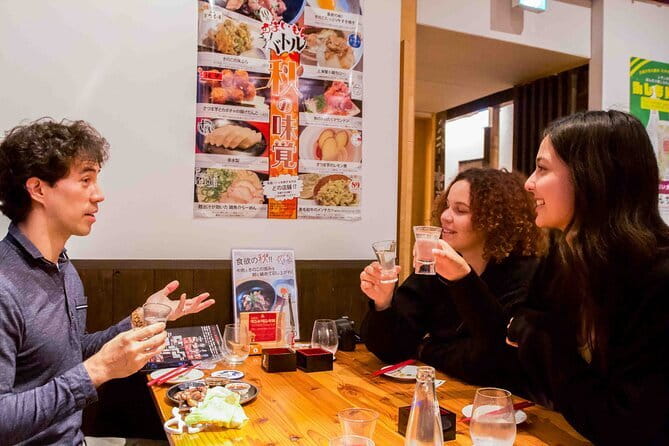
- One drink is included: You can choose an alcoholic or non-alcoholic beverage.
- Useful beyond the meal: A convenience-store stop helps you identify practical vegan choices for the rest of your stay.
Why this Tokyo food tour is more than a vegan lunch
The strongest part of this experience is its variety. Some vegan tours lean heavily on one cuisine or one restaurant. This one uses a string of familiar Japanese foods to show you how plant-based cooking works across different textures and settings.
You can expect small portions rather than one oversized meal. That is a smart format in Tokyo, where a short stretch of food exploration can include noodles, fried foods, sandwiches, and sweets. You get to compare dishes without filling up after the first stop.
The tour also makes sense for mixed groups. If you are vegan, you get a practical introduction to places and dishes you may want to seek out later. If you are not vegan, you still get Japanese food in recognizable forms, including ramen and fried karaage. One past participant specifically enjoyed the tour despite not being vegan, which tells you the menu is not built only for people already committed to plant-based eating.
Your guide adds the context. Daisy and Sahori are two guides praised for making the experience both friendly and educational. The emphasis is not only on what is in each bowl or sandwich, but also on local ingredients, preparation methods, and the changing role of vegan food in Japan.
More Tokyo food crawls:
- Tokyo: Shinjuku Food Tour (13 Dishes at 4 Local Eateries)
★ 5.0 · 6,603 reviews - Tokyo: Shinjuku Food Tour (15 Dishes and 4 Eateries)
★ 4.9 · 2,033 reviews - Best of Shinjuku: Izakaya Food Tour (4 Stops, 14+ Tastings)
★ 5.0 · 1,863 reviews
Starting near Shibuya Crossing
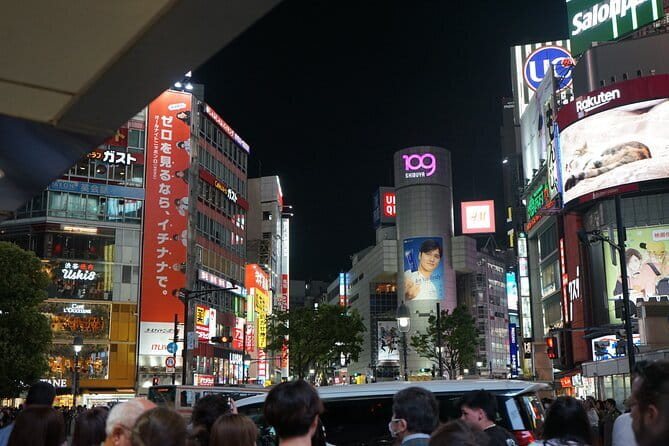
The meeting point is SHIBU HACHI BOX at 2-chōme-1-1 Dōgenzaka, Shibuya. This puts you in a central part of Tokyo, near one of the city’s best-known scenes. Your guide takes you past Shibuya’s famous crossing, so the tour begins with a little orientation before the food takes center stage.
That opening is useful if you are still getting your bearings in the area. Shibuya can feel like a wall of signs, trains, pedestrians, and side streets. Starting near a major landmark gives you an easy place to locate the group, though you should still allow enough time to reach the meeting point.
The crossing itself is not the main event, but it gives the experience a strong Tokyo setting. You are not being taken straight into a quiet cooking classroom. You begin among the city’s well-known streets, then shift toward food stops in Shibuya and Ebisu.
Since private transportation is not included, expect the tour to use the city’s public setting rather than a dedicated vehicle. The experience is near public transportation, and it ends by Ebisu Station, making it practical to continue sightseeing or return to your accommodation afterward.
Mini ramen bowls with four possible styles
Ramen is the centerpiece for many people, and this tour gives you a chance to try Hokkaido-style ramen in small bowls. The listed choices include spicy miso, miso, shoyu, and shio.
That selection is valuable because it shows how much variety sits inside one familiar dish. Miso gives you a fuller, fermented flavor. Shoyu brings soy sauce into the mix. Shio is generally the lighter, salt-seasoned style, while spicy miso adds heat. The exact selection available to you may depend on the stop and the day, but the tour presents several ways to compare ramen rather than treating it as a single flavor.
The small bowls are a practical choice. Ramen can be filling, and you still have several other foods ahead. You can pay attention to the broth, noodles, toppings, and seasoning without treating the first course as your entire meal.
For a vegan visitor, this is also a useful lesson in ordering. Ramen broth often relies on ingredients that are not obvious from the menu, so a guided tasting removes some of the guesswork. You can ask how the plant-based version is built and what gives it its depth.
Gyoza and vegan karaage show off texture
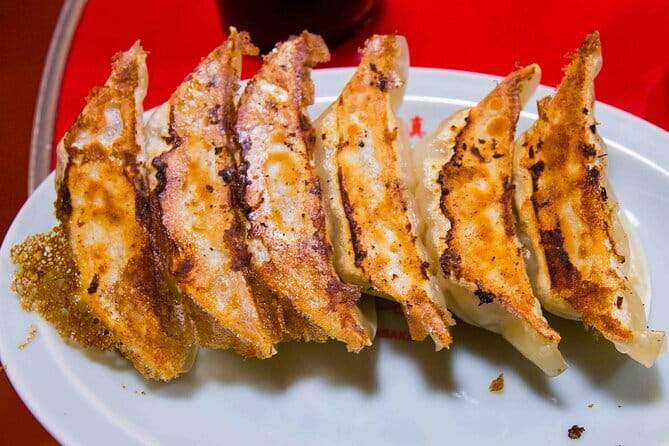
Next comes the fried and savory side of Japanese comfort food. Vegan gyoza gives you the familiar dumpling shape and crisp bottom, while vegan karaage takes the idea of Japanese fried chicken and gives it a plant-based twist.
These dishes are important because good vegan food needs more than a meat-free label. Texture does much of the work. Gyoza should offer a contrast between the wrapper and filling. Karaage is judged by its crisp coating and seasoned bite. Tasting both helps you see how Japanese cooking can focus on crunch, aroma, dipping sauces, and presentation without relying on meat.
The tour calls these snacks, but together with ramen and the other stops, they function as a guided lunch. That distinction matters if you arrive very hungry. You are likely to receive a series of samples rather than a single full restaurant entrée, so a light meal beforehand may be sensible if you have a large appetite. At the same time, arriving too full defeats the purpose of a food tour.
A few more Tokyo bookings worth comparing
- Vegan Friendly Sushi & Okonomiyaki Shibuya Night Foodie Tour
★ 5.0 · 124 reviews - Ramen & Dumpling Cooking in Tokyo with Chef/Vegan possible
★ 5.0 · 107 reviews - Vegan/Vegetarian Ramen and Gyoza by Bentoya cooking
★ 5.0 · 59 reviews - Ramen Making from Scratch with Tokyo Mom(Vegan Option Available)
★ 5.0 · 39 reviews
Fruit sandwiches and anko for the sweet finish

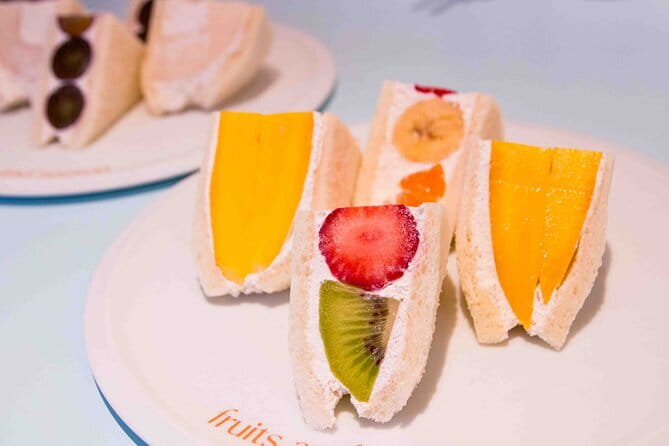
Japanese fruit sandwiches are one of the more distinctive stops. They combine fresh seasonal fruit with soft bread and a creamy filling. Their simple appearance can be misleading, since the appeal lies in the balance of sweetness, texture, and neat presentation.
Seasonal fruit means the exact experience can change. You should not expect one fixed fruit selection every time. That variation is part of the point, since it connects the snack to what is available locally rather than promising an identical menu year-round.
The butter and anko sandwich offers a different style of sweetness. Anko is sweet red bean paste, a staple flavor in Japanese desserts. Pairing it with butter creates a richer, more substantial bite than the fruit sandwich.
These two sandwiches help prevent the tour from becoming a parade of noodles and fried food. They also give you a quick introduction to Japanese sweets that you might otherwise overlook during a first visit.
The convenience-store stop has real value
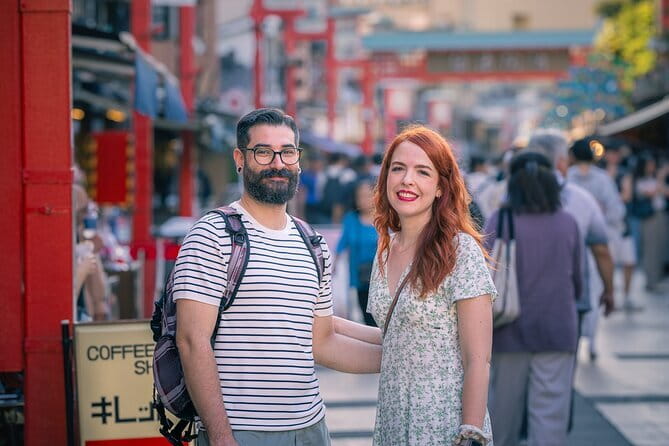
One of the most useful parts of the experience is the quick stop at a convenience store. This is not as glamorous as ramen or gyoza, but it may help you more during the rest of your trip.
Japanese convenience stores are everywhere, and they are often the place you turn to for a quick breakfast, snack, drink, or late-night meal. Finding vegan choices can be less simple than spotting a familiar vegetable sandwich. Ingredient labels, sauces, broths, and seasonings require attention.
The guide can give you practical advice on navigating that problem. You may learn which types of products to examine and how to think about packaged food in Japan. The stop also shifts the tour from a special meal to daily travel advice.
I especially like this feature for visitors staying several days. You may not book another food tour, but you will probably pass a convenience store many times. A few minutes of focused guidance can make those future stops less stressful.
From Shibuya to Ebisu in about three hours

The experience lasts approximately three hours and ends near Ebisu Station at 1 Chome-5 Ebisuminami, Shibuya. The route gives you two useful Tokyo neighborhoods without asking you to commit a full day.
That length is a good middle ground. You get enough time for several foods and cultural explanations, but you still have most of the day free. You could schedule it around shopping in Shibuya, an afternoon museum visit, or an evening plan elsewhere.
The end point is also convenient. Ebisu is well connected, and finishing near a station means you do not have to retrace the route to collect a vehicle or return to the starting point. Since no private transportation is included, this setup works best for people who are comfortable using Tokyo’s trains and walking between stops.
The exact amount of walking is not stated, so you should not book this assuming it is a seated meal. You are exploring city neighborhoods and visiting food stops. Wear comfortable shoes and keep your schedule flexible enough to enjoy the explanations instead of rushing toward the next appointment.
How the small group changes the experience
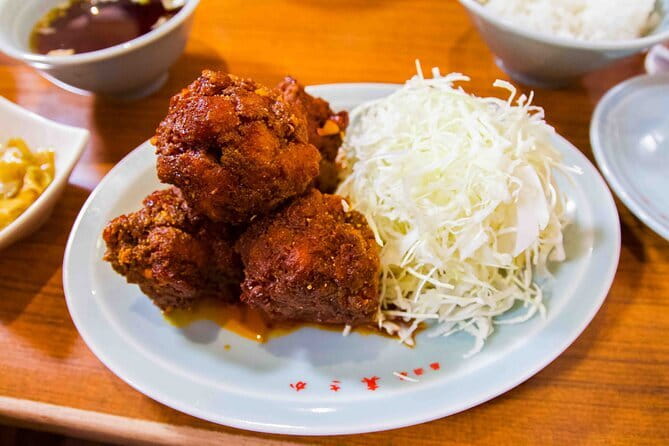
The maximum group size is six. That is a real advantage for a food tour, especially when the guide is explaining unfamiliar ingredients or checking dietary needs.
A group of this size can usually gather around a small food counter more easily than a large bus-sized party. You also have a better chance to ask about ingredients, cooking methods, and where to find vegan food later in Tokyo.
The experience can feel different depending on the day. A small group may include several people with the same dietary goals, or you may find yourself with a mix of vegans and curious omnivores. The menu is broad enough to work for both.
Daisy and Sahori are named guides associated with especially positive experiences, but the guide assigned to your booking can vary. What you should expect is a guide-led format focused on food culture, not a self-guided list of restaurants.
Is $101.25 a fair price?
The cost is $101.25 per person. That is a significant amount for three hours, especially in Tokyo, where you can find inexpensive meals on your own.
The value improves if you would otherwise spend time searching for vegan restaurants, translating ingredients, and guessing which dishes are fully plant-based. Your fee covers the guide, several tastings, lunch, one alcoholic or non-alcoholic drink, and the convenience-store advice. It also buys a planned route through two neighborhoods.
The value is weaker if your main goal is simply to eat a large meal. A person focused on quantity could spend less at a restaurant and leave fuller. This tour is better judged as a food-and-culture introduction, with multiple samples and personal guidance.
For first-time visitors, I think the price can make sense if vegan dining is a major part of your trip. It is also appealing for a mixed-diet couple or family because the dishes are familiar enough to interest people who do not follow a vegan diet.
Who should book this experience?
I would consider this tour a strong match for:
- Vegan visitors who want more than generic international food.
- Vegetarians who want help finding fully plant-based Japanese dishes.
- Curious eaters who want to understand how vegan versions of familiar foods are made.
- Couples and small groups who prefer a personal guide over a large food walk.
- Visitors staying in Tokyo for several days who can use the convenience-store and restaurant advice later.
- People who enjoy tasting many small portions rather than ordering one large dish.
It may be less suitable if you want a private tour, need private transportation, or prefer a fixed sit-down meal. It may also disappoint anyone expecting a deep tour of Tokyo landmarks, since the famous Shibuya crossing is a brief part of a food-focused route.
The tour is open to most participants, and confirmation is provided at booking. If your plans change, free cancellation is available up to 24 hours before the start time. Cancellations or changes made within 24 hours are not accepted for a refund.
Practical tips before you go
Start with an empty enough stomach to handle several tastings, but do not assume the tour is an unlimited feast. The food is served in a sequence, and the value comes from variety.
Check the meeting point carefully. SHIBU HACHI BOX is near Shibuya’s main sights, but large stations can take time to navigate. Plan your arrival around the station exit and the busy streets around Dōgenzaka.
Bring an appetite for questions. Ask about ramen broth, the ingredients in gyoza, the plant-based karaage, and the differences between fruit sandwiches and anko sandwiches. The educational side is one of the reasons to choose this tour over eating alone.
Use the final station location to your advantage. Ebisu Station is a sensible launch point for your next activity, but allow time to finish the tour before booking anything that cannot move.
Should you book the Tokyo Vegan Food Tour?
Book it if you want a friendly, small-group introduction to Japanese vegan food and practical help for eating well in Tokyo afterward. The combination of ramen choices, gyoza, karaage, seasonal fruit sandwiches, anko, a drink, and a convenience-store stop gives you more range than a standard lunch.
Skip it if $101.25 feels too high for a three-hour tasting, or if you would rather choose your own restaurants and spend less. For most vegan visitors, though, the guide’s local context and the chance to sample several Japanese favorites make this a useful first or second day activity, especially when you want food advice you can keep using after the tour ends.
FAQ
Where does the Tokyo Vegan Food Tour start?
It starts at SHIBU HACHI BOX, 2-chōme-1-1 Dōgenzaka, Shibuya, Tokyo 150-0043, Japan.
Where does the tour finish?
The tour finishes near Ebisu Station at 1 Chome-5 Ebisuminami, Shibuya, Tokyo 150-0022, Japan.
How long does the tour last?
The experience lasts approximately three hours.
What food is included?
The tour includes vegan tastings such as Hokkaido-style ramen, vegan gyoza dumplings, vegan karaage, seasonal fruit sandwiches, and butter and anko sandwiches.
What ramen choices are available?
The listed ramen choices include spicy miso, miso, shoyu, and shio.
Is a drink included?
Yes. One drink is included, and you can choose an alcoholic or non-alcoholic beverage.
How large is the tour group?
The maximum group size is six participants.
Is private transportation included?
No. Private transportation is not included. The tour is near public transportation and concludes near Ebisu Station.
Can I cancel for a refund?
Yes. You can cancel at least 24 hours before the experience start time for a full refund. Cancellations or changes made less than 24 hours before the start time are not accepted for a refund.
New on our Tokyo list
- Tokyo : Kamikaze Street Drift Ride★ 5.0 · 3 reviews
- Private Zen Meditation in English in Shinjuku, Tokyo★ 5.0 · 3 reviews
- Sumi-e Experience in a relaxing green tea shop in Tokyo★ 5.0 · 3 reviews
- Onsen Spa in Tokyo and Asakusa Bar Hopping with Local Guide★ 5.0 · 3 reviews
- Easy for everyone! Now you can play handmade mini shamisen and show off to everyone! Musical instruments, sweets and live music★ 5.0 · 3 reviews
- Tokyo: Private Tsukiji Street Food & Sake with Local Guide★ 5.0 · 3 reviews
- Mt Fuji Exploration Tour with Free Japanese Kusa Mochi from Tokyo★ 4.5 · 3 reviews
- Tokyo Tsukiji Fish Market Walking and Exploring Hidden Gems Tour★ 5.0 · 3 reviews
Tokyo Food Tours, compared.
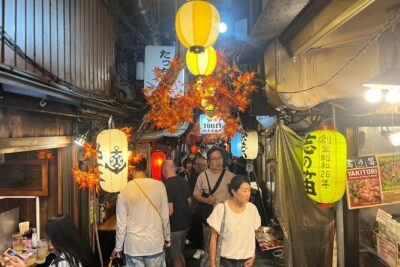
Shinjuku Food Tour (13 Dishes at 4 Local Eateries)
Read our review →
Shinjuku Food Tour (15 Dishes and 4 Eateries)
Read our review →
Best of Shinjuku: Izakaya Food Tour (4 Stops, 14+ Tastings)
Read our review →
Tokyo Night Foodie Tour in Shinjuku – Seasonal Sushi, Wagyu Beef
Read our review →
Eat and Drink Like a Local: Tokyo Ueno Food Tour-Taverns&Ramen
Read our review →
Tsukiji Fish Market: Street Food & Culture Walking Tour
Read our review →Shinjuku Food Tour – 15 Dishes, 3 Drinks, 4 Eateries
Read our review →Browse the lists this tour appears in