
Reviewed · JAPANESE COOKING CLASSES
Vegan/Vegetarian Ramen and Gyoza by Bentoya cooking
The best part of this Tokyo cooking class is that you make ramen soup from scratch, rather than simply boiling noodles and adding a packaged sauce. You also learn how Japanese dashi can hide fish ingredients, a key issue for anyone eating vegan or vegetarian in Japan.
I like the local supermarket visit and the small group size, which is capped at six people. I also like that the class covers both ramen and gyoza, then sends you home with useful instructions so you can cook the dishes again.
The main consideration is location. Komae is outside central Tokyo, so you’ll need to allow time to reach the meeting point. The class also runs in the morning, and strict vegans should ask questions about ingredients before booking.
In This Review
- Key points at a glance
- Why this class matters for plant-based eaters in Japan
- Meeting at Komae Station and seeing a local supermarket
- Making ramen soup instead of opening a packet
- Folding gyoza by hand
- An English-speaking host and a welcoming home setting
- How two and a half hours passes
- What the $75 price includes in practical terms
- Who will enjoy this cooking class most
- Booking, weather, and small practical details
- Should you book BentoYa Cooking?
- FAQ
- Where does the cooking class meet?
- Where does the activity finish?
- How long does the experience last?
- What time does the class run?
- How many people can join?
- Is the food vegan or vegetarian?
- Does the class include a supermarket visit?
- What dishes do you make?
- Who teaches the class?
- Is cancellation free?
Key points at a glance
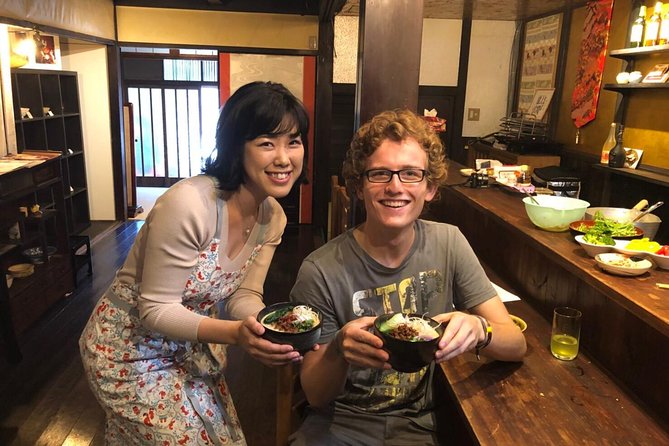
- Ramen soup from scratch: Learn how to build the soup without the bonito-based stock common in Japanese cooking.
- A supermarket visit first: See basic Japanese ingredients in their everyday setting before cooking with them.
- Two classic dishes: Make vegan or vegetarian ramen and gyoza during one 2.5-hour session.
- Small class size: The maximum is six people, allowing room for questions and hands-on help.
- Personal instruction: Kaori is named as the main host, with English-language guidance and practical cooking tips.
- A useful Tokyo food lesson: Understand why vegetarian eating can be difficult in Japan, even when a dish appears meat-free.
Why this class matters for plant-based eaters in Japan
Japan is an excellent food destination, but vegetarian and vegan dining takes care. Fish stock, usually made with bonito flakes, appears in many soups and sauces that otherwise look meat-free. That makes ordinary ramen especially tricky.
This class tackles the issue directly. Instead of asking you to guess which ingredients are safe, the instructor explains the building blocks of the meal and shows you how to make a plant-based version yourself. That is useful during your trip, but it is even more useful after you return home.
You’ll learn how to make the soup from the beginning, prepare the fillings, and handle the noodles and dumplings. One version of the class has included tantanmen-style ramen, giving the meal a richer, more seasoned profile than a plain vegetable noodle soup.
I see this as more than a meal with a recipe attached. It is a practical lesson in reading Japanese ingredients and understanding the role of dashi. If you have struggled to find dependable vegan food in Tokyo, that context can save you a lot of guesswork.
More ramen stops:
- Eat and Drink Like a Local: Tokyo Ueno Food Tour-Taverns&Ramen
★ 5.0 · 957 reviews - Ramen & Gyoza Cooking Class in Tokyo with Local Supermarket Visit
★ 5.0 · 823 reviews - Tokyo: Ramen Tasting Tour with 6 Mini Bowls of Ramen
★ 4.9 · 432 reviews
Meeting at Komae Station and seeing a local supermarket
The class starts at Komae Station, at 1 Chome-7 Motoizumi, Komae, Tokyo 201-0013. The meeting point is near public transportation, but Komae is not one of the obvious first stops for a short central Tokyo itinerary. Plan your route before class and leave enough time for the morning journey.
That extra ride is part of the tradeoff. You are not meeting in a major tourist district, but you are also not being placed in a polished demonstration kitchen designed only for visitors. The setting gives the experience a more local feel.
The class includes a visit to a nearby supermarket to look at common Japanese ingredients. This is one of the strongest features for anyone who wants to keep eating Japanese food after the activity. You can see labels, packaging, seasonings, noodles, wrappers, and other staples in the place where local shoppers buy them.
The supermarket stop also gives you a chance to ask about ingredients before they reach the cooking table. For vegans and vegetarians, that matters. A product can appear harmless while containing fish stock, seafood seasoning, or another animal ingredient.
Do not think of this stop as a sightseeing visit. Its value is practical. You are learning what to look for, which ingredients are basic, and how the food used in Japanese home cooking is sold.
Making ramen soup instead of opening a packet
Many cooking activities show you how to assemble a dish. This one focuses on the soup itself, which is the heart of ramen. You’ll work through the ingredients and seasoning needed to create a vegan or vegetarian broth without relying on bonito dashi.
That is a worthwhile skill because ramen quality depends on balance. The noodles and toppings matter, but the soup carries the main flavor. Learning the process helps you understand how Japanese cooks build depth without the fish stock that appears in so many traditional dishes.
The class is not limited to a basic clear broth. A reported session included tantanmen ramen, a seasoned style that can offer a fuller, more powerful bowl. The exact recipe may vary, so ask what will be prepared on your date if the style of ramen matters to you.
You’ll also learn how to handle toppings and presentation. One account specifically praised instruction in cutting, cooking methods, seasoning, and presentation. Those details are important because they turn the meal from a loose collection of ingredients into a bowl that looks and tastes deliberate.
The teaching appears suited to home cooks rather than trained chefs. You do not need to arrive with advanced knife skills or professional equipment. The useful question is not whether you can cook in a restaurant kitchen. It is whether you want a recipe you can repeat in your own kitchen.
Folding gyoza by hand
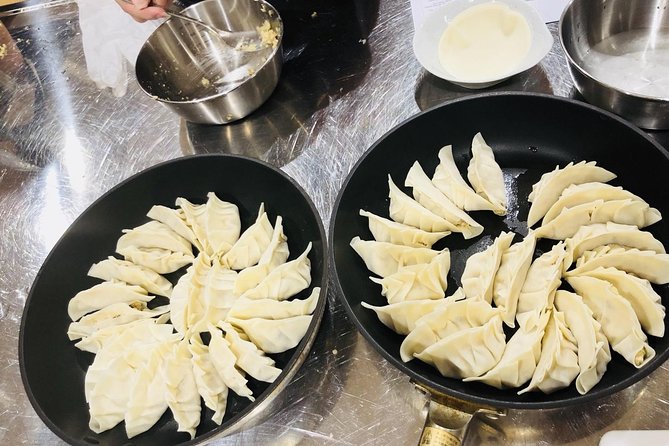
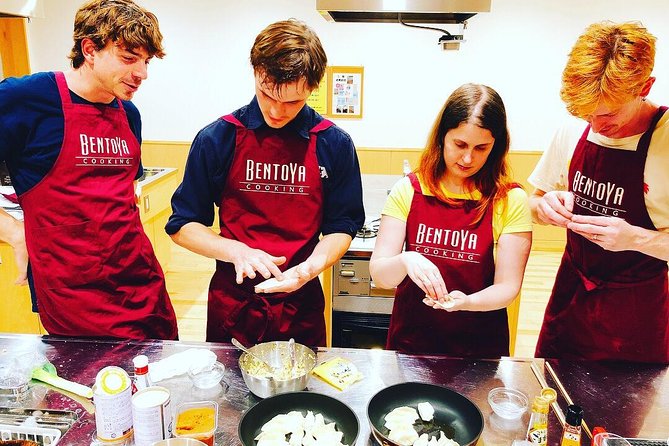
Gyoza brings a different kind of work to the class. Ramen depends on broth and seasoning, while gyoza asks you to prepare a filling, portion it, and fold the wrappers neatly enough to hold together during cooking.
For many people, the folding is the most playful part of the morning. It is also the step where a little guidance helps. The instructor can show you how much filling to use and how to seal the dumpling without tearing the wrapper or leaving it too loose.
The plant-based filling gives you another way to build flavor without meat. You can pay attention to texture, seasoning, and moisture, all of which affect the finished dumpling. A vegetarian gyoza that is bland or watery is not much of a reward, so the cooking instruction matters here.
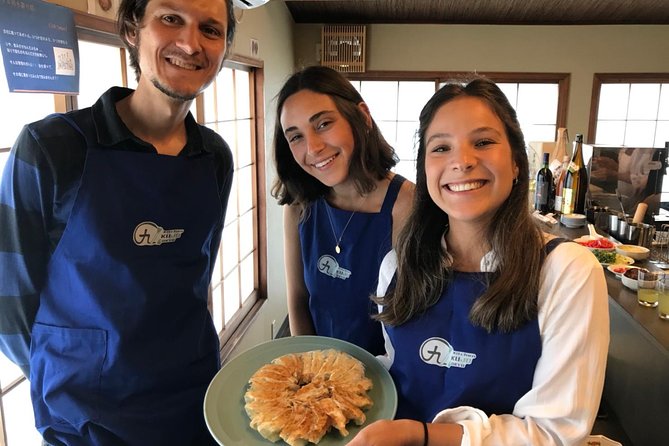
The class includes both preparation and eating. You are not watching someone else make the final plate while you stand at the side. You take part in the work, then sit down to eat the ramen and gyoza you helped create.
That makes the $75 price easier to assess. You are paying for instruction, ingredients, a supermarket visit, a meal, and a small-group setting. It is not the cheapest way to get lunch in Tokyo, but comparing it with the cost of a bowl of ramen misses the point. The value is in the recipe and the confidence to make it again.
More cooking classes in Tokyo:
- Tokyo: Easy Ramen Cooking Experience in Kabukicho, Shinjuku
★ 4.6 · 321 reviews - Ramen and Sushi Cooking Class with Sake Pairing Set in Tokyo
★ 5.0 · 291 reviews - Tokyo: Wagyu and 7 Japanese Dishes Cooking Class
★ 4.9 · 273 reviews - Tokyo Washoku 4-hour Cooking Class: From Market to Table
★ 5.0 · 253 reviews
An English-speaking host and a welcoming home setting
Kaori is the host most closely associated with this experience. She is described as friendly, welcoming, and able to speak very good English. That is important when the class involves ingredient names, food restrictions, knife technique, and questions about Japanese cooking.
The setting is a personal kitchen rather than a large commercial studio. That can make the morning feel more intimate and conversational. You may have a chance to ask about food, daily life, and cooking in Japan while the meal comes together.
It also means you should expect a personal class, not a highly staged production. If you want bright studio lighting, a formal chef demonstration, or a large menu, this may not be the right choice. If you want direct help and a relaxed exchange, the format should suit you well.
Kaori is not the only name connected with individual sessions. Miwa is named alongside her in one account, while another names Rina as the instructor who led the supermarket and cooking portions. Since hosts can vary, confirm who will teach your class if that detail matters to you.
The strongest teaching points are practical: cutting, seasoning, cooking technique, and presentation. You should also receive instruction files afterward. That follow-up material is a real benefit, since it helps you reproduce the ramen and gyoza once the smells and steps are no longer fresh in your mind.
How two and a half hours passes
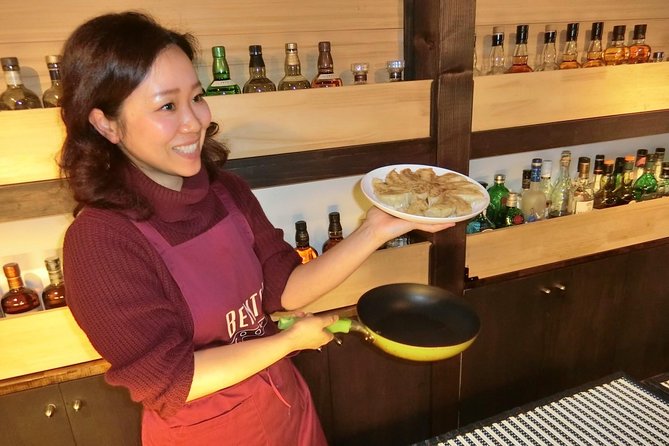
The activity lasts about two hours and 30 minutes, from 10:00 a.m. to 1:00 p.m. The morning schedule works well if you want a substantial lunch and still have the afternoon free for Tokyo sightseeing.
The likely rhythm is straightforward:
- Meet at Komae Station.
- Visit a local supermarket and discuss Japanese ingredients.
- Return to the cooking location.
- Prepare ramen soup and toppings.
- Mix and shape gyoza.
- Cook, arrange, and eat the finished meal.
- Receive instructions for making the dishes at home.
The exact order and recipes can change, so treat this as the shape of the experience rather than a guaranteed minute-by-minute plan. The supplied details clearly establish the supermarket introduction, cooking lesson, and shared meal, but they do not give a full timed schedule.
The class is limited to six people. That limit is a major advantage over a large group demonstration. You have a better chance to ask how to replace an ingredient, get help with gyoza folding, or check whether a seasoning fits your diet.
A small group can also mean the class feels more social. If you are traveling alone, the cooking format gives you something to do together without the pressure of a formal tour. If you are bringing children, keep in mind that the class includes cutting and cooking, so adult supervision and attention will still matter.
What the $75 price includes in practical terms
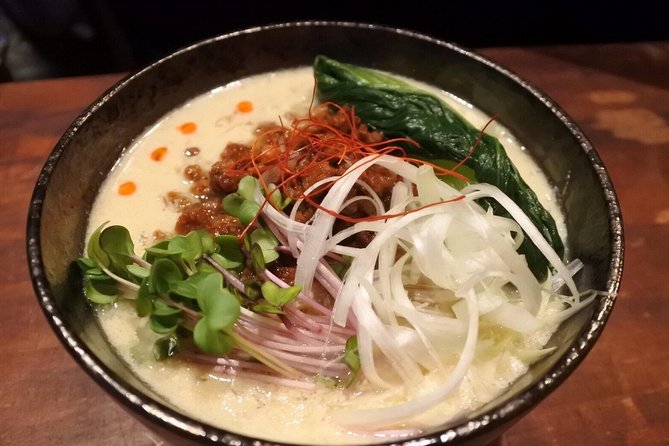
At $75 per person, this is a mid-range food activity. The fair comparison is not simply a restaurant meal. It includes a guided supermarket visit, hands-on cooking, the finished lunch, and recipe material for later use.
The price makes the most sense if you care about plant-based Japanese food beyond one meal. A single restaurant visit answers the question of what you can eat today. This class helps answer what you can buy, how you can read ingredients, and how you can cook the dishes yourself tomorrow.
It is also better value for people who enjoy active experiences. If you would rather sit down and be served, spend the money on a meal. If you like learning a skill and asking questions, the class offers more lasting value.
The small maximum of six supports the price. You are not paying for a crowd-sized performance. You are paying for closer instruction, especially during the parts that benefit from hands-on correction, such as dumpling folding and seasoning.
The experience is booked, on average, 27 days ahead. That suggests you should not leave it until the last week of a short Tokyo visit. Confirmation arrives within 48 hours of booking, subject to availability, so build in time for the booking to be confirmed before you finalize the rest of your schedule.
Who will enjoy this cooking class most
I would put this near the top of the list for vegans and vegetarians who want a dependable food experience in Tokyo. The class addresses the fish-stock problem directly and gives you more control than ordering from a menu.
It also suits anyone who loves Japanese food and wants to understand how it is made. You do not have to follow a plant-based diet to enjoy ramen, gyoza, a supermarket visit, or a morning in a Japanese kitchen.
Families may find it appealing, especially if older children enjoy cooking. One account describes a 13-year-old taking part in the experience, but the activity details do not set a formal minimum age. Ask the provider about age suitability before booking for younger children.
I would be more cautious if you have severe allergies or require strict ingredient control. The activity is designed as vegan or vegetarian, but the available information does not list every ingredient, cross-contact procedure, or kitchen policy. Contact BentoYa Cooking before paying and explain your needs clearly.
The class is also less suitable if your Tokyo plan is tightly packed around central sights. Komae adds travel time, and the class occupies the full morning. That is not a flaw, but you should treat it as a destination in its own right rather than a quick stop between major attractions.
Booking, weather, and small practical details
The experience uses a mobile ticket, so keep your booking details available on your phone. Confirmation is sent within 48 hours, subject to availability.
Free cancellation is available up to 24 hours before the start time for a full refund. Cancellations or changes made less than 24 hours before the start time are not accepted for a refund, and the cut-off follows local time in Japan.
The activity requires good weather. If poor weather causes cancellation, you are offered another date or a full refund. Since this is a cooking class, the weather requirement may relate to the supermarket portion or the host’s arrangements, so check your messages before setting out.
The activity runs Monday through Sunday from 10:00 a.m. to 1:00 p.m., with dates currently listed through February 16, 2027. The provider is BentoYa Cooking, Japanese Vegan/Vegetarian Cooking School.
Should you book BentoYa Cooking?
Book it if you want more than a plant-based lunch. The supermarket visit, fish-stock explanation, scratch-made soup, gyoza practice, and take-home instructions give you several useful layers in one morning.
I especially recommend it for visitors who have found Japanese vegetarian dining confusing. You’ll leave with a better sense of what goes into the food, not just a full stomach.
Think twice if Komae is too far from your base, if you dislike hands-on cooking, or if you need a formally documented allergy policy. For everyone else, the $75 cost is reasonable for a small class, a full meal, and recipes you can use after Japan.
FAQ
Where does the cooking class meet?
The class meets at Komae Station, at 1 Chome-7 Motoizumi, Komae, Tokyo 201-0013, Japan.
Where does the activity finish?
The activity ends back at the meeting point.
How long does the experience last?
The class lasts approximately two hours and 30 minutes.
What time does the class run?
The listed schedule is Monday through Sunday from 10:00 a.m. to 1:00 p.m.
How many people can join?
The maximum group size is six travelers.
Is the food vegan or vegetarian?
The experience teaches vegan or vegetarian Japanese food. Ask BentoYa Cooking about specific ingredients if you follow a strict diet or have allergies.
Does the class include a supermarket visit?
Yes. The instructor can show you a local supermarket and introduce basic Japanese ingredients before the cooking session.
What dishes do you make?
You make ramen and gyoza. The ramen soup is prepared from scratch, and one described class prepared tantanmen-style ramen.
Who teaches the class?
Kaori is named as the host, and other individual sessions have included instructors named Miwa and Rina. Confirm the instructor when you book.
Is cancellation free?
You can cancel up to 24 hours before the experience start time for a full refund. Cancellations or changes made less than 24 hours before the start time are not accepted for a refund.
More Vegan & Vegetarian in Tokyo
- Vegan Friendly Sushi & Okonomiyaki Shibuya Night Foodie Tour
★ 5.0 · 124 reviews - Ramen & Dumpling Cooking in Tokyo with Chef/Vegan possible
★ 5.0 · 107 reviews - Ramen Making from Scratch with Tokyo Mom(Vegan Option Available)
★ 5.0 · 39 reviews - Tokyo: 2-Hour Vegan and Vegetarian Ramen Guided Walking Tour
★ 4.8 · 33 reviews
New on our Tokyo list
- From Tokyo: Mount Fuji & Hakone Full Day Private Tour★ 4.9 · 25 reviews
- Tokyo Spectacular View Day-Cruise in 90 Minutes★ 5.0 · 25 reviews
- Real Tokyo Runner Club : Daikoku Car Meet Night Tour with JDM Car★ 5.0 · 25 reviews
- 2.5 Hour-Guided Cycle Tour in the Central Tokyo★ 5.0 · 25 reviews
- Ramen Making from Scratch +Akihabara Tour –Cooking Class★ 5.0 · 25 reviews
- [Self-Drive] Tokyo & Daikoku Custom Car Driving Tour★ 4.9 · 25 reviews
- Tokyo: 2-Hour Night Bike Tour of the City’s Hidden Gems★ 4.9 · 25 reviews
- Samurai themed Entertainment show in Shinjuku★ 4.5 · 25 reviews
Japanese Cooking Classes, compared.
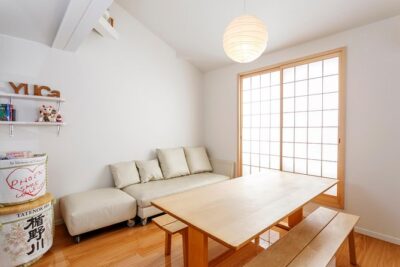
Ramen & Gyoza Cooking Class in Tokyo with Local Supermarket Visit
Read our review →
Easy Ramen Cooking Experience in Kabukicho, Shinjuku
Read our review →
Ramen and Sushi Cooking Class with Sake Pairing Set in Tokyo
Read our review →
Tokyo Washoku 4-hour Cooking Class: From Market to Table
Read our review →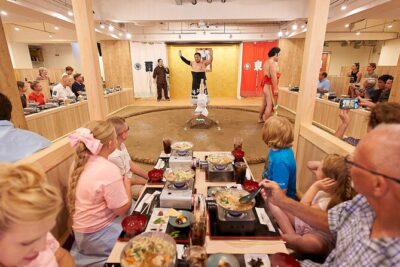
TokyoSumoShow, ChickenHotPot, and Mochi-Pounding by Pro Wrestlers
Read our review →
Professional Ramen & Gyoza with Ramen Chef in a restaurant!
Read our review →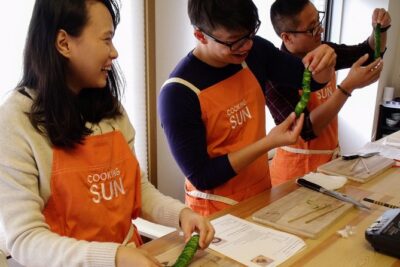
Small-Group Wagyu Beef and 7 Japanese Dishes Tokyo Cooking Class
Read our review →Browse the lists this tour appears in