
Reviewed · TOKYO FOOD TOURS
Tokyo Wagyu Culinary Tour Cooking Culture and Tasting
Tokyo Wagyu is more than a pricey steak on a hot plate. In this small class, you learn why different cuts behave differently, watch them being prepared, then cook them yourself under a chef’s eye. The hands-on work makes the meal far more useful than a simple tasting.
I like the six-person limit, which keeps the class personal, and I like the practical focus on seasoning, heat, and timing. Guide Mike also shares food and activity ideas for Tokyo, a useful bonus when you are still planning your days.
The main drawback is the $920 price, which is a serious splurge for roughly two hours. Since the currency and whether that amount covers one or more participants are not specified, confirm the final booking total before you pay.
In This Review
- Key points at a glance
- Why this Tokyo Wagyu class is more than a steak meal
- A seasonal welcome drink begins the lesson
- Sirloin, tenderloin, and the value of comparison
- The butchery demonstration shows what happens before the pan
- Cooking Wagyu means controlling heat and timing
- Your turn at the cooking station
- Tasting the finished cuts with matching drinks
- Wagyu’s place in Tokyo food culture
- Is $920 good value for two hours?
- Who should book this Wagyu experience?
- Booking details that affect your plans
- Should you book the Tokyo Wagyu Culinary Tour?
- FAQ
- Where does the Tokyo Wagyu culinary tour begin?
- Where does the activity end?
- How long does the Wagyu class last?
- How many people can join?
- What Wagyu cuts will be introduced?
- Will I cook the Wagyu myself?
- Can dietary restrictions be accommodated?
- What is the cancellation policy?
Key points at a glance
- Cook several Wagyu cuts yourself: Compare sirloin and tenderloin, then put the lessons into practice.
- Learn the reasons behind the price: The class explains Wagyu origins, grading, care, and preparation.
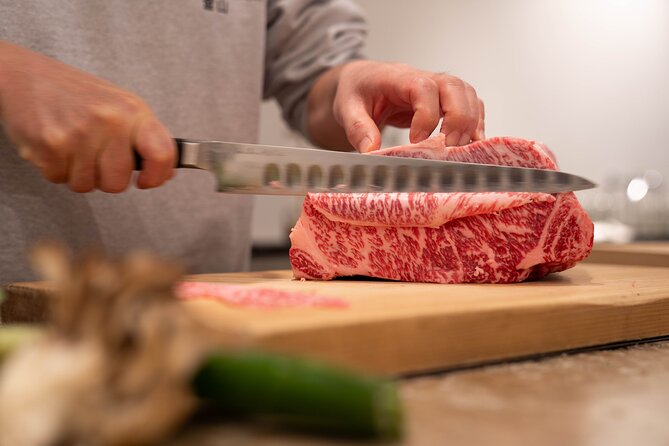
- Watch a butchery demonstration: You see how larger cuts are prepared before cooking.
- Keep the group small: A maximum of six people allows room for questions and individual help.
- Taste with paired drinks: Your finished Wagyu is served with beverages chosen to complement its flavor.
- Meet in Oshiage: The class begins and ends at 3-chōme-25-17 Oshiage, Sumida City.
Why this Tokyo Wagyu class is more than a steak meal
The most useful part of this experience is the connection between explanation and action. You are not simply told that Wagyu is special, then handed a plate. You first learn what you are looking at, watch the preparation, hear how heat changes the meat, and then test those ideas yourself.
That sequence matters. Wagyu can be expensive, and a costly cut deserves better than guesswork. A few simple errors, such as using too much heat or leaving the meat on the pan too long, can work against the qualities you paid for.
I also like that the lesson reaches beyond Wagyu. The basic ideas about seasoning, pan heat, and timing apply to many steaks you might cook at home. You leave with something more useful than a pleasant memory: a better sense of how to handle premium beef.
The class takes place in Oshiage, in Tokyo’s Sumida City. The supplied meeting point is 3-chōme-25-17 Oshiage, Sumida City, Tokyo 131-0045, Japan, and the activity returns to that same spot. Plan your route carefully and allow enough time to arrive without rushing.
More cooking classes in Tokyo:
- Ramen & Gyoza Cooking Class in Tokyo with Local Supermarket Visit
★ 5.0 · 823 reviews - Tokyo: Easy Ramen Cooking Experience in Kabukicho, Shinjuku
★ 4.6 · 321 reviews - Ramen and Sushi Cooking Class with Sake Pairing Set in Tokyo
★ 5.0 · 291 reviews
A seasonal welcome drink begins the lesson
Your first taste is a welcome drink inspired by the season in Japan. This is a small detail, but it sets the tone for the class. The drink gives you a first sense of how Japanese cooking often pays attention to the time of year, even before the beef appears.
You then receive an introduction to Wagyu’s origins and grading. This section should help you understand why one cut or grade may cost more than another, rather than treating the price as a mystery.
For you, the important point is not memorizing every grading term. It is learning to connect the grade with the meat’s appearance, texture, fat, and best cooking method. That context makes the tasting later more interesting because you have a basis for comparison.
The class also explains the care involved in producing Wagyu. The point is not only that the beef is luxurious. You are being shown why the product has a particular place in Japanese food culture and why careful cooking is needed once it reaches the pan.
Sirloin, tenderloin, and the value of comparison
The class introduces several cuts, including sirloin and tenderloin. These are not interchangeable pieces of beef, and learning the difference helps you make smarter choices at restaurants or butcher shops later.
Sirloin is generally associated with a fuller steak character, while tenderloin is prized for its soft texture. The experience gives you a chance to consider how each cut is used and what sets it apart, rather than judging everything by price alone.
You should pay close attention to the explanations before cooking. Look for the way each cut is described, including the amount of fat and the intended result. The lesson is designed to help you see the difference between a cut chosen for tenderness and one chosen for a stronger steak flavor.
This comparison is one of the reasons the small group matters. With no more than six people, you have a better chance to ask why one piece needs a different approach from another. A large class could turn this into a demonstration you watch from a distance. Here, the format is meant to keep you involved.
The butchery demonstration shows what happens before the pan
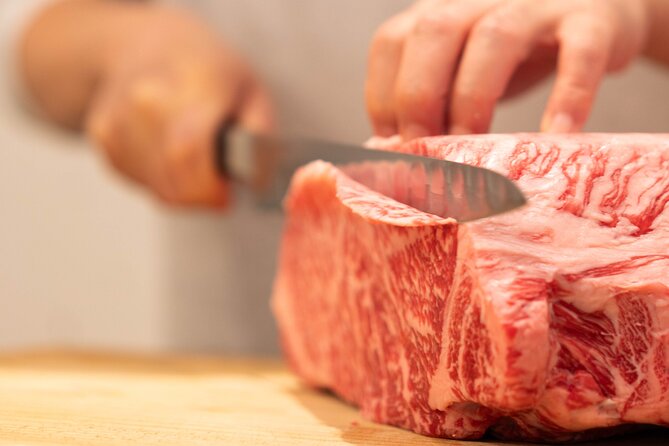
Before you cook, you watch a butchery demonstration. This gives you a look at how the cuts are prepared and separated for the meal.
For many people, this may be the most unfamiliar part of the class. A finished steak arrives at a restaurant looking simple, but the work before cooking affects its shape, thickness, texture, and best use. Seeing that preparation gives you a clearer idea of how a cut reaches the plate.
The demonstration also supports the cultural side of the experience. Wagyu is presented not just as an ingredient but as a product handled with care. The class links the beef to Japanese culinary traditions, which adds meaning to the tasting without turning the session into a long lecture.
You should not expect a full professional butchery course in a two-hour class. The butchery segment is there to explain the cuts and prepare you for cooking, not to train you for commercial meat work. That is a sensible limit for the available time.
More Tokyo food crawls:
- Tokyo: Shinjuku Food Tour (13 Dishes at 4 Local Eateries)
★ 5.0 · 6,603 reviews - Tokyo: Shinjuku Food Tour (15 Dishes and 4 Eateries)
★ 4.9 · 2,033 reviews - Best of Shinjuku: Izakaya Food Tour (4 Stops, 14+ Tastings)
★ 5.0 · 1,863 reviews - Tokyo Night Foodie Tour in Shinjuku – Seasonal Sushi, Wagyu Beef
★ 5.0 · 1,161 reviews
Cooking Wagyu means controlling heat and timing
The cooking demonstration focuses on temperature control and timing. These are the skills most likely to help you at home, especially if you rarely cook expensive steak.
You learn how to season the beef properly and how to manage the heat so the meat cooks as intended. The class emphasizes that Wagyu does not reward careless treatment simply because it contains more fat or costs more.
I would treat this part as the practical heart of the class. Watch what the chef does before the pan gets hot, how the cooking is timed, and how the different cuts respond. Notice how the instructions change from sirloin to tenderloin rather than assuming one method suits every piece.
The session is also a useful reminder that expensive ingredients do not remove the need for judgment. Heat that is too strong, poor timing, or heavy seasoning can cover the qualities you are supposed to notice. The goal is a clean preparation that lets the meat speak for itself.
Your turn at the cooking station
After the demonstration, you cook Wagyu yourself with help from the chefs. This is where the class earns its place as a cooking activity rather than a guided meal.
You prepare different cuts and learn by doing. That means you can test the advice immediately, see how the meat changes during cooking, and ask for help while the food is still on the heat.
For a first-time Wagyu cook, this support is valuable. You do not have to guess whether your pan is ready or whether the timing is right. You can focus on the process and build confidence before trying a similar meal at home.
The hands-on format also makes the tasting more meaningful. When the food reaches your plate, you know how it was seasoned and cooked. You can compare your results across the cuts and think about which method suited each one best.
The class is not described as a full meal with a long menu, so you should book it for the lesson and tasting rather than expecting an all-day food itinerary. At around two hours, it is a focused activity that can fit neatly into a Tokyo schedule.
Tasting the finished cuts with matching drinks
Once the cooking is complete, you taste the dishes with beverages selected to complement Wagyu. Pairing drinks with the beef helps you consider how flavor changes when the meat is served with something else.
This is not only a reward at the end. It gives you another way to judge the cuts. A drink that works with a rich piece may affect your view of the meat differently from a pairing used with a leaner or more delicate cut.
The tasting is likely to be most useful if you slow down and compare rather than eating everything at once. Think about texture, seasoning, fat, and the effect of the beverage. Those small observations are the reason a guided tasting can teach more than ordering one steak at a restaurant.
The available details do not specify the exact drinks or the number of dishes. That is worth keeping in mind if you have strong expectations about alcohol, a particular beverage, or portion size. The experience does say that dietary restrictions can be accommodated, so tell the provider about your needs before the class.
Wagyu’s place in Tokyo food culture
The final discussion connects Wagyu with Japanese culture. This gives the class a wider frame, showing how a premium ingredient can carry ideas about care, quality, preparation, and presentation.
I like this closing conversation because it brings the separate pieces together. The welcome drink reflects the season, the cuts show different uses, the butchery demonstration explains preparation, and the cooking lesson shows how technique protects the meat.
You also receive practical advice for cooking Wagyu at home. That may be the best souvenir from the session. You can buy premium beef in Japan or elsewhere, but knowing how to season and cook it responsibly is what lets you recreate part of the experience later.
Guide Mike adds another useful layer by offering recommendations for food and activities in Tokyo. If you are new to the city, ask him early in your trip rather than saving the conversation for the final minutes. The advice may help you shape the rest of your visit.
Is $920 good value for two hours?
At $920, this is not a casual food stop. It is a high-cost, short-format activity, so you need to decide what kind of value you want.
If you only want to eat excellent beef, a restaurant may give you a simpler and possibly less expensive way to do it. You would not get the same instruction, but you also would not pay for a cooking lesson, butchery demonstration, or small-group access.
The price makes more sense if you care about the method. You are paying for a local-led class, several Wagyu cuts, instruction on grading and preparation, hands-on cooking, a tasting, and a maximum group size of six. The personal attention is important because cooking premium beef can feel intimidating without guidance.
Still, the total needs clarification. The information gives a price of $920 but does not state the currency or clearly explain whether it is per person or for the booking. Contact the provider, emc, before confirming so you know exactly what is included.
This is also a poor choice if you have only a few hours in Tokyo and want to see major sights. The class begins and ends in Oshiage, and travel time to and from the meeting point is separate from the roughly two-hour activity.
Who should book this Wagyu experience?
I would recommend it most strongly to people who enjoy food education, cooking, and small-group activities. It suits couples, friends, and serious food fans who want to understand an expensive Japanese ingredient instead of simply ordering it.
It is also a good fit if you want a practical Tokyo souvenir. A cooking technique takes up no space in your luggage, and the lessons on seasoning and heat can be used long after your trip.
You may want to skip it if your budget is tight, if you prefer a long restaurant meal, or if you are looking for a broad sightseeing tour. Two hours goes quickly, and the focus remains firmly on Wagyu.
Families or groups with dietary restrictions should contact the provider in advance. The experience says accommodations are available, but you should not wait until the class begins to explain an important food need.
The group limit of six is a clear advantage for anyone who dislikes crowded demonstrations. You have a better chance to see the preparation, receive cooking help, and ask questions without competing with a large room.
Booking details that affect your plans
Confirmation is provided when you book, and the activity uses a mobile ticket. Keep the ticket available on your phone and make sure you know the exact meeting address in Oshiage.
The experience returns to the starting point, which makes it easier to plan the next part of your day. Even so, allow time for arrival and departure because the listed two hours does not include your trip across Tokyo.
Free cancellation is available if you cancel at least 24 hours before the local start time. Cancellations or changes made within 24 hours are not accepted and are not refunded, so check your schedule before the final day.
Should you book the Tokyo Wagyu Culinary Tour?
Book this class if you want to learn how Wagyu works, not just eat it. The combination of grading, cut comparison, butchery, chef demonstrations, hands-on cooking, and paired tasting gives you a clear lesson in both technique and culture.
I would hesitate only because of the $920 cost and the short duration. Confirm what the price covers, share dietary needs ahead of time, and decide if cooking instruction matters enough to justify a premium over a restaurant meal.
For a small group that values food, the class offers a focused and practical way to spend part of a Tokyo day. Mike’s local suggestions are an added benefit, especially if you arrange the class early enough to use them during the rest of your visit.
FAQ
Where does the Tokyo Wagyu culinary tour begin?
The experience begins at 3-chōme-25-17 Oshiage, Sumida City, Tokyo 131-0045, Japan.
Where does the activity end?
The activity ends back at the same meeting point in Oshiage.
How long does the Wagyu class last?
The experience lasts approximately two hours.
How many people can join?
The activity has a maximum of six travelers.
What Wagyu cuts will be introduced?
The class includes different cuts such as sirloin and tenderloin, with explanations of their uses and differences.
Will I cook the Wagyu myself?
Yes. After the cooking demonstration, you prepare different cuts yourself with help from the chefs.
Can dietary restrictions be accommodated?
Yes. You should inform the provider about dietary restrictions so accommodations can be arranged.
What is the cancellation policy?
You can cancel at least 24 hours before the local start time for a full refund. Cancellations and changes made within 24 hours are not accepted, and the amount paid is not refunded.
New on our Tokyo list
- Tokyo : Kamikaze Street Drift Ride★ 5.0 · 3 reviews
- Private Zen Meditation in English in Shinjuku, Tokyo★ 5.0 · 3 reviews
- Sumi-e Experience in a relaxing green tea shop in Tokyo★ 5.0 · 3 reviews
- Onsen Spa in Tokyo and Asakusa Bar Hopping with Local Guide★ 5.0 · 3 reviews
- Easy for everyone! Now you can play handmade mini shamisen and show off to everyone! Musical instruments, sweets and live music★ 5.0 · 3 reviews
- Tokyo: Private Tsukiji Street Food & Sake with Local Guide★ 5.0 · 3 reviews
- Mt Fuji Exploration Tour with Free Japanese Kusa Mochi from Tokyo★ 4.5 · 3 reviews
- Tokyo Tsukiji Fish Market Walking and Exploring Hidden Gems Tour★ 5.0 · 3 reviews
Tokyo Food Tours, compared.
Shinjuku Food Tour (13 Dishes at 4 Local Eateries)
Read our review →
Shinjuku Food Tour (15 Dishes and 4 Eateries)
Read our review →
Best of Shinjuku: Izakaya Food Tour (4 Stops, 14+ Tastings)
Read our review →
Tokyo Night Foodie Tour in Shinjuku – Seasonal Sushi, Wagyu Beef
Read our review →
Eat and Drink Like a Local: Tokyo Ueno Food Tour-Taverns&Ramen
Read our review →
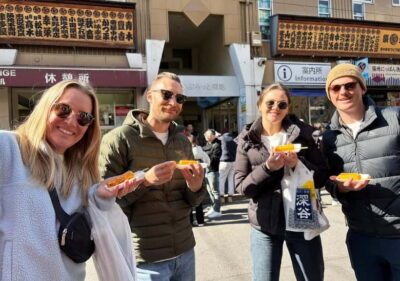
Tsukiji Fish Market: Street Food & Culture Walking Tour
Read our review →Shinjuku Food Tour – 15 Dishes, 3 Drinks, 4 Eateries
Read our review →Browse the lists this tour appears in