
Reviewed · WALKING TOURS
Tokyo walking tour around Imperial Palace and Tokyo Station
Tokyo’s Imperial Palace area is best understood on foot, where grand office buildings, old gates, polished shopping halls, and the quiet outer gardens meet in one compact route. This two-hour walk links Tokyo Station and Marunouchi with Nijubashi and Sakuradamon, giving you a useful first look at central Tokyo without asking you to spend half a day on your feet.
I like the small group limit of four, which gives the guide room to answer questions and adjust the pace. I also like the mix of architecture and history: you get the view from KITTE, the Meiji Seimei Kan, the stone and iron bridges of Nijubashi, and the Imperial Palace Outer Garden. The main drawback is that this is an outside walking tour, so the value depends on your interest in buildings, streets, and explanations rather than palace interiors or long museum visits.
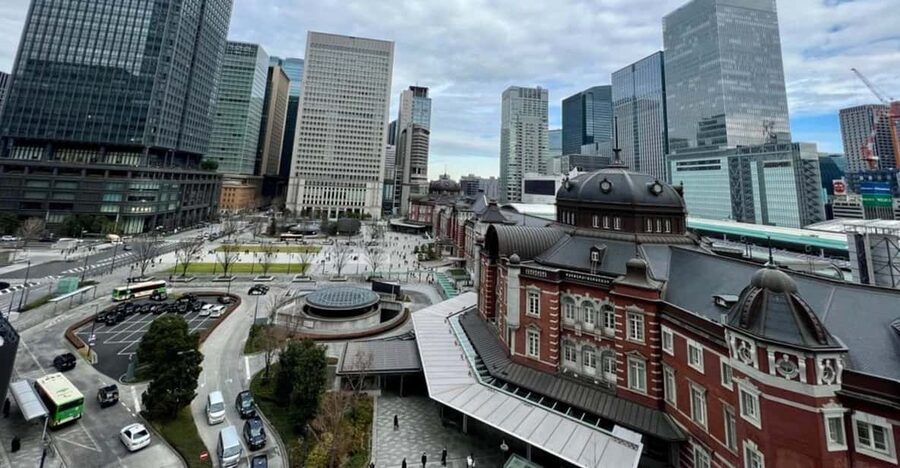
- Tokyo Station from Marunouchi: Begin beside one of Japan’s most recognizable buildings and learn how the surrounding district developed.
- KITTE viewing point: Look back at Tokyo Station from the Japan Post building, a useful angle for photos.
- Meiji Seimei Kan: Spend the longest indoor-adjacent stop around this elegant Meiji-era insurance building.
- Nijubashi and Sakuradamon: See two of the Imperial Palace area’s best-known gateways and hear how they fit into the palace grounds.
- Small-group guiding: With no more than four participants, the walk can feel more like a private orientation than a large group tour.
- English or Japanese: Guides such as Mikio, Masahito, and Miho have led walks that suit families, first-time visitors, and curious question-askers.
In This Review
- Why This Short Walk Makes Sense in Tokyo
- Meeting at Marunouchi South Exit
- Tokyo Station, the First Ten Minutes
- Marunouchi Building and the Mitsubishi Story
- The KITTE View of Tokyo Station
- Meiji Seimei Kan and Marunouchi’s Older Face
- Nijubashi, the Palace’s Best-Known Approach
- Sakuradamon Gate and the Final Stretch
- What the Small Group Changes
- Is $49 a Fair Price?
- Who Should Book This Walk?
- Practical Tips for a Better Two Hours
- Should You Book It?
- FAQ
- How long does the Tokyo Imperial Palace and Tokyo Station walking tour last?
- How much does the tour cost?
- Where does the tour meet?
- Where does the tour finish?
- Which languages are available?
- How many people can join the group?
- Is the Imperial Palace included?
- Can I cancel or pay later?
Why This Short Walk Makes Sense in Tokyo
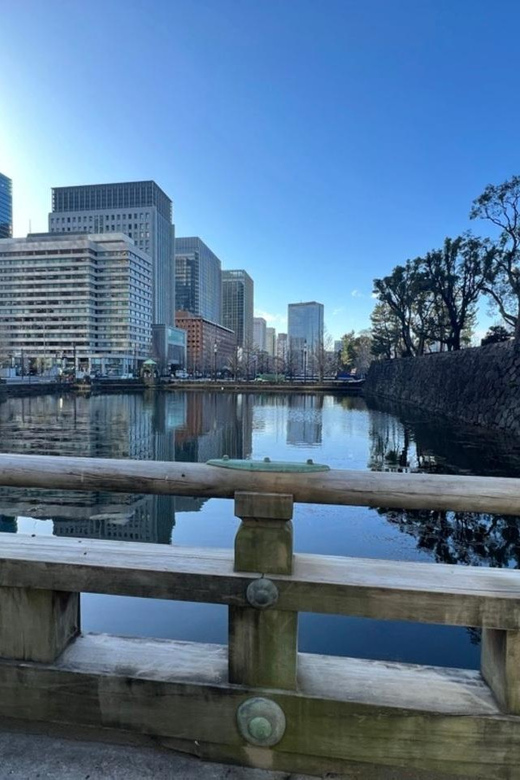
Tokyo can be hard to read at first. The city is huge, but its central districts often reward you with small pockets of calm, formal gardens, and carefully preserved buildings beside modern towers.
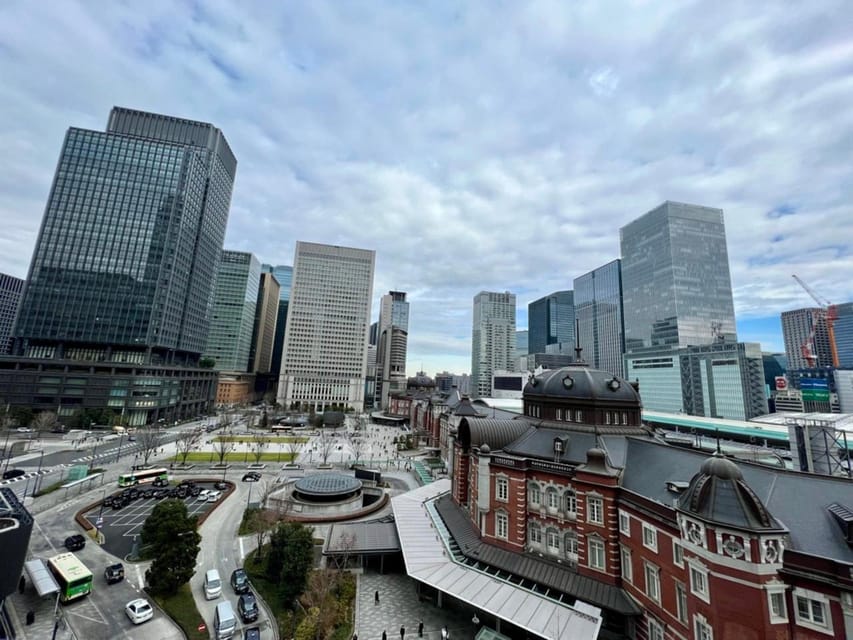
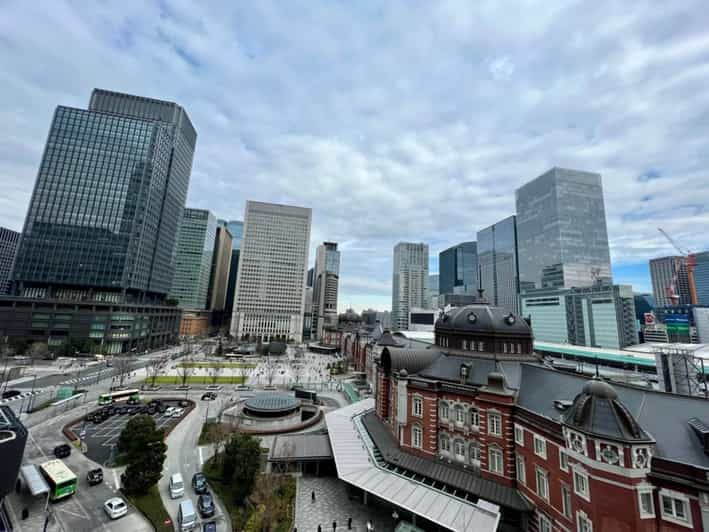
This route gives you a clear introduction to Marunouchi, the district between Tokyo Station and the Imperial Palace. The area was bought and developed by Mitsubishi from 1890, and that background helps explain why the streets feel so planned and polished. You are not simply ticking off famous sights. You are seeing how business, government, monarchy, transport, and retail occupy the same few blocks.
The tour lasts two hours and costs $49 per person. That is a fair price if you want context and a flexible conversation, especially with a group of only four. It is less compelling if you already know Marunouchi well or prefer to explore at your own pace with a guidebook.
The route is also a sensible first-day activity. Tokyo Station is a major transport hub, and the walk ends near Kasumigaseki Station, putting you close to another useful subway area. You can use the tour to get oriented before returning to the district on your own.
Meeting at Marunouchi South Exit
You meet in front of the police box near Tokyo Station’s Marunouchi South Exit, at 1-9-1 Marunouchi, Chiyoda-ku. This is a practical meeting point, but Tokyo Station is large enough that you should allow time to find the correct exit.
The tour begins outdoors, so arrive ready to walk. The information provided does not list a specific distance or accessibility arrangement, so you should ask the provider if you need details about surfaces, walking speed, or seating.
From the meeting point, the walk moves through the Marunouchi side of the station. This is the side associated with the station’s grand red-brick exterior and the broad avenues leading toward the Imperial Palace.
More walking routes in Tokyo:
- Tokyo Tsukiji Fish Market Food and Culture Walking Tour
★ 5.0 · 3,184 reviews - Tokyo: Imperial Palace and Shogun Historical Walking Tour
★ 5.0 · 2,251 reviews - Tokyo: Shinjuku Local Bar and Izakaya Guided Walking Tour
★ 4.9 · 1,794 reviews
Tokyo Station, the First Ten Minutes
Tokyo Station is more than a place to catch a train. Its Marunouchi facade gives the tour an immediate visual anchor, and your guide uses the building to explain the character of the district around it.
The scheduled stop here is about ten minutes. That is enough for an introduction, a few photographs, and an explanation of the station’s role in central Tokyo. It is not enough for a full station tour, shopping, or a detailed look at every architectural feature.
I like starting here because it gives you a point of comparison. Tokyo’s rail system is known for speed and scale, while the Marunouchi side presents a more formal face, with broad streets and major corporate buildings. The contrast begins before you have walked very far.
Marunouchi Building and the Mitsubishi Story
The next stop is Marunouchi Building, with about ten minutes set aside for a guided look. The building represents the modern commercial side of the district, where offices, restaurants, and shops have replaced much of the older low-rise setting.
The important detail is the connection to Mitsubishi’s development of Marunouchi from 1890. Your guide can put the surrounding buildings into a larger story about planned urban development, rather than treating each facade as an isolated attraction.
This stop is brief, so think of it as context rather than a full architectural visit. You may have time to notice the building and hear its role in the neighborhood, but the tour is moving toward the Japan Post building and the palace grounds.
The KITTE View of Tokyo Station
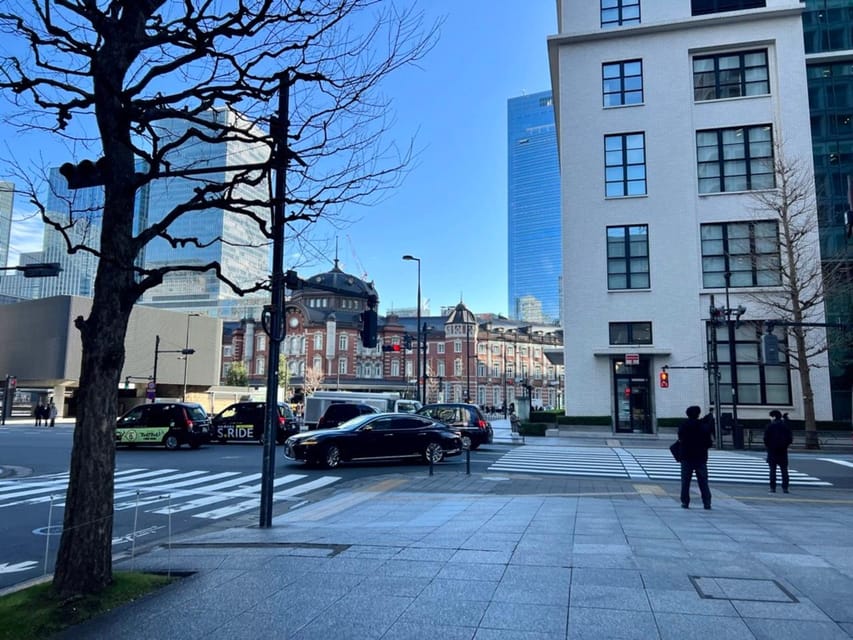
KITTE Marunouchi is the Japan Post building and one of the most useful stops for understanding the station from above or across an open interior viewpoint. The tour allows around fifteen minutes here.
The main reward is the view back toward Tokyo Station. You get a different angle from the street-level introduction, and this is one of the better chances on the route to frame the station with the surrounding Marunouchi district.
This stop also adds a modern retail setting to the walk. KITTE is not presented as a shopping excursion, so do not expect a long browse through its stores. Still, it gives the route a welcome change of pace and offers a place where the station’s design can be seen as part of a wider city plan.
If photography matters to you, keep your phone or camera ready here. The exact view and available time can depend on the guide’s route and the pace of the group.
A few more Tokyo bookings worth comparing
- Mt Fuji and Hakone 1-Day Bus Tour Return by Bullet Train
★ 5.0 · 26,383 reviews - 1-Day Tokyo Bus Tour
★ 5.0 · 14,250 reviews - Tokyo: TOKYO SKYTREE® Admission ticket
★ 4.5 · 11,192 reviews - Tokyo: teamLab Planets TOKYO Digital Art Museum Entry Ticket
★ 4.6 · 9,779 reviews
Meiji Seimei Kan and Marunouchi’s Older Face
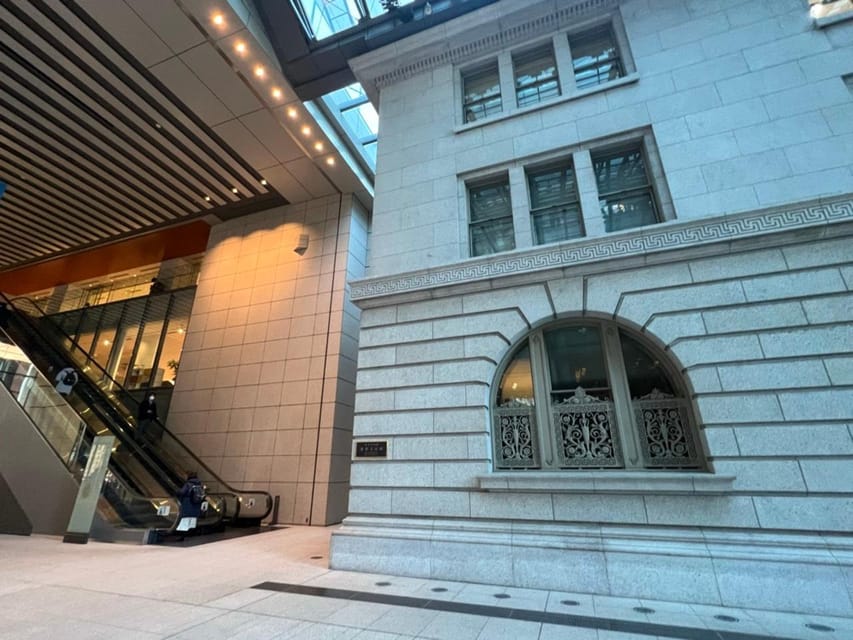
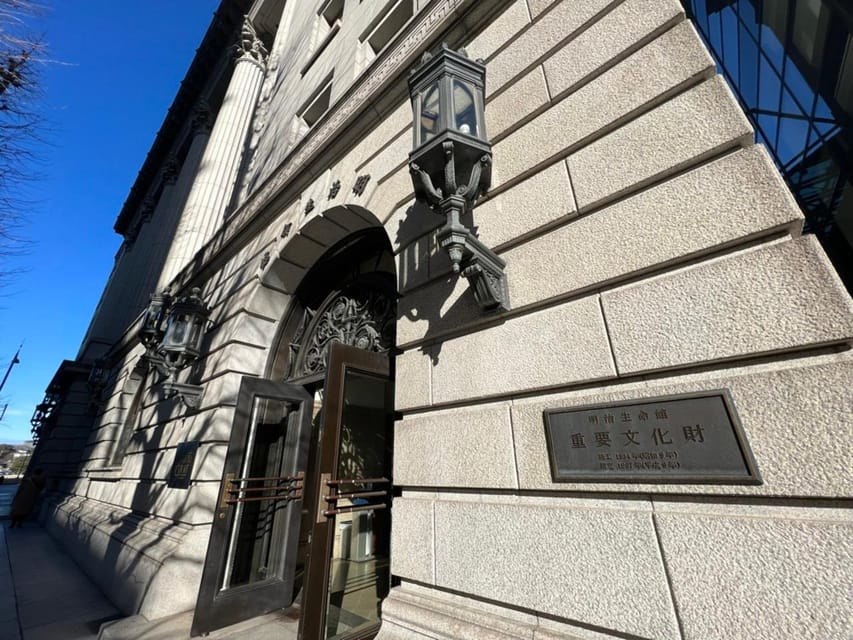
The Meiji Seimei Kan receives about thirty minutes, making it the longest stop before the Imperial Palace area. This elegant Meiji Life Insurance Company building gives the walk a more formal architectural focus.
The building helps show that Marunouchi is not only a district of new towers and shopping centers. Its older structures bring a different scale and mood, with details that reward a slower look. Your guide can explain why the building matters and how it fits into the area’s development.
I consider this stop especially useful for visitors who are interested in architecture but do not want a full-day design tour. Thirty minutes gives you enough time to look carefully, ask questions, and compare the Meiji Seimei Kan with the newer commercial buildings you have already seen.
The tour description does not promise interior access, so plan on seeing and discussing the building as part of the walking route. The exact amount of time spent inside or outside should be confirmed with the guide.
Nijubashi, the Palace’s Best-Known Approach
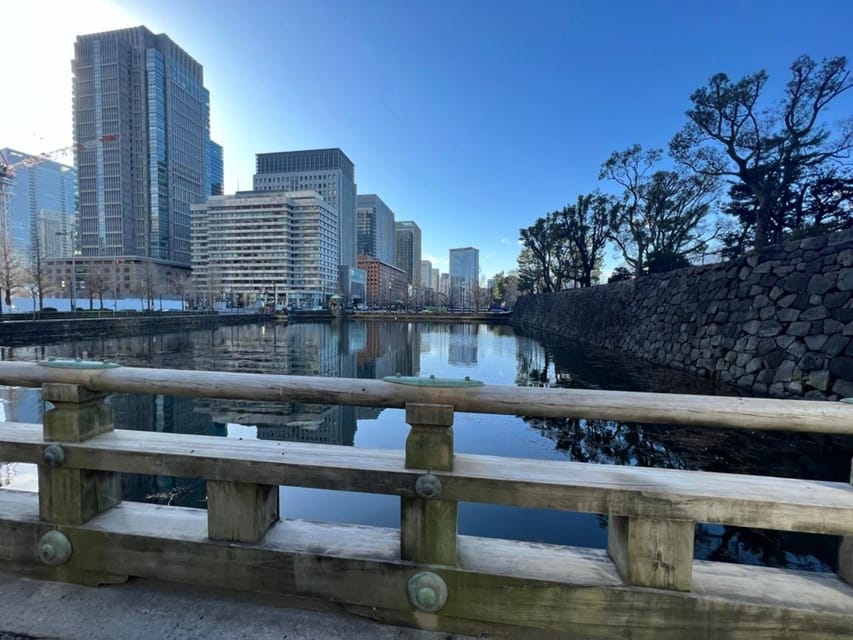
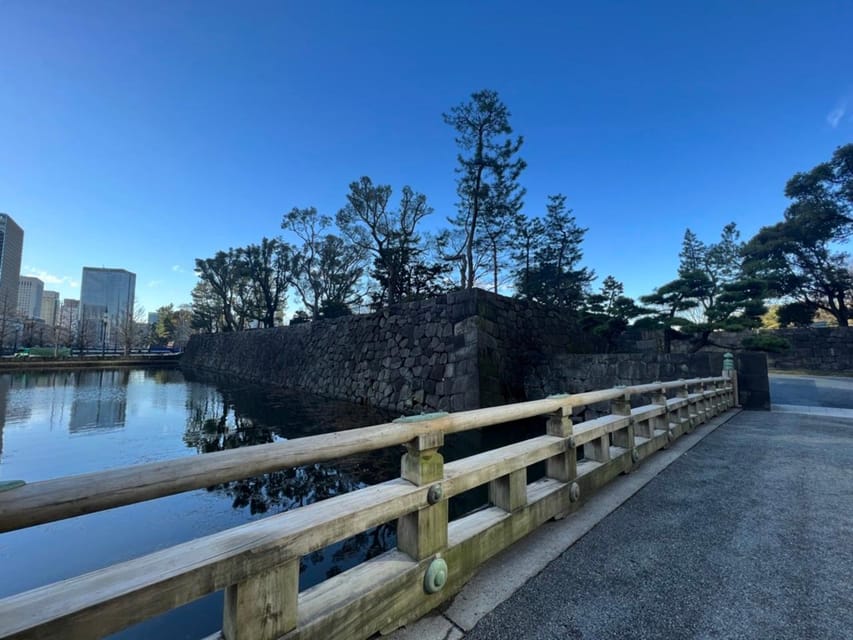
From Marunouchi, the route continues toward the Imperial Palace Outer Garden and Nijubashi. The scheduled time at Nijubashi is about thirty minutes, giving the guide room to explain both the bridge and the palace approach.
Nijubashi refers to the stone and iron bridges at the front gate of the Imperial Palace. The setting is formal and spacious, a sharp change from the offices and retail buildings around Tokyo Station. This is the point where the tour shifts from commercial Tokyo to imperial Tokyo.
You should not expect to enter the Imperial Palace itself on this walk. The route focuses on the outer garden and palace outskirts, along with views of the gates and bridges. That distinction matters. If you want palace interiors or a longer garden visit, this tour will not cover those areas.
The bridge is a good place to pause for photographs, but it can also be one of the busiest parts of the route. Your guide’s value here is not just pointing out the bridge. It is explaining why this approach matters and how the stone and iron structures reflect Japanese architectural traditions.
Sakuradamon Gate and the Final Stretch
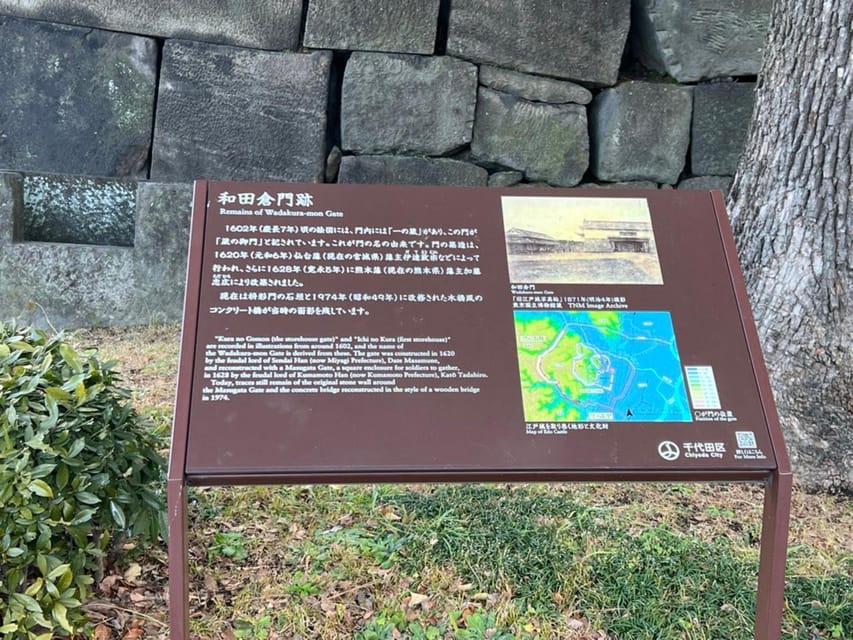
The final scheduled stop is Sakuradamon Gate, with about twenty-five minutes. This is another major entrance associated with the Imperial Palace area and gives the tour a second architectural focal point after Nijubashi.
Seeing both gates is worthwhile because they do not serve as duplicates in the experience. Nijubashi presents the palace’s formal front approach, while Sakuradamon adds another view of the defensive and ceremonial character of the grounds.
The tour finishes at Kasumigaseki Station. That makes the ending practical if you plan to continue sightseeing or use public transport, though it is not the same place where you began. Keep the ending in mind when planning lunch or your next reservation.
The listed stop times add up to roughly 140 minutes, while the advertised duration is two hours. That suggests the actual pace or stop lengths may vary, so ask the guide how the timing is handled if you have a strict afternoon schedule.
What the Small Group Changes
A maximum of four participants is one of the strongest features here. In a large group, a short walking tour can turn into a line behind the guide, with questions saved for the end. With four people, you have a better chance to ask about architecture, Japanese customs, the palace, or anything else you notice along the way.
The small size also helps families. Mikio has led a walk with two teenagers and kept the route engaging by turning it into a learning experience rather than a string of dates and building names. That is useful if you are traveling with older children who may lose interest in a standard sightseeing lecture.
Masahito has also adjusted the route around participant preferences and discussed topics beyond the scheduled sights. If you have a particular interest, such as architecture, Japanese government, photography, or local history, raise it early. A four-person group gives the guide more room to respond.
Miho has led the walk as an introduction to Tokyo for people staying near the Imperial Palace. That makes this a good choice near the beginning of your stay, when you want a local explanation of the area before exploring it alone.
The language options are Japanese and English. The guide is included in the price, and the activity is described as a live guided tour rather than an audio walk.
Is $49 a Fair Price?
At $49 per person, the tour is not the cheapest way to see these sights. You can walk around Tokyo Station, Marunouchi, and the palace exterior without paying for admission. The fee is paying for a person who connects the places, answers questions, and helps you notice details you might otherwise pass.
The value improves if you are new to Tokyo, have limited time, or want a focused introduction without planning the route yourself. A two-hour walk is short enough to fit around other plans, and the group size is much smaller than many city tours.
The value is weaker if your main goal is shopping, palace entry, or a long visit in the gardens. This is an architecture and orientation walk, not a full Imperial Palace visit. You also receive no listed meals, transport, or admissions, only the guide.
The flexible booking terms help if your schedule is uncertain. You can cancel up to 24 hours in advance for a full refund, and you can reserve now and pay later. Starting times depend on availability, so check the schedule before building your day around it.
Who Should Book This Walk?
I would recommend it to first-time Tokyo visitors who want a simple introduction to the city’s central districts. It is also a good fit for anyone staying near the Imperial Palace, Tokyo Station, or Marunouchi and wanting more meaning from a self-guided stroll.
Families may appreciate the short length and small group. The experience with Mikio suggests that teenagers can stay involved when the guide welcomes questions and connects the sites to larger ideas.
Architecture fans will get the most from the stops at Tokyo Station, KITTE, Marunouchi Building, and Meiji Seimei Kan. The tour also suits visitors who enjoy seeing how a modern business district meets an imperial compound.
You may want to skip it if you dislike walking, want guaranteed indoor visits, or have already spent time learning about Marunouchi and the palace gates. The route is concentrated, and its appeal comes from explanation and comparison rather than a large number of attractions.
Practical Tips for a Better Two Hours
Wear comfortable shoes and allow extra time to reach the police box near the Marunouchi South Exit. Tokyo Station can be confusing even when you know the general area.
Keep the tour’s outdoor focus in mind when checking the weather. The supplied details do not state whether the route changes for rain or bad conditions, so ask the provider if that matters for your plans.
Tell your guide what interests you at the start. Masahito’s approach has included checking whether the planned route suits the group, and a small tour is the right setting for making that kind of request.
Plan your next activity from Kasumigaseki Station, not Tokyo Station. The walk does not return to the starting point.
Should You Book It?
Book this tour if you want a compact, personal introduction to Tokyo Station, Marunouchi, and the Imperial Palace Outer Garden. The strongest reasons are the four-person limit, the useful KITTE viewpoint, the Meiji Seimei Kan stop, and the chance to ask a local guide real questions.
Skip it if you are looking for palace admission, extensive garden time, or a low-cost walk without guiding. At $49, the tour earns its price through explanation and flexibility, not through entry tickets or a long list of included extras.
For a first day in Tokyo, especially with family or a short schedule, I think it is a sensible choice.
FAQ
How long does the Tokyo Imperial Palace and Tokyo Station walking tour last?
The advertised duration is two hours.
How much does the tour cost?
The price is $49 per person.
Where does the tour meet?
Meet in front of the police box near Tokyo Station’s Marunouchi South Exit, at 1-9-1 Marunouchi, Chiyoda-ku, Tokyo 100-0005.
Where does the tour finish?
The tour finishes at Kasumigaseki Station.
Which languages are available?
The live guide can conduct the tour in Japanese or English.
How many people can join the group?
The group is limited to four participants.
Is the Imperial Palace included?
The route visits the Imperial Palace Outer Garden, Nijubashi, and Sakuradamon Gate. Palace interior entry is not included in the provided tour details.
Can I cancel or pay later?
You can cancel up to 24 hours in advance for a full refund. The reserve-now, pay-later option lets you book without paying immediately.
New on our Tokyo list
- Sumi-e Experience in a relaxing green tea shop in Tokyo★ 5.0 · 3 reviews
- Tokyo : Kamikaze Street Drift Ride★ 5.0 · 3 reviews
- Private Zen Meditation in English in Shinjuku, Tokyo★ 5.0 · 3 reviews
- Onsen Spa in Tokyo and Asakusa Bar Hopping with Local Guide★ 5.0 · 3 reviews
- Easy for everyone! Now you can play handmade mini shamisen and show off to everyone! Musical instruments, sweets and live music★ 5.0 · 3 reviews
- Tokyo: Private Tsukiji Street Food & Sake with Local Guide★ 5.0 · 3 reviews
- Mt Fuji Exploration Tour with Free Japanese Kusa Mochi from Tokyo★ 4.5 · 3 reviews
- Tokyo Tsukiji Fish Market Walking and Exploring Hidden Gems Tour★ 5.0 · 3 reviews
Walking Tours, compared.
Tokyo Tsukiji Fish Market Food and Culture Walking Tour
Read our review →
Imperial Palace and Shogun Historical Walking Tour
Read our review →
Shinjuku Local Bar and Izakaya Guided Walking Tour
Read our review →
Asakusa Walking Tour with Sensoji Temple Visit
Read our review →
Tokyo Castle & Imperial PalaceーShogun Walking Tour
Read our review →
Browse the lists this tour appears in