
Reviewed · TOKYO FOOD TOURS
Tokyo: West-Side Cycling and Food Tour with Guide
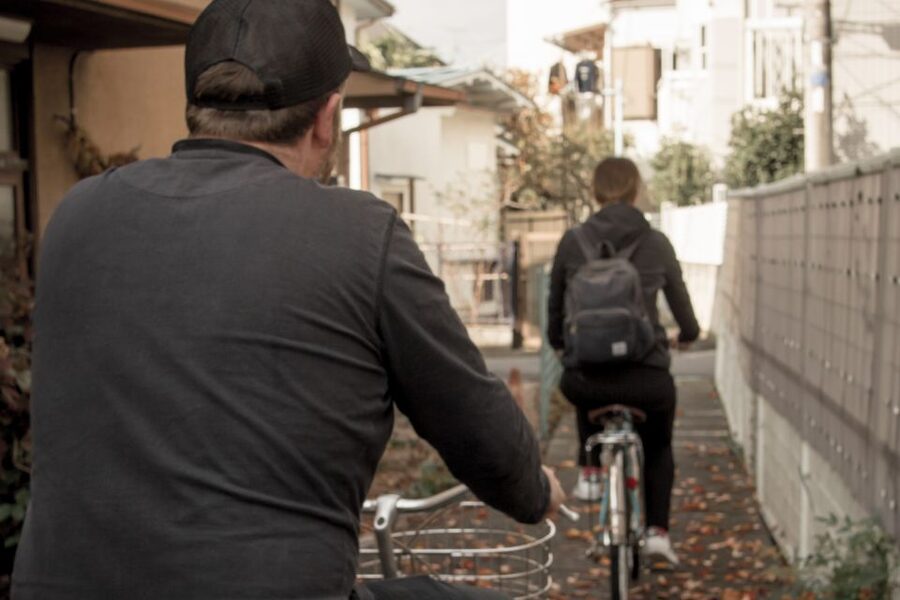
Tokyo’s west side is best understood at bicycle speed. On this 3.5-hour outing, you pedal a slightly creaky but well-maintained mamachari through Nakano, Koenji, and Asagaya, using back lanes, riverside paths, and local activity hubs that most visitors miss from a train window.
I like the everyday food stops, including two street eats and a simple local lunch, and I like the chance to see Tokyo’s practical bicycle culture up close, from baskets to organized parking systems. The trade-off is clear: you need to handle 12 to 15 kilometers of narrow, crowded streets and uneven surfaces, and rain usually does not stop the tour.
In This Review
- Key points at a glance
- Why a bicycle reveals more of west Tokyo
- Starting at Koenji Station without a scramble
- The mamachari: useful, sturdy, and not built for racing
- Nakano, Koenji, and Asagaya at street level
- Food stops that make the route useful
- Tokyo’s bicycle rules and parking habits
- What Andy adds to the experience
- How much value you get for $110
- Weather, clothing, and the practical trade-offs
- Who should book this west-side ride
- Should you book the Koenji cycling and food tour?
- FAQ
- Where does the Tokyo cycling and food tour meet?
- How long does the experience last?
- How far do you cycle?
- What food and drinks are included?
- Is the tour suitable for children?
- What happens if it rains?
- Can I cancel or pay later?
Key points at a glance
- Ride a Japanese mamachari: Use a practical city bicycle with a front basket, built for errands rather than speed.
- See three west-side neighborhoods: The route links Nakano, Koenji, and Asagaya through smaller streets and local paths.
- Eat like a local: Your price covers two street food tastes, a simple lunch, and one bottled drink.
- Learn how Tokyo cycles: Get a close look at bicycle parking, neighborhood riding habits, and the small rules of city movement.
- Meet guide Andy at Koenji Station: He wears a baseball cap and waits outside the ticket gates five minutes before departure.
- Prepare for real riding: The tour suits confident cyclists over 140 cm and does not cater to vegan diets, allergies, or special food needs.
Why a bicycle reveals more of west Tokyo
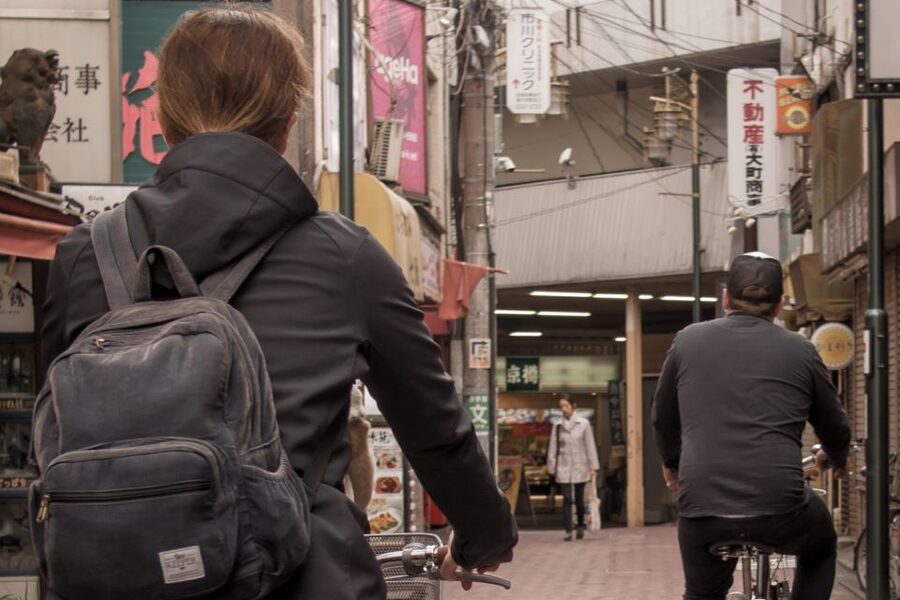
Tokyo is easy to cross by train, but rail travel gives you only the main points. A bicycle lets you connect the spaces between them. You pass through streets too small for a bus, slow down at corners, and see how people use the city when they are shopping, commuting, eating, or simply getting home.
This tour focuses on the inner west side, a part of Tokyo with a more local rhythm than the city’s famous sightseeing districts. Nakano, Koenji, and Asagaya each have their own feel, but the route is less about checking off monuments and more about noticing how the neighborhoods work.
Guide Andy leads in English and brings the perspective of someone who has spent years learning Japanese customs and daily habits. His explanations are one of the main reasons to choose this tour. You can ask about food, etiquette, vending machines, shops, cycling, and the small social details that are easy to miss when you explore alone.
The group format is private or small-group, depending on your booking. That matters here. A bicycle tour works best when you can hear the guide, ask questions, and keep a comfortable pace without a large pack of riders filling every narrow lane.
More Tokyo food crawls:
- Tokyo: Shinjuku Food Tour (13 Dishes at 4 Local Eateries)
★ 5.0 · 6,603 reviews - Tokyo: Shinjuku Food Tour (15 Dishes and 4 Eateries)
★ 4.9 · 2,033 reviews - Best of Shinjuku: Izakaya Food Tour (4 Stops, 14+ Tastings)
★ 5.0 · 1,863 reviews
Starting at Koenji Station without a scramble
The meeting point is outside the ticket gates at Koenji Station on the JR Train Network. Koenji is six minutes from Shinjuku by train and about 18 minutes from Shibuya, so reaching the start is simple from the main visitor areas.
Andy waits five minutes before the start, wearing a baseball cap. This is not a loose, show-up-when-you-can activity. The group leaves on time, and the route will not wait for a late arrival. I would allow extra time to find the station, pass through the ticket gates, and get to the meeting point without rushing.
Bring your passport or another ID card, hand sanitizer or tissues, and a garbage bag. The garbage bag is a useful small detail for carrying waste between food stops, since public trash bins can be limited.
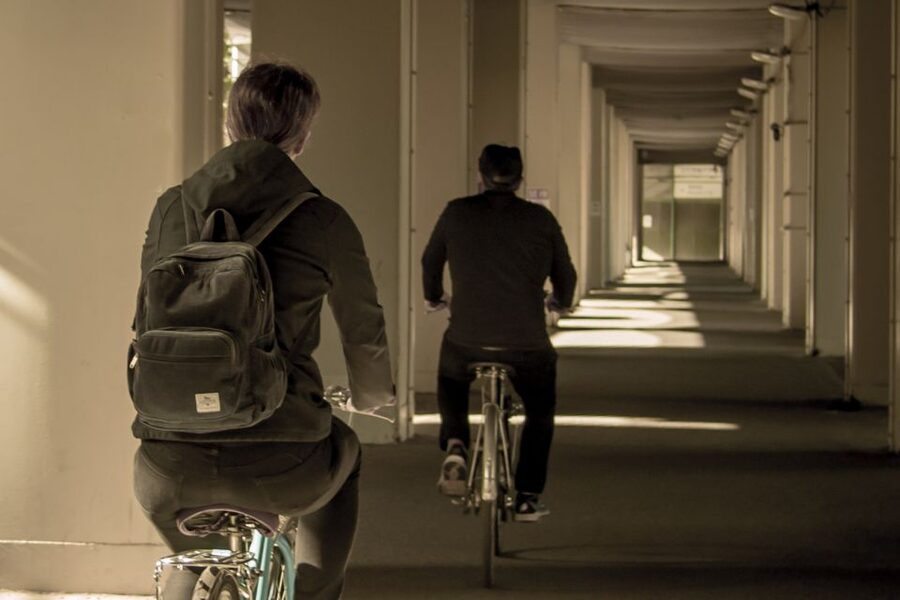
Once you meet the guide, you receive a mamachari bicycle. These are practical Japanese city bikes, often fitted with a front basket. They are not performance bicycles, and that is part of the appeal. You are riding the same sort of machine used for ordinary neighborhood errands.
The mamachari: useful, sturdy, and not built for racing
A mamachari is made for short urban trips, shopping, and carrying things. The bicycles used here are described as salvaged, sometimes creaky, and sometimes squeaky, but carefully maintained. Past riders found them in good shape and easy to ride, even in very small alleys.
Expect a relaxed pace rather than a workout. The route covers roughly 7.5 to 9.5 miles, or 12 to 15 kilometers, across 210 minutes. That total includes riding, walking, food stops, and explanations, so you are not pedaling hard for three and a half hours.
You do need basic control. The route includes narrow and occasionally crowded streets, uneven surfaces, sharp turns, and riverside bike paths. You should feel comfortable braking, steering around other road users, and stopping when the group stops.
The minimum height is about 140 centimeters, or 4 feet 7 inches, for a comfortable fit. Children under 10 are not suitable for this activity. If you are nervous on bicycles, have limited balance, or dislike riding in tight city spaces, this is not the right way to see Tokyo.
Nakano, Koenji, and Asagaya at street level
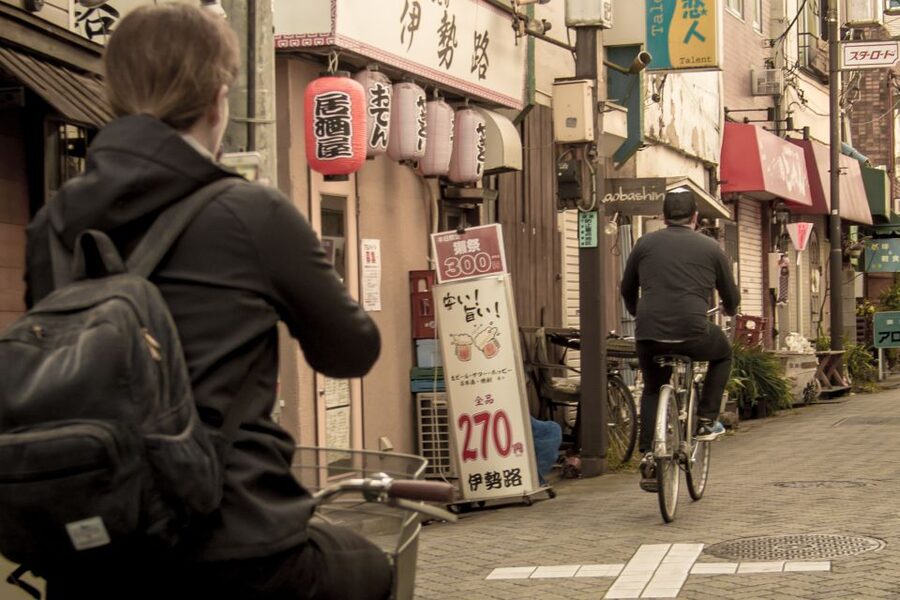
The route moves through Nakano, Koenji, and Asagaya, three west-side neighborhoods that are easy to reach by train but more rewarding when linked by bicycle. You are not simply traveling from station to station. You are using the lanes and paths between them.
In Nakano, you get a sense of Tokyo beyond its major visitor corridors. Koenji brings the tour back to its starting area and serves as a useful base for understanding local streets, shops, and everyday movement. Asagaya adds another neighborhood perspective before the route comes together.
The most useful part is the contrast between the main activity hubs and the twisting back streets. A short turn can move you from a busy commercial area into a quiet residential lane. You may notice small architectural details, neighborhood shops, bicycles lined up for daily use, and the way traffic changes from one street to the next.
The ride also includes riverside bike paths. These offer a change from tight lanes and give the group room to pedal at an easy pace. The route is not built around grand views. Its value is the change in scale, from larger city movement to close-up local scenes.
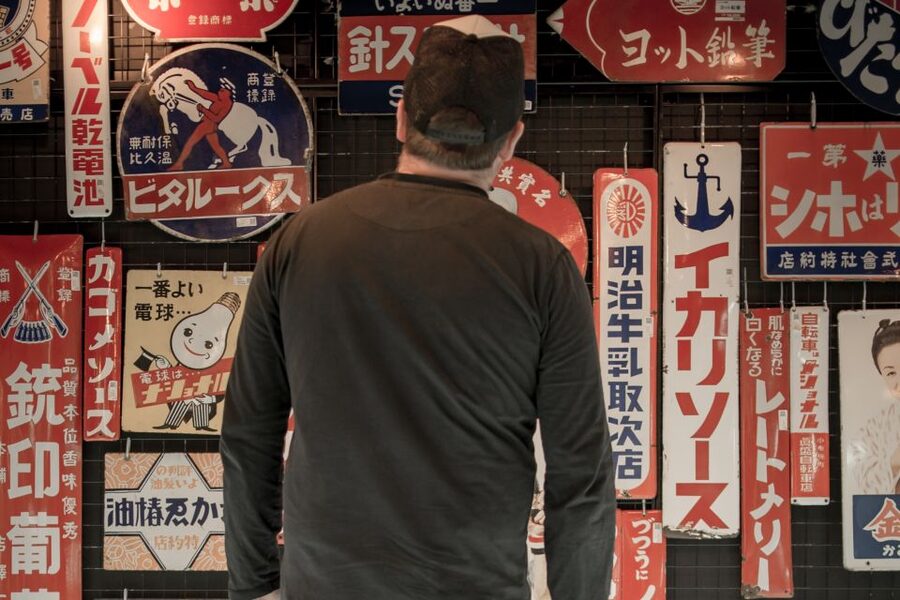
Andy’s commentary adds meaning to what you see. He explains Japanese habits and social customs in a practical way, rather than treating the neighborhoods as a collection of photo stops. If you have questions about how people live, eat, shop, or move through Tokyo, this is the sort of tour where those questions fit naturally.
A few more Tokyo bookings worth comparing
- Tokyo Guided Small-Group Biking Tour
★ 5.0 · 1,250 reviews - Tokyo Great Cycling Tour
★ 5.0 · 811 reviews - Tokyo Top Highlights 3h Guided E-bike Tour
★ 5.0 · 714 reviews - 3h Tokyo E-Bike Tour: Hidden Gems, and Local Life with guide
★ 5.0 · 670 reviews
Food stops that make the route useful
The ticket includes two popular street food eats, a simple local lunch, and one bottled drink. That gives the outing a useful structure: ride, stop, taste, talk, and continue.
The food is not presented as a private menu built around individual preferences. You should expect ordinary local fare chosen for the route, not a tasting course designed around dietary requests. A small noodle bar is part of the lunch experience described by the tour, where you can eat in the same casual setting used by local office workers and other regulars.
This is a good way to understand food culture in practice. You are not just told that Japanese meals can be quick and informal. You see how a small lunch stop works, how people share limited counter space, and how the meal fits into a normal day.
The two street foods give you smaller tastes along the way. They also keep the tour from becoming one long ride. You get short breaks to ask questions, take in the surroundings, and compare the snacks with what you might have tried in more famous parts of Tokyo.
There are limits. The tour does not cater to vegan diets, food allergies, or personal tastes. If you have a serious allergy, this is not a safe choice. If you avoid animal products, you should skip it. The included bottled drink is a convenience, but the tour does not promise a custom drink selection.
Tokyo’s bicycle rules and parking habits
One of the tour’s most unusual subjects is Tokyo’s bicycle culture. You learn through direct experience how bicycles fit into a city where space is precious and orderly movement matters.
Bicycle parking fees are included, so you do not have to manage small charges at the stops. That is practical, but the larger benefit is seeing how organized parking works in a Japanese city. Bicycle use is not just about riding. It also involves knowing where to leave the bike and how to avoid blocking streets or entrances.
This part of the tour gives context to the mamachari itself. The bicycle is not a novelty vehicle brought out for tourists. It is a normal tool of urban life, and riding one helps you notice the city from the same low, practical viewpoint.
The tour also includes cycling liability insurance. That does not replace careful riding, but it is a reassuring inclusion for an activity that uses public streets and shared paths.
What Andy adds to the experience
Andy is the named guide, and his style is a strong reason to book this particular outing. He combines local knowledge with an approachable sense of humor and answers questions patiently. His explanations cover both broad Japanese customs and small things that puzzle first-time visitors.
Expect useful details rather than a memorized speech. He can explain local food, neighborhood habits, vending machine drinks, bicycle use, and social customs as they come up. His background as an Australian transplant also gives the conversation an easy bridge for English-speaking visitors who want cultural context without a formal lecture.
Several parts of the tour depend on good guiding. Narrow streets can feel confusing, and the route includes sharp turns and changing surfaces. Andy helps set the pace and leads the group through areas that would be harder to connect on your own.
The guide also offers recommendations after the tour by email. That can be helpful if this is your first day in Tokyo and you want ideas for places to eat or neighborhoods to visit later. It is a small extra, but it extends the value beyond the 210-minute ride.
How much value you get for $110
At $110 per person, this is not the cheapest way to move around Tokyo. You can use public transportation for far less, and you can buy lunch and snacks independently.
The value comes from the package. Your fee covers a bicycle, English-speaking guide, lunch, two street foods, a bottled drink, bicycle parking fees, and cycling liability insurance. You are also paying for a route that connects several local neighborhoods and for explanations that would be hard to recreate from a map.
I would consider it good value if you want a guided introduction to ordinary west Tokyo and would otherwise spend time figuring out bicycle rental, parking, food stops, and the route yourself. It is less appealing if you mainly want famous sights, a fast ride, or complete control over what you eat.
The small-group or private format improves the calculation. A large group could make narrow streets awkward, while a smaller group lets you stop for questions and keep the ride personal. Since the food is simple rather than lavish, think of the included meals as fuel and local context, not a full food tour with many courses.
Weather, clothing, and the practical trade-offs
This is an outdoor activity in all seasons and generally proceeds in rain. You should expect the possibility of getting wet and dress accordingly. The tour is not a good backup plan for a day when you want to stay dry indoors.
Wear clothing that lets you pedal comfortably and shoes suitable for walking as well as cycling. The information provided does not specify a helmet policy, so you may want to ask the provider before booking if helmet use is important to you.
The distance is manageable for a competent cyclist, but the city setting makes it more demanding than the number alone suggests. Narrow lanes, crowded sections, uneven ground, and sharp turns require attention. The leisurely pace helps, yet you should not treat the tour as a completely effortless sightseeing ride.
Food restrictions are the other major concern. Vegans and people with food allergies should not book this experience. The tour does not tailor the included food to personal tastes or dietary needs.
Cancellation is flexible up to 24 hours before the start for a full refund, and you can reserve now and pay later. Starting times vary, so check availability when choosing a date.
Who should book this west-side ride
I would recommend this tour to you if you want:
- A first look at Tokyo outside the best-known sightseeing zones
- A relaxed but active way to see several local neighborhoods
- An English-speaking guide who can explain customs and daily life
- Casual Japanese food without arranging every stop yourself
- A small-group or private experience with room for questions
- A practical introduction to riding and parking bicycles in Tokyo
I would steer you elsewhere if you want a museum-heavy day, major landmarks, a serious cycling workout, or a fully customized food itinerary. It is also a poor fit for anyone under 140 centimeters, children under 10, inexperienced cyclists, vegans, or people with food allergies.
Should you book the Koenji cycling and food tour?
Book it if your idea of seeing Tokyo includes quiet side streets, small food stops, local routines, and conversations about how the city works. The strongest part is not a single attraction. It is the connection between the bicycle, the neighborhoods, the food, and Andy’s explanations.
Skip it if rain would ruin your day or if riding through tight urban streets sounds stressful. For confident cyclists who want a more personal look at Nakano, Koenji, and Asagaya, $110 buys a well-organized half-day with transport, food, and cultural guidance already handled.
FAQ
Where does the Tokyo cycling and food tour meet?
The tour begins directly outside the ticket gates at Koenji Station on the JR Train Network. The guide wears a baseball cap and waits there five minutes before the scheduled start.
How long does the experience last?
The experience lasts 210 minutes, or about three and a half hours. Starting times vary, so check availability when booking.
How far do you cycle?
You should expect to ride roughly 12 to 15 kilometers, or 7.5 to 9.5 miles, at a leisurely pace. The route includes narrow streets, occasional crowds, uneven surfaces, and riverside bike paths.
What food and drinks are included?
The price includes two popular street food eats, a simple local lunch, and one bottled drink. The tour does not cater to personal tastes, vegan diets, food allergies, or other dietary requirements.
Is the tour suitable for children?
Children under 10 are not suitable for this activity. Riders should also be at least 140 centimeters, or about 4 feet 7 inches, to fit the bicycles comfortably.
What happens if it rains?
The tour generally proceeds as planned in rainy weather. You should be prepared to get wet because this is an outdoor activity.
Can I cancel or pay later?
You can cancel up to 24 hours before the experience for a full refund. A reserve-now, pay-later option is also available.
New on our Tokyo list
- From Tokyo: Mount Fuji & Hakone Full Day Private Tour★ 4.9 · 25 reviews
- Tokyo Spectacular View Day-Cruise in 90 Minutes★ 5.0 · 25 reviews
- Real Tokyo Runner Club : Daikoku Car Meet Night Tour with JDM Car★ 5.0 · 25 reviews
- 2.5 Hour-Guided Cycle Tour in the Central Tokyo★ 5.0 · 25 reviews
- [Self-Drive] Tokyo & Daikoku Custom Car Driving Tour★ 4.9 · 25 reviews
- Tokyo: 2-Hour Night Bike Tour of the City’s Hidden Gems★ 4.9 · 25 reviews
- Ramen Making from Scratch +Akihabara Tour –Cooking Class★ 5.0 · 25 reviews
- Samurai themed Entertainment show in Shinjuku★ 4.5 · 25 reviews
Tokyo Food Tours, compared.
Shinjuku Food Tour (13 Dishes at 4 Local Eateries)
Read our review →
Shinjuku Food Tour (15 Dishes and 4 Eateries)
Read our review →
Best of Shinjuku: Izakaya Food Tour (4 Stops, 14+ Tastings)
Read our review →
Tokyo Night Foodie Tour in Shinjuku – Seasonal Sushi, Wagyu Beef
Read our review →
Eat and Drink Like a Local: Tokyo Ueno Food Tour-Taverns&Ramen
Read our review →
Tsukiji Fish Market: Street Food & Culture Walking Tour
Read our review →Shinjuku Food Tour – 15 Dishes, 3 Drinks, 4 Eateries
Read our review →Browse the lists this tour appears in