
Reviewed · KIMONO EXPERIENCES
:Tokyo,Shibuya /Meiji Shrine tour in KIMONO/English-friendly
The best part of this experience is the easy pairing of kimono rental and Meiji Shrine. You choose your clothing at SHIBUI, then walk only a few minutes to one of Tokyo’s most important Shinto sites. It gives you a cultural setting for the outfit, rather than leaving you to pose in a shop or crowded street.
I especially like the central location, just minutes from Meiji Shrine and Takeshita Street, and the chance to get help with photos from the guide. The shop also has many kimono and yukata choices, along with matching slippers, bags, and accessories at no extra charge. The main consideration is that the meeting point is inside an apartment building on the fourth floor, so you need to find Jingumae Room 413 rather than simply look for a street-facing store.
In This Review
- Key points to know before booking
- Why the Kimono and Shrine Combination Works
- Choosing Your Kimono at SHIBUI
- Walking to Meiji Shrine from Harajuku
- Six Stops Inside Meiji Shrine
- 1. Torii gates
- 2. Sake barrels
- 3. Wine barrels
- 4. Meiji Shrine forest
- 5. Main shrine
- 6. Shinto prayer hall
- Free Time, Photos, and Optional Shrine Admission
- What the Three Hours Are Worth
- Who Will Enjoy This Most
- Should You Book the SHIBUI Kimono Shrine Tour?
- FAQ
- Where does the tour meet?
- How far is SHIBUI from Meiji Shrine?
- Is a kimono rental included?
- Is hair styling included?
- Is the tour offered in English?
- How long does the activity last?
- Are museum and garden admission fees included?
- Can the guide take photos?
Key points to know before booking
- Six Meiji Shrine stops: See the torii gates, sake barrels, wine barrels, forest, main shrine, and Shinto prayer hall.
- Kimono or yukata included: Choose from different colors and styles, with slippers, bags, and accessories included.
- English-speaking guidance: A one-hour guided walk explains shrine customs and the meaning of the main sights.
- Personal photos: Your guide can take photos of you alone, with friends, or with family, and video may also be possible.
- Useful Harajuku base: The shop is close to Meiji Shrine and Takeshita Street, making it easy to add more sightseeing.
- Three-hour schedule: Expect dressing, a guided visit, free time at the shrine, and a return to SHIBUI to change clothes.
Why the Kimono and Shrine Combination Works
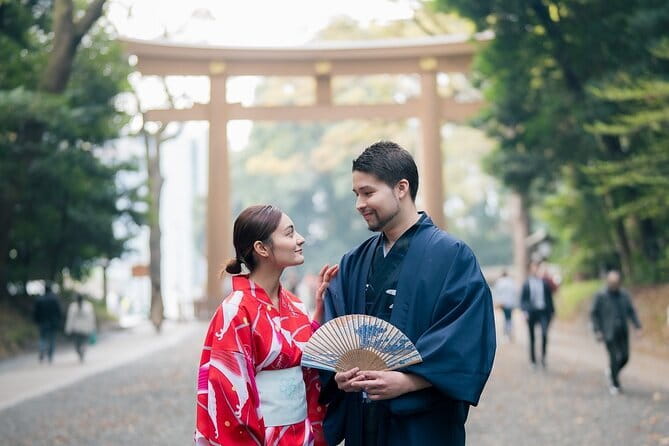
Tokyo offers many chances to rent traditional clothing, but the setting matters. A kimono photo in a rental studio can look polished, yet it tells you little about how the clothing connects with Japanese customs. Here, you wear it while visiting Meiji Shrine, where the setting, rituals, gates, and forest give the experience more purpose.
Meiji Shrine honors Emperor Meiji and Empress Shoken. The tour focuses on practical cultural details rather than asking you to wander through the grounds without context. An English-speaking guide leads you to six recommended locations and explains what you are seeing along the way.
I see this as a gentle introduction to Shinto. You are not simply collecting photos. You are learning how a major shrine is arranged and how visitors behave there. The tour does not promise a religious ceremony or a private ritual, so you should book it for cultural explanation, sightseeing, clothing, and photography.
The small group limit of 10 people is useful here. Kimono dressing and group photos can become slow with a large crowd. A smaller group should make it easier to hear the guide and move through the shrine together, though the exact group size on your date depends on bookings.
More kimono fittings and strolls:
- Let’s make kimono !(Kimono is a gift for you
★ 5.0 · 252 reviews - Tokyo: Matcha and Kimono Experience
★ 4.7 · 219 reviews - Tokyo: Asakusa Kimono Dressing and Matcha Experience
★ 4.9 · 173 reviews
Choosing Your Kimono at SHIBUI
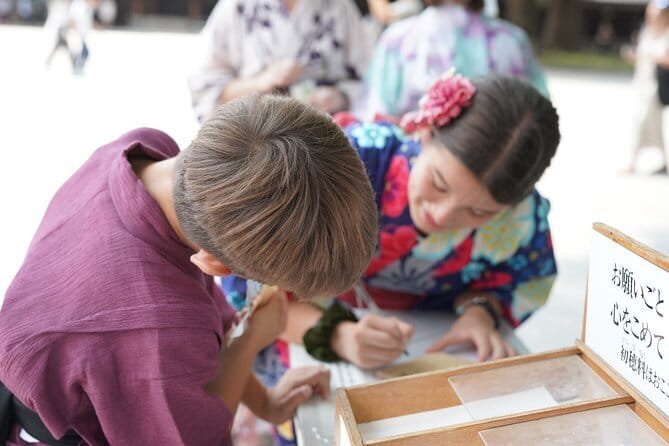
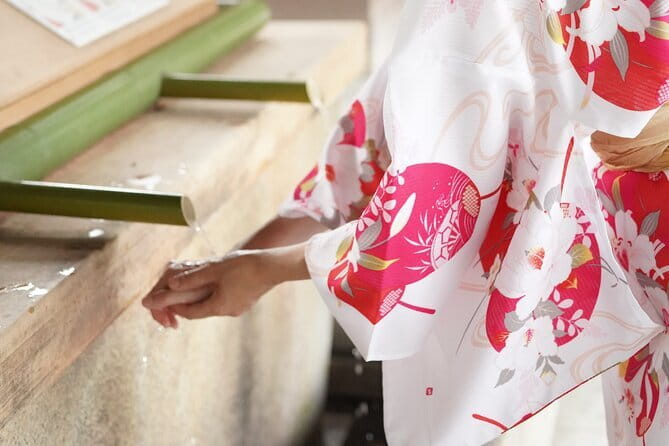
The tour begins at Harajuku Kimono SHIBUI, where the rental service is included in the package. You can choose a kimono, which is formal traditional clothing, or a yukata, which is a more casual style. The collection includes choices for all ages, with different colors and designs.
You also choose suitable slippers, bags, and accessories without an additional charge. That detail matters because the small finishing pieces make the outfit look complete, and you do not need to shop for them separately.
Hair styling is optional and costs 2,000 JPY, paid at the shop. It is not included in the listed price, so add it only if you want a more finished look for photos. The tour information does not specify the full range of sizes, fitting time, or the exact clothing selection available on a given day. If you have particular needs, ask SHIBUI before booking.
The fitting is part of the experience, but it also uses some of your three-hour schedule. Arrive ready to make a choice rather than expecting unlimited time to compare every item. If you are traveling with children or a group, the free accessories and broad age range make this easier to arrange, though everyone still needs enough time to dress.
One practical detail deserves emphasis: the meeting point is listed as Jingumae Room 413, Harajuku Cope Anex. The shop is in an apartment building, on the fourth floor. Look for the building and room number instead of expecting a large shop sign at street level.
Walking to Meiji Shrine from Harajuku
The location is one of the strongest reasons to choose this activity. SHIBUI is about a five-minute walk from Meiji Shrine, with the tour information also describing it as roughly three minutes away. It is about two minutes from Takeshita Street, the famous Harajuku shopping lane.
That short walk keeps the outing focused. You are not spending part of the booking on a long transfer across Tokyo, and you can combine the tour with Harajuku before or after. Takeshita Street is a very different experience from Meiji Shrine, so the contrast is useful: colorful youth fashion and shops on one side, quiet religious grounds on the other.
Wear the supplied slippers, but remember that Meiji Shrine involves walking through large grounds. The tour includes the guided portion, free time, and the walk back to change clothes. Comfortable movement matters more than trying to make the outfit look perfect at every moment.
The information does not specify whether transportation between the shop and shrine is provided because the route is on foot. Plan on walking the short distance with your group.
Six Stops Inside Meiji Shrine
The guided presentation lasts about 50 to 60 minutes. During that time, the guide takes you through six recommended spots and points out good places for pictures.
More temples and shrines near Tokyo:
- Tokyo: Meiji Shrine, Asakusa, Skytree Bus Tour and Cruise
★ 4.7 · 1,986 reviews - Tokyo: Asakusa Walking Tour with Sensoji Temple Visit
★ 4.8 · 1,583 reviews - Nikko: Kegon Falls, Lake Chuzenji & Toshogu Temple
★ 4.6 · 1,577 reviews - Tokyo: Kamakura & Enoshima Day Trip including Temple Tickets
★ 4.5 · 1,375 reviews
1. Torii gates
The torii marks the transition from ordinary city space into the shrine grounds. At Meiji Shrine, the gates help you feel the change quickly. You leave the close-packed Harajuku streets and enter a much more open setting.
Your guide can explain how to approach the shrine respectfully. The tour listing promises cultural and Shinto information, though it does not give a detailed script or a list of specific rituals covered.
2. Sake barrels
Rows of sake barrels are among the shrine’s most recognizable photo backdrops. They are not simply decorative props. They show the connection between companies, local producers, and shrine offerings.
This is an especially good stop for kimono photographs because the patterned barrels create a strong background. Your guide can help arrange personal photos, so you are not limited to hurried snapshots taken by a companion.
3. Wine barrels
The wine barrels offer an unusual companion to the sake barrels. They reflect a later period of international exchange and show that Meiji Shrine is not presented only through older Japanese customs.
For you, this stop adds visual variety. If the group is taking photos, the barrels give you another background instead of repeating the same torii image.
4. Meiji Shrine forest
The forest is a major part of the visit. It creates a calm setting close to Harajuku and helps explain why the shrine feels separate from the city.
The supplied information does not identify particular trees, wildlife, or seasonal events, so I would treat this as a quiet walking section rather than expect a nature tour. The guide’s role is to explain the shrine and its practices while showing you recommended areas.
5. Main shrine
The main shrine is the central sight of the visit. This is where the tour’s earlier explanations about Shinto customs become more useful. You can observe the architecture, see how people approach the shrine, and follow the guide’s advice about respectful behavior.
The tour does not state that a formal prayer or special access is included. You should expect an explanation and a visit to the public areas, not a private religious program.
6. Shinto prayer hall
The prayer hall gives you another chance to see Shinto practice in context. Your guide explains what happens in this part of the shrine and helps you understand the difference between simply looking at a building and knowing how it functions.
These six stops create a sensible first visit. You get the major visual points, some cultural background, and enough free time to look around at your own pace.
Free Time, Photos, and Optional Shrine Admission
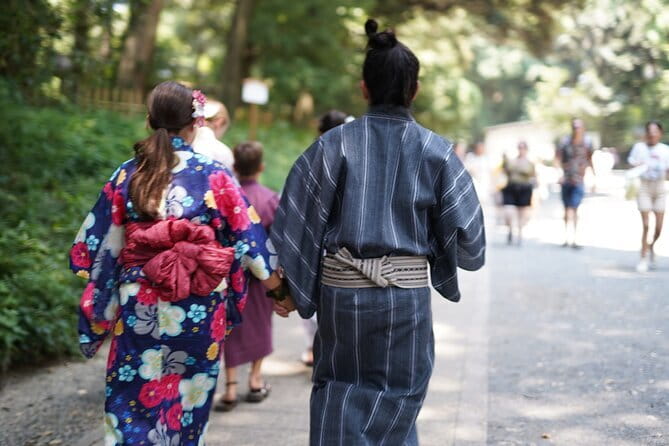
After the guided portion, you have free time to explore. The schedule says the group meets again about 1.5 hours later, then returns to SHIBUI so you can change clothes. That is a generous break compared with a tour that rushes you from one photo stop to the next.
Use the free period for your own pictures, a slower look at the main shrine, or a visit to the optional Meiji Jingu Museum and Inner Garden. Admission to those two places is not included. You decide if you want to pay separately and visit them during the free time.
The free period also means the outing is not a nonstop guided walk. If you prefer constant commentary, this may feel less structured. I think it is a good arrangement for a kimono experience because you have time to enjoy the grounds without trying to listen while posing or adjusting clothing.
The guide can take photos of you alone, with friends, or with family. Video may also be possible. Personal photography is a real part of the value here, especially if everyone in your group wants to appear in the pictures. Ask the guide at the start if you want video, since the information says it is possible rather than guaranteed.
What the Three Hours Are Worth
The listed price is $137 per group up to one person. That wording is unusual, so check the booking screen carefully to see how the final price changes when you add additional participants. The package includes the kimono or yukata rental, accessories, the English-speaking guided visit, and photo help.
For one person, the value depends on your priorities. A simple clothing rental may cost less, but this package adds cultural explanation and a guided visit to Meiji Shrine. If you mainly want outfit photos, the shrine setting and guide assistance make the price easier to justify.
For a group, confirm the exact rate before payment. The activity is limited to 10 participants, but the supplied price information specifically says up to one person. Do not assume the displayed amount covers a family or group of friends.
Food and drinks are not included. That is easy to handle in Harajuku, but budget separately if you plan to eat before or after. Hair styling also costs 2,000 JPY extra.
The tour allows free cancellation up to 24 hours before the activity for a full refund, and you can reserve now and pay later. Those terms help if your Tokyo schedule is still changing. Starting times vary, so check availability for your date.
Who Will Enjoy This Most
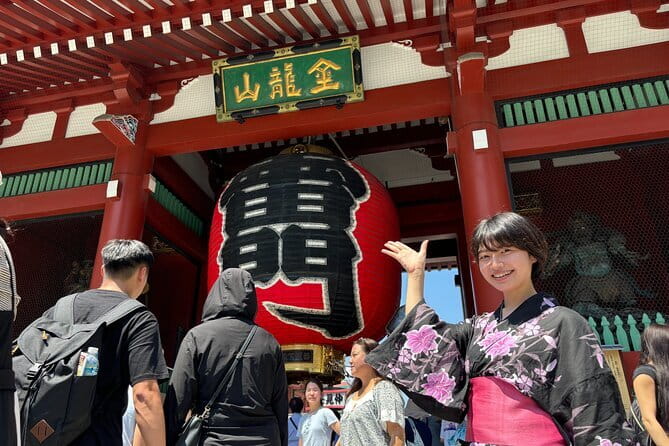
I would choose this for a first visit to Tokyo when you want a cultural activity that is easy to fit between Harajuku sights. It suits solo visitors, couples, families, and friends who want shared photos without arranging a photographer.
It is also a good choice if you want English guidance. The tour is offered in English, and the staff are described as friendly and accommodating. The current score is 5 out of 5 from four verified bookings, including a May 2025 booking that praised the helpful staff, kimono selection, and short walk to the shrine.
The activity may be less suitable if you dislike changing clothes, walking in traditional footwear, or spending part of your day on posed photographs. It is also not the right booking if you want a full-day history tour of Meiji Shrine or included admission to the museum and inner garden.
Families should note that the kimono collection is described as suitable for all ages. Still, confirm any specific sizing or fitting questions with SHIBUI before you commit.
Should You Book the SHIBUI Kimono Shrine Tour?

Book it if you want three useful things in one outing: traditional clothing, an English explanation of Meiji Shrine, and personal photos in a memorable setting. The short walk from SHIBUI to the shrine keeps the plan simple, and the 1.5 hours of free time prevents the visit from feeling rushed.
Check the fourth-floor apartment meeting point, the extra cost for hair styling, the separate admission fees, and the final price for more than one participant. If those details suit your plans, this is a practical Harajuku activity with more cultural substance than a basic kimono rental.
FAQ
Where does the tour meet?
The meeting point is Jingumae Room 413, Harajuku Cope Anex. The shop is in an apartment building on the fourth floor.
How far is SHIBUI from Meiji Shrine?
The shop is described as about a five-minute walk from Meiji Shrine, with another description stating roughly three minutes. It is also about two minutes from Takeshita Street.
Is a kimono rental included?
Yes. Kimono and yukata rental is included, and you can choose from the available collection. Suitable slippers, bags, and accessories are also included at no extra charge.
Is hair styling included?
No. Hair styling is optional and costs 2,000 JPY, paid at the shop.
Is the tour offered in English?
Yes. The activity includes an English-speaking live guide, and English is the listed tour language.
How long does the activity last?
The full activity lasts three hours. The guided presentation at Meiji Shrine takes about 50 to 60 minutes, followed by free time and a return to SHIBUI to change clothes.
Are museum and garden admission fees included?
No. Admission to the Meiji Jingu Museum and Inner Garden is optional and must be paid separately if you choose to visit them.
Can the guide take photos?
Yes. The guide can take personal photos of you alone, with friends, or with family. Video may also be possible.
More Shibuya Plans
- Official Street Go-Kart in Shibuya
★ 5.0 · 3,435 reviews - Tokyo: Street Kart Experience in Shibuya
★ 4.9 · 1,484 reviews - Shibuya Meltdown Nightlife Tour: All-You-Can-Drink Bar Hopping
★ 5.0 · 1,058 reviews - Shibuya Official Street Go-Kart in Shibuya Annex
★ 5.0 · 972 reviews
New on our Tokyo list
- Tokyo : Kamikaze Street Drift Ride★ 5.0 · 3 reviews
- Private Zen Meditation in English in Shinjuku, Tokyo★ 5.0 · 3 reviews
- Sumi-e Experience in a relaxing green tea shop in Tokyo★ 5.0 · 3 reviews
- Onsen Spa in Tokyo and Asakusa Bar Hopping with Local Guide★ 5.0 · 3 reviews
- Easy for everyone! Now you can play handmade mini shamisen and show off to everyone! Musical instruments, sweets and live music★ 5.0 · 3 reviews
- Tokyo: Private Tsukiji Street Food & Sake with Local Guide★ 5.0 · 3 reviews
- Mt Fuji Exploration Tour with Free Japanese Kusa Mochi from Tokyo★ 4.5 · 3 reviews
- Tokyo Tsukiji Fish Market Walking and Exploring Hidden Gems Tour★ 5.0 · 3 reviews
Kimono Experiences, compared.

Tokyo Asakusa: Traditional Kimono Rental Experience at Wargo
Read our review →
Tokyo Asakusa: Miu Kimono Rental and Optional Photoshoot
Read our review →
Tokyo Authentic Kimono Rental in Asakusa with Photography Option
Read our review →Browse the lists this tour appears in