
Reviewed · YANAKA & OLD TOKYO WALKS
Ueno and Yanaka Culture Art Walking Tour in Old Tokyo
Ueno and Yanaka give you two very different views of Tokyo in one day. Ueno brings museums, shrines, a broad park, and the noisy Ameyoko shopping street. Yanaka feels quieter and more traditional, with old wooden homes, small temples, cat decorations, and lanes that escaped much of the city’s modern rebuild.
I like the well-balanced route, which mixes indoor culture with fresh air and neighborhood wandering. I also like the way guide Beth brings attention to small details you could easily miss, from overlooked shrines to the beauty of a museum building. The main caution is simple: this is a long walking day, about seven and a half hours, with no private vehicle.
In This Review
- Key Points to Know
- Why This Old Tokyo Walking Tour Works
- Starting at Ueno Station and the National Museum
- Ueno Park’s Temples, Shrines, and Water
- Ameyoko and a Self-Paced Lunch
- Crossing Into Yanaka’s Art Scene
- Yanaka Ginza and Tokyo’s Cat Town
- Yanaka Cemetery and a Quiet Temple
- What the $148.93 Price Covers
- Walking Conditions, Timing, and Practical Tips
- Who Will Enjoy This Ueno and Yanaka Route
- Should You Book This Tour?
- FAQ
- How long does the Ueno and Yanaka tour last?
- Where does the tour start?
- Where does the tour end?
- Is transportation included?
- Is lunch included?
- What admissions are included?
- How large is the group?
- Can the tour be canceled for a refund?
Key Points to Know
- Ueno Park combines museums, shrines, temples, and nature in one compact part of Tokyo.
- The National Museum of Nature and Science admission is included, with highlights such as a life-sized blue whale and steam locomotive.
- Ameyoko provides a lunch break among old-style shops and restaurants, but food is at your own cost.
- Yanaka offers a calmer side of Tokyo, with traditional streets and a less hurried feel.
- Beth is a particularly warm and attentive guide, answering questions clearly and adapting explanations to the group.
- The tour ends at Nippori Station, making it useful for continuing your day in northern or eastern Tokyo.
Why This Old Tokyo Walking Tour Works
Tokyo can feel hard to read at street level. Its trains are efficient, its districts change quickly, and important temples or small cultural sites may sit behind ordinary-looking streets. This tour gives you a guide for making sense of two districts that reward slower exploration.
Ueno is the larger cultural center. Its park contains museums, religious buildings, ponds, and broad paths where you can step away from traffic. Yanaka is more intimate. The district is known as a Shitamachi, or lower-city area, a term tied to Tokyo’s older working neighborhoods and everyday urban life.
The route connects these areas on foot rather than treating them as isolated attractions. That matters. You get a sense of how the city shifts from grand public institutions to local shopping streets, then to residential lanes and temple grounds.
The group is limited to a maximum of 15 people. That is small enough for a guide to answer questions without the day feeling like a procession, though it is not a private tour. Beth has been singled out for her gentle manner, clear answers, and ability to bring the story of these neighborhoods to life.
More old-Tokyo backstreet walks:
- The Old Quarter of Tokyo – Yanaka Walking Tour
★ 4.5 · 590 reviews - Yanaka Walking Tour: Historic and Traditional District of Tokyo
★ 5.0 · 530 reviews - Tokyo: Old Quarter Yanaka Walking Tour
★ 4.8 · 406 reviews
Starting at Ueno Station and the National Museum
The tour begins at 9:30 a.m. at Ueno Station. Use the JR Yamanote Line and aim for the Park Gate exit, which is the closest exit to the meeting point. Ueno Station is large, so arriving early is wise. The tour does not include transport to the meeting point, and you will also need to arrange your own transport after the tour.
The first major stop is the National Museum of Nature and Science, with about an hour inside. Admission is included, and the guide provides an introduction to the museum, its background, and several notable displays.
The museum is a good opening because it gives the day an indoor cultural anchor before the longer walk through Ueno Park. You can expect to see a life-sized blue whale model and a steam locomotive, along with taxidermied animals and other science displays. These are easy reference points for understanding the museum’s broad appeal. It is not limited to one narrow subject, so different ages and interests can find something to enjoy.
An hour is enough for an introduction and selected highlights, but not enough to see every room at a careful pace. If you are passionate about natural science, you may wish you had more time. The guide’s role here is to point out worthwhile sections and explain why the building and collections matter, rather than leave you to wander without context.
Ueno Park’s Temples, Shrines, and Water
After the museum, you spend roughly an hour and a half exploring Ueno Park. This is one of the strongest parts of the day because the park gives you several kinds of Tokyo in a short walk.
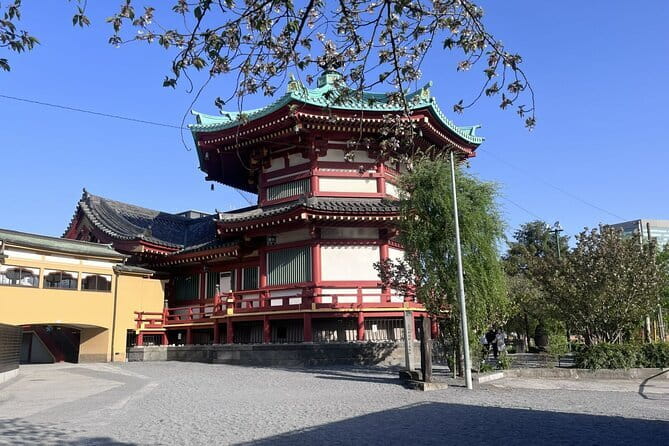
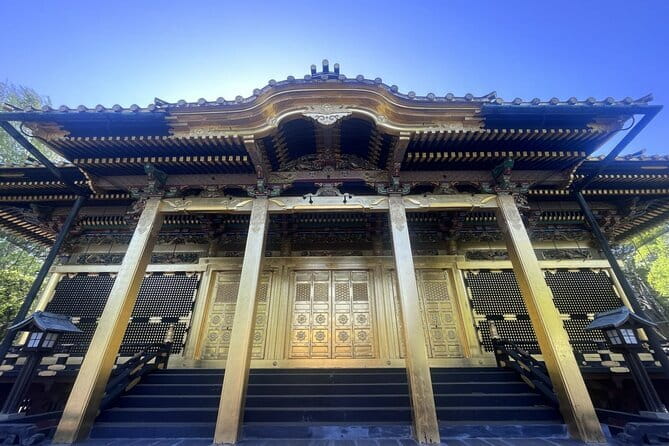
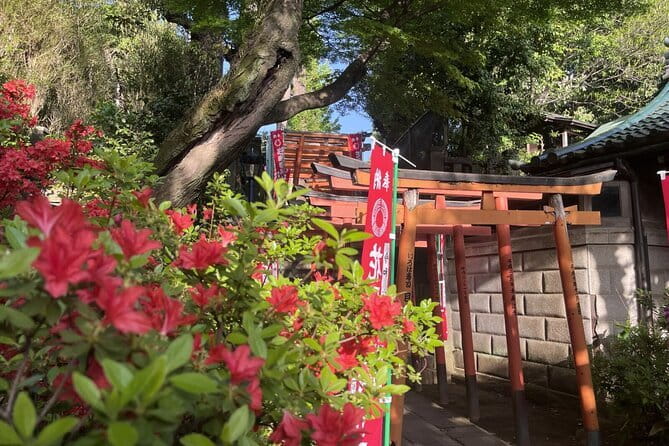
You will see temples, shrines, and a lake, with time to slow down and enjoy the setting. Toshogu Shrine is among the admission sites included in the tour. The park’s religious buildings add a sense of ceremony and age to a district otherwise known for museums and busy transport links.
I especially like this section for first-time visitors who might otherwise treat Ueno as a place to rush through on the way to a museum. A guide can point out details you might skip on your own, including smaller religious sites and the relationship between the park’s open spaces and its cultural buildings.
The pace is described as relaxed, but you should still expect plenty of time on your feet. The route is outdoors, and the weather will affect your comfort. Wear shoes you can walk in for hours, and bring whatever protection you normally need for sun or rain.
The park is also where the tour’s balance becomes clear. You are not moving from one indoor attraction to another. You get time among trees, water, stone features, and religious architecture before entering the denser streets around Ameyoko.
Ameyoko and a Self-Paced Lunch
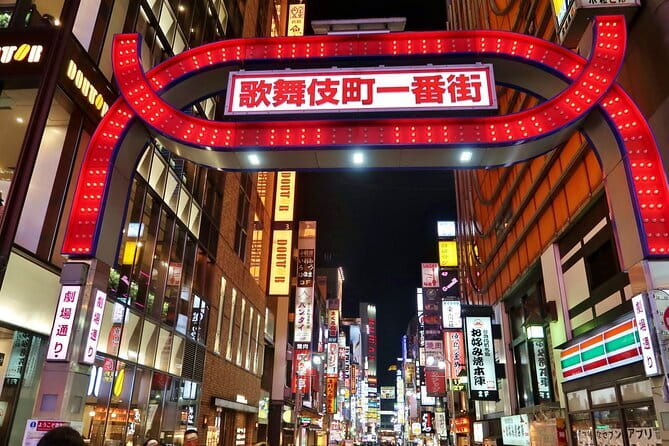
The final Ueno stop is Ameyoko Shopping Street, a retro shopping and dining area with a very different mood from the park. The guide explains the area’s background and importance before giving you a lunch break to explore on your own.
This is a useful arrangement. Lunch is not included, but you are not locked into one restaurant or one fixed meal. You can choose what appeals to you, look around the shops, or simply enjoy a break from the walking.
Ameyoko is lively and crowded compared with Yanaka. It is a place for street-level Tokyo: shopping arcades, restaurants, and quick movement. The contrast helps you understand the day’s central idea. Ueno is not just museums and greenery, while Yanaka is not simply an old-fashioned photo backdrop.
The free time also gives the tour a practical pause. Seven and a half hours is a long outing, and a self-directed lunch lets you eat according to your own preferences. The tradeoff is that the price does not cover food or drink, so budget for lunch separately.
More walking routes in Tokyo:
- Tokyo Tsukiji Fish Market Food and Culture Walking Tour
★ 5.0 · 3,184 reviews - Tokyo: Imperial Palace and Shogun Historical Walking Tour
★ 5.0 · 2,251 reviews - Tokyo: Shinjuku Local Bar and Izakaya Guided Walking Tour
★ 4.9 · 1,794 reviews - Tokyo: Tsukiji Fish Market Food and Walking tour
★ 5.0 · 1,724 reviews
Crossing Into Yanaka’s Art Scene
The Yanaka portion begins with a museum connected to the district’s art and cultural life. The museum was both the workshop and family home of a famous Japanese sculptor. Admission is included.
This is one of the more distinctive stops because it offers a personal setting rather than only a large public collection. A former home and studio can show how art was made and how a creative family lived, giving the visit a more human scale.
You spend about an hour and ten minutes here. That allows time to look at the art and hear the background from the guide. Beth is particularly good at explaining the setting in a calm, approachable way, which suits a museum that is more intimate than grand.
The exact appeal will depend on your interest in Japanese art and sculpture. If you prefer large museums with many rooms and major collections, this stop may feel modest. If you enjoy artists’ homes, working spaces, and local cultural stories, it is likely to be one of the day’s most memorable visits.
Yanaka Ginza and Tokyo’s Cat Town

Next comes Yanaka Ginza Shopping Street, with about an hour for a guided walk. The street has a cozy, local feel, and the tour introduces you to Yanaka as a neighborhood rather than simply a series of attractions.
Yanaka is often associated with cats, and you can look for cat statues, cat-themed goods, and other small touches along the shopping street. This gives the walk a light, playful side. You do not need to be a cat enthusiast to enjoy it, but anyone who likes local shops and small visual details will have plenty to notice.
Yanaka Ginza is also a good place to see the difference between a tourist sight and a neighborhood shopping street. The appeal is not one grand monument. It comes from the combined effect of storefronts, daily commerce, narrow streets, and a slower pace.
The guide’s presence is useful here because the street can seem simple at first glance. With context, you can pay attention to how the district feels and why it has retained such a different character from newer parts of Tokyo.
You should not expect a large shopping center or a long list of major attractions. This is a walking and atmosphere stop. The value comes from observing the neighborhood, not from checking off famous landmarks.
Yanaka Cemetery and a Quiet Temple

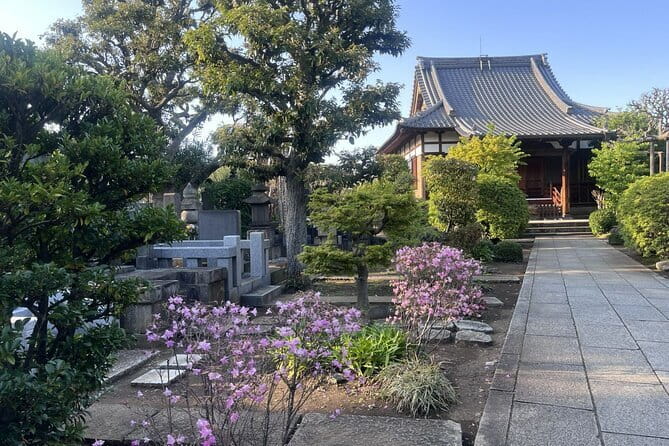
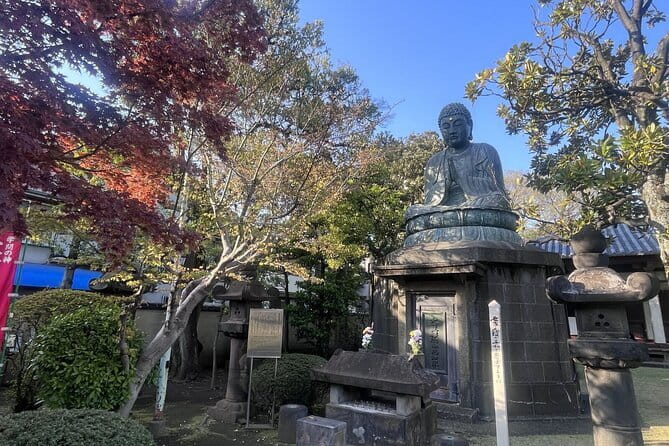
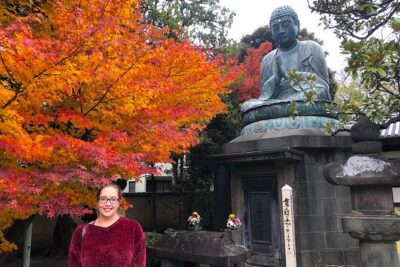
The final part of the tour visits a peaceful Buddhist temple with impressive Buddha statues, followed by a walk through Yanaka Cemetery and Sakura Dori. You have about an hour for this section.
After the noise of Ameyoko and the steady movement of the day, the temple and cemetery provide a quiet finish. The temple gives you a place to rest among religious statues, while the cemetery offers another view of Yanaka’s older character.
A cemetery may not be on every visitor’s must-see list, but it can be an important part of understanding Tokyo’s traditional neighborhoods. Here, the atmosphere is calm and reflective, and the walk helps you see how temples, residences, and burial grounds exist close together in the city.
Sakura Dori is especially appealing during cherry blossom season, though the tour information does not promise blossoms at any particular time. It is best to think of this as a peaceful street walk, with seasonal beauty depending on when you visit.
The tour ends at Nippori Station, not back at Ueno. That is convenient if you want to continue from Nippori, but you should plan your onward route before the day begins. The finish also reinforces the point of the tour: you have crossed through Tokyo on foot, from one district into another.
What the $148.93 Price Covers
At $148.93 per person, this is not a budget walking tour. The value depends on how much you want from a guide-led day rather than a simple route between free sights.
The price includes admission to the museums and Toshogu Shrine, plus an English-speaking local guide. It does not include lunch, drinks, or trains before and after the tour. Since you cover several paid cultural stops, the admission costs reduce the gap between this tour and arranging every visit yourself.
The bigger value is the interpretation. Ueno Park contains enough museums and religious buildings to fill a day, but without planning, you could easily choose the wrong attractions or miss the smaller places. Yanaka is even harder to read without local context. The guide helps connect the sites and explains why they belong together.
The tour is a good fit if you want a full day organized around culture, architecture, and neighborhood life. It is less appealing if you prefer to move at your own speed, spend several hours in one museum, or avoid walking in a group.
The fact that many people reserve well in advance, on average about 185 days, suggests that you should not wait until the last minute if your dates are fixed. Availability can change, especially for a small-group experience.
Walking Conditions, Timing, and Practical Tips
This is an outdoor walking tour lasting about seven and a half hours. That should shape your decision more than the word culture in the title. You will move between museums, parks, streets, shrines, shopping areas, temples, and a cemetery, so comfortable footwear is essential.
The tour does not use a private vehicle. Trains and other transport before and after the tour are not included. The listed route itself is built around walking, and the meeting point is at Ueno Station.
A few simple preparations will make the day easier:
- Arrive early at Ueno Station and use the JR Yamanote Line if that suits your route.
- Head toward the Park Gate exit, the closest exit to the meeting point.
- Bring money for lunch and drinks.
- Wear shoes suitable for several hours outdoors.
- Plan your return from Nippori Station.
- Check the forecast because much of the day takes place outside.
Most people can take part, and the maximum group size is 15. Still, the length of the walk matters. If you have limited stamina or strongly prefer seated sightseeing, this may not be the right choice.
The tour can be canceled for a full refund up to 24 hours before the start time. Changes or cancellations made less than 24 hours before the tour are not accepted for a refund.
Who Will Enjoy This Ueno and Yanaka Route
I would recommend this tour to anyone who wants more than Tokyo’s biggest names. It works particularly well for a first visit because it introduces museums, religious sites, shopping streets, and everyday neighborhoods without forcing you to plan each stop separately.
It also suits repeat visitors who have already seen the major modern districts and want a calmer day. Yanaka offers a useful change of pace, while Ueno gives the day enough major cultural content to keep it from feeling too quiet.
Art lovers should pay attention to the Yanaka museum and the National Museum of Nature and Science. Architecture fans will enjoy the mix of museum buildings, temples, shrines, traditional homes, and urban streets. Families may appreciate the blue whale and locomotive at the science museum, though the long walking time should be considered.
Food-focused visitors will enjoy having time at Ameyoko, but this is not a dedicated food tour. Shoppers may like Yanaka Ginza and Ameyoko, though neither stop is designed as a long, independent shopping session.
The tour is less suitable if you want a private guide, a vehicle, extensive time inside one museum, or a short half-day outing.
Should You Book This Tour?
Book it if you want a carefully connected day in old Tokyo, with a guide who can explain the details that are easy to miss. The strongest reasons are the mix of Ueno’s museums and shrines, the quieter streets of Yanaka, included admissions, and the attentive guiding style associated with Beth.
Think twice if seven and a half hours of walking sounds tiring, or if $148.93 feels high for a day that still requires you to pay for lunch and transport. You can visit many of these districts independently, but you will need to choose the museums, find the smaller shrines, manage the route, and supply the background yourself.
For an active visitor who values context and prefers a small group to a bus tour, this is a strong choice. It gives you a more grounded view of Tokyo, from public culture in Ueno to the old neighborhood character of Yanaka.
FAQ
How long does the Ueno and Yanaka tour last?
The tour lasts approximately 7 hours and 30 minutes, beginning at 9:30 a.m.
Where does the tour start?
The meeting point is Ueno Station at 7 Chome-1 Ueno, Taito City, Tokyo. Use the JR Yamanote Line and head toward the Park Gate exit, which is closest to the meeting point.
Where does the tour end?
The tour ends at Nippori Station at 2 Chome-19 Nishinippori, Arakawa City, Tokyo.
Is transportation included?
No. The tour does not use a private vehicle, and trains or other transport before and after the tour are not included.
Is lunch included?
No. The tour includes a lunch break at Ameyoko Shopping Street, but food and drinks are not included in the price.
What admissions are included?
Admission fees for the museums and Toshogu Shrine are included.
How large is the group?
The tour has a maximum of 15 people.
Can the tour be canceled for a refund?
Yes. You can cancel up to 24 hours before the start time for a full refund. Cancellations or changes made less than 24 hours before the start time are not accepted for a refund.
New on our Tokyo list
- Tokyo : Kamikaze Street Drift Ride★ 5.0 · 3 reviews
- Private Zen Meditation in English in Shinjuku, Tokyo★ 5.0 · 3 reviews
- Sumi-e Experience in a relaxing green tea shop in Tokyo★ 5.0 · 3 reviews
- Onsen Spa in Tokyo and Asakusa Bar Hopping with Local Guide★ 5.0 · 3 reviews
- Easy for everyone! Now you can play handmade mini shamisen and show off to everyone! Musical instruments, sweets and live music★ 5.0 · 3 reviews
- Tokyo: Private Tsukiji Street Food & Sake with Local Guide★ 5.0 · 3 reviews
- Mt Fuji Exploration Tour with Free Japanese Kusa Mochi from Tokyo★ 4.5 · 3 reviews
- Tokyo Tsukiji Fish Market Walking and Exploring Hidden Gems Tour★ 5.0 · 3 reviews
Yanaka & Old Tokyo Walks, compared.
Yanaka Walking Tour: Historic and Traditional District of Tokyo
Read our review →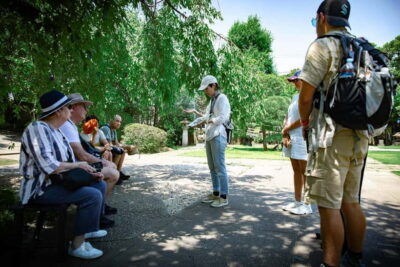

Small Town in the Big City: Tasting Tokyo’s Kichijoji
Read our review →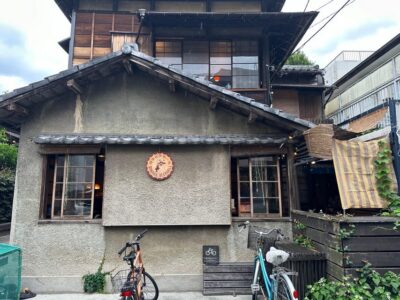
Stroll in Old traditional culture towns~Yanaka & Nezu
Read our review →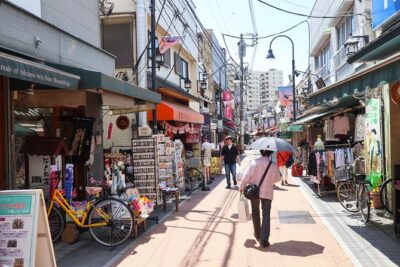
Yanaka Historical Walking Tour in Tokyo’s Old Town
Read our review →
Private Home Cooking in Yanaka – Local Flavors in a Warm Setting
Read our review →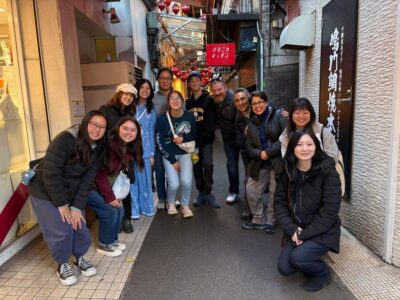
Browse the lists this tour appears in