
Reviewed · KAMAKURA TOURS
When Emperors Reigned and Shoguns Ruled
Kamakura tells Japan’s samurai story in a wonderfully compact way. In four hours, you move from a grand Shinto shrine built by the first shogun to a giant bronze Buddha and a hillside temple filled with gardens, caves, and statues. The guide, Virgil, brings the period from 1185 to 1333 into focus with stories about shoguns, samurai, religion, and daily life.
I like two things here. The private format lets you set the pace and ask questions without holding up a group. I also like the unusual pairing of a history guide and photographer, since Virgil can take pictures while you concentrate on the sites. The main consideration is the price: at $108.99 per person, you are paying for personal attention, not simply transportation or admission.
- Walk from Kamakura Station to Hase Station, with major sights arranged in a sensible one-way route.
- See Tsurugaoka Hachimangu, the shrine tied closely to Minamoto Yoritomo and the first shogunate.
- Browse Komachidori, where sweets, snacks, and souvenirs bring present-day Kamakura into the picture.
- Stand beneath the Great Buddha, a 13th-century bronze image of Amida Buddha.
- Explore Hasedera’s gardens, ponds, caves, and Kannon statue over a longer final stop.
- Travel privately with a flexible guide, with group sizes limited to eight people.
In This Review
- Why Kamakura Makes a Strong Half-Day From Tokyo
- Starting Along Wakamiya Main Street
- Tsurugaoka Hachimangu and the First Shogun
- Komachidori’s Sweets and Street Life
- Meeting the Great Buddha at Kotoku-in
- Hasedera’s Gardens, Caves, and Kannon
- What the Private Guide Adds
- Is $108.99 a Fair Price?
- Who Will Enjoy This Kamakura Walk?
- Should You Book Samurai Phototours?
- FAQ
- How long does the Kamakura tour last?
- Where does the tour begin and end?
- Which attractions are visited?
- Is this a private tour?
- Are admission fees and meals included?
- Can I cancel for a full refund?
Why Kamakura Makes a Strong Half-Day From Tokyo
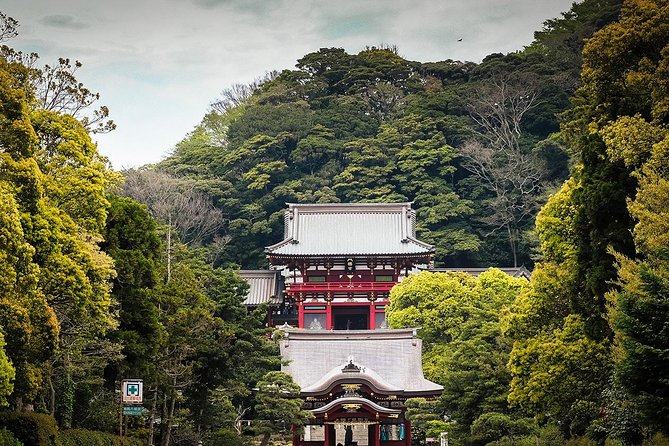
Kamakura is one of Japan’s best places to connect political history with religious life. From 1185 to 1333, it served as the center of a military government led by shoguns. That shift changed Japan. Power moved away from the imperial court in Kyoto and toward a warrior class that valued loyalty, discipline, military skill, and new forms of Buddhist practice.
You see those changes in physical form. Tsurugaoka Hachimangu reflects the power of the samurai government, while the Great Buddha and Hasedera show the importance of Buddhism. The walk also includes Komachidori, a modern shopping street where you can watch contemporary Japanese life unfold between historic sites.
I find this combination more useful than visiting temples one by one with no context. Virgil’s explanations connect the buildings and statues to the people who commissioned them, worshipped there, and used religion to make sense of a changing country.
The route lasts about four hours and ends at Hase Station on the Enoden Line. That makes the experience practical if you are using Kamakura as a half-day outing and want to continue elsewhere afterward. It is not a quiet country walk. The central streets can be busy, particularly on a Sunday or during a long weekend, but a private guide can help you keep moving and adjust the order when needed.
Starting Along Wakamiya Main Street
The tour begins at Kamakura Station and heads along Wakamiya Main Street toward the main shrine. This first 20-minute stretch is useful because it gives you time to get oriented before the historical explanations become more detailed.
Wakamiya Main Street leads directly into the story of Tsurugaoka Hachimangu. As you walk, you are also watching modern Kamakura at close range: shops, pedestrians, local businesses, and the steady movement between station and shrine. That gradual change from town street to sacred setting helps you understand how central the shrine remains to the city.
The walk is short, but it is not filler. It sets up the relationship between Kamakura’s commercial center and its most important religious landmark. If you arrive early, the station is the natural meeting point, but you should allow enough time to find the correct area around Kamakura Station.
More Kamakura and Enoshima days:
- Tokyo: Kamakura & Enoshima Day Trip including Temple Tickets
★ 4.5 · 1,375 reviews - Tokyo: Mt. Fuji, Kamakura, Big Buddha, & Lake Ashi Day Trip
★ 4.5 · 867 reviews - From Tokyo: Kamakura & Enoshima 1-Day Bus Tour
★ 4.5 · 189 reviews
Tsurugaoka Hachimangu and the First Shogun
You spend about 50 minutes at Tsurugaoka Hachimangu, one of Japan’s three most important Shinto shrines. Minamoto Yoritomo, the first shogun, built the shrine in the 12th century, making it closely tied to the rise of the Kamakura government.
This is the place where the tour’s title comes alive. You are not just looking at a shrine. You are standing inside a site chosen to express political authority and religious devotion at the same time. That connection is central to understanding the Kamakura Period.
The shrine’s scale also helps. After the walk up Wakamiya Main Street, the grounds give you room to see how ceremonies, worship, and public power could meet in one setting. Virgil is particularly well suited to this stop because his explanations focus on the shoguns and the symbolism behind the places you visit. His style, based on the available feedback, includes historical anecdotes rather than a bare list of dates.
I like having nearly an hour here. A rushed visit would reduce Tsurugaoka Hachimangu to a photo stop, while the longer pause lets you listen, look around, and ask questions. The admission cost is included, so there is no extra ticket to arrange at this stop.
Komachidori’s Sweets and Street Life
The route then reaches Komachidori, Kamakura’s famous shopping street. You have about 50 minutes here, a generous amount of time for browsing stalls and shops selling sweets, snacks, and souvenirs.
This stop gives the tour a needed change of mood. After the formal setting of Tsurugaoka Hachimangu, Komachidori shows you the everyday, commercial side of Kamakura. The street is a good place to see how an old city functions now, not only how it looked during the age of shoguns.
Food is not included, and the tour does not include lunch, so this is the obvious place to buy something if you want a snack. One comment about the experience mentions matcha ice cream, and another describes a soba lunch. Those choices are not guaranteed, but the timing leaves room for a quick purchase or meal if your guide and group agree.
The trade-off is that Komachidori can feel crowded. You may need patience around popular food counters and narrow stretches of the street. A private tour helps because you can tell Virgil if you would rather browse, eat, or move on. Just remember that food and drinks are extra.
Meeting the Great Buddha at Kotoku-in
Kotoku-in is home to Kamakura’s Great Buddha, a giant bronze statue of Amida Buddha dating from the 13th century. The visit lasts about 40 minutes, enough time to appreciate the statue, hear its background, and take photographs without turning the stop into a hurried glance.
The Great Buddha is one of Kamakura’s clearest visual symbols. Its size makes an immediate impression, but the value of the stop comes from understanding why a bronze Amida Buddha mattered in this period. The statue represents a different side of Kamakura from the military authority seen at Tsurugaoka Hachimangu.
This is also one of the tour’s strongest photo stops. Virgil’s role includes professional photography, and the private setup makes it easier to pause for pictures without asking strangers to take them. If you are traveling alone, that feature has real value. You can leave with photographs that show you at the site rather than a collection of selfies.
Admission to Kotoku-in is not included in the tour price. The same applies to Hasedera, so you should carry some extra money for the two paid attractions. The tour price covers the guide and hosting, not every entrance fee.
Same corner of Kamakura, a completely different plan:
- Kamakura Historical Walking Tour with the Great Buddha
★ 5.0 · 129 reviews - Kamakura Private Tour: Temples, Nature, and the Great Buddha
★ 5.0 · 121 reviews - Kamakura Walking Tour – The City of Shogun
★ 5.0 · 100 reviews - Tokyo:Sea of Mount Fuji, Hakone Ropeway, Ōwakudani, Enoshima
★ 4.9 · 84 reviews
Hasedera’s Gardens, Caves, and Kannon
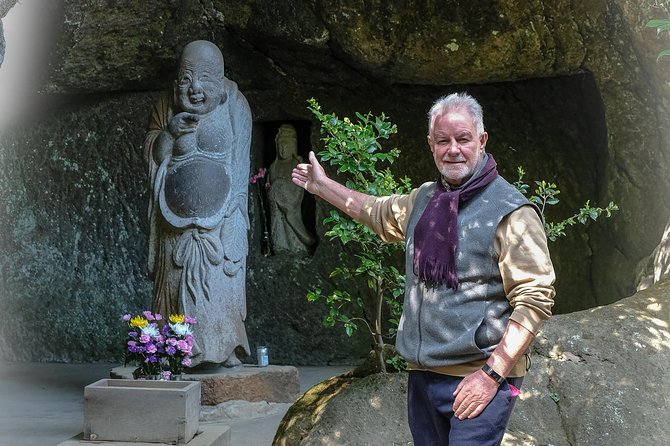
The final and longest visit is Hasedera, with about one hour and 20 minutes set aside. This Buddhist temple spreads across several levels and includes gardens, ponds, caves, and an ancient 11-headed statue of Kannon, the Goddess of Mercy.
The longer time here makes sense. Hasedera is not a single building and a quick exit. You move through different parts of the temple grounds, with the gardens and ponds offering a calmer contrast to Komachidori. The caves add another layer, while the Kannon image gives the visit a strong religious focus.
I would save some energy for this stop. Since it covers multiple levels, you will get more from it if you do not treat the first half of the tour as a race. The private format is especially helpful here because you can ask Virgil to explain a statue or pause when you need a break.
Hasedera is also a fitting ending because it brings together several themes from the day: Buddhist devotion, artistic tradition, the natural setting around Kamakura, and the way religious sites remain part of daily life. Admission is not included, so budget separately for this temple and Kotoku-in.
What the Private Guide Adds
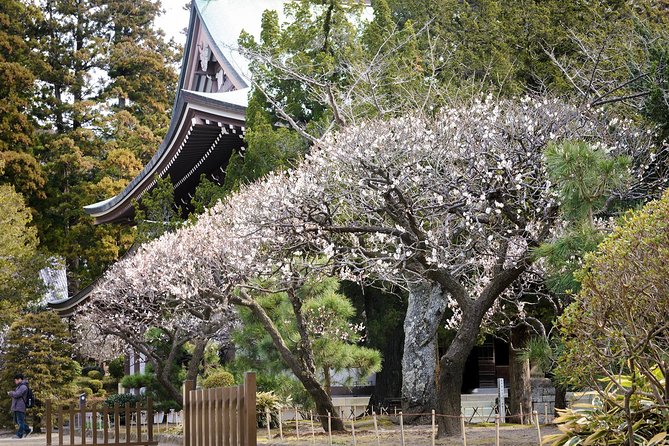
The strongest feature of this experience is not the number of stops. You can visit these places independently. The real question is how much value you place on having someone explain what you are seeing and adjust the day to your interests.
Virgil is identified by several different forms of his name in the feedback, including Virgil and Virgilio. He is described as an English-speaking guide who also speaks Spanish. His strengths are clear: history, personal warmth, patience, photography, and flexibility.
That flexibility matters in practical ways. One family with teenagers appreciated his patience with questions and stops for trying new foods. A parent and 10-year-old daughter used the tour to add historical context to their interest in Japanese culture. Another pair found that he adjusted the day to their slower walking pace. If you need a tightly timed, lecture-style tour, this may feel relaxed. If you want a human pace, that is a benefit.
The guide also helps with navigation. Reviews describe him using public transportation and helping a participant who got lost. Transportation to and from the attractions is not formally included, so clarify how the day will work when you meet. The route itself ends at Hase Station, and public transportation may be part of moving between sections.
The photographer role is another unusual advantage. Virgil can take pictures with your camera or phone, giving solo visitors a practical reason to consider this tour. Couples and families also benefit, since the person normally taking the pictures can join the frame.
Is $108.99 a Fair Price?
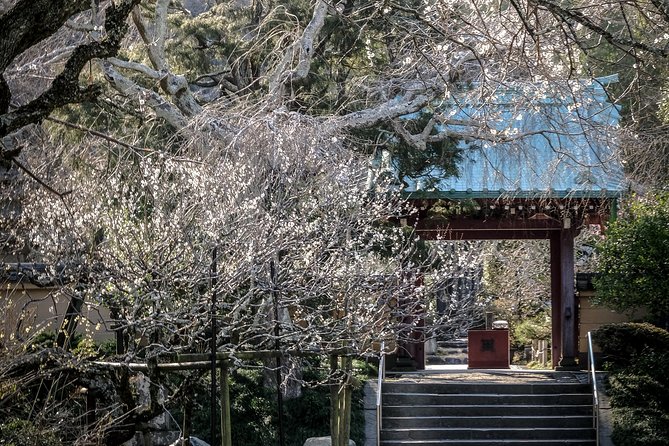
At $108.99 per person, this is not the cheapest way to see Kamakura. You still pay separately for food, drinks, transportation, and admission to Kotoku-in and Hasedera. If you only want to see the Great Buddha and take a few pictures, independent travel will cost less.
The price makes more sense for a private group of several people. Up to eight people can participate, and the private nature means the guide’s attention stays with your party. Group discounts are available, though the exact savings depend on the booking details. For a family or small group that wants a flexible day, the per-person cost can be easier to justify than arranging separate research, navigation, and photography.
I would also factor in the time saved. You do not need to build your own route between five different stops or work out how the samurai government connects to the temples and shrine. You receive a focused four-hour experience with a start time chosen from several options.
The value is highest for first-time visitors, solo visitors, families, and anyone who wants historical explanation rather than a simple checklist. It is lower for repeat visitors who already know Kamakura well or prefer exploring without a guide.
Who Will Enjoy This Kamakura Walk?
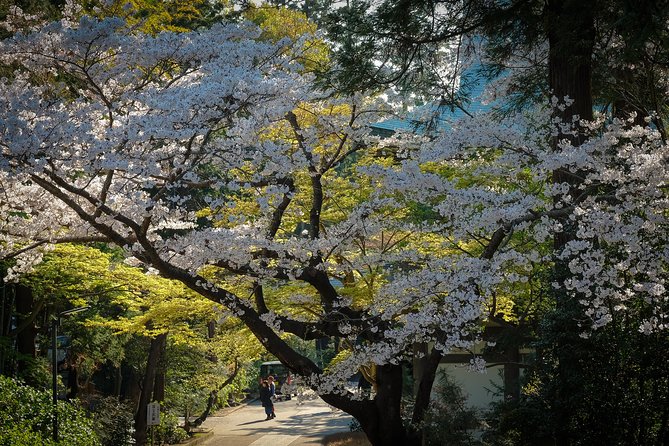
I would recommend this tour to you if you want a clear introduction to Kamakura’s political and religious past. It suits people who enjoy asking questions, stopping for photographs, and letting the day unfold at a moderate pace.
Families are a particularly good match. The mix of shrine, shopping street, giant Buddha, gardens, caves, and food options gives children and teenagers several different points of interest. The guide’s patience with questions is useful when younger members of the group need more time or change pace.
Solo visitors should also take a close look at it. A private guide removes the awkwardness of sightseeing alone, and the photography service may be worth a lot to someone who wants proper pictures.
You should think twice if you want a completely independent day, a long lunch, or a tour focused only on architecture. The schedule is full, food is not included, and the paid admissions add to the base price. Four hours also gives you an introduction, not every temple and shrine in Kamakura.
Booking includes free cancellation up to 24 hours before the local start time. Changes or cancellations made later are not accepted for a refund.
Should You Book Samurai Phototours?
Book it if you want Kamakura to make sense, not just look beautiful. The best parts are the links between Minamoto Yoritomo, the shogunate, samurai culture, Shinto, Buddhism, and Zen, all explained while you move through the actual places connected to those subjects.
I would choose it for a first visit, a family outing, or a small group that values a flexible guide and good photographs. I would skip it if your main goal is saving money or wandering alone.
The most useful planning tip is simple: wear comfortable shoes, keep some extra money for the two entrance fees and food, and do not schedule your next activity too tightly. With Virgil’s personal approach, the day is designed to breathe a little.
FAQ
How long does the Kamakura tour last?
The tour lasts approximately four hours.
Where does the tour begin and end?
It begins at Kamakura Station at 1-chōme-1-15 Onarimachi, Kamakura. It ends at Hase Station on the Enoden Line, at 2 Chome-14 Hase, Kamakura.
Which attractions are visited?
The route includes Wakamiya Main Street, Tsurugaoka Hachimangu Shrine, Kamakura Komachidori, Kotoku-in and the Great Buddha of Kamakura, and Hasedera Temple.
Is this a private tour?
Yes. Only your group participates, with group sizes of up to eight people.
Are admission fees and meals included?
Food, drinks, and lunch are not included. Admission to Kotoku-in and Hasedera is also not included. Tsurugaoka Hachimangu has no admission charge listed for this experience.
Can I cancel for a full refund?
Yes. You can cancel at least 24 hours before the experience start time for a full refund. Cancellations or changes made less than 24 hours before the start time are not refunded.
New on our Kamakura list
- Buddha, Bamboo & Zen – Bespoke Kamakura Private Walking Tours★ 5.0 · 25 reviews
- Yokohama and Kamakura 6hr Private Trip Government-Licensed Guide★ 5.0 · 25 reviews
- Tokyo: Kamakura and Yokohama Private Day Trip with Guide★ 4.6 · 27 reviews
- Private Kamakura plus Yokohama Tour – English Speaking Driver★ 4.5 · 28 reviews
- Day Trip to Kamakura & Enoshima: Shrines, Seaside, Temples & Tea★ 5.0 · 32 reviews
- Kamakura: A Journey Through Medieval Japan★ 4.9 · 32 reviews
- From Tokyo: Kamakura Private Customize Tour by Luxury Van★ 4.6 · 38 reviews
- Exciting Kamakura – One Day Tour from Tokyo★ 5.0 · 40 reviews
Kamakura Tours, compared.
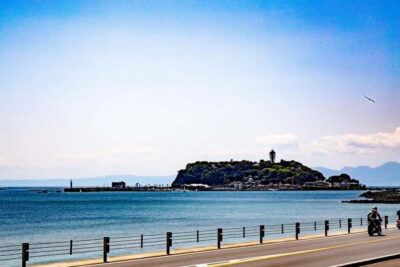
Kamakura & Enoshima Day Trip including Temple Tickets
Read our review →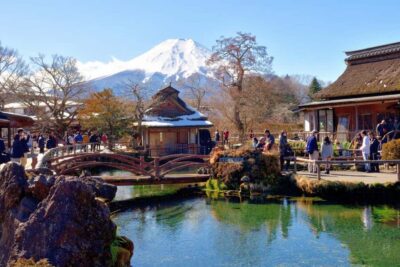
Mt. Fuji, Kamakura, Big Buddha, & Lake Ashi Day Trip
Read our review →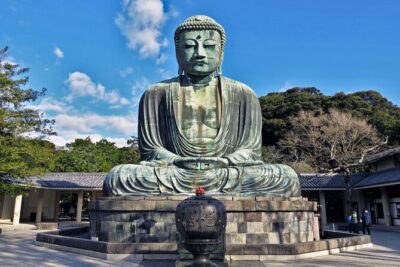
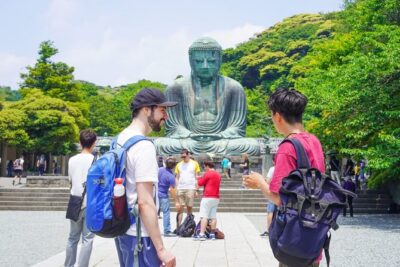
Kamakura Historical Walking Tour with the Great Buddha
Read our review →
Kamakura Private Tour: Temples, Nature, and the Great Buddha
Read our review →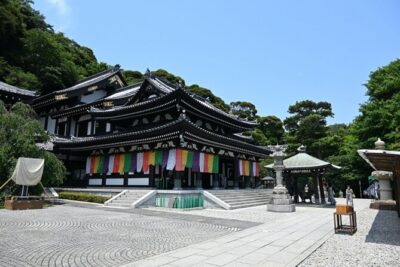
Sea of Mount Fuji, Hakone Ropeway, Ōwakudani, Enoshima
Read our review →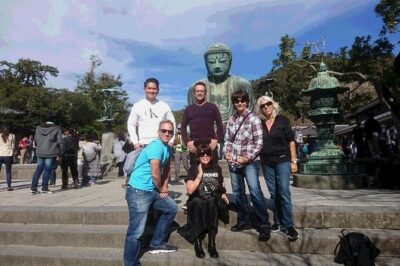
Kamakura 8 hr Private Walking Tour with Licensed Guide from Tokyo
Read our review →Browse the lists this tour appears in