
Reviewed · HISTORICAL TOURS
Asakusa: 3.5-hour Big-picture History Walk
Asakusa is one of the best places in Tokyo to see Japan’s many sides at once: sacred temple grounds, old shopping lanes, riverside views, and a former entertainment district where postwar Tokyo found its footing. This walk uses those places to explain Japan’s long isolation and sudden opening to the outside world.
I like the way the tour connects big ideas to things you can actually see, from the shared worship of Buddhism and Shinto to the different roles dragons play in Japan and the West. I also like the small group size, usually no more than eight people, and the breaks for traditional Japanese snacks.
The main drawback is simple: this is a history-focused walk with a moderate amount of walking. It is not the best choice if you have mobility limits or want a relaxed sightseeing day with lots of free time for shopping.
In This Review
- Key points at a glance
- Why this Asakusa walk offers more than temple photos
- Starting beside Asakusa Station and the Sumida River
- Kaminarimon and the road into Sensō-ji
- Hōzōmon and the Buddhist heart of the route
- Asakusa Shrine and the shared life of Buddhism and Shinto
- Yōgō-dō Pavilion and the quieter corners of temple life
- From temple grounds to Edo-style streets
- Asakusa Mokubakan and the neighborhood’s entertainment past
- Hoppy Street and postwar working-class Asakusa
- The guides make the small group worthwhile
- How much walking and preparation to expect
- Who should book this Asakusa experience
- Should you book it?
- FAQ
- How long does the Asakusa history walk last?
- What language is the tour conducted in?
- How large is the group?
- Are headsets provided?
- Where is the meeting point?
- Is hotel pickup included?
- What should I bring?
- Does the walk operate in bad weather?
- Can children join the tour?
- Is the route suitable for people with mobility impairments?
Key points at a glance
- Japan’s closed-door era explained on foot: Learn why Japan restricted foreign contact, why the Netherlands remained its key European trading partner, and how the country reopened in the 19th century.
- Buddhism and Shinto side by side: See why these two faiths have shared worshipers for centuries rather than functioning as rival systems.
- A small group with real guide attention: Groups are limited to eight, with headsets supplied for groups of three or more.
- Asakusa beyond Sensō-ji: Walk through former theater and cinema streets, old-style pub lanes, and quieter shopping areas.
- A useful Tokyo orientation: The route includes riverside views, a rooftop viewpoint, the Tokyo Skytree story, and major Asakusa landmarks.
- Good practical touches: You receive traditional sweets and snacks, while guides point out breaks and facilities along the route.
Why this Asakusa walk offers more than temple photos
Many Asakusa visits begin and end at Sensō-ji. That is understandable. The temple is Tokyo’s oldest and most famous Buddhist site, and the approach through Kaminarimon and Nakamise Shopping Street is one of the city’s classic scenes.
This tour asks you to pause and ask better questions. Why do Buddhist and Shinto symbols appear so close together? Why did Japan close itself to much of the world? Why did Asakusa shift from an old center of entertainment to one of Tokyo’s best places for nostalgia?
That makes the walk useful early in a Tokyo visit. You are not simply collecting sights. You are building a framework for understanding the country you will see elsewhere.
The price is $88 per person, which is a fair but not bargain-level cost for 210 minutes. You are paying for a certified English-speaking guide, a small group, headsets when needed, snack tasting, and an explanation of the area that would be difficult to assemble from signs alone. If you mainly want photographs of Sensō-ji, it is expensive. If you want context and the chance to ask questions, the value is stronger.
More Asakusa visits:
- Tokyo: Japanese Dance Cabaret Theater Asakusa-Kaguwa Ticket
★ 4.8 · 2,270 reviews - Tokyo: Meiji Shrine, Asakusa, Skytree Bus Tour and Cruise
★ 4.7 · 1,986 reviews - Tokyo: Roll and Authentic Sushi Making Class in Asakusa
★ 4.9 · 1,957 reviews
Starting beside Asakusa Station and the Sumida River
The meeting point is in front of the Burger King beside Exit 4 of Asakusa Station on the Ginza Line. Step outside the exit rather than waiting underground. This is a useful detail because large stations can make first meetings needlessly confusing.
The route begins with the Tokyo Cruise Asakusa Pier. The guided stop lasts about 15 minutes and helps place Asakusa beside the Sumida River. From here, you begin to see the neighborhood as more than a temple quarter. Water, commerce, transport, sightseeing, and city growth all meet along this edge of Tokyo.
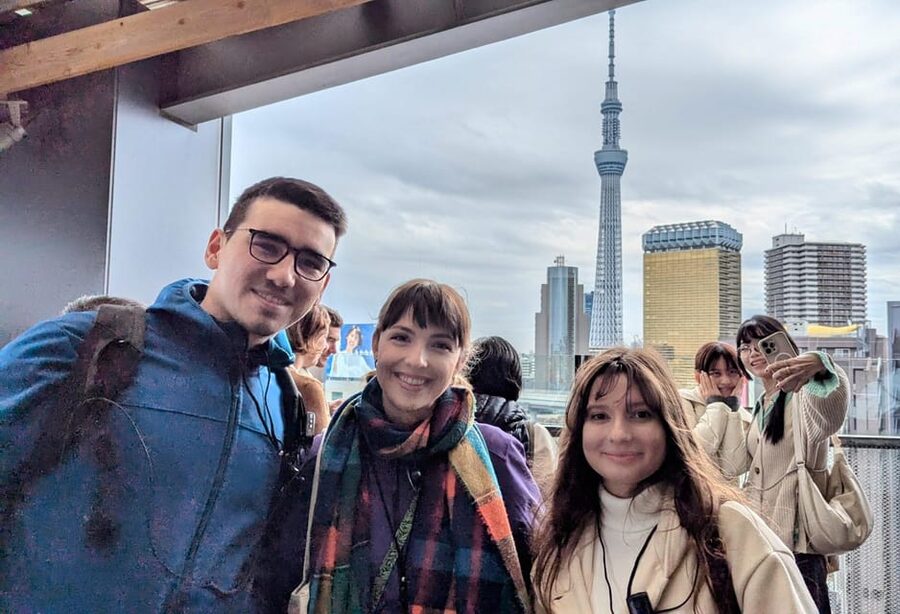
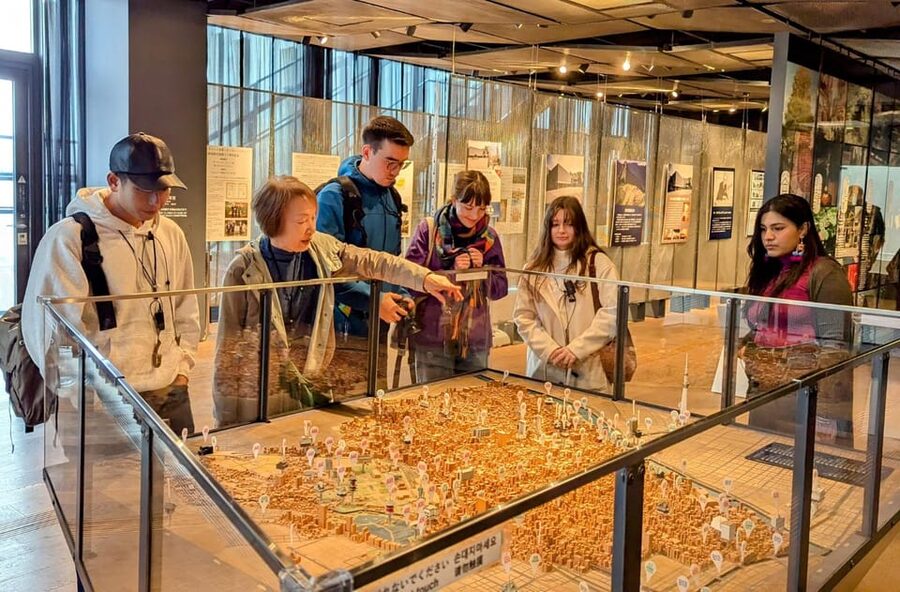
A stop at the Asakusa Culture Tourist Information Center follows and lasts about 30 minutes. The building itself is worth attention, especially for visitors interested in architecture. One previous participant particularly valued the view from the upper level and returned later during the trip.
That rooftop view also gives you a clear sense of Asakusa’s modern setting. You can see how traditional streets and temple roofs fit into a much larger Tokyo, including the Tokyo Skytree. Your guide may explain the playful Japanese reading of its 634-meter height, roku-san-yon, which echoes the digits six, three, and four.
Kaminarimon and the road into Sensō-ji
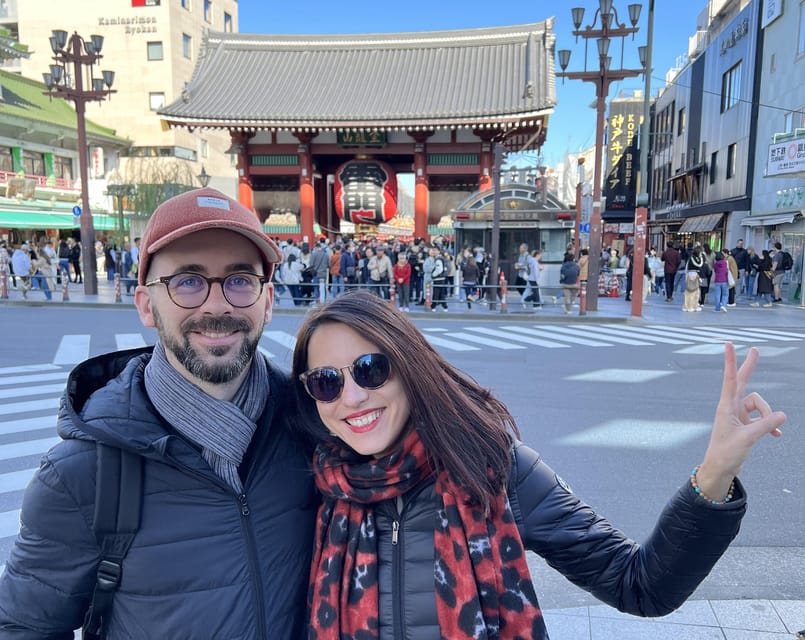
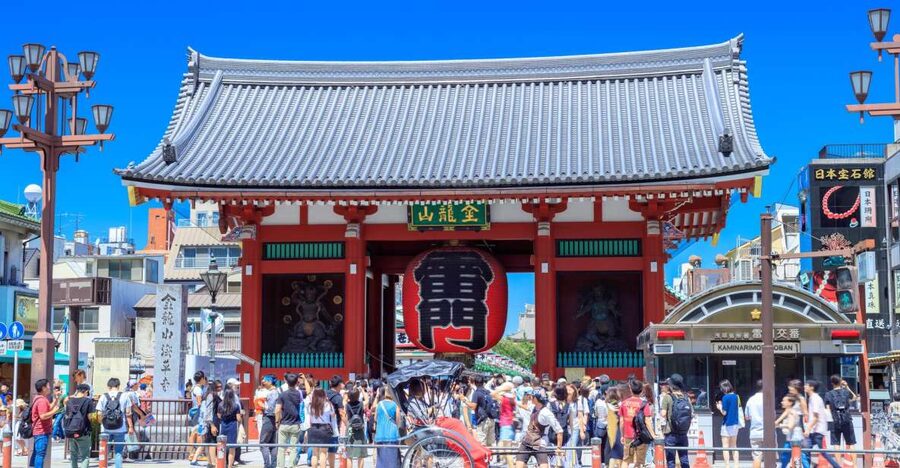
Kaminarimon, or the Thunder Gate, is the dramatic entrance to the temple district. The guided stop lasts around 15 minutes, enough time to examine the gate and hear why it matters before the crowds pull you toward the shops.
From there, the route continues along Nakamise Shopping Street for about 30 minutes. This is the famous approach lined with souvenirs, snacks, sweets, and traditional-style storefronts. It can be crowded, so you should expect a walking lesson in how to move through a busy Japanese sightseeing street rather than a quiet stroll.
The value here is the explanation. A guide can point out how the approach works as a transition from ordinary city streets into sacred ground. You also receive a selection of freshly made Japanese traditional snacks and sweets, which gives this section a taste as well as a visual element.
If you are not interested in shopping, do not worry that the tour will become a sales march. One guide, Taka, adjusted the pace for a participant who preferred architecture, history, and gardens over stores. That is the sort of small-group flexibility that can make this walk feel personal rather than fixed.
Hōzōmon and the Buddhist heart of the route
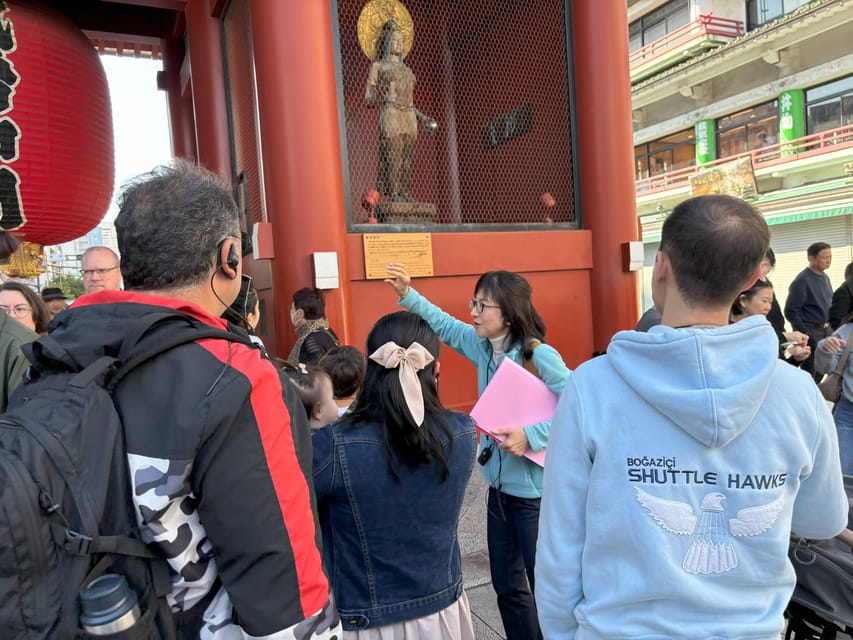
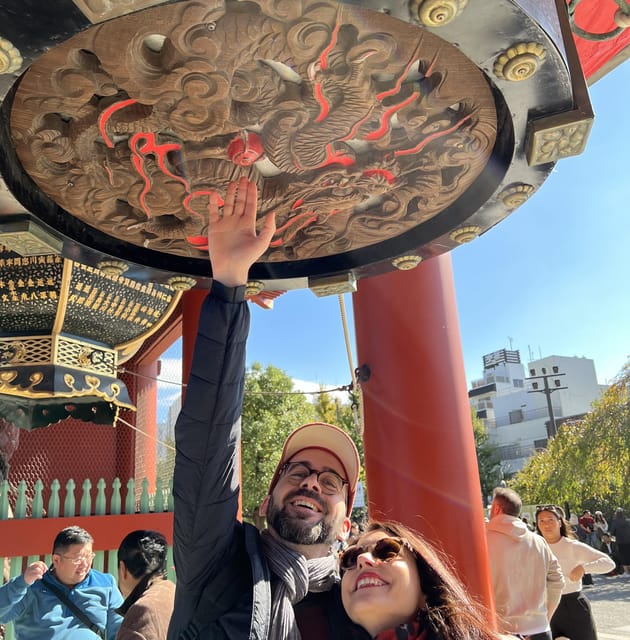
The Hōzōmon Gate comes next, with about 15 minutes of guided explanation. It forms another important threshold before the main temple buildings. Your guide uses these gates, images, and surrounding details to explain how Buddhist worship appears in daily Japanese life.
Sensō-ji receives the longest stop, about 45 minutes. That is sensible. There is a lot to take in, but the purpose is not to rush through a checklist. You can expect an explanation of the temple’s role, its visual symbols, and the way its sacred function exists alongside the commercial life of Asakusa.
This is where the tour’s big-picture method works best. Instead of treating religion as a museum subject, the guide explains how Buddhism and Shinto have complemented one another for more than a thousand years. Japanese people have often used both traditions in daily life, with each serving different needs and moments.
You do not need prior knowledge of Japanese religion. The tour is designed to make the relationship understandable through the places around you. That is more useful than memorizing a list of religious terms.
A few more Tokyo bookings worth comparing
- Tokyo: Imperial Palace and Shogun Historical Walking Tour
★ 5.0 · 2,251 reviews - Tokyo: Imperial Palace Japanese History Walking Tour
★ 4.9 · 987 reviews - Tokyo: Shinjuku Historical Walking Tour & Secret Backstreets
★ 5.0 · 530 reviews - Yanaka Walking Tour: Historic and Traditional District of Tokyo
★ 5.0 · 530 reviews
Asakusa Shrine and the shared life of Buddhism and Shinto
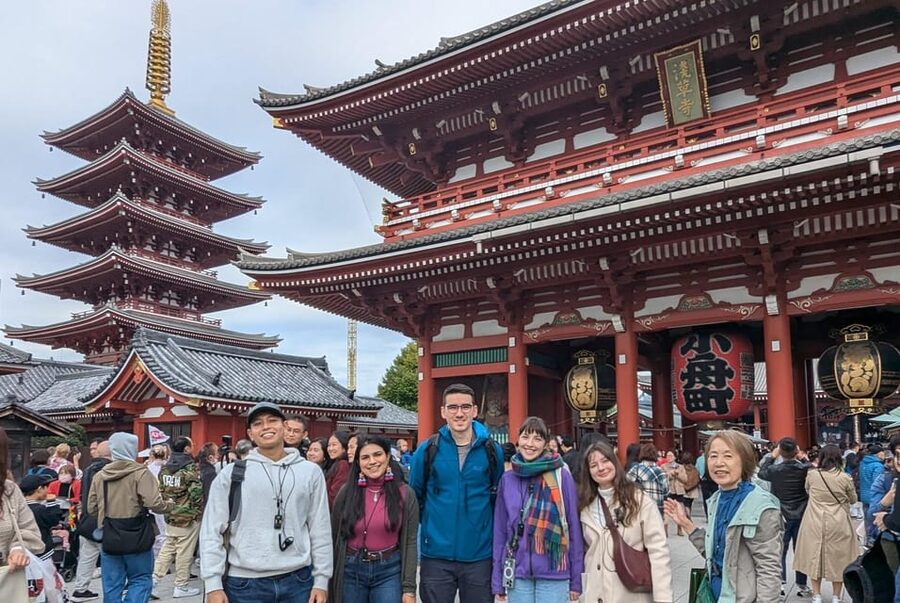
Asakusa Shrine receives about 15 minutes. It sits close to Sensō-ji, making the relationship between the two traditions visible in a single compact area.
The guide explains why the two religions have coexisted peacefully while sharing many of the same worshipers. You will also hear how they can complement each other in ordinary life. This is one of the most helpful parts of the walk because it corrects the common assumption that Japanese religious life must fit into one exclusive category.
The lesson is tied to the setting rather than delivered as a classroom speech. You see how a Buddhist temple and a Shinto shrine can occupy neighboring ground, then consider what that says about Japanese customs.
Yōgō-dō Pavilion and the quieter corners of temple life
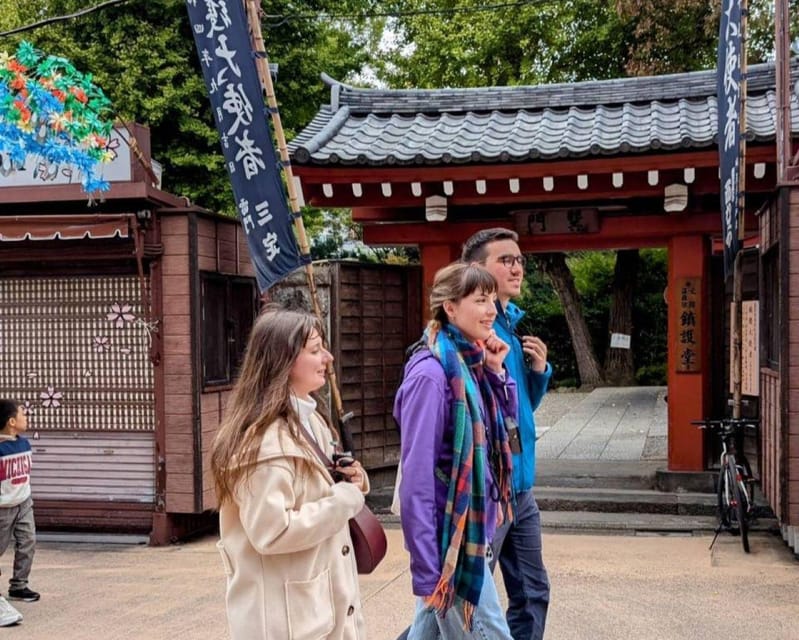
The Yōgō-dō Pavilion receives a 15-minute visit and guided explanation. This stop adds another layer to the temple area and gives the walk a little breathing room after the main Sensō-ji complex.
The exact feel of the visit will depend on the day, weather, and crowd levels, but the purpose is clear: the tour does not stop at the most photographed building. It takes you to a less central part of the religious district and uses it to widen your understanding of the area.
That approach suits people who want more than a quick photo at the main gate. It also means you should wear shoes that are comfortable for steady walking and standing.
From temple grounds to Edo-style streets
The route then shifts toward Asakusa Nishi-sandō Shopping Street, with about 15 minutes for visiting, walking, and explanation. This street offers a quieter, more nostalgic mood than the main Nakamise approach.
Here, the tour moves from major history to atmosphere. You may feel as though you have stepped onto an old film set, especially if you enjoy modest storefronts and the slower character of traditional shopping streets. It is a useful contrast with the crowds around Sensō-ji.
The tour also looks back toward the Edo period, when Tokyo was still called Edo and Asakusa was a major center of urban life. You will not simply hear dates and names. The aim is to picture how people used these streets and how the district developed around worship, trade, and entertainment.
Asakusa Mokubakan and the neighborhood’s entertainment past
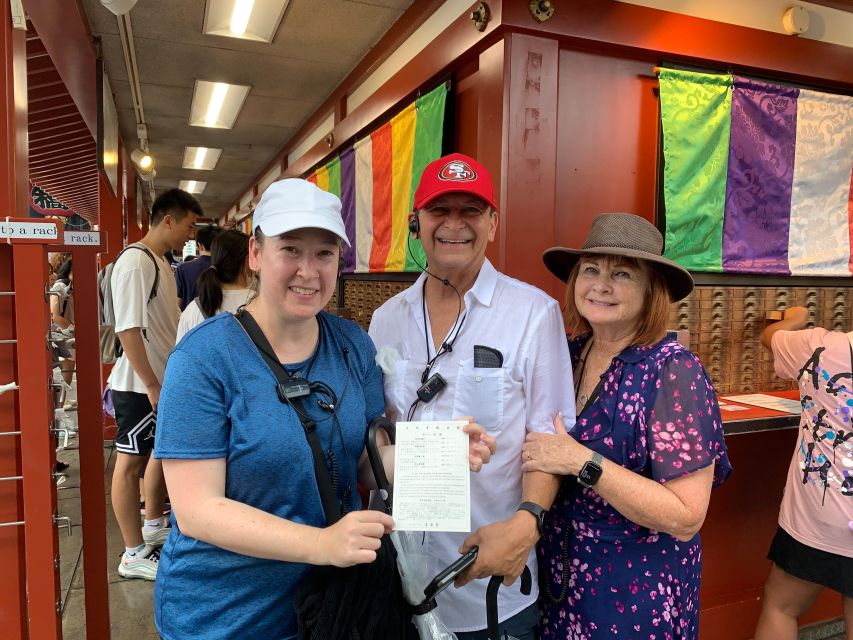
Asakusa Mokubakan is visited for around 15 minutes. The stop introduces the area’s performance tradition and its place in Asakusa’s entertainment past.
Before Shinjuku and Shibuya took on their modern reputations, Asakusa was a major destination for amusements. Cinemas, vaudeville theaters, and performance halls drew people here, creating a busy district right beside the temple.
This contrast is one of the tour’s strongest ideas. Human life moves between the sacred and the secular. A person might pray at Sensō-ji, browse shops, watch a performance, and eat or drink nearby, all within the same neighborhood.
That mix still gives Asakusa its character. The district is not preserved as a silent historical display. It remains a place where ordinary city life presses right up against old religious buildings.
Hoppy Street and postwar working-class Asakusa
The final listed stop is Hoppy Street, with about 15 minutes for a visit and guided walk. The narrow lane is known for old-style Japanese pubs and offers a glimpse of postwar working-class energy.
You should not expect a full meal or pub crawl as part of the tour. Instead, the guide explains the street’s character and its connection to Asakusa’s entertainment life. It is a short but meaningful ending because it shows how the neighborhood carried on after the war.
The walk closes with a sense of Asakusa as a place shaped by resilience. Temple traditions, popular entertainment, local drinking spots, shopping streets, and tourism all overlap here.
The guides make the small group worthwhile
The guide quality matters greatly on a tour built around explanation. The English-speaking guides named in past bookings include Ai, Yasu, Taka, Jun, Satchi, Yoko, and Akiko. The strongest praise focuses on patient pacing, clear explanations, and the ability to respond to individual interests.
Taka was especially good at handling crowds, finding useful photo positions, pointing out facilities before they became urgent, and answering questions about both Asakusa and Japan more broadly. He also adjusted the route emphasis for people more interested in buildings, history, and gardens than shopping.
Ai looked after the group when cold rain arrived, a reminder that the walk operates in all weather. Yoko and Yasu were praised for friendly, clear English and for putting Asakusa into a wider Tokyo context. Jun added local details, including the wordplay around Tokyo Skytree’s height.
The maximum group size is eight. Headsets are included for groups of three or more, which matters around Kaminarimon and Nakamise, where street noise and crowds can make a soft-spoken guide hard to hear.
How much walking and preparation to expect
The experience lasts 3.5 hours and includes a moderate amount of walking. You should bring water and wear comfortable shoes. Vending machines are available, but carrying a bottle is still sensible.
There are breaks along the way, and guides can point out toilets. That practical care is useful on a half-day walk, especially for families and older adults.
The tour runs in all weather, so check the forecast and dress accordingly. Rain can change the feel of Asakusa, but it can also make the temple district quieter and more atmospheric. The important point is to arrive prepared rather than assume the walk will move indoors.
People with mobility impairments may find the route difficult. The supplier asks anyone with mobility issues to make contact in advance and will try to help, but the activity is not recommended for people who cannot manage moderate walking.
Children younger than six may join without charge. Families are welcome, though the historical focus is aimed more at adults. Young children who need frequent breaks may find the 210-minute structure demanding.
Who should book this Asakusa experience
I would choose this walk for a first or second day in Tokyo if I wanted a clear introduction to Japanese history without spending hours in a museum. It suits curious adults, couples, older children, and anyone who wants to understand why Asakusa feels both traditional and thoroughly urban.
It is also a good match if you prefer a guide who can answer questions rather than a large group following a flag. The small size gives you a better chance to ask about religion, architecture, food, local customs, or the parts of Tokyo you plan to visit next.
I would skip it if your priority is shopping, free time, or a slow temple visit. You will spend much of the 210 minutes listening and walking, and the route covers several different ideas. The tour is not designed as a flexible hop-on, hop-off outing.
The flexible booking terms help reduce the risk: you can cancel up to 24 hours ahead for a full refund, and you can reserve now and pay later. The tour is conducted in English, with an English audio guide included.
Should you book it?
Book this Asakusa walk if you want the neighborhood to make sense, not just look pretty. The strongest parts are the explanation of Buddhism and Shinto, the story of Japan’s isolation and reopening, and the move from Sensō-ji into old entertainment and pub streets.
At $88, it is best treated as a guided history experience rather than a basic sightseeing walk. If you value an attentive guide, a small group, traditional snacks, and a route that reaches beyond the standard temple photos, it offers solid value. If you only want to see Sensō-ji, visit independently and save the money.
FAQ
How long does the Asakusa history walk last?
The tour lasts 210 minutes, or 3.5 hours.
What language is the tour conducted in?
The live tour guide speaks English, and an English audio guide is included.
How large is the group?
The maximum group size is eight participants.
Are headsets provided?
Yes. Headsets are provided for groups of three or more so you can hear the guide clearly.
Where is the meeting point?
Meet in front of the Burger King beside Exit 4 of Asakusa subway station on the Ginza Line, station G19. Step outside Exit 4 to reach the meeting place.
Is hotel pickup included?
No. Hotel pickup and drop-off are not included.
What should I bring?
Bring comfortable shoes and water. Vending machines are available, but bottled water is recommended.
Does the walk operate in bad weather?
Yes. The tour operates in all weather conditions, so dress appropriately for the forecast.
Can children join the tour?
Yes. Families are welcome, and children younger than six may join without charge. The historical focus is recommended mainly for adults.
Is the route suitable for people with mobility impairments?
The tour involves a moderate amount of walking and is not suitable for people with mobility impairments. If you have mobility concerns, contact the supplier in advance to discuss possible assistance.
More Walking Tours in Tokyo
- Tokyo Tsukiji Fish Market Food and Culture Walking Tour
★ 5.0 · 3,184 reviews - Tokyo: Shinjuku Local Bar and Izakaya Guided Walking Tour
★ 4.9 · 1,794 reviews - Tokyo: Tsukiji Fish Market Food and Walking tour
★ 5.0 · 1,724 reviews - Tokyo: Asakusa Walking Tour with Sensoji Temple Visit
★ 4.8 · 1,583 reviews
New on our Tokyo list
- From Tokyo: Mount Fuji & Hakone Full Day Private Tour★ 4.9 · 25 reviews
- Tokyo Spectacular View Day-Cruise in 90 Minutes★ 5.0 · 25 reviews
- Real Tokyo Runner Club : Daikoku Car Meet Night Tour with JDM Car★ 5.0 · 25 reviews
- 2.5 Hour-Guided Cycle Tour in the Central Tokyo★ 5.0 · 25 reviews
- Tokyo: 2-Hour Night Bike Tour of the City’s Hidden Gems★ 4.9 · 25 reviews
- Ramen Making from Scratch +Akihabara Tour –Cooking Class★ 5.0 · 25 reviews
- [Self-Drive] Tokyo & Daikoku Custom Car Driving Tour★ 4.9 · 25 reviews
- Samurai themed Entertainment show in Shinjuku★ 4.5 · 25 reviews
Historical Tours, compared.
Imperial Palace and Shogun Historical Walking Tour
Read our review →
Yanaka Walking Tour: Historic and Traditional District of Tokyo
Read our review →
Shinjuku Historical Walking Tour & Secret Backstreets
Read our review →
Mt. Fuji Heritage Tour: Traditional Villages, Lakes & Shrine
Read our review →
The Best of Izakaya in Shinjuku Food & Cultural Tour
Read our review →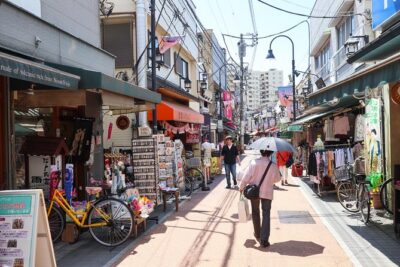
Yanaka Historical Walking Tour in Tokyo’s Old Town
Read our review →Browse the lists this tour appears in