
Reviewed · HISTORICAL TOURS
Asakusa: A Big-picture History Walk to Know Japan
Asakusa is often sold as a quick temple stop. This walk gives the neighborhood a much bigger job: explaining how Japan moved from long isolation to modern global power. You begin beside the Sumida River and finish at a Buddhist temple and Shinto shrine that share the same sacred grounds.
I like the tour’s big-picture storytelling, especially the links between Perry’s arrival, Edo’s isolation, ukiyo-e prints, and European art. I also like the clear religious comparisons, which help you understand what you are doing at a shrine or temple instead of simply copying the person in front of you.
The main consideration is pace. Two hours is enough for a strong introduction, not a slow visit to every corner. The walk involves a moderate amount of standing and walking, and one person found the headset created an echo, so this may not suit anyone with serious mobility concerns.
In This Review
- What makes this Asakusa walk different
- Start beside the Sumida River
- Get the religious basics at the Tourist Information Center
- Read the dragons at Kaminarimon
- Walk Nakamise with ukiyo-e in mind
- Compare medieval Japan and Europe at Hōzōmon
- Make sense of Sensō-ji’s rituals
- Finish where Buddhism and Shinto meet
- How the guides shape the experience
- Is $58 a fair price?
- Who should book this two-hour walk?
- Should you book the Asakusa history walk?
- FAQ
- Where does the Asakusa history walk meet?
- How long does the tour last?
- Is the tour offered in English?
- What is included in the price?
- Can children join the tour?
- What happens if the tour is cancelled?
What makes this Asakusa walk different
- The Sumida River becomes a history lesson: Learn why Japan restricted foreign contact, why Dutch traders were allowed to remain, and how Admiral Perry helped force the country open.
- Buddhism and Shinto are explained side by side: The tour makes the difference between temple and shrine customs easier to grasp.
- Kaminarimon’s dragon has a surprising role: You compare Japanese and Western dragon traditions and see why they developed in opposite directions.
- Nakamise connects local souvenirs with European art: Buddhist symbols and ukiyo-e prints lead to a story about the birth of Western Impressionism.
- Sensō-ji and Asakusa Shrine share one long story: The final stop shows how Buddhist and Shinto worship existed together for more than 1,000 years.
- A certified English-speaking guide keeps it personal: Guides including Choco, Sachi, Amy, Yoko, Kay, and Yasu have been praised for clear explanations and family-friendly energy.
Start beside the Sumida River
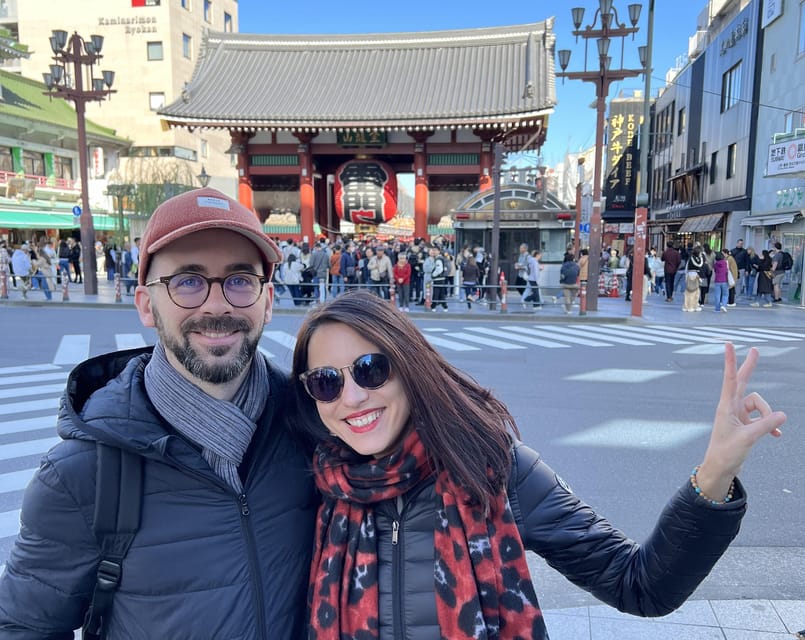
Meet in front of the Burger King beside Exit 4 of Asakusa Station on the Ginza Line, station G19. This is a practical meeting point, but step outside the station exit rather than waiting underground. The walk begins at 2-chōme-20-6 Kaminarimon.
Your first stop is the Tokyo Cruise Asakusa Pier, where the Sumida River gives the opening story some physical sense. Japan’s long period of restricted contact can sound abstract in a classroom. Here, the river helps frame Asakusa as a place linked to movement, trade, defense, and the outside world.
You learn why the Edo shogunate sealed Japan for more than 200 years and why the Netherlands was the one European trading partner allowed to maintain contact. The guide then connects that policy to Admiral Perry’s arrival and Japan’s forced reopening.
The walk also points toward modern Tokyo. The story includes Odaiba’s former gun batteries and the Statue of Liberty replica facing the Pacific. That contrast is useful: Japan’s defensive past and its modern international image appear in the same explanation.
This opening section lasts about 15 minutes. It is less about taking a scenic river stroll and more about getting a map of Japanese history in your head. If you want a long waterfront walk, this is not that. If you want a quick explanation of why Japan developed differently from many European countries, it is a strong beginning.
More Asakusa visits:
- Tokyo: Japanese Dance Cabaret Theater Asakusa-Kaguwa Ticket
★ 4.8 · 2,270 reviews - Tokyo: Meiji Shrine, Asakusa, Skytree Bus Tour and Cruise
★ 4.7 · 1,986 reviews - Tokyo: Roll and Authentic Sushi Making Class in Asakusa
★ 4.9 · 1,957 reviews
Get the religious basics at the Tourist Information Center
The Asakusa Culture Tourist Information Center is the next stop, also planned for about 15 minutes. This is where the guide introduces Buddhism and Shinto before you reach the main religious sites.
That order matters. Many first-time visitors see a torii, incense burner, offering box, or statue without knowing which tradition it belongs to. The guide uses clear, visual explanations to set up the rest of the walk.
The goal is not to turn you into a religious scholar. It is to give you enough working knowledge to understand why people bow, where they pray, and how the spaces differ. You will also hear how these traditions relate to one another in Japan, rather than treating Buddhism and Shinto as sealed-off subjects.
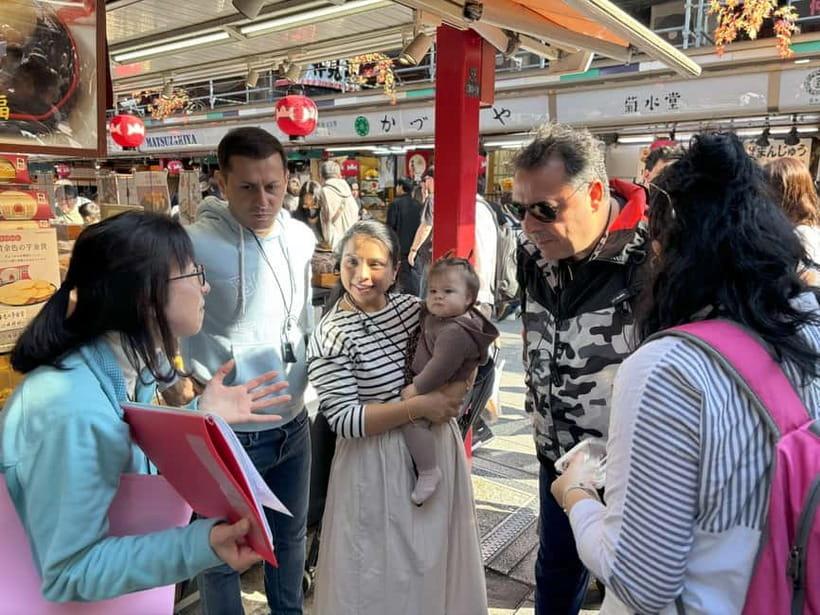
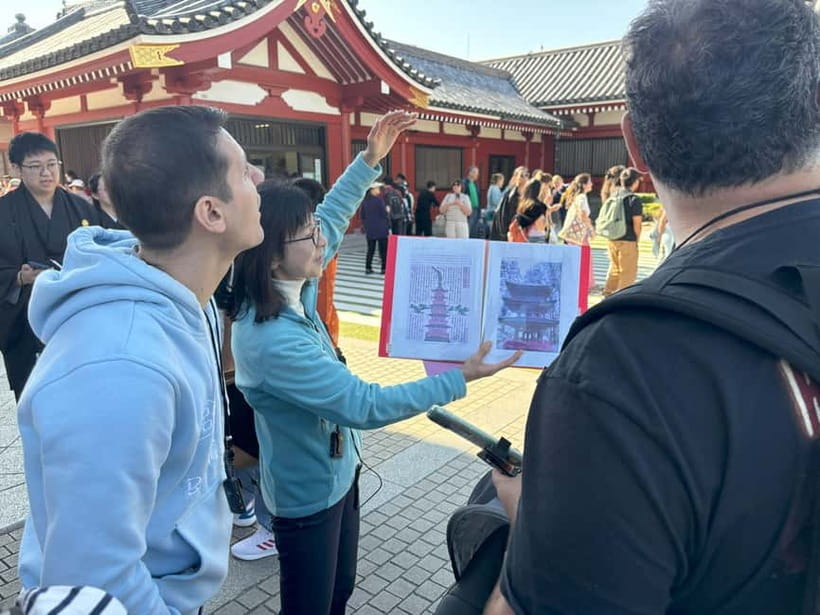
Several guides have been praised for making this part easy to follow. Amy brought printed images to help explain the material, and Kay offered practical advice about approaching shrines respectfully. Those details matter because the tour is not only about dates and names. It tries to show you how the places function.
Read the dragons at Kaminarimon
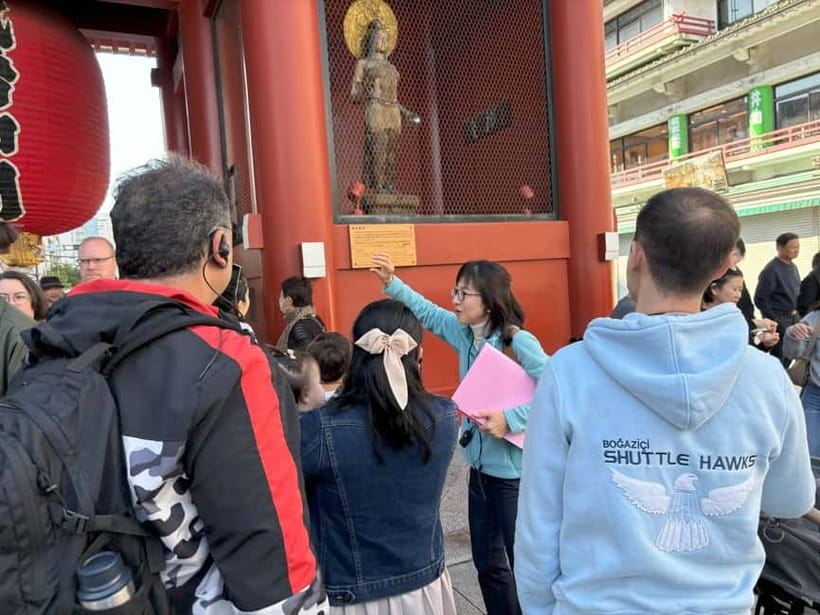
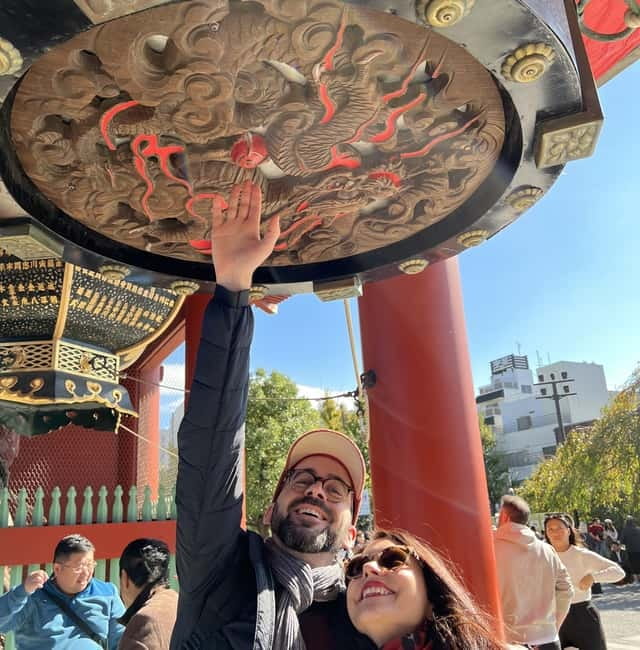
Kaminarimon, or Thunder Gate, is Asakusa’s best-known entrance. Its huge lantern makes it a natural photo stop, but the tour asks you to look beyond the standard picture.
Here, you compare Japanese and Western dragons. In much of Western tradition, dragons are treated as dangerous enemies to defeat. The Japanese dragon has a different role, tied to water and protection rather than simply serving as a monster in a heroic tale.
This is a small subject with a useful payoff. It shows how symbols can change meaning from one culture to another. You also begin to see that Japanese art and religious decoration are not just visual ornaments. They carry ideas about nature, power, protection, and the sacred.
The stop lasts about 15 minutes. Kaminarimon can be crowded, and the gate is a working entrance rather than a quiet museum display. Your guide’s voice and group positioning will matter here. Groups of three or more receive headsets, which should help you hear over the street noise, though one person found the earpiece produced an occasional echo.
Walk Nakamise with ukiyo-e in mind
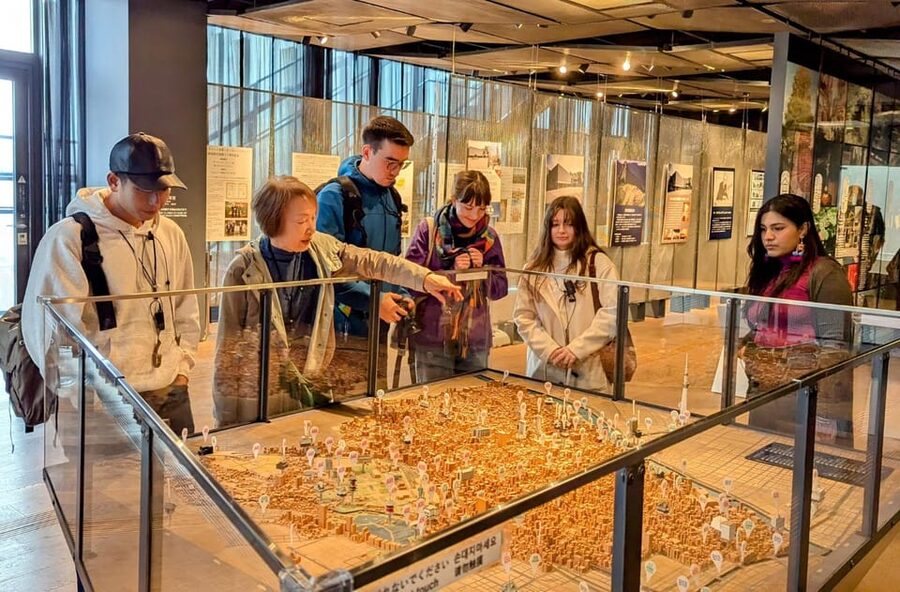
From Kaminarimon, you move along Nakamise Shopping Street for about 30 minutes. This is one of Japan’s oldest shopping streets, lined with small shops selling snacks, souvenirs, crafts, and traditional goods.
The guide uses Nakamise to explain Buddhist symbols, including the vajra, also called tokko. You are not simply told what an object looks like. You learn why it appears in Buddhist settings and how religious ideas become part of everyday visual culture.
The more unexpected subject is ukiyo-e woodblock printing. These prints traveled from Japan to Europe and helped inspire Western Impressionist painters. That connection gives the shopping street a wider role. A print bought or seen in Japan could affect how European artists thought about composition, cropping, color, and ordinary life.
I like this part because it links a familiar tourist activity, browsing a shopping street, with a major exchange in art. It also helps explain why Japanese art made such a strong impression abroad. The story is not limited to famous temples or samurai. It includes affordable printed images and the way they circulated.
Nakamise is the longest stop, but it is not a dedicated shopping break. The guide may allow snack tastings, and traditional treats are included, yet you should not expect time for a relaxed buying spree. If you want to browse every shop, return later on your own.
The street can be crowded, so keep close to the group and watch your footing. Comfortable shoes are essential. Water and weather-appropriate clothing are also wise, since much of the experience takes place outdoors.
A few more Tokyo bookings worth comparing
- Tokyo: Imperial Palace and Shogun Historical Walking Tour
★ 5.0 · 2,251 reviews - Tokyo: Imperial Palace Japanese History Walking Tour
★ 4.9 · 987 reviews - Tokyo: Shinjuku Historical Walking Tour & Secret Backstreets
★ 5.0 · 530 reviews - Yanaka Walking Tour: Historic and Traditional District of Tokyo
★ 5.0 · 530 reviews
Compare medieval Japan and Europe at Hōzōmon
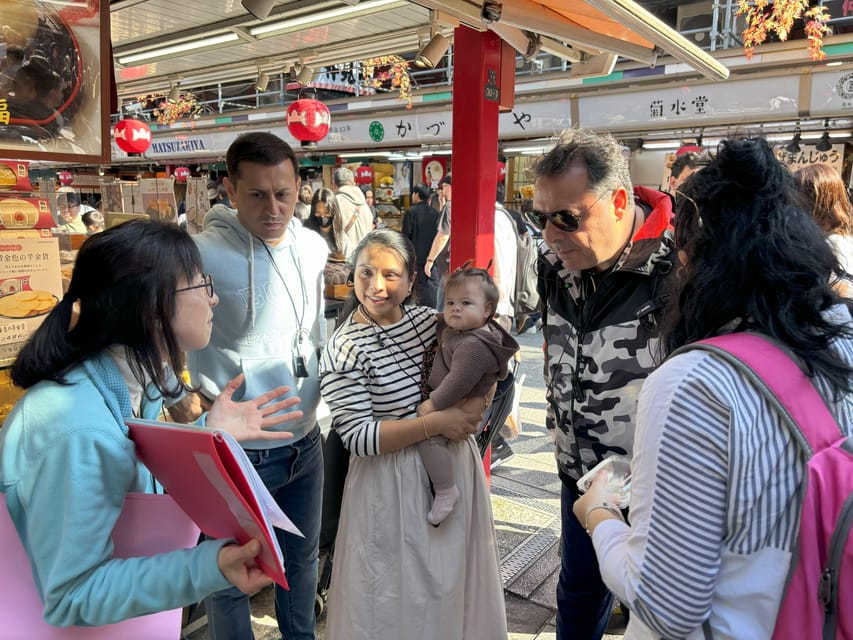
Hōzōmon Gate follows Nakamise. The scheduled stop is about 15 minutes, and the focus shifts from art and symbols to a comparison between medieval Japan and Europe.
The guide reveals that people in Japan and the West shared surprisingly similar ways of thinking 1,000 years ago. This does not mean the cultures were identical. The value lies in seeing that medieval people in different places wrestled with some comparable questions about religion, society, authority, and the world around them.
That comparison helps prevent a common mistake in Japan: treating the country as completely separate from every other culture at every point in history. Japan had its own institutions and customs, but people were still responding to familiar human concerns.
Hōzōmon also prepares you for Sensō-ji. You see another large religious gateway, but the point is not merely architectural. The guide keeps asking what the building, image, or custom tells you about the society that created it.
Make sense of Sensō-ji’s rituals
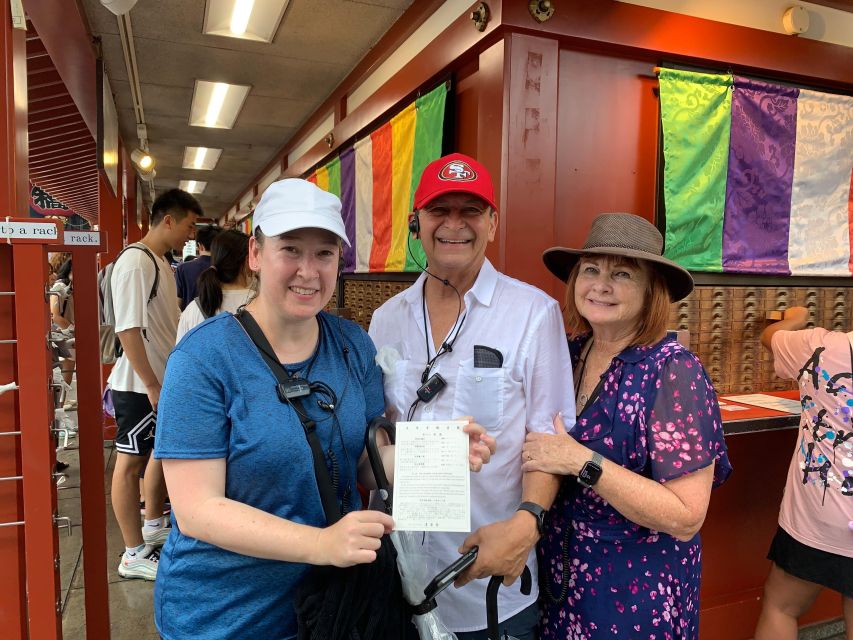
Sensō-ji is Japan’s oldest Buddhist temple and the central attraction of the walk. The planned visit lasts around 15 minutes, so this is an introduction rather than a full temple exploration.
The guide explains the difference between prayer in Buddhism and prayer in Shinto. That distinction can be confusing because Japanese religious life has often allowed traditions to overlap. A short explanation here can make the rest of your Japan trip easier, especially if you plan to visit other temples and shrines.
You may also learn how to approach the space respectfully, how to read basic ritual actions, and why certain objects are present. One family found the fortune-telling activity near the temple entrance especially engaging for an eight-year-old. This is a useful reminder that the tour can work for children when the guide turns the past into something they can see and do.
At the same time, the historical focus may suit adults and older children best. An eight-year-old can enjoy parts of it, as one guide, Choco, showed, but the tour is not designed as a play-centered family activity. Children younger than six may join without charge.
Sensō-ji is a busy public site, not a quiet private lesson. You will have to share the space with worshippers, shoppers, and other groups. The guide’s skill is most valuable here, helping you notice meaning while keeping the visit moving.
Finish where Buddhism and Shinto meet
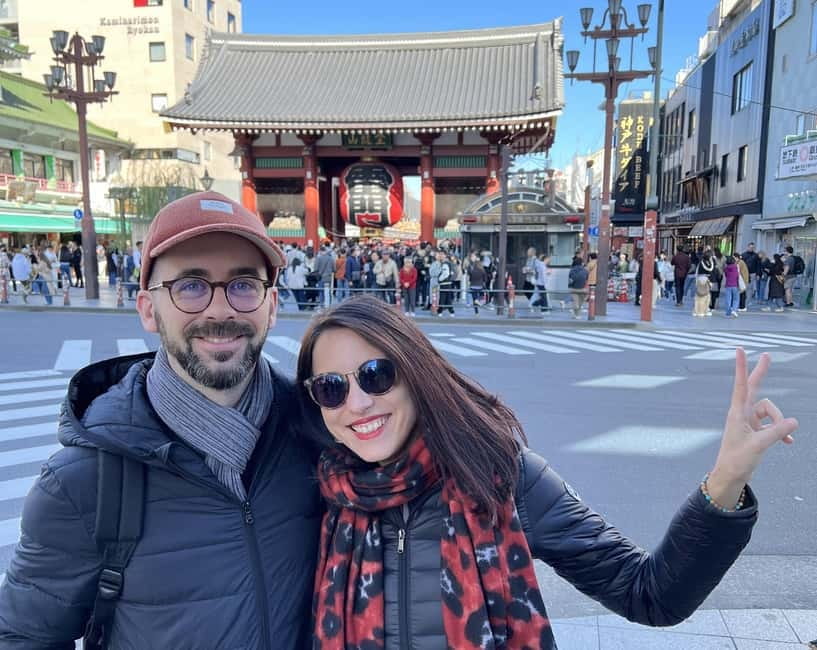
The final stop is Asakusa Shrine, another 15-minute section. This is the tour’s strongest idea and its best ending.
A Buddhist temple and a Shinto shrine share the same grounds, worshippers, and long local story. The tour explains how this religious coexistence lasted for more than 1,000 years.
For many people, this is the moment when the earlier explanations click. Instead of assuming that Japan has two entirely separate religious systems, you see how they lived alongside one another in daily practice and local tradition.
The shrine also brings the walk back to the neighborhood itself. Asakusa is not just a collection of historic structures arranged for sightseeing. Its sacred sites, shopping street, river, festivals, and local customs developed together.
The timing is worth noting. Fifteen minutes gives you a clear explanation, but not a lengthy period for quiet reflection or detailed photography. If Asakusa Shrine interests you, you can return later after the walk and spend more time there.
How the guides shape the experience
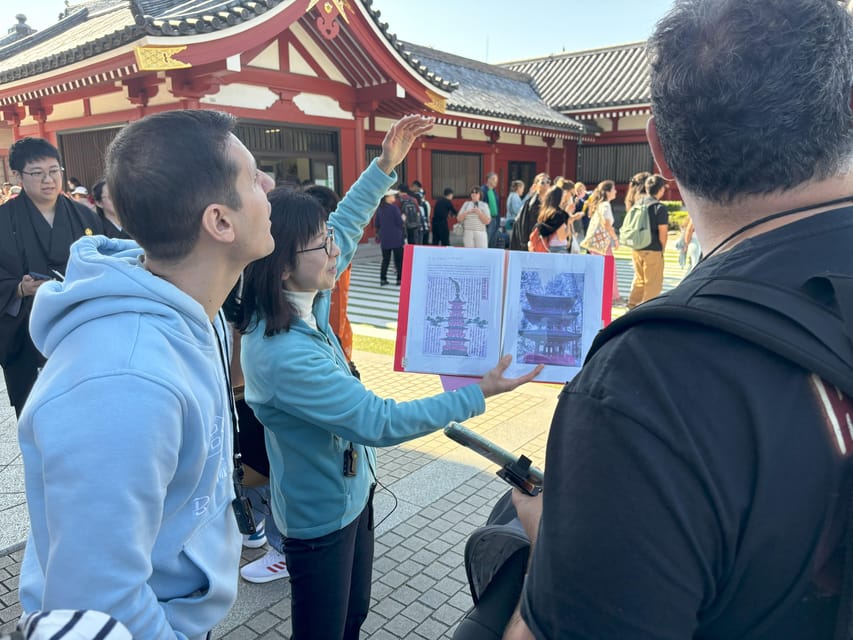
The tour is conducted in English by a certified live guide, with English audio support. The guide matters a great deal because the tour’s value comes from explanation rather than admission to a special site.
Choco has been especially effective with mixed-age groups, keeping adults interested while giving children something concrete to follow. Sachi has been praised for explaining Asakusa’s history and spiritual customs in a friendly way. Amy’s use of printed images is helpful for people who understand ideas better when they can see them.
Yoko, Yasu, Kay, and Sachiko have also been singled out for cheerful, clear, and engaging guidance. The individual style may vary by date, but the repeated strength is the same: the guides explain the area rather than simply leading you from one photo stop to the next.
Headsets are provided for groups of three or more. They are useful near busy streets and crowded gates. Still, sound quality may not be perfect for everyone. If you hear an echo, tell the guide early so the equipment can be adjusted.
Is $58 a fair price?
At $58 per person, this is not the cheapest way to see Asakusa. You can walk through Kaminarimon, Nakamise, Sensō-ji, and Asakusa Shrine without paying for entry. The price is for the guided context, organized route, English explanations, headset support for larger groups, and traditional snack tastings.
I think the value is strongest at the start of a Japan trip. If you are confused by the relationship between shoguns, foreign trade, Buddhism, Shinto, and Japanese art, two hours of clear structure can save you from piecing everything together one sign at a time.
The price is less compelling if you already know Asakusa well or prefer wandering at your own speed. The tour covers a small area, and one person described it as a general overview. That is fair. It gives you a framework, not an exhaustive study of Tokyo’s past.
The free cancellation period is up to 24 hours before the tour, and you can reserve now and pay later. The tour may be cancelled if the minimum number of participants is not met, with notice sent at least 24 hours ahead and a full refund provided.
Who should book this two-hour walk?
I would choose this tour if you want history tied to actual streets and buildings. It suits first-time visitors who want more than photographs, families with older children, and anyone who wants a basic guide to Japanese religious etiquette.
It is also a good choice if you enjoy connections between cultures. The Netherlands and Japan, Japanese woodblock prints and European Impressionism, Japanese and Western dragons, and medieval Japan and Europe all appear in the story.
You should think twice if you have limited mobility. The activity includes a moderate amount of walking and is not considered suitable for people with mobility impairments. Anyone with mobility concerns should contact the provider before booking, since the staff will try to help.
Plan for rain or shine conditions. Wear comfortable shoes, bring water, and dress for the forecast. There is no hotel pickup or drop-off, so you need to reach the Asakusa meeting point yourself.
Should you book the Asakusa history walk?
Book it if you want Asakusa to make sense, not just look attractive. The strongest parts are the river opening, the clear Buddhism and Shinto comparison, the ukiyo-e story, and the final explanation of the temple and shrine sharing one religious setting.
Skip it if your priority is shopping time, quiet temple visits, or a slow photography walk. At two hours, the tour moves with purpose.
For $58, I see it as a useful orientation, especially early in a Japan visit. You leave with a better grasp of why Asakusa matters and with enough practical guidance to revisit the area on your own. The overall rating of 4.6 from 77 ratings fits the experience: a well-liked, compact history walk with strong guides and a clear educational aim.
FAQ
Where does the Asakusa history walk meet?
The meeting point is in front of the Burger King next to Exit 4 of Asakusa subway station, G19, on the Ginza Line. Step outside at Exit 4.
How long does the tour last?
The walking tour lasts two hours. The route includes the Tokyo Cruise Asakusa Pier, Asakusa Culture Tourist Information Center, Kaminarimon, Nakamise Shopping Street, Hōzōmon Gate, Sensō-ji Temple, and Asakusa Shrine.
Is the tour offered in English?
Yes. The tour has a live English-speaking guide and an English audio guide. Headsets are included for groups of three or more.
What is included in the price?
The price includes a certified guide, the walking tour, headsets for groups of three or more, and traditional snack tastings. Hotel pickup and drop-off are not included.
Can children join the tour?
Yes. Children younger than six may join free of charge. The tour is recommended mainly for adults because of its historical focus, but families are welcome.
What happens if the tour is cancelled?
The tour will not operate unless the minimum number of participants is reached. If it is cancelled, the provider will notify you at least 24 hours in advance and issue a full refund. You can also cancel up to 24 hours before the activity for a full refund.
More Walking Tours in Tokyo
- Tokyo Tsukiji Fish Market Food and Culture Walking Tour
★ 5.0 · 3,184 reviews - Tokyo: Shinjuku Local Bar and Izakaya Guided Walking Tour
★ 4.9 · 1,794 reviews - Tokyo: Tsukiji Fish Market Food and Walking tour
★ 5.0 · 1,724 reviews - Tokyo: Asakusa Walking Tour with Sensoji Temple Visit
★ 4.8 · 1,583 reviews
New on our Tokyo list
- Tokyo Spectacular View Day-Cruise in 90 Minutes★ 5.0 · 25 reviews
- From Tokyo: Mount Fuji & Hakone Full Day Private Tour★ 4.9 · 25 reviews
- Real Tokyo Runner Club : Daikoku Car Meet Night Tour with JDM Car★ 5.0 · 25 reviews
- 2.5 Hour-Guided Cycle Tour in the Central Tokyo★ 5.0 · 25 reviews
- Ramen Making from Scratch +Akihabara Tour –Cooking Class★ 5.0 · 25 reviews
- [Self-Drive] Tokyo & Daikoku Custom Car Driving Tour★ 4.9 · 25 reviews
- Tokyo: 2-Hour Night Bike Tour of the City’s Hidden Gems★ 4.9 · 25 reviews
- Samurai themed Entertainment show in Shinjuku★ 4.5 · 25 reviews
Historical Tours, compared.

Imperial Palace and Shogun Historical Walking Tour
Read our review →
Yanaka Walking Tour: Historic and Traditional District of Tokyo
Read our review →
Shinjuku Historical Walking Tour & Secret Backstreets
Read our review →
Mt. Fuji Heritage Tour: Traditional Villages, Lakes & Shrine
Read our review →
The Best of Izakaya in Shinjuku Food & Cultural Tour
Read our review →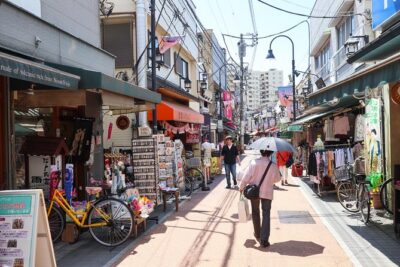
Yanaka Historical Walking Tour in Tokyo’s Old Town
Read our review →Browse the lists this tour appears in