
Reviewed · JAPANESE COOKING CLASSES
Cook Everyday Japanese Home Meals with Your Tokyo Mom
The best part of this Tokyo cooking class is the setting: you step into a real Japanese home, not a polished demonstration kitchen. You remove your shoes, use ordinary household tools, cook with seasonal ingredients, and sit down to eat what you made. I like the hands-on work with dashi, the seaweed and dried-fish stock that forms the base of many Japanese dishes, and the personal choice of meat, fish, vegetables, or a requested favorite dish.
I also like the small home-life lessons, from arranging dishes to understanding how a Japanese meal comes together. The possible drawback is location: the class meets in Koganei, well away from central Tokyo, and transportation is not included. If your schedule is tight, the trip to a quiet suburb may take more effort than a class near the main sightseeing districts.
In This Review
- Key points to know before booking
- Why cooking in a Tokyo home changes the experience
- Starting with dashi, the quiet foundation of Japanese cooking
- Choosing between Saikyo-yaki, teriyaki, and a personal request
- Shaping onigiri by hand
- Making tamagoyaki and the seasonal vegetable dish
- Miso soup, rice, and sitting down to eat
- The hosts and the small-group format
- Getting to Koganei from central Tokyo
- Is $99 a fair price?
- Who should book this home-cooking class?
- Final booking advice
- FAQ
- Where does the cooking class meet?
- How long does the activity last?
- What dishes will I prepare?
- Can I choose the main dish?
- Is an English-speaking instructor available?
- Are ingredients and cooking equipment included?
- How many people can join, and what is the cancellation policy?
Key points to know before booking
- A real home setting: Cook in a retro house or lived-in family home rather than a tourist venue.
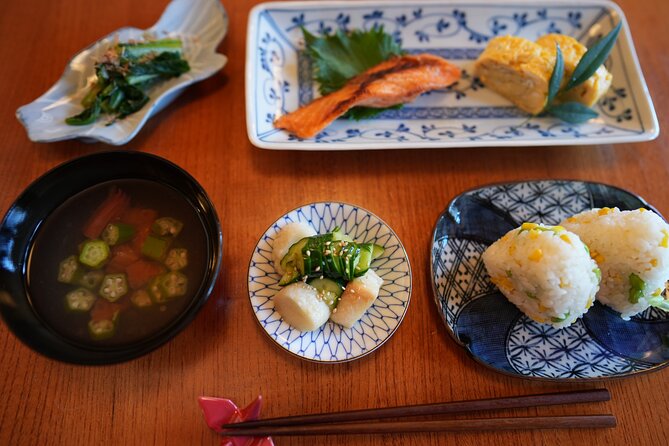
- A complete Japanese meal: Prepare dashi, onigiri, tamagoyaki, a seasonal vegetable dish, miso soup, and one main course.
- Your choice of main dish: Pick Saikyo-yaki, teriyaki, or request another Japanese favorite, with meat, fish, or vegetables.
- Small-group feel: The class accepts a maximum of six people, allowing room for questions and practical instruction.
- English support: An English-speaking instructor is available, with Aki and Ali associated with classes from Tokyo Mom’s Kitchen.
- Flexible cancellation: Cancel at least 24 hours before the start time for a full refund.
Why cooking in a Tokyo home changes the experience
A home kitchen tells you things a restaurant cannot. You see the tools people use every day, the way ingredients are handled, and how several modest dishes become a balanced meal. The lesson begins at the entrance, where you remove your shoes, and continues at the table, where presentation and placement matter as much as taste.
This is a useful choice if you want contact with ordinary Japanese life. The house may be a charming retro property or a cozy family home, so the setting is personal rather than uniform. That also means you should expect a lived-in environment, not a purpose-built cooking school with restaurant-style equipment.
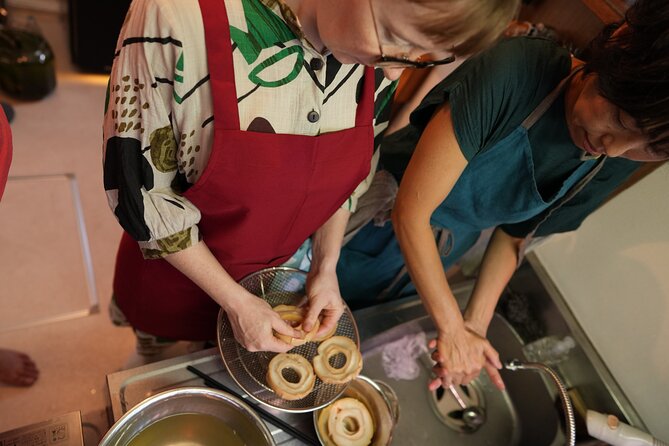
The class lasts about two and a half hours. That gives you enough time to cook several dishes without racing through every step. You will not simply watch a host prepare lunch while you take notes. You handle ingredients, use the utensils, shape rice balls, and help bring the meal together.
The group limit of six matters here. Home kitchens have limited counter space, and a small group gives you a better chance to see the technique and ask for help. The format should suit beginners, including people who rarely cook. Basic confidence is not required, since the instruction is designed to guide you through each dish.
More cooking classes in Tokyo:
- Ramen & Gyoza Cooking Class in Tokyo with Local Supermarket Visit
★ 5.0 · 823 reviews - Tokyo: Easy Ramen Cooking Experience in Kabukicho, Shinjuku
★ 4.6 · 321 reviews - Ramen and Sushi Cooking Class with Sake Pairing Set in Tokyo
★ 5.0 · 291 reviews
Starting with dashi, the quiet foundation of Japanese cooking
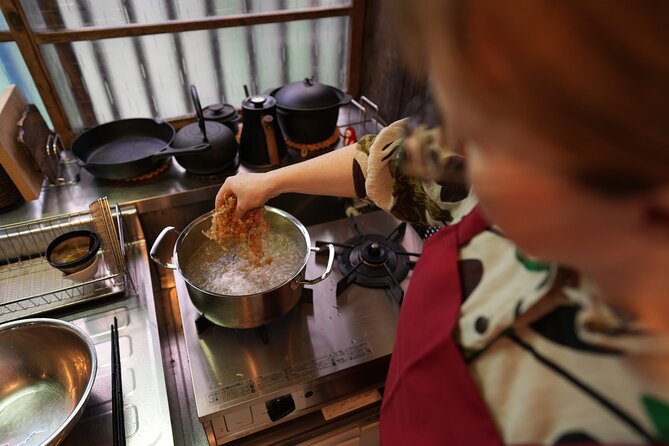
The first important lesson is dashi. You make this soup stock from seaweed and dried fish, and it becomes the base for miso soup and a useful window into Japanese cooking.
Dashi is simple in appearance, but it teaches an important idea: Japanese home food often depends on careful treatment of a few ingredients rather than a long list of sauces. You learn how umami develops and why the stock matters to the final meal.
This is also where the class moves beyond a recipe handout. You gain a bit of cultural context about food, health, and daily routines. The cooking is practical, but the host also explains why these dishes belong together and how they fit into home life.
If you do not eat fish, ask about the dashi and main-course options before booking. The supplied details identify dried fish as part of the stock and allow a choice of meat, fish, or vegetables for the main dish, but they do not specify alternative stock arrangements.
Choosing between Saikyo-yaki, teriyaki, and a personal request
Your main dish gives the class some welcome flexibility. You can choose Saikyo-yaki, teriyaki, or ask for a Japanese dish you especially want to learn. For either cooking style, you can use meat, fish, or vegetables.
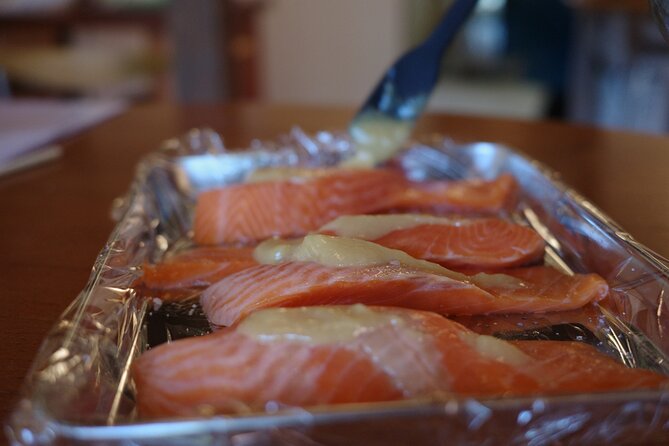
Saikyo-yaki uses a sweet white miso marinade before grilling. The result is known for a delicate, savory sweetness, and the method gives you a useful introduction to miso beyond soup. It is a good pick if you want to learn a preparation that feels distinctly Japanese but remains straightforward.
Teriyaki offers a more familiar route. Its sweet and savory soy-based glaze is easy to recognize, but making it at home shows you how the sauce is balanced and applied. Choose it if you want a practical dish you may be able to repeat after returning home.
The request option is valuable, but keep it realistic. The host will do their best to prepare your favorite Japanese dish, yet no specific request is guaranteed. If you have a particular food in mind, share it in advance rather than waiting until the class begins.
The choice of meat, fish, or vegetables helps the class work for different tastes. Still, the information does not confirm detailed allergy, vegetarian, vegan, or gluten-free arrangements. If those issues affect your booking, contact Tokyo Mom’s Kitchen before paying and explain exactly what you need.
Shaping onigiri by hand
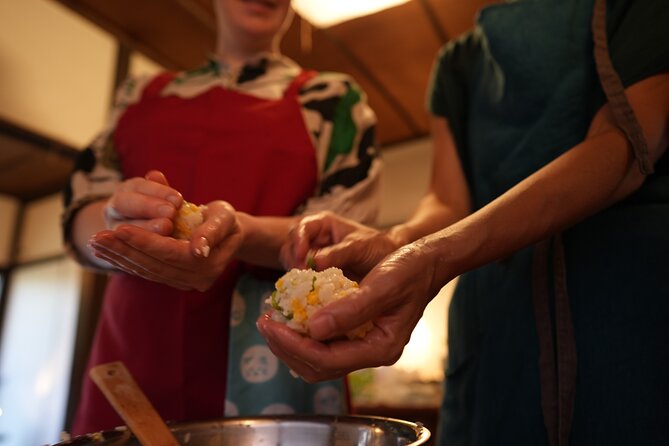
Onigiri brings a playful, tactile part to the meal. You shape cooked rice into Japanese rice balls by hand and wrap them with seaweed. The technique looks easy, but the right pressure and shape take a little practice.
This is one of the most useful dishes to learn because it belongs to everyday Japanese food culture rather than special-occasion dining. Onigiri can be simple, portable, and filling. Making it yourself also gives you a better feel for rice texture and portion size than simply eating one from a shop.
Do not expect every rice ball to come out perfectly shaped. That is part of the fun, and the class is meant to teach beginners. The supplied feedback specifically points to people with little cooking experience producing good food and enjoying the process.
A few more Tokyo bookings worth comparing
- Mt Fuji and Hakone 1-Day Bus Tour Return by Bullet Train
★ 5.0 · 26,383 reviews - 1-Day Tokyo Bus Tour
★ 5.0 · 14,250 reviews - Tokyo: TOKYO SKYTREE® Admission ticket
★ 4.5 · 11,192 reviews - Tokyo: teamLab Planets TOKYO Digital Art Museum Entry Ticket
★ 4.6 · 9,779 reviews
Making tamagoyaki and the seasonal vegetable dish
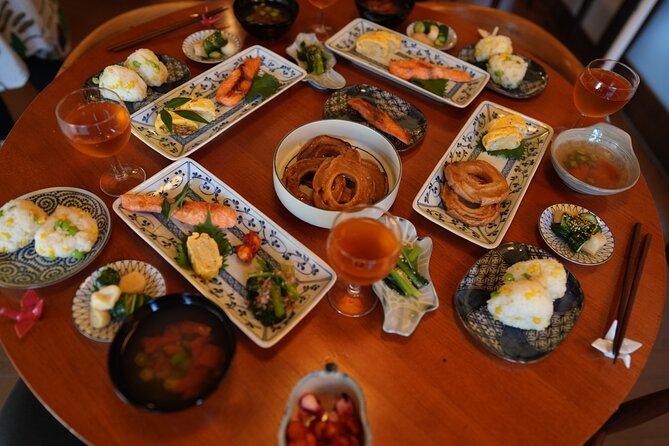
Tamagoyaki is a fluffy Japanese omelet made by cooking and rolling layers of egg. It rewards patience and a light touch. You will likely find this step more technical than it first appears, but instruction and practice make it manageable.
The seasonal vegetable dish changes with the time of year. That keeps the menu connected to Japanese home cooking rather than locking every class into the same set of ingredients. It also gives you a chance to see how a simple vegetable preparation can balance the rice, soup, egg, and main course.
Seasonality has practical value. You are not just learning a fixed restaurant menu. You are seeing how home cooks use what is available and adjust meals through the year. The exact vegetable dish is not specified, so the final menu may vary.
Miso soup, rice, and sitting down to eat
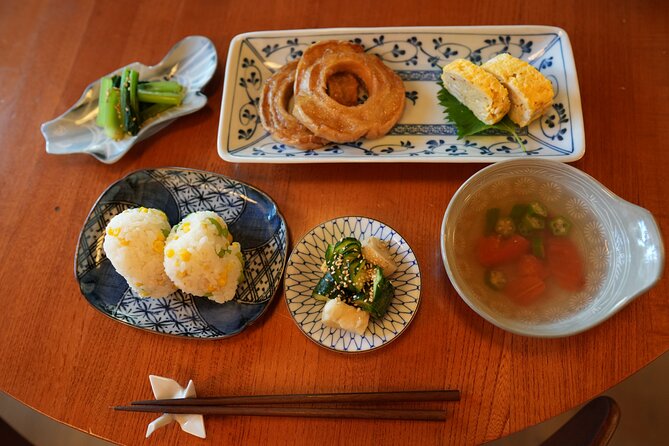
Miso soup returns you to the dashi made at the start. You see how the stock becomes a finished soup and how a few elements can create a satisfying part of the meal.
The completed menu includes the main dish, onigiri, tamagoyaki, a seasonal vegetable dish, and miso soup. You then eat the food together at home. This shared meal is not an afterthought. It lets you notice how Japanese dishes are served as a group, with attention to arrangement, balance, and portion.
The class also includes recipe and instruction materials. That is important for anyone who wants to repeat the meal later. Recipes are much more useful when you have already handled the ingredients and watched the steps, though the supplied information does not specify the format or language of the materials.
Alcohol is not included. You may want to plan your expectations around a food-focused meal rather than a dinner with drinks.
The hosts and the small-group format
An English-speaking instructor is available, which makes the class workable for international visitors who want more than a visual demonstration. The cooking feedback connected with Tokyo Mom’s Kitchen highlights Aki’s cheerful, careful teaching style, and Ali has also led a related cooking class.
You should confirm the host for your specific date if meeting a particular instructor matters to you. The experience information does not guarantee that Aki or Ali will personally lead every session.
A maximum of six people is a sensible limit for a home kitchen. You get a more direct lesson than in a large commercial class, and the host can correct small mistakes before they affect the food. It also makes the meal feel closer to a shared visit than a stage show.
The trade-off is that a small home does not offer the same spacious work area as a professional school. If you prefer polished facilities, fixed stations, and a highly structured production line, this may feel informal. If you value contact and conversation, the informal setting is the point.
Getting to Koganei from central Tokyo
The meeting point is 4-chōme-15-17 Nakachō, Koganei, Tokyo 184-0012. The area is near public transportation, but private transportation, parking fees, and other transport costs are not included.
Koganei is in Tokyo Prefecture but not in the central sightseeing core. Allow time to reach the address and return afterward. A class beginning here can work well on a day when you are already exploring western Tokyo, while it may be awkward between fixed-ticket attractions in Asakusa, Shibuya, or eastern Tokyo.
The activity ends at the same meeting point. That makes planning simpler, but you still need to arrange your own journey in both directions. Because this is a residential setting, follow the meeting instructions closely and arrive prepared to remove your shoes at the entrance.
Is $99 a fair price?
At $99 per person, this is not the cheapest way to eat Japanese food. You can buy an inexpensive meal in Tokyo for far less. The value comes from the teaching, ingredients, equipment, meal, recipes, and access to a private home setting.
The price makes more sense if you would otherwise book a formal cooking class, pay for a restaurant meal, and still leave without knowing how the dishes were made. Here, the meal is part of a two-and-a-half-hour lesson. You also get cultural details that are hard to pick up from a menu.
The value is strongest for people who enjoy participation. If you only want to taste Japanese food, spend the money on a good restaurant. If you want to understand dashi, practice tamagoyaki, shape onigiri, and learn a main dish you can make again, the fee is easier to justify.
A mobile ticket is provided, and all ingredients, cooking utensils, an apron, and hand towels are included. You do not need to assemble cooking equipment or shop before arriving.
Who should book this home-cooking class?
I would recommend it to first-time visitors who want a personal view of Japan, home cooks looking for repeatable dishes, and families or friends who enjoy learning together. Beginners are welcome, and the small group should make it easier to keep up.
It is also a good fit for anyone tired of sightseeing at a fast pace. The quiet suburb and home setting offer a change from major attractions, with food as the reason to slow down.
You may want to skip it if your Tokyo schedule is packed, if you dislike entering private homes, or if your food restrictions require arrangements that have not been confirmed. The suburban meeting point is the main practical concern, not the cooking itself.
You can cancel for a full refund up to 24 hours before the start time. Cancellations or changes made less than 24 hours ahead are not accepted for a refund, and confirmation may take up to 48 hours for bookings made within two days of the activity.
Final booking advice
Book this class if you want to cook, not just eat. The strongest reasons are the real home setting, the small group, the dashi lesson, and the chance to choose your main ingredient and cooking style.
Before booking, check your route to Koganei, ask about any dietary needs, and confirm which instructor is scheduled if that matters to you. With those details settled, this is a thoughtful way to spend half a day learning the everyday food culture that a standard restaurant visit cannot show.
FAQ
Where does the cooking class meet?
It meets at 4-chōme-15-17 Nakachō, Koganei, Tokyo 184-0012, Japan.
How long does the activity last?
The cooking experience lasts approximately 2 hours and 30 minutes.
What dishes will I prepare?
You will prepare dashi, onigiri, tamagoyaki, a seasonal vegetable dish, miso soup, and one main dish.
Can I choose the main dish?
Yes. You can choose Saikyo-yaki, teriyaki, or request a favorite Japanese dish. For the listed cooking styles, you can choose meat, fish, or vegetables.
Is an English-speaking instructor available?
Yes. An English-speaking instructor is available. Aki and Ali are associated with classes from Tokyo Mom’s Kitchen, but a specific instructor is not guaranteed in the supplied details.
Are ingredients and cooking equipment included?
Yes. Ingredients, cooking utensils, recipe and instruction materials, an apron, and hand towels are included.
How many people can join, and what is the cancellation policy?
The class accepts a maximum of six people. You can cancel up to 24 hours before the start time for a full refund. Changes or cancellations made less than 24 hours before the start are not accepted for a refund.
New on our Tokyo list
- Sumi-e Experience in a relaxing green tea shop in Tokyo★ 5.0 · 3 reviews
- Tokyo : Kamikaze Street Drift Ride★ 5.0 · 3 reviews
- Private Zen Meditation in English in Shinjuku, Tokyo★ 5.0 · 3 reviews
- Onsen Spa in Tokyo and Asakusa Bar Hopping with Local Guide★ 5.0 · 3 reviews
- Easy for everyone! Now you can play handmade mini shamisen and show off to everyone! Musical instruments, sweets and live music★ 5.0 · 3 reviews
- Tokyo: Private Tsukiji Street Food & Sake with Local Guide★ 5.0 · 3 reviews
- Mt Fuji Exploration Tour with Free Japanese Kusa Mochi from Tokyo★ 4.5 · 3 reviews
- Tokyo Tsukiji Fish Market Walking and Exploring Hidden Gems Tour★ 5.0 · 3 reviews
Japanese Cooking Classes, compared.
Ramen & Gyoza Cooking Class in Tokyo with Local Supermarket Visit
Read our review →
Easy Ramen Cooking Experience in Kabukicho, Shinjuku
Read our review →
Ramen and Sushi Cooking Class with Sake Pairing Set in Tokyo
Read our review →
Tokyo Washoku 4-hour Cooking Class: From Market to Table
Read our review →
TokyoSumoShow, ChickenHotPot, and Mochi-Pounding by Pro Wrestlers
Read our review →
Professional Ramen & Gyoza with Ramen Chef in a restaurant!
Read our review →
Small-Group Wagyu Beef and 7 Japanese Dishes Tokyo Cooking Class
Read our review →Browse the lists this tour appears in