
Reviewed · TOKYO FOOD TOURS
Small-Group Wagyu Beef and 7 Japanese Dishes Tokyo Cooking Class
The best part of this Tokyo cooking class is its scope: in about three hours, you work through dashi, Japanese cuisine’s basic stock, several home-style dishes, and a Wagyu beef main course before sitting down to eat. It is not just a recipe demonstration. You chop, mix, season, present, and receive help along the way.
I like the maximum group size of eight, which keeps you at the counter instead of parked in the back watching someone else cook. I also like the practical focus: you learn staple seasonings, careful knife cuts, plating, and recipes you can try at home. The main drawback is simple but real: the building can be difficult to locate, so allow extra time for the 9:30 a.m. meeting.
In This Review
- Key points to know before booking
- What this Tokyo cooking class really offers
- Finding Cooking Sun Tokyo in Shinanomachi
- Starting with dashi, the foundation of the meal
- Seven dishes, careful cuts, and useful techniques
- The Wagyu beef main course
- Sitting down for the meal you prepared
- What you take home besides recipes
- Group size, pace, and the level of hands-on work
- Who should book this experience
- Timing, price, and practical details
- My final call on Cooking Sun Tokyo
- FAQ
- How long does the Tokyo cooking class last?
- What time does the class start?
- Where does the cooking class meet?
- How many people can join the class?
- Is the instruction in English?
- Are ingredients and cooking supplies included?
- Is a vegetarian option available?
- Is hotel pickup included?
Key points to know before booking
- Seven to eight dishes in three hours: The class moves from dashi and appetizers through a Wagyu beef main dish and dessert.
- Small, active group: With no more than eight people, you should have regular chances to cook and ask questions.
- English-speaking local instructors: Aya, Hidemi, Kaori, Megumi, and Yoko are among the instructors praised for patient, clear teaching.
- A full meal is included: You eat what you prepare, with sake and green tea served alongside the food.
- Useful for home cooks: Recipes, ingredient guidance, cutting methods, and seasoning tips go home with you.
- Plan for navigation: Cooking Sun Tokyo is near public transportation, but the entrance can be tricky to spot in the residential setting.
What this Tokyo cooking class really offers
At $72.96 per person, this is a reasonably priced way to spend a morning in Tokyo. You are paying for about three hours of instruction, all ingredients, use of cooking supplies, an apron and towel, recipes, and a substantial meal. The value improves if you want more than a single dish or a quick tourist demonstration.
The class is built around kaiseki ryouri, the Japanese tradition of carefully prepared, well-presented courses. You should not expect a formal restaurant kitchen or an elaborate luxury tasting menu. Instead, the class uses the idea of a multi-course meal to teach a range of Japanese methods, flavors, textures, and presentation styles.
That distinction matters. You may leave with less of a polished chef demonstration and more of a working understanding of how Japanese home cooking comes together. This is especially useful if you want to repeat the dishes after returning home.
The experience receives a five-star rating from 190 reviews, with 99 percent recommending it. That strong record fits the class’s clear strengths: small groups, friendly instruction, a generous amount of food, and an approachable setting for different cooking levels.
More cooking classes in Tokyo:
- Ramen & Gyoza Cooking Class in Tokyo with Local Supermarket Visit
★ 5.0 · 823 reviews - Tokyo: Easy Ramen Cooking Experience in Kabukicho, Shinjuku
★ 4.6 · 321 reviews - Ramen and Sushi Cooking Class with Sake Pairing Set in Tokyo
★ 5.0 · 291 reviews
Finding Cooking Sun Tokyo in Shinanomachi
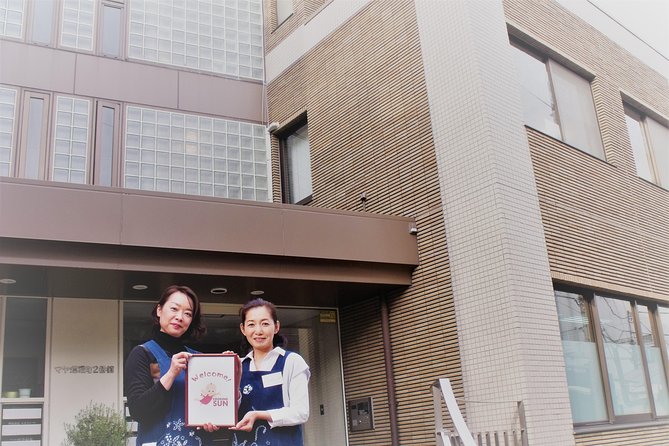
The meeting point is Cooking Sun Tokyo at 18-39 Shinanomachi, Shinjuku City, Tokyo 160-0016. The class begins at 9:30 a.m. and ends back at the same location, with no hotel pickup or drop-off.
The location is near public transportation, but several people found the building hard to locate. This is the one logistical issue I would take seriously. A quiet residential area can feel very different from the large station exits and commercial streets that most visitors associate with central Tokyo.
Use the map carefully and give yourself extra time. One useful local detail is that a large park is nearby, and the walk to the class can be pleasant, with trees and a quieter feel. Still, do not cut it close. Arriving a few minutes early is better than trying to find an unmarked entrance while the class is starting.
The class is mobile-ticket friendly, and confirmation is provided when you book. You should still have the address and meeting details ready on your phone before leaving your hotel.
Starting with dashi, the foundation of the meal
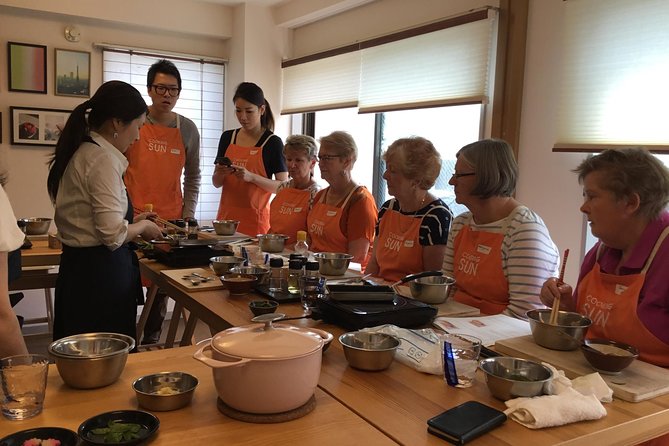
The class begins with dashi, the basic stock used throughout Japanese cooking. This is a smart starting point because dashi helps explain why so many Japanese dishes taste layered without relying on heavy sauces or large amounts of fat.
Your instructor introduces typical Japanese seasonings as the stock comes together. These may appear again in soups, dressings, vegetables, and other dishes during the session. The point is not just to memorize a recipe. You begin to see how a small set of ingredients can produce very different results depending on quantity, timing, and preparation.
This opening also gives the class a useful cultural frame. Japanese cooks often begin with dashi, so you are learning a kitchen habit rather than treating the stock as an isolated lesson.
The instruction is in English, and the teachers explain the purpose of each step rather than simply calling out commands. Aya and Hidemi are specifically praised for their clear guidance, while other classes have been led by Kaori, Megumi, and Yoko. The exact instructor may vary, but the teaching style is presented as friendly, patient, and accessible.
Seven dishes, careful cuts, and useful techniques
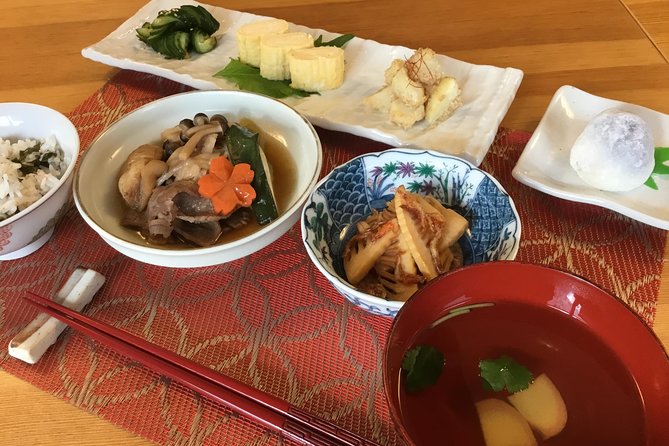
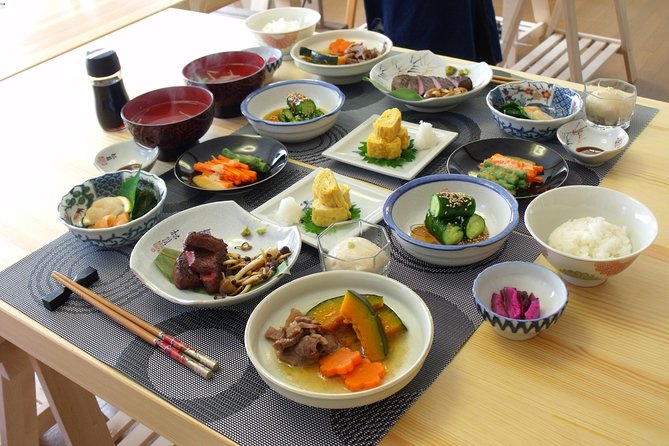
After the dashi, the class moves through seven dishes using Japanese vegetables, traditional seasonings, and a mixture of classic and modern recipes. The description allows for seven or eight dishes, so the exact menu can vary, but the format is consistent: appetizers, side dishes, a main course, and dessert.
You learn more than a list of ingredients. The instruction covers food preparation, presentation, elaborate vegetable cutting, and ways to balance a complete meal. These details are valuable because Japanese cooking often depends on appearance and texture as much as on flavor.
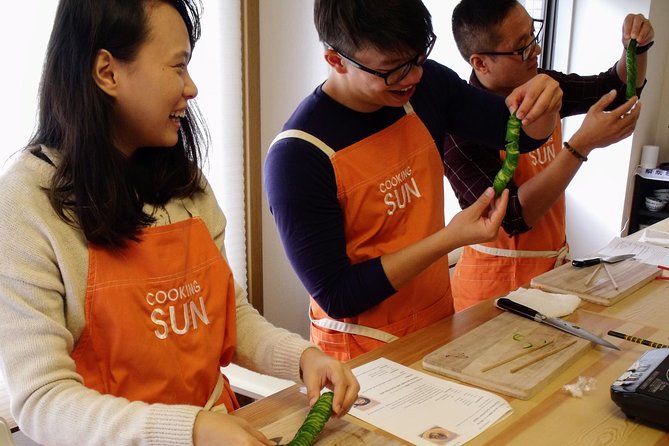
The class is designed for different levels of experience. You do not need advanced cooking skills, and the instructors provide feedback as you work. A beginner can follow the steps, while a more experienced cook may pick up useful details about Japanese seasoning, cutting, or plating.
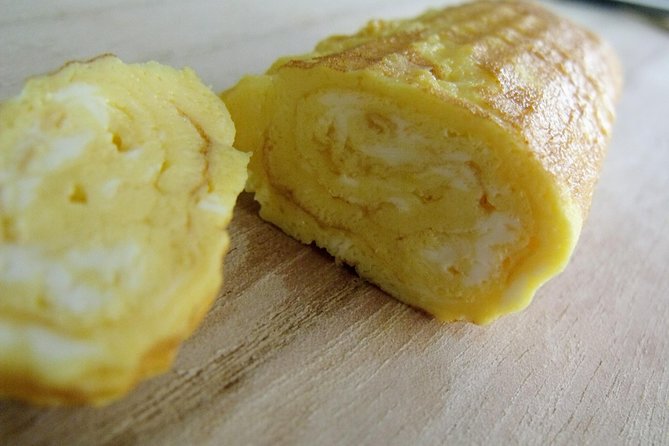
There is one point to understand before booking. The class is hands-on, but not every dish is prepared from start to finish by each participant. One detailed account noted that some cooking involved chopping and mixing while staff handled other foods, including rice, potatoes, and miso soup. An egg was cooked in class, and a lotus root dish used minced chicken prepared in advance.
That does not make the experience a poor choice. It simply means this is a guided group class, not a private chef apprenticeship. You will participate in many steps, but the instructors may prepare parts of the meal to keep the large menu moving within three hours.
More Tokyo food crawls:
- Tokyo: Shinjuku Food Tour (13 Dishes at 4 Local Eateries)
★ 5.0 · 6,603 reviews - Tokyo: Shinjuku Food Tour (15 Dishes and 4 Eateries)
★ 4.9 · 2,033 reviews - Best of Shinjuku: Izakaya Food Tour (4 Stops, 14+ Tastings)
★ 5.0 · 1,863 reviews - Tokyo Night Foodie Tour in Shinjuku – Seasonal Sushi, Wagyu Beef
★ 5.0 · 1,161 reviews
The Wagyu beef main course
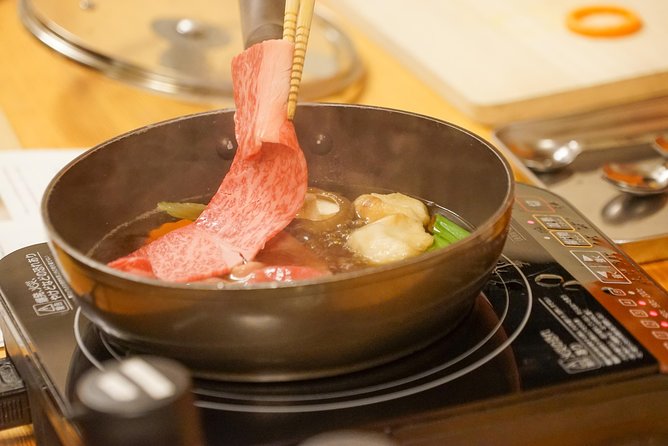
Wagyu is the headline ingredient, and the class uses it as the main dish. The word combines Wa, meaning Japanese, and gyu, meaning beef. Here, it gives you a chance to work with a famous local specialty while learning how it fits into a Japanese meal.
Several dishes are prepared before the main course, so the Wagyu is not presented as the only reason to attend. That is good value. You get to understand how a rich beef dish works alongside vegetables, soup, rice, pickles, or other smaller courses rather than eating it alone.
Sukiyaki is repeatedly singled out as a favorite dish, especially the tender Wagyu version. If the menu includes sukiyaki during your session, expect it to be one of the meal’s highlights. The class also gives you instruction on the surrounding dishes, which helps keep the meal balanced.
The food is described as delicious and plentiful, but you should keep your expectations sensible. This is a cooking lesson with a shared meal, not a Wagyu tasting at a specialist restaurant. The appeal is learning how to prepare and serve the beef as part of a broader Japanese menu.
Sitting down for the meal you prepared
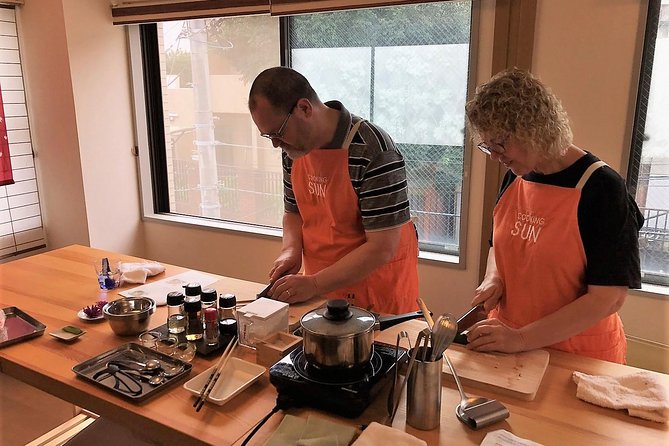
Once the cooking is finished, the group sits down to eat. This is when the class becomes more than a morning lesson. You can see how the different dishes work together, compare your preparation with the instructor’s guidance, and enjoy the results while the techniques are still fresh.
The meal includes sake and green tea. One note from a participant hoped for a small cup of sake with lunch, so serving details may not always feel identical for every group. The included drinks add a pleasant Japanese touch, but the food and instruction are the main reasons to book.
The atmosphere is homey and relaxed rather than formal. That makes it easier to ask questions, admit when a cut is uneven, and talk with the instructors and other people at the table. If you like social activities, this is a natural setting to meet people while doing something useful.
The full meal also helps justify the price. You are not paying for a short lesson and leaving hungry. You spend the final part of the class eating a multi-course lunch made from the ingredients supplied for the session.
What you take home besides recipes
Recipes are included, which is one of the strongest practical features of the class. You can refer back to the dishes after your trip instead of relying on memory or trying to recreate a flavor from a vague description.
The instructors also explain staple ingredients and offer tips for preparing authentic Japanese meals at home. That may include how dashi is used, how seasonings are balanced, how vegetables are cut, and how food is arranged for presentation.
I would consider this class particularly useful if you already cook at home and want a wider set of Japanese dishes. You are likely to gain more from the seasoning explanations and preparation methods than from simply watching a chef make one famous dish.
It also works for complete beginners. The instructors break down the steps, provide feedback, and keep the tone relaxed. Couples, families, and solo participants can all fit into the small-group format, though the experience is best for anyone who enjoys active participation.
Group size, pace, and the level of hands-on work
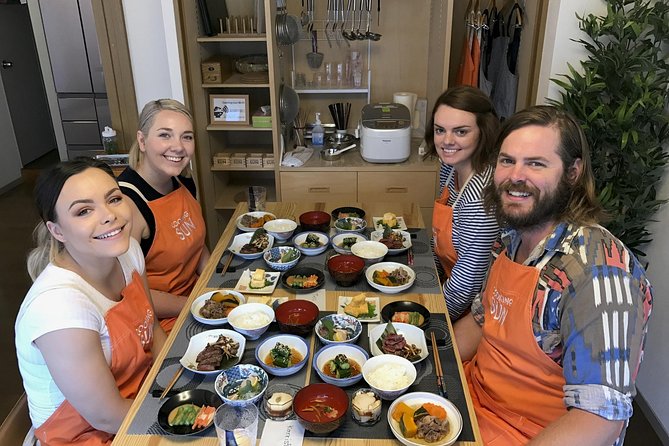
The maximum of eight people is important. A larger group could make a class covering seven or eight dishes feel rushed or passive. With eight or fewer, you should have a better chance to handle ingredients, follow demonstrations closely, and ask about unfamiliar methods.
The pace is brisk because the menu is ambitious. Several people describe making a large number of dishes in a short time, and that is both the attraction and the limitation. You get plenty of variety, but you will not spend twenty minutes perfecting every single technique.
The teaching appears to balance short explanations with practical work. Instructors demonstrate, provide context about ingredients and culture, and then guide you through the next task. Two instructors may help the group, which supports the small class format.
If your priority is intensive knife training, advanced culinary theory, or complete control over every dish, you may find the guided format too limited. If your priority is learning a broad set of approachable Japanese recipes while eating a good lunch, the pace works in your favor.
Who should book this experience
I would recommend this class to home cooks, food-focused visitors, couples, families, and anyone who wants a break from sightseeing. It is also a good first-day activity because it gives you useful context for the meals you will eat later in Tokyo.
You do not need Japanese cooking experience. The instructors speak English and explain the steps clearly. The class also suits people who want a social activity without committing to a full-day food tour.
Vegetarians can request a vegetarian option, and you should advise the provider of any dietary requirements or allergies when booking. The class has accommodated complex allergies according to one account, but you should not wait until the morning of the experience to raise the issue.
This is less suitable if you want a private class, a very quiet setting, or a single-dish lesson with lots of repetition. It may also disappoint if you expect every one of the seven or eight dishes to be made entirely by you. The group format means some preparation is shared or completed by the staff.
Timing, price, and practical details
The class lasts about three hours and starts at 9:30 a.m. That gives you the rest of the day for Shinjuku, nearby parks, museums, shopping, or another activity. It is a useful choice when you want a substantial morning experience without giving up a full afternoon.
The $72.96 price includes the local instructor, recipes, ingredients, cooking supplies, apron, and towel rental. It does not include transportation to the meeting point or hotel transfers. Since you also eat the completed meal and receive instruction across several dishes, the price compares well with many shorter food activities.
Free cancellation is available if you cancel at least 24 hours before the start time. Cancellations within 24 hours are not refunded, and changes inside that window are not accepted. The cut-off follows Tokyo local time, so check the clock carefully if you are booking from another country.
My final call on Cooking Sun Tokyo
Book this class if you want a friendly, practical introduction to Japanese cooking with a real meal at the end. The small group, English instruction, Wagyu main course, recipes, and broad menu offer more substance than a quick demonstration.
Go in knowing that the menu moves fast and that some dishes may be partly prepared for you. Also plan carefully for the residential meeting point. If those details suit you, this is a strong-value Tokyo activity, especially for anyone who wants to take home cooking skills rather than just food memories.
FAQ
How long does the Tokyo cooking class last?
The class lasts approximately three hours.
What time does the class start?
The class starts at 9:30 a.m.
Where does the cooking class meet?
It meets at Cooking Sun Tokyo, 18-39 Shinanomachi, Shinjuku City, Tokyo 160-0016, Japan.
How many people can join the class?
The class has a maximum of eight people.
Is the instruction in English?
Yes. The instructors are English-speaking local instructors, and English instructions are provided.
Are ingredients and cooking supplies included?
Yes. Ingredients, cooking supplies, recipes, an apron, and a towel rental are included.
Is a vegetarian option available?
Yes. A vegetarian option is available if you request it when booking. You should also advise the provider of any other dietary requirements.
Is hotel pickup included?
No. Hotel pickup and drop-off are not included. The activity begins and ends at the Cooking Sun Tokyo meeting point.
More Workshops in Tokyo
- Sushi Making Tokyo Roll and Authentic Japanese Sushi Class
★ 5.0 · 3,971 reviews - Tokyo: Roll and Authentic Sushi Making Class in Asakusa
★ 4.9 · 1,957 reviews - Tokyo Shinjuku Chopsticks Making Class
★ 5.0 · 1,763 reviews - Tokyo: Sushi Making Class in a Happi Coat near a Famous Spot
★ 4.9 · 1,377 reviews
New on our Tokyo list
- From Tokyo: Mount Fuji & Hakone Full Day Private Tour★ 4.9 · 25 reviews
- Tokyo Spectacular View Day-Cruise in 90 Minutes★ 5.0 · 25 reviews
- Real Tokyo Runner Club : Daikoku Car Meet Night Tour with JDM Car★ 5.0 · 25 reviews
- 2.5 Hour-Guided Cycle Tour in the Central Tokyo★ 5.0 · 25 reviews
- Ramen Making from Scratch +Akihabara Tour –Cooking Class★ 5.0 · 25 reviews
- [Self-Drive] Tokyo & Daikoku Custom Car Driving Tour★ 4.9 · 25 reviews
- Tokyo: 2-Hour Night Bike Tour of the City’s Hidden Gems★ 4.9 · 25 reviews
- Samurai themed Entertainment show in Shinjuku★ 4.5 · 25 reviews
Tokyo Food Tours, compared.
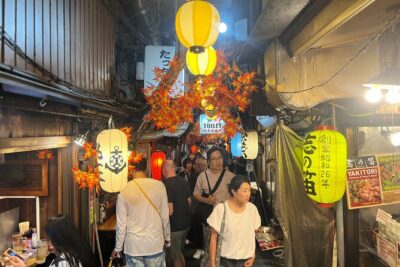
Shinjuku Food Tour (13 Dishes at 4 Local Eateries)
Read our review →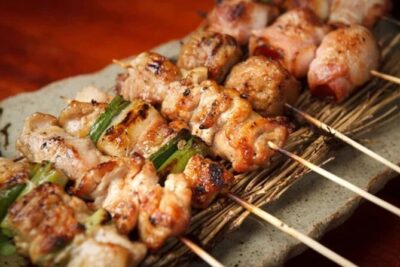
Shinjuku Food Tour (15 Dishes and 4 Eateries)
Read our review →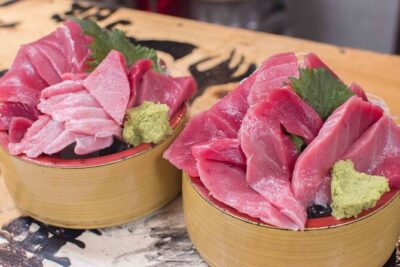
Best of Shinjuku: Izakaya Food Tour (4 Stops, 14+ Tastings)
Read our review →
Tokyo Night Foodie Tour in Shinjuku – Seasonal Sushi, Wagyu Beef
Read our review →
Eat and Drink Like a Local: Tokyo Ueno Food Tour-Taverns&Ramen
Read our review →
Tsukiji Fish Market: Street Food & Culture Walking Tour
Read our review →Shinjuku Food Tour – 15 Dishes, 3 Drinks, 4 Eateries
Read our review →Browse the lists this tour appears in