
Reviewed · JAPANESE COOKING CLASSES
Tokyo Washoku 4-hour Cooking Class: From Market to Table
The best part of this four-hour Tokyo class happens before anyone turns on the stove. You shop at a local supermarket with your guide, learning how Japanese cooks choose vegetables, meat, seasonings, and other everyday ingredients. I like that practical start, and I like that you do much of the cutting and cooking yourself rather than simply watching a demonstration.
The class also gives you recipes to take home, which makes the $79.59 price easier to justify. Guides such as April, Yuri, Masai, Alice, Mihori, Taka, and Suzy have been praised for their patience and warmth. The main caution is timing: arrive early for the 10 a.m. start, since arriving more than five minutes late without contacting the provider can count as a cancellation.
In This Review
- Key details at a glance
- Starting at the supermarket near Iriya Station
- Walking from the market to the cooking studio
- Making makisushi, miso soup, and rolled omelet
- Learning Japanese knife and cooking methods
- Sitting down to eat with sake or beer
- How the $79.59 price compares with the experience
- Vegetarian, vegan, and allergy planning
- Timing, cancellation, and the Kappabashi option
- Who should book this four-hour class
- Should you book the Tokyo Washoku cooking class?
- FAQ
- Where does the cooking class meet?
- What time does the class start?
- What dishes will I prepare?
- Are vegetarian and vegan options available?
- How large is the group?
- Can I cancel for a refund?
Key details at a glance
- A supermarket visit comes first: Learn how to select Japanese ingredients with a guide near Iriya Station.
- Four classic dishes are on the menu: Make makisushi, miso soup, dashimaki tamago, and nasu dengaku from scratch.
- You get real hands-on practice: Cutting, rolling, seasoning, and cooking are part of the lesson.
- The small group keeps things personal: The maximum is seven people, though other participants may join your booking.
- Sake and beer can be part of the meal: Pair drinks with the food after cooking, depending on the session.
- Recipes go home with you: The dishes are designed to be repeated in your own kitchen.
Starting at the supermarket near Iriya Station
Meet at the FamilyMart at 2-chōme-1-10 Shitaya in Taito City at 10 a.m. The location is near public transportation, but Tokyo addresses can still take a little patience, so I would allow extra time. This is not a tour where arriving at the last moment is wise.
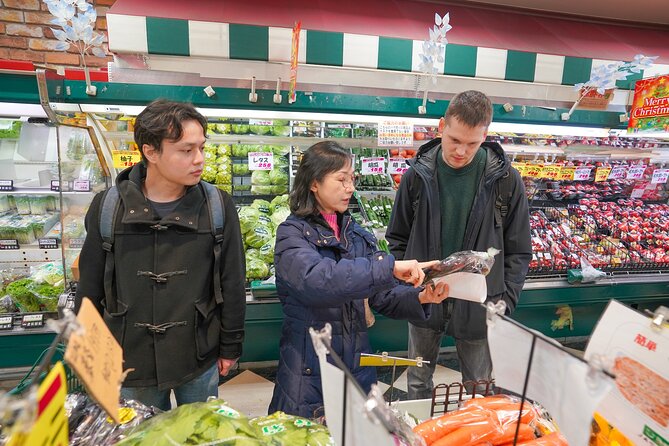
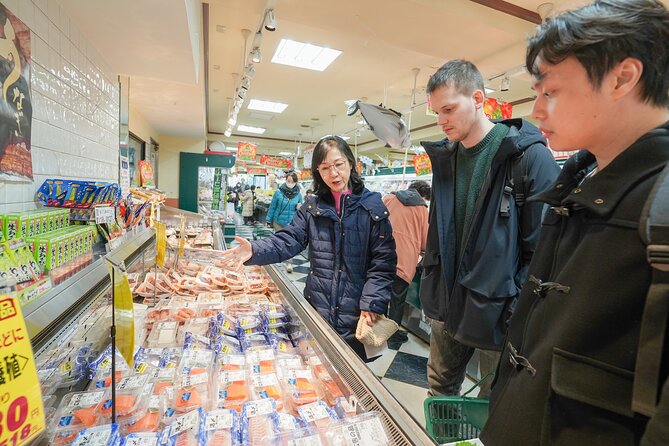
Your guide leads you into a nearby supermarket and explains what you are looking at. This part adds something a standard cooking class often misses. Japanese food can seem simple on the plate, but the shopping choices matter: the type of miso, the cut of an eggplant, the quality of seaweed, and the look of fresh produce all affect the result.
You are not just collecting a shopping list. You learn how everyday Japanese ingredients are sold and how to make sensible choices when labels are unfamiliar. That is useful if you plan to cook Japanese food after returning home, and it gives you a closer look at ordinary life in Tokyo.
Guides have included April, Yuri, Masai, Alice, Mihori, Taka, Suzy, Minnie, and Nigiri. The guide you meet will shape the tone of the day. The strongest descriptions point to patient teaching, clear directions, cheerful conversation, and a willingness to answer questions about food and daily life in Japan.
The supermarket portion also helps you ask better questions later. You can point to an ingredient and ask how it is used, what could replace it, or how it fits into a home meal. For many people, this is more useful than a polished lecture about Japanese cuisine.
More cooking classes in Tokyo:
- Ramen & Gyoza Cooking Class in Tokyo with Local Supermarket Visit
★ 5.0 · 823 reviews - Tokyo: Easy Ramen Cooking Experience in Kabukicho, Shinjuku
★ 4.6 · 321 reviews - Ramen and Sushi Cooking Class with Sake Pairing Set in Tokyo
★ 5.0 · 291 reviews
Walking from the market to the cooking studio
After shopping, you continue to a dedicated cooking studio. The exact walking time is not provided, so you should expect the activity to include a short move through the neighborhood rather than treating the supermarket and studio as one building.
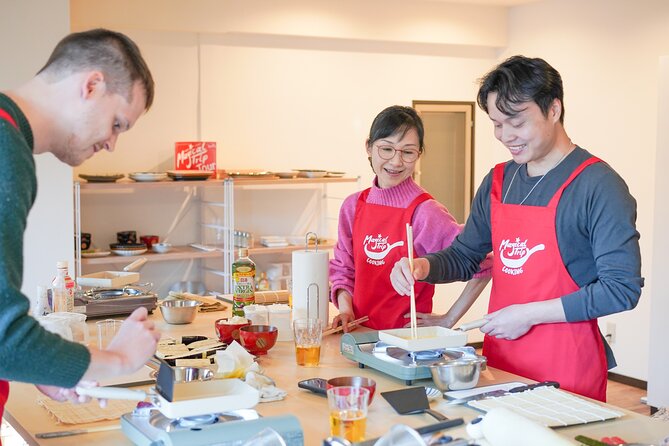
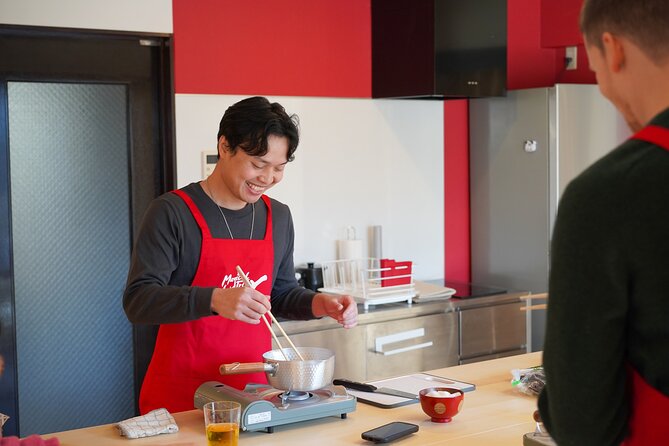
The studio has been described as spacious and well set up. That matters in a hands-on class. You need room to cut, mix, roll, and move around without feeling packed into a narrow demonstration area. A comfortable setting also makes it easier to work at your own speed.
The maximum group size is seven. That is small enough for the guide to watch your technique and answer questions, while still allowing you to meet people from other countries. If you prefer a completely private lesson, check the booking details before paying, since other participants may be included.
The class is taught in a friendly style rather than as a silent technical workshop. You can ask about ingredients, preparation, Tokyo life, or ways to repeat the food at home. Some guides have also shared personal stories and comparisons from time spent abroad, which can make the cooking instructions easier to follow.
Making makisushi, miso soup, and rolled omelet
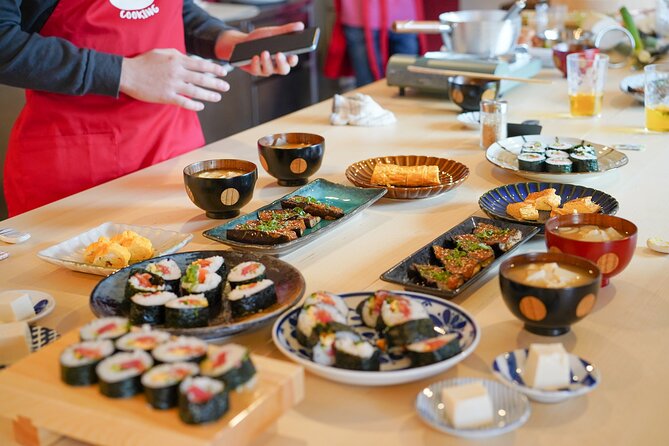
The listed dishes are makisushi, miso soup, dashimaki tamago, and nasu dengaku. Together, they give you a good spread of Japanese cooking skills. You work with rice, soup stock and miso, eggs, vegetables, and grilling or pan-cooking methods.
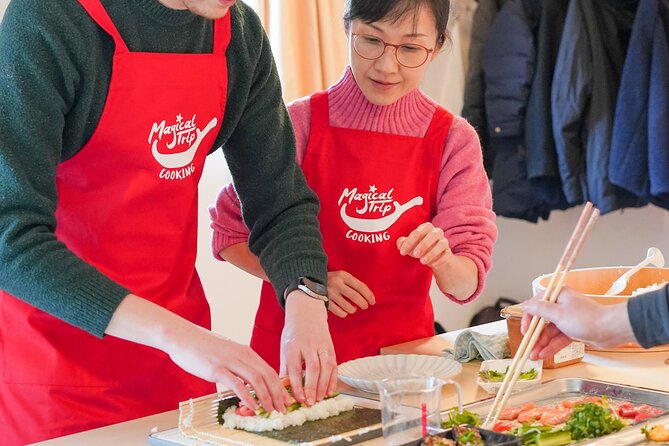
Makisushi is a particularly good class dish because it rewards careful preparation. You learn how to handle the fillings and roll the sushi rather than buying a finished piece from a shop. The skill is practical, visual, and easy to try again at home once you have the recipe.
Miso soup looks modest, but it teaches a basic part of Japanese home cooking. The flavor depends on balance, not a long list of ingredients. One participant described the finished soup as the best they had eaten, and that makes sense as a sign that the lesson covers more than simply stirring miso into hot water.
Dashimaki tamago, or Japanese rolled omelet, requires attention to heat, timing, and the shape of each fold. It is not the same as a flat Western omelet. Your guide demonstrates the method, then helps you practice it. If you cannot eat eggs, the selection is reduced from four dishes to three, so this is an important point to consider before booking.
Nasu dengaku uses grilled eggplant with a savory topping. It offers a different texture from the sushi and omelet, while showing how Japanese cooking can turn a simple vegetable into a satisfying main part of a meal. The class focuses on home-style dishes, so the point is not restaurant showmanship. You leave with methods you can reasonably repeat.
The exact pace depends on your group and guide. You should expect instruction, practice, questions, and shared preparation rather than rushing through a fixed restaurant-style service. That makes the class suitable for beginners, but experienced home cooks can still ask about technique and ingredient choices.
Learning Japanese knife and cooking methods
One of the class highlights is practice with traditional Japanese knife and cooking techniques. The value here is not just learning to copy a particular cut. Your guide can show you how to handle ingredients cleanly and safely, and explain why the preparation affects the finished dish.
The experience is designed to be hands-on. You should expect to chop, prepare, roll, season, and cook rather than stand at the edge of the room. This is a good choice if you learn best by doing, though anyone hoping for a quiet food tasting may find the work more demanding than expected.
The guides are central to the experience. Yuri has been praised for showing each step in detail and providing recipes for later use. Suzy has been described as patient and personable, while Mihori has been noted for clear instruction and light conversation. Minnie focused on explaining each direction, and Alice combined cooking with stories and a cheerful manner.
These details matter because a cooking class can become frustrating if the teacher moves too fast. Here, the available guide descriptions suggest a supportive approach, but your exact instructor will depend on the date. Ask questions as you go. The class is specifically designed for that kind of interaction.
A few more Tokyo bookings worth comparing
- Tokyo Tsukiji Fish Market Food and Culture Walking Tour
★ 5.0 · 3,184 reviews - Tokyo: Tsukiji Fish Market Food and Walking tour
★ 5.0 · 1,724 reviews - Tokyo: Tsukiji Fish Market Guided Walking Tour
★ 4.9 · 1,397 reviews - Tsukiji Fish Market Guided Tour and Sushi Making with Pro Chef
★ 5.0 · 775 reviews
Sitting down to eat with sake or beer
Once the dishes are ready, you sit down and eat together at the studio. This turns the class into a complete meal, not just a lesson followed by a rushed taste. It also gives you time to compare results and ask about the recipes while the steps are still fresh.
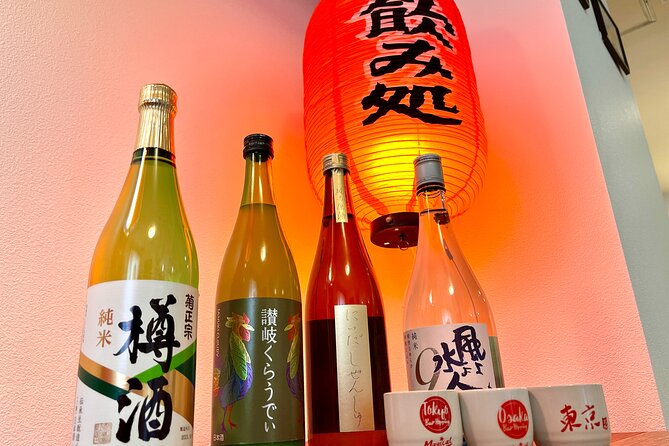
Beer and sake tasting may be included during the cooking and dining portion. For people interested in Japanese drinks, this is a pleasant extra. You can experiment with pairings and see how a dry sake or a beer changes the way the food tastes.
The drinks are not the main reason to book. The core value is the supermarket visit, instruction, meal, and recipes. If you do not drink alcohol, the class may still suit you, but the supplied details do not specify the full nonalcoholic drink arrangement, so ask ahead if that is important to you.
The shared meal also works well for families and mixed-age groups. Two teenagers enjoyed one session, and the activity gave them something concrete to do while learning about Japanese vegetables and meat. Children should still be able to follow the four-hour schedule and participate safely in kitchen work.
How the $79.59 price compares with the experience
At $79.59 per person, this is not the cheapest meal in Tokyo. You could eat sushi, miso soup, and several simple dishes for less, especially at a casual restaurant. But a restaurant meal would not include a guided supermarket visit, knife practice, cooking instruction, drink tasting, or recipes.
The price makes the most sense if you want a skill-based activity. You are paying for four hours of teaching and participation, not only for lunch. A group of up to seven also gives the experience a more personal feel than a large demonstration class.
I consider the recipe handouts an important part of the value. A meal disappears quickly, but a recipe can lead to several more meals at home. The dishes are described as tasty without being overly complicated, which is exactly what you want from a class taken during a trip.
The value is weaker if you already cook these dishes regularly or have no interest in preparing Japanese food again. It is also less suitable if you want a market tour with no kitchen work. This experience asks you to spend much of the morning actively preparing food.
Vegetarian, vegan, and allergy planning
Vegetarian and vegan participants are welcome, and the provider arranges ingredients and the cooking process for those needs. You must send dietary requests or allergy information at least one day before the tour. Same-day requests cannot be accommodated.
There is an important limitation. The provider cannot guarantee an allergy-free setting because the food is prepared in kitchens that do not belong to MagicalTrip. Substitutions may not be possible at every point, although the provider will try to make adjustments elsewhere.
If you have a serious allergy, read this policy carefully before booking and contact the provider in advance. Do not assume that a dish can be changed at the last minute. Egg-free participants also receive three food types instead of four, so the menu becomes smaller.
Tokyo weather can be extreme, with summer highs listed as high as 40°C and winter lows as low as -5°C. Much of the activity takes place indoors, but you still need to dress for the walk between the meeting point, supermarket, and studio. The tour also requires good weather, so poor conditions can lead to a new date or full refund.
Timing, cancellation, and the Kappabashi option
The class lasts about four hours and ends back at the cooking studio, which is also the meeting point. The activity does not include a scheduled visit to Kappabashi Dougu Street, but you may visit the famous kitchenware area on your own afterward.
That makes the location useful for anyone interested in Japanese knives, pans, ceramics, or cooking tools. Treat it as an optional add-on, not part of the paid class. Since the cooking ends at the studio, you can decide afterward if you still have the energy to continue shopping.
Be strict with the start time. The group begins at 10 a.m., and the provider says that more than five minutes late without contact may be treated as a cancellation. You cannot join later, reschedule, or receive a refund after missing the group.
Free date and time changes are available up to 24 hours before the start. You can cancel for a full refund if you do so at least 24 hours ahead. Changes or cancellations inside that window are not accepted, and a no-show is not refundable.
Who should book this four-hour class
I would choose this class if you want food to be the main way you connect with Tokyo. It suits first-time cooks, curious home cooks, couples, families with older children, and anyone who likes asking questions instead of simply following a guide from one sight to the next.
It is especially useful early in a Japan trip. The supermarket teaches you what local ingredients look like, and the meal gives you a first taste of familiar Japanese dishes in a relaxed setting. If you have just arrived in Tokyo, the class can also help you get comfortable with everyday food customs.
The format works for solo participants too, since the group can include people from several countries. You should be ready to share a kitchen and meal, though. The maximum group size is seven, not one-on-one instruction.
I would hesitate if your schedule is tightly packed, since four hours is a serious block of time. I would also hesitate if you need guaranteed allergy controls, dislike alcohol-related activities, or want a fully private class. Contact the provider before booking if any of those points affect your decision.
Should you book the Tokyo Washoku cooking class?
Yes, if you want a practical and sociable introduction to Japanese home cooking. The supermarket visit is the clever part of the design, and the combination of makisushi, miso soup, rolled omelet, and grilled eggplant gives you a useful range of skills for $79.59.
Book with enough time to reach the FamilyMart meeting point, send dietary information at least one day ahead, and leave room in your schedule for the full four hours. If you do that, you get more than lunch: you get a look at how Japanese ingredients are chosen, prepared, and enjoyed at home.
FAQ
Where does the cooking class meet?
Meet at the FamilyMart at 2-chōme-1-10 Shitaya, Taito City, Tokyo 110-0004, Japan. The location is near public transportation.
What time does the class start?
The class starts at 10 a.m. You must arrive on time because arriving more than five minutes late without contacting the provider may be treated as a cancellation.
What dishes will I prepare?
The class includes makisushi, miso soup, dashimaki tamago, and nasu dengaku. The dishes are prepared from scratch with guidance from your local instructor.
Are vegetarian and vegan options available?
Yes. Vegetarian and vegan participants are welcome, but you must provide your dietary request at least one day before the class.
How large is the group?
The maximum group size is seven people. Other participants may join your booking.
Can I cancel for a refund?
You can cancel for a full refund up to 24 hours before the scheduled start time. Cancellations, no-shows, and changes made less than 24 hours before the start are not eligible for a refund or date change.
More Workshops in Tokyo
- Sushi Making Tokyo Roll and Authentic Japanese Sushi Class
★ 5.0 · 3,971 reviews - Tokyo: Roll and Authentic Sushi Making Class in Asakusa
★ 4.9 · 1,957 reviews - Tokyo Shinjuku Chopsticks Making Class
★ 5.0 · 1,763 reviews - Tokyo: Sushi Making Class in a Happi Coat near a Famous Spot
★ 4.9 · 1,377 reviews
More Shopping Tours in Tokyo
- Tokyo: Tsukiji Fish Market Food and Culture Walking Tour
★ 4.7 · 757 reviews - Tsukiji Fish Market: Street Food & Culture Walking Tour
★ 5.0 · 669 reviews - Tsukiji Fish Market Small-Group Food Walking Tour
★ 5.0 · 621 reviews - Tokyo: Tsukiji Fish Market Sushi Making Class with Pro Chef
★ 4.9 · 506 reviews
New on our Tokyo list
- From Tokyo: Mount Fuji & Hakone Full Day Private Tour★ 4.9 · 25 reviews
- Tokyo Spectacular View Day-Cruise in 90 Minutes★ 5.0 · 25 reviews
- Real Tokyo Runner Club : Daikoku Car Meet Night Tour with JDM Car★ 5.0 · 25 reviews
- 2.5 Hour-Guided Cycle Tour in the Central Tokyo★ 5.0 · 25 reviews
- Ramen Making from Scratch +Akihabara Tour –Cooking Class★ 5.0 · 25 reviews
- [Self-Drive] Tokyo & Daikoku Custom Car Driving Tour★ 4.9 · 25 reviews
- Tokyo: 2-Hour Night Bike Tour of the City’s Hidden Gems★ 4.9 · 25 reviews
- Samurai themed Entertainment show in Shinjuku★ 4.5 · 25 reviews
Japanese Cooking Classes, compared.
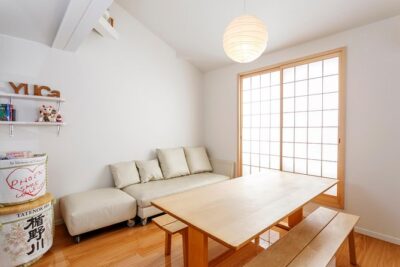
Ramen & Gyoza Cooking Class in Tokyo with Local Supermarket Visit
Read our review →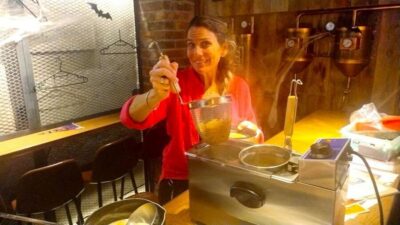
Easy Ramen Cooking Experience in Kabukicho, Shinjuku
Read our review →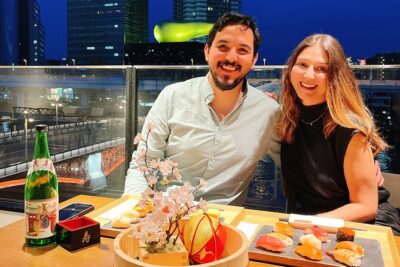
Ramen and Sushi Cooking Class with Sake Pairing Set in Tokyo
Read our review →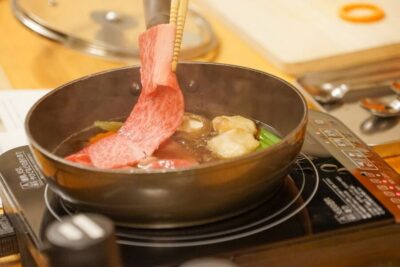
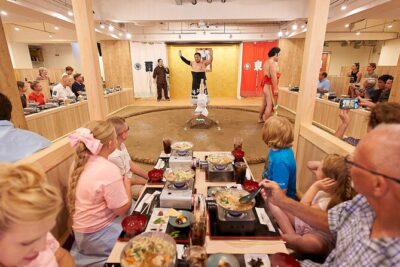
TokyoSumoShow, ChickenHotPot, and Mochi-Pounding by Pro Wrestlers
Read our review →
Professional Ramen & Gyoza with Ramen Chef in a restaurant!
Read our review →
Small-Group Wagyu Beef and 7 Japanese Dishes Tokyo Cooking Class
Read our review →
Private Home Cooking in Yanaka – Local Flavors in a Warm Setting
Read our review →Browse the lists this tour appears in