
Reviewed · WALKING TOURS
Discover Tokyo 3 Hour Customizable Private Walking Tour
Tokyo can feel enormous on day one. This private three-hour walk gives you a useful first look without locking you into a fixed group schedule. You can focus on Shibuya’s back streets, Shinjuku’s parks and drinking lanes, Ueno’s shrines and market streets, or the modern waterfront around Odaiba.
I like the flexible start time and the chance to ask practical questions, such as how to order simple Japanese dishes or use Tokyo’s trains. I also like that the guide can shape the route around your interests rather than reciting the same script to every group.
The main catch is the short duration. The listed areas are spread across Tokyo, so you will need to choose carefully. Private transportation is not included, and the Odaiba route involves a monorail ride, so ask exactly which route fits your three hours and what transport costs you should expect.
In This Review
- Key points to know before booking
- Why a private walk helps in giant Tokyo
- Shibuya: famous crossing, quieter lanes, and local shrines
- Shinjuku: parks, drinking alleys, and broad city views
- Ueno and Akihabara: shrines, market streets, and a change of mood
- Shinbashi, Shiodome, and Odaiba: Tokyo’s modern waterfront
- What the guide adds beyond a map
- Price, group size, and the value of three hours
- Timing, walking effort, and practical limits
- Who should book this Tokyo walk
- Should you book it?
- FAQ
- How long does the tour last?
- Is the tour private?
- Which areas can the tour cover?
- Can I choose the starting time?
- Is transportation included?
- Are food and snacks included?
- What is the cancellation policy?
Key points to know before booking
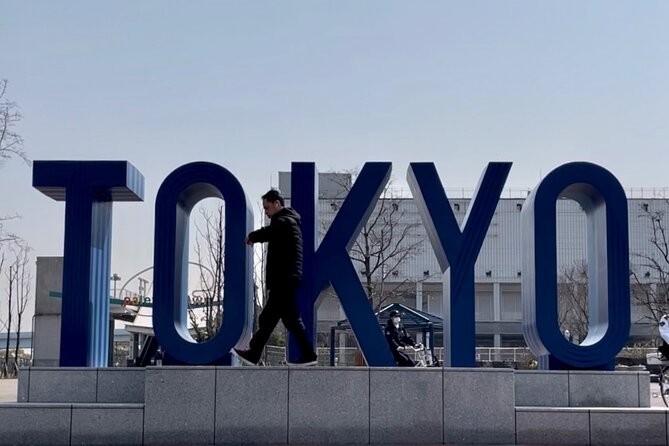
- Four distinct route choices: Pick from Shibuya, Shinjuku, Ueno and Akihabara, or Shinbashi, Shiodome, and Odaiba.
- A truly private outing: Only your group participates, making it easier to ask questions and adjust the pace.
- Useful Tokyo coaching: Your guide can help with basic Japanese menu items, local customs, and public transportation.
- Three hours means smart planning: You cannot explore every listed district in depth, so agree on priorities before starting.
- Guides named in past bookings: Bunga and Ron are the two guide names connected with the supplied comments.
- Good value for a small group: At $91.04 per person, the price makes more sense when shared among several people, especially if a group discount applies.
Why a private walk helps in giant Tokyo
Tokyo is not one compact sightseeing center. It is a collection of large districts, each with its own feel, transport links, and daily rhythm. A private guide can help you decide what is worth your limited time instead of sending you across town for a rushed checklist.
The real value here is orientation. You can ask about local customs, how to order basic food in Japanese, and how to get around by public transport. Those answers may help for the rest of your stay, especially if Tokyo is your first stop in Japan.
You also get a route shaped around your interests. Ask for culture, city views, shopping, side streets, or a mix. The supplied descriptions point to both famous sights and less polished corners, including alleys, drinking streets, shrines, market lanes, and modern waterfront attractions.
The private format matters most if you want to stop and ask questions. You are not waiting for a large group or following someone else’s photo schedule. If you are traveling with family or friends, you can also set a pace that suits everyone.
More walking routes in Tokyo:
- Tokyo Tsukiji Fish Market Food and Culture Walking Tour
★ 5.0 · 3,184 reviews - Tokyo: Imperial Palace and Shogun Historical Walking Tour
★ 5.0 · 2,251 reviews - Tokyo: Shinjuku Local Bar and Izakaya Guided Walking Tour
★ 4.9 · 1,794 reviews
Shibuya: famous crossing, quieter lanes, and local shrines
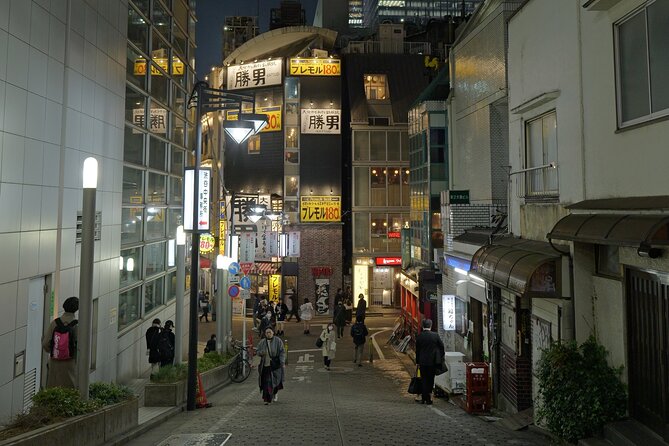
The Shibuya route runs from the west side toward the east side and includes back alleys, shops, and some shrines. That mix is useful because Shibuya is more than its famous crossing and giant screens.
I like the idea of using the district as a short lesson in contrasts. One minute you may be near Tokyo’s most recognizable urban scenes, and the next you may be in a narrow lane or at a religious site. The guide can explain how these different spaces sit beside one another.
At 45 minutes, this is an introduction, not a full Shibuya exploration. You will need to decide if you care more about shops, street scenes, or shrines. Tell the guide before setting out, since trying to give equal time to everything could leave each part feeling rushed.
This option suits a first morning or afternoon in Tokyo when you want a quick sense of the city’s modern side. It also works well if you plan to return to Shibuya later for shopping or nightlife and want some orientation first.
Shinjuku: parks, drinking alleys, and broad city views
Shinjuku changes sharply with the time of day. The route can include city parks, drinking alleys, large promenades, and sweeping views. That makes the start time more important here than it may be in another district.
A daytime walk gives you a chance to focus on open spaces, major streets, and views. An evening route may make more sense if you want to see the drinking alleys and the district after dark. The tour description does not promise a specific observation deck or named park, so ask your guide what is operating and practical at your chosen hour.
I like this choice for people who want Tokyo’s big-city energy without limiting the visit to shopping. Shinjuku gives you a look at several sides of the city, from open public spaces to narrow nightlife lanes.
Still, 45 minutes goes quickly. Shinjuku is large, and the walk does not include private transport. Agree on a small target area rather than expecting to cover the whole district. If a city view is your main goal, say so at the start.
Ueno and Akihabara: shrines, market streets, and a change of mood
This route takes you through Ueno toward Akihabara. It includes shrines, torii gates, a large pond, Ameyoko street, ethnic street food, and bargain shopping.
Ueno offers a calmer side of Tokyo. Shrines, gates, and the pond give the walk a more reflective feel than the dense commercial districts. Then Ameyoko changes the pace with food stalls, shops, and a more crowded market atmosphere.
The route is especially useful if you want cultural sights and everyday shopping in one short outing. You might find foods and goods here that feel less polished and more practical than those in Tokyo’s major department stores. Since snacks are not included, bring your own budget if you want to sample something along the way.
The Akihabara portion can be tailored, but the supplied information does not specify particular electronics, game, or anime shops. If those are important to you, ask whether the guide can include them. Likewise, if you prefer shrines and market food, make that clear so the route does not become a rushed walk through too many interests.
This is likely the most varied of the four choices. The drawback is distance. Moving from Ueno toward Akihabara while stopping at several sights can make the 45-minute outline feel tight.
A few more Tokyo bookings worth comparing
- Tokyo Top Highlights 3h Guided E-bike Tour
★ 5.0 · 714 reviews - 3h Tokyo E-Bike Tour: Hidden Gems, and Local Life with guide
★ 5.0 · 670 reviews - Tokyo: 3-Hour Bike or E-Bike City Highlights Tour
★ 4.8 · 435 reviews - Tokyo: 3-hour Guided E-Bike Tour of the City’s Hidden Gems
★ 4.8 · 251 reviews
Shinbashi, Shiodome, and Odaiba: Tokyo’s modern waterfront
The Odaiba option begins around Shinbashi and uses the monorail to reach Odaiba, a man-made island. The listed sights include a man-made beach, Rainbow Bridge, a Statue of Liberty replica, and other attractions.
This is the most modern route. Instead of focusing on old shrines or narrow market streets, you get open waterfront views and large-scale city design. Rainbow Bridge gives the route a strong visual focus, while the beach and statue add the sort of unusual sights that make for memorable photographs.
Shinbashi and Shiodome also offer a different look at Tokyo before you head out to the island. The route can show how older transport and business areas connect with newer development.
Transport planning matters here. Private transportation is not included, and this route uses a monorail. Confirm the meeting point, the exact train or monorail plan, and how much time will be spent traveling rather than walking. At 45 minutes, the transfer can take up a meaningful part of the visit.
Choose this route if you have already seen some traditional Tokyo or want city views and modern architecture. It may be less suitable if your top goals are temples, local food, or old neighborhoods.
What the guide adds beyond a map
A map can show you where Shibuya, Shinjuku, and Ueno are. It cannot answer every small question that comes up while you walk. This tour is strongest when you use the guide as a practical local translator.
You can ask how to order basic menu items in Japanese, how to behave in local settings, and how to use public transportation. Those are small skills, but they reduce friction during the rest of your trip.
The guide can also adjust the route to your interests. Bunga is named in one account as someone who built a route around the group’s input and made the stops work together from a transport point of view. Ron is named in another as a guide who prepared a customized Tokyo outing around a couple’s interests.
That does not mean every booking will have the same guide or the same route. Confirm your guide’s name and your preferred focus after booking. A clear message before the tour can make the three hours much more useful.
The strongest personal qualities connected with the guides are patience, friendliness, attentiveness, and clear explanations. Those traits matter in Tokyo, where a good walk can include many quick questions about signs, customs, food, and transit.
Price, group size, and the value of three hours
The listed price is $91.04 per person. That is not a cheap casual stroll, but this is a private activity, and group discounts are available. For two people, the total is about $182.08 before any discount. For a larger group, the per-person cost may become easier to justify.
You are paying for the guide’s time and the ability to shape the route, not for admission tickets or a meal. The listed stops have no admission charge, snacks are not included, and private transportation is excluded. The Odaiba route may therefore require extra transport spending.
I see the best value for first-time visitors who want a fast orientation and practical help. It can also be a good choice for a small group with different interests, since a private guide can balance those requests.
The value drops if you expect a full sightseeing day. Three hours cannot give you a serious look at all four route areas. Treat the outing as a focused introduction, then use what you learn to plan your own longer visits.
Timing, walking effort, and practical limits
The experience lasts about three hours, with the listed route sections shown as 45 minutes each. That structure suggests four possible area choices rather than a realistic promise to explore every district in one outing. Confirm the exact plan before you start.
You should have a moderate level of physical fitness. The activity is a walking tour through city streets, and some routes include parks, alleys, market streets, or transfers. Comfortable shoes are a sensible choice, though the supplied information does not state a required dress code or equipment list.
Choose your starting time with care. Shinjuku can feel different during the day and at night, while shopping and food stops may also suit one time better than another. Your guide can help match the schedule to your goals, but you need to state those goals clearly.
The meeting area is flexible, with multiple central Tokyo starting points. That is helpful if you are staying near one of the major districts. It also means you should confirm the exact starting point rather than assuming the tour begins at a single standard location.
The tour is near public transportation, and service animals are allowed. Free cancellation is available if you cancel at least 24 hours before the local start time. Changes or cancellations made inside that window are not accepted for a refund.
Who should book this Tokyo walk
I would choose this experience for a first visit, especially if you want a person to help you get oriented quickly. It is also a good match for couples, families, and small groups who prefer a private pace.
Book it if you want to:
- Compare modern Tokyo with shrines, markets, and local streets
- Ask practical questions about food, manners, or trains
- Focus on one district instead of following a fixed citywide route
- Receive help connecting sights in a sensible order
- Build a custom outing around culture, views, shopping, or food
I would hesitate if you want entrance to major attractions included, a full meal, or private vehicle transport. I would also avoid booking without a plan if you hope to cover Shibuya, Shinjuku, Ueno, Akihabara, and Odaiba in one morning. The city is too large for that to be comfortable.
Should you book it?
Book this private Tokyo walk if you value personal guidance more than a long list of included sights. The best use of the three hours is to choose one route, state your priorities, and ask for practical advice you can use afterward.
For a first day, I favor Shibuya or Ueno and Akihabara if you want a broad introduction. Pick Shinjuku for parks, drinking lanes, and city views, or Odaiba for modern waterfront scenery and unusual photo stops. Confirm the route, guide, meeting point, and transport plan before you go.
At $91.04 per person, the outing makes the most sense for a small group that wants a custom experience. If you need a low-cost walk with no extra transport or food expenses, this may not be the right fit.
FAQ
How long does the tour last?
The experience lasts approximately three hours.
Is the tour private?
Yes. Only your group participates in the activity.
Which areas can the tour cover?
The available area choices include Shibuya, Shinjuku, Ueno and Akihabara, or Shinbashi, Shiodome, and Odaiba.
Can I choose the starting time?
Yes. You can choose a start time that fits your schedule.
Is transportation included?
No. Private transportation is not included. The Odaiba route uses a monorail, so confirm the transport plan and related costs before starting.
Are food and snacks included?
No. Snacks are not included in the price.
What is the cancellation policy?
You can cancel at least 24 hours before the local start time for a full refund. Cancellations or changes made less than 24 hours before the start are not accepted for a refund.
New on our Tokyo list
- Sumi-e Experience in a relaxing green tea shop in Tokyo★ 5.0 · 3 reviews
- Tokyo : Kamikaze Street Drift Ride★ 5.0 · 3 reviews
- Private Zen Meditation in English in Shinjuku, Tokyo★ 5.0 · 3 reviews
- Onsen Spa in Tokyo and Asakusa Bar Hopping with Local Guide★ 5.0 · 3 reviews
- Easy for everyone! Now you can play handmade mini shamisen and show off to everyone! Musical instruments, sweets and live music★ 5.0 · 3 reviews
- Tokyo: Private Tsukiji Street Food & Sake with Local Guide★ 5.0 · 3 reviews
- Mt Fuji Exploration Tour with Free Japanese Kusa Mochi from Tokyo★ 4.5 · 3 reviews
- Tokyo Tsukiji Fish Market Walking and Exploring Hidden Gems Tour★ 5.0 · 3 reviews
Walking Tours, compared.
Tokyo Tsukiji Fish Market Food and Culture Walking Tour
Read our review →
Imperial Palace and Shogun Historical Walking Tour
Read our review →
Shinjuku Local Bar and Izakaya Guided Walking Tour
Read our review →

Asakusa Walking Tour with Sensoji Temple Visit
Read our review →
Tokyo Castle & Imperial PalaceーShogun Walking Tour
Read our review →
Browse the lists this tour appears in