
Reviewed · ANIME & POP CULTURE TOURS
From Asakusa: Old Tokyo, Temples, Gardens and Pop Culture
Tokyo’s past and present come together in a single four-hour walk. You begin at Senso-ji, amid incense, temple gates, and Nakamise-dori’s shops, then move through market streets and railway-linked neighborhoods before reaching Akihabara’s anime world and a quiet historic garden.
I like the contrast between Okachimachi’s everyday market life and Koishikawa Korakuen’s calm paths. I also like that the tour includes local train rides and standard admissions, which makes the $68 price easier to judge. The main drawback is pace: several districts in four hours means you’ll see a lot, but you won’t have long to explore each stop on your own.
In This Review
- Key points
- Five Tokyo neighborhoods in four hours
- Starting in Asakusa at Kamiya Bar
- Senso-ji and the meaning behind the crowds
- Ueno and Okachimachi, Tokyo’s everyday side
- Akihabara, from electronics to otaku culture
- Koishikawa Korakuen, an Edo garden after the city noise
- What the $68 price really covers
- Guides, group size, and the human factor
- Who should book this East Tokyo walk?
- FAQ
- How long does the Tokyo tour last?
- Where does the tour meet?
- Which areas are included?
- Is the tour conducted in English?
- What is included in the price?
- Is food included?
- Is the tour wheelchair accessible?
Key points
- Five very different Tokyo districts: Asakusa, Ueno, Okachimachi, Akihabara, and Koishikawa Korakuen each show another side of the city.
- A strong historical thread: The guide explains how old temple neighborhoods, early subway travel, markets, electronics, and pop culture shaped modern Tokyo.
- Senso-ji gets proper attention: You have guided time at Tokyo’s best-known Buddhist temple, not just a quick photo stop.
- Small-group format: With no more than eight participants, it should be easier to ask questions and keep track of the group.
- Useful inclusions: Guide costs, standard admissions, and local train rides are covered, while food, drinks, and Tokyo National Museum admission are extra.
- Good guide reports: Taka, Takee, Michelle, and Toru have each been praised for warmth, information, and personal attention.
Five Tokyo neighborhoods in four hours
This tour is built around contrast. Instead of spending half a day in one temple district, you cross East Tokyo and watch the city change block by block.
Asakusa gives you old Tokyo’s public face: a major Buddhist temple, a traditional shopping approach, and streets shaped by centuries of worship and entertainment. Ueno and Okachimachi feel more practical and lived-in, with museums, food stalls, and market shops. Akihabara turns toward electronics, gaming, anime, and manga. Koishikawa Korakuen then offers a quiet Edo-period garden, a sharp change after the city streets.
I like this structure because it answers a useful question: how did Tokyo become both deeply traditional and relentlessly modern? You are not only seeing attractions. You are moving through the connections between them.
The route also uses local trains. That matters. Tokyo is too large to understand only by walking through polished sightseeing zones. A short train ride shows how ordinary movement keeps the city connected, and it saves time between districts.
Still, this is not a slow, leisurely stroll. The listed stops add up to four hours, with roughly 45 minutes each in Asakusa, Akihabara, and Koishikawa Korakuen, plus shorter visits to Senso-ji, Ueno, and Okachimachi. You should arrive ready to walk, listen, and keep moving.
More anime and pop-culture days:
- Official Street Go-Kart Tour – Akihabara
★ 5.0 · 1,578 reviews - Tokyo Go Kart: Asakusa, Skytree, and Akihabara **IDP MUST**
★ 5.0 · 988 reviews - Akihabara Anime & Game Adventure Walking Tour (Group or Private)
★ 5.0 · 404 reviews
Starting in Asakusa at Kamiya Bar
The meeting point is Kamiya Bar in Asakusa, at 1-chōme-1-1 Asakusa. The tour begins in one of Tokyo’s most recognizable historic districts, so this is a useful place to start if you want cultural context before tackling the city’s newer attractions.
Your guide introduces Asakusa as more than the temple and its shopping street. The neighborhood was already a major center of urban life long before today’s tourist crowds. Its story includes entertainment, commerce, religious pilgrimage, and transportation.
One especially useful thread is the history of the subway connection between Asakusa and Ueno. Asia’s first subway began operating between these two areas, linking them in a way that helped shape modern Tokyo. That detail gives the route a practical backbone. You are not simply hopping between unrelated sights. You are following an old connection between two important parts of the city.
The first 45 minutes focus on Asakusa, which gives your guide enough time to explain the area without reducing it to a rushed photo stop. Wear comfortable shoes. The tour is wheelchair accessible, but you should still be prepared for a busy urban setting and a walking route with several changes of scene.
Senso-ji and the meaning behind the crowds
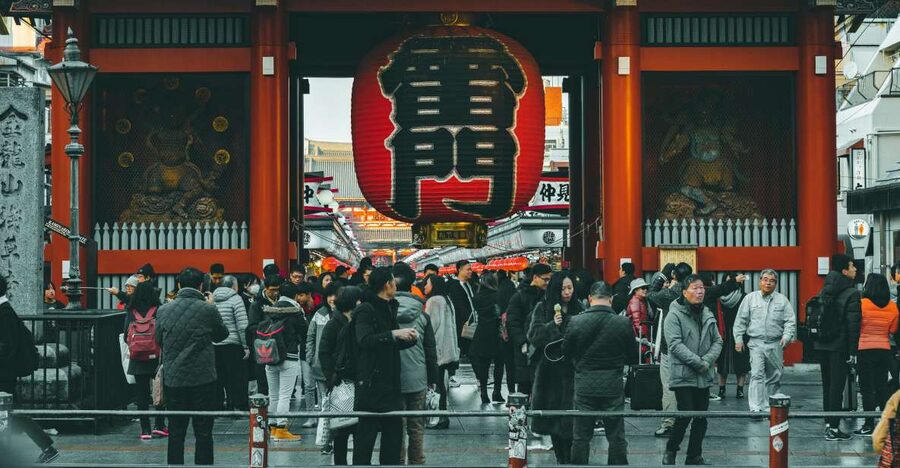
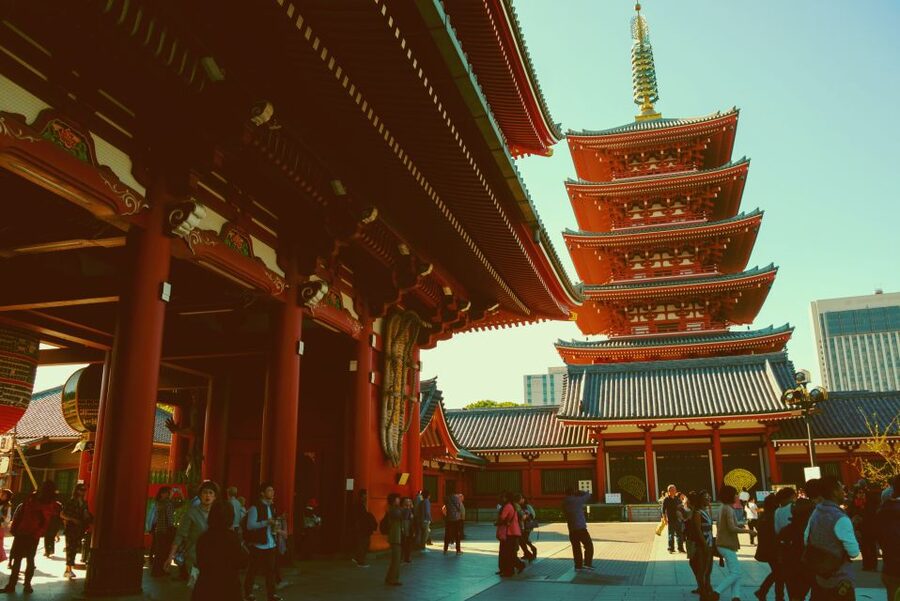
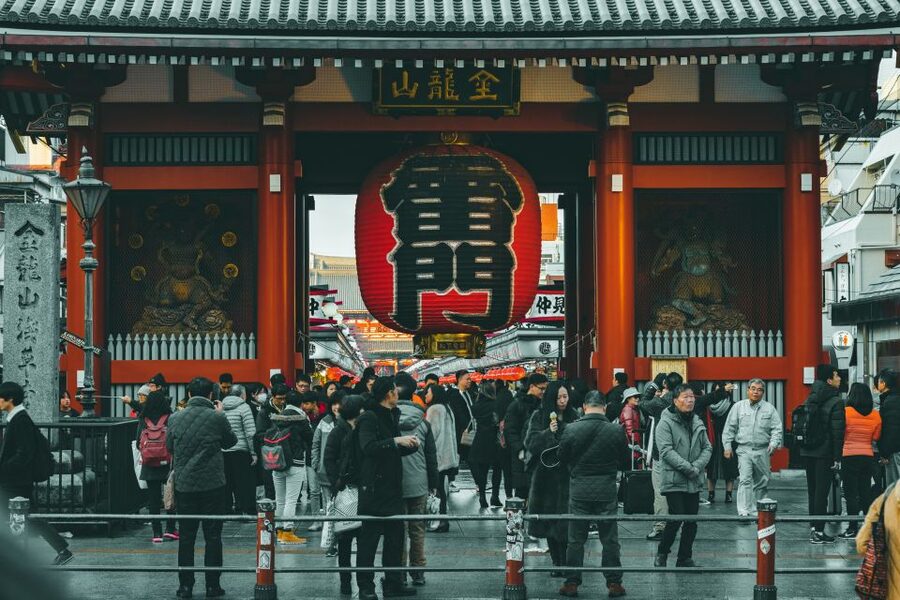
Senso-ji is the tour’s clearest link to old Tokyo. The temple is an early Buddhist temple in Japan, and the guide explains its background while you move through the grounds.
You will also see Nakamise-dori, the shopping street leading toward the temple. It is lined with shops selling souvenirs, snacks, and traditional goods. The street can feel crowded, but that is part of the point. Senso-ji has long drawn people, sellers, and pilgrims, and the approach remains a lively public space rather than a quiet museum corridor.
The scheduled temple portion is about 15 minutes, within the broader Asakusa visit. That is enough for an introduction and orientation, but not enough for a long, independent examination of every building or shop. If you want detailed photographs, extended shopping, or time to pray privately, plan to return later on your own.
I like having a guide here because Senso-ji can otherwise become a quick sequence of gate, lantern, incense, and temple hall. Context helps you read the space. You learn why the area matters, how the neighborhood grew around it, and how Asakusa’s older identity continues into the present.
The tour does not appear to include a meal or snack. Food and drinks are your responsibility, so do not count on the walking route as a food tour.
Ueno and Okachimachi, Tokyo’s everyday side
From Asakusa, the route continues toward Ueno, a district associated with museums, cherry blossoms, and public spaces. The scheduled visit lasts about 25 minutes.
Ueno gives the tour a different kind of history. Asakusa centers on worship and old entertainment streets. Ueno brings in museums, seasonal beauty, and one of the city’s major public gathering areas. If you visit during cherry-blossom season, the area’s trees add a seasonal element, although no particular bloom conditions can be guaranteed.
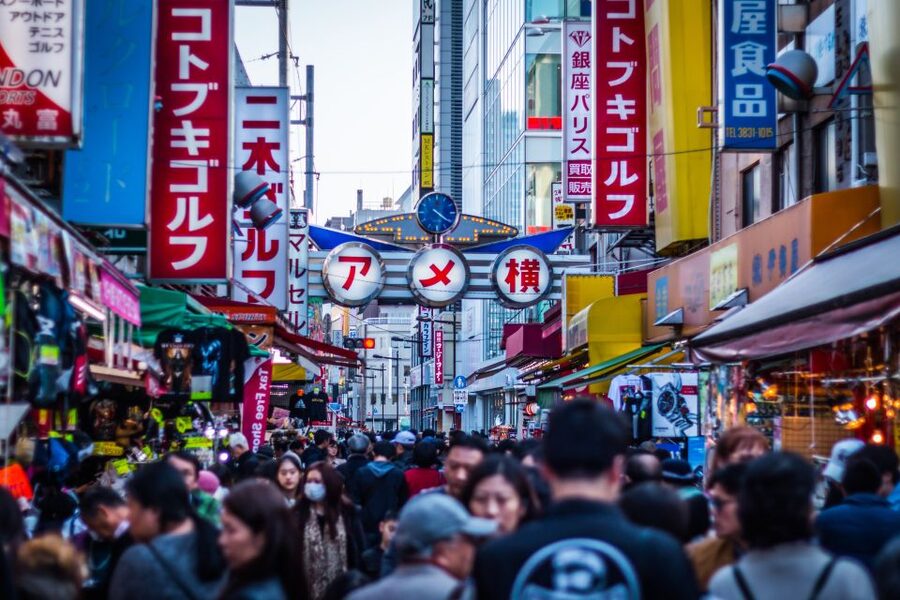
Next comes Okachimachi, also allotted about 25 minutes. This is where the tour turns toward marketplace grit. The area has long been home to street vendors and shops selling food and other goods. It is not presented as a polished corporate shopping district, and that is precisely its appeal.
For me, Okachimachi is one of the most useful stops because it shows how people actually shop and sell in Tokyo. You get narrow commercial streets, small businesses, food, and a sense of constant trade. The district helps balance the grand temple and museum-centered parts of the route.
The limitation is time. Twenty-five minutes gives you a guided look, not a full market crawl. You might find yourself wanting to stop for a snack or inspect a shop, but the group still has to move on. If this area catches your interest, make a note of it and return after the tour.
More temples and shrines near Tokyo:
- Tokyo: Meiji Shrine, Asakusa, Skytree Bus Tour and Cruise
★ 4.7 · 1,986 reviews - Tokyo: Asakusa Walking Tour with Sensoji Temple Visit
★ 4.8 · 1,583 reviews - Nikko: Kegon Falls, Lake Chuzenji & Toshogu Temple
★ 4.6 · 1,577 reviews - Tokyo: Kamakura & Enoshima Day Trip including Temple Tickets
★ 4.5 · 1,375 reviews
Akihabara, from electronics to otaku culture
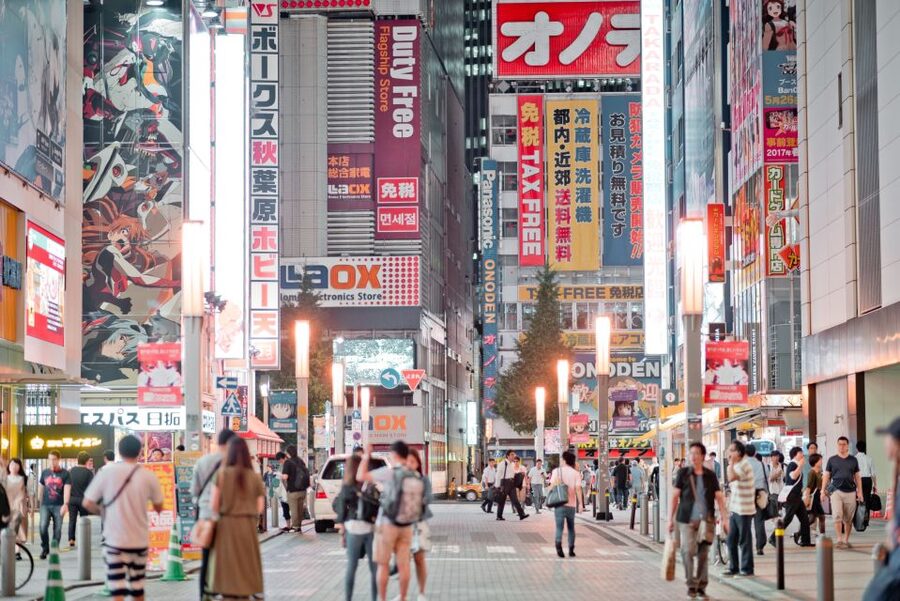
Akihabara is the route’s biggest change in mood. Known as Electric Town, it has been associated with electronics since the pre-war era. Its identity later shifted toward anime, manga, games, and other parts of otaku culture.
The 45-minute visit gives your guide room to explain that change. Akihabara is not just a collection of neon signs and themed shops. It shows how a district can adapt to new technology and new forms of entertainment while keeping its strong commercial character.
You will see streets filled with electronics businesses, gaming culture, and anime-related shops. The area can feel like stepping into a manga or anime setting, especially when cosplayers appear in the streets. The tour presents this as part of daily public life in Akihabara, where fiction and ordinary city routines often sit side by side.
I like this stop because it prevents the tour from becoming a shrine-and-garden study of Japan. Tokyo’s modern identity includes pop culture, design, games, and the communities that form around them. Akihabara gives you a direct look at that side of the city.
At the same time, you should know what this visit is not. It is an orientation walk, not a dedicated shopping trip or anime convention experience. You will have limited time to browse. If you already know the specific stores or products you want, return later with a separate plan.
Families may enjoy this part most, especially if children like games, manga, or anime. One guide, Takee, was praised for keeping children engaged and even adding origami and a pub stop to a private experience. Those details show the sort of personal touch a guide may bring, but they should not be treated as guaranteed parts of this scheduled tour.
Koishikawa Korakuen, an Edo garden after the city noise
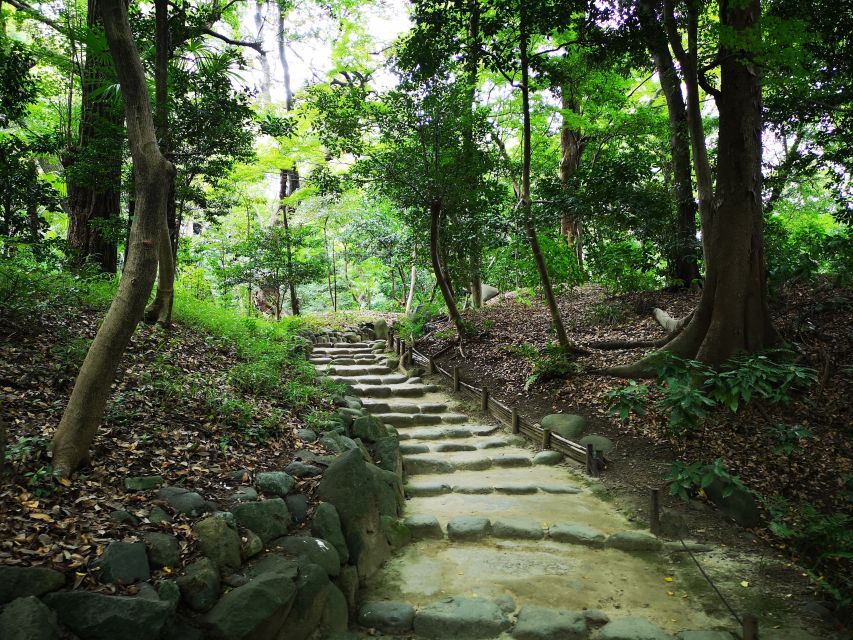
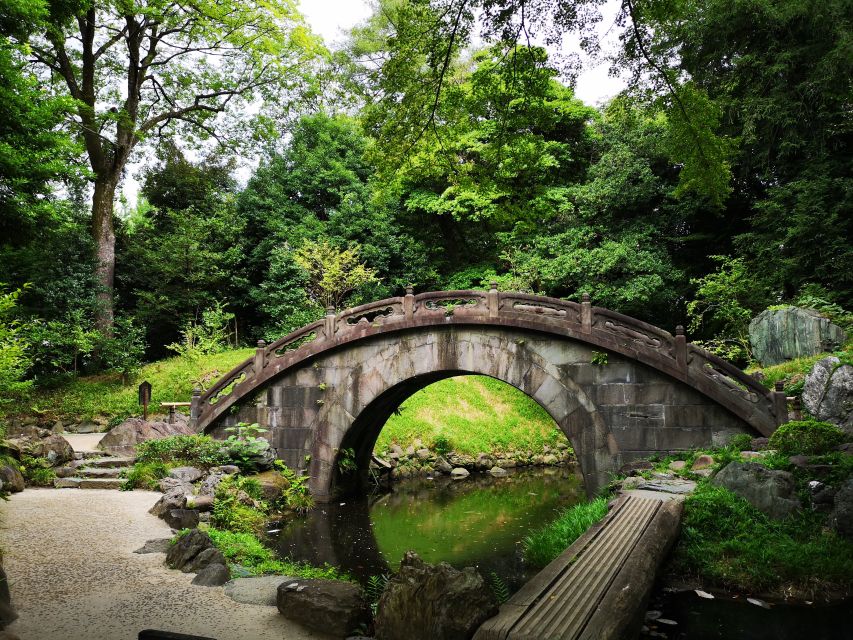
The final major stop is Koishikawa Korakuen, a traditional Japanese garden that offers a strong visual reset after Akihabara.
The garden dates to the Edo period, and its paths, planted areas, and views reflect an older approach to designed nature. The experience changes with the season. Spring may bring cherry blossoms, while autumn can bring red and gold foliage. The tour describes scenic views along the way, so this stop is not only about reaching one viewpoint. Walking is part of the experience.
I like ending here. After several busy districts, the garden gives you space to slow down and think about what you have seen. Tokyo’s story is not only one of growth, technology, and crowds. It also includes carefully made quiet places protected within the city.
The 45-minute visit is long enough for a guided introduction and a walk through selected parts of the garden. It is not a full-day garden visit. If gardens are your main reason for booking, you may want more time than this route allows.
Admission to standard tour sights is included, but admission to the Tokyo National Museum is not included if you choose to add it. The provided route does not list the museum as a required stop, so you should not assume there will be enough time for a full museum visit.
What the $68 price really covers
At $68 per person, this tour is priced as a compact guided introduction to several major parts of East Tokyo. The value depends on what you want from a four-hour outing.
The price includes the guide, standard costs during the tour, admissions, and local train rides. That removes some small expenses and, more importantly, means you do not need to work out every transfer while trying to follow the neighborhood story.
I consider that useful for a first day in Tokyo. The route covers places that are easy to visit independently, but understanding their relationship takes planning. You would need to research Senso-ji, the subway link to Ueno, Okachimachi’s market streets, Akihabara’s cultural shift, and Koishikawa Korakuen. The guide packages those subjects into one route.
The value is less clear if you prefer long independent visits. You may feel hurried in Okachimachi or Akihabara, especially if you want to shop. Food and drinks are extra, and any custom additions can create additional costs. The Tokyo National Museum also requires separate admission if you choose to include it.
For a small group limited to eight, the price is reasonable if you care about conversation and local orientation. It is less attractive if you only want transportation between famous sights or a checklist of photo stops.
Guides, group size, and the human factor
The tour is conducted in English by a live guide, and the group is limited to eight people. That small size should make it easier to hear explanations in busy streets and ask questions without stopping a large crowd.
Several guide names appear in the experience feedback. Taka, also written as Takee, was praised for being engaging and informative, with a particular ability to keep children interested. Michelle was described as professional, friendly, competent, and fluent in Italian as well as English. Toru was praised for kindness, availability, and acting more like an experienced travel companion than a guide.
Those comments point to the strongest part of this experience: the guide can connect the stops into a story. The exact person you receive is not specified in advance, so you should book this for the route and format rather than for one named guide.
The overall rating is 4.6 from 15 ratings, with the available comments strongly favoring the guides’ warmth and communication. That is encouraging, though the sample is not large enough to erase the practical limitations of a fast four-hour route.
Who should book this East Tokyo walk?
I would choose this tour if you are visiting Tokyo for the first time and want a clear introduction to East Tokyo. It suits you especially well if you enjoy history but also want electronics, anime, shopping streets, and modern city life in the same morning or afternoon.
Families may benefit from the variety. A temple alone can lose a child’s attention, while Akihabara adds an entirely different kind of interest. The garden gives the group a calmer finish.
This also works for you if navigating Tokyo feels intimidating. The included local train rides and small group take away some of the friction, while the guide explains what you are seeing.
I would hesitate if you want a relaxed temple visit, a serious museum session, or a long shopping stop. The route covers a lot of ground, and its strength is range rather than depth at one location.
Book it if you want the big picture of how old Tokyo and new Tokyo fit together. Skip it if your ideal day means staying in one neighborhood and exploring every side street at your own pace.
FAQ
How long does the Tokyo tour last?
The tour lasts four hours.
Where does the tour meet?
The meeting point is Kamiya Bar in Asakusa, at 1-chōme-1-1 Asakusa.
Which areas are included?
The route includes Asakusa, Senso-ji Temple, Ueno, Okachimachi, Akihabara, and Koishikawa Korakuen.
Is the tour conducted in English?
Yes. The live tour guide language is English.
What is included in the price?
The price includes guide costs, standard costs during the tour, admissions, and local train rides.
Is food included?
No. Food and drinks are not included.
Is the tour wheelchair accessible?
Yes, the activity is listed as wheelchair accessible. Comfortable shoes are recommended.
More Asakusa Visits
- Tokyo: Japanese Dance Cabaret Theater Asakusa-Kaguwa Ticket
★ 4.8 · 2,270 reviews - Tokyo: Roll and Authentic Sushi Making Class in Asakusa
★ 4.9 · 1,957 reviews - Tokyo Asakusa Rickshaw Tour
★ 5.0 · 1,375 reviews - Tokyo Panoramic 1 Day: Meiji Shrine, Asakusa, Odaiba and SKYTREE®
★ 4.5 · 1,222 reviews
New on our Tokyo list
- Sumi-e Experience in a relaxing green tea shop in Tokyo★ 5.0 · 3 reviews
- Tokyo : Kamikaze Street Drift Ride★ 5.0 · 3 reviews
- Private Zen Meditation in English in Shinjuku, Tokyo★ 5.0 · 3 reviews
- Onsen Spa in Tokyo and Asakusa Bar Hopping with Local Guide★ 5.0 · 3 reviews
- Easy for everyone! Now you can play handmade mini shamisen and show off to everyone! Musical instruments, sweets and live music★ 5.0 · 3 reviews
- Tokyo Tsukiji Fish Market Walking and Exploring Hidden Gems Tour★ 5.0 · 3 reviews
- Tokyo: Private Tsukiji Street Food & Sake with Local Guide★ 5.0 · 3 reviews
- Mt Fuji Exploration Tour with Free Japanese Kusa Mochi from Tokyo★ 4.5 · 3 reviews
Anime & Pop Culture Tours, compared.
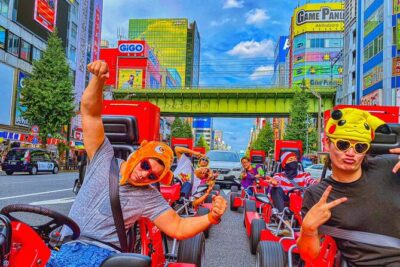
Tokyo Go Kart: Asakusa, Skytree, and Akihabara **IDP MUST**
Read our review →
Akihabara Anime & Game Adventure Walking Tour (Group or Private)
Read our review →

Akihabara Tailor-made Private Tour for Anime Fans
Read our review →
Ramen Making from Scratch +Akihabara Tour –Tokyo Cooking Class
Read our review →
Manga Drawing Workshop Guided by Pro Manga Artist
Read our review →Browse the lists this tour appears in