
Reviewed · TEMPLE & SHRINE TOURS
Full Tokyo: Meiji Shrine, Imperial Palace, Asakusa & Skytree
Tokyo is a huge city, and this tour tackles its highlights by walking and riding local trains rather than sitting in a tour bus. Starting at Hachiko Statue, you move from Shibuya’s famous crossing to the quiet woods of Meiji Shrine, then on to the Imperial Palace, Akihabara, Asakusa, and Tokyo Skytree.
I like two things right away: the route saves planning time, and the guide adds cultural context that is easy to miss on your own. Guides such as Francisco and Jorge have been praised for friendly, clear help in both English and Spanish. The catch is simple: this is an active day with plenty of walking, train transfers, and limited time at some stops.
In This Review
- Key points before you book
- Why this route works for a first day in Tokyo
- Meeting Hachiko and crossing Shibuya
- Meiji Shrine, where Tokyo gets quiet
- The Imperial Palace exterior in 30 minutes
- A quick look at Akihabara’s electric pop culture
- Two hours in Asakusa and Senso-ji
- Tokyo Skytree closes the route with a city view
- What the $39 price really includes
- Walking, trains, weather, and group pace
- Who will get the most from this Tokyo day
- Should you book Full Tokyo?
- FAQ
- How long does the Tokyo tour last?
- What time does the tour start?
- Where does the tour meet?
- Where does the tour end?
- Is transportation included?
- Does the tour return to Shibuya?
- Is Tokyo Skytree admission included?
- Can I enter the Imperial Palace?
- Is lunch included?
- What languages does the guide speak?
- How large can the group be?
- Can I cancel for a full refund?
Key points before you book
- Seven major Tokyo sights in one day: Shibuya, Meiji Shrine, the Imperial Palace exterior, Akihabara, Asakusa, and Tokyo Skytree all fit into one route.
- Local trains are part of the experience: Train tickets between itinerary points are included, but you need to walk through stations and keep pace with the group.
- Meiji Shrine gets the longest cultural stop: You have about 70 minutes among the forest paths and Shinto grounds.
- Asakusa gives you the most free time: Two hours allow room for Senso-ji, shopping, sightseeing, or an optional traditional lunch.
- Skytree admission is included: The tour finishes at the tower after your guide accompanies you to the entrance.
- The group can reach 20 people: That keeps the price low, though it is less personal than a private tour.
Why this route works for a first day in Tokyo
The clever part of this outing is its shape. Tokyo’s sights are spread across several districts, so a self-guided day can turn into a tangle of maps, train lines, and missed turns. Here, you meet at the Hachiko statue in Shibuya at 8:00 a.m., then follow a set route east across the city.
You get a useful first look at several sides of Tokyo. Shibuya supplies the modern city rush. Meiji Shrine offers quiet and ceremony. The Imperial Palace gives you a glimpse of Japan’s imperial center. Akihabara brings electronics, anime, and pop culture. Asakusa adds an older temple district, and Skytree closes the day with a broad view over Tokyo.
I especially like this mix because it avoids making Tokyo seem like only a city of neon and shopping. The shift from crowded Shibuya to Meiji Shrine’s wooded setting happens early, when your mind is still fresh. A guide can also explain Japanese religion and customs as you go. One guide praised by name, Francisco, handled both English and Spanish for the group, while Jorge earned similar praise for making the day enjoyable.
The pace is not leisurely. Seven hours is enough to cover a lot, but not enough to linger at every stop. Think of this as a well-organized orientation day, not a slow neighborhood walk.
More temples and shrines near Tokyo:
- Tokyo: Meiji Shrine, Asakusa, Skytree Bus Tour and Cruise
★ 4.7 · 1,986 reviews - Tokyo: Asakusa Walking Tour with Sensoji Temple Visit
★ 4.8 · 1,583 reviews - Nikko: Kegon Falls, Lake Chuzenji & Toshogu Temple
★ 4.6 · 1,577 reviews
Meeting Hachiko and crossing Shibuya
The morning starts at the Hachiko statue, a well-known meeting place near Shibuya Station. From there, you see Shibuya Crossing, the famous intersection where crowds move in several directions at once.
The crossing itself does not require a long stop to understand. Its value is the setting: giant screens, station traffic, department stores, side streets, and the steady movement that defines this part of Tokyo. Your guide helps you get oriented before the route heads toward Meiji Shrine.
The transfer to Meiji Shrine takes about 40 minutes. Since the tour uses trains, this is not dead time. You will need to walk through stations, board with the group, and pay attention to the guide’s directions. That can be a plus on your first Tokyo morning, when the rail system may seem like a puzzle.
Bring shoes you can walk in for hours. The day includes station corridors, shrine paths, city sidewalks, and time on your feet at several major sights. A past guide note also pointed out that winter wind and cold can make the day feel harder, so dress for the season rather than relying on the calendar alone.
Meiji Shrine, where Tokyo gets quiet
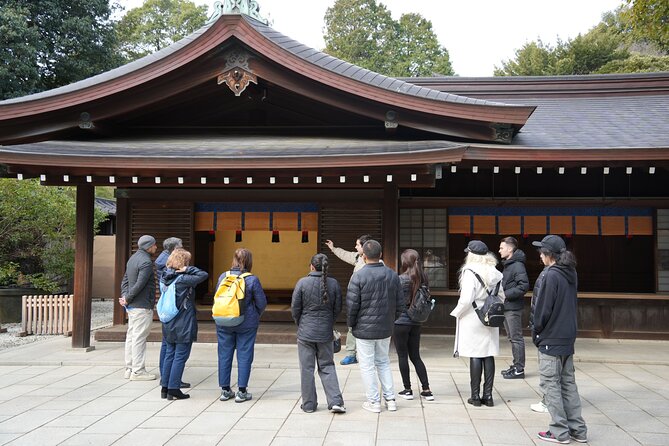
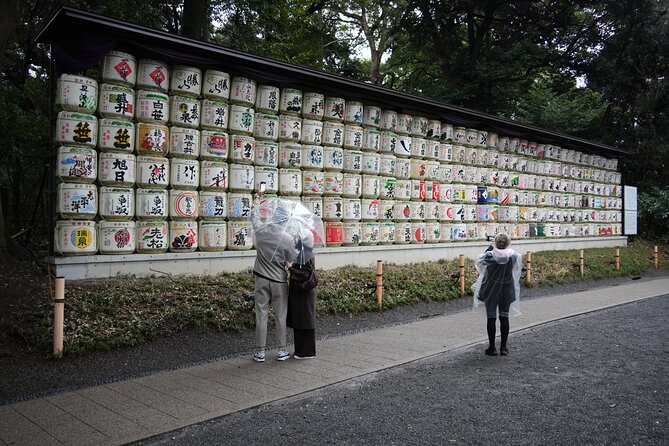
Meiji Jingu Shrine is the most peaceful stop on the route. It sits within a large forested area, creating a sharp contrast with Shibuya’s screens and traffic. You have about 1 hour and 10 minutes here, which is a useful amount of time for a first visit.
This is a Shinto sanctuary connected with traditional Japanese spirituality. The guide can help you understand the basic customs and the meaning of the shrine setting, rather than leaving you to wonder what each gate, offering, or ritual means.
The path through the trees is part of the experience. You are not simply checking off a building at the end of a street. The change in sound and pace matters. Tokyo can feel crowded and fast, but this stop gives you a chance to pause and take in a more restrained side of Japanese culture.
The shrine admission is free. The main limitation is timing. Seventy minutes gives you a good introduction, but you will not have unlimited time for every path or ceremony. Stay aware of the meeting instructions, since the group still has a long route ahead.
This is also where a strong guide can make the biggest difference. One highly praised guide had graduate-level study in philosophy and a special focus on Japanese religion and spirituality. You should not assume that every guide will have that exact background, but the tour is designed to add explanation rather than simply lead you from gate to gate.
The Imperial Palace exterior in 30 minutes
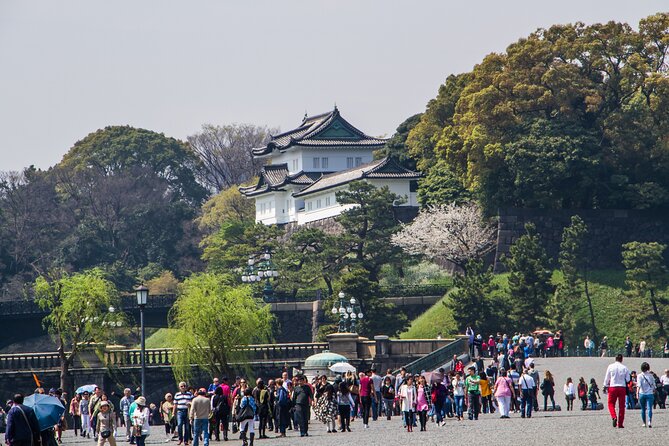
Next comes the Imperial Palace, the official residence of the Emperor. The tour stops for about 30 minutes, mainly to admire and photograph the exterior.
That short visit is worth understanding before you book. You do not enter the palace itself, and palace admission is not included. This is a photo and orientation stop, not a full palace tour.
The appeal is the setting and the symbolism. The Imperial Palace represents the center of Japan’s modern imperial institution, while its grounds provide a pause from the commercial districts. Your guide can give the stop context, then help the group move on without spending half the day in one location.
If you have a strong interest in palace grounds, gardens, or imperial architecture, you may want to return independently later. The 30-minute stop gives you a look, not a full study. That tradeoff is fair for a route trying to cover much of Tokyo in one day.
More Asakusa visits:
- Tokyo: Japanese Dance Cabaret Theater Asakusa-Kaguwa Ticket
★ 4.8 · 2,270 reviews - Tokyo: Roll and Authentic Sushi Making Class in Asakusa
★ 4.9 · 1,957 reviews - Tokyo Asakusa Rickshaw Tour
★ 5.0 · 1,375 reviews - Tokyo Panoramic 1 Day: Meiji Shrine, Asakusa, Odaiba and SKYTREE®
★ 4.5 · 1,222 reviews
A quick look at Akihabara’s electric pop culture
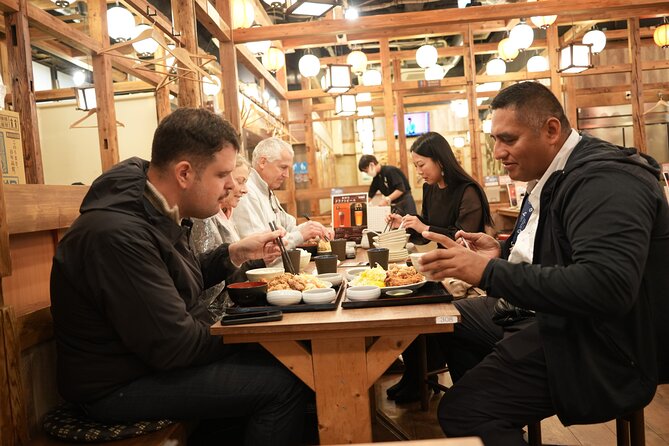
The route also takes you through Akihabara, Tokyo’s district for electronics, anime, manga, and pop culture. The information provided does not assign a separate long stop here, so treat Akihabara as a brief look at the district rather than a dedicated shopping session.
That is still useful. Akihabara shows a very different part of Tokyo from Meiji Shrine or Asakusa. Bright signs, specialty stores, and hobby culture give the district a strong identity. A guide can point out what makes the area distinctive and help you decide if it deserves more time later.
If you want to shop for electronics, anime goods, or collectibles, do not expect enough free time to browse every store. The tour’s purpose is to give you a broad first impression. You can return on another day with a short list and more room to explore.
Two hours in Asakusa and Senso-ji
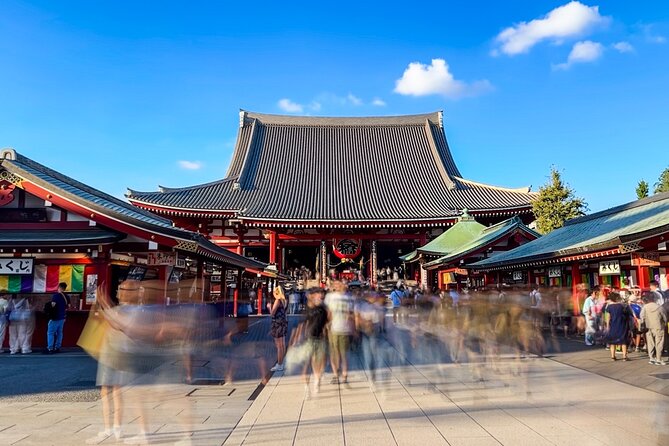
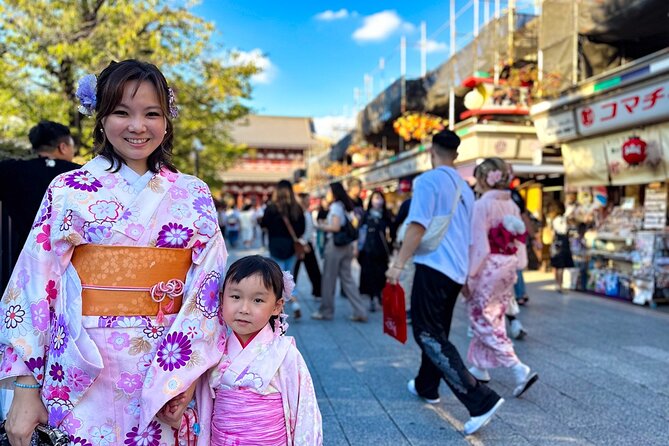
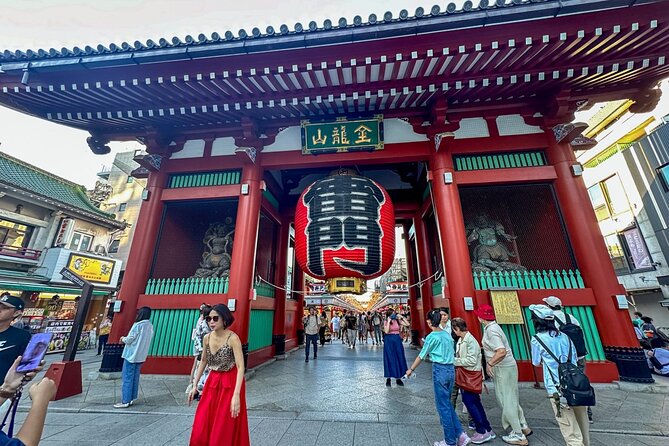
Asakusa is where the tour slows down. You have about two hours, the longest scheduled stop, to explore the historic district and visit Senso-ji, Tokyo’s oldest temple.
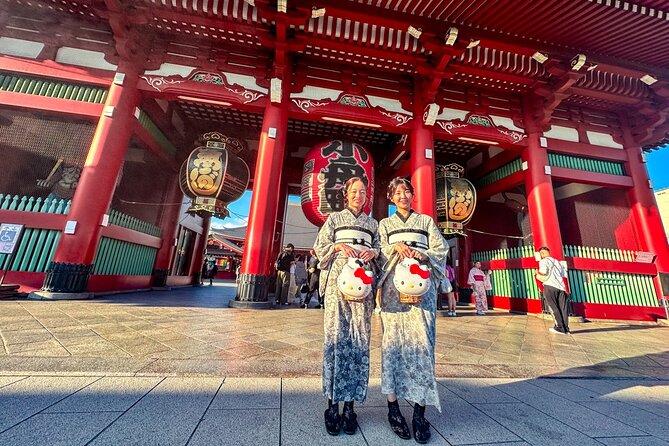
Senso-ji is the heart of the visit. Its temple buildings, approach, and surrounding streets offer a clear sense of old Tokyo, even as modern life continues around them. This is a good place to listen to the guide’s explanation, then take some time to look around at your own pace.
You also get free time here for sightseeing and shopping. That flexibility makes Asakusa more satisfying than a quick photo stop. You can browse the traditional shopping streets, take pictures, or simply enjoy the atmosphere around the temple.
Lunch is optional. If you select the meal option, a traditional lunch is part of the plan. If you do not, the two-hour break still gives you time to arrange food on your own, though drinks are not included. Check the option you choose at booking so you know what is covered.
Asakusa is also the best place to notice the tour’s balance between structure and freedom. Your guide handles the route and explains the main sights, but you are not marched from one photo point to the next for the entire two hours. For many people, this will be the most comfortable section of the day.
Tokyo Skytree closes the route with a city view
The final stop is Tokyo Skytree, one of the world’s tallest structures. Admission to the observation deck is included, and the guide accompanies the group to the entrance.
The tower gives the day a strong finish. After seeing Tokyo at street level, you can look out over the city from above and understand how widely its districts spread. The view is especially useful after moving through Shibuya, central Tokyo, Akihabara, and Asakusa in one day.
Your time at Skytree is listed as about 30 minutes. That is enough for a look from the observation area, but you should not expect a long independent visit with plenty of time for every level, shop, or attraction inside the complex.
The tour ends at Skytree. This point matters. There is no return bus to Hachiko Statue, and the guide does not take you back to your hotel. Plan the rest of your day from Oshiage rather than assuming you will finish in Shibuya.
What the $39 price really includes
At $39 per person, this is priced as an efficient shared sightseeing day rather than a luxury guided tour. The value comes from combining a bilingual guide, train transfers between the scheduled points, and Tokyo Skytree admission in one package.
Those train tickets matter. Tokyo’s rail network is excellent, but every transfer takes time and attention. Having the route organized can be worth more than the ticket cost alone, especially if you are new to the city.
Skytree admission also improves the value. You are not paying separately for the tower after the tour begins, and the guide takes the group to the entrance. Lunch is optional, so you can keep the lower price or choose the meal add-on for convenience.
There are limits. Drinks are not included, the Imperial Palace visit is exterior-only, and hotel pickup and drop-off are not provided. A group of up to 20 people also means you are paying for shared guidance, not one-on-one attention.
Still, for a first Tokyo visit with limited time, the price is sensible. You are buying a route that removes much of the day’s planning work. If you already know Tokyo’s train system and have carefully planned these districts yourself, the savings may feel smaller. If you want an organized introduction, the calculation works better.
Walking, trains, weather, and group pace
This tour is described as requiring moderate physical fitness, and you should take that seriously. You will walk between sights, through train stations, around shrine and temple grounds, and across busy urban areas. One direct assessment of the experience called it a walking tour with many train rides and advised you to be ready to walk your shoes off.
Wear comfortable shoes and keep your belongings easy to manage. You will need to stay close enough to hear instructions during transfers. The tour has a maximum of 20 people, so the group is not enormous, but it is large enough that delays can affect everyone.
Weather also matters. Winter wind and cold can be noticeable, especially during outdoor stops and while moving between stations. Dress in layers and prepare for a full morning and afternoon outside, even though parts of the route take place indoors or underground.
The bilingual format is a real feature. The guide speaks English and Spanish, and Francisco was specifically praised for making sure both language groups received the information. If you speak one of those languages, confirm the language arrangement when booking so your expectations match the departure.
Who will get the most from this Tokyo day
I would choose this tour if you are visiting Tokyo for the first time, have only a few days, or want a guided overview before returning to favorite areas on your own. It is also useful for anyone who does not want to spend hours building a route through different train lines.
It suits curious visitors who want cultural explanation along with famous sights. Meiji Shrine and Senso-ji are more meaningful when you understand the religious customs and setting, and a good guide can connect those places to the wider city.
I would be more cautious if you dislike fixed schedules, group movement, or walking. The Imperial Palace stop is short, Akihabara is not given a long dedicated period, and the final visit at Skytree is also limited. This is a sampler, not a slow exploration of each district.
The tour can also work well near the start of your stay. It shows you where Shibuya, Asakusa, Akihabara, and Skytree fit within Tokyo, helping you decide where to spend extra time later. Just remember that the day ends on the opposite side of the city from the starting point.
Should you book Full Tokyo?
Book it if you want a fast, guided introduction to Tokyo’s major contrasts and value having trains, timing, and Skytree admission arranged for you. The strongest parts are the cultural explanation at Meiji Shrine, the two-hour Asakusa stop, and the chance to see the city from Skytree after a full day at street level.
Skip it if you want long visits at every sight or prefer to set your own pace. At $39, the tour offers good value for an active first look, but you should arrive ready for walking, transfers, and a firm schedule. Plan your evening from Tokyo Skytree, not Hachiko Statue, and this seven-hour route can give your Tokyo visit a useful start.
FAQ
How long does the Tokyo tour last?
The tour lasts approximately seven hours.
What time does the tour start?
The tour starts at 8:00 a.m.
Where does the tour meet?
You meet the guide at the Hachiko statue, located at 2 Chome-1 Dogenzaka, Shibuya, Tokyo 150-0043, Japan.
Where does the tour end?
The tour ends at Tokyo Skytree, at 1-chōme-1-2 Oshiage, Sumida City, Tokyo 131-0045.
Is transportation included?
Train tickets are included for transfers between the itinerary points. Hotel pickup and drop-off are not included.
Does the tour return to Shibuya?
No. The tour ends at Tokyo Skytree, and there is no return bus to the original meeting point.
Is Tokyo Skytree admission included?
Yes. Entrance to Tokyo Skytree is included, and the guide accompanies the group to the entrance.
Can I enter the Imperial Palace?
The tour stops outside the Imperial Palace for about 30 minutes. Entry to the palace itself is not included.
Is lunch included?
Lunch is included only if you select the meal option. Drinks are not included.
What languages does the guide speak?
The tour includes a bilingual guide in English and Spanish.
How large can the group be?
The group can include a maximum of 20 people.
Can I cancel for a full refund?
Yes. You can cancel at least 24 hours before the experience start time for a full refund. Changes or cancellations made less than 24 hours before the start time are not accepted for a refund.
New on our Tokyo list
- From Tokyo: Mount Fuji & Hakone Full Day Private Tour★ 4.9 · 25 reviews
- Tokyo Spectacular View Day-Cruise in 90 Minutes★ 5.0 · 25 reviews
- Real Tokyo Runner Club : Daikoku Car Meet Night Tour with JDM Car★ 5.0 · 25 reviews
- 2.5 Hour-Guided Cycle Tour in the Central Tokyo★ 5.0 · 25 reviews
- Ramen Making from Scratch +Akihabara Tour –Cooking Class★ 5.0 · 25 reviews
- [Self-Drive] Tokyo & Daikoku Custom Car Driving Tour★ 4.9 · 25 reviews
- Tokyo: 2-Hour Night Bike Tour of the City’s Hidden Gems★ 4.9 · 25 reviews
- Buddha, Bamboo & Zen – Bespoke Kamakura Private Walking Tours★ 5.0 · 25 reviews
Temple & Shrine Tours, compared.
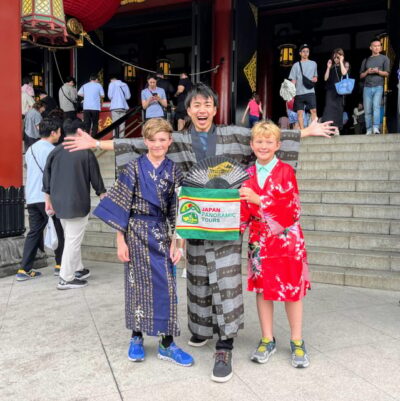
Meiji Shrine, Asakusa, Skytree Bus Tour and Cruise
Read our review →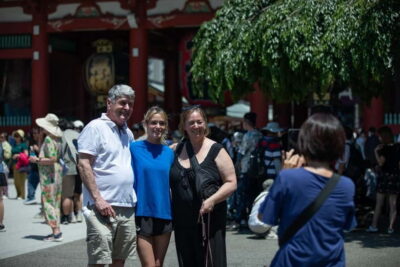
Asakusa Walking Tour with Sensoji Temple Visit
Read our review →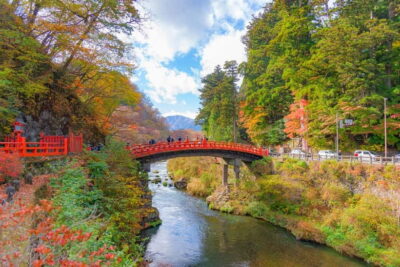
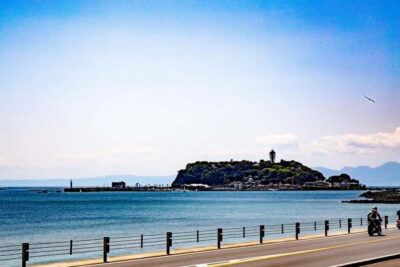
Kamakura & Enoshima Day Trip including Temple Tickets
Read our review →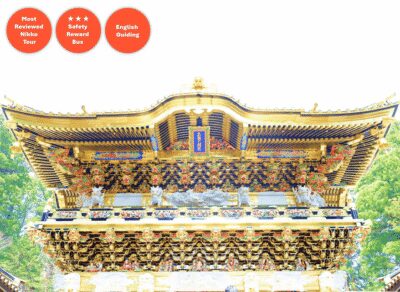
Nikko Toshogu Shrine and Kegon Waterfall Tour
Read our review →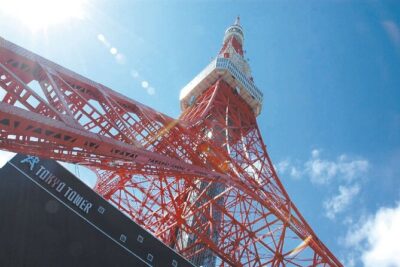
Tokyo Panoramic 1 Day: Meiji Shrine, Asakusa, Odaiba and SKYTREE®
Read our review →
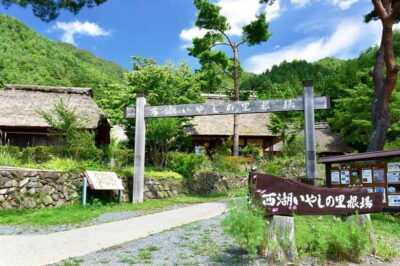
Mt. Fuji Heritage Tour: Traditional Villages, Lakes & Shrine
Read our review →Browse the lists this tour appears in