
Reviewed · TEMPLE & SHRINE TOURS
Get to know the secret of Asakusa! Shrine and Temple Tour
The most unusual part of this Asakusa outing is its focus on the Seven Gods of Fortune. Instead of stopping only at famous Senso-ji, you visit seven smaller shrines and temples, collecting a stamp at each one as a free souvenir of your journey.
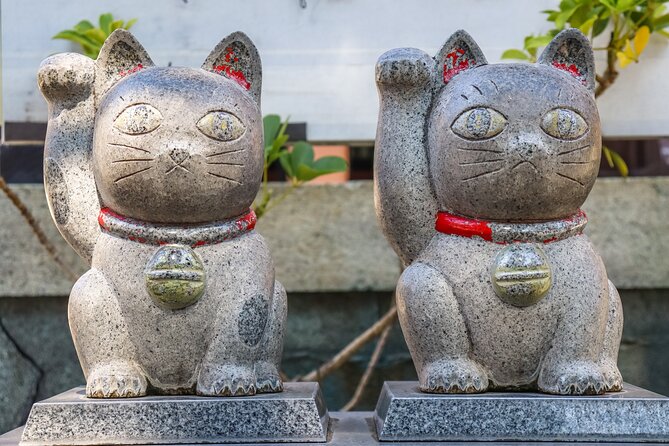
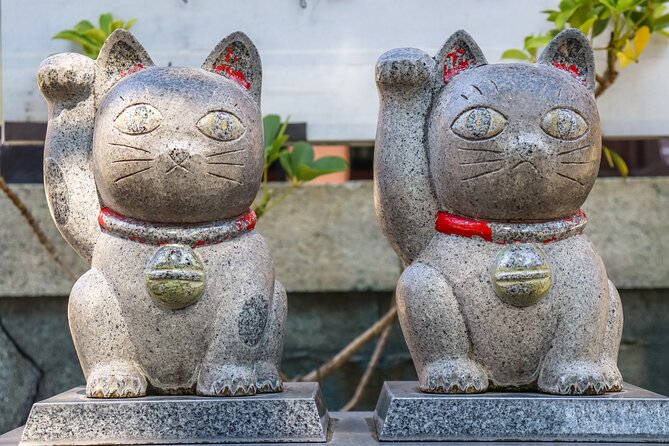
I like the private format, since your guide can adjust the pace, explain unfamiliar customs, and help with photos. I also like the mix of grand sights and quiet neighborhood temples, from Maneki Neko cats at Imado Shrine to the small Edo-period Hashiba Fudoson.
The main drawback is the amount of walking. The five-and-a-half-hour route covers many stops, and extra costs for transport, food, and optional experiences are paid separately. Ask about the final price before booking, since the cost notes for the teahouse are not perfectly clear.
In This Review
- Key Things to Know Before You Book
- Why the Seven Gods Route Gives Asakusa More Meaning
- Starting at Matsuchiyama Shoden
- Imado Shrine and the Story of Maneki Neko
- Hashiba Fudoson and Edo-Era Architecture
- Lunch at Ishihama Saryo Raku
- Yoshiwara Shrine and Benzaiten
- Otori Shrine and the Lucky Rake Market
- Asakusa Shrine and the Link to Senso-ji
- Senso-ji, Tokyo’s Most Recognizable Temple
- Nakamise Street and Kaminarimon Gate
- What the Private Format Really Adds
- Walking, Transport, and Extra Costs
- Who Will Get the Most From This Asakusa Walk
- Should You Book This Asakusa Tour?
- FAQ
- How long does the Asakusa shrine and temple tour last?
- Is this a private tour?
- How much does the tour cost?
- Where does the tour start?
- Where does the tour end?
- Are meals included?
- What happens if the tour is on a Wednesday?
- Are entrance fees included?
- Can I cancel the tour for a full refund?
Key Things to Know Before You Book
- Seven fortune deities: Visit the temples and shrines linked to Bishamonten, Hotei, Benzaiten, Ebisu, and the other lucky figures.
- A private guide: Your party is the only group on the tour, with guides including Kazumi, Nanako, Nobu, Eric, and Harada Taketsugu.
- Stamp collecting: Gather stamps at the religious sites for a simple, free memento tied to the route.
- A local lunch stop: The Ishihama Saryo Raku teahouse offers dishes such as tempura bowls, soba, and sweets, though food is not included.
- Famous and overlooked Asakusa: Senso-ji and Nakamise are paired with quieter places that many first-time visitors miss.
- Flexible pacing: Your guide can respond to requests, help take photographs, and adjust the route where practical.
Why the Seven Gods Route Gives Asakusa More Meaning
Asakusa is easy to visit badly. You can walk through Kaminarimon Gate, take a few pictures at Senso-ji, buy a snack, and leave without understanding much about the neighborhood.
This route gives you a theme to follow. Each shrine or temple is connected with one of the Seven Gods of Fortune, figures associated with wishes such as health, business success, marriage, artistic ability, and good luck. The stamp collection turns the walk into a small goal rather than a string of unrelated stops.
I especially like this idea for a second visit to Asakusa, or for anyone who has already seen Senso-ji and wants more of the district. The guide supplies the cultural background that can be hard to pick up on your own, while the private format leaves room for questions.
The tour lasts about five hours and 30 minutes. That is enough time for nine stops, but not enough for long visits at every site. Several stops last only 15 or 20 minutes, so you should expect focused explanations and quick orientation rather than extended time for quiet reflection.
More temples and shrines near Tokyo:
- Tokyo: Meiji Shrine, Asakusa, Skytree Bus Tour and Cruise
★ 4.7 · 1,986 reviews - Tokyo: Asakusa Walking Tour with Sensoji Temple Visit
★ 4.8 · 1,583 reviews - Nikko: Kegon Falls, Lake Chuzenji & Toshogu Temple
★ 4.6 · 1,577 reviews
Starting at Matsuchiyama Shoden
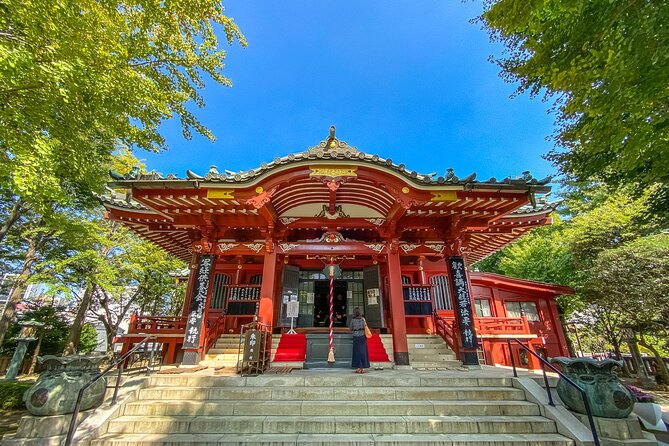
The route begins at Honryuin Matsuchiyama Shoden, also called Matsuchiyama Shoden. You spend about 25 minutes here, with no admission charge.
This temple is linked with health, good relationships, marriage, and prosperous business. The fortune deity associated with the site is Bishamonten, a protective figure connected with good fortune and success.
A guide adds real value at a place like this. Without context, a smaller temple can seem less important than the giant red gate and lanterns at Senso-ji. With an explanation of its beliefs and local role, you get a better sense of how religious sites serve different hopes and needs.
The stop also sets the tone for the day. This is not simply a photo tour of famous Tokyo sights. You are learning how several sites fit into Japanese custom and neighborhood life.
Imado Shrine and the Story of Maneki Neko
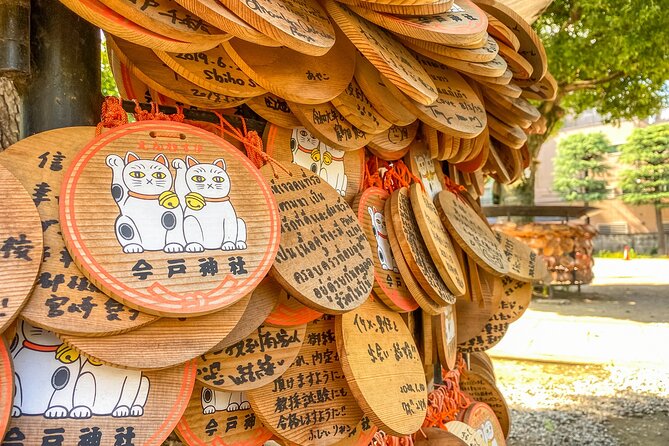
Next comes Imado Shrine, visited for about 20 minutes. Admission is free, and the shrine is known for Maneki Neko, the familiar beckoning cat figure associated with good fortune.
You can expect to see Maneki Neko displayed around the shrine. Imado is also associated with marriage luck and attracts many women seeking help with romantic hopes.
This is one of the most visually appealing stops for families and anyone interested in Japanese popular culture. The cat figures give you an immediate point of reference, while the guide can explain why they appear here and how the shrine’s reputation developed.
The short visit is probably enough to see the main displays and hear the story. If you want extended time for photographs or personal prayer, tell your guide early so the pace can be adjusted if possible.
Hashiba Fudoson and Edo-Era Architecture
Hashiba Fudoson receives about 15 minutes. It is a small, plain temple where the architectural style associated with the Edo period is easier to appreciate because the setting is less grand.
Hotei, the cheerful deity linked with good luck and contentment, is part of the Seven Gods route here. The contrast with Senso-ji is useful. You see that religious architecture in Asakusa is not limited to enormous gates, bright colors, and crowds.
The short stop may feel too brief if old buildings are your main interest. Still, it gives the route a welcome change of scale. I find that the smaller sites often make the district feel more like a lived-in neighborhood than a list of monuments.
More Asakusa visits:
- Tokyo: Japanese Dance Cabaret Theater Asakusa-Kaguwa Ticket
★ 4.8 · 2,270 reviews - Tokyo: Roll and Authentic Sushi Making Class in Asakusa
★ 4.9 · 1,957 reviews - Tokyo Asakusa Rickshaw Tour
★ 5.0 · 1,375 reviews - Tokyo Panoramic 1 Day: Meiji Shrine, Asakusa, Odaiba and SKYTREE®
★ 4.5 · 1,222 reviews
Lunch at Ishihama Saryo Raku
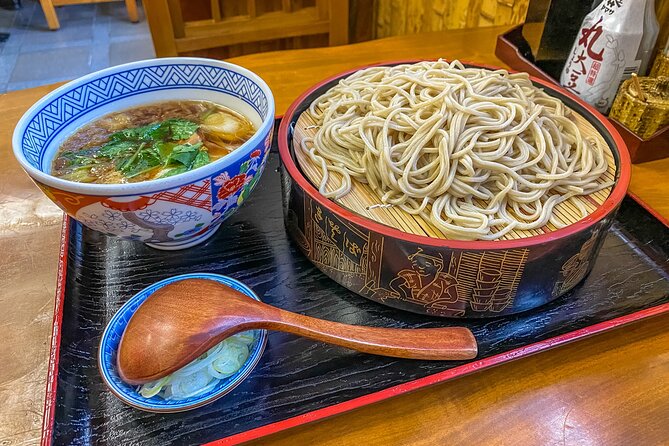
The planned meal stop is Ishihama Saryo Raku, a restaurant within the grounds of Ishihama Shrine. You have about 40 minutes here.
The menu is described as including tempura bowls, soba, sweets, and other choices. That range makes the stop practical for a mixed group, though you pay for your own meal. The tour’s cost information lists meal expenses separately, with an estimated 1,000 yen per person.
A meal break matters on this route. You are moving between several sites, and a chance to sit down keeps the second half from becoming a tiring march. One account of the experience specifically praised the local restaurant lunch, so I would treat this as more than a quick snack stop.
I would also confirm the arrangement before departure. Ishihama Saryo Raku is closed on Wednesdays, when an alternative stop is used. The supplied cost details also mention a 4,800 yen admission charge for the teahouse, which does not sit neatly with the separate meal estimate. Ask exactly what that amount covers, since it may affect the final cost.
Yoshiwara Shrine and Benzaiten
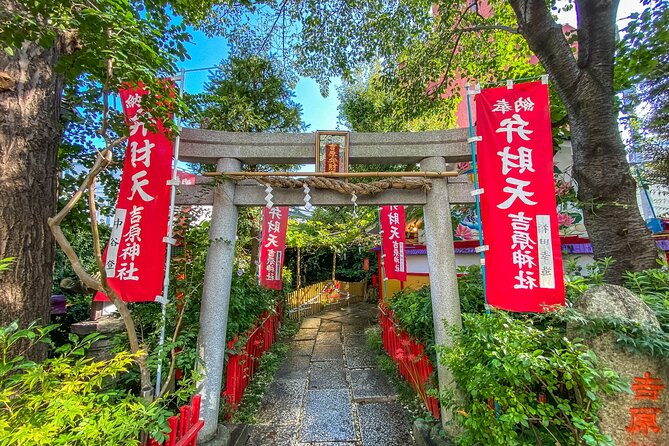
Yoshiwara Shrine is the next religious stop, with about 20 minutes allotted. It is associated with Benzaiten, the only female deity among the Seven Gods of Fortune on this route.
Benzaiten is linked with artistic ability and marriage, as well as wishes made by women. This gives the tour another useful theme: the route is not only about wealth or business. Different sites speak to different hopes, and your guide can explain those distinctions as you go.
The shrine is a good reminder to pay attention to the purpose of a place, not just its appearance. You might find the visit more meaningful if you take a moment to consider which wishes or symbols are connected with the site.
Otori Shrine and the Lucky Rake Market
At Otori Shrine, you spend about 20 minutes. The shrine is known for its large, decorated rakes, sold during the Rooster Market as good-luck objects.
The shrine’s symbol is Okame-san, a mask from Japanese Noh tradition. These details make Otori different from the other stops. You are seeing a religious site tied to seasonal commerce, traditional performance, and household symbols of luck.
This is a strong stop for shoppers and photographers, especially if you want a souvenir with a clear cultural connection. The tour does not promise that the Rooster Market will be taking place during your visit, so do not assume the seasonal sales will be active.
Asakusa Shrine and the Link to Senso-ji
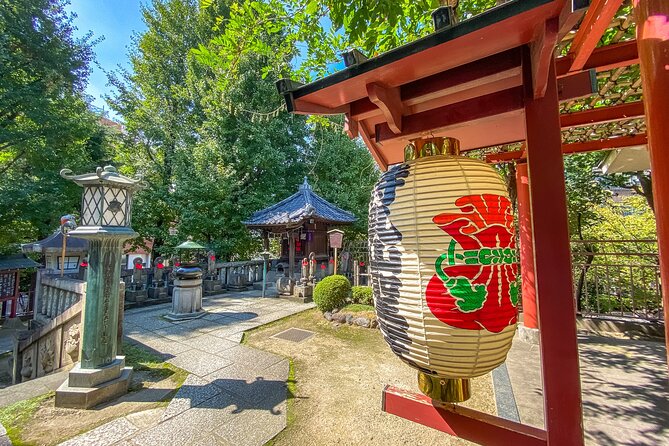
The route then reaches Asakusa Shrine for about 15 minutes. The shrine has a close connection with Senso-ji, the district’s best-known temple, and is associated with Ebisu, a deity of good fortune.
This pairing is one of the most useful parts of the route. Many people treat the shrine and temple complex as one sight, but they are distinct religious places with different identities. Your guide can help you understand that relationship before you enter the larger Senso-ji area.
The short visit is enough for an introduction, but the site can feel squeezed between the preceding stops and the major temple ahead. If this connection interests you, ask for a little extra explanation rather than rushing straight to the next gate.
Senso-ji, Tokyo’s Most Recognizable Temple
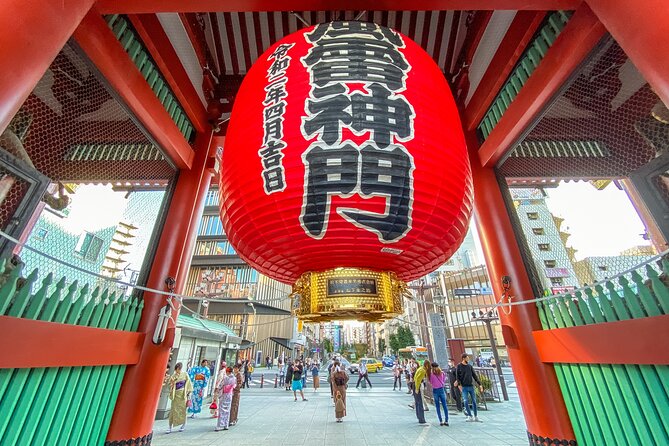
Senso-ji is allotted about 30 minutes. It is widely known as Tokyo’s oldest temple, with its huge red lantern and vermillion buildings forming the classic image of Asakusa.
This is the most crowded and familiar part of the tour, but it earns its place. The scale and color make it an essential Tokyo sight, while the earlier stops give you a better frame for understanding it.
Thirty minutes is enough for a guided overview and photographs. It is not enough for a slow visit to every corner, a long prayer, and extensive shopping. If you want more time here, tell the guide at the start. The private format gives you a better chance of making that request than a large group tour would.
One especially useful detail from the tour experience is the possibility of seeing ceremonies at Senso-ji. No ceremony is guaranteed, but the guide can help you recognize what is happening if one takes place during your visit.
Nakamise Street and Kaminarimon Gate
The final listed stop is Nakamise Shopping Street, reached through the Kaminarimon area. You spend about 20 minutes walking through one of Asakusa’s busiest shopping stretches.
Nakamise is lined with souvenir shops and places to buy snacks. The guide points out recommended shops, which can save you from choosing at random when the street is crowded with similar-looking goods.
I would use this time for orientation rather than a major shopping expedition. Twenty minutes passes quickly, and you may want to return later if something catches your eye. The street is also a practical place to decide what kind of souvenir you want, from religious items to traditional sweets.
The meeting information says the activity ends back at the meeting point, while another note says the finishing spot can differ from the starting point. Tell your guide in advance if you want to end somewhere else, and confirm the exact finish when you meet.
What the Private Format Really Adds
The private arrangement is the strongest practical reason to choose this tour. Only your group participates, so you are not trying to hear an explanation over a large crowd or wait for strangers at every gate.
The guides named in the tour information include Nanako, Harada Taketsugu, Kazumi, Nobu, Eric, and Tom Harada. The strongest qualities associated with the guides are clear explanations, patience, flexibility, and help with photographs.
That flexibility can make a real difference. Kazumi is described as adjusting the route to requests and finding good views for Tokyo Tower, while also helping with photos. Nanako helped guests prepare by suggesting they buy drinks or snacks before setting out. Nobu kept a steady pace, and Eric was praised for adding small details about each place.
You should still tell the guide what matters to you. Ask for more history, more photography time, a slower pace, or extra shopping time at Nakamise. A private tour works best when you treat it as a conversation rather than a fixed parade of stops.
Walking, Transport, and Extra Costs
The tour is near public transport and begins at Asakusa Station, listed at 1-chome-1-3 Asakusa, Taito City. Most people can take part, but the route includes quite a lot of walking.
The listed price is $103.92 per person. For a private five-and-a-half-hour experience, that can be fair if you value personal attention and cultural explanation. The value is weaker if you only want the famous sights, since Senso-ji, Asakusa Shrine, Nakamise, and the other religious sites are free to enter.
Several costs are separate:
- Transportation is estimated at 300 yen per person.
- Meal costs are estimated at 1,000 yen per person.
- Optional experiences are estimated at 3,500 yen per person.
- Food, drinks, entrance costs, and transport incurred during the tour are paid by you.
- The cost notes mention a 4,800 yen charge connected with Ishihama Saryo Raku, so confirm this before booking.
The tour provider covers the guide’s necessary expenses, but that does not mean your own food and transport are included. I would budget extra cash or a payment method for lunch, drinks, souvenirs, and any optional activity.
Free cancellation is available if you cancel at least 24 hours before the local start time. Changes made inside that 24-hour window are not accepted, and the amount paid is not refunded for a late cancellation.
Who Will Get the Most From This Asakusa Walk
I would recommend this tour to first-time visitors who want more than a quick look at Senso-ji. It also suits repeat visitors who want smaller religious sites, Japanese fortune traditions, and a clearer sense of how the Edo period still shapes Asakusa.
Families may like the lucky cats, colorful temple details, stamp collection, and manageable stop-by-stop structure. Couples may be interested in the marriage themes at Imado Shrine and Yoshiwara Shrine. Anyone interested in art will find the Benzaiten connection and the Okame-san mask at Otori Shrine worth noting.
The tour is less suitable if you dislike walking, want a slow photography session at every site, or prefer to explore without a schedule. The route covers a lot in one morning or afternoon, and the short stops require you to keep moving.
The stamp collection is a small but clever touch. It gives children a reason to stay engaged, and it gives adults a physical reminder of the less familiar parts of Asakusa. I would bring a pen and keep the stamps together, although the exact stamp process is not specified.
Should You Book This Asakusa Tour?
Book it if you want a private, guide-led introduction to the religious side of Asakusa, especially the Seven Gods of Fortune. The mix of Maneki Neko, Edo-period architecture, lucky rakes, local food, Senso-ji, and Nakamise is much broader than a standard temple photo stop.
Think twice if you are counting every yen, have limited walking ability, or mainly want time at Senso-ji. In that case, a shorter self-guided visit may be enough.
For most people who want context and personal attention, this is a strong choice. Confirm the extra charges, tell the guide your preferred pace, and keep your schedule flexible for the Wednesday restaurant change. With those details settled, you get a useful and personal look at an Asakusa that extends well beyond its famous red lantern.
FAQ
How long does the Asakusa shrine and temple tour last?
The tour lasts approximately five hours and 30 minutes.
Is this a private tour?
Yes. The activity is private, and only your group participates.
How much does the tour cost?
The listed price is $103.92 per person.
Where does the tour start?
The meeting point is Asakusa Station at 1-chome-1-3 Asakusa, Taito City, Tokyo 111-0032, Japan.
Where does the tour end?
The activity is listed as ending back at the meeting point, but the finishing spot can be changed. Tell your guide if you want to end somewhere else.
Are meals included?
No. Food and drinks are paid for by you. The planned meal stop is Ishihama Saryo Raku, where the menu includes options such as tempura bowls, soba, and sweets.
What happens if the tour is on a Wednesday?
Ishihama Saryo Raku is closed on Wednesdays, so an alternative stop is used.
Are entrance fees included?
The listed religious sites have no admission charge, but all entrance fees and other costs incurred at visited locations are paid by you. Confirm the stated 4,800 yen teahouse charge before booking.
Can I cancel the tour for a full refund?
Yes, if you cancel at least 24 hours before the experience start time. Cancellations or changes made less than 24 hours before the start are not refunded or accepted.
New on our Tokyo list
- Sumi-e Experience in a relaxing green tea shop in Tokyo★ 5.0 · 3 reviews
- Tokyo : Kamikaze Street Drift Ride★ 5.0 · 3 reviews
- Private Zen Meditation in English in Shinjuku, Tokyo★ 5.0 · 3 reviews
- Onsen Spa in Tokyo and Asakusa Bar Hopping with Local Guide★ 5.0 · 3 reviews
- Easy for everyone! Now you can play handmade mini shamisen and show off to everyone! Musical instruments, sweets and live music★ 5.0 · 3 reviews
- Tokyo: Private Tsukiji Street Food & Sake with Local Guide★ 5.0 · 3 reviews
- Mt Fuji Exploration Tour with Free Japanese Kusa Mochi from Tokyo★ 4.5 · 3 reviews
- Tokyo Tsukiji Fish Market Walking and Exploring Hidden Gems Tour★ 5.0 · 3 reviews
Temple & Shrine Tours, compared.
Meiji Shrine, Asakusa, Skytree Bus Tour and Cruise
Read our review →
Asakusa Walking Tour with Sensoji Temple Visit
Read our review →
Kamakura & Enoshima Day Trip including Temple Tickets
Read our review →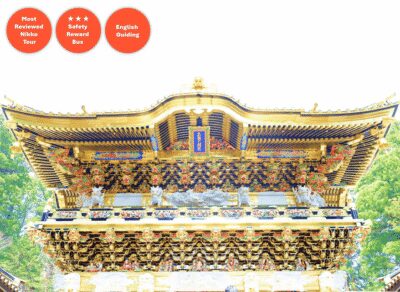
Nikko Toshogu Shrine and Kegon Waterfall Tour
Read our review →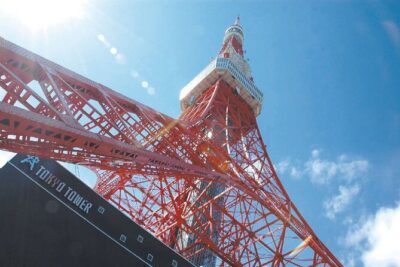
Tokyo Panoramic 1 Day: Meiji Shrine, Asakusa, Odaiba and SKYTREE®
Read our review →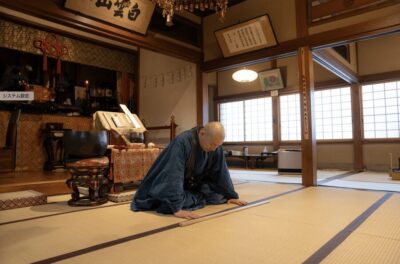
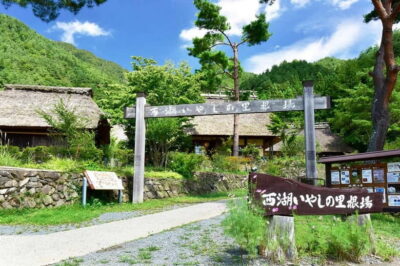
Mt. Fuji Heritage Tour: Traditional Villages, Lakes & Shrine
Read our review →Browse the lists this tour appears in