
Reviewed · TEMPLE & SHRINE TOURS
Harajuku Meiji Shrine Walking Tour in Tokyo
Harajuku makes a sharp turn every few blocks. One moment you are beneath towering torii gates and shaded trees at Meiji Jingu Shrine; soon after, you are threading through Takeshita Street’s shops, sweets, and youth fashion. I like that this two-hour walk puts those very different sides of Tokyo together instead of treating Harajuku as only a shopping stop. I also like the small-group limit of 15, which gives you room to ask questions.
Guides such as Miyu and Hiroko explain shrine etiquette, Japanese religion, local history, and modern life in clear, well-paced terms. The main consideration is that this is a short overview, not a slow, detailed tour of every corner, and the narrow streets can feel crowded at busy times.
In This Review
- Key points at a glance
- Why this Harajuku route works so well
- Starting at Harajuku Station
- Meiji Jingu: quiet paths beneath the trees
- Takeshita Street: Harajuku turns up the color
- Omotesando: polished design beside youth culture
- The guides make the difference
- Walking effort, group size, and timing
- Is $25 a fair price?
- Who should book this walk?
- Booking and cancellation details
- Should you book the Harajuku Meiji Shrine Walking Tour?
- FAQ
- How long is the Harajuku Meiji Shrine Walking Tour?
- How much does the tour cost?
- Where does the tour start?
- Where does the tour end?
- Which places are included in the route?
- How large can the group be?
- Is admission included?
- Is the tour accessible by public transportation?
- Can I cancel for a full refund?
Key points at a glance
- Meiji Jingu first: Begin with a peaceful 70-hectare forest and one of Tokyo’s best-known Shinto shrines.
- A strong cultural contrast: Move from sacred pathways to Takeshita Street’s youthful shops and colorful storefronts.
- Three major Harajuku areas: The route also includes Omotesando, the broad avenue lined with designer stores and modern buildings.
- Local guides with useful context: Miyu and Hiroko are praised for history, etiquette, practical tips, and friendly explanations.
- Manageable size and length: The group is limited to 15 people, and the walk takes about two hours.
- Good early-Tokyo orientation: The route starts at Harajuku Station and finishes near Tokyu Plaza Harajuku, making it useful near the beginning of your stay.
Why this Harajuku route works so well
Harajuku is easy to reach but not always easy to understand. The area contains a major shrine, a youth-culture shopping lane, a polished fashion avenue, and some of Tokyo’s most recognizable architecture. On your own, you can certainly find these places, but you may miss how they fit together.
I like the route because it gives you a simple story: spiritual Tokyo, youthful Tokyo, and fashionable Tokyo in one walk. The guide handles the route while you listen, look around, and ask questions instead of stopping every few minutes to check a map.
At $25 per person, the tour is priced as an affordable introduction rather than a full-day cultural program. The value comes from the explanations and the efficient route. If you already know Harajuku well, you may prefer exploring independently. If this is your first visit, two hours with a local guide can save time and help you return later with a better sense of where to go.
More temples and shrines near Tokyo:
- Tokyo: Meiji Shrine, Asakusa, Skytree Bus Tour and Cruise
★ 4.7 · 1,986 reviews - Tokyo: Asakusa Walking Tour with Sensoji Temple Visit
★ 4.8 · 1,583 reviews - Nikko: Kegon Falls, Lake Chuzenji & Toshogu Temple
★ 4.6 · 1,577 reviews
Starting at Harajuku Station
The meeting point is Harajuku Station at 1 Chome-18 Jingumae, Shibuya. This is a practical start because you do not spend the first part of the walk looking for the neighborhood. You arrive by public transportation and begin in one of Tokyo’s most recognizable districts.
A station meeting point also makes the tour easy to place into a wider day. You could continue shopping after the walk, visit another part of Shibuya, or use the route as a first look before returning to the places that caught your eye.
Because the tour uses a mobile ticket, keep your booking details easy to reach on your phone. Confirmation is provided at booking. The tour has a maximum of 15 people, so it should feel more personal than a large bus-style outing, though the exact group size can vary up to that limit.
Meiji Jingu: quiet paths beneath the trees
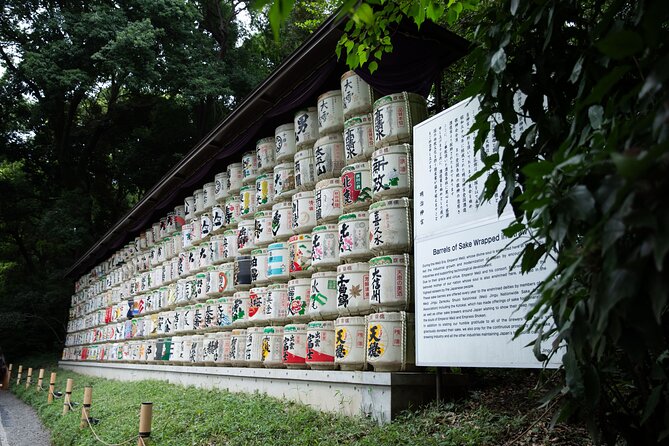
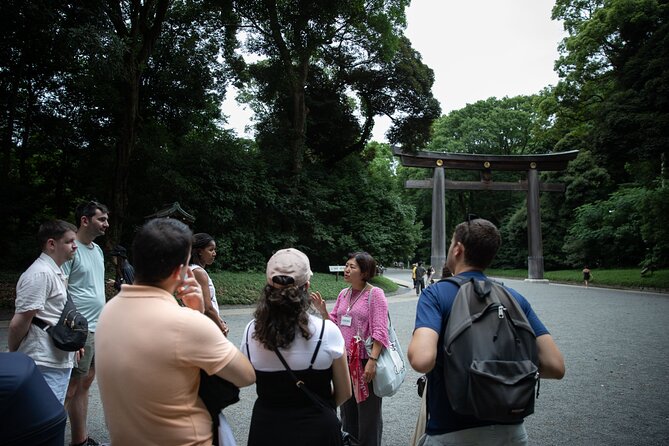
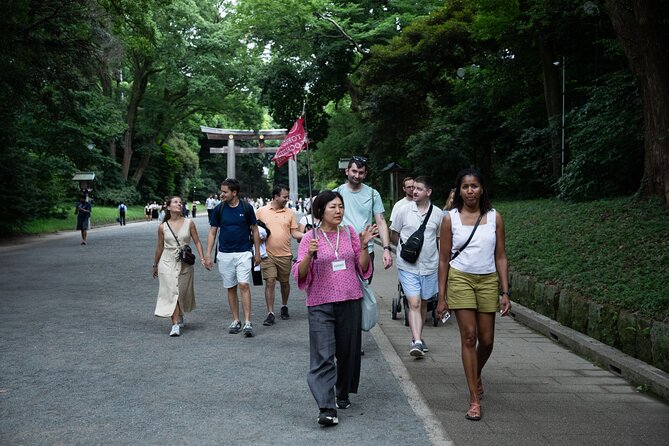
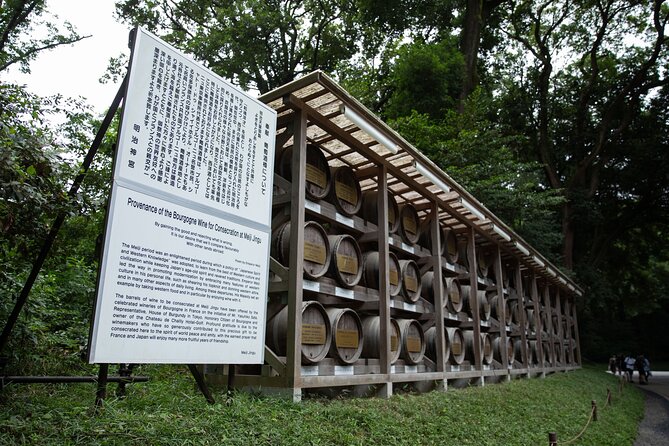
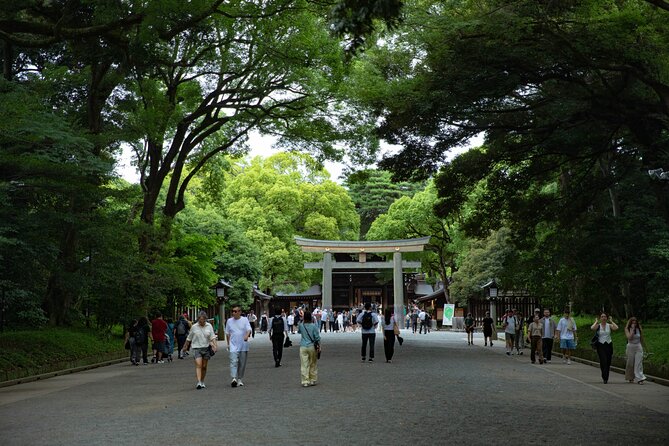
The first stop is Meiji Jingu, with about 40 minutes set aside for the shrine. You enter through large torii gates and follow tree-lined paths through a 70-hectare forest. That setting is the first major surprise of the route. Harajuku is known for crowds and fashion, yet the shrine approach feels removed from the city.
Your guide can help turn a shrine visit into more than a quick photo stop. Hiroko, in particular, is praised for explaining the shrine’s history, religious meaning, and proper etiquette. That matters if this is your first Shinto shrine visit, since small actions and respectful behavior may not be obvious when you arrive alone.
The tour information lists admission as included, while the shrine stop itself has no separate admission charge. In practical terms, you are paying for the guided experience, not a costly entry ticket. The guide’s explanations are the part that gives this stop its value.
Allow yourself to listen closely here. The forest, gates, and shrine buildings provide the setting, but the details about Japanese culture help you understand what you are seeing. The guide may also answer questions about religion and daily life, which is one reason this walk works well for families and mixed-age groups.
The 40-minute stop is enough for an introduction, but it is not a complete shrine visit. If you want extended time for quiet reflection, photographs, or a closer look at every feature, plan to return on your own. The tour keeps moving because it also covers two very different parts of Harajuku.
Takeshita Street: Harajuku turns up the color
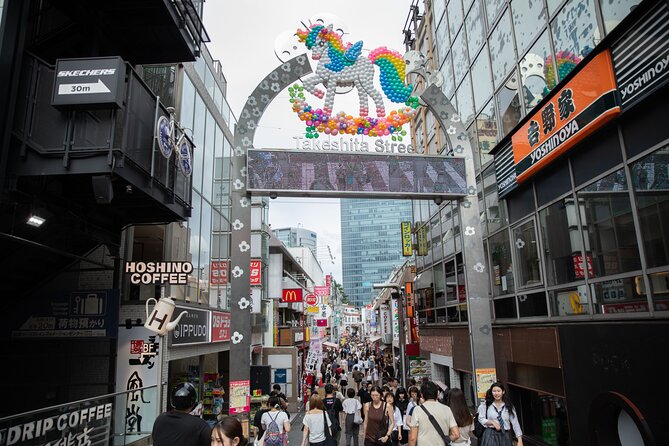
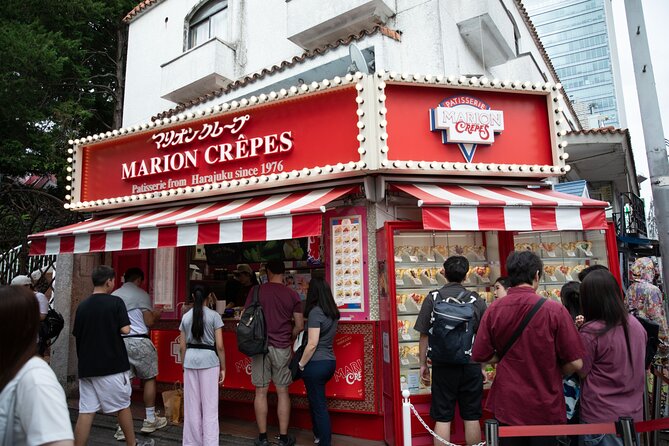
From the calm of Meiji Jingu, the route shifts to Takeshita Street for about 30 minutes. This is a narrow, 400-meter pedestrian lane filled with boutiques, accessory shops, themed stores, and the visual energy associated with Harajuku youth culture.
The contrast is the point. You move from wooded shrine paths to a compact street where color, fashion, and novelty are hard to miss. A guide can add context about why this area matters to Tokyo’s younger shoppers and how it differs from the grander retail streets nearby.
Thirty minutes is enough to understand the character of Takeshita Street, but you should not expect a leisurely shopping session. If a shop catches your attention, note it and return after the tour. The route is designed to show you the area and explain it, not to wait while everyone makes purchases.
This is also the part of the walk most likely to feel crowded. The street is narrow, and its popularity is part of its appeal. Keep your group in sight and expect a slower walking pace. Anyone who dislikes busy shopping lanes may enjoy Meiji Jingu more, while anyone interested in youth fashion and unusual shops will likely find this stop especially useful.
I appreciate that the guide does not treat Takeshita Street as an isolated attraction. Placing it after the shrine makes the change in mood clear. You get a better sense of Harajuku as a neighborhood of contrasts rather than a single theme park for fashion.
More Harajuku wanders:
- Tokyo Go-Kart Tour Shibuya-Harajuku-Shinjuku (*IDP Required)
★ 5.0 · 217 reviews - Tokyo: Guided Go Kart Tour from Harajuku to Shibuya Crossing
★ 4.5 · 166 reviews - Shibuya & Harajuku: Hidden Gems & Highlights Private Tour
★ 4.7 · 139 reviews - Harajuku Kawaii Fashion and Pop-Culture Tour
★ 5.0 · 94 reviews
Omotesando: polished design beside youth culture
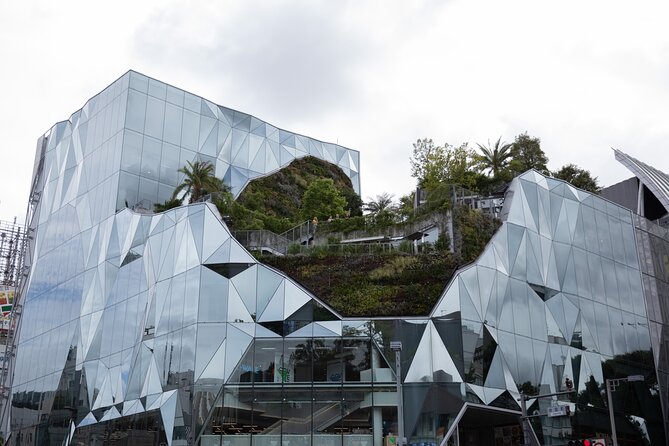
The final listed stop is Omotesando, with about 20 minutes on the broad, tree-lined avenue. It is known for high-end boutiques, flagship designer stores, and modern architecture. The street has a more polished feel than Takeshita Street, with wider sidewalks and a calmer rhythm in the route description.
This stop adds a useful second view of Harajuku shopping. Takeshita Street shows the area’s playful, youthful side. Omotesando presents a more refined retail district where buildings and storefronts are part of the attraction.
Twenty minutes gives you an orientation, not a serious shopping trip. You will have time to see the avenue and hear why it is often compared with Paris’s Champs-Élysées, but you will need to return later if you want to browse designer stores. The short stop is sensible within a two-hour tour, since the walk already covers a lot of ground.
The route ends at Tokyu Plaza Harajuku, known here as HARAKADO, at Jingumae 6-chome. This is a useful finish because you are left in a central Harajuku shopping area rather than returned to the starting point. It also gives you a clear place to continue exploring after the guide says goodbye.
The guides make the difference
The strongest part of this experience is the human explanation. Miyu is repeatedly praised for her friendly manner, clear history lessons, answers to questions, and practical tips. Her pacing also suits a group with different ages and interests. That is important on a route that moves between religion, history, fashion, and modern city life.
Hiroko receives similar praise for making shrine etiquette and Japanese culture understandable, especially for first-time visitors. One useful feature of the guiding style is its balance. The explanations are described as informative without becoming too long, which helps when the group is walking and the surroundings keep changing.
Guide quality can vary from one departure to another, so you should not assume Miyu or Hiroko will lead every date. Still, the named guides give you a useful idea of the experience: expect a local perspective, questions along the way, and information that connects old traditions with present-day Tokyo.
I would book this near the start of a Tokyo stay. The route gives you practical orientation, and the guide can offer tips that help you decide where to spend more time later. You also get an early introduction to shrine etiquette, which is useful if more temples and shrines are on your itinerary.
Walking effort, group size, and timing
The total duration is about two hours. The route includes three stops and walking between them, so wear comfortable shoes. The information provided does not give a total distance or a detailed breakdown of every walking segment, so you should think of it as a standard neighborhood walking tour rather than a seated sightseeing trip.
Most people can participate, and service animals are allowed. The tour is near public transportation, which makes the start convenient. If you need detailed information about surfaces, seating, or rest stops, ask the provider before booking because those details are not specified.
A maximum of 15 people is a good middle ground. You get more structure than a solo visit but less of the crowd management associated with a large group. A smaller group also makes it easier to hear the guide on a city street and ask about etiquette, history, or shopping areas.
The tour is short enough to fit into a busy Tokyo schedule. You could take it in the morning and continue around Harajuku afterward, or use it as an afternoon introduction before dinner elsewhere. Since the itinerary does not provide exact departure times, check the available start time when booking.
Is $25 a fair price?
At $25, this is a sensible price for a two-hour guided introduction to one of Tokyo’s most varied neighborhoods. You are not paying for an expensive attraction ticket. Meiji Jingu and the shopping streets are public places, and the listed admission fee is included along the way.
The real purchase is time and interpretation. A guide leads you directly between major sights, explains shrine behavior, adds local context, and helps you see why the neighborhood changes so sharply from one block to the next. For a first visit, that can be worth more than the cost of a coffee and a few wrong turns.
The price is less compelling if you are comfortable researching routes, reading about shrine customs in advance, and exploring crowded shopping streets alone. Harajuku is accessible, and you do not need a tour to enter these areas. The best value goes to visitors who want an easy introduction, have limited time, or enjoy asking questions as they walk.
The 100 percent recommendation rate and five-star score shown for the experience are encouraging, with 61 ratings recorded. I would place the greatest weight on the repeated praise for the guides’ explanations, friendly approach, pacing, and practical advice. Those are the features most likely to affect your day.
Who should book this walk?
I would recommend it to first-time Tokyo visitors, families, couples, and anyone who wants cultural context without committing to a long full-day program. It is also a good fit if you want to see both the quiet and fashionable sides of Harajuku in one outing.
It suits curious shoppers who want more than store names, and first-time shrine visitors who want etiquette explained before they explore other sacred sites in Japan. The manageable duration also works well for people building a packed Tokyo schedule.
You may want to skip it if you prefer complete independence, dislike walking in busy districts, or plan to spend most of your time shopping rather than listening. You should also remember that each stop is brief. This tour introduces Harajuku; it does not replace a full afternoon there.
Booking and cancellation details
The tour costs $25 per person and uses a mobile ticket. You can cancel for a full refund up to 24 hours before the experience start time. Cancellations or changes made less than 24 hours before the start are not accepted for a refund, and the cut-off follows Tokyo local time.
The provider is Localized Walking & Food Tours. Confirmation arrives when you book, and the meeting point is Harajuku Station. Check the exact departure time and keep the end point, Tokyu Plaza Harajuku, in mind when planning what comes next.
Should you book the Harajuku Meiji Shrine Walking Tour?
Book it if you want a friendly, efficient introduction to Harajuku and prefer understanding a place rather than simply passing through it. The combination of Meiji Jingu, Takeshita Street, and Omotesando gives you three distinct views of the district, while guides such as Miyu and Hiroko add the history, etiquette, and local tips that are easy to miss alone.
Skip it if you already know Harajuku or want several hours for shopping and photography. For most first-time visitors, though, $25 is a fair trade for a well-planned two-hour orientation, especially near the start of a Tokyo stay.
FAQ
How long is the Harajuku Meiji Shrine Walking Tour?
The tour lasts approximately two hours.
How much does the tour cost?
The price is $25 per person.
Where does the tour start?
It starts at Harajuku Station, at 1 Chome-18 Jingumae, Shibuya, Tokyo 150-0001, Japan.
Where does the tour end?
The tour ends at Tokyu Plaza Harajuku, also called HARAKADO, at Jingumae 6-chome in Shibuya.
Which places are included in the route?
The route includes Meiji Jingu Shrine, Takeshita Street, and Omotesando.
How large can the group be?
The group has a maximum of 15 travelers.
Is admission included?
An admission fee is listed as included. The Meiji Jingu Shrine stop itself is listed with free admission.
Is the tour accessible by public transportation?
Yes. The experience is near public transportation, and the meeting point is Harajuku Station.
Can I cancel for a full refund?
Yes. You can cancel at least 24 hours before the start time for a full refund. Cancellations or changes made less than 24 hours before the start time are not accepted for a refund.
More Walking Tours in Tokyo
- Tokyo Tsukiji Fish Market Food and Culture Walking Tour
★ 5.0 · 3,184 reviews - Tokyo: Imperial Palace and Shogun Historical Walking Tour
★ 5.0 · 2,251 reviews - Tokyo: Shinjuku Local Bar and Izakaya Guided Walking Tour
★ 4.9 · 1,794 reviews - Tokyo: Tsukiji Fish Market Food and Walking tour
★ 5.0 · 1,724 reviews
New on our Tokyo list
- From Tokyo: Mount Fuji & Hakone Full Day Private Tour★ 4.9 · 25 reviews
- Tokyo Spectacular View Day-Cruise in 90 Minutes★ 5.0 · 25 reviews
- Real Tokyo Runner Club : Daikoku Car Meet Night Tour with JDM Car★ 5.0 · 25 reviews
- 2.5 Hour-Guided Cycle Tour in the Central Tokyo★ 5.0 · 25 reviews
- Tokyo: 2-Hour Night Bike Tour of the City’s Hidden Gems★ 4.9 · 25 reviews
- Ramen Making from Scratch +Akihabara Tour –Cooking Class★ 5.0 · 25 reviews
- [Self-Drive] Tokyo & Daikoku Custom Car Driving Tour★ 4.9 · 25 reviews
- Samurai themed Entertainment show in Shinjuku★ 4.5 · 25 reviews
Temple & Shrine Tours, compared.
Meiji Shrine, Asakusa, Skytree Bus Tour and Cruise
Read our review →
Asakusa Walking Tour with Sensoji Temple Visit
Read our review →
Kamakura & Enoshima Day Trip including Temple Tickets
Read our review →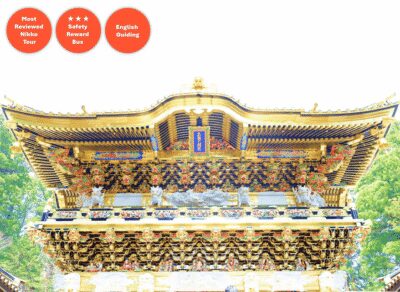
Nikko Toshogu Shrine and Kegon Waterfall Tour
Read our review →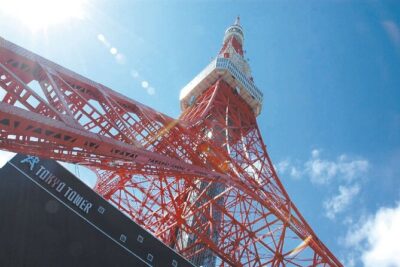
Tokyo Panoramic 1 Day: Meiji Shrine, Asakusa, Odaiba and SKYTREE®
Read our review →
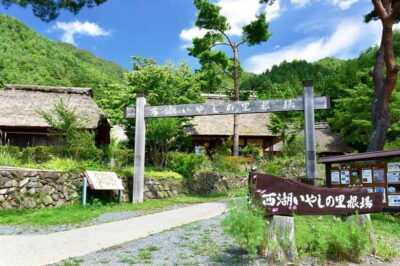
Mt. Fuji Heritage Tour: Traditional Villages, Lakes & Shrine
Read our review →Browse the lists this tour appears in