
Reviewed · HISTORICAL TOURS
Historic Town of Kawagoe – Small town of Edo 3h Walking Tour
Kawagoe gives you a taste of old Tokyo without sending you far from the capital. On this three-hour walk, you move through streets shaped by the Meiji, Taisho, Showa, and Heisei eras, with dark wooden Kura-Zukuri storehouses, sweets shops, temples, and a famous bell tower along the way. It is a useful choice if you want history explained rather than simply photographed.
I like the small group, limited to six, and the built-in pause for a drink and cake or snack. I also like the human touches: guide Masahito Ito has helped visitors with questions about Japanese history, translated in a local clothing shop, and assisted with getting a goshuin book. The main drawback is simple: this is a walking tour with plenty of time on your feet, and Kawagoe can feel crowded in peak seasons.
In This Review
- Key points about the Kawagoe walk
- Why Kawagoe makes a good Tokyo day trip
- Starting at Honkawagoe Station
- The old street and Kura-Zukuri storehouses
- Four eras along one three-hour route
- Bell tower, cultural properties, and the town’s sound
- Candy Alley and the Showa-era sweet stop
- The included drink, cake, and snack break
- What the guides add to the experience
- Is $70 a fair price?
- Who should book this walk?
- Should you book the Kawagoe walking tour?
- FAQ
- How long is the Kawagoe walking tour?
- Where does the tour meet?
- How do I get to Kawagoe for the tour?
- What language is the tour conducted in?
- How large is the group?
- What sights are included?
- Are food and drinks included?
- Is the tour suitable for wheelchair users?
- What should I bring?
Key points about the Kawagoe walk
- Kura-Zukuri streets: See the thick-walled storehouses built after the 1893 great fire, a distinctive part of Kawagoe’s old commercial center.
- Four eras in one town: The route connects Meiji, Taisho, Showa, and Heisei traces instead of treating Kawagoe as a single frozen period.
- Candy Alley: Visit Confectionery Yokocho, known for more than 70 shops in its early Showa-era heyday in the 1930s.
- Small-group guiding: With no more than six participants, it is easier to ask questions and keep the pace personal.
- A welcome refreshment: Your fee includes one drink and one cake or snack, a handy break during the walk.
- A practical half-day plan: You return to Honkawagoe Station with time left for lunch, shopping, and more sweets.
Why Kawagoe makes a good Tokyo day trip
Kawagoe sits about 40 kilometers northwest of Tokyo. From the capital, you first make your way to Seibu Railway’s Honkawagoe Station, where the tour begins outside the ticket barriers near Starbucks. The transport cost is not included, so you need to budget for the train separately.
The payoff is a town with a different rhythm from central Tokyo. Kawagoe is often called Koedo, meaning Little Edo, because parts of the town preserve an old-style commercial setting associated with Tokyo’s Edo period. This tour is not a museum visit dressed up as a walk. You move through working streets, shops, cafés, cultural properties, and places where people still buy food and religious items.
I find that useful because old Japanese streets can be hard to read on your own. A dark wooden building may look attractive, but a guide can explain why it was built that way, how the 1893 fire changed the main street, and how the town moved through later periods without losing its older character.
The four-era theme also gives the walk a clear shape. Rather than seeing a collection of unrelated sights, you get a basic sense of how Kawagoe changed from Meiji to Taisho, Showa, and Heisei. The experience is especially suited to you if you enjoy architecture, local history, and small food stops more than major monuments.
A few more Tokyo bookings worth comparing
- Tokyo: Imperial Palace and Shogun Historical Walking Tour
★ 5.0 · 2,251 reviews - Tokyo: Imperial Palace Japanese History Walking Tour
★ 4.9 · 987 reviews - Yanaka Walking Tour: Historic and Traditional District of Tokyo
★ 5.0 · 530 reviews
Starting at Honkawagoe Station
The meeting point is in front of Starbucks outside the ticket barrier at Seibu Railway’s Honkawagoe Station. That detail matters. Kawagoe has several railway stations, so check that you are heading to Honkawagoe rather than simply searching for Kawagoe Station and assuming they are the same place.
Once the group gathers, the walk begins with about five minutes on foot. This is a short opening stretch, but it gets you away from the station and into the town’s older setting. With a group capped at six people, you should have a fair chance to hear the guide clearly and ask for help with questions about customs, buildings, or food.
English is the tour language. Masahito Ito is one of the guides associated with the experience, and Masa has also led the walk. The available comments describe both as kind, clear, and generous with their time. I would still treat the guide assignment as subject to availability, but the small-group format gives the experience a more personal feel than a large coach outing.
Wear shoes you can walk in for three hours. You should also carry water, sunscreen, and a hat, and check the forecast before setting out. Smoking is not allowed during the activity.
The old street and Kura-Zukuri storehouses
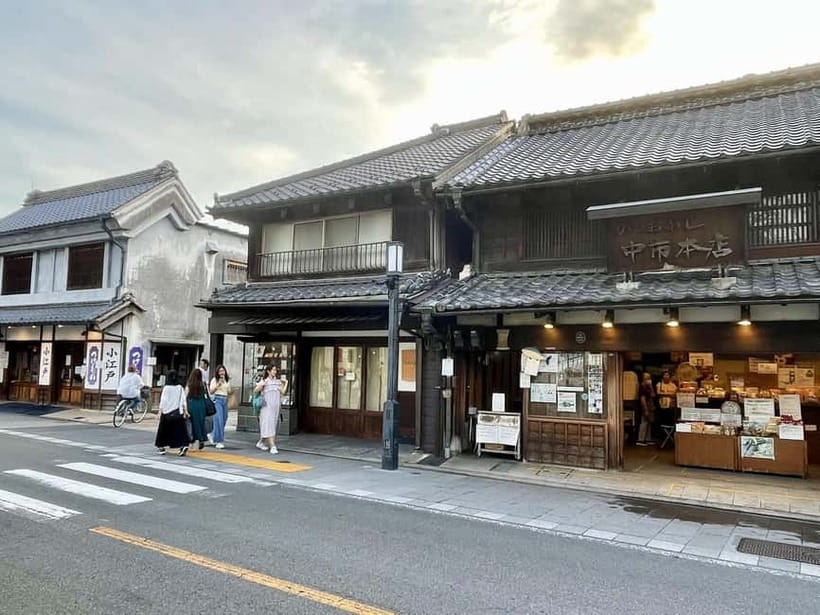
The heart of the walk is Kawagoe’s main historic street, where you see Kura-Zukuri-style houses. These buildings have thick walls and a heavy, storehouse-like appearance. They were built to resist fire, an important point in a town that suffered a major blaze in 1893.
The street is photogenic, but the construction is more than decoration. The fire helps explain why these buildings look so different from ordinary wooden shopfronts. A guide can point out how the town’s merchants adapted, and why the surviving style became part of Kawagoe’s identity.
This is one of the strongest parts of the tour for anyone who likes buildings with a story. You are not just taking a picture of a black-and-white façade. You are seeing how fire, trade, and later rebuilding shaped the town.
The main street can also be busy. Shops and pedestrians share the same area, and peak tourist periods bring more people. Take care near crowded sections, and do not expect a quiet private stroll at every moment. The benefit is that Kawagoe remains a place with active shops and local food rather than a carefully sealed historic set.
Four eras along one three-hour route
The tour uses the Meiji, Taisho, Showa, and Heisei periods as a way to understand Kawagoe’s changing face. These names can sound like a history lesson, but on foot they become easier to place.
The Meiji period brought major changes to Japan after the end of the shogunate. Taisho followed with its own cultural style, while Showa covers a long span that includes the early 1930s and the postwar years. Heisei is the most recent period included here. You are not promised a formal lecture at every stop, but the route is designed to show how old and newer elements sit together.
That approach is helpful if you are visiting Japan for the first time and want context without spending a full day in a museum. It also works for repeat visitors who have already seen Tokyo’s major districts and want a smaller city with a strong local character.
The tradeoff is that three hours can only introduce these eras. If you want a detailed academic account of Japanese history, this is not the right format. If you want clear explanations tied to real streets and buildings, the balance makes sense.
More walking routes in Tokyo:
- Tokyo Tsukiji Fish Market Food and Culture Walking Tour
★ 5.0 · 3,184 reviews - Tokyo: Shinjuku Local Bar and Izakaya Guided Walking Tour
★ 4.9 · 1,794 reviews - Tokyo: Tsukiji Fish Market Food and Walking tour
★ 5.0 · 1,724 reviews - Tokyo: Asakusa Walking Tour with Sensoji Temple Visit
★ 4.8 · 1,583 reviews
Bell tower, cultural properties, and the town’s sound
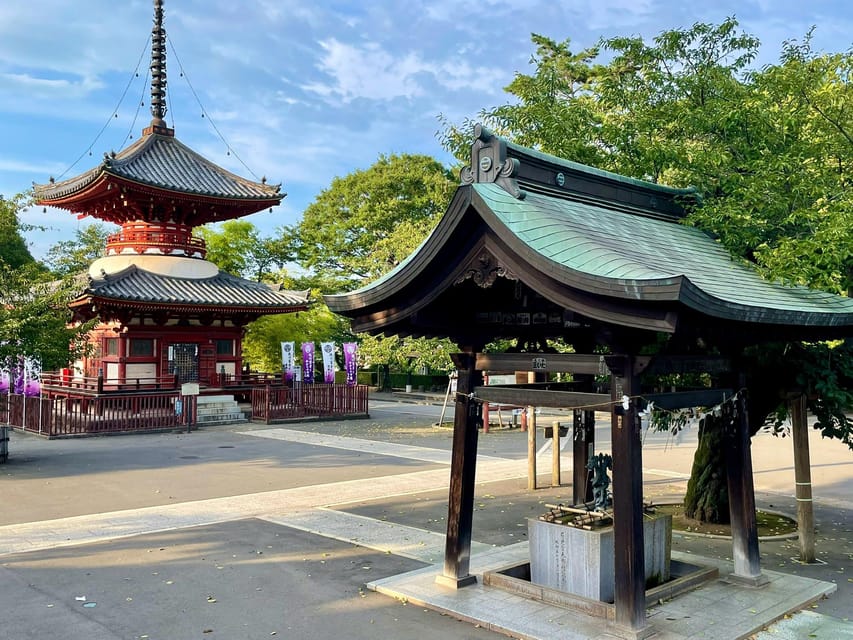
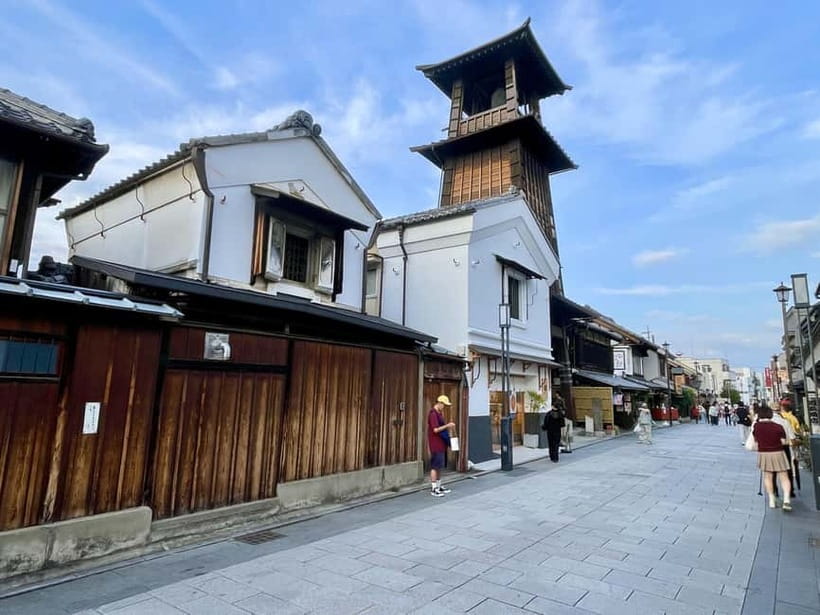
One of the stops is the bell tower, a well-known Kawagoe sight. A particularly good moment can come when you hear the bell in action. You should not assume it will ring at a precise time during every tour, but the chance to see and hear it adds more life than a quick photograph alone.
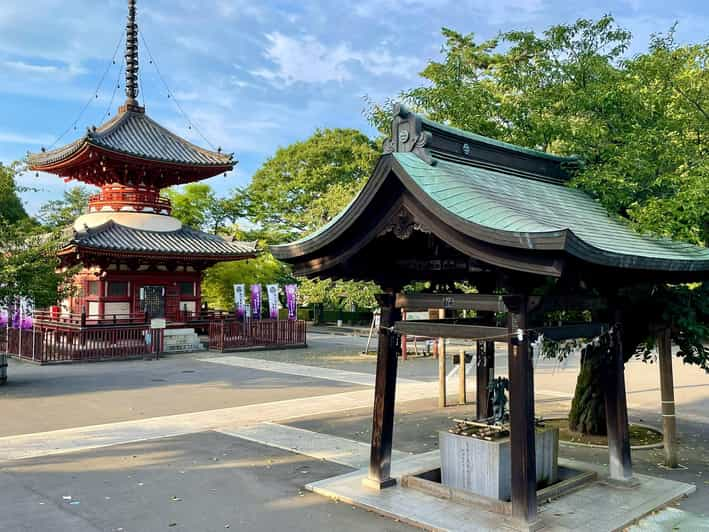
The route also includes visits to historical buildings and cultural properties. Exact stop order can vary, but the overall plan allows time for several short visits, shopping, walking, and a guided sightseeing segment of about 30 minutes.
This varied pacing suits Kawagoe. You might spend one stretch looking closely at a building, then move on to a shop or cultural site, then pause for food. It keeps the tour from becoming a long march through similar streets.
Some visitors may prefer more time inside each attraction. The stops are short, with individual visit periods listed at around 10 and 20 minutes, followed by longer blocks for shopping and walking. Think of this as an introduction to Kawagoe’s historic center, not a detailed museum tour.
Candy Alley and the Showa-era sweet stop
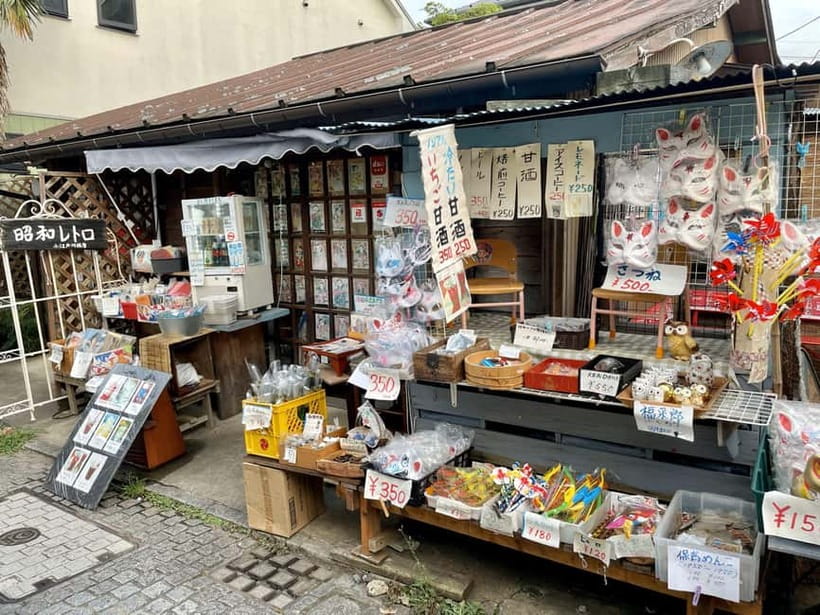
Confectionery Yokocho, often called Candy Alley, is one of the most appealing parts of the route. The area had more than 70 stores during its early Showa-era heyday in the 1930s, giving it a strong connection to everyday sweets and local shopping.
Today, the appeal is practical as well as historical. You can look at traditional-style treats, browse shops, and see how a small commercial lane remains tied to Kawagoe’s food culture. This is a good place to save room in your appetite. Even if the tour includes a cake or snack, you may want to buy something for later.
Candy Alley is also where the old-town atmosphere feels less formal. Historical buildings can sometimes seem distant, but a sweets street gives you a direct way to take part. You are not just learning about the past. You are choosing something to eat.
The area may be crowded, and shop visits are part of the walking time rather than a long private tasting session. If you want a broad food tour, this activity will not replace one. If you want a compact introduction to Kawagoe’s sweets and old shopping streets, it works well.
The included drink, cake, and snack break
The price includes one drink and one cake or snack. That is a small but useful detail. Three hours of walking can feel longer than expected, especially in warm weather, and a seated café pause gives you time to recover and ask the guide questions.
The café is described as being in a historic building, which makes the break fit the theme instead of feeling like an unrelated chain stop. Seasonal nature and local gourmet food are also part of the general Kawagoe experience, though the exact refreshment can vary.
One past outing included a delicious beer and snack. Do not assume beer is guaranteed, since the included drink is not specified, but the comment points to the relaxed nature of the pause. You may receive a nonalcoholic drink or another available option.
The snack is not a full meal. Plan lunch separately, especially if you are hungry in the morning. One of the best ways to use the tour is to stay in Kawagoe afterward, find lunch, continue shopping, and try another sweet before returning to Tokyo.
What the guides add to the experience
A guide is most useful in Kawagoe when you want help connecting small details. The tour can answer questions about the town, Japanese history, cultural properties, and local customs in a way that a map cannot.
Masahito Ito has helped with practical cultural encounters, including getting a goshuin book and translating in a local clothing store. A goshuin book is used to collect commemorative calligraphy and stamps at religious sites. That kind of assistance can make a short visit feel less awkward, especially if you are unsure what to ask or how to handle a purchase.
Masa has also been praised for clear explanations and for giving a visitor who had already been to Kawagoe a fuller experience. That is worth noting. A guide is not only for first-time visitors. You may recognize the bell tower or Candy Alley, yet still learn more when someone explains the setting.
The small group helps here. Six people is small enough for questions without turning every stop into a private tour. The guide can also help with translation when you step into a shop, although you should not expect unlimited personal shopping assistance.
Is $70 a fair price?
At $70 per person, this is not the cheapest way to walk around Kawagoe. You still pay for transportation from Tokyo, and lunch, shopping, and extra sweets are on your own.
The value comes from the three hours of guided context, the small group, entrance fees to certain attractions, and the included drink and cake or snack. If you would otherwise spend the day looking at buildings without understanding them, the guide can make the extra cost worthwhile.
I would compare it with your own travel style. Independent visitors who enjoy reading signs, using translation tools, and setting their own pace may prefer to visit Kawagoe alone. In that case, a self-guided day costs less and lets you linger longer in Candy Alley or shop at your own speed.
You should consider the tour good value if you have limited time in Tokyo, want an English-speaking guide, or prefer a planned route through several historic areas. It is also a sensible choice for families, since the guide can answer questions and help with local interactions. The three-hour length leaves enough of the day for lunch and independent exploring.
Who should book this walk?
I would choose this tour if you want a manageable introduction to Kawagoe rather than an all-day historical course. It suits couples, families, solo visitors, and small groups who enjoy walking, food, architecture, and stories about how Japanese towns developed.
It is also a good fit for repeat Japan visitors. Kawagoe offers a change from Tokyo’s modern central districts, and the route gives you a reason to look beyond the most famous sights.
I would hesitate if you have mobility limitations, use a wheelchair, or find three hours of walking difficult. The activity is not suitable for people with mobility impairments or wheelchair users. Crowds may also make the route tiring during busy seasons.
Bring a camera, but keep your attention on the guide too. The best parts are not only the attractive façades. They are the links between the fire, the storehouses, the bell, the sweets, and the town’s changing eras.
Should you book the Kawagoe walking tour?
Book it if you want a small, friendly, English-language introduction to Koedo Kawagoe and value explanation over simply wandering. The strongest reasons are the six-person limit, the Kura-Zukuri streets, Candy Alley, the historic café pause, and the chance to ask for practical help with local customs and shops.
Skip it if you want complete freedom, a low-cost self-guided outing, or a slower visit with long stops inside each attraction. If you do book, stay in Kawagoe after the tour for lunch, shopping, and more sweets. That turns a focused three-hour walk into a rewarding day trip from Tokyo.
FAQ
How long is the Kawagoe walking tour?
The tour lasts three hours, including walking, sightseeing, visits, shopping time, and a drink and cake or snack break.
Where does the tour meet?
Meet in front of Starbucks outside the ticket barrier at Honkawagoe Station on the Seibu Railway.
How do I get to Kawagoe for the tour?
Transportation to and from Kawagoe is not included. The experience information advises taking a train from Ikebukuro Station to Kawagoe, and you must make your own transportation arrangements.
What language is the tour conducted in?
The live tour guide speaks English.
How large is the group?
The tour is a small-group experience limited to six participants.
What sights are included?
The walk includes historical buildings, cultural properties, Kura-Zukuri-style houses, the historic town area, the bell tower area, and Confectionery Yokocho, also known as Candy Alley.
Are food and drinks included?
One drink and one cake or snack are included. A full lunch is not included.
Is the tour suitable for wheelchair users?
No. The activity is not suitable for wheelchair users or people with mobility impairments.
What should I bring?
Bring comfortable walking shoes, a hat, a camera, sunscreen, and water. Check the weather forecast and dress appropriately.
More 3-Hour Experiences in Tokyo
- Tokyo Top Highlights 3h Guided E-bike Tour
★ 5.0 · 714 reviews - 3h Tokyo E-Bike Tour: Hidden Gems, and Local Life with guide
★ 5.0 · 670 reviews - Tokyo: 3-Hour Bike or E-Bike City Highlights Tour
★ 4.8 · 435 reviews - Tokyo: 3-hour Guided E-Bike Tour of the City’s Hidden Gems
★ 4.8 · 251 reviews
New on our Tokyo list
- Sumi-e Experience in a relaxing green tea shop in Tokyo★ 5.0 · 3 reviews
- Tokyo : Kamikaze Street Drift Ride★ 5.0 · 3 reviews
- Private Zen Meditation in English in Shinjuku, Tokyo★ 5.0 · 3 reviews
- Onsen Spa in Tokyo and Asakusa Bar Hopping with Local Guide★ 5.0 · 3 reviews
- Easy for everyone! Now you can play handmade mini shamisen and show off to everyone! Musical instruments, sweets and live music★ 5.0 · 3 reviews
- Tokyo: Private Tsukiji Street Food & Sake with Local Guide★ 5.0 · 3 reviews
- Mt Fuji Exploration Tour with Free Japanese Kusa Mochi from Tokyo★ 4.5 · 3 reviews
- Tokyo Tsukiji Fish Market Walking and Exploring Hidden Gems Tour★ 5.0 · 3 reviews
Historical Tours, compared.

Imperial Palace and Shogun Historical Walking Tour
Read our review →
Yanaka Walking Tour: Historic and Traditional District of Tokyo
Read our review →
Shinjuku Historical Walking Tour & Secret Backstreets
Read our review →
Mt. Fuji Heritage Tour: Traditional Villages, Lakes & Shrine
Read our review →
The Best of Izakaya in Shinjuku Food & Cultural Tour
Read our review →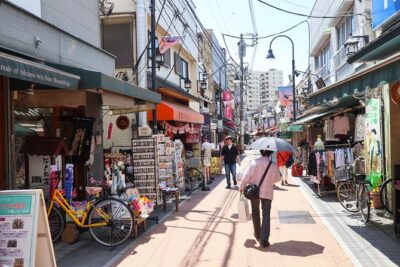
Yanaka Historical Walking Tour in Tokyo’s Old Town
Read our review →Browse the lists this tour appears in