
Reviewed · RAMEN EXPERIENCES
Home made Ramen you made from scratch!!
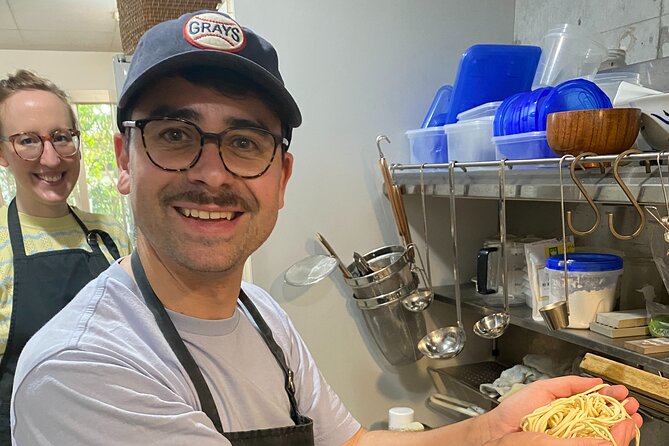
The best part of this Tokyo class is that you do not simply watch someone assemble a bowl of noodles. You make the ramen noodles and soup from scratch, then work through the supporting dishes that give the meal its depth. Hideki, who spent about 10 years working in ramen restaurants, guides you through the process in his Shinagawa cooking studio.
I like the very small group size, limited to four people, and the useful location near Shinagawa Station, central Tokyo districts, and Haneda Airport. I also like that the class includes gyoza, a recipe booklet, and lunch made from your own work. The main consideration is the price: at $115 per person, this costs far more than a bowl of ramen, so it makes the most sense if you want a practical cooking lesson, not just a meal.
In This Review
- Key points to know before booking
- Making real ramen instead of just eating it
- The Shinagawa meeting point and getting there
- Starting with noodles and soup stock
- Nitamago and chashu add the restaurant touch
- Folding gyoza alongside the ramen
- The final cooking stage moves quickly
- A small class with a personal feel
- Is $115 a fair price?
- Who will enjoy this Shinagawa cooking class?
- Booking, timing, and cancellation details
- Should you book Hideki’s ramen class?
- FAQ
- Where does the ramen cooking class take place?
- How long does the experience last?
- What food will I make?
- Is lunch included?
- How many people can join?
- Who teaches the class?
- Does the class end where it begins?
- Is the studio near public transportation?
- Can I cancel for a full refund?
Key points to know before booking
- Former ramen chef Hideki leads the class: He brings about a decade of restaurant experience and handles the fast final cooking stages.
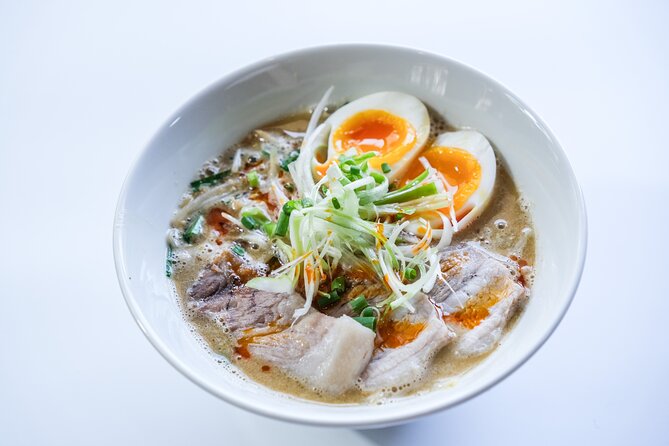
- You make the meal from scratch: The lesson covers noodles, dashi, nitamago, chashu, ramen, and gyoza.
- Maximum of four people: This is a personal, hands-on class rather than a large demonstration.
- The class takes place in a home studio: Hideki may meet you at the train station and walk with you to the studio.
- You receive practical help for cooking at home: A recipe booklet and ingredient-sourcing advice are part of the experience.
- The location works well with a busy Tokyo schedule: The studio is near Shinagawa and convenient for Ginza, Shibuya, Shinjuku, and Haneda Airport.
Making real ramen instead of just eating it
Tokyo has no shortage of excellent ramen shops. A good bowl can be quick, affordable, and deeply satisfying. But a restaurant meal gives you very little sense of how the dish comes together. This class takes the opposite approach. You spend roughly three hours learning the work behind the bowl, then sit down to eat the results.
That difference matters. Ramen is not one recipe but a collection of separate parts that must meet at the right moment. The noodles need attention. The soup needs a proper stock. The pork and egg need preparation ahead of serving. Gyoza adds another set of steps. You get a better feel for the dish because you are involved in each stage.
Hideki’s background is a real strength. He worked in ramen restaurants for about 10 years, so this is not simply a casual home-cooking demonstration. You can expect restaurant-based tips as you go, along with help when the timing gets tight.
The class is held in Hideki’s home cooking studio in Minamishinagawa. That setting gives the experience a personal feel, though it is worth understanding what you are booking. This is not a polished culinary school with a large teaching kitchen and multiple stations. It is a small, friendly class in a local home environment.
More ramen stops:
- Eat and Drink Like a Local: Tokyo Ueno Food Tour-Taverns&Ramen
★ 5.0 · 957 reviews - Ramen & Gyoza Cooking Class in Tokyo with Local Supermarket Visit
★ 5.0 · 823 reviews - Tokyo: Ramen Tasting Tour with 6 Mini Bowls of Ramen
★ 4.9 · 432 reviews
The Shinagawa meeting point and getting there
The meeting point is Hideki Ramen Cooking Studio at 6-chōme-15-3 Minamishinagawa, Shinagawa City, Tokyo 140-0004. The activity ends at the same place, so you do not need to arrange a separate return transfer after lunch.
The area is convenient for a Tokyo itinerary. Shinagawa is a useful transport hub, and the studio is also positioned well for plans involving Ginza, Shibuya, Shinjuku, or Haneda International Airport. That makes this class easier to fit into a trip than an activity far from the main transport routes.
Several class participants were met at the train station by Hideki, who then walked them to his home. That is helpful if you are unfamiliar with the local streets or worried about finding a private studio. Communication about the meeting point is described as clear, and Hideki has also stayed in contact through WhatsApp when participants were running late while working out the train system.
Still, leave enough time to reach the station and confirm the meeting details. Tokyo’s rail network is efficient, but it is easy to lose minutes changing lines or finding the correct exit. Since the class has a fixed cooking schedule, arriving early is the sensible plan.
Starting with noodles and soup stock
The lesson begins with the foundations of the meal. You learn how to prepare the dashi, or soup stock, and how to make the noodles. These are the parts that turn ramen from a convenient dish into a proper cooking project.
The noodle lesson is especially useful if you want to repeat the meal at home. The class is not limited to opening a packet and adding toppings. You work through the noodle-making process and learn how the soup is built. The exact recipe details are not provided in the booking information, but Hideki supplies a recipe booklet so you can refer back to the method later.
Dashi is also a valuable skill beyond ramen. Japanese cooking uses stock as a base for many dishes, and learning its role helps you understand why a bowl can taste full even when its ingredients look simple. Hideki’s advice during this stage gives you the kind of practical guidance that is hard to get from a written recipe alone.
Keep in mind that the pace may change as the cooking progresses. One French-speaking participant described the class as starting calmly, then moving faster as the final cooking stage approached. That is normal for ramen. Several components need to be ready at nearly the same time, and Hideki takes control of the last steps when needed.
Nitamago and chashu add the restaurant touch
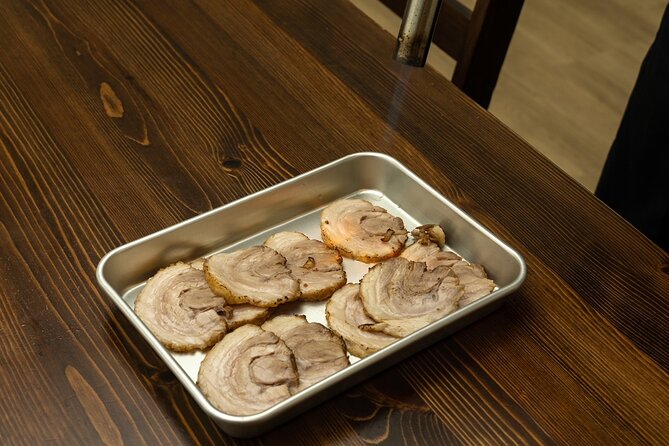
The class also covers nitamago, the seasoned boiled egg commonly served with ramen, and chashu, the boiled pork topping. These ingredients may look like simple garnishes, but they do much of the work that makes a bowl feel complete.
Nitamago teaches you that timing and preparation matter. The egg is not just placed on top at random. It needs to be cooked and prepared as part of the ramen plan. Chashu adds another texture and a savory topping, giving you a better understanding of how ramen shops build a bowl in layers.
This is one of the strongest reasons to choose the class over a basic food demonstration. You are learning several separate techniques that you can use again, rather than memorizing only one finished dish. The take-home booklet is useful here, especially once you are back home and trying to remember the order of the steps.
The class also offers ingredient-sourcing advice. That is a small but important detail. A recipe can be easy to follow and still be difficult to repeat if you do not know what to buy or where to find it. Hideki’s guidance helps bridge that gap, although the provided information does not specify particular shops or substitutions.
A few more Tokyo bookings worth comparing
- Mt Fuji and Hakone 1-Day Bus Tour Return by Bullet Train
★ 5.0 · 26,383 reviews - 1-Day Tokyo Bus Tour
★ 5.0 · 14,250 reviews - Tokyo: TOKYO SKYTREE® Admission ticket
★ 4.5 · 11,192 reviews - Tokyo: teamLab Planets TOKYO Digital Art Museum Entry Ticket
★ 4.6 · 9,779 reviews
Folding gyoza alongside the ramen
Gyoza gives the class a welcome change of pace. While the ramen involves stock, noodles, egg, and pork, the dumplings add hands-on shaping and assembly. You make them with Hideki rather than receiving a separate plate prepared in advance.
The gyoza also makes the meal feel broader than a single-bowl lesson. You finish with a complete Japanese lunch that includes ramen and dumplings, and the cooking process gives you different tasks to handle. This is a good fit if you want to learn food you can make for friends at home.
Hideki’s teaching style appears well suited to beginners. He is described as patient, friendly, welcoming, and willing to walk participants through each step. That matters in a small class because you can ask questions and get help before a mistake becomes difficult to fix.
The class is not presented as a formal professional qualification, and you should not expect advanced culinary training. Instead, you get a practical introduction led by someone who knows the restaurant version of the food. For most visitors, that balance is the point.
The final cooking stage moves quickly
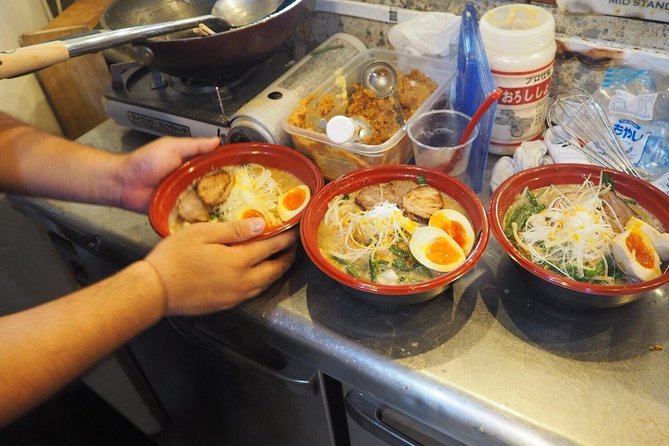
Ramen rewards preparation, but the final stage is fast. Once the stock, noodles, egg, pork, and dumplings are ready, timing becomes important. The class gathers everything into the finished meal, and Hideki helps manage the last cooking steps.
One useful detail is that Hideki may take over part of the final cooking when the pace increases. That is not a weakness. It helps protect the meal you have spent the class preparing. You still learn by doing, but you also get guidance from someone used to producing ramen in a restaurant setting.
This is where the class differs from a slow, relaxed cooking lesson. The early work gives you time to understand the ingredients. The ending has more pressure because the food needs to be served at the right moment. If you enjoy a little kitchen energy, it adds fun. If you prefer a perfectly unhurried class, the final stretch may feel busy.
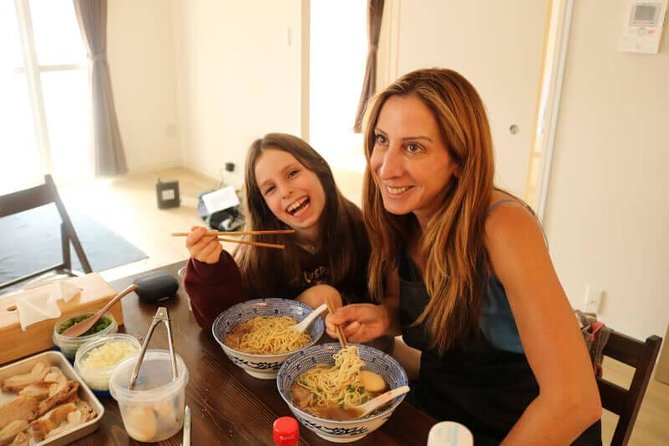
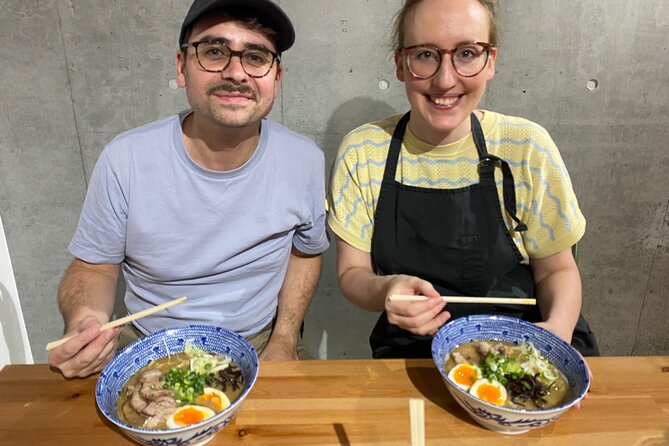
At the end, you eat the ramen and gyoza you made. Lunch is included in the $115 price, but alcoholic drinks and soft drinks cost extra. The meal is not an add-on after the lesson. It is the payoff for the work you have just done, and it lets you judge the balance of the soup, noodles, pork, egg, and dumplings yourself.
A small class with a personal feel
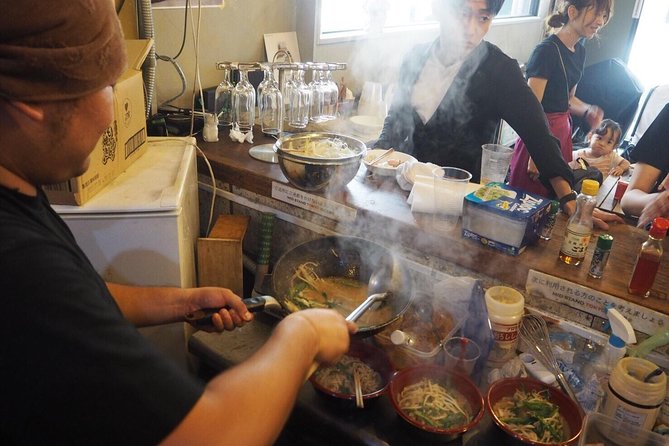
The maximum group size is four people, and the class can also operate as a private experience for a smaller party. That size has a clear benefit: Hideki can keep an eye on each stage, answer questions, and offer hands-on help.
The setting is intimate. You are visiting a home studio rather than joining a large group in a commercial kitchen. Past participants were welcomed into Hideki’s home, and some described the atmosphere as friendly and close. That personal contact is likely to appeal to you if you prefer meeting a local host over attending a standard tourist workshop.
There is a tradeoff. A home setting may feel less formal and less spacious than a dedicated cooking school. The supplied information does not give details about kitchen layout, seating, or accessibility, so you should contact the provider if those points matter to you.
The small size also makes this a good choice for couples, families, or friends who want to cook together. Group discounts are available, though the exact discount is not stated. Ask about the current rate when booking rather than assuming a fixed saving.
Is $115 a fair price?
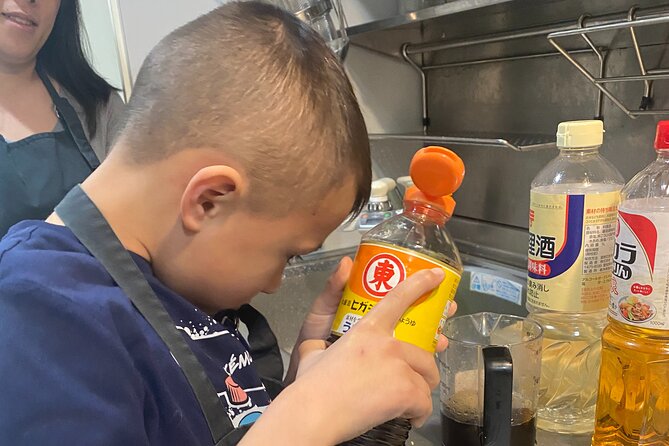
At $115 per person, this is an expensive lunch if you judge it only by the food. You can buy ramen in Tokyo for much less. The value comes from the three-hour lesson, Hideki’s professional experience, the small group, the gyoza, the recipe booklet, and the chance to repeat the meal at home.
I would compare it with the price of a private cooking class in another major city, not with a restaurant bowl. You are paying for instruction and access to a local host as well as lunch. If you want a souvenir that takes up no space in your suitcase, a recipe and a new cooking skill can be more useful than another purchased item.
The value is strongest for you if you enjoy cooking or want to recreate Japanese food after the trip. Several participants made the ramen again at home using Hideki’s recipe. That is a good sign that the lesson is designed to be practical rather than purely entertaining.
The value is weaker if your main goal is simply to eat excellent ramen. In that case, spend the money at a well-regarded ramen shop and use the remaining time to see Tokyo. This class earns its price through participation, not through the meal alone.
Who will enjoy this Shinagawa cooking class?
I would recommend it most strongly to:
- Couples and small groups who want a private-feeling activity.
- Visitors who enjoy cooking and want a recipe they can use at home.
- Food lovers curious about the work behind restaurant-style ramen.
- Families or friends who like hands-on activities more than sightseeing talks.
- People staying near Shinagawa or arranging a plan that includes Haneda Airport.
- Anyone who appreciates direct help from a local host and a small class.
It may be less suitable for someone with a very tight schedule. The activity lasts about three hours, and the meeting point is fixed. It may also disappoint you if you expect a large professional kitchen, a formal chef’s uniform, or a fully relaxed pace from start to finish.
Alcohol and soft drinks are not included, so plan to pay extra if you want them. The activity is near public transportation, but the listing does not specify a pickup service from hotels or the airport. You should use the stated meeting point and allow time for the train journey.
Booking, timing, and cancellation details
The experience is often booked about seven days ahead, and confirmation is sent within 48 hours, subject to availability. Since the group is capped at four people, booking early is sensible if you have only one open day in Tokyo.
Mobile tickets are supported, and free cancellation is available if you cancel at least 24 hours before the local start time. Cancellations made less than 24 hours before the start are not refunded, and late changes are not accepted. This policy is worth noting if your Tokyo schedule may shift.
The activity starts and ends at the Hideki Ramen Cooking Studio. The booking information confirms that it is near public transportation, but it does not provide a detailed walking route from a specific station. Confirm the meeting instructions before the day of the class, especially if you plan to rely on a station meeting with Hideki.
Should you book Hideki’s ramen class?
Book this class if you want to understand ramen as a process, not just order it from a counter. Hideki’s 10 years of restaurant experience, tiny group size, station assistance, recipe booklet, and hands-on work with noodles, dashi, nitamago, chashu, and gyoza give the experience real substance.
I would especially choose it for a couple or small group with three spare hours and an interest in cooking at home. The $115 price is fair when you value the lesson and the personal host, but it is not a bargain meal. If you want only a quick taste of Tokyo ramen, skip the class and visit a restaurant. If you want to take a useful piece of Japanese food culture home with you, this is a strong pick.
FAQ
Where does the ramen cooking class take place?
The class takes place at Hideki Ramen Cooking Studio, 6-chōme-15-3 Minamishinagawa, Shinagawa City, Tokyo 140-0004, Japan.
How long does the experience last?
The cooking class lasts approximately three hours.
What food will I make?
You will make ramen and gyoza dumplings. The lesson also includes dashi soup stock, nitamago ramen-style boiled egg, chashu boiled pork, and homemade noodles.
Is lunch included?
Yes. Lunch consists of the ramen you make from scratch. Alcoholic beverages and soft drinks cost extra.
How many people can join?
The activity has a maximum of four participants.
Who teaches the class?
Hideki leads the class. He worked at a ramen restaurant for about 10 years.
Does the class end where it begins?
Yes. The activity ends back at the meeting point, Hideki Ramen Cooking Studio.
Is the studio near public transportation?
Yes. The studio is near public transportation and is positioned conveniently for areas including Ginza, Shibuya, Shinjuku, Shinagawa, and Haneda International Airport.
Can I cancel for a full refund?
Yes, if you cancel at least 24 hours before the experience start time. Cancellations made less than 24 hours before the start are not refunded, and changes made within that period are not accepted.
New on our Tokyo list
- Sumi-e Experience in a relaxing green tea shop in Tokyo★ 5.0 · 3 reviews
- Tokyo : Kamikaze Street Drift Ride★ 5.0 · 3 reviews
- Private Zen Meditation in English in Shinjuku, Tokyo★ 5.0 · 3 reviews
- Onsen Spa in Tokyo and Asakusa Bar Hopping with Local Guide★ 5.0 · 3 reviews
- Easy for everyone! Now you can play handmade mini shamisen and show off to everyone! Musical instruments, sweets and live music★ 5.0 · 3 reviews
- Tokyo: Private Tsukiji Street Food & Sake with Local Guide★ 5.0 · 3 reviews
- Mt Fuji Exploration Tour with Free Japanese Kusa Mochi from Tokyo★ 4.5 · 3 reviews
- Tokyo Tsukiji Fish Market Walking and Exploring Hidden Gems Tour★ 5.0 · 3 reviews
Ramen Experiences, compared.

Eat and Drink Like a Local: Tokyo Ueno Food Tour-Taverns&Ramen
Read our review →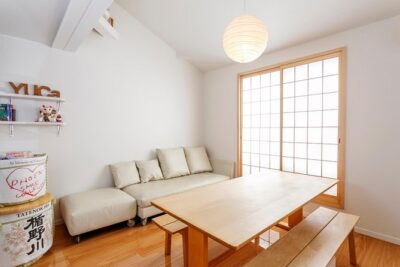
Ramen & Gyoza Cooking Class in Tokyo with Local Supermarket Visit
Read our review →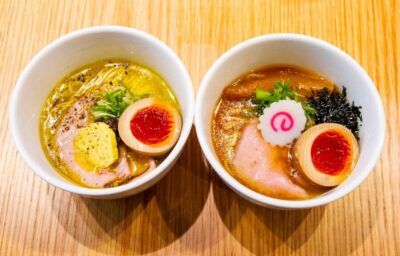

Easy Ramen Cooking Experience in Kabukicho, Shinjuku
Read our review →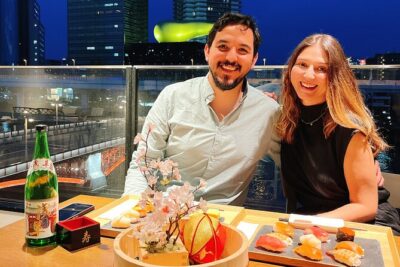
Ramen and Sushi Cooking Class with Sake Pairing Set in Tokyo
Read our review →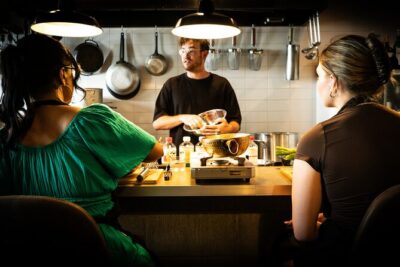
Professional Ramen & Gyoza with Ramen Chef in a restaurant!
Read our review →
Ramen Dojo Tokyo | Make All 3 (Tonkotsu/Shoyu/Miso)
Read our review →Ramen Dojo Tokyo | Make All 3 (Tonkotsu/Shoyu/Miso)
Read our review →Browse the lists this tour appears in