
Reviewed · SUSHI EXPERIENCES
How to use Japanese knife, Tuna Cutting and Sushi Workshop
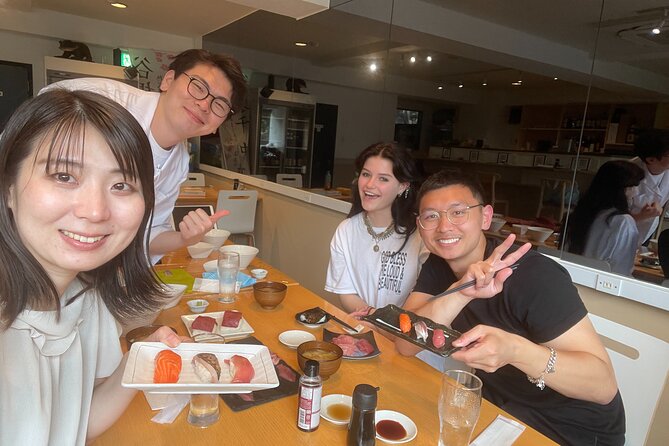
Cutting a tuna block with a sushi chef is the heart of this Tokyo workshop. You learn why different sections of the fish are cut and used in different ways, then put that lesson to work by preparing sushi for breakfast. It is a rare chance to handle a task usually left to professionals.
I like two things right away: the small maximum of 10 people, which should leave room for instruction, and the fact that your tuna and sushi ingredients are included. You are not paying for a cooking demonstration and then buying lunch afterward. You prepare food and eat it as part of the two-hour session.
The main consideration is the price, $182.43 per person. That is a serious sum for a short food class, and the workshop does not list a market visit as part of this booking. You are paying for access to a professional chef, quality ingredients, and a specialized skill rather than a long sightseeing program.
In This Review
- Key points to know before booking
- Why cutting tuna changes the way you see sushi
- A 9:30 a.m. start in Azabujuban
- Learning the tuna from the knife outward
- From tuna cuts to hand-shaped sushi
- The people who make the lesson work
- What the workshop teaches about Edo sushi
- Is $182.43 a fair price?
- What is not included in this specific booking
- Who will get the most from this morning
- Practical details that affect your morning
- Should you book the tuna and sushi workshop?
- FAQ
- Where does the tuna and sushi workshop start?
- What time does the activity begin?
- How long does the workshop last?
- What is included in the price?
- What is the maximum group size?
- Does the workshop finish at a different location?
- Can I cancel for a full refund?
Key points to know before booking
- Cutting tuna is the main event: Learn about the fish’s different parts and practice making cuts with a sushi chef.
- Breakfast is part of the lesson: After preparing the fish, you make sushi and eat what you create.
- A professional leads the class: Guides and interpreters such as Amy, Azusa, and Adam have helped explain the food and technique.
- The group is limited to 10 people: This is small enough to feel personal, though the final group size can vary.
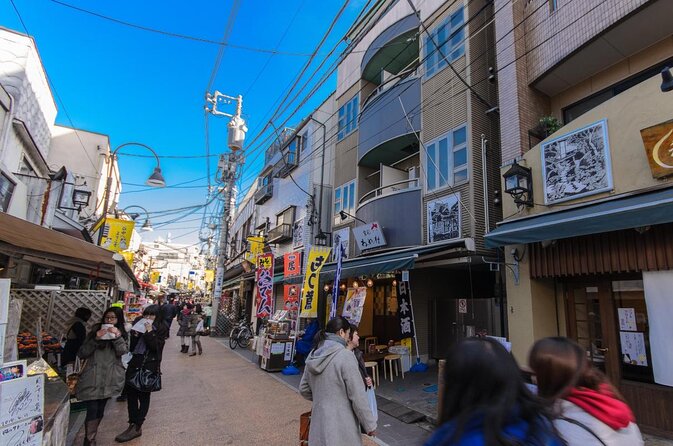
- The meeting point is in Azabujuban: Start at 9:30 a.m. at 3-chome Azabujuban in Minato City.
- Your booking has room to change: Free cancellation is available until 24 hours before the start time, subject to the stated conditions.
Why cutting tuna changes the way you see sushi
Most sushi classes begin with rice, toppings, and a few simple shaping exercises. This one begins farther upstream, with the fish itself. That makes the lesson more useful if you want to understand sushi rather than simply assemble it.
A tuna block is not just a piece of red fish waiting to be sliced. The cut, grain, fat, and texture vary across the fish. The chef explains the different sections and shows you how those differences affect preparation. You then get to use the knife yourself, under instruction.
That hands-on step matters. A chef can make a clean cut in seconds, but watching the motion is not the same as feeling how the knife moves through the fish. The class gives you a small taste of the control and judgment required behind a sushi counter.
You should not expect to become a professional sushi chef in two hours. The value is in seeing the process from the inside. You leave with a better sense of why sushi can look simple while demanding careful technique.
More sushi mornings and classes:
- Sushi Making Tokyo Roll and Authentic Japanese Sushi Class
★ 5.0 · 3,971 reviews - Tokyo: Roll and Authentic Sushi Making Class in Asakusa
★ 4.9 · 1,957 reviews - Make Sushi and Create Unforgettable Memories in Tokyo
★ 5.0 · 1,413 reviews
A 9:30 a.m. start in Azabujuban
The workshop begins at 9:30 a.m. at 3-chome Azabujuban, Minato City, Tokyo 106-0045, at the listed location, Sanpia Azabujuban. The meeting point is described as easy to locate and close to public transportation, which helps with an early start in a city where a small address can otherwise take time to find.
Give yourself enough time to reach the building without rushing. The activity is short, and arriving late could cut into the part you paid to learn. Your mobile ticket is useful for keeping the booking details on your phone while you make your way there.
The morning timing has a practical advantage. Sushi becomes breakfast, so the meal fits naturally into the schedule instead of taking over your sightseeing day. Afterward, you still have most of the day available for Tokyo.
It also means this is not the best choice if you prefer a slow morning. A 9:30 start is manageable, but you need to be ready for a focused class rather than a leisurely brunch.
Learning the tuna from the knife outward
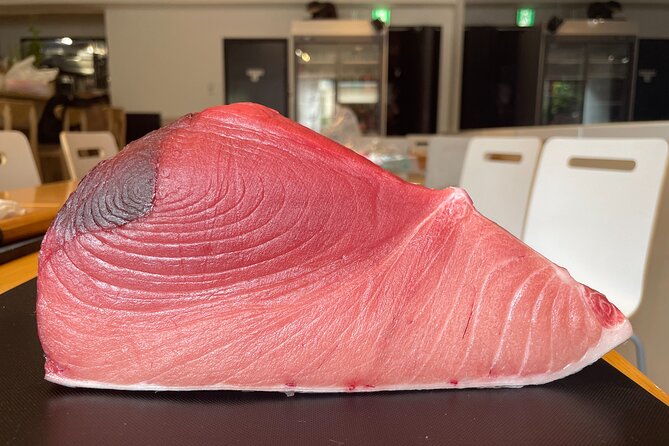
The chef begins by introducing tuna and its parts. This is where the workshop offers something beyond a standard sushi-making class. You learn that the fish is divided into sections with different qualities, and that a sushi maker’s job includes deciding how each part should be cut and served.
The chef then demonstrates the knife work. Pay attention to the angle, pressure, and direction of the cut. The point is not simply to make a slice. It is to protect the texture and create a piece that works for sushi.
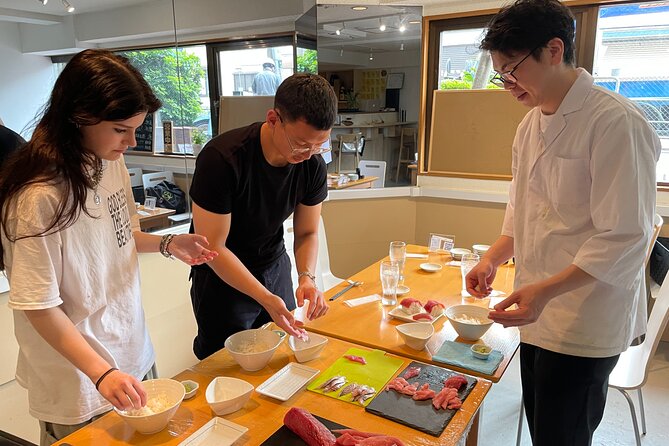
Then it is your turn. You cut tuna alongside the chef and work through some of the techniques yourself. The information supplied for the class describes this as an opportunity normally reserved for professionals, so you should expect a real task rather than a token gesture with a harmless piece of food.
That can be humbling in a good way. The technique looks easy when a skilled chef does it. Once you try, you see how much control it takes to make a neat, attractive cut. The lesson gives you respect for the craft without pretending that one class can cover every part of it.
If you have sons, daughters, or friends who enjoy food, the activity also works well as a shared project. One account describes a family learning how to cut tuna and prepare nigiri together. The structure gives everyone something to do, rather than leaving one person to cook while the rest watch.
From tuna cuts to hand-shaped sushi
After cutting the fish, you use it to make sushi. The class includes the tuna and the other sushi ingredients, so you can move from preparation to assembly without an extra purchase.
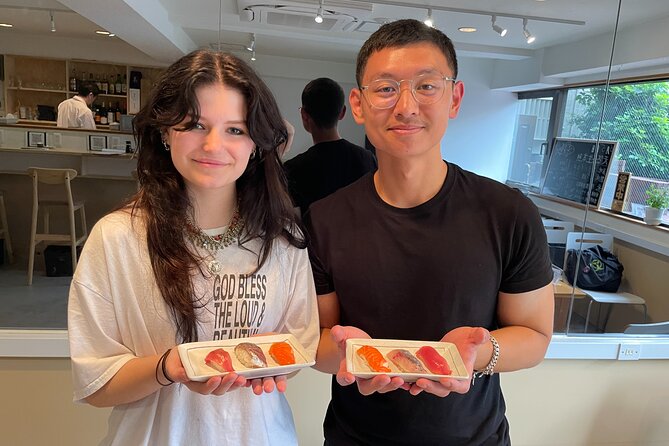
The focus includes nigiri-style sushi, according to the supplied descriptions. You shape the rice and place the tuna on top, following the chef’s instruction. This sounds simple, but the class makes clear how difficult it is to get the technique right.
That is the fun of the meal. You are not only eating a finished dish prepared by someone else. You are seeing how the fish, rice, knife, and hand movements fit together. The final pieces may not look exactly like those made by the chef, but that is part of the lesson.
The sushi is eaten for breakfast at the workshop. Food quality matters here, since the meal is both the result of your work and part of what makes the price easier to assess. The supplied comments describe the tuna and prepared dishes as delicious, with some sessions including several tuna cuts and chef-prepared dishes at the restaurant.
Keep in mind that the exact food selection is not itemized. The confirmed details say tuna and sushi ingredients are included, but they do not promise a specific number of pieces, a set menu, or particular tuna cuts. If those details matter to you, ask the operator before booking.
A few more Tokyo bookings worth comparing
- Tokyo Shinjuku Chopsticks Making Class
★ 5.0 · 1,763 reviews - Tokyo: Sushi Making Class in a Happi Coat near a Famous Spot
★ 4.9 · 1,377 reviews - Chopstick Making Workshop in Ginza
★ 4.8 · 1,366 reviews - Tokyo Sushi Making Class in Tsukiji with Professional Chef
★ 5.0 · 1,177 reviews
The people who make the lesson work
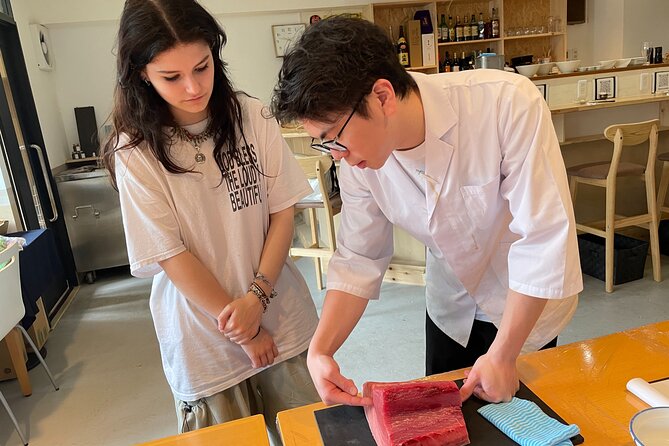
A knife lesson depends on clear instruction. The chef has to explain technique in a way that makes sense to a beginner, then watch closely enough to correct mistakes before they become bad habits.
Language support is also important. Amy is named as a translator who explained the process with enthusiasm. Azusa and Adam are also named in connection with friendly, informative instruction. Since staff assignments can change, treat these names as examples of the team rather than a guarantee that one particular person will lead your date.
The human side of the class is one of its strengths. A group of no more than 10 people is small enough for introductions, questions, and a little conversation while the chef works. You can make new friends without being placed in a huge cooking crowd.
Still, group size is a maximum, not a promise that every session will have only a handful of people. If the class fills to 10, some waiting may be necessary while each person handles the knife. That is normal for a practical lesson, but it is worth remembering if you want one-to-one coaching throughout.
What the workshop teaches about Edo sushi
The class includes a short historical introduction to sushi and places attention on Edo sushi. That context gives the food a stronger connection to Tokyo. You are not just learning a recipe detached from its setting.
The historical portion is brief, based on the available details, so do not book this expecting a long lecture. Its role is to prepare you for the practical work. You get enough background to understand the style, then move quickly to the tuna and the sushi.
This balance suits most people. Food history is more useful when you can connect it to what you are holding in your hands. After hearing about the tradition, you immediately see how the chef handles the fish and shapes the sushi.
The lesson also reveals the gap between making sushi at home and working as a professional. One account describes the class as an eye-opening way to understand how much skill a sushi chef needs. That may be the most lasting souvenir: a sharper eye when you sit at a sushi counter later in your trip.
Is $182.43 a fair price?
At $182.43 per person, this is not a budget cooking class. The two-hour length makes the price look high if you compare it with a basic sushi lesson where the instructor provides pre-cut ingredients.
The calculation improves if you value the tuna cutting itself. You are handling a block of tuna, learning about its sections, receiving instruction from a professional, making sushi, and eating the result. The ingredients are included, and the class is capped at 10 people.
You are also paying for access to a specialized activity. Most visitors can order tuna. Far fewer get to learn how a sushi maker breaks down and prepares it. If your main goal is to eat as much sushi as possible, the price may not feel efficient. If your goal is to understand the craft, the cost is easier to justify.
The price makes most sense for food-focused visitors, cooking enthusiasts, and people marking a special morning in Tokyo. It is less compelling for someone who only wants a quick introduction to sushi or who already has a full day of expensive activities planned.
What is not included in this specific booking
Some of the available descriptions mention Toyosu Market, tuna auctions, wholesale seafood, market shopping, and behind-the-scenes access. Those details appear connected to market-focused sessions or related combinations, but they are not part of the stated schedule for this booking.
For this activity, the confirmed plan is a two-hour tuna-cutting and sushi workshop beginning and ending at the Azabujuban meeting point. Do not assume that a Toyosu visit is included just because you have heard about it in connection with the same food program.
This distinction matters when planning your morning. If you want both Toyosu and sushi-making, check the exact product name and confirmation details before paying. Otherwise, treat this as a focused class rather than a fish-market tour.
Who will get the most from this morning
I would recommend the workshop most strongly to you if you meet one or more of these descriptions:
- You want a food activity that teaches a real technique.
- You enjoy small-group classes more than large demonstrations.
- You are curious about how sushi chefs choose and cut tuna.
- You are traveling with family members who like hands-on activities.
- You want a breakfast plan that finishes in about two hours.
- You are happy to pay for instruction and ingredients rather than only for a meal.
It can also suit repeat visitors to Tokyo who have already seen the major sights. The class gives you a different way to spend a morning and connects food with Japanese craft.
I would hesitate if you dislike handling knives, want a long market tour, or expect to leave with professional-level skills. The knife work is the point, not a side activity. You should be comfortable following safety instructions and accepting that your first cuts may be uneven.
Practical details that affect your morning
Confirmation is sent within 48 hours of booking, subject to availability. Since the class is often booked well ahead, with an average booking lead time of about 71 days, reserve early if the 9:30 time fits tightly into your Tokyo plans.
The activity ends back at the starting point. That makes planning simpler, especially if you have another reservation later in the day. Public transportation is nearby, but the provided details do not name a specific station or give walking times.
The activity requires good weather, and it can also be canceled if the minimum number of participants is not reached. In either case, you are offered another date or a full refund. For your own cancellation, you can cancel free of charge until 24 hours before the local start time. Changes or cancellations inside that window are not accepted for a refund.
Should you book the tuna and sushi workshop?
Book it if you want access to the work behind sushi, not just another meal. Cutting tuna with a chef, learning about its parts, and shaping your own nigiri make this more distinctive than a class that begins with fish already portioned for you.
I would not book it as a substitute for Toyosu Market, since that stop is not part of the stated two-hour program. I would also compare the $182.43 price with your other food plans. But if the cost fits your budget and you like practical lessons, this is a memorable use of a Tokyo morning, with a meal you helped create at the end.
FAQ
Where does the tuna and sushi workshop start?
It starts at Japan, 106-0045 Tokyo, Minato City, Azabujuban, 3-chome 34, Sanpia Azabujuban.
What time does the activity begin?
The workshop starts at 9:30 a.m.
How long does the workshop last?
The activity lasts approximately two hours.
What is included in the price?
Tuna and sushi ingredients are included. You also receive instruction from a professional sushi maker and take part in the tuna-cutting and sushi-making activities.
What is the maximum group size?
The activity accepts a maximum of 10 people.
Does the workshop finish at a different location?
No. The activity ends back at the meeting point in Azabujuban.
Can I cancel for a full refund?
Yes. You can cancel at least 24 hours before the local start time for a full refund. Cancellations or changes made less than 24 hours before the start are not refunded.
New on our Tokyo list
- Sumi-e Experience in a relaxing green tea shop in Tokyo★ 5.0 · 3 reviews
- Tokyo : Kamikaze Street Drift Ride★ 5.0 · 3 reviews
- Private Zen Meditation in English in Shinjuku, Tokyo★ 5.0 · 3 reviews
- Onsen Spa in Tokyo and Asakusa Bar Hopping with Local Guide★ 5.0 · 3 reviews
- Easy for everyone! Now you can play handmade mini shamisen and show off to everyone! Musical instruments, sweets and live music★ 5.0 · 3 reviews
- Tokyo: Private Tsukiji Street Food & Sake with Local Guide★ 5.0 · 3 reviews
- Mt Fuji Exploration Tour with Free Japanese Kusa Mochi from Tokyo★ 4.5 · 3 reviews
- Tokyo Tsukiji Fish Market Walking and Exploring Hidden Gems Tour★ 5.0 · 3 reviews
Sushi Experiences, compared.
Sushi Making Tokyo Roll and Authentic Japanese Sushi Class
Read our review →
Roll and Authentic Sushi Making Class in Asakusa
Read our review →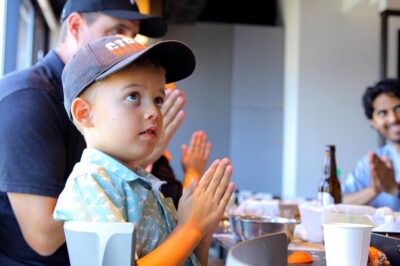
Make Sushi and Create Unforgettable Memories in Tokyo
Read our review →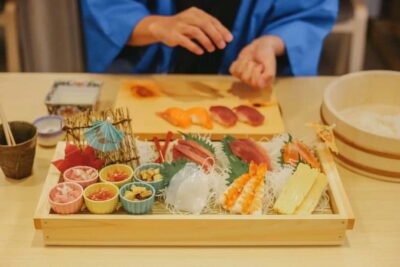
Sushi Making Class in a Happi Coat near a Famous Spot
Read our review →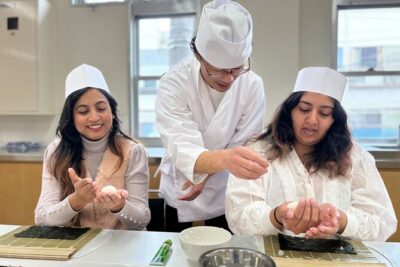
Tokyo Sushi Making Class in Tsukiji with Professional Chef
Read our review →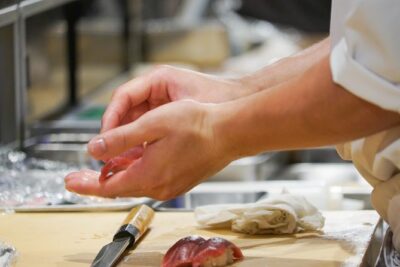
Tokyo Night Foodie Tour in Shinjuku – Seasonal Sushi, Wagyu Beef
Read our review →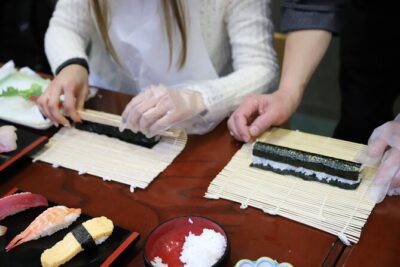
Tsukiji Fish Market Guided Tour and Sushi Making with Pro Chef
Read our review →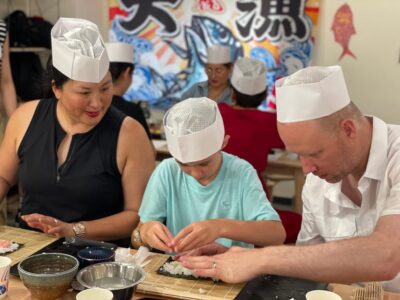
Tsukiji Fish Market Sushi Making Class with Pro Chef
Read our review →Browse the lists this tour appears in