
Reviewed · WORKSHOPS
Chopstick Making Workshop in Ginza
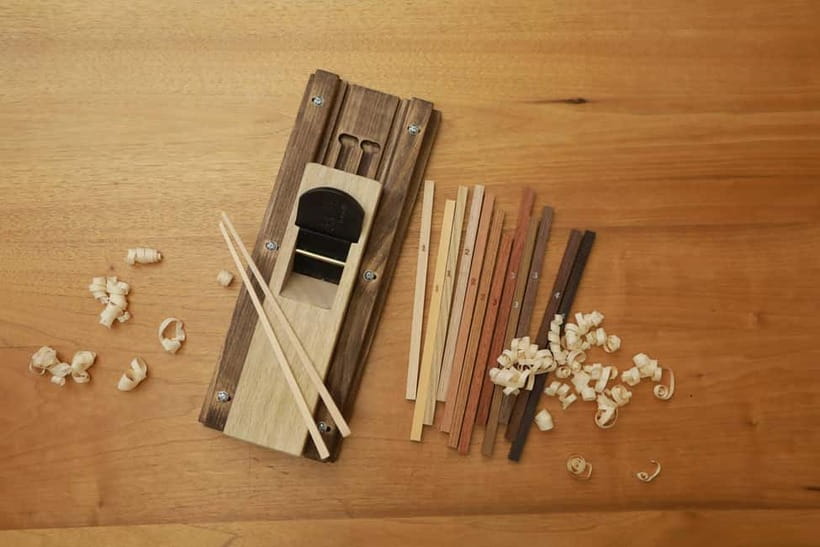
Making chopsticks by hand turns a familiar Japanese object into a useful souvenir with a story. At 銀座箸 in Ginza, you choose your wood and length, then use a hand plane, sandpaper, and oil to shape the pair yourself.
I like the choice of 24 woods and the fact that you take the finished chopsticks home the same day. I also like the optional laser engraving, which can add a name or phrase in Japanese or your own language. The main consideration is physical effort: planing takes real pressure, and busy sessions may leave you waiting briefly for help.
In This Review
- Key points to know before you book
- Why this one-hour Ginza activity works
- Choosing wood and length at 銀座箸
- Planing the chopsticks by hand
- Sanding the tips and corners
- Oil gives the wood its finished look
- Engraving in Japanese or your own language
- English guidance and the workshop atmosphere
- Is $25 good value in Ginza?
- Who should book this chopstick workshop?
- Practical timing and cancellation advice
- My verdict on 銀座箸
- FAQ
- Where is the chopstick workshop located?
- How long does the activity take?
- How much does the workshop cost?
- Can I choose the type of wood?
- Can I choose the chopstick length?
- Is engraving included?
- Can the engraving be written in English or another native language?
- Is English instruction available?
- Can I take the chopsticks home immediately?
- Is the workshop wheelchair accessible?
- Who should not take part?
Key points to know before you book
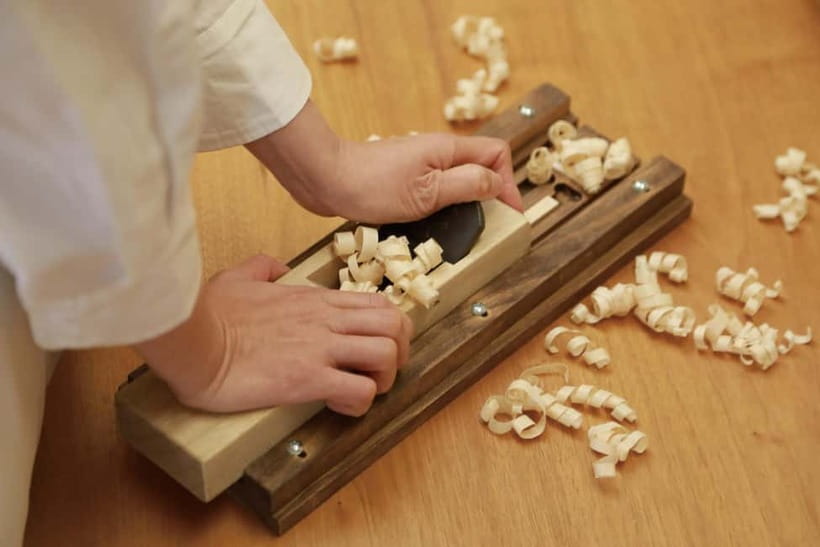
- Hand-planing takes strength: This is genuine woodworking with a manual plane, not a quick paint-and-glue craft.
- Five wood choices are included: The other 19 types are specialty woods and cost extra.
- Two lengths help with fit: You can select the size that suits you rather than accepting one standard pair.
- The finish is practical: Sandpaper and oil leave you with chopsticks intended for regular use.
- Engraving makes the souvenir personal: Names or favorite phrases can be laser-engraved in Japanese or your native language for an additional ¥1,100.
- English help is available: English-speaking staff explain the process, with the guide fee already included.
Why this one-hour Ginza activity works
Ginza is known for department stores, polished streets, and high-end shopping. This workshop gives you a different side of the district: a compact woodworking experience where the object in front of you changes because of your own hands.
The finished item is small, light, and easy to pack. That matters in Japan, where souvenirs can quickly become a luggage problem. A pair of handmade chopsticks is also more useful than a decorative trinket. You can use it at home and remember the trip each time you eat with it.
The workshop lasts about one hour. That is long enough to feel that you made something, but short enough to fit between shopping, lunch, or another Ginza stop. I especially like this timing for a rainy afternoon or for a family looking for one hands-on activity without giving up half the day.
There is a tradeoff. The workshop is not passive. You will need to press a plane against wood again and again, then spend time sanding the edges and tips. Several people find the effort satisfying, but children and anyone with limited hand or arm strength may need close assistance.
A few more Tokyo bookings worth comparing
- Sushi Making Tokyo Roll and Authentic Japanese Sushi Class
★ 5.0 · 3,971 reviews - Tokyo: Roll and Authentic Sushi Making Class in Asakusa
★ 4.9 · 1,957 reviews - Tokyo Shinjuku Chopsticks Making Class
★ 5.0 · 1,763 reviews
Choosing wood and length at 銀座箸
Your first decision is the blank pair of wood. You can choose from 24 types and two lengths. Five wood options are included in the base experience, while the remaining 19 are higher-grade choices with an added charge.
This price structure is worth understanding before you arrive. The advertised starting price is $25 per person, but your final cost can rise if you select specialty wood or add engraving. The extra charge for engraving is ¥1,100 per pair. Since the workshop handles wood selection and processing in-house, the upgrade gives you access to materials you may not find in an ordinary souvenir shop, but you should ask about the price of each option before committing.
The wood choice also changes the work. Softer wood may be easier for a first attempt. Harder or denser wood can take more effort to plane, though some people specifically enjoy the challenge. Olive wood, for example, has been found difficult to shape, but the extra work can make the final pair feel more earned.
You do not need to know anything about timber before starting. Staff help explain the choices, and the range gives you a chance to select based on color, grain, feel, or difficulty. If you want the smoothest first experience, ask which included wood is most forgiving. If you have already used hand tools or want a tougher project, ask about the specialty options.
The two lengths are useful for couples and families. You can choose a size rather than simply receiving an adult standard. The supplied information does not specify the measurements, so confirm the available lengths and ask the staff which one suits you best.
Planing the chopsticks by hand
After choosing your pair, you place the chopsticks on a stand and use a plane to shave the wood. This is the part that separates the workshop from a standard souvenir purchase.
You work gradually. The aim is not to remove a large amount of wood in one heroic push. Instead, you make repeated passes and watch the shape develop. It takes some strength, especially when the wood is hard, and the correct pressure may not feel obvious at first.
That learning curve is part of the appeal. You begin with simple instructions, then adjust your hand position and pressure as the staff watch your progress. English-speaking instructors are available, and the workshop is designed for beginners. Named instructors such as Tina and Waka have been praised for patient, step-by-step help, while Kotoha, Shion, and Koko have also been singled out for attentive instruction.
At a busy time, the instructors may be helping several people at different stages. They remain available, but you may need to pause briefly until someone can check your technique. This is not usually a problem if you are comfortable working slowly, but it can feel frustrating if you expect one instructor to stay beside you every minute.
Pay attention to the orientation of the chopstick as you plane. A chopstick can flip, and it is easy to lose track of which side should face up. If you are unsure, stop and ask before taking another pass. Careful, light work is safer for the shape than rushing to finish.
The physical effort gives the activity its sense of achievement. You are not simply decorating a prepared object. You are changing the wood with a traditional hand tool, one shaving at a time.
Sanding the tips and corners
Once the main shaping is done, you use sandpaper to smooth the tips and corners. This stage is quieter and more precise than planing, but it can take longer than expected if you want a polished result.
I would resist the temptation to hurry here. The chopsticks need to feel comfortable in your hand and at the mouth, so rough corners matter. Sanding also lets you correct small uneven areas left by the plane. Several people choose to spend extra time on precision sanding, and the staff may allow additional time when needed.
This is where the one-hour schedule can feel tight at full capacity, particularly if several people are working carefully or need help. At a half-full session, the hour should feel comfortable for a straightforward pair. If you are very particular about the finish, ask at the start how much flexibility there is.
The workshop’s focus on materials and finish is one of its strongest points. The company handles the wood selection and processing itself, so the activity is not just a tourist craft assembled from anonymous pieces. The final shape reflects both the material and the amount of care you put into it.
Families should expect different speeds. A confident 12-year-old may manage the process well, while a younger child may need help applying pressure or keeping the chopstick steady. The published restrictions say the activity is not suitable for children under three or people over 70. That is important because the work involves tools and physical effort, even though some family groups with a wider age range have taken part successfully.
Same corner of Tokyo, a completely different plan:
- Mt Fuji and Hakone 1-Day Bus Tour Return by Bullet Train
★ 5.0 · 26,383 reviews - 1-Day Tokyo Bus Tour
★ 5.0 · 14,250 reviews - Tokyo: TOKYO SKYTREE® Admission ticket
★ 4.5 · 11,192 reviews - Tokyo: teamLab Planets TOKYO Digital Art Museum Entry Ticket
★ 4.6 · 9,779 reviews
Oil gives the wood its finished look
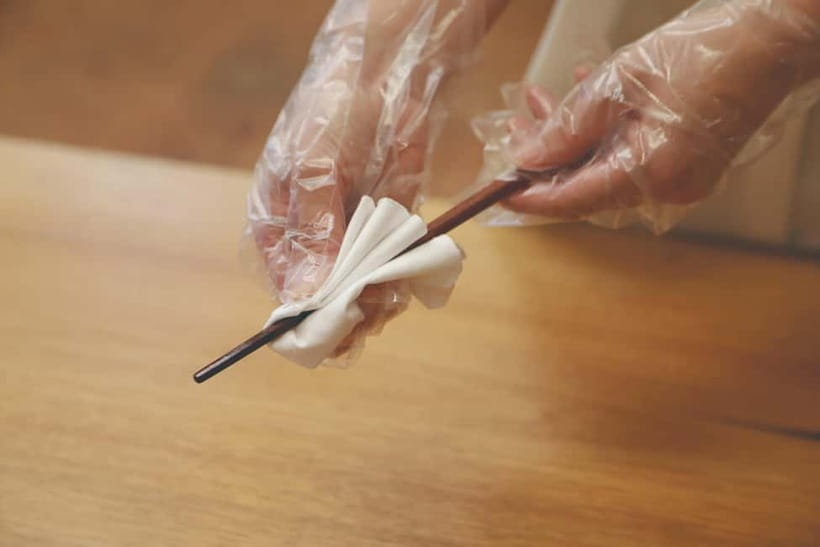
After planing and sanding, you apply oil to finish the chopsticks. This brings out the grain and gives the surface a more polished appearance.
The oil is a small step, but it changes how the pair feels. Before finishing, the wood looks like a work in progress. Afterward, the grain becomes more visible and the chopsticks look ready to use. Staff guide you through the application, so you do not need prior experience with wood finishing.
The final pair is ready to take home on the day. That makes the experience easy to fit into a Tokyo itinerary. You do not need to return to Ginza later or arrange shipping.
If you are making pairs as gifts, think about the recipient before you start. The two lengths, the wood choices, and the option to engrave allow you to make each pair different. You can create matching chopsticks for a couple or choose a different wood for each family member.
Engraving in Japanese or your own language
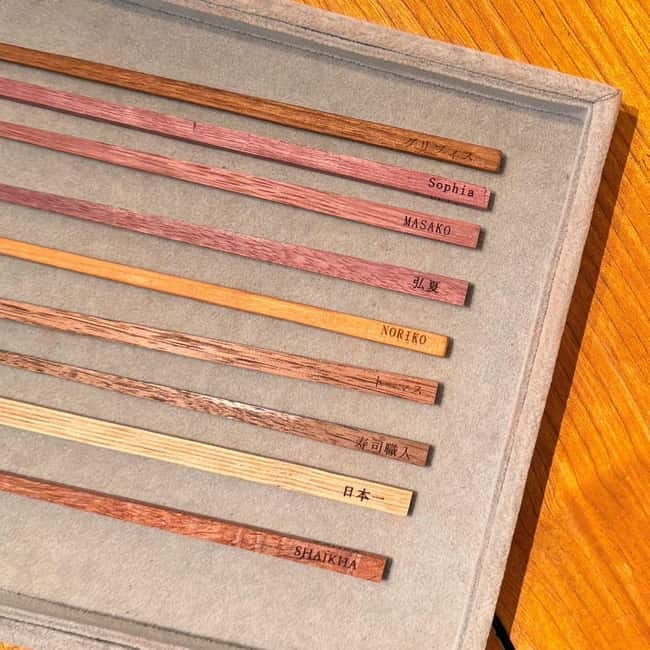
Engraving is optional and costs an additional ¥1,100 per pair. You can add a name or favorite phrase in Japanese or your native language.
The engraving uses a high-performance laser designed to put gentle stress on the wood. Staff can help translate a name or phrase into Japanese, which adds a distinctly local touch without requiring you to know Japanese writing.
I see engraving as worthwhile if the chopsticks are a gift or a keepsake. It turns a handmade object into something clearly connected to one person. It also helps family members tell their pairs apart when several people make chopsticks together.
Do not treat it as part of the base price. Ask about the engraving fee and the wood surcharge before you begin. If you are making two pairs, the engraving charge applies per pair, so the total can add up quickly for a family.
English guidance and the workshop atmosphere
The instructors speak English and Japanese. The guide fee of ¥1,000 is included in the experience price, so you are not expected to arrange a separate translator or tip for instruction.
The teaching style is practical. Staff demonstrate each stage, then let you work. If you struggle with the plane or need help deciding how to continue, they can step in and correct the technique. This balance matters because the point is for you to make the chopsticks, not for an employee to finish them.
The space has been described as cozy and calm, though it can become busy. At full capacity, the workstations may feel close and the staff may need to move between participants. At quieter times, you can work at a more relaxed pace.
Some people find the physical side surprisingly sporty. Planing uses more than fingertips, and repeated pressure can work your arms and core. Tie back long hair and wear clothing you do not mind wearing during a hands-on craft session. The supplied information does not list a special dress code, but basic workshop awareness is sensible.
The instructors’ patience is a major part of the experience. Names such as Tina and Waka appear in connection with especially careful teaching, and other staff members have also been praised for staying engaged even when the shop is busy. You should still expect a group setting rather than a private lesson.
Is $25 good value in Ginza?
At $25 per person, the workshop is reasonably priced for a one-hour Ginza activity, especially because you leave with a usable object that you made yourself. Comparable ready-made chopsticks may cost less, but they will not carry the memory of planing, sanding, oiling, and choosing the wood.
The base price includes the workshop, tools, materials, five included wood choices, English-speaking support, and your handmade pair. The value becomes less clear only if you choose several paid upgrades without checking the total.
The 19 specialty woods can add to the cost, and engraving costs ¥1,100 per pair. One participant felt the extra wood and engraving charges were worth it, while another wished the price differences had been explained more clearly. My advice is simple: ask which five choices are free, ask the price of any upgrade, and confirm whether engraving is charged per pair before you start.
For a family, the total cost can be higher than a casual souvenir purchase. Yet the activity gives everyone a shared task, and each person takes home a separate result. For couples, the matching-pair idea works particularly well. For solo visitors, it is a compact way to bring home something personal from Tokyo rather than another mass-produced item.
Who should book this chopstick workshop?
I would recommend it to:
- Couples who want matching or complementary souvenirs
- Families with children old enough to use hand tools with help
- Visitors who prefer making something over watching a demonstration
- Anyone interested in Japanese food culture and everyday objects
- Shoppers looking for a light, useful gift
- Repeat Tokyo visitors seeking a short activity in Ginza
I would be more cautious if you dislike repetitive hand work or have difficulty applying pressure. The workshop is beginner-friendly, but beginner-friendly does not mean effortless.
The official restrictions exclude children under three and people over 70. Wheelchair access is available, but the information provided does not explain workstation dimensions or tool arrangements, so contact the provider if you need specific setup details.
Practical timing and cancellation advice
The meeting point is 2-9-13 Ginza, Chuo-ku, Tokyo. Check the address carefully before setting out. One participant arrived at the wrong address, so do not rely on memory or assume every Ginza craft business is nearby.
The activity takes one hour, with starting times subject to availability. Arriving a little early may help you settle in, and the workshop has sometimes been able to start promptly when space is ready. Do not plan a train departure immediately afterward if you want extra time for careful sanding.
You can cancel up to 24 hours in advance for a full refund. A reserve-now, pay-later option is also available, which helps if your Tokyo schedule is still changing.
My verdict on 銀座箸
Book this if you want a souvenir that carries evidence of your own effort. The best parts are the real hand planing, the broad wood selection, the patient English support, and the fact that the chopsticks are finished and ready to take home that day.
Go in knowing that the work can be physical and that most of the 24 wood options cost extra. If you ask about upgrades first and accept a little sanding time, this is a smart one-hour addition to a Ginza day. I would choose an included wood for a first attempt unless a particular grain catches your eye, then add engraving if the pair is meant as a gift.
FAQ
Where is the chopstick workshop located?
The meeting point is 2-9-13 Ginza, Chuo-ku, Tokyo, in the heart of Ginza.
How long does the activity take?
The stated duration is one hour. Starting times depend on availability.
How much does the workshop cost?
The listed price is $25 per person. Five wood types are included, while 19 higher-grade wood options require an additional charge.
Can I choose the type of wood?
Yes. You can choose from 24 types of wood, with five included in the base price and the remaining 19 available for an added cost.
Can I choose the chopstick length?
Yes. Two different lengths are available.
Is engraving included?
No. Name or phrase engraving is optional and costs an additional ¥1,100 per pair.
Can the engraving be written in English or another native language?
Yes. You can request a name or favorite phrase in Japanese or your own language.
Is English instruction available?
Yes. English-speaking staff assist with the workshop, and the instructors speak English and Japanese. The included guide fee is ¥1,000.
Can I take the chopsticks home immediately?
Yes. The finished chopsticks can be taken home on the same day.
Is the workshop wheelchair accessible?
Yes, the activity is listed as wheelchair accessible.
Who should not take part?
The activity is listed as unsuitable for children under three and people over 70.
New on our Tokyo list
- From Tokyo: Mount Fuji & Hakone Full Day Private Tour★ 4.9 · 25 reviews
- Tokyo Spectacular View Day-Cruise in 90 Minutes★ 5.0 · 25 reviews
- Real Tokyo Runner Club : Daikoku Car Meet Night Tour with JDM Car★ 5.0 · 25 reviews
- 2.5 Hour-Guided Cycle Tour in the Central Tokyo★ 5.0 · 25 reviews
- Ramen Making from Scratch +Akihabara Tour –Cooking Class★ 5.0 · 25 reviews
- [Self-Drive] Tokyo & Daikoku Custom Car Driving Tour★ 4.9 · 25 reviews
- Tokyo: 2-Hour Night Bike Tour of the City’s Hidden Gems★ 4.9 · 25 reviews
- Buddha, Bamboo & Zen – Bespoke Kamakura Private Walking Tours★ 5.0 · 25 reviews
Workshops, compared.
Sushi Making Tokyo Roll and Authentic Japanese Sushi Class
Read our review →
Roll and Authentic Sushi Making Class in Asakusa
Read our review →
Sushi Making Class in a Happi Coat near a Famous Spot
Read our review →
Tokyo Sushi Making Class in Tsukiji with Professional Chef
Read our review →
Ramen & Gyoza Cooking Class in Tokyo with Local Supermarket Visit
Read our review →
Matcha Making Class in Tokyo with Authentic Japanese Sweets Set
Read our review →
Samurai Sword & Archery Class from Samurai Descendant
Read our review →Browse the lists this tour appears in