
Reviewed · DESSERT TOURS
Japanese dried-type Sweets (Ohigashi) making
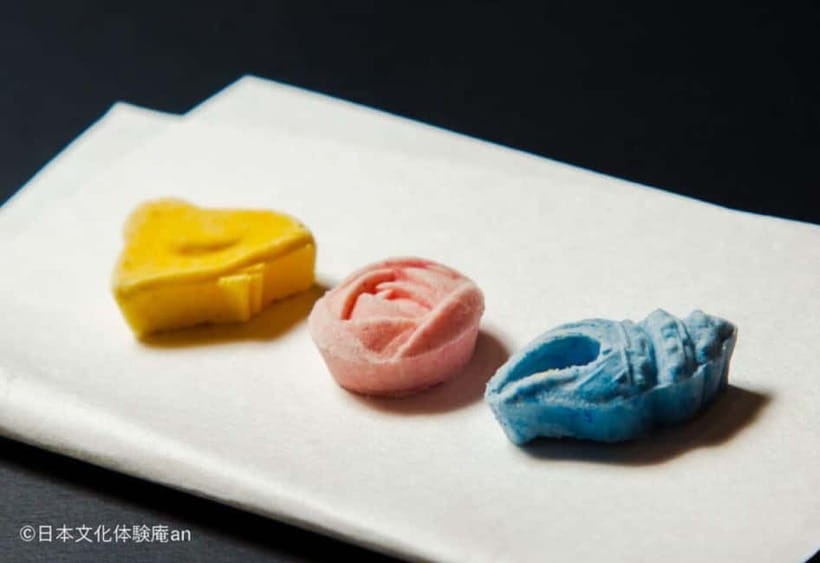
Japanese Ohigashi making turns a few minutes, a wooden mold, and fine Wasanbon sugar into a small edible souvenir. At AN TOKYO Japanese Culture Experience in Tokyo, you choose a cute wooden mold and shape traditional dried sweets with a Japanese instructor guiding each step. The result is delicate, smooth, and made without added color.
I like the low $10 price and the short 30-minute format. You get a hands-on taste of Japanese confectionery without giving up half a day, and the mellow flavor of 100% Wasanbon gives this simple activity a real point. The main consideration is language: instruction is in Japanese, with English translation provided as much as possible, so you may need to watch closely and follow the demonstration.
In This Review
- Key points to know
- Why Wasanbon makes this small sweet special
- Choosing a wooden mold at AN TOKYO
- Making Ohigashi in a 30-minute session
- Picture time, then a fresh taste
- What the $10 price really gives you
- Who will enjoy this hands-on Tokyo stop
- Timing, meeting point, and arrival advice
- A friendly guide, with Japanese-first instruction
- Cancellation and booking details worth noting
- How this compares with buying Ohigashi
- Should you book the Wasanbon Ohigashi experience?
- FAQ
- Where does the Ohigashi-making activity take place?
- How long does the activity last?
- What is included in the price?
- How much does the activity cost?
- What is Wasanbon?
- Can I make colorful Ohigashi?
- Is an experience completion certificate included?
- Is the activity available in English?
- What is the cancellation policy?
Key points to know
- 100% Wasanbon sugar: The sweets use traditional Japanese sugar with a soft, mellow flavor and a texture that melts in your mouth.
- Choose your own mold: You select a wooden mold before shaping the Ohigashi, giving the finished sweets a personal touch.
- Freshly made taste: You eat the sweets soon after making them, when their texture is at its best.
- Only 30 minutes: This fits neatly into a busy Tokyo day and works well between sightseeing stops.
- Color costs extra: The standard activity makes uncolored Ohigashi. Colorful sweets are available for an additional 200 JPY.
- Friendly, hands-on instruction: The Japanese instructor guides you through the process and helps you follow along.
Why Wasanbon makes this small sweet special
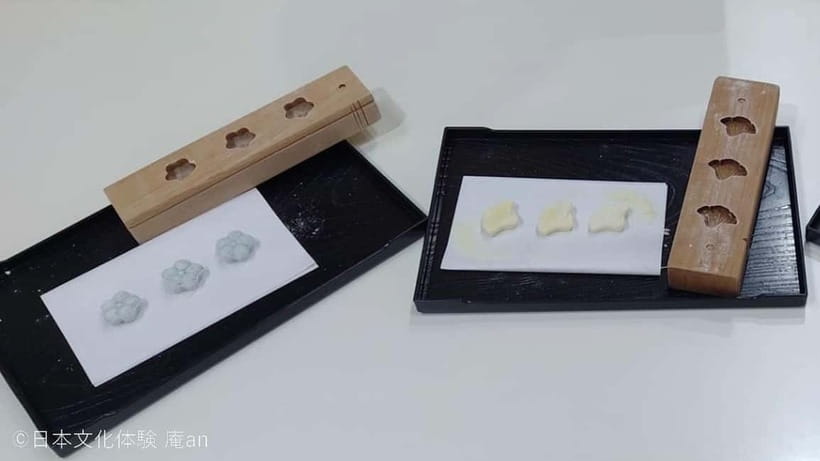
Ohigashi is a Japanese dried-type sweet made by pressing sugar into a mold. It looks firm and decorative, but the texture is surprisingly light and smooth. Once you place it in your mouth, it breaks down quickly and releases a gentle sweetness.
The key ingredient here is Wasanbon, a traditional Japanese sugar. The activity uses 100% Wasanbon rather than presenting it as a minor flavoring or garnish. That matters because Wasanbon has a mellow taste that differs from ordinary white sugar. You get to notice the sugar itself, not just a filling or coating.
I like this kind of food activity because it explains something through your hands and mouth at the same time. You are not simply shown a finished sweet. You shape it, look at it, and then taste the result while the making process is still fresh in your mind.
The Ohigashi is made without added color as part of the standard activity. That gives the sweets a simple, traditional appearance. If you want a more colorful result, you can request that option on the day for 200 JPY more.
A few more Tokyo bookings worth comparing
- Matcha Making Class in Tokyo with Authentic Japanese Sweets Set
★ 5.0 · 744 reviews - Tokyo: Matcha Making Experience with Mochi Sweets in Asakusa
★ 4.9 · 388 reviews - Make Traditional Nerikiri Sweets & Matcha experience in Shibuya
★ 5.0 · 130 reviews
Choosing a wooden mold at AN TOKYO
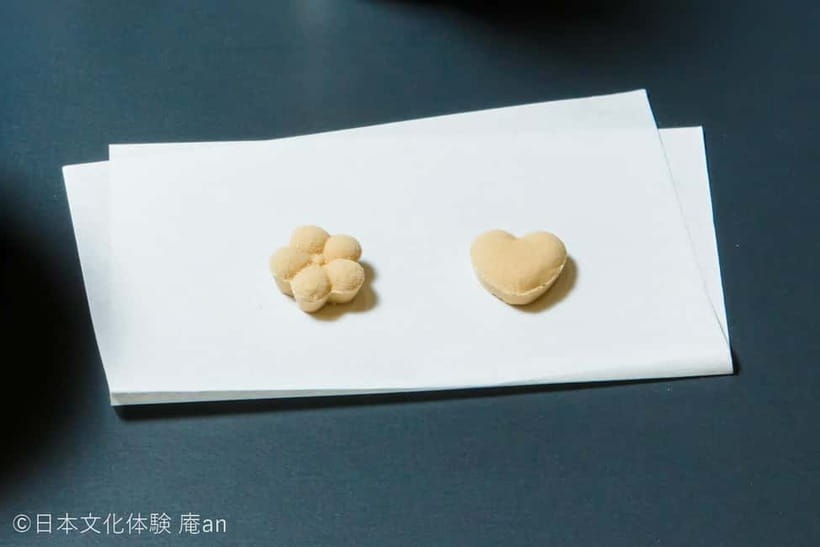
The activity starts with an explanation of Japanese traditional sweets. You then choose your preferred wooden mold from the available selection. The exact designs are not specified, but the molds are described as cute, so the choice is part of the fun rather than a purely technical step.
A wooden mold gives each piece its form and pattern. Your selection also affects the look of the finished sweet, making this a little more personal than a standard demonstration. If you are taking photos, the mold and the uncolored sugar create a clean, attractive subject.
The choice may take only a moment, but it gives you a useful connection to the craft. Instead of receiving one identical item, you make a decision before the shaping begins. I would take a little time here, especially if you are doing the activity with children or friends and want different shapes for comparison.
Making Ohigashi in a 30-minute session
After the explanation, the instructor leads the Ohigashi-making portion. You work with Wasanbon and use the selected wooden mold to create your sweets. The activity is short, so expect a focused introduction and a simple making process rather than a long confectionery course.
The supplied schedule places the main work and picture time within the first 20 minutes. That tells you something useful about the pace: you will have enough time to take part and photograph the result, but you should not arrive expecting a slow, detailed workshop lasting several hours.
The short format is a strength for many people. You can fit it into a day that already includes temples, museums, shopping, or other food stops. It also gives children a manageable task, though the information specifically states that children under two who sit on a parent’s lap are free. Anyone who participates in the activity needs a reservation and entry is not allowed for people who are not taking part.
Because the instructor speaks Japanese, pay attention to the demonstration. English translation is provided as much as possible if you request it, but the activity does not promise full English instruction. Simple visual steps may make the process easy to follow, though you should contact the provider in advance if language support is important to you.
Picture time, then a fresh taste
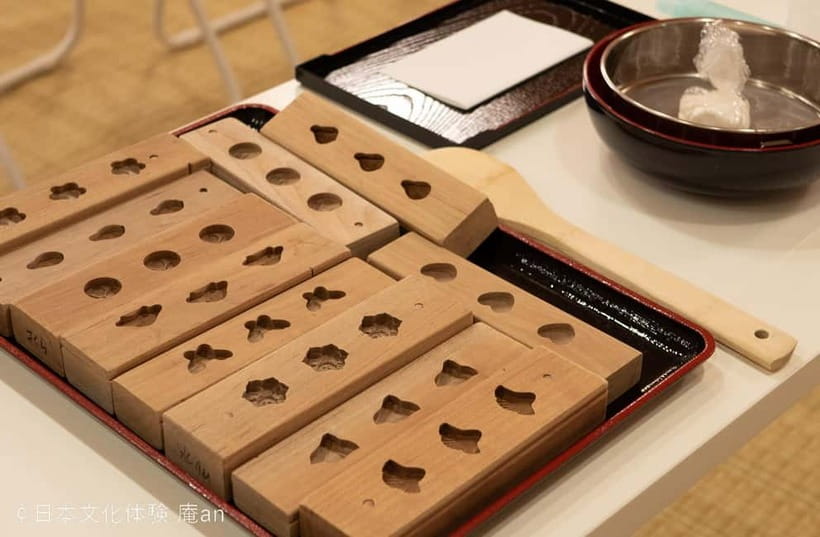
Once you have made the sweets, there is time for photos. This is a useful part of the schedule, since the finished Ohigashi is small and decorative. Photographing it before eating gives you a record of the shape you selected and the work you completed.
The next part is eating and drinking time. The schedule lists the experience as ending at 20 minutes, followed by food and drink time until the 30-minute departure. This means you should not rush out immediately after the making portion. You get a chance to taste the sweets while they are freshly made.
That fresh taste is one of the best reasons to book this rather than simply buying packaged Japanese sweets. The texture of Ohigashi is part of its appeal, and eating it soon after shaping lets you notice the soft, quick-melting quality of the Wasanbon.
The flavor is likely to be subtle rather than bold. Wasanbon is valued for its mellow sweetness, so this is better suited to you if you enjoy delicate confectionery. If you prefer rich chocolate, heavy cream, or strongly flavored desserts, the experience may feel restrained.
Same corner of Tokyo, a completely different plan:
- Mt Fuji and Hakone 1-Day Bus Tour Return by Bullet Train
★ 5.0 · 26,383 reviews - 1-Day Tokyo Bus Tour
★ 5.0 · 14,250 reviews - Tokyo: TOKYO SKYTREE® Admission ticket
★ 4.5 · 11,192 reviews - Tokyo: teamLab Planets TOKYO Digital Art Museum Entry Ticket
★ 4.6 · 9,779 reviews
What the $10 price really gives you
At about $10 per person, this is an inexpensive Tokyo activity. The price includes a set experience for making Japanese dried sweets, not a full meal or a large box of souvenirs. Its value comes from the combination of instruction, hands-on work, photos, and tasting within a short visit.
I see this as a good add-on rather than a major day trip. You are paying for a small cultural activity that introduces a traditional ingredient and technique. The low cost also makes it easier to add to your plans without cutting a more substantial museum visit or meal.
The extra charges are clear. Adding color costs 200 JPY, and an experience completion certificate costs 300 JPY. Neither is included in the basic price. The uncolored version is the standard choice, so you can keep the cost close to the advertised rate if you do not need either extra.
The certificate may appeal to children or anyone collecting small reminders of Japanese activities. It is optional, and the information does not describe its design or contents, so I would treat it as a souvenir add-on rather than a reason to book.
Who will enjoy this hands-on Tokyo stop
This activity suits you if you want a short cultural break with something to eat at the end. It is especially practical for a first visit to Tokyo when your schedule is packed and you want one activity that takes only half an hour.
It also works well for families. The sweets are cute, the mold choice adds a simple decision, and the activity does not require a long attention span. Children under two sitting on a parent’s lap are free, according to the activity information. The child must still be with a participating reservation, since nonparticipants cannot enter.
Couples and friends may enjoy comparing the molds and finished shapes. Solo visitors can take the same pleasure from choosing one design and making a small personal souvenir. The activity does not require you to buy a large quantity of sweets, which may suit you if you want a taste rather than a shopping stop.
You should think twice if you need a fully English-led class. The instructor is Japanese, and English translation is offered as much as possible, but it is not listed as the main language. Contact the provider before booking if detailed English explanation is essential.
Timing, meeting point, and arrival advice
The meeting point is AN TOKYO Japanese Culture Experience at coordinates 35.6916541, 139.7715022 in Honshu, Japan. The supplied details identify the venue and coordinates but do not give a station name or walking directions, so check the exact route before you set out.
The operation hours are 10:00 to 17:00. Reservations received after 17:00 are processed the next day. That timing matters if you are booking late in the evening or trying to arrange a last-minute morning visit.
Plan to arrive early. The event cannot be held for delayed arrivals, no matter the reason. Since the whole activity lasts just 30 minutes, even a small delay could remove a large part of your making time.
The schedule is tight but clear:
- At the start, you receive an explanation of Japanese traditional sweets.
- You make Ohigashi with Wasanbon.
- You take pictures of your finished sweets.
- Around 20 minutes, the making portion ends.
- You eat and drink before leaving at the 30-minute mark.
The precise start times depend on availability, so check the schedule when choosing a booking. The short duration makes it easy to place this activity before or after another Tokyo plan, but leave enough time to reach the venue without relying on a last-second connection.
A friendly guide, with Japanese-first instruction
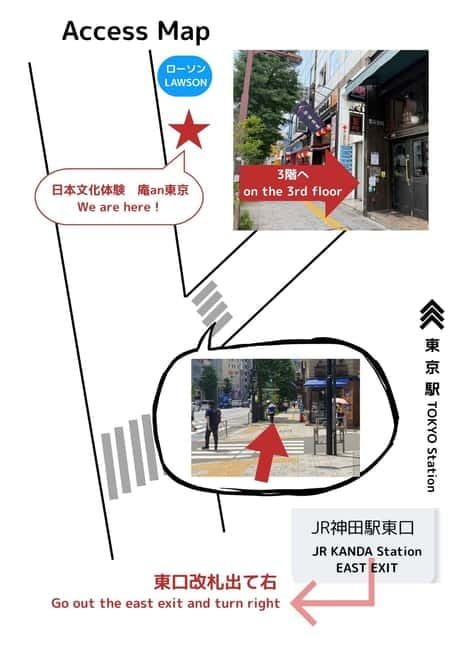
The instructor is Japanese and leads the hands-on work. The available feedback specifically highlights the woman leading the activity as kind to talk with and good at giving guidance. That matches what you need here: clear help with a small physical task, not a long lecture.
You will probably get the most from the session by watching the instructor’s hands and copying the order of the steps. If you would like English translation, contact the provider and request it. The information says translation will be provided as much as possible, which is helpful but not the same as a guaranteed fully English-speaking class.
This language point does not make the activity impossible for English speakers. The work is visual and practical, and the instructor is there to guide you. Still, I would not choose it if you need detailed explanations of every stage or a formal lesson about Japanese confectionery in English.
Cancellation and booking details worth noting
You can cancel up to 24 hours in advance for a full refund, and the reserve-now-pay-later option lets you hold a place without paying at the time of booking. Those terms are useful when you are still arranging a Tokyo itinerary.
After the cancellation deadline, a fee applies. Changing the date or time after a cancellation fee has been incurred also brings a specified charge. The stated policy treats requests made after 17:00 as belonging to the next day, so keep that cutoff in mind when contacting the venue.
If you cancel, the provider does not compensate you for travel expenses to the venue. I would therefore avoid booking this too tightly against a nonrefundable train, restaurant, or ticket reservation. A little breathing room is sensible, especially because late arrival does not allow the session to be held.
How this compares with buying Ohigashi
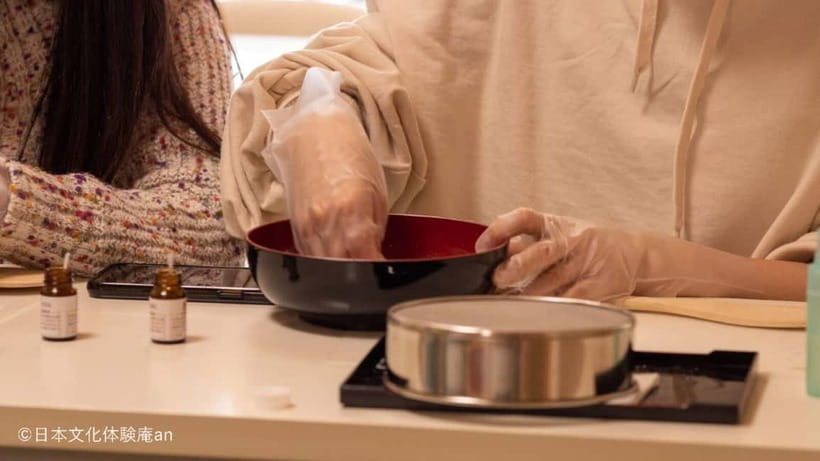
Buying a finished sweet is faster, but it does not give you the same connection to the ingredient or form. Here, you choose a wooden mold, work with 100% Wasanbon, photograph your result, and taste it soon afterward.
The activity is also more limited than a full wagashi-making class. You are making one specific dried sweet, not learning a broad range of Japanese confectionery techniques. That narrow focus is part of the charm for a short visit, but it may disappoint you if you want an advanced workshop or a large take-home assortment.
The no-color standard version is worth trying first. It lets you see the simple appearance of the Wasanbon and keeps the price down. Add the 200 JPY color option if the visual side matters to you, especially if you are booking with children or want more colorful photographs.
Should you book the Wasanbon Ohigashi experience?
Book it if you want an inexpensive, neatly timed Tokyo activity with a real taste of traditional Japanese sugar. The strongest reasons are the 100% Wasanbon, the chance to select a wooden mold, and the pleasure of eating the sweets fresh rather than buying them prepackaged.
I would recommend it most to families, food-minded visitors, and anyone building a busy Tokyo day around several short stops. Allow extra time to reach AN TOKYO, request English translation ahead of time if needed, and do not arrive late.
Skip it if you are looking for a long class, a full English lesson, or a substantial meal. For everyone else, 30 minutes and $10 is a fair trade for a small, hands-on look at Japanese confectionery.
FAQ
Where does the Ohigashi-making activity take place?
It takes place at AN TOKYO Japanese Culture Experience, located at coordinates 35.6916541, 139.7715022 in Honshu, Japan.
How long does the activity last?
The scheduled duration is 30 minutes. The making and picture time finish around the 20-minute mark, followed by eating and drinking time before departure.
What is included in the price?
The price includes a set experience for making Japanese dried sweets called Ohigashi.
How much does the activity cost?
The listed price is $10 per person.
What is Wasanbon?
Wasanbon is traditional Japanese sugar. The Ohigashi in this activity is made from 100% Wasanbon, which has a mellow taste and a smooth texture that melts in your mouth.
Can I make colorful Ohigashi?
The standard activity uses no added color. You can request colorful Ohigashi on the day for an additional 200 JPY.
Is an experience completion certificate included?
No. A completion certificate costs an additional 300 JPY.
Is the activity available in English?
The instructor’s language is Japanese. English translation will be provided as much as possible if you contact the provider and request it.
What is the cancellation policy?
You can cancel up to 24 hours in advance for a full refund. Cancellation fees apply after that deadline, and late arrival does not allow the event to be held.
New on our Tokyo list
- Sumi-e Experience in a relaxing green tea shop in Tokyo★ 5.0 · 3 reviews
- Tokyo : Kamikaze Street Drift Ride★ 5.0 · 3 reviews
- Private Zen Meditation in English in Shinjuku, Tokyo★ 5.0 · 3 reviews
- Onsen Spa in Tokyo and Asakusa Bar Hopping with Local Guide★ 5.0 · 3 reviews
- Easy for everyone! Now you can play handmade mini shamisen and show off to everyone! Musical instruments, sweets and live music★ 5.0 · 3 reviews
- Mt Fuji Exploration Tour with Free Japanese Kusa Mochi from Tokyo★ 4.5 · 3 reviews
- Tokyo Tsukiji Fish Market Walking and Exploring Hidden Gems Tour★ 5.0 · 3 reviews
- Tokyo: Private Tsukiji Street Food & Sake with Local Guide★ 5.0 · 3 reviews
Dessert Tours, compared.
Matcha Making Class in Tokyo with Authentic Japanese Sweets Set
Read our review →
Matcha Making Experience with Mochi Sweets in Asakusa
Read our review →
Make Traditional Nerikiri Sweets & Matcha experience in Shibuya
Read our review →
Private Mochi Sweets Making class near Shibuya area
Read our review →
Japanese Traditional Sweets making and Tea Ceremony
Read our review →
Tokyo Local Food Tour: Noodles, Skewers, Dumplings, Sweets
Read our review →
Two Types of Japanese Sweets Making and Tea Ceremony
Read our review →
Mochi Matcha Gluten Free Japanese Sweets Class near Shibuya area
Read our review →Browse the lists this tour appears in