
Reviewed · TEA CEREMONIES
Tokyo: Two Types of Japanese Sweets Making and Tea Ceremony
The best part of this Tokyo experience is its three-part look at Japanese tea culture: you make wasanbon ohigashi, shape seasonal nerikiri, then whisk matcha in a casual tea ceremony. It is not just a cup of tea and a photo. You get your hands into the sweets first, then understand how they fit the tea.
I like the use of bean paste from long-established Kyoto shops, and I like the seasonal focus, since the sweets change their shapes and colors with the time of year. The $28 price also covers 125 minutes and three connected activities. The main caution is language: the instructor is Japanese, with English translation provided as much as possible, so some explanations may be simpler than others.
In This Review
- Key points at a glance
- What you actually make in 125 minutes
- Ohigashi and the quiet character of wasanbon
- Two seasonal nerikiri shapes, one careful lesson
- Matcha preparation after the sweets
- The breaks are useful, not wasted time
- English support and what to expect from the instructor
- What the $28 price includes
- Who will get the most from this activity
- Timing, arrival, and cancellation details
- A balanced verdict from the available feedback
- Should you book this Tokyo sweets and tea experience?
- FAQ
- How long does the Japanese sweets and tea experience last?
- What sweets will I make?
- Is matcha included?
- What kind of ingredients are used?
- Is the activity available in English?
- How much does the experience cost?
- Are any extras charged separately?
- Can I cancel for a refund?
- Are young children free?
Key points at a glance
- Three skills in one visit: Make ohigashi, shape two nerikiri sweets, and prepare matcha.
- Kyoto-made ingredients: The white and red bean paste comes from long-established Kyoto shops.
- Seasonal designs: Your nerikiri includes a flower shape and a kinton style linked to the season.
- A real hands-on tea lesson: You grind matcha in a demonstration, then whisk your own bowl.
- A compact Tokyo activity: The full session lasts 125 minutes, with breaks built into the schedule.
- Useful cost details: The $28 fee includes the main program, while a take-out box costs 100 JPY, coloring costs 200 JPY, and a completion certificate costs 300 JPY.
What you actually make in 125 minutes
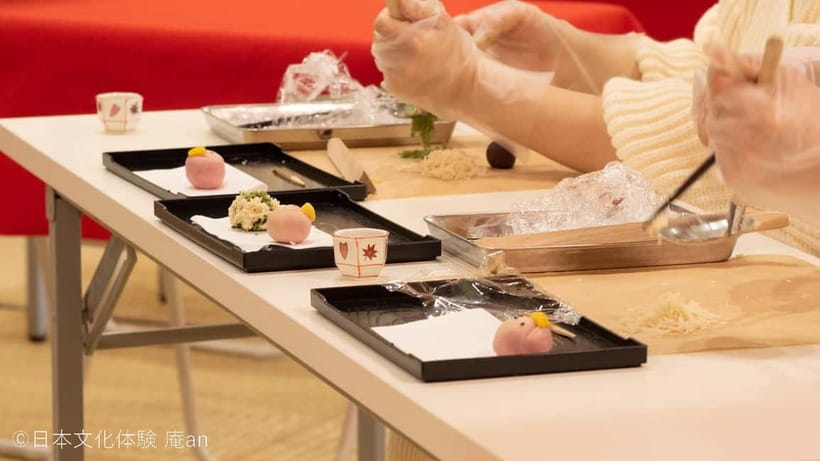
This is a small Japanese culture workshop built around the traditional pairing of sweets and tea. You do not simply watch a teacher prepare everything. The program gives you three separate tasks, each showing a different side of Japanese confectionery and tea.
First comes ohigashi, a dry sweet made with wasanbon, a traditional Japanese sugar. Then you work with white and red bean paste to make two seasonal nerikiri sweets. Finally, you learn the basics of matcha preparation and take part in a casual tea ceremony.
The order makes sense. Ohigashi is the simplest activity and helps you get used to the tools and methods. Nerikiri requires more care. Tea comes last, when you can eat the sweets with the drink they were designed to accompany.
At $28 per person, the experience costs less than many long Tokyo attractions and fills more than two hours. The value depends on what you want. If you are looking for a quick photo opportunity, this may feel long. If you want to make food, learn a little context, and leave with a better understanding of matcha, it is a fair price.
More tea rooms worth booking:
- Matcha Making Class in Tokyo with Authentic Japanese Sweets Set
★ 5.0 · 744 reviews - Tokyo: Traditional Tea Ceremony with a Tea Master
★ 5.0 · 528 reviews - Tokyo: Matcha Making Experience with Mochi Sweets in Asakusa
★ 4.9 · 388 reviews
Ohigashi and the quiet character of wasanbon
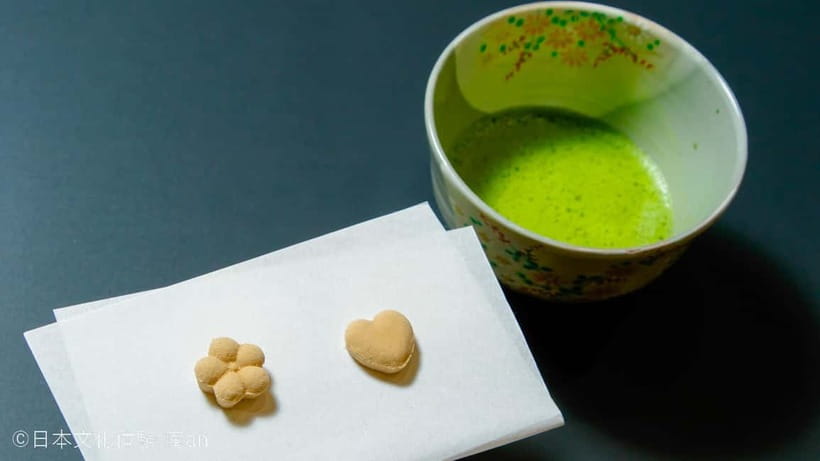
The first making activity focuses on ohigashi, a traditional Japanese dried sweet. Unlike soft nerikiri, ohigashi has a firmer, drier texture and is made with wasanbon sugar.
Wasanbon is not ordinary table sugar. Its use gives the activity a clear connection to Japanese confectionery traditions, and the sweet itself shows that Japanese sweets are not all about sticky bean paste or bright modern desserts. Ohigashi is restrained, neat, and designed to be enjoyed with tea.
The schedule places this activity in the opening 20 minutes. That is a good choice. The instructor begins with an explanation of traditional Japanese sweets, then moves into the hands-on work while the details are still fresh.
You should expect this part to be approachable. A participant who found the ohigashi easy also found the later tea whisking easy, while the nerikiri required more fine touch. That gives you a useful sense of the progression: ohigashi is a gentle start, not the technical test of the class.
The experience uses Kyoto-produced bean paste later in the program, but ohigashi gives you a chance to compare a dry sweet with the softer sweets that follow. That contrast is one of the better teaching features here. You are not making three versions of the same thing.
Two seasonal nerikiri shapes, one careful lesson
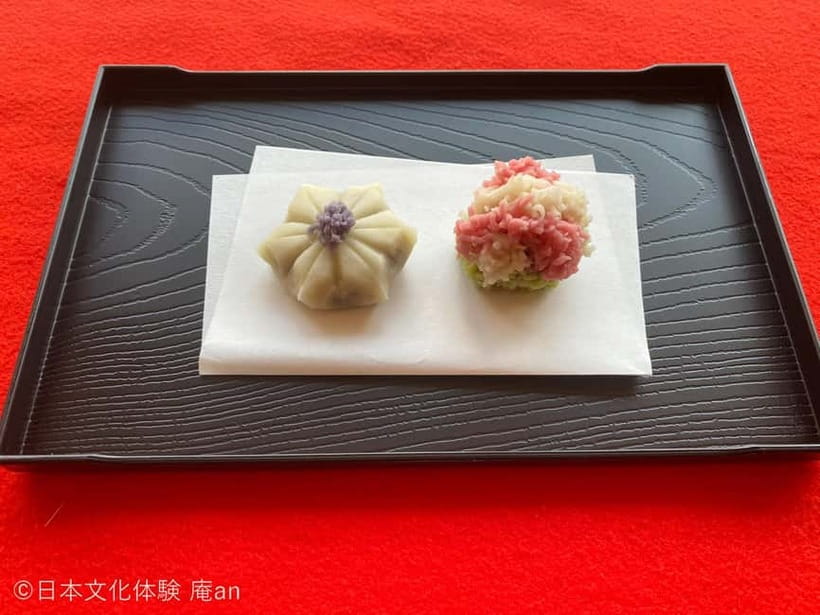
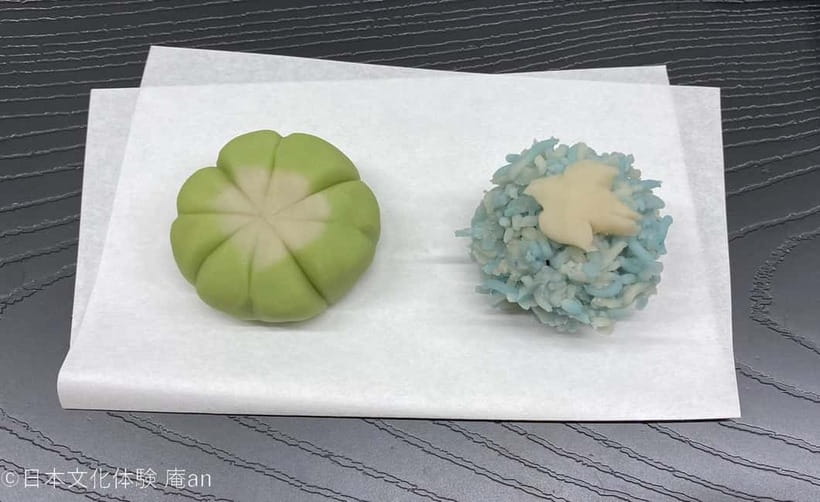
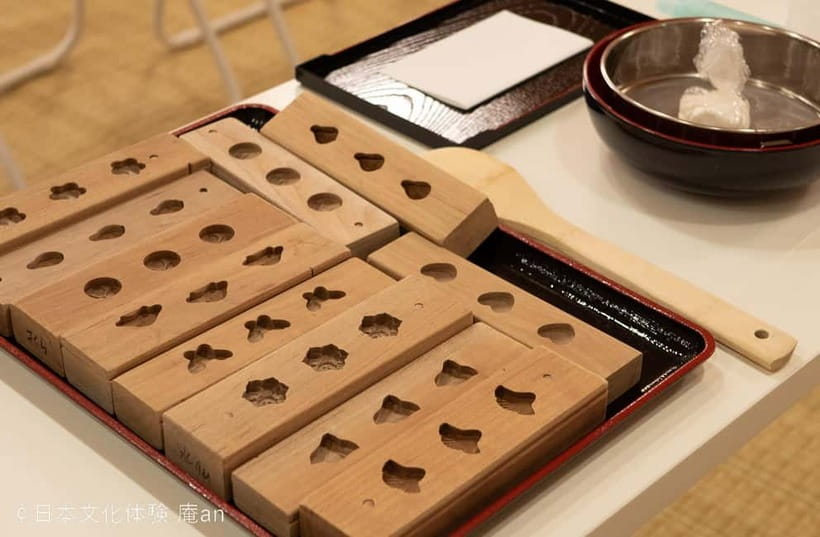
After the first activity and a short break, you make two nerikiri sweets. The planned forms are a flower-shaped nerikiri and a kinton nerikiri.
Nerikiri is soft Japanese confectionery made with white or red bean paste. The outside can be shaped and colored to suggest flowers, plants, or other seasonal images. The point is not only taste. Shape, texture, and presentation all matter.
The flower shape gives you a clear form to work toward. The kinton style is likely to feel less straightforward because the surface and arrangement require more control. You will need a light touch rather than force. Press too hard and the details can lose their shape.
This is the part where the workshop becomes more than a simple food craft. You are working with a traditional sweet that is meant to reflect the season. The design may change during the year, so the exact result is not fixed from one visit to the next.
The program schedule places nerikiri making from about 30 minutes to 85 minutes, with a break afterward. That long middle section tells you where most of the hands-on work happens. Do not rush it. If you are taking photographs, save most of them for the finished sweets rather than stopping constantly during shaping.
The bean paste is a particularly useful detail. The experience uses white and red bean paste produced by long-established Kyoto shops. That does not turn the class into a Kyoto food tour, but it gives the sweets a stronger link to established Japanese confectionery practice than a generic cooking workshop would offer.
Matcha preparation after the sweets
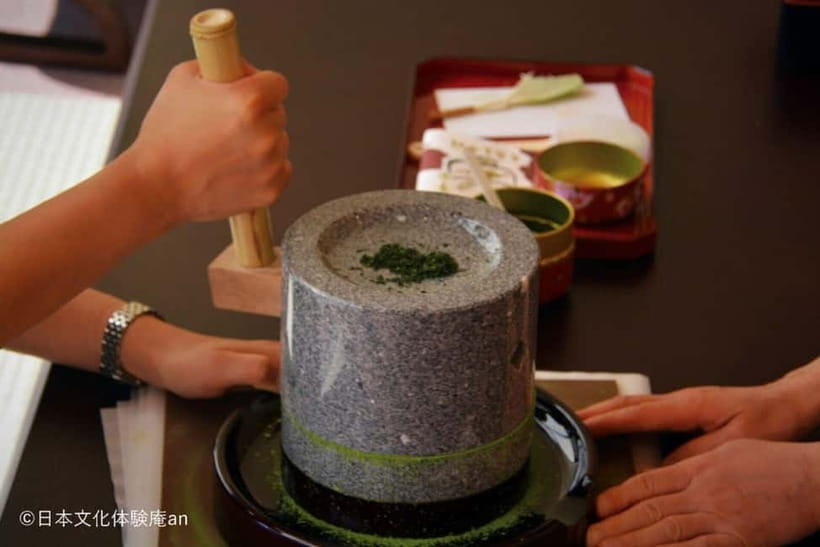
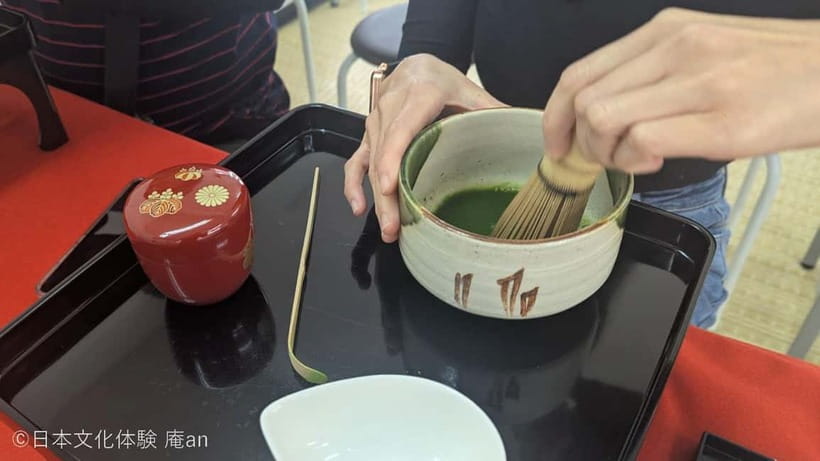
At about 95 minutes, the tea portion begins. You first receive an explanation about tea, then watch a matcha grinding demonstration. After that, you prepare your own matcha and take part in the tea ceremony.
The program uses single-origin special matcha. That is worth noting if you already enjoy green tea, since matcha is not simply powdered sencha. The instructor also explains the difference between green tea and matcha, which helps put the drink in context.
You should not expect a formal, silent tea-school ceremony with strict etiquette from beginning to end. This is described as a casual tea ceremony, and that is a strength for most first-time participants. You can learn the basic actions without feeling that one wrong movement will ruin the whole experience.
The practical task is whisking the matcha. It may look difficult at first, but the activity is presented as manageable. You make the tea yourself, then enjoy it with the sweets you prepared. That final pairing helps explain why Japanese confectionery can be delicate and lightly sweet rather than heavily sugary.
The matcha grinding demonstration adds a useful visual lesson, even though you do not appear to spend the full class grinding your own tea. You see where the powder comes from before using it in the bowl.
A few more Tokyo bookings worth comparing
- Make Traditional Nerikiri Sweets & Matcha experience in Shibuya
★ 5.0 · 130 reviews - Private Mochi Sweets Making class near Shibuya area
★ 5.0 · 93 reviews - Japanese Traditional Sweets making and Tea Ceremony
★ 4.7 · 50 reviews - Tokyo Local Food Tour: Noodles, Skewers, Dumplings, Sweets
★ 5.0 · 48 reviews
The breaks are useful, not wasted time
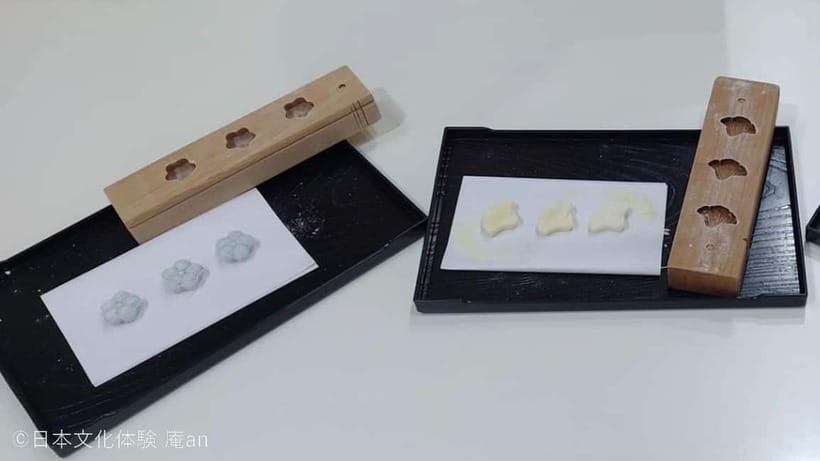
The timetable includes breaks at about 20 minutes and 85 minutes. In a 125-minute food activity, those pauses matter.
After making ohigashi, you have a moment to reset before the more detailed nerikiri work. After the sweets are finished, the later break gives them time to sit before you move into tea. It also keeps the session from becoming one long stretch of delicate handwork.
The final part runs from roughly 95 minutes to 115 minutes, followed by eating and drinking time before departure at 125 minutes. This means the session does not end the second you finish whisking. You have time to enjoy what you made, take pictures, and finish the tea.
There is also a picture time before the formal end. If you want a clean photograph of your sweets, use that moment rather than trying to handle a phone while shaping the paste.
English support and what to expect from the instructor
The instructor is Japanese, and English translation is provided as much as possible. That wording is important. You should not book this expecting every explanation to be delivered in polished, fluent English.
At the same time, the activity has clear visual steps, demonstrations, and practical tasks. The instructor explains the types of Japanese sweets, the difference between green tea and matcha, and the basic tea process. English guidance has also been provided during instruction, including explanations of what to do.
If you need a detailed lecture in English, you may find the language support limited. If you are comfortable following demonstrations and asking simple questions, the format should be easier to manage. The instructor’s effort to explain the background adds value, especially during the tea section.
The class is a better fit for people who want an accessible introduction than for someone pursuing formal tea training. You learn the ideas behind the ceremony, but the atmosphere remains casual.
What the $28 price includes
The $28 fee includes the complete set of three experiences: ohigashi making, two nerikiri making activities, and the tea ceremony with matcha.
The included items give the price its value. You are not paying for one prepared sweet and a brief demonstration. You spend most of the 125 minutes making things yourself, then eat and drink the results.
A few extras cost more:
- A take-out box for your sweets costs 100 JPY.
- Adding color costs 200 JPY.
- An experience completion certificate costs 300 JPY.
The take-out box is the most practical add-on if you want to save a sweet for later or carry it safely. Since nerikiri is delicate, do not assume you can transport it neatly without suitable packaging.
The optional color charge is worth checking before you begin if you want a more decorative result. The experience already focuses on seasonal shapes, but color may affect how finished your sweets look.
The certificate is purely optional. I would skip it unless you collect these kinds of souvenirs or need a record of the activity.
Who will get the most from this activity
I would recommend this experience to first-time visitors who want a focused introduction to Japanese sweets and matcha without giving up half a day. It also suits couples, families with older children, and anyone who likes food crafts more than passive sightseeing.
You need some patience for the nerikiri section. The shapes are seasonal and attractive, but the work requires fine touch. If you prefer quick, easy cooking tasks, the middle portion may feel demanding.
It can also work well for people who already know matcha but have never made nerikiri. The three-part structure gives you more than a standard tea demonstration. You can compare dry ohigashi with soft bean-paste sweets and then taste both with matcha.
Children who sit on a parent’s lap are free if they are under 2 years old. Children who take part in the experience need their own booking, and people who are not participating are not allowed to enter. That makes this more of a hands-on class than a place where someone can wait inside while others work.
Timing, arrival, and cancellation details
The activity operates from 10:00 to 17:00. Reservations received after 17:00 are processed the next day, so do not expect an instant response to a late-evening request.
You need to arrive on time. The event cannot be held for delayed arrivals, and travel expenses are not compensated if you miss it because of a delay. Leave enough time to reach AN TOKYO Japanese Culture Experience, especially if you are coming across Tokyo rather than from nearby.
You can cancel up to 24 hours before the activity for a full refund. The reserve-now, pay-later option also lets you hold a place without paying immediately, which is helpful when your Tokyo schedule is still changing.
The supplied information does not give a group size, exact transport directions, or a named instructor. Contact the venue if you need those details before booking.
A balanced verdict from the available feedback
The experience has a 4.6 rating from 26 reviews, with especially strong praise for the instructor’s kindness, explanations, and English help. The most useful detail is not just that the class is friendly. It is that the instructor takes time to explain the types of Japanese sweets and the difference between green tea and matcha.
The feedback also gives you a realistic skill guide. Ohigashi was considered easy, and whisking the tea was straightforward. Nerikiri was more demanding and called for fine touch. That is exactly the sort of warning I want before booking a craft activity. The result may be beautiful, but your first attempt will not necessarily be perfect.
Taste also matters. The nerikiri was well liked, which makes sense given the use of Kyoto bean paste. Still, Japanese sweets are often less sweet than Western pastries, and the experience is built around subtle flavor rather than a large dessert portion.
Should you book this Tokyo sweets and tea experience?
Book it if you want to make traditional Japanese sweets, understand a little about the ingredients, and prepare matcha in one compact session. The seasonal nerikiri, Kyoto bean paste, wasanbon ohigashi, and single-origin matcha give the class more substance than a basic tea photo stop.
Think twice if your English must be fully fluent at every stage, if you dislike careful handwork, or if you need a flexible start time. The class cannot wait for late arrivals, and the English translation is provided as much as possible rather than guaranteed in full.
For $28, the combination is strong: three activities, 125 minutes, and food you prepare yourself. I would choose it for a free morning or afternoon in Tokyo, especially if you want a cultural activity that leaves you with a better understanding of why Japanese sweets and tea belong together.
FAQ
How long does the Japanese sweets and tea experience last?
The full activity lasts 125 minutes, including the making sessions, breaks, tea ceremony, picture time, and final eating and drinking time.
What sweets will I make?
You will make wasanbon ohigashi, a dried Japanese sweet, plus two seasonal nerikiri sweets. The nerikiri forms include a flower shape and a kinton style.
Is matcha included?
Yes. The experience includes a matcha preparation and tea ceremony section. You will see a matcha grinding demonstration and make your own matcha.
What kind of ingredients are used?
The program uses wasanbon sugar for ohigashi, white and red bean paste from long-established Kyoto shops for the nerikiri, and single-origin special matcha for the tea.
Is the activity available in English?
The instructor is Japanese, and English translation is provided as much as possible. You should be prepared to follow demonstrations and simple instructions if every explanation is not available in fluent English.
How much does the experience cost?
The listed price is $28 per person. The main set of ohigashi making, nerikiri making, and tea ceremony is included.
Are any extras charged separately?
Yes. A sweets take-out box costs 100 JPY, adding color costs 200 JPY, and an experience completion certificate costs 300 JPY.
Can I cancel for a refund?
You can cancel up to 24 hours in advance for a full refund. You can also reserve now and pay later.
Are young children free?
Children under 2 years old who sit on a parent’s lap are free. Anyone who does not participate in the experience is not allowed to enter.
New on our Tokyo list
- From Tokyo: Mount Fuji & Hakone Full Day Private Tour★ 4.9 · 25 reviews
- Tokyo Spectacular View Day-Cruise in 90 Minutes★ 5.0 · 25 reviews
- Real Tokyo Runner Club : Daikoku Car Meet Night Tour with JDM Car★ 5.0 · 25 reviews
- 2.5 Hour-Guided Cycle Tour in the Central Tokyo★ 5.0 · 25 reviews
- Ramen Making from Scratch +Akihabara Tour –Cooking Class★ 5.0 · 25 reviews
- [Self-Drive] Tokyo & Daikoku Custom Car Driving Tour★ 4.9 · 25 reviews
- Tokyo: 2-Hour Night Bike Tour of the City’s Hidden Gems★ 4.9 · 25 reviews
- Samurai themed Entertainment show in Shinjuku★ 4.5 · 25 reviews
Tea Ceremonies, compared.
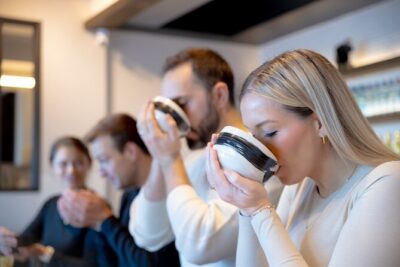
Matcha Making Class in Tokyo with Authentic Japanese Sweets Set
Read our review →
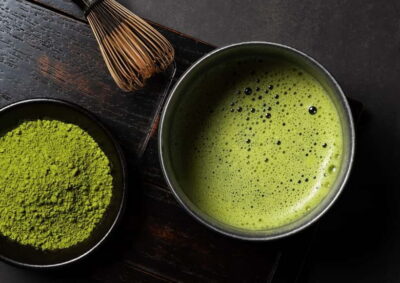
Matcha Making Experience with Mochi Sweets in Asakusa
Read our review →
Tea Ceremony Workshop in Tokyo by the Experienced Instrucor
Read our review →

Make Traditional Nerikiri Sweets & Matcha experience in Shibuya
Read our review →Browse the lists this tour appears in