
Reviewed · TEA CEREMONIES
Japanese Traditional Sweets making and Tea Ceremony
The best part of this 95-minute class is that you do not simply watch Japanese sweets being made. You color bean paste, shape it into seasonal designs, grind matcha, and drink the tea with sweets made by your own hands. Nerikiri is delicate, pretty, and far more hands-on than a standard tea tasting.
I like two things right away: the class uses white and red bean paste from long-established Kyoto shops, and you make two different seasonal sweets, including a flower-shaped nerikiri and a kinton nerikiri. At $18, that is a good deal for a practical cultural activity in Tokyo.
The main caution is communication and crowd size. The instructor is Japanese, with English translation provided as much as possible, and one English-speaking participant found the demonstrations easy enough to follow. But another found the room too crowded and the instructor too quick, so arrive ready to watch closely.
In This Review
- Key points at a glance
- Why nerikiri makes this class special
- The first 55 minutes: coloring and shaping two sweets
- A short break before the tea portion
- Grinding Uji matcha and preparing your own tea
- Why the demonstrations matter more than the language
- The final 30 minutes: ceremony, pictures, and tasting
- Is $18 a good price for 95 minutes?
- Who should book this Tokyo culture experience?
- Practical details before you reserve
- Should you book it?
- FAQ
- Where is the Japanese sweets and tea ceremony experience held?
- How long does the experience last?
- What sweets will I make?
- What ingredients are used for the sweets?
- Is matcha included?
- What language is the class in?
- How much does the experience cost?
- Can I cancel for a full refund?
Key points at a glance
- Two seasonal sweets: Make a flower-shaped nerikiri and a kinton nerikiri from Kyoto bean paste.
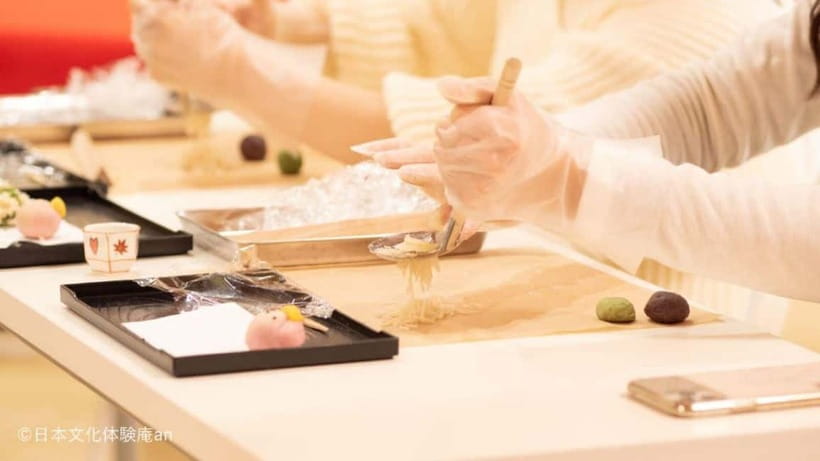
- Hands-on from the first minute: You begin by coloring white bean paste, then shape it with your own fingers.
- Uji matcha included: Grind matcha and prepare your own tea before eating the sweets.
- Short but full program: The class runs for 95 minutes, with the sweets finished before the tea ceremony begins.
- Good value at $18: The fee includes both the sweets-making class and tea ceremony, while a take-out box costs 100 JPY extra.
- English help is limited: Clear demonstrations carry much of the lesson, but translation may not be continuous.
Why nerikiri makes this class special
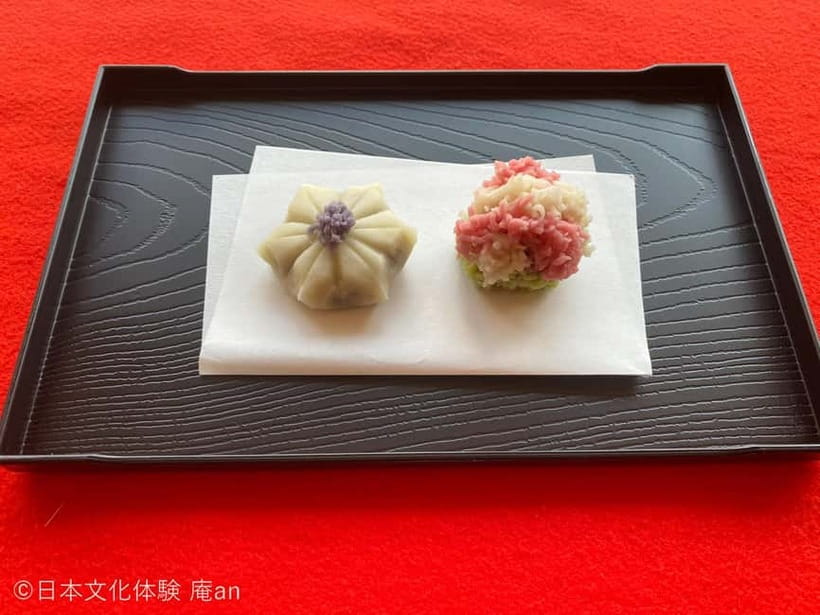
Japanese traditional sweets are called wagashi, and nerikiri is one of the more refined types. It uses smooth white bean paste, colored and shaped to suggest flowers, fruit, or other seasonal images. The finished sweet is meant to please the eye before it reaches your mouth.
That seasonal link matters. Japanese food culture often pays close attention to the time of year, and nerikiri turns that idea into something you can hold. You are not making a generic candy or decorating a cookie. You are shaping bean paste into a small edible design with a distinctly Japanese purpose.
The class uses white and red bean paste produced by long-established Kyoto shops. That gives the activity a useful connection to Kyoto food culture, even though the meeting point is in Tokyo. You get to work with the same basic material used in high-grade Japanese sweets, rather than a simple tourist substitute.
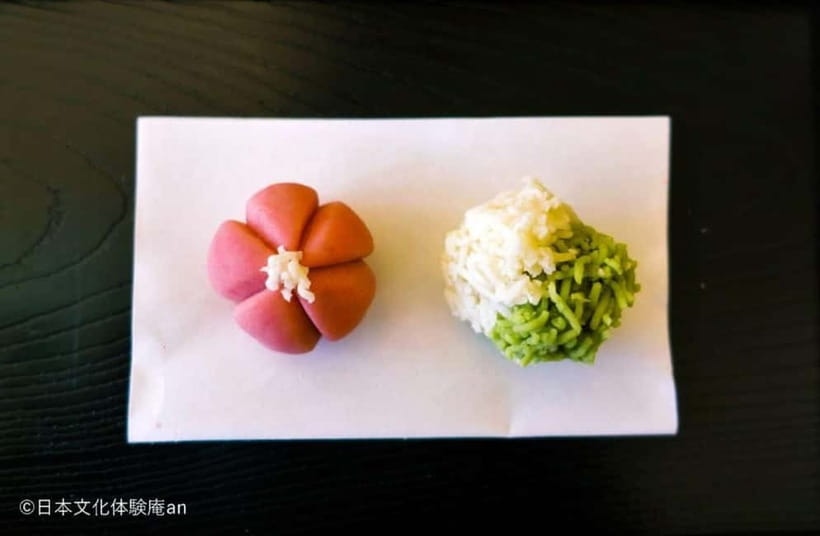
I also like that the class does not stop at one sweet. You prepare a flower-shaped nerikiri and a kinton nerikiri. The two forms give you different ways to handle the paste, and the contrast makes the lesson more interesting than repeating one design twice.
More tea rooms worth booking:
- Matcha Making Class in Tokyo with Authentic Japanese Sweets Set
★ 5.0 · 744 reviews - Tokyo: Traditional Tea Ceremony with a Tea Master
★ 5.0 · 528 reviews - Tokyo: Matcha Making Experience with Mochi Sweets in Asakusa
★ 4.9 · 388 reviews
The first 55 minutes: coloring and shaping two sweets
The session begins with an explanation of Japanese traditional sweets. This opening should give you the basic idea behind nerikiri before you start handling the paste. Since the class is practical, you will learn by watching the instructor and copying each step.
The first project is a flower-shaped nerikiri. You start with coloring the white bean paste, then shape it into the seasonal design. This is the stage where your own sense of touch matters most. The paste must be handled carefully, and the shape depends on small adjustments rather than heavy tools or complicated equipment.
Do not expect every sweet to look identical. That is part of the fun. The activity gives you a chance to express your creative side, but the demonstration remains important. Watch how Marie forms the paste, then follow her movements at your own pace.
The second project is a kinton nerikiri. This gives you another style to try and helps show how the same bean paste can become a different kind of sweet. The class schedule allows about 55 minutes for the opening explanation and both sweets, so the pace is purposeful rather than leisurely.
If you like craft activities, this first section is likely the strongest part. You make something with your hands, learn a technique you can remember, and finish with two edible results. If you prefer a quiet tasting or a formal ceremony with little participation, the constant shaping and coloring may feel more like a workshop than a relaxing cultural show.
A short break before the tea portion
After the sweets are prepared, the program includes a break before the tea explanation begins at about the 65-minute mark. This pause divides the experience neatly into two parts: making wagashi first, then preparing matcha to eat with it.
The break also gives you a moment to look at your finished sweets. Since the program moves from making to drinking, you will not eat them immediately. That small delay helps the tea ceremony feel like a separate stage rather than an afterthought.
Grinding Uji matcha and preparing your own tea
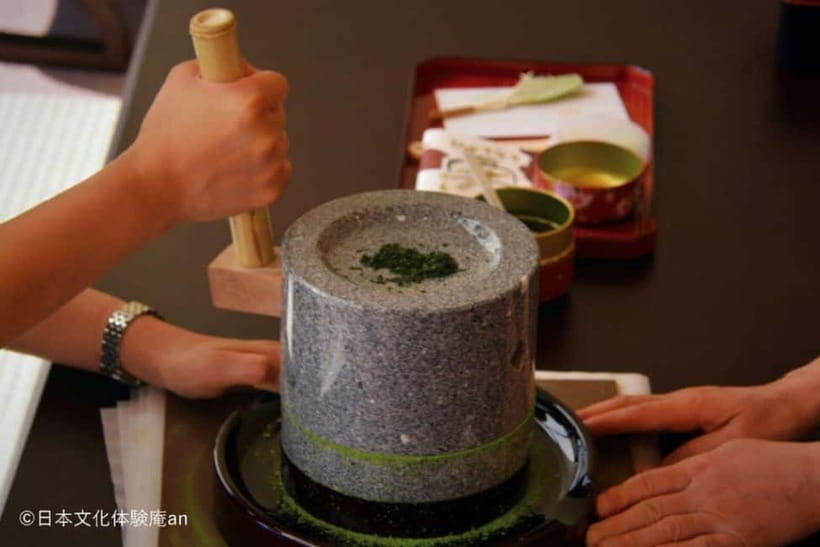
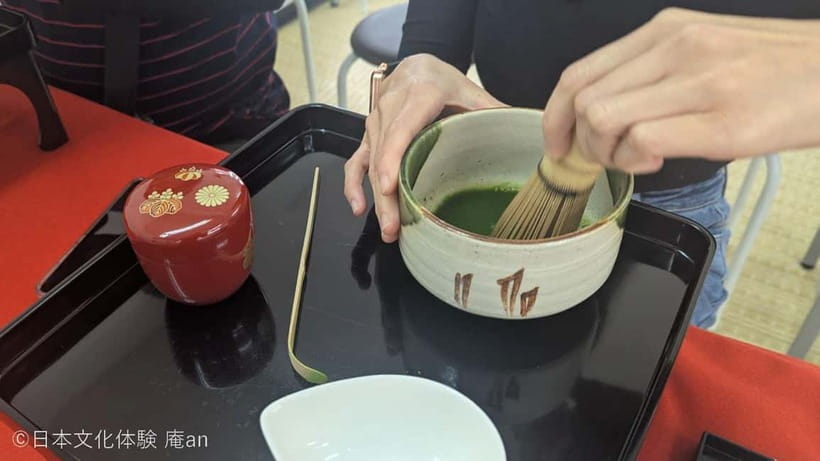
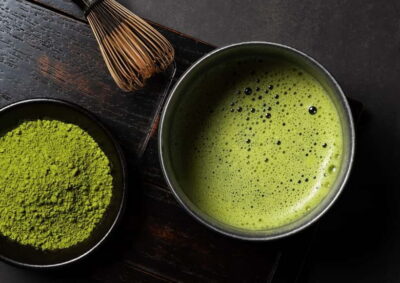
The second half begins with an explanation of tea, followed by a demonstration of matcha grinding. The activity uses a single-origin special matcha from Uji, an area known for matcha production. You then prepare your own tea as part of the tea ceremony experience.
This is a useful detail for anyone comparing Japanese culture classes. Some activities offer a cup of matcha with a sweet already placed beside it. Here, you take part in more of the process. You see how matcha is prepared, then drink the tea alongside sweets you made yourself.
The flavor pairing is central to the experience. High-quality white and red bean paste brings sweetness, while matcha has a strong, earthy taste with a bitter edge. The sweet and tea are meant to balance one another, so do not judge the matcha as if it were a sweetened green tea. It is a more concentrated drink with a flavor that can be new to many first-time drinkers.
The tea ceremony section is not described as a long formal performance. It is a compact cultural lesson with an explanation, a grinding demonstration, your own tea preparation, and time for pictures. That makes it approachable, though it may not satisfy someone seeking an extended ceremonial study.
A few more Tokyo bookings worth comparing
- Make Traditional Nerikiri Sweets & Matcha experience in Shibuya
★ 5.0 · 130 reviews - Private Mochi Sweets Making class near Shibuya area
★ 5.0 · 93 reviews - Tokyo Local Food Tour: Noodles, Skewers, Dumplings, Sweets
★ 5.0 · 48 reviews - Mochi Matcha Gluten Free Japanese Sweets Class near Shibuya area
★ 5.0 · 26 reviews
Why the demonstrations matter more than the language
The official language is Japanese, with English translation provided as much as possible. You should contact the provider if you want English support added. The practical reality is that the visual demonstrations do a great deal of the teaching.
One participant found the instructor helpful and patient, while noting that English was difficult for the instructor. That person still followed the techniques through demonstration. This tells you what to expect: you may understand the process without catching every spoken explanation.
Another participant had a less comfortable experience in a crowded room, where it was hard to hear and the instructor continued without waiting. That is the key weakness to keep in mind. A hands-on class works best when you can see the instructor’s fingers and hear the next instruction clearly.
I would choose a seat with a direct view of the demonstration if you have any choice. Keep your phone ready for a quick picture, but do not let photography replace watching the technique. The shaping steps are the heart of the class, and missing one can make the next part harder.
The high score of 4.7 from 50 ratings suggests that the class usually delivers what people want, especially the combination of sweets-making and tea. Still, the two very different experiences show why expectations matter. It is a better fit for someone comfortable learning through demonstration than for someone who needs detailed English instruction at every step.
The final 30 minutes: ceremony, pictures, and tasting
The tea ceremony experience follows the matcha demonstration. You prepare and enjoy your tea with the two sweets you made earlier. The order is sensible: the delicate bean paste becomes the food companion to the stronger matcha.
Picture time comes near the end, followed by eating and drinking time. The full program ends at about 95 minutes, and you are expected to leave the room then. This is a compact schedule, but it includes making, instruction, tea preparation, photography, and tasting.
I like the fact that the tasting happens after you have completed the work. It gives the food more meaning. You can compare the two sweets, notice their different shapes, and see how the sweetness works with the matcha. The point is not just to receive a snack. You build the snack, then learn how it fits into a tea setting.
If you want to take your sweets with you, a box costs 100 JPY. That is a small extra fee, but plan for it if you are buying the activity partly as a food souvenir. An experience completion certificate costs 300 JPY, and a nominative certificate requires you to provide names in advance. Otherwise, a blank space is left for the name.
Is $18 a good price for 95 minutes?
At $18 per person, this class offers solid value. You receive instruction in making two sweets, a matcha grinding demonstration, a tea ceremony experience, and the chance to drink your own matcha with the sweets. You are paying for participation, not just admission to a demonstration.
The price also makes sense for a first introduction to wagashi. You do not need to commit to a long cooking course, and the 95-minute length fits neatly into a Tokyo sightseeing day. It is long enough to feel like a real activity but short enough to pair with other plans.
The value is strongest if you enjoy doing things with your hands. Someone interested only in eating Japanese sweets could spend less at a shop. Someone hoping for a formal, highly detailed tea ceremony may want a longer specialized program. For most first-time visitors who want a taste of both wagashi and matcha, the combination is appealing.
Remember the small add-ons. The take-out box is 100 JPY, and the completion certificate is 300 JPY. Neither changes the basic value, but the class price does not include them.
Who should book this Tokyo culture experience?
I would recommend this class to families with older children, couples, solo visitors, and anyone who wants a low-cost cultural activity with a clear result at the end. Children under two who sit on a parent’s lap are free, while children who participate normally are covered by the standard booking terms.
It also suits people who enjoy Japanese food but do not know much about wagashi. You learn what nerikiri is, how bean paste is colored and shaped, and why matcha is served with a sweet. That is enough background to make later visits to Japanese confectionery shops more meaningful.
The activity may be less suitable if you need full English instruction, dislike group workshops, or want a slow and highly formal tea ceremony. English help is available as much as possible, but Japanese is the stated language. Group conditions can affect how well you hear and follow the instructor.
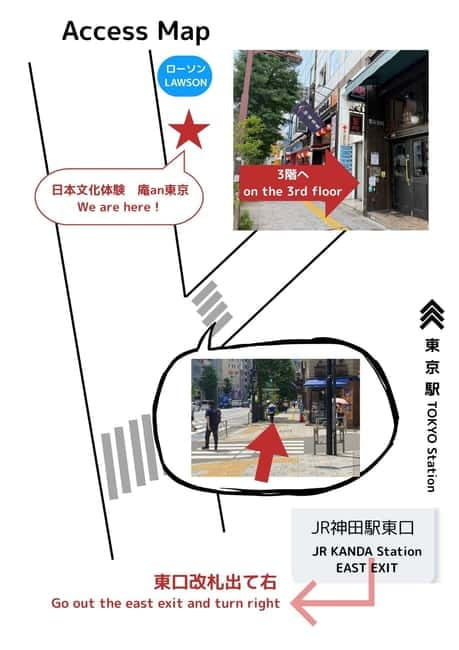
The class is held at AN TOKYO Japanese Culture Experience. The listed coordinates are 35.6916541, 139.7715022. Check the exact meeting details carefully before setting out, and allow time to arrive because the session will not be held for latecomers.
Practical details before you reserve
The activity operates from 10:00 to 17:00. Reservations received after 17:00 are processed the next day, so do not expect an immediate response during the evening.
You can reserve now and pay later, which helps if your Tokyo schedule is still shifting. Free cancellation is available up to 24 hours in advance for a full refund. After that point, a cancellation fee applies, and changing the date or time after a fee has been incurred can bring another specified charge.
Do not count on reimbursement for transportation if you cancel. Also, only people taking part in the experience may enter, so a nonparticipating companion should not expect to wait inside.
Contact the provider ahead of time if you want English translation support or a certificate with names printed. Those details are easier to settle before the class than at the door.
Should you book it?
Book this experience if you want an affordable, hands-on introduction to Japanese sweets and matcha, especially if you like craft work and can learn from demonstrations. The two seasonal nerikiri, Kyoto bean paste, Uji matcha, and tea ceremony create a well-balanced 95-minute program.
Think twice if you need a quiet room, a small group, or step-by-step English throughout. The activity can become difficult to follow when the room is crowded, and its value depends on your ability to watch the instructor closely.
For most visitors who want to do more than take pictures of Japanese food, I think the $18 price is fair. You leave with a better sense of how wagashi is made, how matcha is prepared, and why the two belong together.
FAQ
Where is the Japanese sweets and tea ceremony experience held?
It is held at AN TOKYO Japanese Culture Experience in Tokyo, Honshu. The listed coordinates are 35.6916541, 139.7715022.
How long does the experience last?
The full activity lasts 95 minutes. The program includes sweets-making, a break, tea instruction, a tea ceremony, picture time, and final eating and drinking time.
What sweets will I make?
You will make two seasonal Japanese sweets: a flower-shaped nerikiri and a kinton nerikiri.
What ingredients are used for the sweets?
The class uses white and red bean paste produced by long-established shops in Kyoto. You begin by coloring the white bean paste before shaping the sweets.
Is matcha included?
Yes. You will see a matcha grinding demonstration, prepare your own matcha, and drink it with the sweets you made.
What language is the class in?
The instructor’s language is Japanese. English translation is provided as much as possible, and you can contact the provider if you would like to request additional English support.
How much does the experience cost?
The listed price is $18 per person. A sweets take-out box costs 100 JPY, and an experience completion certificate costs 300 JPY.
Can I cancel for a full refund?
You can cancel up to 24 hours in advance for a full refund. Cancellation fees apply after that point, and the activity will not wait for late arrivals.
New on our Tokyo list
- From Tokyo: Mount Fuji & Hakone Full Day Private Tour★ 4.9 · 25 reviews
- Tokyo Spectacular View Day-Cruise in 90 Minutes★ 5.0 · 25 reviews
- Real Tokyo Runner Club : Daikoku Car Meet Night Tour with JDM Car★ 5.0 · 25 reviews
- 2.5 Hour-Guided Cycle Tour in the Central Tokyo★ 5.0 · 25 reviews
- Tokyo: 2-Hour Night Bike Tour of the City’s Hidden Gems★ 4.9 · 25 reviews
- Ramen Making from Scratch +Akihabara Tour –Cooking Class★ 5.0 · 25 reviews
- [Self-Drive] Tokyo & Daikoku Custom Car Driving Tour★ 4.9 · 25 reviews
- Samurai themed Entertainment show in Shinjuku★ 4.5 · 25 reviews
Tea Ceremonies, compared.
Matcha Making Class in Tokyo with Authentic Japanese Sweets Set
Read our review →
Matcha Making Experience with Mochi Sweets in Asakusa
Read our review →
Tea Ceremony Workshop in Tokyo by the Experienced Instrucor
Read our review →

Make Traditional Nerikiri Sweets & Matcha experience in Shibuya
Read our review →Browse the lists this tour appears in