
Reviewed · TOKYO FOOD TOURS
Kawagoe Japanese Food Tour : Unagi Kaiseki and Sake near Tokyo
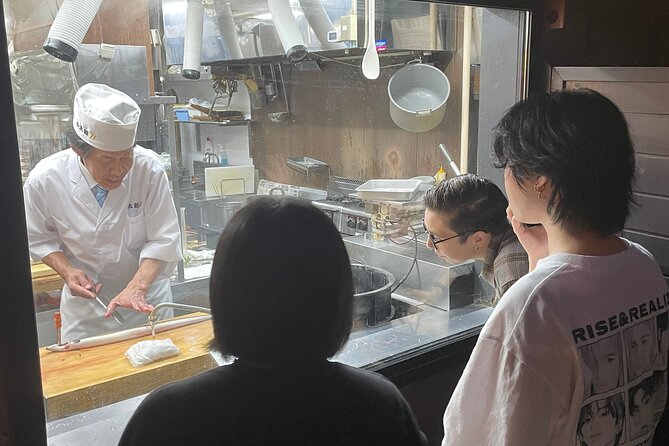
The star here is not just the eel on your plate. It is the chance to watch a chef with more than 40 years of experience prepare live unagi in front of you, then taste the fish in several traditional forms. You also get to handle the preparation yourself by grating fresh wasabi.
I like two things right away: the small group, capped at eight, keeps the demonstration close and personal, and the food offers something far beyond the usual sushi, ramen, or tempura circuit. I also like the setting, since Kawagoe gives you an old-town evening outside central Tokyo’s crowds.
The main consideration is the price, $181.19 per person for about two and a half hours. Alcohol costs extra, transportation is not included, and the late-afternoon start means you need to plan your Kawagoe sightseeing around a 5:00 pm meeting time.
In This Review
- Key points to know before booking
- Why this Kawagoe food experience feels different
- Meeting the chef and seeing live unagi prepared
- Shirayaki, unajū, and the shape of the meal
- The fresh wasabi activity is more important than it sounds
- Optional Saitama sake with a premium meal
- A small group makes the demonstration easier to follow
- Why Kawagoe improves the evening
- Is $181.19 good value?
- Who should book this experience?
- Practical details before you reserve
- Should you book the Kawagoe unagi tour?
- FAQ
- Where does the Kawagoe unagi experience begin?
- What time does the tour start?
- What food is included?
- Is sake included in the price?
- How many people can join?
- Can I cancel for a full refund?
Key points to know before booking
- Watch traditional eel preparation up close: A master chef demonstrates how live eel becomes shirayaki and unajū.
- Grate your own fresh wasabi: Your technique affects the heat, making this a small but memorable hands-on lesson.
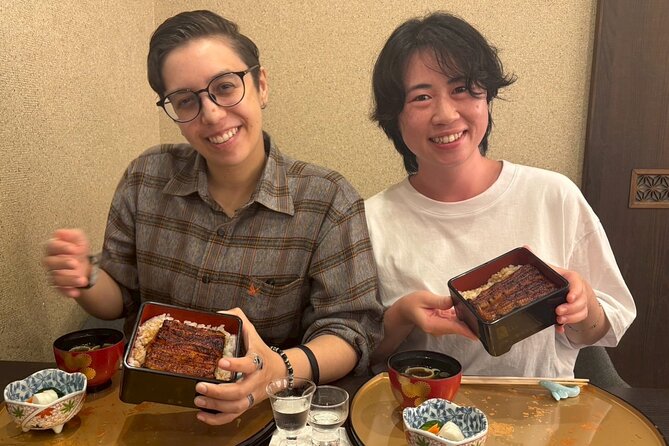
- Taste premium eel in several forms: The course includes an appetizer, plain grilled eel, and grilled eel over rice.
- Learn through food and humor: An English-speaking guide explains the dishes, local customs, and eel facts through quizzes.
- Keep the evening intimate: The group has a maximum of eight people, and solo participants are welcome.
- Treat sake as an add-on: Three specially selected varieties may be paired with the meal for an additional fee.
Why this Kawagoe food experience feels different
Japan offers no shortage of food tours. Many focus on familiar favorites such as sushi, ramen, tempura, or soba. This experience takes a narrower route, focusing on unagi, a premium ingredient often linked with special meals and celebrations.
That focus matters. You are not simply eating eel in a restaurant. You are shown how the dish comes together, why the preparation requires skill, and how different serving styles change the taste and texture.
The chef’s performance is the heart of the evening. You can watch live eel being prepared, see the grilling process, and learn about traditional methods that are rarely part of a standard restaurant meal. The experience also includes fun quizzes, so the explanations are meant to be lively rather than a long lecture.
The English-speaking guide helps connect the demonstration to Japanese food culture. Mr. Kusuda has been praised for his translation, lively delivery, and candid humor, which can make the technical parts easier to follow.
More sake and whisky sessions:
- Ramen and Sushi Cooking Class with Sake Pairing Set in Tokyo
★ 5.0 · 291 reviews - Sake Tasting Masterclass in Shinjuku (8+ Varieties with a Pro)
★ 5.0 · 271 reviews - Sake Omakase in Tokyo: Guided Tasting by Certified Sommeliers
★ 5.0 · 239 reviews
Meeting the chef and seeing live unagi prepared
The tour begins at Eccola Resona Koedoterrace, at 41 Saiwaicho, Kawagoe, Saitama 350-0063. The meeting time is 5:00 pm, and the activity ends at the same place.
The opening demonstration is likely to be the most unusual part for anyone accustomed to restaurant dining. You may have the opportunity to hold a live eel before it is prepared, then watch the chef turn it into finished dishes. That direct connection between ingredient and meal gives the food a stronger sense of place.
This is also where you should expect a little more visual detail than you might see in a typical cooking class. The chef does not merely present a finished plate. He shows the preparation process and explains how eel is handled, grilled, and served.
For some people, seeing a live fish handled so directly may be confronting. That is a fair consideration, especially for children or anyone who prefers food to arrive with no connection to its original form. For others, this is precisely what makes the experience useful and memorable.
You do not need to be an eel expert. The guide’s explanations and quizzes are designed to give you enough background to understand what you are seeing. The format works best if you are curious and willing to ask questions.
Shirayaki, unajū, and the shape of the meal
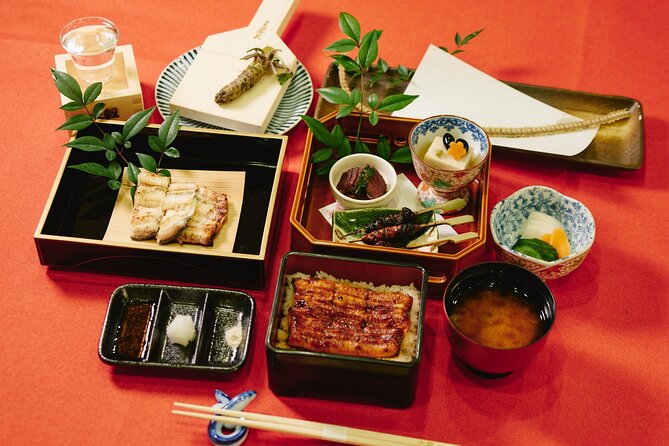
The included course meal features an appetizer, shirayaki, and unajū.
Shirayaki is eel grilled without the usual sweet soy-based sauce. This plain preparation lets you focus on the natural flavor and texture of the fish. It is a good comparison point, especially if your only previous experience with eel has been a strongly seasoned rice bowl.
Unajū is grilled eel served over rice, usually presented in a lidded box. Here, it provides the more familiar, comforting part of the meal, with the smoky eel balanced by rice and the seasonings that accompany it.
The value of tasting both styles is that you can see why preparation matters. One dish highlights the eel itself, while the other shows how it works as part of a complete meal. The course also includes other kaiseki-style dishes, though the supplied details do not specify every appetizer or side.
That uncertainty is worth keeping in mind. If you want a precisely described tasting menu with every course listed in advance, this may feel less predictable. If you prefer a focused meal built around one special ingredient, the structure makes sense.
The fresh wasabi activity is more important than it sounds
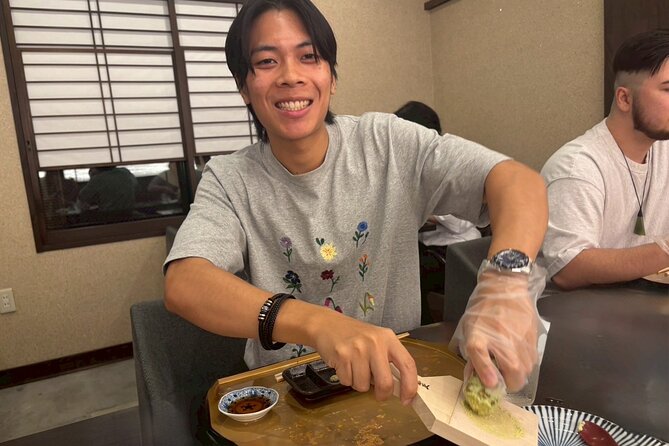
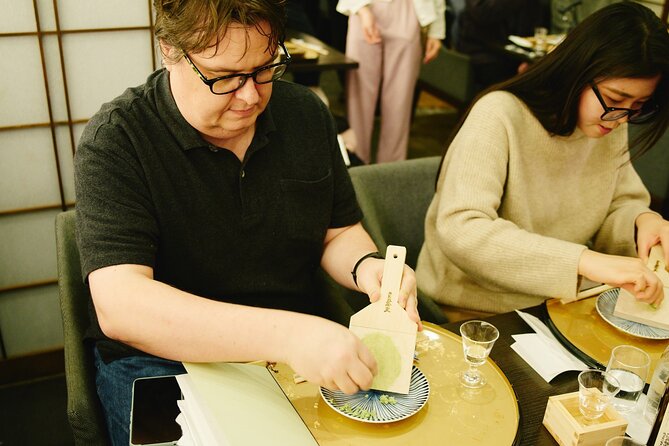
You also grate fresh wasabi yourself. This is not the same as opening a tube of green paste at a sushi counter.
The experience explains that the heat changes according to your technique. How you grate the root affects the result, so you get a small lesson in texture, aroma, and spice before tasting it with the food.
Fresh wasabi is valued for its cleaner, more fragrant bite. The point is not simply to produce the strongest possible heat. You are learning how the condiment can support the eel instead of overwhelming it.
I like this part because it gives you something to do between demonstrations and courses. It also creates a direct connection between your actions and the flavor on the plate. You are not watching the entire evening from the sidelines.
If you are sensitive to spicy food, you still have control over the amount you taste. The experience does not describe the wasabi as a challenge or stunt, so you can approach it at your own pace.
More Tokyo food crawls:
- Tokyo: Shinjuku Food Tour (13 Dishes at 4 Local Eateries)
★ 5.0 · 6,603 reviews - Tokyo: Shinjuku Food Tour (15 Dishes and 4 Eateries)
★ 4.9 · 2,033 reviews - Best of Shinjuku: Izakaya Food Tour (4 Stops, 14+ Tastings)
★ 5.0 · 1,863 reviews - Tokyo Night Foodie Tour in Shinjuku – Seasonal Sushi, Wagyu Beef
★ 5.0 · 1,161 reviews
Optional Saitama sake with a premium meal
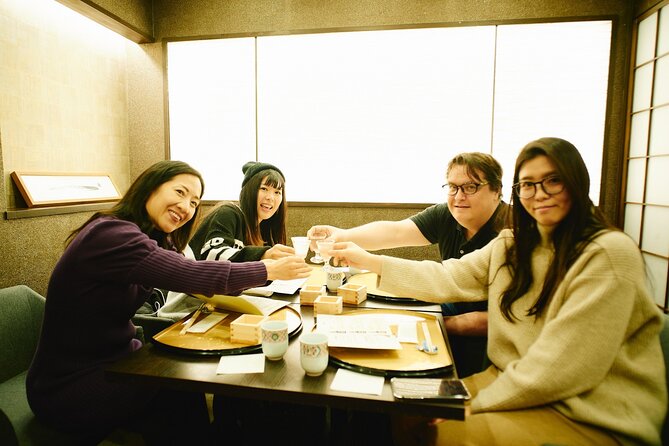
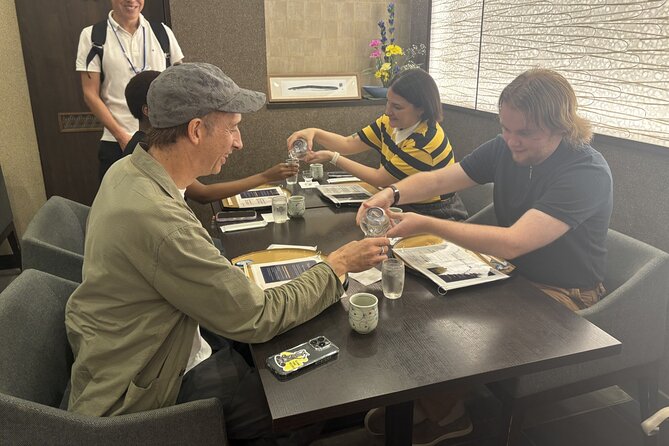
Alcohol is not included in the standard price. You can add a sake pairing with three varieties selected for this experience, including sake produced in Saitama.
That extra cost changes the final price, so check the booking choice carefully before you commit. If you already know you do not drink alcohol, the included meal and demonstration remain the core of the experience.
For sake drinkers, the pairing can add useful context. Different sake styles can change how grilled eel tastes, especially when the meal moves from plain shirayaki to sauced eel over rice.
The pairing also reinforces the local character of the evening. You are eating a Kawagoe-area specialty in Saitama and can match it with sake from the same prefecture. That feels more grounded than adding a generic drink to a restaurant meal.
Still, do not book this only for the alcohol. The sake is an optional enhancement, not a required part of the program. The main draw is the chef, the eel preparation, and the food itself.
A small group makes the demonstration easier to follow
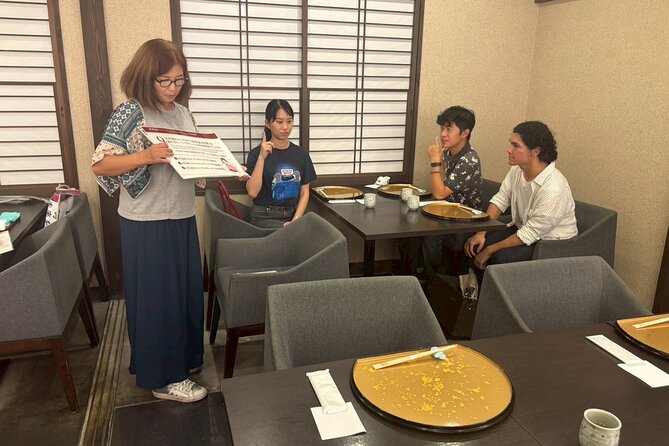
The group is limited to eight people. That is a useful number for a live food demonstration, since you should have a better chance of seeing the chef’s work without standing at the back of a large crowd.
A small group also suits the interactive elements. Holding the eel, grating wasabi, answering quizzes, and asking questions all work better when the session is not packed with dozens of people.
Solo participants are welcome, which makes this a practical choice if you are exploring Japan on your own. You are not required to arrange a private booking or bring a companion.
The guide’s role matters here. Mr. Kusuda has been singled out for lively translation and humor, while other feedback points to friendly staff and clear explanations about the dishes. The experience appears designed to bridge the language gap rather than leave you to observe silently.
Because the tour lasts about two and a half hours, the pace should feel focused rather than rushed. It is long enough for the demonstration, meal, wasabi activity, and explanations, but short enough to fit into an evening in Kawagoe.
Why Kawagoe improves the evening
Kawagoe is about a 30-minute train ride from central Tokyo, according to the tour information. Transportation is not included, so you will need to arrange your own train travel and allow enough time to reach the meeting point.
The town is known for a historic streetscape associated with Japan’s samurai-era past. Compared with Tokyo, Kyoto, Osaka, or Mt. Fuji, it offers a calmer setting for an evening meal and a walk.
The 5:00 pm start is useful because you can explore before dinner. You might spend the earlier part of the day in Kawagoe itself, then arrive at the meeting point with time to spare. The suggested wider plan includes Chichibu or Moominvalley Park earlier in the day, followed by a kimono stroll in Kawagoe.
That proposed day would be ambitious, so check your energy and transport connections before adding several destinations. The food experience itself is fixed at the end of the day, and arriving late would be a poor trade for trying to squeeze in too much sightseeing.
The tour ends back at the starting point. That makes it easier to continue your evening in Kawagoe or head back toward Tokyo after the meal.
Is $181.19 good value?
At $181.19 per person, this is not a budget food stop. You are paying for a focused cultural program, a premium ingredient, a guided demonstration, the included meal, and a small group rather than simply buying an eel bowl.
The price makes more sense if you value access and explanation. A standard unagi restaurant can give you a good meal, but it will not necessarily let you watch a master chef prepare live eel, taste plain grilled eel beside unajū, grate fresh wasabi, and follow the process in English.
The comparison is less favorable if you only want to eat eel. In that case, a restaurant visit would likely be a simpler and less costly choice, although the supplied information does not provide standard restaurant prices for comparison.
Remember to add the cost of public transportation and, if desired, the three-sake pairing. Tips are also not included. These extras are not surprising, but they mean the advertised per-person price is not the full evening budget.
The experience is booked an average of 57 days ahead, so it is sensible to reserve early if your Tokyo dates are fixed. That booking pattern may also reflect the small eight-person limit rather than only the popularity of the food.
Who should book this experience?
I would recommend it most strongly to you if you enjoy food preparation, regional specialties, and meals with a story behind them. It is especially suited to someone who has already tried common Japanese dishes and wants a less routine experience.
It also works well for repeat visitors to Japan. One person who had lived in Japan for two years described it as the best experience of that stay, which makes sense if you want to move beyond the standard first-trip checklist.
Food-focused couples, solo visitors, and small groups should all fit comfortably. The combination of demonstration, tasting, and guided explanation gives everyone something to follow, even if not every person in your party is equally excited about eel.
You may want to skip it if you dislike seafood, feel uneasy watching live food preparation, or have no interest in a structured meal. The experience is centered on unagi from start to finish, so there is no reason to book it hoping the focus will shift to sushi or other Japanese staples.
Practical details before you reserve
You receive confirmation at booking, and the experience uses a mobile ticket. The meeting point is near public transportation, but the fare is your responsibility.
Most people can participate, and solo booking is allowed. The group maximum is eight, which helps preserve the close-up nature of the chef’s demonstration.
The standard booking includes the food course and wasabi grinding. Alcohol, transportation, and tips are separate.
Cancellation is flexible up to 24 hours before the 5:00 pm start for a full refund. Changes or cancellations made within 24 hours are not accepted or refunded, with cut-off times based on local time.
Should you book the Kawagoe unagi tour?
Book it if you want more than a meal. The strongest reasons are the 40-year eel chef, the chance to see the full preparation process, the contrast between shirayaki and unajū, and the fresh wasabi activity. The small group and English guidance make the format easier to follow than an ordinary restaurant visit.
Skip it if $181.19 feels high for a two-and-a-half-hour food experience, or if you would rather spend your evening sampling several unrelated dishes. Add the sake pairing only if it fits your budget and drinking plans.
For the right person, this is a smart way to pair Kawagoe sightseeing with a food tradition you may not encounter in a normal Tokyo izakaya. Plan your transport, arrive ready for a hands-on demonstration, and leave room for a short old-town stroll before or after dinner.
FAQ
Where does the Kawagoe unagi experience begin?
It begins at Eccola Resona Koedoterrace, 41 Saiwaicho, Kawagoe, Saitama 350-0063. The activity ends back at the same meeting point.
What time does the tour start?
The start time is 5:00 pm. The experience lasts approximately two hours and 30 minutes.
What food is included?
The course includes an appetizer, shirayaki, which is plain grilled eel, and unajū, grilled eel served over rice. Kaiseki dishes and the wasabi-grating activity are also part of the experience.
Is sake included in the price?
No. Alcoholic beverages are not included in the standard price. An optional pairing with three sake varieties is available for an additional fee.
How many people can join?
The activity has a maximum of eight participants. Solo participants are welcome to book.
Can I cancel for a full refund?
Yes, if you cancel at least 24 hours before the experience start time. Cancellations or changes made less than 24 hours in advance are not accepted, and the amount paid is not refunded.
More Drinking Tours in Tokyo
- Tokyo Bar Hopping Tour in Shinjuku (All-You-Can-Drink + Dinner)
★ 5.0 · 3,587 reviews - Tokyo: Shinjuku Local Bar and Izakaya Guided Walking Tour
★ 4.9 · 1,794 reviews - Shibuya Meltdown Nightlife Tour: All-You-Can-Drink Bar Hopping
★ 5.0 · 1,058 reviews - Tokyo: Pub Crawl and Bar Tour
★ 4.5 · 951 reviews
New on our Tokyo list
- From Tokyo: Mount Fuji & Hakone Full Day Private Tour★ 4.9 · 25 reviews
- Tokyo Spectacular View Day-Cruise in 90 Minutes★ 5.0 · 25 reviews
- Real Tokyo Runner Club : Daikoku Car Meet Night Tour with JDM Car★ 5.0 · 25 reviews
- 2.5 Hour-Guided Cycle Tour in the Central Tokyo★ 5.0 · 25 reviews
- Ramen Making from Scratch +Akihabara Tour –Cooking Class★ 5.0 · 25 reviews
- [Self-Drive] Tokyo & Daikoku Custom Car Driving Tour★ 4.9 · 25 reviews
- Tokyo: 2-Hour Night Bike Tour of the City’s Hidden Gems★ 4.9 · 25 reviews
- Samurai themed Entertainment show in Shinjuku★ 4.5 · 25 reviews
Tokyo Food Tours, compared.
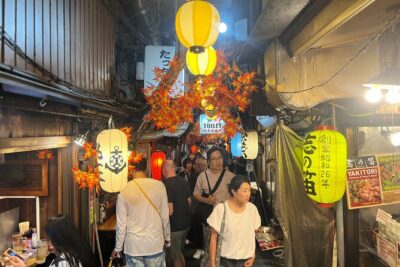
Shinjuku Food Tour (13 Dishes at 4 Local Eateries)
Read our review →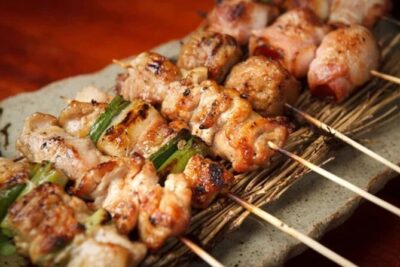
Shinjuku Food Tour (15 Dishes and 4 Eateries)
Read our review →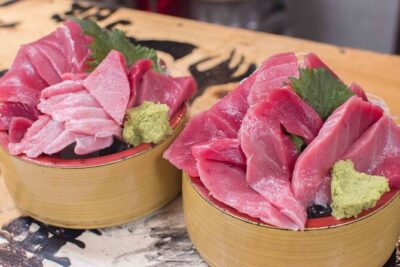
Best of Shinjuku: Izakaya Food Tour (4 Stops, 14+ Tastings)
Read our review →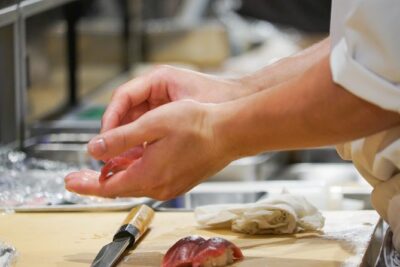
Tokyo Night Foodie Tour in Shinjuku – Seasonal Sushi, Wagyu Beef
Read our review →
Eat and Drink Like a Local: Tokyo Ueno Food Tour-Taverns&Ramen
Read our review →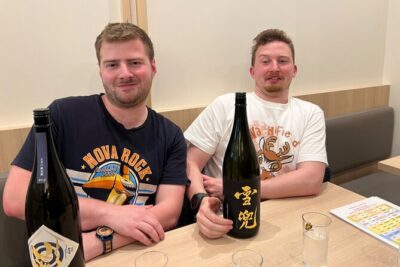
Tsukiji Fish Market: Street Food & Culture Walking Tour
Read our review →Shinjuku Food Tour – 15 Dishes, 3 Drinks, 4 Eateries
Read our review →Browse the lists this tour appears in