
Reviewed · SUSHI EXPERIENCES
Kid-Friendly Sushi Making Class in Tokyo (English-Led)
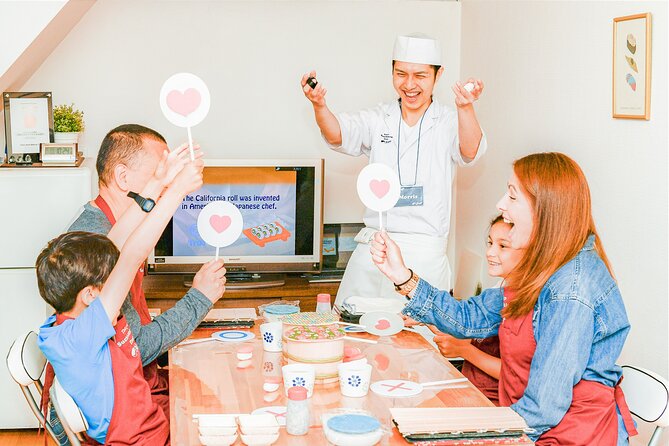
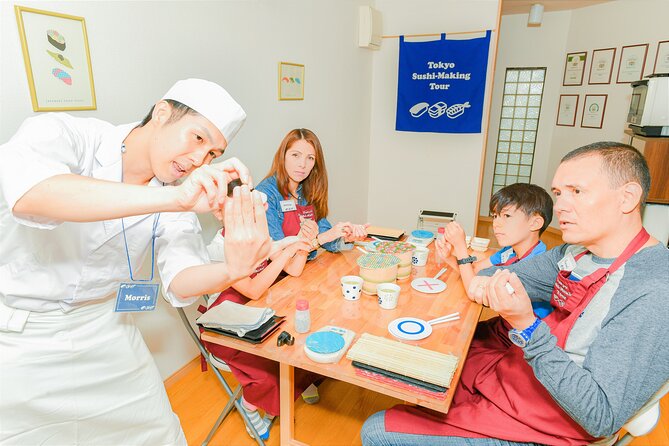
The best part of this Tokyo class is that you do not just watch a sushi chef work. You make four different styles yourself, from nigiri to a decorative roll, then sit down to eat what you shaped. A short quiz on sushi etiquette and trivia keeps the cultural lesson lively, while English-speaking instructors such as Nat and Morris guide you through each step.
I like the small maximum group of eight, which gives you real hands-on help instead of a distant demonstration. I also like the mix of practical skills and cultural detail: you learn how to prepare vinegared rice, pick up useful Japanese phrases, and hear how sushi developed in Japan.
The main consideration is the meeting point. Kita-Senju is well connected to parts of eastern Tokyo, but it is not the most central base for every visitor. You should also report dietary needs ahead of time, especially if you need non-raw fish, vegetarian, or gluten-free ingredients.
In This Review
- Key points to know before booking
- Starting at Kita-Senju Station at 10:30 AM
- A quiz that makes sushi etiquette easier to remember
- Preparing vinegared rice, the foundation of the meal
- Making four sushi styles in one sitting
- Decorative sushi roll
- California roll
- Nigiri sushi
- Battleship roll
- Eating your own sushi at the end
- What the small group means for your experience
- Is $68.97 good value?
- Dietary needs and raw fish planning
- Who will enjoy this class most?
- Booking, timing, and cancellation details
- Should you book the Kita-Senju sushi class?
- FAQ
- How long does the sushi-making class last?
- What time does the class start?
- Where do I meet the instructor?
- Where does the activity finish?
- Is the class suitable for children?
- What kinds of sushi will I make?
- Can I request a vegetarian or non-raw fish menu?
Key points to know before booking
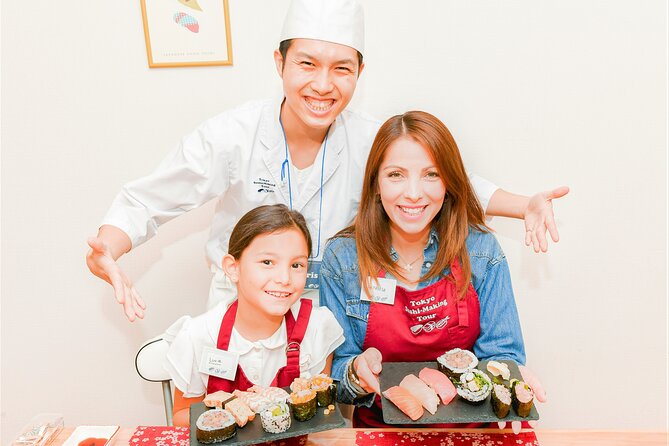
- Four sushi styles in one class: Make decorative sushi rolls, California rolls, nigiri sushi, and battleship rolls.
- A genuinely hands-on lesson: You prepare vinegared rice and shape the sushi yourself, with guidance from the instructor.
- Good for children from age eight: The quiz, varied activities, and food preparation keep the pace lively for families.
- English instruction: Nat and Morris are named instructors who lead the class in English and answer questions throughout.
- Small-group attention: The class accepts no more than eight participants, useful when you need help with rolling or shaping.
- Dietary requests are possible: Non-raw fish, vegetarian, and gluten-free menus are available if arranged in advance.
Starting at Kita-Senju Station at 10:30 AM
Your meeting point is at the East exit of Kita-Senju Station, at 3-5 Senjuasahicho in Adachi City. The class starts at 10:30 a.m. and finishes back at the same meeting point after about two and a half hours.
That location makes sense if your day includes Asakusa, Ueno, Akihabara, or Ginza, all named as convenient access points for the class. Still, Tokyo station transfers can take longer than they look on a map, so I would allow extra time to find the correct station exit. A mobile ticket is provided, and confirmation is sent within 48 hours of booking, subject to availability.
The start time is well suited to a morning activity. You can take the class, eat your finished sushi for lunch, and still have much of the day left for sightseeing. The tradeoff is that you need to be ready for a fixed morning appointment rather than fitting the lesson into a flexible afternoon.
More sushi mornings and classes:
- Sushi Making Tokyo Roll and Authentic Japanese Sushi Class
★ 5.0 · 3,971 reviews - Tokyo: Roll and Authentic Sushi Making Class in Asakusa
★ 4.9 · 1,957 reviews - Make Sushi and Create Unforgettable Memories in Tokyo
★ 5.0 · 1,413 reviews
A quiz that makes sushi etiquette easier to remember
The class begins with a quiz covering sushi etiquette and trivia. This is a smart choice for families because it gives children something active to do before the food preparation starts. It also helps adults avoid treating etiquette as a dry lecture.
You can expect to learn practical points about how sushi is eaten, along with useful Japanese phrases and travel tips. The information is presented as part of the class rather than as a long history talk, so the lesson should feel connected to the meal ahead.
The quiz also gives the instructor a chance to set the tone. Nat is described as friendly, patient, and strong in English, while Morris is praised for making the class interesting and enjoyable for families. The two-hour-thirty-minute format has room for questions, so you are not simply rushing from one recipe to the next.
Preparing vinegared rice, the foundation of the meal
Before making sushi, you learn about vinegared rice. This is one of the most useful parts of the lesson because rice often decides whether homemade sushi holds together or falls apart.
The class focuses on the preparation rather than handing you finished rice. That means you learn an important part of the process you can repeat at home. You are not expected to arrive with cooking experience. Beginners are welcome, and the class is designed to give you step-by-step help.
For children, rice preparation may be less visually exciting than decorating a roll, but it shows that sushi is more than raw fish placed on rice. The lesson connects a basic ingredient to the final result, giving the meal a little more meaning.
Making four sushi styles in one sitting
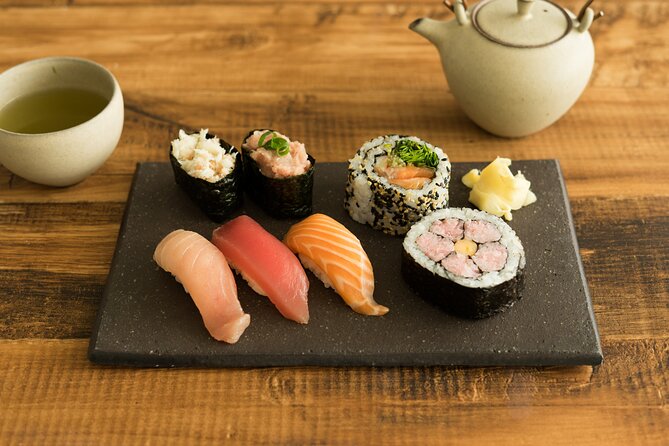
The class includes four distinct types of sushi. That variety is a major reason the price feels reasonable, especially if you want one activity that combines instruction, food, and culture.
A few more Tokyo bookings worth comparing
- Tokyo Shinjuku Chopsticks Making Class
★ 5.0 · 1,763 reviews - Tokyo: Sushi Making Class in a Happi Coat near a Famous Spot
★ 4.9 · 1,377 reviews - Chopstick Making Workshop in Ginza
★ 4.8 · 1,366 reviews - Tokyo Sushi Making Class in Tsukiji with Professional Chef
★ 5.0 · 1,177 reviews
Decorative sushi roll
The decorative roll is likely to be the most playful part of the class. You arrange ingredients so a pattern appears when the roll is cut. The process rewards careful placement, but it does not require professional knife skills or years of practice.
This is a particularly good choice for children because the result is visual. You can see the design emerge only after the roll is sliced, which gives the activity a small moment of surprise. It is also the style most likely to inspire you to try sushi-making at home for a birthday, family meal, or dinner with friends.
California roll
The California roll gives you practice with an inside-out roll, a style familiar to many people outside Japan. It helps you handle the rice, filling, and nori in a different arrangement from the standard outside-wrapped roll.
For a first-time cook, this can be useful because you get more than one rolling method in the same lesson. You can compare how each roll feels to assemble and how the finished pieces hold together.
Nigiri sushi
Nigiri is the simplest-looking style and one of the easiest to underestimate. You form a small portion of rice and place fish on top, but getting the size and shape right takes some care.
The class typically uses raw salmon and tuna. That gives you a chance to work with classic sushi ingredients, but it also makes advance planning important if anyone in your party does not eat raw fish. A non-raw fish menu is available when requested ahead of time.
Battleship roll
The battleship roll, also called gunkan-style sushi, is shaped like a small boat. It uses a strip of nori around the rice and creates a rim for the topping.
This fourth style adds another useful technique. You learn to form sushi that is neither a flat roll nor a simple piece of nigiri. The different shapes make the class feel varied, and the finished plate should give you a clear sense of how much you have made during the session.
Eating your own sushi at the end
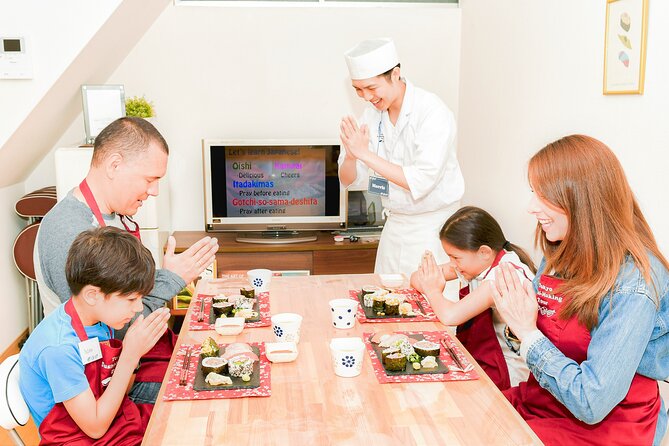
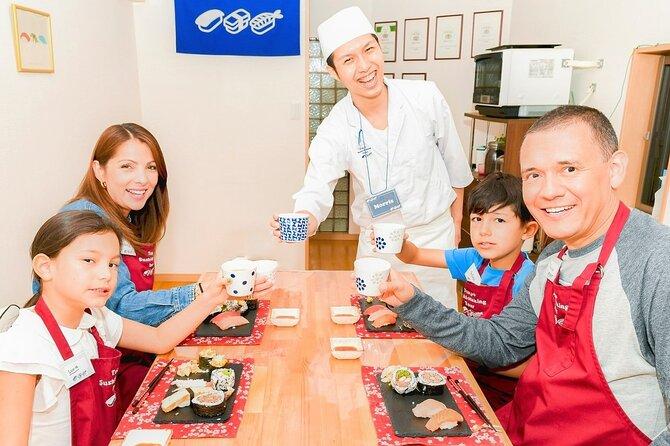
After the preparation, you eat the sushi you have made. That sounds obvious, but it changes the feel of the class. You are not cooking for an unseen customer or taking food home in a box. You get an immediate reward and can see how your rice, rolls, and shapes turned out.
The finished plate includes the four styles you prepared, so you can compare them side by side. Some pieces may look more polished than others, especially on a first attempt. That is part of the fun, and the instructor’s role is to help you improve rather than expect restaurant-level presentation.
The meal also gives you time to ask final questions. The class is described as relaxed and friendly, with a pace that works for children and adults. If your family usually finds cooking demonstrations passive, this format gives everyone something to do and something to eat.
What the small group means for your experience
With a maximum of eight participants, the class is much smaller than a large cooking demonstration. That matters when you are learning a physical skill. Rolling sushi, forming nigiri, and building a battleship shape are easier when an instructor can watch your hands and correct a small mistake.
Nat and Morris are both identified as English-speaking instructors. Nat is described as patient and able to answer questions clearly, while Morris has taught families with young children. The named instructors may vary by date, so you should not assume you will receive a particular teacher unless the booking details confirm it.
A small group also suits mixed-age families. An eight-year-old may need more help than an adult, and a compact class makes it easier for the teacher to give that attention. The atmosphere is meant to be laid-back rather than formal, which should help beginners relax.
The limit is that a small class can feel personal only if the group itself works well together. The available information does not promise a private class, so you may share the session with other participants.
Is $68.97 good value?
At $68.97 per person, this is not the cheapest way to eat sushi in Tokyo. You can find a quick sushi meal for much less. The value comes from the teaching, the food preparation, the English guidance, and the cultural material packed into roughly 150 minutes.
I would compare the price with other Tokyo food activities, not with the cost of lunch alone. You receive instruction in four sushi styles, a lesson on rice, an etiquette quiz, Japanese phrases, travel tips, and the meal you make. For a family, it also replaces a passive sightseeing stop with an activity everyone can share.
The value is strongest if you are a beginner, want a family activity, or hope to repeat the techniques at home. It is less compelling if you already make sushi comfortably or mainly want an inexpensive meal.
The class has received a 5 rating with 23 reviews and is recommended by 100 percent of participants in the supplied booking information. That is a small sample, so I would treat it as encouraging rather than proof that every session will be perfect. The repeated strengths are consistent: friendly English instruction, a good mix of activities, careful preparation, and a fun result that you get to eat.
Dietary needs and raw fish planning
The standard ingredients typically include raw salmon and tuna. If that does not suit you, the provider offers a non-raw fish menu, a vegetarian menu, and a gluten-free menu.
You must share dietary restrictions in advance. This is not a detail to leave until the morning of the class, since the ingredients need to be arranged before you arrive.
The class may be a good choice for families with different food preferences because alternatives are available. Still, the supplied information does not list every ingredient or allergy procedure, so you should give clear details when booking if you have a serious allergy or strict dietary requirement.
Who will enjoy this class most?
I would recommend it first to families with children aged eight and older. The quiz, four different sushi shapes, and chance to eat the finished work create a clear rhythm that should hold a child’s attention better than a long cultural talk.
It also suits couples, friends, and solo participants who want a practical food activity. You do not need previous cooking experience, and the English-speaking format removes a major barrier for visitors who want instruction rather than a silent demonstration.
The class is especially useful if you are curious about sushi etiquette but do not want a stiff lesson. You get cultural context, useful phrases, and travel tips without giving up the hands-on part.
I would hesitate only if you need a central Tokyo meeting point, cannot manage a 10:30 a.m. start, or want a private class. Kita-Senju is convenient from several major sightseeing areas, but the route may be less direct from other parts of the city.
Booking, timing, and cancellation details
The activity is booked about 40 days in advance on average, so I would reserve early if your Tokyo dates are fixed. Confirmation arrives within 48 hours, subject to availability.
Free cancellation is offered up to 24 hours before the start time for a full refund. Cancellations or changes made less than 24 hours before the class are not accepted for a refund, and the cut-off follows Tokyo local time.
The activity begins and ends at the same meeting point. Plan your morning around the 10:30 a.m. start, and allow enough time to reach the East exit of Kita-Senju Station without a last-minute station scramble.
Should you book the Kita-Senju sushi class?
Book it if you want to do more than eat sushi in Tokyo. The class gives you a clear introduction to rice, rolling, shaping, etiquette, and basic sushi culture, all in one compact morning. The small group and English instruction are strong advantages, especially for families.
I would make this a high-priority pick for parents with children eight and older, first-time sushi makers, and anyone who values a meal they helped create. Arrange dietary alternatives early, check the route to Kita-Senju, and reserve ahead if possible.
Skip it if your main goal is the lowest-cost sushi meal or if you already have strong sushi-making skills. For everyone else, the combination of four styles, personal guidance, and a shared meal makes the $68.97 fee a fair price for a useful Tokyo experience.
FAQ
How long does the sushi-making class last?
The class lasts approximately two hours and 30 minutes.
What time does the class start?
The class starts at 10:30 a.m.
Where do I meet the instructor?
You meet at the East exit of Kita-Senju Station, at 3-5 Senjuasahicho, Adachi City, Tokyo 120-0026, Japan.
Where does the activity finish?
The activity ends back at the meeting point.
Is the class suitable for children?
Yes. Children aged eight and older are welcome, and the class is designed for families and cooking beginners.
What kinds of sushi will I make?
You will make decorative sushi rolls, California rolls, nigiri sushi, and battleship rolls.
Can I request a vegetarian or non-raw fish menu?
Yes. Non-raw fish, vegetarian, and gluten-free menus are available, but you must inform the provider of your dietary needs in advance.
New on our Tokyo list
- Sumi-e Experience in a relaxing green tea shop in Tokyo★ 5.0 · 3 reviews
- Tokyo : Kamikaze Street Drift Ride★ 5.0 · 3 reviews
- Private Zen Meditation in English in Shinjuku, Tokyo★ 5.0 · 3 reviews
- Onsen Spa in Tokyo and Asakusa Bar Hopping with Local Guide★ 5.0 · 3 reviews
- Easy for everyone! Now you can play handmade mini shamisen and show off to everyone! Musical instruments, sweets and live music★ 5.0 · 3 reviews
- Tokyo: Private Tsukiji Street Food & Sake with Local Guide★ 5.0 · 3 reviews
- Mt Fuji Exploration Tour with Free Japanese Kusa Mochi from Tokyo★ 4.5 · 3 reviews
- Tokyo Tsukiji Fish Market Walking and Exploring Hidden Gems Tour★ 5.0 · 3 reviews
Sushi Experiences, compared.
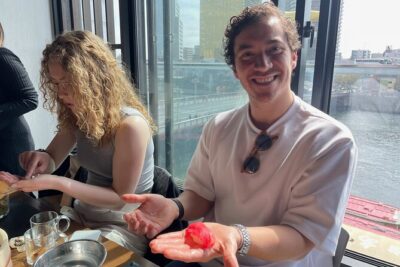
Sushi Making Tokyo Roll and Authentic Japanese Sushi Class
Read our review →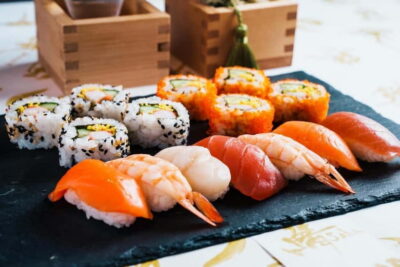
Roll and Authentic Sushi Making Class in Asakusa
Read our review →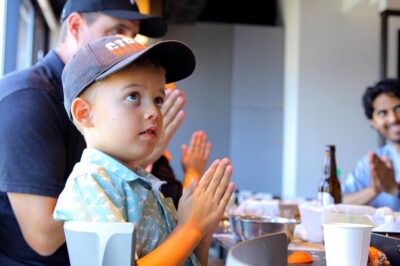
Make Sushi and Create Unforgettable Memories in Tokyo
Read our review →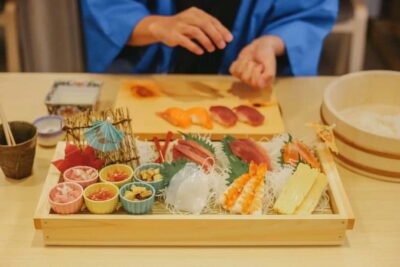
Sushi Making Class in a Happi Coat near a Famous Spot
Read our review →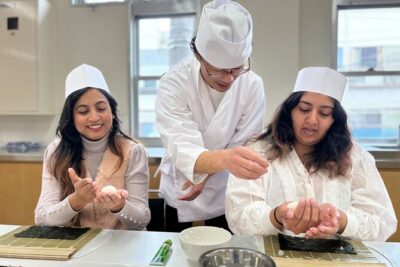
Tokyo Sushi Making Class in Tsukiji with Professional Chef
Read our review →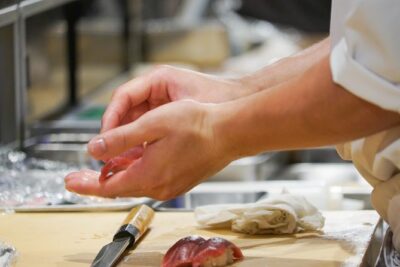
Tokyo Night Foodie Tour in Shinjuku – Seasonal Sushi, Wagyu Beef
Read our review →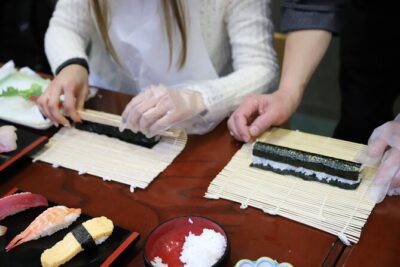
Tsukiji Fish Market Guided Tour and Sushi Making with Pro Chef
Read our review →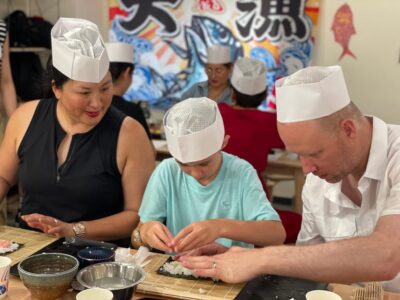
Tsukiji Fish Market Sushi Making Class with Pro Chef
Read our review →Browse the lists this tour appears in