
Reviewed · JAPANESE COOKING CLASSES
Learn to Make Home Style Tempura Udon and Gyoza
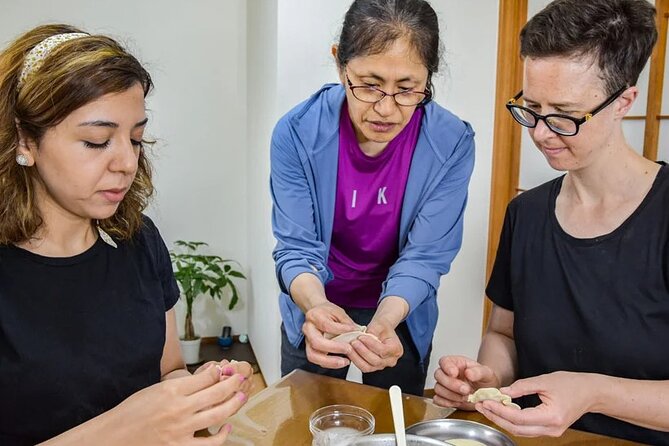
Making noodles by hand gives this Tokyo food experience its real appeal. With Emi guiding you, you’ll knead udon dough, prepare dashi, fry tempura, and fold gyoza before sitting down to eat. I like the private format and the useful recipe booklet, which turns a pleasant afternoon into a skill you can use at home. I also like that you choose your gyoza filling in advance.
The main drawback is that this is not a casual drop-in class. You must reach Nerima Station on your own, provide a WhatsApp number, and book well ahead for groups of three or more. A single male participant cannot take part alone, so check the group rules before paying.
In This Review
- Key points to know
- A hands-on Tokyo meal, not just a cooking demonstration
- Meeting Emi near Nerima Station
- Kneading udon from scratch
- Getting tempura crisp instead of heavy
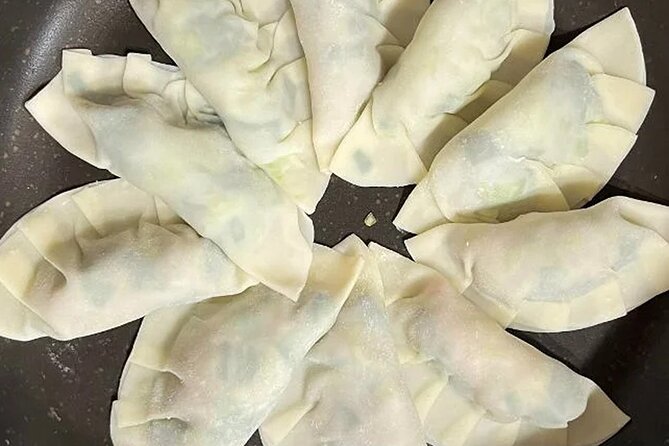
- Folding gyoza with your chosen filling
- Sitting down to eat your own cooking
- What the private format is really worth
- How much time to allow
- Who should book this class
- Booking, dietary needs, and cancellation
- Should you book Learn to Make Home Style Tempura Udon and Gyoza?
- FAQ
- Where does the cooking class meet?
- How long does the experience last?
- What dishes will I make?
- Do I eat the food I prepare?
- Which gyoza fillings can I choose?
- Is the class private?
- Is the class suitable for vegetarians or pescatarians?
- What is included in the price?
- Do I need to arrange transportation?
- What is the cancellation policy?
Key points to know
- Make three Japanese staples: Prepare hand-kneaded udon, crispy tempura, and folded gyoza in one class.
- Learn with Emi privately: Your group receives direct instruction instead of working in a large shared class.
- Choose your gyoza filling: Select minced pork, minced pork with shrimp, or vegetables when booking.
- Eat what you cook: The finished udon, tempura, and gyoza become your meal at the end.
- Take the lesson home: An English recipe booklet helps you repeat the dishes after Tokyo.
- Plan well ahead: The class lasts about 2 hours and 30 minutes and fills quickly for groups of three or more.
A hands-on Tokyo meal, not just a cooking demonstration
Many food activities give you a taste of Japan and little else. This one asks you to do the work. That is the point. You leave with more than a full stomach because you have handled the dough, mixed ingredients, shaped gyoza, and watched oil turn batter crisp.
The menu is well chosen. Udon, tempura, and gyoza are familiar enough to sound approachable, but each teaches a different kitchen skill. Udon gives you a feel for dough. Tempura teaches timing and frying. Gyoza adds filling, folding, and portion control.
I also like the order of the meal. You start with preparation, move into cooking, and finish by eating everything together. The class does not end with a rushed taste at the counter. You sit down with the food you made, which makes the work feel worthwhile.
The class is private, so only your own group takes part. That matters if you want to ask questions freely or need the pace adjusted. It also makes this a better fit for a family, couple, or small group of friends than for someone hoping to meet a large mix of other people.
More cooking classes in Tokyo:
- Ramen & Gyoza Cooking Class in Tokyo with Local Supermarket Visit
★ 5.0 · 823 reviews - Tokyo: Easy Ramen Cooking Experience in Kabukicho, Shinjuku
★ 4.6 · 321 reviews - Ramen and Sushi Cooking Class with Sake Pairing Set in Tokyo
★ 5.0 · 291 reviews
Meeting Emi near Nerima Station
The meeting point is at Nerima Station, at 1-chōme-3-5 Nerima, Nerima City, Tokyo 176-0001. Transportation to and from the location is not included, so you need to handle the trip yourself. The activity is near public transportation, which helps, but you should still allow time to find the exact meeting spot.
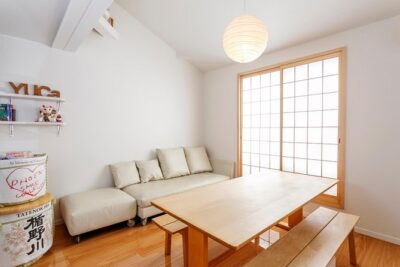
The class begins at a cozy cooking studio near the station. The available information does not give a full walking route from the station, so use your booking details and host messages carefully. A WhatsApp-registered phone number is required for smooth communication with Emi.
Emi’s role is more than showing you a list of steps. She explains what you should look for as you cook, including practical points such as how vegetables should be cut. That kind of instruction is useful because recipes often tell you what to do without explaining what success looks like.
This teaching style suits you if you want to understand the reasons behind a dish. It may be less ideal if you only want to watch a professional prepare food while you take photographs. You will be expected to work.
Kneading udon from scratch
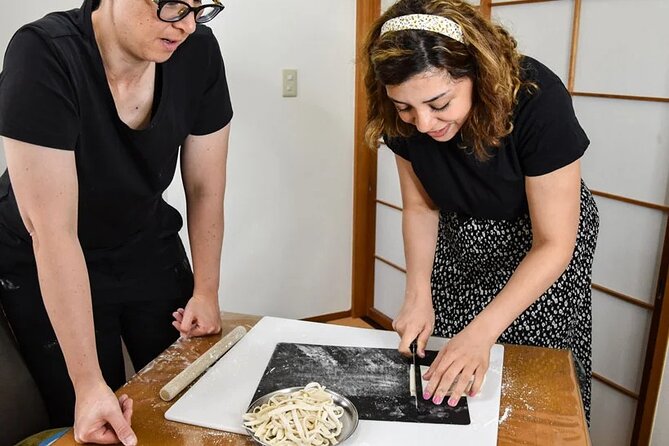
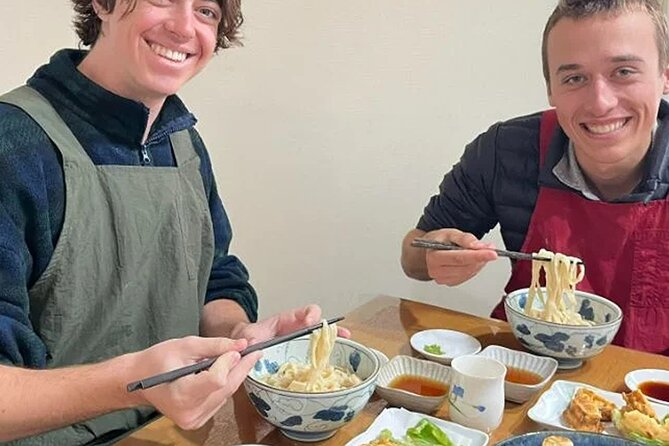
The first major task is making udon noodles by hand. You knead the dough yourself, rather than starting with packaged noodles. That gives you a better sense of the texture and effort behind one of Japan’s best-known comfort foods.
Handmade noodle dough can feel simple at first, then surprisingly demanding. The value here is not only the final bowl. You learn how the dough should feel as it comes together, and you receive immediate corrections from Emi while you work.
The udon is served with tempura, so the class connects the noodle-making stage with the rest of the meal. You are not preparing three unrelated dishes. Each part ends up on the same table.
You will also prepare dashi. The supplied details do not specify every ingredient or method, so do not expect a full lesson on every regional broth style. Still, learning to prepare the soup base adds an important layer to the udon. A bowl of noodles depends on its broth as much as its noodles.
The recipe booklet is especially helpful here. Udon dough can be difficult to recreate from memory, so having English instructions gives you a practical reference once you are home.
Getting tempura crisp instead of heavy
Tempura looks easy until you try to make it light and crisp. In this class, you prepare and fry the tempura yourself. Emi shows you the process and explains the signs to watch for as you cook.
That direct feedback is one of the strongest reasons to choose a private class. Frying involves several small judgments, from the batter to the cooking stage. A written recipe can list ingredients, but it cannot always tell you what the food should look like at the right moment.
The class does not promise a professional kitchen or restaurant-level production. Its value is that you get a guided first attempt in a low-pressure setting. You can ask why a step matters, rather than quietly repeating a mistake.
You should also remember that frying is an active part of the session. If you prefer a neat, hands-off experience, this may feel like work. If you enjoy learning by doing, the tempura section is likely to be one of the most satisfying parts.
A few more Tokyo bookings worth comparing
- Mt Fuji and Hakone 1-Day Bus Tour Return by Bullet Train
★ 5.0 · 26,383 reviews - 1-Day Tokyo Bus Tour
★ 5.0 · 14,250 reviews - Tokyo: TOKYO SKYTREE® Admission ticket
★ 4.5 · 11,192 reviews - Tokyo: teamLab Planets TOKYO Digital Art Museum Entry Ticket
★ 4.6 · 9,779 reviews
Folding gyoza with your chosen filling
Gyoza gives you the most room to personalize the menu. You choose one of three fillings when booking:
- Minced pork
- Minced pork and shrimp
- Vegetables only
Make that choice carefully. You cannot assume the class will have every filling available on the day, since the preference must be submitted in advance. Vegetarian and pescetarian dietary needs can be accommodated if you tell the provider ahead of time.
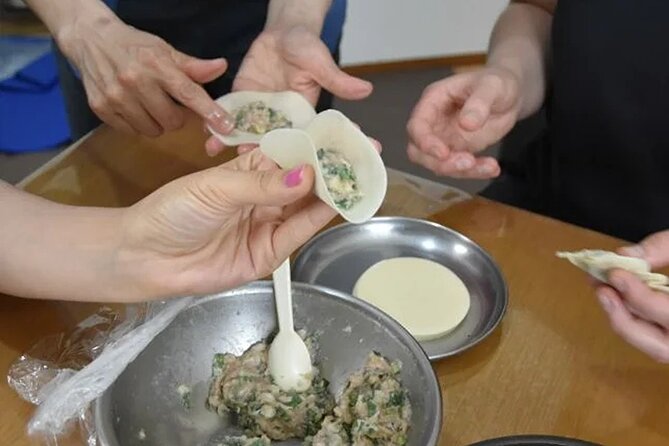
The process includes filling and folding the dumplings. Folding is a small skill with a clear payoff. You can see the shape of your work before it reaches the pan, and the recipe booklet gives you something to consult later.
The choice of filling makes the class more flexible for mixed groups. One person may prefer pork, while another may want vegetables. Still, the available choices are limited to the three listed options, so contact the provider if your diet is more restricted.
The class is not described as allergy-free, halal, vegan, or gluten-free. If you have a serious allergy or a requirement beyond vegetarian or pescetarian food, ask before booking rather than hoping it can be managed at the studio.
Sitting down to eat your own cooking
After the preparation and cooking, you sit down to eat the udon with tempura and gyoza. Barley tea is included during the class, giving you a nonalcoholic drink while you work.
This shared meal is more important than it may seem. Cooking classes can sometimes feel like a string of tasks followed by a quick sample. Here, the finished dishes form a proper meal, so you have time to enjoy the results and discuss what you made with Emi.
The meal also helps you judge the techniques you just learned. You can notice the texture of the udon, the crispness of the tempura, and the shape and filling of the gyoza while the lesson is still fresh.
The class does not include alcohol. Japan’s legal drinking age is 20, but that point is not central to this experience because barley tea is the included drink.
What the private format is really worth
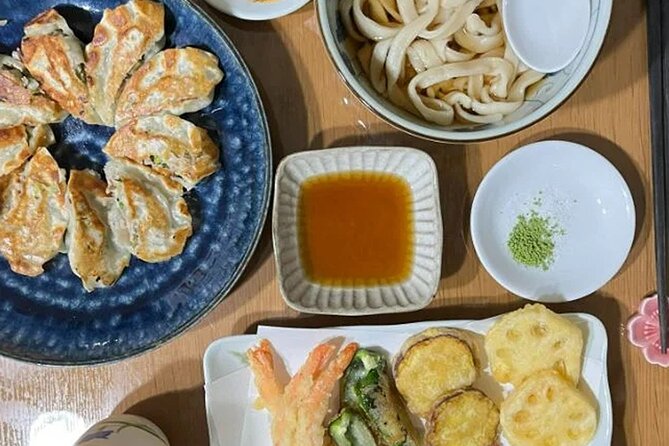
The price is $95.23 per person. That is not the cheapest way to eat udon, tempura, and gyoza in Tokyo. You could find a less expensive meal in a restaurant, and you would not have to knead dough or clean up after your own cooking.
The price makes more sense if you value instruction and personal attention. It includes all ingredients and tools, the full meal, barley tea, the English recipe booklet, and a private session with Emi. You are paying for time, guidance, and the chance to repeat the dishes at home.
For a couple or family, the private setting can also be more comfortable than sharing a work station with strangers. A child or first-time cook may ask basic questions without feeling self-conscious. The available information does not give a minimum age, so families should confirm that point before booking if it matters.
I would see the class as good value for people who want a usable souvenir. The recipe booklet and hands-on practice have a longer life than a restaurant receipt. If you have no interest in cooking again, the price may feel high for a 2.5-hour meal activity.
How much time to allow
The session lasts about 2 hours and 30 minutes. That is long enough to cover several dishes without turning the experience into an all-day commitment.
You should allow extra time before and after the class for transportation. The activity starts and ends at the meeting point near Nerima Station, and transport is not included. The final end time may depend on how quickly your group works, so avoid scheduling a tight connection or another fixed activity immediately afterward.
A half-day format works well on a Tokyo itinerary. You can place it on a day when you want a slower local activity rather than a full schedule of major sights. Nerima is not presented as a sightseeing stop within the class, so treat this as a food lesson, not a combined neighborhood tour.
Groups of three or more should book two to three months ahead, especially in spring and autumn. The typical advance booking pattern is about 81 days, which tells you that last-minute availability may be poor during popular seasons.
Who should book this class
I would recommend it to you if you enjoy practical activities and want to understand Japanese food beyond ordering it. It is a good pick for families, couples, small friend groups, and anyone who wants a quieter private lesson.
It is also a strong choice for cooks. One direct example comes from a mother and daughter, with the daughter training to be a chef. The class worked for them because Emi shared both cooking guidance and insight into daily life in Japan.
You should also book it if you like taking home a useful souvenir. The English recipe booklet means you can try the dishes again with your family instead of letting the experience fade after your flight home.
I would be more cautious if you are a single male participant, since the activity does not allow one male participant to join alone. Solo visitors should ask the provider about an acceptable arrangement before making plans.
This is not the best pick for a person who wants a broad food tour, a market visit, or a restaurant crawl. It focuses on three dishes in one studio. That narrow focus is its strength if you want to learn, but its limitation if you want to see more of Tokyo during the same outing.
Booking, dietary needs, and cancellation
You must select your gyoza filling when booking: minced pork, minced pork and shrimp, or vegetables. Vegetarian and pescetarian requirements can be accommodated with advance notice. Give clear details about any dietary restriction before the class.
Confirmation is sent within 48 hours of booking, subject to availability. For groups of three or more, booking two to three months ahead is strongly advised, especially in spring and autumn.
Free cancellation is available up to 24 hours before the start time for a full refund. Cancellations or changes made less than 24 hours before the experience are not accepted for a refund, and cut-off times use Tokyo local time.
Should you book Learn to Make Home Style Tempura Udon and Gyoza?
Book this class if you want a private, hands-on food lesson with a real meal at the end. Emi’s clear explanations, the choice of gyoza filling, and the English recipe booklet make it more useful than a simple cooking demonstration.
Skip it if you want a cheap lunch, a flexible solo activity, or a wider look at Tokyo food culture. At $95.23, the value depends on using the instruction. If you knead, fry, fold, ask questions, and later cook the recipes at home, this makes a strong Tokyo souvenir.
FAQ
Where does the cooking class meet?
The class starts at Nerima Station, at 1-chōme-3-5 Nerima, Nerima City, Tokyo 176-0001, Japan.
How long does the experience last?
The cooking class lasts approximately 2 hours and 30 minutes.
What dishes will I make?
You will make hand-kneaded udon, dashi, tempura, and gyoza.
Do I eat the food I prepare?
Yes. The class ends with a meal of your handmade udon with tempura and gyoza.
Which gyoza fillings can I choose?
You can choose minced pork, minced pork and shrimp, or vegetables only. You must provide your choice when booking.
Is the class private?
Yes. Only your group participates in the activity.
Is the class suitable for vegetarians or pescatarians?
Yes, vegetarian and pescetarian dietary requirements can be accommodated if you provide advance notice.
What is included in the price?
The price includes ingredients, tools, the udon, tempura, and gyoza meal, barley tea, and an English recipe booklet.
Do I need to arrange transportation?
Yes. Transportation to and from the meeting point is not included.
What is the cancellation policy?
You can cancel at least 24 hours before the start time for a full refund. Changes or cancellations made less than 24 hours before the start time are not accepted for a refund.
New on our Tokyo list
- Sumi-e Experience in a relaxing green tea shop in Tokyo★ 5.0 · 3 reviews
- Tokyo : Kamikaze Street Drift Ride★ 5.0 · 3 reviews
- Private Zen Meditation in English in Shinjuku, Tokyo★ 5.0 · 3 reviews
- Onsen Spa in Tokyo and Asakusa Bar Hopping with Local Guide★ 5.0 · 3 reviews
- Easy for everyone! Now you can play handmade mini shamisen and show off to everyone! Musical instruments, sweets and live music★ 5.0 · 3 reviews
- Tokyo: Private Tsukiji Street Food & Sake with Local Guide★ 5.0 · 3 reviews
- Mt Fuji Exploration Tour with Free Japanese Kusa Mochi from Tokyo★ 4.5 · 3 reviews
- Tokyo Tsukiji Fish Market Walking and Exploring Hidden Gems Tour★ 5.0 · 3 reviews
Japanese Cooking Classes, compared.
Ramen & Gyoza Cooking Class in Tokyo with Local Supermarket Visit
Read our review →
Easy Ramen Cooking Experience in Kabukicho, Shinjuku
Read our review →
Ramen and Sushi Cooking Class with Sake Pairing Set in Tokyo
Read our review →
Tokyo Washoku 4-hour Cooking Class: From Market to Table
Read our review →
TokyoSumoShow, ChickenHotPot, and Mochi-Pounding by Pro Wrestlers
Read our review →
Professional Ramen & Gyoza with Ramen Chef in a restaurant!
Read our review →
Small-Group Wagyu Beef and 7 Japanese Dishes Tokyo Cooking Class
Read our review →Browse the lists this tour appears in