
Reviewed · SUSHI EXPERIENCES
Little EDO Sushi Making workshop in Kawagoe
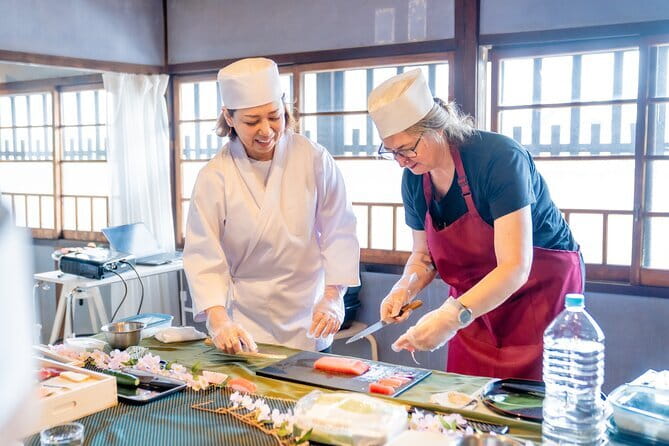
Kawagoe’s 140-year-old former rice wholesale shop gives this sushi class a setting you will not find in a modern cooking studio. Inside MUSUBIYA, staircase cabinets and broad ceiling beams preserve the feel of old Japan while an English-speaking Japanese chef guides you through nigiri and maki sushi.
I like the small maximum of six people, which should leave room for personal help with rice, knife work, and hand movements. I also like that you eat what you make, turning a short lesson into both a cultural visit and a meal. The main consideration is the price, $84.08 per person, plus the fact that drinks cost extra and stairs lead into the venue.
In This Review
- Key points to know before booking
- Making sushi inside old Kawagoe
- What the 90-minute class covers
- Why the sushi rice lesson matters
- From nigiri hand movements to maki rolls
- An English-speaking chef and a small class
- What makes the setting worth the price
- Dietary requests need to be made early
- Timing, transport, and the Kawagoe day plan
- Who will enjoy this workshop most
- Should you book the Little EDO Sushi Making workshop?
- FAQ
- Where does the sushi class take place?
- How long does the experience last?
- What types of sushi will I make?
- Is the class taught in English?
- Are ingredients and food included?
- Can the class accommodate special diets?
- Are there stairs at the venue?
- What is the cancellation policy?
Key points to know before booking
- Historic setting: Make sushi inside a 140-year-old building that once served as a rice wholesale shop.
- Two sushi styles: Prepare traditional hand-shaped nigiri and rolled maki sushi.
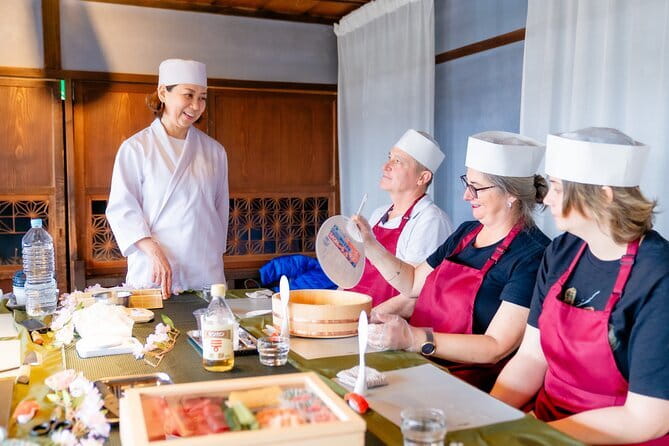
- English instruction: An English-speaking Japanese sushi chef leads the hands-on lesson.
- Tiny class size: The group is limited to six people, useful if you want individual guidance.
- Advance dietary requests: Vegan, vegetarian, gluten-free, halal, and some allergy needs can be arranged before the class.
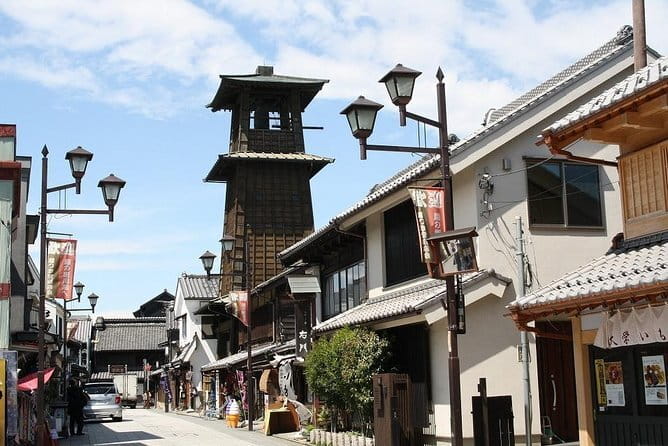
- Easy Kawagoe location: MUSUBIYA is about a three-minute walk from Kashiya Yokocho.
Making sushi inside old Kawagoe
This experience begins at MUSUBIYA, 1-6-7 Ishiharacho, Kawagoe City, a short walk from Kashiya Yokocho. That location matters. You can pair the class with a stroll through one of Kawagoe’s most popular old-town areas without spending much time getting from one to the other.
The building is part of the lesson. It was once a rice merchant’s shop, and its age shows in the architectural details. Look for the staircase cabinets, an ingenious storage feature built into the stairs, and the large ceiling beams overhead. They give the room a strong sense of place before you even pick up a knife or rice paddle.
I like this approach to a cooking class because the surroundings explain part of the food’s story. Rice was not simply an ingredient here. It was central to the building’s original business, so learning to prepare sushi rice in this setting feels more connected to Kawagoe than a standard kitchen demonstration would.
There are stairs to reach the venue. If stairs are difficult for you, contact the operator before booking or as early as possible. Alternative arrangements may be available, but you should not wait until the day of the class.
More sushi mornings and classes:
- Sushi Making Tokyo Roll and Authentic Japanese Sushi Class
★ 5.0 · 3,971 reviews - Tokyo: Roll and Authentic Sushi Making Class in Asakusa
★ 4.9 · 1,957 reviews - Make Sushi and Create Unforgettable Memories in Tokyo
★ 5.0 · 1,413 reviews
What the 90-minute class covers
The published duration is about one hour and 30 minutes, with sessions listed from noon to 1:30 p.m. or from 3 to 4:30 p.m. One description refers to the class as two hours, so allow a little flexibility around the stated timing rather than planning a tight connection immediately afterward.
The class begins with instruction on sushi and its place in Japanese food culture. You learn that nigiri sushi was created in Japan about 300 years ago, a useful detail because it separates the hand-formed style from older methods of preserving fish with rice.
The chef then explains how to make sushi rice. This is one of the most useful parts for home cooks. The rice controls the texture and balance of every piece, and the technique is more practical to take home than simply watching someone shape finished sushi.
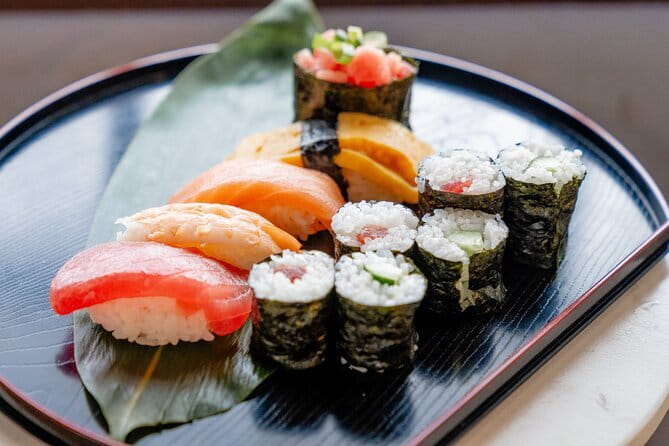
You will prepare two familiar forms:
- Nigiri sushi: Rice is shaped by hand and paired with a topping.
- Maki sushi: Rice and fillings are rolled in seaweed and cut into pieces.
The class is hands-on rather than a simple demonstration. You work under the chef’s direction and try to copy the precise hand movements used to form nigiri. That can be harder than it looks, but the small group size should make it easier to ask for help and correct your technique.
The available information does not specify the exact fish, fillings, or number of pieces. That is worth keeping in mind if you are comparing this class with another workshop based on a detailed menu. What is clear is that the ingredients for the lesson and the meal are included, while beverages are not.
Why the sushi rice lesson matters
Many visitors can make a basic roll at home after watching a short video. The rice is the part that often causes trouble. It needs the right texture, seasoning, and handling so that it holds together without becoming heavy or wet.
This workshop gives the rice proper attention instead of treating it as a background step. You can recreate the method at home, provided you can find suitable rice and follow the chef’s instructions carefully.
The lesson also covers how to cut neta, the topping used for sushi. The supplied feedback specifically praises learning about sushi history, sushi rice, cutting neta, and shaping nigiri. Those details suggest that the class goes beyond assembling ingredients and gives you a better sense of the work behind a finished piece.
You should not expect to leave with professional sushi-chef skills after one short class. You should expect to understand the process better, recognize why the rice and cutting matter, and have a chance to practice the movements yourself.
From nigiri hand movements to maki rolls
Nigiri is likely the more demanding of the two styles. The chef shows you how to form rice with your hands and place the topping so the piece holds its shape. The goal is not just to make something edible. It is to see how much control goes into a small, neatly shaped piece of sushi.
The class invites you to copy the chef’s hand motions. That makes the experience more active, but it also means the result may not look perfect on your first attempt. I consider that a benefit rather than a flaw. A polished demonstration can make sushi look easy. Trying it yourself shows you where the skill lies.
Maki sushi offers a different lesson. You work with a larger sheet and fillings, then roll and cut it into portions. The finished roll is familiar and generally more forgiving than nigiri, so it gives you a satisfying result even if the hand-shaped pieces take practice.
At the end, you eat the sushi you prepared. That makes the class feel complete and keeps the workshop from becoming a demonstration with no payoff. Since beverages are not included, plan to buy or bring a drink separately if you want one with the meal.
A few more Tokyo bookings worth comparing
- Tokyo Shinjuku Chopsticks Making Class
★ 5.0 · 1,763 reviews - Tokyo: Sushi Making Class in a Happi Coat near a Famous Spot
★ 4.9 · 1,377 reviews - Chopstick Making Workshop in Ginza
★ 4.8 · 1,366 reviews - Tokyo Sushi Making Class in Tsukiji with Professional Chef
★ 5.0 · 1,177 reviews
An English-speaking chef and a small class
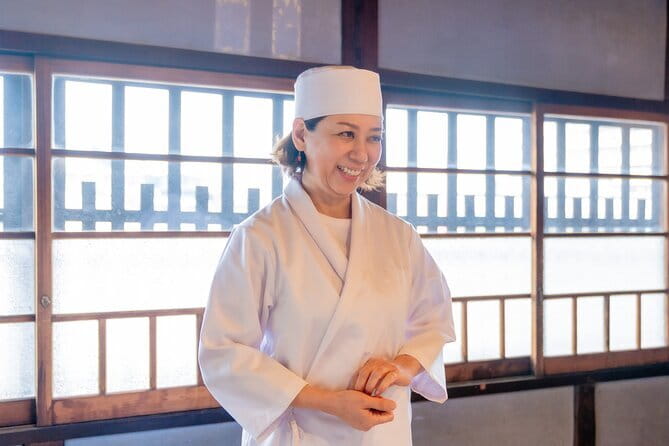
The instructor is an English-speaking Japanese sushi chef with international experience. No personal name is provided, so you should not expect to book a particular named chef. The important practical point is that instruction is offered in English, including the history, preparation steps, and guidance while you work.
A maximum of six people is a strong feature here. Sushi shaping benefits from close instruction, especially when the chef is showing small movements that are difficult to see from across a large room. A group of this size also keeps the class more personal without making it a private lesson.
The class is operated by Kate’s Hands-On Sushi Class. The tone is intended to be friendly and engaging, with cultural explanation mixed into the cooking. The available rating is 5 out of 5 from 18 ratings, and the recommendation rate is 100 percent. That is encouraging, though the sample is still modest, so I would treat it as a useful signal rather than a guarantee that the format suits every person.
What makes the setting worth the price
At $84.08 per person, this is not a budget meal. You are paying for instruction, ingredients, a prepared lunch or afternoon meal, and access to a distinctive historic building. Hotel transportation is not included, but the central Kawagoe location keeps the extra planning fairly simple.
The value is strongest if you want more than sushi on a plate. You receive a lesson you can use at home, a look at traditional food culture, and time in a building with original features tied to the rice trade. The class also makes a practical stop during a Kawagoe day because it is close to Kashiya Yokocho.
The value is weaker if your only goal is to eat excellent sushi. A restaurant meal will usually be more convenient, and you will not need to spend time learning rice preparation or hand formation. This workshop makes sense for people who want to understand how sushi is made and enjoy doing the work themselves.
The price also does not include drinks. That is a small additional cost, but it is easy to overlook when comparing the total price with other food tours.
Dietary requests need to be made early

MUSUBIYA can accommodate vegan and vegetarian menus, as well as gluten-free and halal requests. Some allergies can also be handled, but the operator specifically excludes meat, nuts, fruits, and dairy from its allergy accommodations.
You must request menu changes when booking. Changes cannot be made on the day of the class. This is especially important for dietary restrictions because the ingredients need to be arranged before the session begins.
If you have a complicated allergy, read the exclusions carefully and contact the operator before paying. The class can help with several common dietary needs, but you should not assume every substitute is possible.
Timing, transport, and the Kawagoe day plan
The meeting point is 結家, also called MUSUBIYA, at the Ishiharacho address in Kawagoe. It is near public transportation and about three minutes from Kashiya Yokocho, making it simple to combine with sightseeing in the old shopping streets.
The listed operating schedule gives Monday sessions at noon and 3 p.m., for dates from May 9, 2025, through February 11, 2027. Because the schedule is limited, check the available date carefully before building your Kawagoe plans around the class.
The noon session works well as a planned lunch, since the ingredients and meal are included. The afternoon session can fit after morning sightseeing, though the meal comes later in the day. Since the class ends where it starts, you can continue exploring Kawagoe without arranging a separate return transfer.
There is no hotel pickup or drop-off. You are responsible for reaching MUSUBIYA. That is not a major problem for an activity in a walkable sightseeing area, but it does mean you should allow time to find the building and arrive ready for the start.
The operator also notes that the activity requires good weather and a minimum number of participants. If poor weather or insufficient enrollment causes cancellation, you are offered another date or a full refund. You can cancel for a full refund up to 24 hours before the start time, but late cancellations and late changes are not accepted.
Who will enjoy this workshop most
I would recommend this class to first-time sushi makers, couples, families, and small groups who want a direct introduction to Japanese food culture. The class is short enough to fit into a wider Kawagoe visit, and the English instruction removes much of the uncertainty for people who do not speak Japanese.
It is also a good choice if you like taking home a skill rather than only a souvenir. The rice method, topping preparation, and hand movements give you useful points to practice after returning home.
Vegetarians, vegans, and people requiring gluten-free or halal menus may also find this appealing, but only if they arrange the menu in advance. The exclusions for certain allergies make a prebooking conversation essential.
I would be more cautious about recommending it to anyone with limited mobility because of the stairs, or to someone seeking a full restaurant-style sushi meal with a wide selection of fish. The menu details are not fully specified, so people with very particular food expectations should ask before booking.
Should you book the Little EDO Sushi Making workshop?
Book it if you want a small, hands-on lesson in a real historic setting and plan to spend time in Kawagoe. The combination of sushi history, rice preparation, nigiri, maki, and a meal gives the 90-minute session a clear purpose.
The $84.08 price is fair for an intimate class with ingredients included, but it is not the right choice if you simply want the cheapest way to eat sushi. Confirm the class length, session time, dietary arrangements, and stair access before you commit.
For most visitors who enjoy food, culture, and practical skills, this is a well-focused addition to a Kawagoe day. The old rice shop gives the class a stronger connection to place than a generic cooking studio, and the small group should help you get more than a quick demonstration.
FAQ
Where does the sushi class take place?
The class takes place at MUSUBIYA, also written as 結家, at 1-6-7 Ishiharacho, Kawagoe City, Saitama, Japan.
How long does the experience last?
The stated duration is approximately one hour and 30 minutes. One description refers to a two-hour class, so allow some flexibility around the scheduled time.
What types of sushi will I make?
You will make nigiri sushi, which is hand-formed, and maki sushi, which is rolled sushi with fillings.
Is the class taught in English?
Yes. An English-speaking Japanese sushi chef leads the lesson and explains the preparation and sushi history.
Are ingredients and food included?
Yes. Ingredients for the cooking class and the meal are included. Beverages are not included.
Can the class accommodate special diets?
The class can accommodate vegan, vegetarian, gluten-free, and halal menus when requested in advance. Some allergies can also be handled, excluding meat, nuts, fruits, and dairy.
Are there stairs at the venue?
Yes. Stairs provide access to the venue. You should contact the operator in advance if you need to avoid stairs, since alternative arrangements may be possible.
What is the cancellation policy?
You can cancel at least 24 hours before the start time for a full refund. Cancellations or changes made less than 24 hours before the class are not accepted for a refund.
New on our Tokyo list
- Sumi-e Experience in a relaxing green tea shop in Tokyo★ 5.0 · 3 reviews
- Tokyo : Kamikaze Street Drift Ride★ 5.0 · 3 reviews
- Private Zen Meditation in English in Shinjuku, Tokyo★ 5.0 · 3 reviews
- Onsen Spa in Tokyo and Asakusa Bar Hopping with Local Guide★ 5.0 · 3 reviews
- Easy for everyone! Now you can play handmade mini shamisen and show off to everyone! Musical instruments, sweets and live music★ 5.0 · 3 reviews
- Tokyo: Private Tsukiji Street Food & Sake with Local Guide★ 5.0 · 3 reviews
- Mt Fuji Exploration Tour with Free Japanese Kusa Mochi from Tokyo★ 4.5 · 3 reviews
- Tokyo Tsukiji Fish Market Walking and Exploring Hidden Gems Tour★ 5.0 · 3 reviews
Sushi Experiences, compared.
Sushi Making Tokyo Roll and Authentic Japanese Sushi Class
Read our review →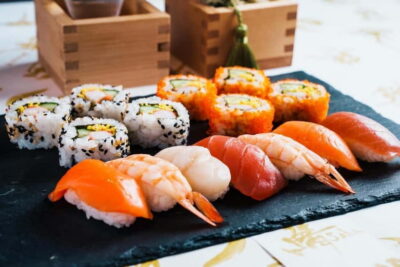
Roll and Authentic Sushi Making Class in Asakusa
Read our review →
Make Sushi and Create Unforgettable Memories in Tokyo
Read our review →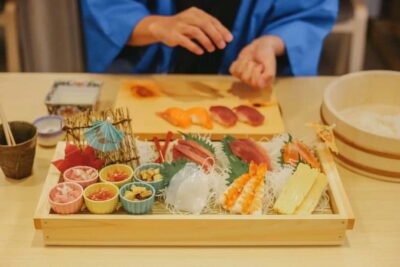
Sushi Making Class in a Happi Coat near a Famous Spot
Read our review →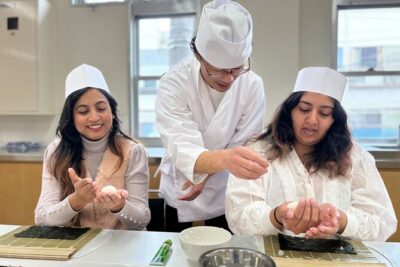
Tokyo Sushi Making Class in Tsukiji with Professional Chef
Read our review →
Tokyo Night Foodie Tour in Shinjuku – Seasonal Sushi, Wagyu Beef
Read our review →
Tsukiji Fish Market Guided Tour and Sushi Making with Pro Chef
Read our review →
Tsukiji Fish Market Sushi Making Class with Pro Chef
Read our review →Browse the lists this tour appears in