
Reviewed · RAMEN EXPERIENCES
Mt. Fuji & Hakone: Fuji Sengen Shrine, Cruise, and Ramen-Making
Lake Ashi, handmade ramen, clear spring ponds, and a red pagoda with Mt. Fuji behind it: this 11 to 12-hour outing packs several of Japan’s most sought-after sights into one long day. You cruise on the Hakone Pirate Ship, cook your own lunch, and visit Fuji-area villages and shrines without piecing together several train and bus routes.
I like the easy round-trip transport from Shinjuku and the hands-on ramen session, which gives the day more character than a simple photo-stop tour. I also like that guides such as Yoko, Mami, and Hiro have been praised for being warm, helpful, and informative.
The catch is time. Tokyo traffic can eat into the schedule, Mt. Fuji may hide behind clouds, and the tour involves substantial walking, including up to 398 steps at Arakura Fuji Sengen Shrine. The cruise can also be replaced if weather or operating conditions shut it down.
In This Review
- Key points at a glance
- Why this day works for first-time visitors
- Lake Ashi and the short Pirate Ship cruise
- Making ramen from flour to lunch
- Arakura Fuji Sengen Shrine and the Churei-to Pagoda climb
- Oshino Hakkai and Mt. Fuji’s spring water
- The real cost of a $128.69 day
- Guides, commentary, and what can vary
- Timing, walking, and weather advice
- Who should book this Fuji and Hakone tour?
- Should you book it?
- FAQ
- Where does the tour start?
- What time does the tour begin?
- How long does the experience last?
- Is hotel pickup included?
- Is lunch included?
- Can I request vegetarian, vegan, or halal food?
- What happens if the Lake Ashi cruise is canceled?
- Is the tour suitable for people with walking difficulties?
Key points at a glance
- Lake Ashi by Hakone Pirate Ship: A short cruise gives you a pleasant water-level view of Hakone and, on a clear day, Mt. Fuji.
- Ramen made from scratch: You prepare noodles, select soup and toppings, and cook lunch to your preferred firmness.
- Arakura Fuji Sengen Shrine: Choose the 398-step staircase or a gentler sloping path to reach the Churei-to Pagoda viewpoint.
- Oshino Hakkai springs: Eight ponds fed by Mt. Fuji snowmelt sit among food stalls, fruit sellers, wine shops, and souvenirs.
- One bus, many sights: The tour handles the long journey from Tokyo, with free Wi-Fi and an English-speaking guide.
- Weather matters: Fuji views, the boat ride, and traffic all depend on conditions beyond the operator’s control.
Why this day works for first-time visitors
This tour is built around a simple idea: see a lot of the Fuji and Hakone area in one day, then return to Tokyo without changing trains or figuring out local buses. That makes it useful if you have limited time in Japan or want an introduction before planning a slower return visit.
You leave from the Shinjuku Center Building at 7:40 a.m. and return to the same general meeting point. The building is about a seven-minute walk from JR Shinjuku Station, though Shinjuku is a maze of roads, towers, and underground passages. Give yourself extra time to find the building and bus. The bus leaves on schedule and will not wait for late arrivals.
The maximum group size is 42 people. That is not a small private excursion, but it is still a practical size for a full-day coach trip. Your experience will depend partly on the guide assigned that day. Yoko has been singled out for her calm, polite help, while Mami and Hiro have been praised for useful explanations and friendly service. Kaori has also been described as warm and easy to travel with.
The bus is air-conditioned and includes free Wi-Fi. One particularly positive account described reclining seats, power outlets, and enough room for a comfortable ride. Still, you should expect a long day on the road. The journey from Tokyo can take around two hours in heavy traffic, and the return to Shinjuku can be slow.
More Boat Tours in Hakone
- Mt Fuji & Hakone Cruise, Drum Show Bullet Train 1 Day from Tokyo
★ 4.0 · 7,413 reviews - Tokyo Mt Fuji 5th St & Hakone Cruise Bus Tour w/Bullet Train
★ 4.4 · 5,024 reviews - Tokyo: Mt. Fuji 5th Station & Hakone Cruise 1-Day Bus Tour
★ 4.2 · 2,381 reviews
Lake Ashi and the short Pirate Ship cruise
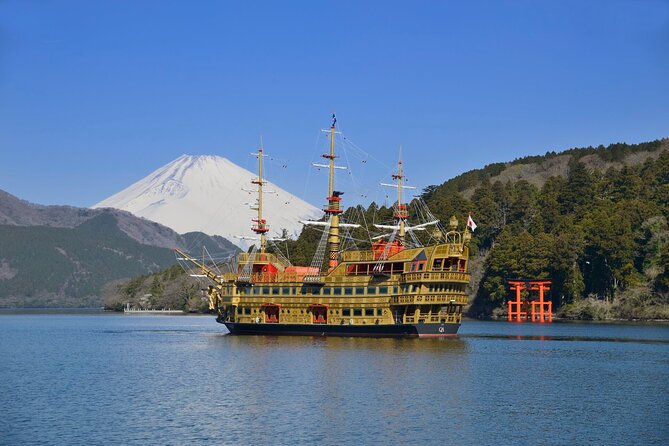
The first major stop is Lake Ashi, Hakone’s best-known body of water. You board the Hakone Pirate Ship for a cruise of about 25 minutes. The ship’s playful design adds a little fun to what could otherwise be a straightforward transfer across the lake.
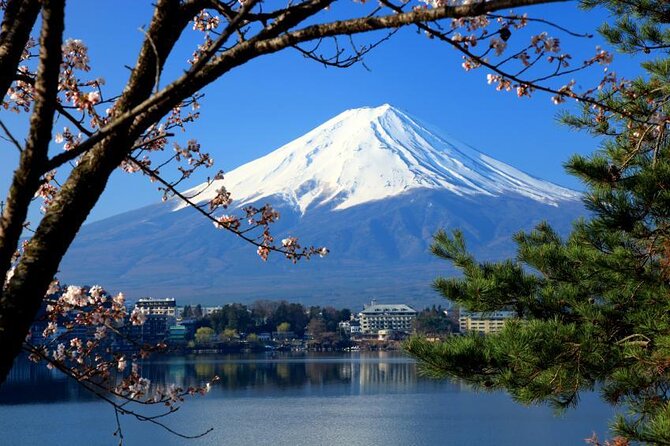
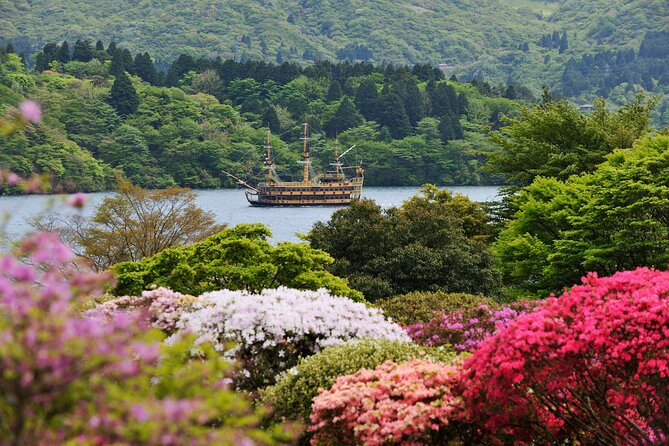
The ride gives you a break from the bus. Look toward the wooded hills, open water, and shoreline buildings. On a clear day, Mt. Fuji may appear beyond the lake, creating the classic Hakone view that draws photographers here. During cherry blossom season, the surroundings can be especially attractive, although no season guarantees a Fuji sighting.
The cruise is included when you select the appropriate tour option. Pay attention while booking, since the information distinguishes between a package with the sightseeing cruise and one without it.
This is also the part of the day most vulnerable to weather and operating changes. High winds, rain, service suspension, traffic delays, or other safety concerns can make the original boat plan impossible. In that case, the operator provides an alternative facility, but no refund is given for the missed cruise. That policy matters if the ship is one of your main reasons for booking.
Some departures have had to use another pickup point for the boat because of timing problems. A capable guide can help, but the episode shows how tightly the schedule may run. Keep your group together and listen carefully to meeting instructions.
Making ramen from flour to lunch
After the morning sightseeing, you head to the Ramen Factory in the Mt. Fuji area for a one-hour cooking session. This is the most hands-on part of the day and a welcome change from standing at viewpoints.
You start with the noodles, then choose a soup base, seasonings, and toppings. You also boil the noodles yourself, deciding how firm you want them. The meal is not just handed to you in a restaurant. You take part in making it, then eat what you prepared for lunch.
That small amount of control makes the experience work well for families, couples, and anyone who likes food with a story attached. It also gives you a better sense of how a familiar Japanese meal comes together, even if the session is necessarily brief.
The ramen-making experience and lunch are included when the lunch option is selected. If you book a version without lunch, you should not assume the meal is included. Vegetarian requests must be sent to the activity provider at least seven days in advance. Halal and vegan lunches are not available.
There are a couple of practical points to keep in mind. One account found the included lunch satisfying and authentically Japanese, while another found lunch a little cold and the traditional low seating difficult for older people. If sitting close to the floor is uncomfortable, ask about the arrangement before booking. The food stop is convenient, but it is not a leisurely restaurant meal.
Arakura Fuji Sengen Shrine and the Churei-to Pagoda climb

Arakura Fuji Sengen Shrine offers one of the most recognizable views in the Fuji area: a red five-story pagoda, wooded slopes, and Mt. Fuji in the distance. The shrine dates to 705 and has served as a place of worship for more than 1,500 years.
You enter through a large red torii gate and pass toward the main hall. Along the route are the Shiogama and Atago Shrines, associated with safe childbirth and fire protection. These smaller religious sites add context to the visit and remind you that this is an active Shinto setting, not only a famous photo location.
The final viewpoint requires effort. You can climb the Sakuya-Hime staircase, with 398 steps, or take a gentler sloping path. The slope is easier on the knees, though the area still involves walking and some uphill movement. The operator advises against joining if you have difficulty walking for 10 to 15 minutes at a time.
Allow enough time for the climb, photos, and the return route. The pagoda viewpoint can be crowded, especially when the weather finally clears. Mt. Fuji is not guaranteed, but even without the mountain, the shrine, pagoda, torii gate, and forested hillside make this the day’s strongest cultural and photographic stop.
The precise shrine plan can vary. The experience description refers to a choice between Arakura Fuji Sengen Shrine and Tenku no Torii, while the detailed route lists Arakura. Check your selected departure details so you know which viewpoint is planned.
More Boat Tours in the Mt Fuji Area
- Mt Fuji & Hakone Cruise, Drum Show Bus 1 Day from Tokyo
★ 4.0 · 1,287 reviews - Tokyo: Hakone Fuji Day Tour w/ Cruise, Cable Car, Volcano
★ 4.2 · 724 reviews - Mt Fuji & Hakone Cruise, Drum Show Bus 1 Day from Tokyo Sta. Area
★ 5.0 · 295 reviews - Tokyo Day Tour in Mt. Fuji, Lake Ashi Cruise and Owakudani Cable
★ 4.5 · 186 reviews
Oshino Hakkai and Mt. Fuji’s spring water
Oshino Hakkai is a small village area known for eight clear ponds. The name refers to those eight bodies of water, which are fed by snowmelt from Mt. Fuji after it filters through volcanic rock over roughly 80 years.
The ponds are the reason to visit, but the surrounding stalls make the stop feel more lived-in than a bare nature viewpoint. You can browse local fruit, regional snacks, souvenirs, and wine from Yamanashi Prefecture, often called Japan’s Fruit Kingdom. Smaller vendors sit alongside larger market areas, so this is a good place to pick up something edible for the ride back.
The visit lasts about an hour and 20 minutes. That is enough for a look at the ponds and some shopping, but not enough for a slow village wander. Stay aware of the departure time. Coach tours run on a clock, and a delayed return can affect every later stop.
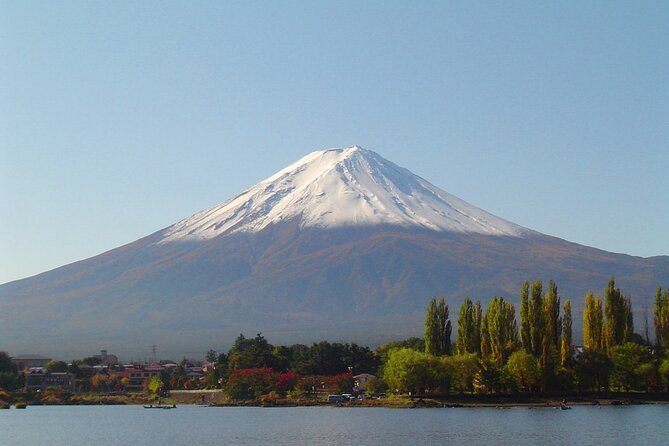
Oshino Hakkai also gives you a second chance at Mt. Fuji photographs. The view is often different from the one at Arakura or Lake Ashi, and clear weather can reveal the mountain from several points during the day. In rain or low cloud, the ponds and village still provide something to see, but the grand Fuji backdrop may disappear.
The real cost of a $128.69 day
At $128.69 per person, this is not the cheapest way to visit the Fuji area. You are paying for a full-day coach, an English-speaking guide, the ramen activity and lunch when selected, and the cruise ticket when that option is included.
The value is strongest if you want convenience. Independent travel to Lake Ashi, Oshino Hakkai, and the Fuji viewpoints requires careful connections, and public transport does not always line up neatly with a single day’s sightseeing plan. Here, you can settle into an air-conditioned bus and let someone else manage the route.
The value is weaker if you mainly want a long, quiet visit at one place. Each stop is fairly short, and the day includes considerable driving. You also carry the risk of paying for a planned Fuji day without seeing Mt. Fuji clearly. Weather can affect the mountain, the cruise, and the route, and the operator does not promise a refund when the cruise is replaced.
I would compare this price with the cost of separate transport, a meal, and admissions before deciding. The tour is most useful during a first Tokyo visit, when time and simplicity matter more than complete control.
Guides, commentary, and what can vary
The strongest human part of the experience is the guide. Yoko has received repeated praise for being polite, understanding, and quick to arrange solutions when the schedule changed. Mami has been credited with explaining Mt. Fuji during the bus ride, and Hiro has been described as friendly, professional, and generous with local snacks.
That said, the quality of commentary may vary by departure. One account found the ride too quiet and wanted fuller introductions at each stop. Another described poor English and an unorganized experience. The tour is conducted in English, but the amount and clarity of spoken information may depend on the individual guide and the day’s traffic pressure.
This is a useful distinction. If you want a guide to explain Japanese religion, volcanic geology, and local customs at length, ask about the guide service before booking. If you mainly want transportation, simple directions, and a practical route through the area, the format should suit you well.
Timing, walking, and weather advice
The tour begins early and ends back at the meeting point after a full day. Wear comfortable shoes, since you will walk around the shrine, village, and lake area. The Arakura stop is the main physical challenge, but the whole day involves moving between bus, boat, shops, and viewpoints.
Bring layers and rain protection. Mt. Fuji’s weather can shift quickly, and rain can remove both the mountain view and the boat ride. The schedule may change for safety, traffic, or weather, so treat the route as a plan rather than a promise.
Build in patience for the road home. Heavy traffic into Tokyo has lengthened the return trip on some days. Avoid scheduling a flight, theater booking, or hard-to-miss dinner immediately after the stated return time.
The mobile ticket is convenient, and confirmation arrives at booking. Hotel pickup and drop-off are not included, so you must reach Shinjuku on your own. Free cancellation is available up to 24 hours before the start time, but late cancellations and changes are not refunded.
Who should book this Fuji and Hakone tour?
I would choose this tour if you are visiting Tokyo for the first time, want to see several famous sights in one day, and prefer a guide and coach over a complicated transport plan. It also suits you if the ramen session sounds appealing and you enjoy mixing food, scenery, shopping, and religious sites.
Families and active adults should find the variety useful. The day rarely stays on one type of activity for long. You cruise, cook, walk, shop, take photos, and ride through the countryside.
I would think twice if you have limited stamina, dislike early starts, or need guaranteed access to Mt. Fuji views. The 398-step option can be avoided, but the alternative path and the rest of the day still require walking. Older visitors should also consider the low lunch seating.
Should you book it?
Book it for breadth and convenience, not for a slow or weather-proof Fuji visit. The route brings together Lake Ashi, handmade ramen, Oshino Hakkai, and a major shrine in one well-organized day, and a good guide can make the long bus ride much easier.
Before paying, confirm three things: that the cruise is included in your selected option, that the lunch arrangement suits your diet and mobility, and that you are comfortable with a possible alternative if weather cancels the boat. If those conditions work for you, the $128.69 price is reasonable for a busy first look at Hakone and Mt. Fuji from Tokyo.
FAQ
Where does the tour start?
The meeting point is the Shinjuku Center Building at 1-chōme-25 Nishishinjuku, Shinjuku City, Tokyo 160-0023. It is about a seven-minute walk from JR Shinjuku Station.
What time does the tour begin?
The stated start time is 7:40 a.m. The bus leaves as scheduled and does not wait for late arrivals.
How long does the experience last?
The full tour lasts approximately 11 to 12 hours and ends back at the meeting point in Shinjuku.
Is hotel pickup included?
No. Hotel pickup and drop-off are not included. You must make your own way to the Shinjuku meeting point.
Is lunch included?
Ramen-making and lunch are included when the lunch option is selected. A version without the lunch option is also available.
Can I request vegetarian, vegan, or halal food?
Vegetarian requests must be sent to the activity provider at least seven days before the tour. Halal and vegan lunches are not available.
What happens if the Lake Ashi cruise is canceled?
If the cruise cannot operate because of service suspension, bad weather, traffic, or another listed condition, the operator will take you to an alternative facility. No refund is provided for this change.
Is the tour suitable for people with walking difficulties?
The tour involves substantial walking. At Arakura Fuji Sengen Shrine, you can choose between a 398-step staircase and a gentler sloping path, but the experience is not recommended for anyone who has difficulty walking distances of 10 to 15 minutes.
More Temple & Shrine Tours in the Mt Fuji Area
- Mt. Fuji Heritage Tour: Traditional Villages, Lakes & Shrine
★ 4.5 · 509 reviews - Mt. Fuji, Oishi Park & Arakurayama Pagoda Bus Tour with Lunch
★ 5.0 · 128 reviews - From Tokyo: Fuji Mountain Area – FujiQ – Lake Kawaguchiko – Chureito Pagoda
★ 4.8 · 32 reviews - Tokyo: Mt. Fuji, Owakudani, Hakone Shrine, & Open-Air Museum
★ 4.7 · 25 reviews
More Boat Tours in Tokyo
- Tokyo: Meiji Shrine, Asakusa, Skytree Bus Tour and Cruise
★ 4.7 · 1,986 reviews - Sumida River: Japanese Traditional Yakatabune Dinner Cruise
★ 4.6 · 779 reviews - Dynamic Tokyo: Tokyo Tower, Tea Experience, Bay Cruise Day Tour
★ 4.5 · 521 reviews - Tokyo Bay Yakatabune Dinner/Day Cruise with Japan Show and Drinks
★ 4.5 · 473 reviews
New on our Tokyo list
- From Tokyo: Mount Fuji & Hakone Full Day Private Tour★ 4.9 · 25 reviews
- Tokyo Spectacular View Day-Cruise in 90 Minutes★ 5.0 · 25 reviews
- Real Tokyo Runner Club : Daikoku Car Meet Night Tour with JDM Car★ 5.0 · 25 reviews
- 2.5 Hour-Guided Cycle Tour in the Central Tokyo★ 5.0 · 25 reviews
- Ramen Making from Scratch +Akihabara Tour –Cooking Class★ 5.0 · 25 reviews
- [Self-Drive] Tokyo & Daikoku Custom Car Driving Tour★ 4.9 · 25 reviews
- Tokyo: 2-Hour Night Bike Tour of the City’s Hidden Gems★ 4.9 · 25 reviews
- Tokyo: Mt. Fuji, Owakudani, Hakone Shrine, & Open-Air Museum★ 4.7 · 25 reviews
Ramen Experiences, compared.

Eat and Drink Like a Local: Tokyo Ueno Food Tour-Taverns&Ramen
Read our review →
Ramen & Gyoza Cooking Class in Tokyo with Local Supermarket Visit
Read our review →

Easy Ramen Cooking Experience in Kabukicho, Shinjuku
Read our review →
Ramen and Sushi Cooking Class with Sake Pairing Set in Tokyo
Read our review →
Professional Ramen & Gyoza with Ramen Chef in a restaurant!
Read our review →
Ramen Dojo Tokyo | Make All 3 (Tonkotsu/Shoyu/Miso)
Read our review →