
Reviewed · WORKSHOPS
Private Handmade Ring Workshop Activity in Tokyo Shibuya
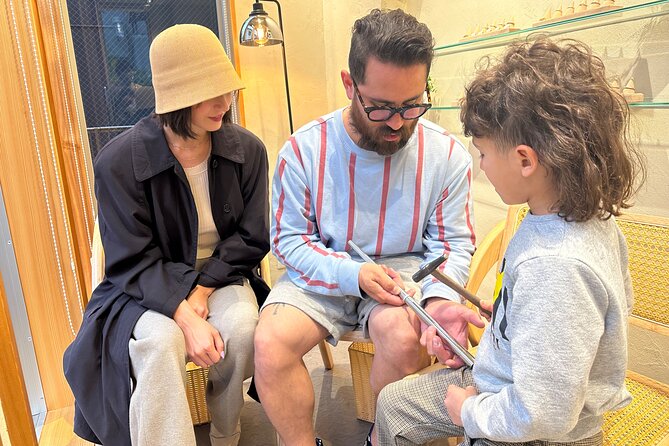
The best part of this Tokyo activity is that you leave with a ring you helped design and texture yourself. In the private workshop at nane tokyo on Cat Street, you choose the metal, thickness, shape, and finish, then use a special hammer to add the marks that make it yours.
I like the personal instruction, especially for first-time metalworkers, and I like the fact that the finished ring is ready to take home the same day. The small shop also suits couples, families, and solo makers who want a quiet break from sightseeing. The main catch is price: the advertised fee is only the workshop charge, while the ring material costs extra, and some people find the final price higher than expected.
In This Review
- Key points to know before you book
- What you actually make at nane tokyo
- Choosing the metal, thickness, and texture
- The hammering session and Japanese tankin
- What the instructor does for you
- A small boutique on Shibuya’s Cat Street
- The finished ring and same-day pickup
- Who gets the best value from this activity
- Price, timing, and practical planning
- My verdict: book it for meaning, not savings
- FAQ
- Where does the ring-making workshop take place?
- How long does the activity last?
- Is this a private workshop?
- What can I customize?
- Are ring materials included in the $21.80 price?
- Can I take the ring home immediately?
- Do I need previous metalworking experience?
- Do I make the entire ring myself?
- Is the workshop suitable for families?
- Can I cancel for a full refund?
Key points to know before you book
- Your ring is partly handmade by you: You choose the design and apply the texture, while the staff handle much of the shaping, finishing, polishing, and cleaning.
- Private instruction matters: Only your group takes part, so you can ask questions freely and receive help throughout the process.
- Same-day souvenir: Your completed ring can be taken home at the end of the roughly one-hour workshop.
- A good couples activity: Partners can make rings for each other, making this a thoughtful anniversary, honeymoon, engagement, or wedding keepsake.
- Material upgrades affect the cost: Silver, gold, blends, sizes, thicknesses, and other choices may raise the final price above the basic workshop charge.
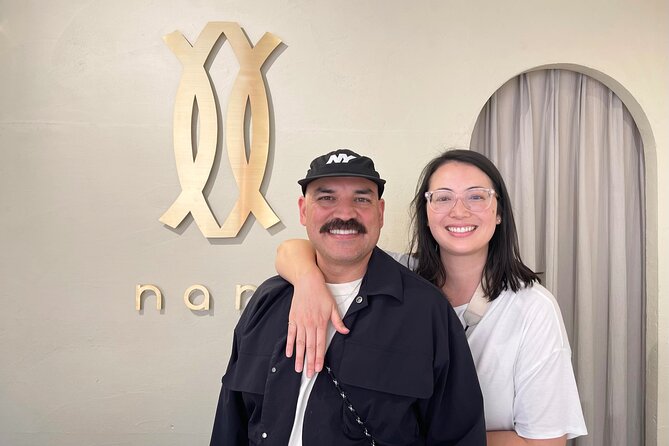
- Friendly named instructors: Hikari, Nana, and Tao are praised for clear guidance, kind service, and taking photos during the activity.
What you actually make at nane tokyo
This is a ring-making class, but it is not a full start-to-finish metalsmithing course. That distinction is important. You take part in the creative decisions and the texturing, while skilled staff complete several technical steps.
The session begins with choices. You select the ring’s material, thickness, shape, and texture. The available options can include silver, gold, and blended metals, with the final cost changing according to what you choose. You also decide how bold or subtle the surface should look.
The hands-on section centers on tankin, a Japanese metalworking technique that uses hammering to shape and texture metal. You use special tools to add the surface pattern. This is the part that gives the ring its personal mark, even if you are not doing every stage of the construction.
Your instructor shows you how to use the hammer and helps you keep the texture under control. You can ask questions as you work, and the staff guide you if the marks are uneven or you are unsure how much pressure to use. If you make a mistake, assistance is available rather than leaving you to rescue the ring alone.
Staff then handle the final shaping, polishing, and cleaning. That makes the workshop accessible to people without craft experience, but it also means you should not arrive expecting to forge a ring entirely by yourself. One useful way to think of it is as a guided design and finishing workshop, not an independent jewelry-production class.
More Shibuya plans:
- Official Street Go-Kart in Shibuya
★ 5.0 · 3,435 reviews - Tokyo: Street Kart Experience in Shibuya
★ 4.9 · 1,484 reviews - Shibuya Meltdown Nightlife Tour: All-You-Can-Drink Bar Hopping
★ 5.0 · 1,058 reviews
Choosing the metal, thickness, and texture
The choice stage is where much of the value lies. A plain, small ring has a different feel from a thicker band with a strongly hammered surface, and the material changes both the look and the cost.
Ask the instructor to explain the differences before settling on your choice. The staff can advise you about which shape and texture work well together, and the guidance is especially useful if you are making a ring for someone else. Couples can also make each other’s rings, an idea suggested during one anniversary visit and a lovely way to make the activity feel more personal.
The advertised price of $21.80 per person should not be treated as the full cost of the jewelry. It covers the workshop itself, but materials are not included. The basic price is described as applying to a small base ring, while larger sizes, thicker bands, different metals, and other selections cost more.
This is the point where you should set a budget. The extra charge may feel reasonable if you want real silver or gold and a ring you will wear for years. It may feel expensive if you are mainly looking for a cheap craft activity. The fair comparison is not with a souvenir keychain. You are paying for metal, instruction, staff finishing, and a private experience in central Tokyo.
The hammering session and Japanese tankin
The texture work is simple enough for beginners, but it still feels like a real craft. You hold the tool, place the ring as instructed, and use the hammer to create a pattern across the surface. The result is not factory-perfect, which is exactly why it feels personal.
Your instructor watches the process and gives feedback. You can ask as many questions as you like, and the private format means you do not need to compete with a large class for attention. That is particularly helpful if you are nervous about damaging the ring or if your group includes children.
A family group with children aged 12, 14, and 17 found the activity workable for everyone, with each person able to create an individual ring. The experience may suit older children and teenagers better than very young children, but the supplied information does not set a minimum age, so confirm that point before booking for smaller children.
The hammering is also a nice antidote to a packed Tokyo schedule. You are not rushing from one sight to the next. For about an hour, you focus on a small object, make decisions together, and watch it turn into something wearable.
What the instructor does for you
The tone of the workshop depends heavily on the staff, and the named instructors receive particularly warm praise. Hikari is noted for patient explanations and careful help throughout the process. Nana is described as cheerful and easy to joke with, while Tao is praised for friendly instruction and taking good photos during an anniversary visit.
English-language service is available, and clear communication is a strong part of the experience. That matters when you are choosing materials or discussing ring size, texture, and design. If you have a very specific idea, explain it early and ask what is practical within the session.
The staff can also help correct errors. One maker struggled with a ring and received assistance fixing it rather than being left with a disappointing result. That support makes the workshop a safer choice than an open studio where you are expected to know the process already.
Photography is another thoughtful touch, though you should treat it as a possibility rather than a guaranteed feature. Staff have taken photos of couples and families while they worked, and in at least one case sent the pictures afterward. Ask politely if you would like photos of the process.
A few more Tokyo bookings worth comparing
- Sushi Making Tokyo Roll and Authentic Japanese Sushi Class
★ 5.0 · 3,971 reviews - Tokyo: Roll and Authentic Sushi Making Class in Asakusa
★ 4.9 · 1,957 reviews - Tokyo Shinjuku Chopsticks Making Class
★ 5.0 · 1,763 reviews - Tokyo: Sushi Making Class in a Happi Coat near a Famous Spot
★ 4.9 · 1,377 reviews
A small boutique on Shibuya’s Cat Street
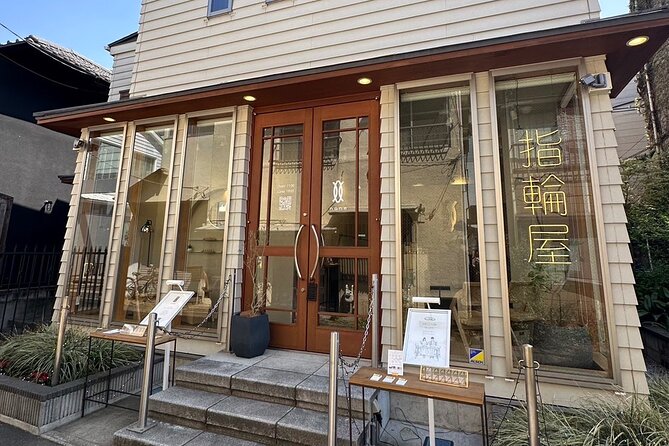
The meeting point is nane tokyo Cat Street branch, at 5-chome 11-13, Jingumae, Shibuya, Tokyo 150-0001. The shop is described as small, cozy, and stylish, more like a jewelry boutique than a large industrial studio.
That setting shapes the experience. You get close attention, but you should not picture a spacious workshop filled with rows of workbenches. The activity ends where it begins, and the location is near public transportation, making it easy to fit into time around Shibuya and Harajuku.
The Cat Street area also gives you a useful pairing for your day. You can schedule the ring workshop between shopping, cafés, and a walk through the Harajuku area. Since the activity lasts around 90 minutes, leave some margin rather than booking it directly against another timed attraction.
The official work time is described as around one hour, while the overall duration is approximately one hour and 30 minutes. The difference may reflect introductions, choosing the ring, finishing work, and collection. Either way, this is a short activity that fits neatly into a sightseeing day.
The finished ring and same-day pickup
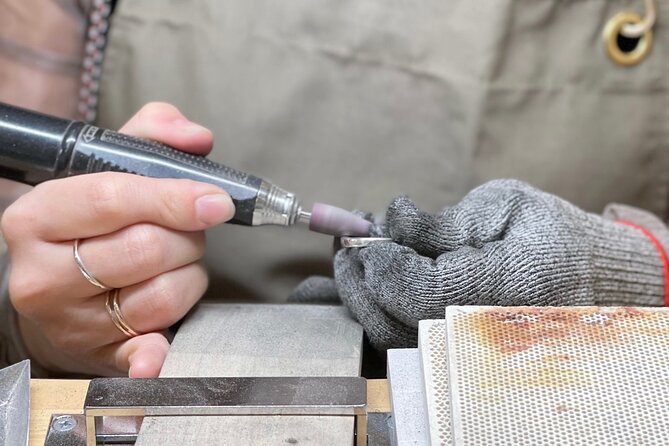
The final stage is handled by skilled craftsmen, who polish and clean the ring before returning it to you. You can take it home on the day, so there is no need to arrange delivery or return to the shop later.
This is a real advantage for short visits. A same-day pickup also lets you wear the ring during the rest of your Tokyo trip, though you may prefer to keep it safe until you return home.
The end product is a keepsake, but it is not necessarily a flawless luxury-jewelry item. The charm comes from the decisions you made and the texture you applied. If you want a perfectly uniform ring made entirely by an expert, buy a finished piece from a jeweler instead.
If you want something with a personal story, this activity makes more sense. Several people chose it for anniversaries, Christmas gifts, engagement rings, wedding rings, or a family souvenir. The ring becomes a reminder not only of Tokyo, but of the time you spent making it together.
Who gets the best value from this activity
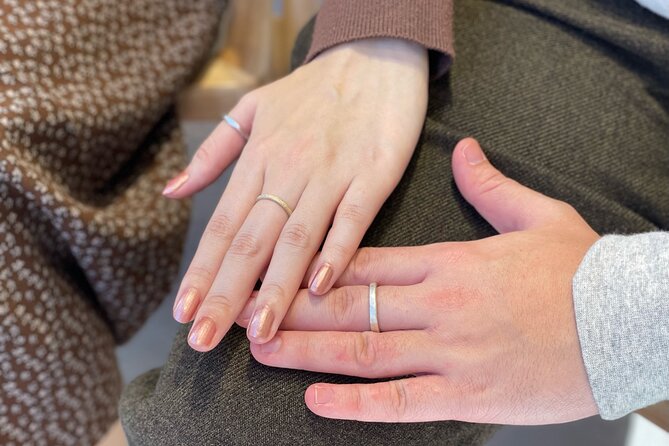
I would recommend this workshop most strongly to couples and families. Making each other’s rings adds a small ritual to the session, and the finished objects carry more meaning than a standard shop purchase. It is also a thoughtful honeymoon or anniversary activity without taking up a whole day.
It works well for a parent and teenager, grandparents and grandchildren, or a small group of friends. The private format lets each person choose a different style, so nobody has to settle for an identical souvenir.
Solo visitors can enjoy it too, especially if they like crafts and want a useful object rather than a decorative trinket. The instructor support means you do not need prior metalworking skill.
You may want to skip it if your main goal is the lowest possible price. The workshop fee looks modest, but the ring material is added separately. The final amount can rise with precious metals, larger sizes, thicker bands, or more elaborate choices.
You should also skip it if you want to perform every technical step yourself. The staff shape the base ring and complete the final polishing and cleaning. Your creative role is real, but it is focused on selection and texturing.
Price, timing, and practical planning
At $21.80 per person before material costs, the workshop charge is fairly easy to fit into a Tokyo itinerary. The real question is the total ring price. Ask for the full cost of your preferred metal, size, thickness, and finish before committing.
This avoids the one unpleasant surprise associated with the activity. Some people feel the rings are costly for their size, while others consider the price worthwhile because the ring is a long-term keepsake and the experience is private.
Confirmation is sent within 48 hours of booking, subject to availability. Because this is a private activity, only your group participates. Service animals are allowed, and most people can take part. The shop is near public transportation.
You can cancel for a full refund if you do so at least 24 hours before the start time. Cancellations or changes made less than 24 hours ahead are not accepted for a refund, and the cut-off follows Tokyo local time.
Bring your booking details on your phone, since the ticket is mobile. Wear something comfortable and plan to keep the rest of your schedule flexible enough for the approximately 90-minute visit.
My verdict: book it for meaning, not savings
I would book this workshop if you want a personal Tokyo souvenir and enjoy doing something together. The private instruction, friendly staff, same-day pickup, and chance to texture the ring yourself make it more memorable than simply buying jewelry in a shop.
I would not book it as a bargain activity. The basic fee does not include the metal, and your preferred ring may cost more than the headline price suggests. Ask about the complete price first.
For an anniversary, honeymoon, engagement, family trip, or special birthday, the extra cost can be justified. You are not just taking home a ring. You are taking home the story of choosing it, hammering it, and making it together at nane tokyo.
FAQ
Where does the ring-making workshop take place?
It takes place at nane tokyo Cat Street branch, at 5-chome 11-13, Jingumae, Shibuya, Tokyo 150-0001.
How long does the activity last?
The workshop takes around one hour, with the approximate total duration listed as one hour and 30 minutes.
Is this a private workshop?
Yes. Only your group participates in the activity.
What can I customize?
You can choose the ring’s material, thickness, shape, and texture. The available material and design choices can affect the final price.
Are ring materials included in the $21.80 price?
No. The workshop price is included, but the cost of materials is not included.
Can I take the ring home immediately?
Yes. The ring is polished and cleaned during the final process and can be taken home on the same day.
Do I need previous metalworking experience?
No previous experience is stated as necessary. The instructor guides you through the process and provides help as you work.
Do I make the entire ring myself?
No. You take part in choosing the design and applying the texture. Staff shape the base ring and complete the final polishing and cleaning.
Is the workshop suitable for families?
Yes. Most people can participate, and a family group including children aged 12, 14, and 17 enjoyed making individual rings. Confirm suitability for younger children before booking.
Can I cancel for a full refund?
Yes, if you cancel at least 24 hours before the experience start time. Cancellations or changes made less than 24 hours before the start time are not accepted for a refund.
New on our Tokyo list
- From Tokyo: Mount Fuji & Hakone Full Day Private Tour★ 4.9 · 25 reviews
- Tokyo Spectacular View Day-Cruise in 90 Minutes★ 5.0 · 25 reviews
- Real Tokyo Runner Club : Daikoku Car Meet Night Tour with JDM Car★ 5.0 · 25 reviews
- 2.5 Hour-Guided Cycle Tour in the Central Tokyo★ 5.0 · 25 reviews
- Ramen Making from Scratch +Akihabara Tour –Cooking Class★ 5.0 · 25 reviews
- [Self-Drive] Tokyo & Daikoku Custom Car Driving Tour★ 4.9 · 25 reviews
- Tokyo: 2-Hour Night Bike Tour of the City’s Hidden Gems★ 4.9 · 25 reviews
- Buddha, Bamboo & Zen – Bespoke Kamakura Private Walking Tours★ 5.0 · 25 reviews
Workshops, compared.
Sushi Making Tokyo Roll and Authentic Japanese Sushi Class
Read our review →
Roll and Authentic Sushi Making Class in Asakusa
Read our review →
Sushi Making Class in a Happi Coat near a Famous Spot
Read our review →
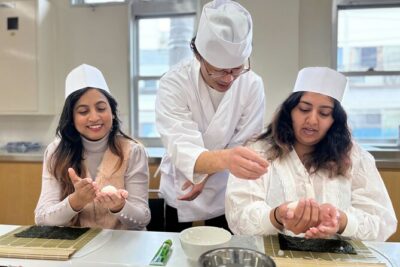
Tokyo Sushi Making Class in Tsukiji with Professional Chef
Read our review →
Ramen & Gyoza Cooking Class in Tokyo with Local Supermarket Visit
Read our review →
Matcha Making Class in Tokyo with Authentic Japanese Sweets Set
Read our review →Browse the lists this tour appears in