
Reviewed · KIMONO EXPERIENCES
Private Kimono photo shooting tour in ancient city Kamakura
Kamakura makes a fine backdrop for a kimono photo session. Instead of limiting you to one famous temple, this private tour moves through quiet temple grounds, a major shrine, and the lively streets near the station. Photographer-guide Shuhei helps with poses and takes pictures in several settings.
I like the choice of calmer photo spots, especially early stops such as Daigyoji and Myohonji. I also like the personal service: Shuhei can suggest poses, adjust the route, and explain Kamakura and Japanese culture as you go. The main consideration is that the 85.20 dollar price does not include the kimono rental, which adds 3,800 yen.
In This Review
- Key points to know before booking
- Why Kamakura works so well for kimono photos
- Meeting Shuhei near Kamakura Station
- Daigyoji Temple provides a quiet beginning
- Myohonji Temple adds trees and old wooden buildings
- Tsurugaoka Hachimangu brings Kamakura’s grand scale
- Jufukuji Temple offers a tranquil final temple setting
- Komachi Street finishes with food and shopping
- The photo package and what you receive
- Is 85.20 dollars a fair price?
- Who will enjoy this experience most?
- Booking timing, cancellation, and practical planning
- Should you book the Kamakura kimono photo tour?
- FAQ
- Where does the tour start and end?
- How long does the experience last?
- Is kimono rental included in the tour price?
- How many edited photos are included?
- Is the tour private?
- Who is the photographer and guide?
- What happens if the weather is poor?
- Can I cancel for a full refund?
Key points to know before booking
- Choose your look: Pick from several kimono styles, or select the available non-kimono option.
- Pose with guidance: Shuhei helps you find natural poses, useful if you are not used to being photographed.
- Visit four historic sites: The route includes Daigyoji, Myohonji, Tsurugaoka Hachimangu Shrine, and Jufukuji.
- Receive up to 30 edited photos: The package includes edited images, along with access to your other photos as provided by the photographer.
- Keep the tour private: Only your own group takes part, with route flexibility built into the experience.
- Plan for extra rental cost: The 3,800 yen kimono fee is separate from the tour price.
Why Kamakura works so well for kimono photos
Kamakura is a former samurai capital with temples and shrines spread around a compact city. That gives this photo session more variety than a simple studio shoot. You can pose beside old wooden temple buildings, walk under trees, pause near a shrine pond, and finish near shops and cafes.
The city also offers a useful balance. Tsurugaoka Hachimangu is Kamakura’s best-known religious site and can feel busy, but the tour also uses smaller temples where you can take photographs without competing for every angle. That matters when you are wearing traditional clothing and want time to settle into the experience.
A private format gives you room to move at a reasonable pace. You are not tied to the preferences of a large group, and the route can be adjusted to suit your interests. The total time is about two to three hours, including changing and travel time, so this is a focused experience rather than a full-day Kamakura sightseeing tour.
More Private Tours in Kamakura
- Kamakura Private Tour: Temples, Nature, and the Great Buddha
★ 5.0 · 121 reviews - Kamakura 8 hr Private Walking Tour with Licensed Guide from Tokyo
★ 5.0 · 80 reviews - Kamakura: Private Guided Walking Tour with Local Guide
★ 4.8 · 60 reviews
Meeting Shuhei near Kamakura Station
The meeting point is the Kamakura City Tourist Information Center at 1-chōme-1-1 Komachi, close to Kamakura Station. This is practical for an arrival from elsewhere in the area, and the tour ends back at the same meeting point.
The first task is choosing your clothing. The kimono rental costs 3,800 yen in addition to the tour fee. Several styles are available, and a non-kimono choice is also offered if you prefer the photography and sightseeing without traditional dress.
Allow some patience for changing. The stated duration includes this time, so you should not expect two or three uninterrupted hours of walking and posing. The clothing change is part of the experience, but it also means you should avoid scheduling another tight activity immediately afterward.
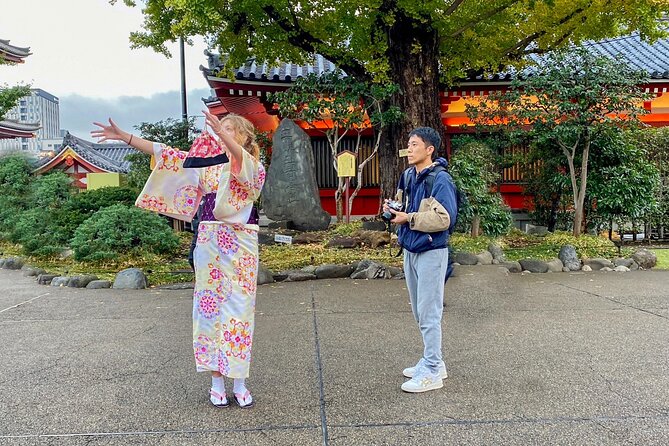
Shuhei’s role is especially useful here. You do not need to arrive knowing how to stand, where to place your hands, or how to look relaxed in formal clothing. He gives posing suggestions and checks that you are comfortable, which makes the session easier for anyone who feels awkward in front of a camera.
Daigyoji Temple provides a quiet beginning
Daigyoji Temple is a small temple beside Kamakura Station. The visit is brief, about five minutes, but it gives the photo session a gentle start before you move farther into the city.
Because the site is generally quiet, you can begin taking pictures without the pressure found at a major shrine. This is a good place to become comfortable with the kimono, the camera, and Shuhei’s direction.
The short stop also tells you what this tour is trying to do. It is not simply a race to Kamakura’s biggest landmark. The smaller locations help create a wider set of photographs, and they may feel more personal than standing in the middle of a crowded entrance gate.
Myohonji Temple adds trees and old wooden buildings
Myohonji is the longest temple stop, at about 20 minutes. It is associated with the Nichiren Buddhist tradition and was founded around 1260. Its old wooden structures and natural surroundings give the photographs a quieter, more historic feel.
The scenery changes with the calendar. Cherry blossoms appear in spring, while autumn leaves add strong seasonal color later in the year. The exact conditions depend on your date, so you should treat these as possible settings rather than guaranteed features.
This is one of the best parts of the route for people who want photographs that feel calm rather than staged. The temple’s setting offers room for portraits, walking shots, and pictures framed by trees. You also get a short cultural visit instead of spending the whole session focused only on posing.
The tradeoff is time. Twenty minutes passes quickly once you include walking, camera setup, and several poses. If Myohonji is your priority, tell Shuhei early so the private format can work in your favor.
More kimono fittings and strolls:
- Kanagawa: Kimono Rental in Kamakura Provided by RikaWafuku
★ 4.8 · 8 reviews - Let’s make kimono !(Kimono is a gift for you
★ 5.0 · 252 reviews - Tokyo: Matcha and Kimono Experience
★ 4.7 · 219 reviews - Tokyo: Asakusa Kimono Dressing and Matcha Experience
★ 4.9 · 173 reviews
Tsurugaoka Hachimangu brings Kamakura’s grand scale
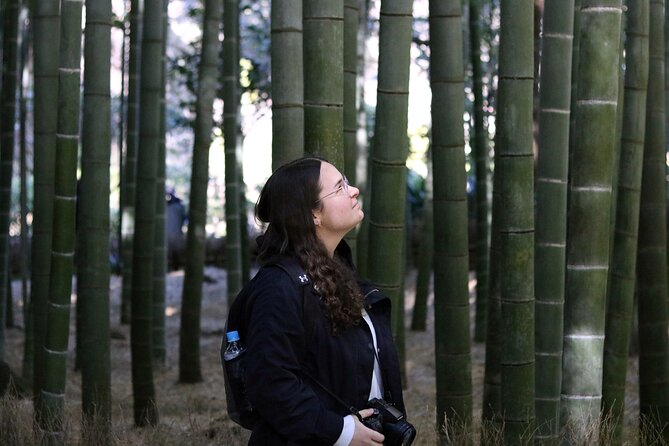
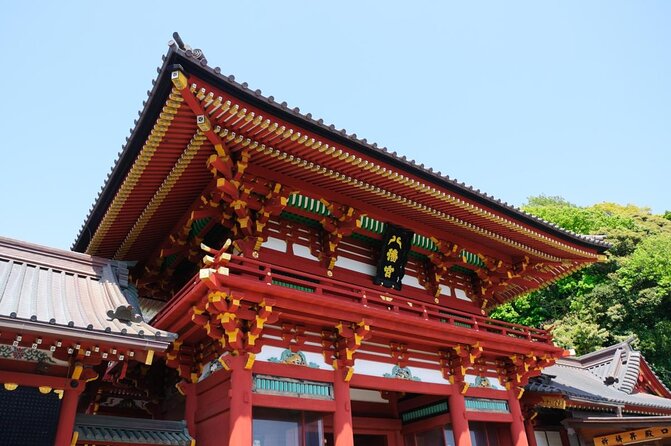
Tsurugaoka Hachimangu Shrine is the major landmark on the route. Founded in the 12th century by Minamoto no Yoritomo, the first shogun of the Kamakura shogunate, it is dedicated to Hachiman, the god of war and protector of the Minamoto clan.
The shrine has a formal entrance, a long approach lined with cherry trees, and a large pond. These features give you more open, recognizable Kamakura scenery after the smaller temple settings.
The planned stop lasts about 25 minutes. You can look around, take photographs, and rest on a bench beside the pond. That pause is welcome when you are wearing a kimono, since traditional clothing can make long walks or quick movements less comfortable.
This is also the location where crowds may have the greatest effect on your photographs. The tour description specifically values quieter places, and your best images may come from working around the shrine rather than insisting on the most obvious central viewpoint. Shuhei’s local familiarity and the private schedule should help, but no photo session can remove other visitors from a famous site.
Jufukuji Temple offers a tranquil final temple setting
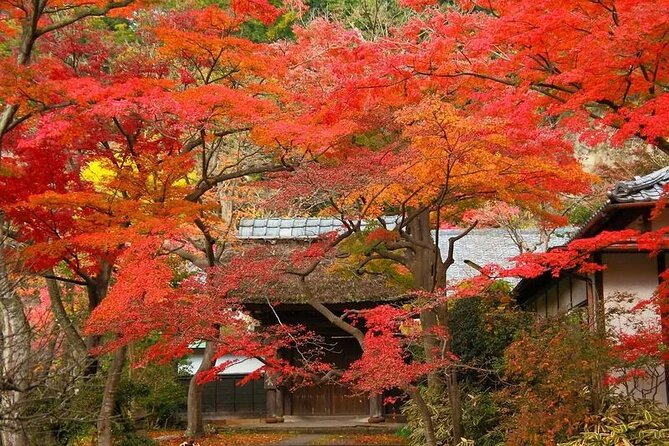
Jufukuji was established in 1200 by Hojo Masako, the wife of Minamoto no Yoritomo. Its approach to the main temple is known for trees and a peaceful atmosphere, and a small local shrine is nearby.
The planned visit is about 10 minutes. That is enough for a look around and several photographs, but not enough for a long temple visit. Think of Jufukuji as a short, atmospheric stop that rounds out the route.
The approach road is likely to be more useful for pictures than a lengthy interior visit. Trees, the path, and the nearby shrine give you a different frame from Myohonji and Tsurugaoka Hachimangu. This variety is important if you want a photo collection that does not look as if it was taken in one place.
Komachi Street finishes with food and shopping
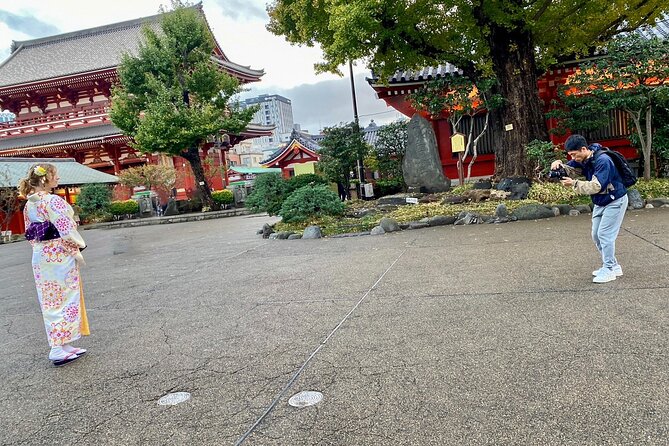
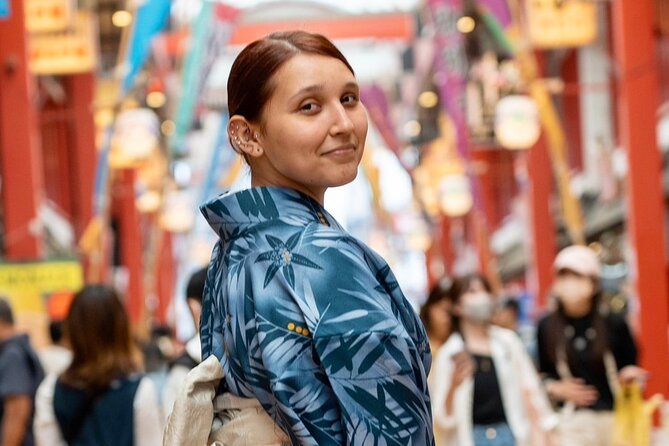
Komachi Street runs through the center of Kamakura near the station. It is lined with shops, boutiques, cafes, and restaurants, with souvenirs, local crafts, and food along the way.
The street is a lively contrast to the temple stops. You can browse after the photo session, buy something small, or simply see the commercial side of Kamakura before returning to the meeting point. Since the activity ends where it began, you will not need to arrange a separate pickup.
The street is also a useful final setting for more casual photographs. If you have chosen the non-kimono option, or if you want a few less formal images, this part of town gives the session a different mood. Purchases and food are not included, so plan to pay separately if you stop at the shops or cafes.
The photo package and what you receive
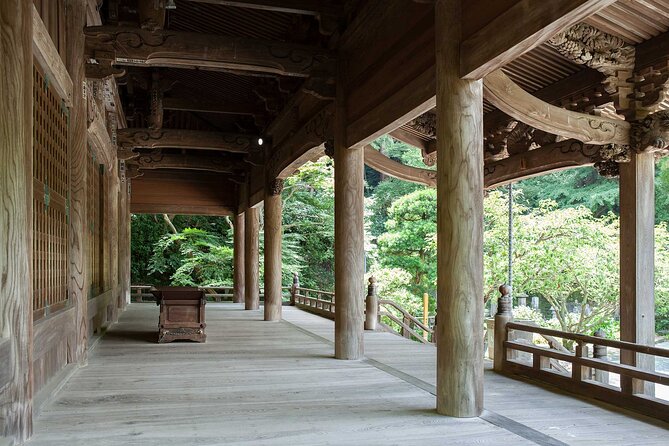
The experience includes up to 30 edited photographs. It also says you can receive the photos from the session, with editing limited to a maximum of 30 images. That makes the package more useful than a single formal portrait, since the route gives you several backgrounds and poses.
Do not think of the 30 edited images as 30 separate locations. They are the finished selection from a short session, and the final number depends on the time available and the photographs taken. If certain poses or places matter most to you, mention them during the tour.
The guidance is a real part of the value. One participant specifically praised Shuhei for suggesting many poses and making sure the session felt comfortable. That is important because kimono photography can look stiff when you are left to invent every pose yourself.
The tour includes bottled water and WiFi on board. These are modest additions, but water is useful during a warm day in traditional clothing. The WiFi may help with staying connected during the activity, though the main benefit remains the private photo service.
Is 85.20 dollars a fair price?
At 85.20 dollars per person, this is not the cheapest way to see Kamakura. You are paying for a private guide and photographer, route flexibility, a clothing-based cultural activity, and edited photographs. The kimono rental is extra at 3,800 yen, so include that in your real budget.
The price makes more sense if you already want professional-looking photographs. A standard temple visit gives you sightseeing, but it does not give you posing help or a planned set of images to take home. Here, the sightseeing and photography serve the same purpose.
The value drops if you mainly want to visit Kamakura’s temples and do not care about photographs. The tour only spends a few minutes at some sites, and the total time includes changing and travel. For detailed temple sightseeing, a separate walking day would be better.
Group discounts may improve the cost for more than one participant. Since this is a private activity, couples, families, and small groups can also avoid sharing the photographer’s attention with strangers.
Who will enjoy this experience most?
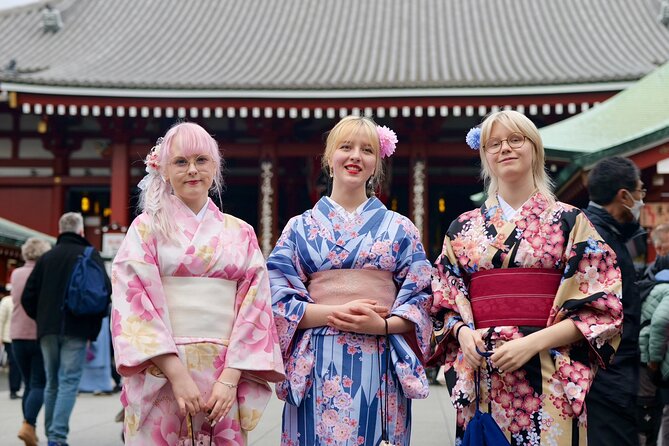
This tour suits you if you want a personal souvenir from Japan rather than another set of phone snapshots. It works especially well for couples, families, friends, and solo visitors who would like help posing.
It is also a good choice if you are curious about wearing Japanese traditional clothing but do not want to spend an entire day in a formal rental experience. The non-kimono option gives you an alternative if you want the locations and photography without the traditional outfit.
You should be comfortable with a moderate amount of walking between stops and with spending time changing clothes. The activity is near public transportation, and most participants can take part, but the supplied information does not give detailed accessibility guidance.
The tour requires good weather. If conditions cancel the activity, you can choose another date or receive a full refund. For your own planning, avoid placing an important timed attraction immediately afterward.
Booking timing, cancellation, and practical planning
This experience is booked about 42 days ahead on average. That is a useful sign that you should reserve early if you need a particular date, especially during blossom or autumn-leaf periods.
You can cancel for a full refund up to 24 hours before the start time. Changes made inside that 24-hour period are not accepted, and the amount paid is not refunded for a late cancellation. All cut-off times use local time in Japan.
The activity is confirmed when you book, and you receive a mobile ticket. Bring an open schedule, since the tour includes changing, walking, photography, and short sightseeing pauses rather than a single fixed photo location.
Should you book the Kamakura kimono photo tour?
Book it if you want professional photographs with cultural scenery, personal posing help, and a private route through several Kamakura locations. Shuhei’s friendly direction is particularly valuable if you are unsure how to pose, and the quieter temples help balance the busy shrine and shopping street.
Skip it if your main aim is a detailed visit to Kamakura’s religious sites, or if the extra 3,800 yen rental cost pushes the budget too far. The tour moves at a photo-session pace, not a deep sightseeing pace.
For most people choosing between a basic kimono rental and this experience, the private photography is the deciding factor. You get the clothing, the city, local guidance, and a set of edited images in one compact outing. Just book with enough time, watch the weather, and remember that the kimono fee is separate.
FAQ
Where does the tour start and end?
It starts at the Kamakura City Tourist Information Center at 1-chōme-1-1 Komachi, Kamakura, near Kamakura Station. The activity ends back at the same meeting point.
How long does the experience last?
The tour lasts approximately two to three hours. This total includes travel time and the time needed to change clothes.
Is kimono rental included in the tour price?
No. Kimono rental costs an additional 3,800 yen. A non-kimono option is also available.
How many edited photos are included?
The package includes a maximum of 30 edited photos. You can also receive the other photos from the session as provided by the photographer.
Is the tour private?
Yes. Only your own group participates in the activity.
Who is the photographer and guide?
The photographer and guide is Shuhei. He helps with poses and offers information about Kamakura and Japanese culture.
What happens if the weather is poor?
The experience requires good weather. If it is canceled because of poor weather, you can select another date or receive a full refund.
Can I cancel for a full refund?
Yes. You must cancel at least 24 hours before the experience start time for a full refund. Cancellations or changes made less than 24 hours before the start time are not accepted for a refund.
New on our Kamakura list
- 1-Day trip: Kamakura City (Enoshima/Shonan/Beach)★ 4.7 · 3 reviews
- Kamakura Zen: Great Buddha, Nature, Bamboo & Samurai Culture★ 5.0 · 3 reviews
- Kamakura Half Day Walking Tour with Local Experience★ 3.4 · 4 reviews
- Hiking Tour in Enoshima with a Local Guide★ 5.0 · 4 reviews
- Kamakura Tour with Pro Photographer: Anime Train & Fuji Sunset★ 5.0 · 4 reviews
- Kamakura Private Custom Tour★ 5.0 · 4 reviews
- Kamakura Historical and Cultural Day Trip with Local Cuisine★ 5.0 · 4 reviews
- Kamakura Full-Day Private Tour★ 5.0 · 4 reviews
Kimono Experiences, compared.

Tokyo Asakusa: Traditional Kimono Rental Experience at Wargo
Read our review →
Tokyo Asakusa: Miu Kimono Rental and Optional Photoshoot
Read our review →
Tokyo Authentic Kimono Rental in Asakusa with Photography Option
Read our review →Browse the lists this tour appears in