
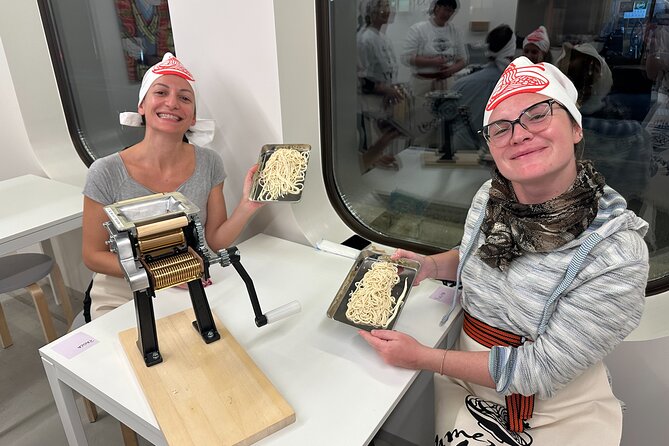
Reviewed · JAPANESE COOKING CLASSES
Ramen Cooking Class at Ramen Factory in Mt.Fuji
The best part of this 90-minute ramen class is that your bowl begins with flour, not a packet. You knead the dough, roll and cut the noodles, prepare the chicken, mix your own soup, and finish the dish yourself. It is a full start-to-finish lesson, not simply a cooking demonstration.
I like the personal touch of choosing your broth and one take-home gift, either a T-shirt, ramen bowl, or Japanese apron. I also like that instructors such as Jojo and Eri explain each step in clear English, helping even nervous cooks keep pace.
The main drawback is the price, $141.56 per person, which is a serious spend for a meal and a short class. You also need to reach the Mt. Fuji branch in Fujikawaguchiko on your own, and dietary requests must be given when you book.
In This Review
- Key points at a glance
- Why this Mt. Fuji ramen class feels different
- Starting with dough and handmade noodles
- Building the chicken topping yourself
- Mixing the broth to match your taste
- Bringing the bowl together
- Dietary choices need advance planning
- What the instructors add to the experience
- The take-home gift has real value
- Location, timing, and booking details
- Who should book this class
- Is Ramen Factory Mt. Fuji worth $141.56?
- FAQ
- Where is the ramen cooking class held?
- Is this the Kyoto Ramen Factory location?
- How long does the class take?
- What will I make during the class?
- Can I choose my ramen broth?
- Are vegetarian and vegan options available?
- Can the class accommodate gluten-free or Muslim-friendly diets?
- Is transportation included?
- What souvenir can I take home?
- What happens if I need to cancel?
Key points at a glance
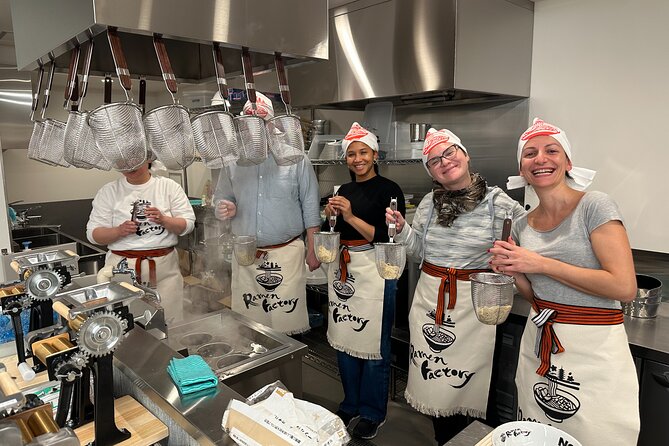
- Make every part of the bowl: Knead flour, roll and cut noodles, boil and drain them, mix the broth, and prepare the topping.
- Choose your own flavor: Select from different broths and sauces, then blend the soup to suit your taste.
- Prepare chicken from scratch: Tie the chicken, add condiments, cook it, and slice it for the final topping.
- Dietary needs are considered: Vegetarian, vegan, gluten-free, and Muslim-friendly arrangements are available when requested in advance.
- Take home a useful souvenir: Pick one gift from a T-shirt, ramen bowl, or Japanese apron.
- Plan for a small class: The maximum group size is 18 people, and the activity returns to its starting point.
Why this Mt. Fuji ramen class feels different
Many food classes give you a prepared base and let you handle only the final stage. This one takes you through the chain of work that turns basic ingredients into a bowl of ramen. That makes the class especially useful if you want to understand the dish rather than simply eat it.
You will work with flour, dough, broth, chicken, and toppings in a set order. The process is practical and hands-on, but you are not expected to arrive with cooking skills. The instructors explain what to do, and help is available during the class.
I like this balance. You get genuine participation without being left to guess what comes next. The class is designed so that a beginner can follow along, yet there are enough separate steps to make the finished bowl feel earned.
The experience takes place at Ramen Factory Mt. Fuji in Funatsu, Fujikawaguchiko-machi. Pay close attention to the name and address when arranging your day, since the company also has a Kyoto location. This activity is at the Mt. Fuji store, not the Kyoto store.
More ramen stops:
- Mt. Fuji & Hakone: Fuji Sengen Shrine, Cruise, and Ramen-Making
★ 5.0 · 124 reviews - Ramen Cooking Class at Lake Kawaguchiko (Short Course)
★ 5.0 · 42 reviews - Eat and Drink Like a Local: Tokyo Ueno Food Tour-Taverns&Ramen
★ 5.0 · 957 reviews
Starting with dough and handmade noodles
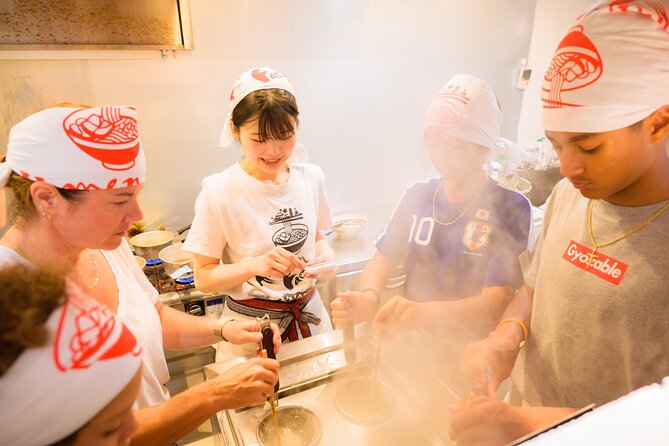
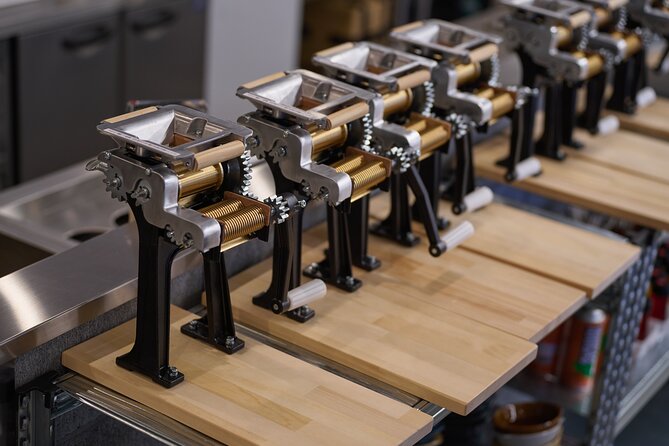
The noodle portion gives the class its strongest sense of craft. You begin by kneading flour, then roll out the dough and cut it into noodle shapes. After that, the noodles are boiled and drained before they go into the soup.
That order matters. You are not simply adding a topping to a ready-made bowl. You handle the texture from the beginning, then see how the noodles change during boiling. The draining step also gives you a small but useful lesson in timing, since the noodles must be ready to meet the broth and toppings.
The work is likely to suit families, couples, and first-time cooks because each task is clear. It also gives you something to focus on if you are not comfortable speaking with a group. Your hands stay busy, and the instructors can show you the next action as the class moves along.
Do not expect to produce a perfect restaurant noodle on your first attempt. That is part of the appeal. The finished meal reflects your work, and the process gives you a better feel for why ramen depends on both noodle texture and soup.
Building the chicken topping yourself
The chicken garnish is another unusual part of the class. You tie the chicken with string, add condiments, cook it, and slice it in the way you prefer. This gives the topping more attention than it usually receives in a quick bowl at a restaurant.
The steps also break up the class nicely. You move from dough to protein, then later return to the noodles and soup. The chicken is not just placed on top at the end as a ready-made decoration. You have a hand in preparing it, which adds to the sense that the bowl is your own creation.
The supplied information does not give a cooking method or exact seasoning list, so you should not expect a highly technical lesson in Japanese poultry preparation. Think of this as a guided preparation task within a ramen-making session, not a separate professional cooking course.
Still, it is a useful feature for anyone who enjoys knowing what goes into a meal. You can also slice the chicken as desired, giving you a little control over the final presentation.
Mixing the broth to match your taste
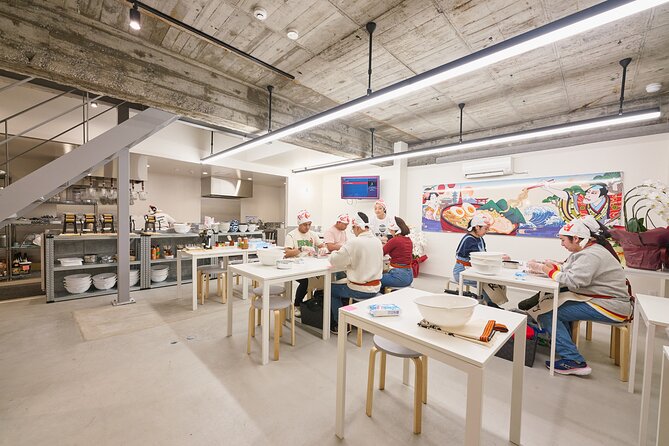
Once the noodles and chicken are underway, you choose from different broths and sauces and blend the soup. This is where the class becomes personal. Two people can follow the same instructions yet finish with different bowls by choosing different soup combinations.
The option to mix the broth is valuable because ramen is not one fixed flavor. The soup carries much of the dish’s character, and the class lets you make a choice instead of accepting one preset recipe. If you enjoy comparing flavors, pay attention to how your sauce selection changes the final result.
The exact broth choices are not specified, so you should not book expecting a particular style or a long tasting menu. The strength here is choice within a guided format. The instructors help you understand the available options, then you decide what suits you.
This part may be one of the easiest ways to personalize the meal without needing advanced technique. The dough and chicken require physical work, while broth mixing lets you make a direct taste decision.
More cooking classes in Mt Fuji Area:
- Fishing with Mt. Fuji Views and Japanese Home Cooking Experience
★ 5.0 · 5 reviews - Ramen & Gyoza Cooking Class in Tokyo with Local Supermarket Visit
★ 5.0 · 823 reviews - Tokyo: Easy Ramen Cooking Experience in Kabukicho, Shinjuku
★ 4.6 · 321 reviews - Ramen and Sushi Cooking Class with Sake Pairing Set in Tokyo
★ 5.0 · 291 reviews
Bringing the bowl together
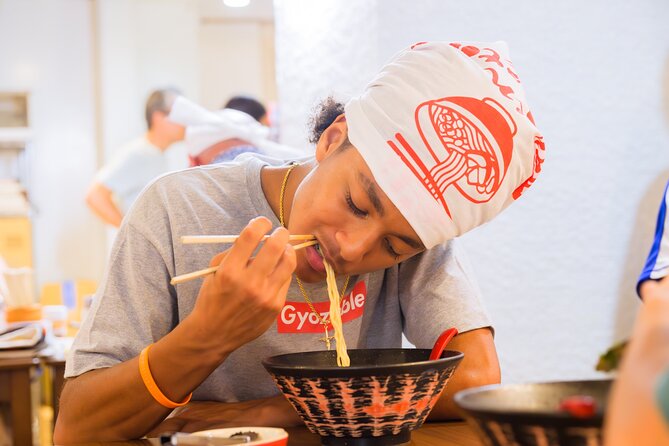
The final stage is simple but satisfying. You put the boiled noodles into the soup, add the chicken and other toppings, and prepare the bowl for eating. Because you have already handled each main component, the finished meal has a clear connection to the earlier work.
The class includes food tasting, lunch, and dinner in its inclusions. In practical terms, your ramen is the meal you make and eat during the activity. You should not read this as a broad restaurant meal with multiple courses. The value lies in the preparation and the chance to eat the completed bowl.
This final stage also makes the class work well as a break in a day around Mt. Fuji. At about 1 hour and 30 minutes, it is long enough to feel like an activity but short enough to fit beside other plans. Since the class ends back at the meeting point, you do not need to arrange a separate return location.
Dietary choices need advance planning
The class can accommodate vegetarian, vegan, gluten-free, and Muslim-friendly requirements. Tofu is offered as a vegetarian or vegan alternative to chicken, but you need to give notice in advance.
This is an important practical point. Do not wait until you arrive to explain a dietary restriction. Include the request in the special requirements section when booking so the team can prepare the right ingredients and arrangement.
The information does not spell out the exact gluten-free noodle process or every ingredient used in each broth. If you have a serious allergy or need to avoid cross-contact, ask the provider for specific details before booking. The stated options are helpful, but they are not a substitute for confirming your own dietary safety.
For many people, this flexibility will make the class easier to share with a mixed group. One person can choose chicken while another uses tofu, rather than having to find separate activities.
What the instructors add to the experience
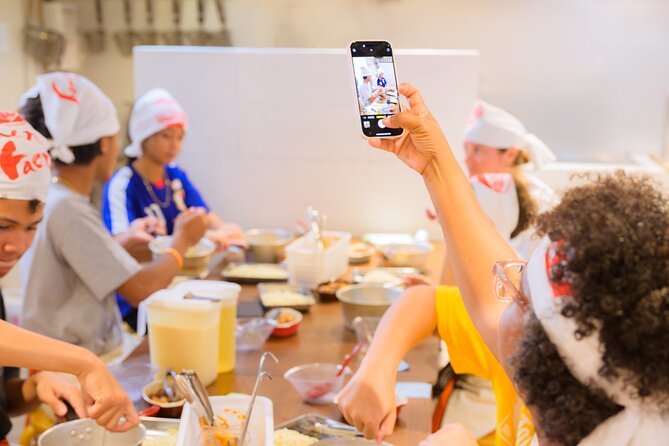
The class is led by a host and instructors, with help available if you need it. Jojo and Eri are named as instructors associated with the session, and the teaching style is described as friendly and easy to follow. English support is a strong point for visitors who do not speak Japanese.
That matters in a class with several timed actions. Kneading, cutting, boiling, draining, cooking, and assembling all need to happen in the right order. Clear instructions keep the activity from becoming stressful, especially for people who are not used to making noodles.
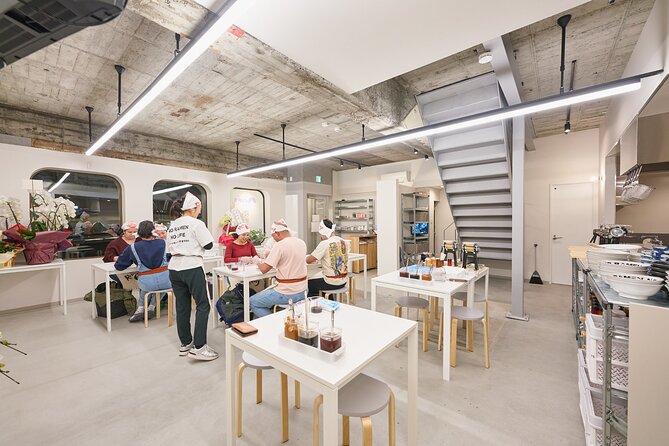
You may also find that the class feels more social than a standard meal. The maximum is 18 participants, which is large enough for a group atmosphere but still limited compared with a major food hall. The exact number on your date can vary, and a full group may mean waiting briefly for a shared instruction or cooking stage.
The available information does not promise private instruction. If you want a one-on-one lesson, this is not presented as that kind of experience. It is a guided group class with instructor assistance.
The take-home gift has real value
Every participant can choose one souvenir: a T-shirt, ramen bowl, or Japanese apron. This is more useful than a small decorative token because each option connects to the activity.
The bowl is the most obvious choice if you want something tied to future ramen meals. The apron may suit you if the cooking itself is the main memory you want to carry home. A T-shirt is the easiest wearable reminder and may appeal if you prefer not to pack kitchenware.
The gift helps soften the price, but it does not erase it. At $141.56 per person, you are paying for instruction, ingredients, the meal, the host, and the keepsake. The right comparison is not only the cost of a bowl of ramen. It is the cost of a guided food activity plus lunch and a personal souvenir.
I see the price as easier to justify for someone who values participation and wants a planned activity near Mt. Fuji. If you simply want an inexpensive bowl of noodles, a regular ramen shop will be the better choice.
Location, timing, and booking details
The meeting point is Ramen Factory Mt. Fuji, 3487-15 Funatsu, Fujikawaguchiko, Minamitsuru District, Yamanashi 401-0301, Japan. Transportation is not included, so you must make your own way there. The location is near public transportation, but no transfer service is provided.
Build in enough time to find the correct branch. The warning about the Kyoto store is worth taking seriously, particularly if you are booking more than one Japan activity and scanning addresses quickly. The Mt. Fuji location is the one that matters here.
The activity lasts approximately 90 minutes and finishes at the same place where it begins. It is often booked about 31 days ahead, so reserving roughly a month in advance is sensible if your schedule is fixed. Confirmation arrives when you book, and the ticket is mobile, which keeps your documents simple.
You can cancel for a full refund up to 24 hours before the start time. Cancellations or changes made inside that 24-hour window are not accepted for a refund, and cut-off times use local time.
Who should book this class
I would point this class toward several types of visitors:
- You want a food activity that gives you something to do, not just something to eat.
- You are visiting the Mt. Fuji area and need a compact activity of about 90 minutes.
- You are a beginner and prefer step-by-step English guidance.
- You are traveling with someone who has vegetarian, vegan, gluten-free, or Muslim-friendly needs.
- You want a souvenir that you can use after the trip.
- You enjoy learning through practical work and do not mind paying more for a guided session.
It may be less suitable if your main goal is a cheap meal, a quiet dining experience, or a highly technical cooking course. A group of up to 18 people also means the atmosphere may be social rather than private.
The class can work for children and adults, but the supplied information does not state a minimum age. If you are booking for a young child, confirm the age rules with the provider first instead of assuming.
Is Ramen Factory Mt. Fuji worth $141.56?
At $141.56, this is not a casual lunch. The price makes sense when you count the host, ingredients, instruction, meal, dietary planning, and choice of T-shirt, ramen bowl, or Japanese apron. It is less convincing if you judge it only by the amount of food in front of you.
I like that the experience gives you a complete sequence: flour becomes noodles, chicken becomes a topping, broth becomes your own blend, and the final bowl is assembled by you. The strong teaching, clear English, and beginner-friendly format add practical value, while the souvenir gives you a physical reminder of the session.
My advice is to book it if you want a memorable food activity during your Mt. Fuji visit and are comfortable with the cost. Confirm dietary needs in advance, check that you are going to the Funatsu branch, and leave enough time for transport. Skip it if you only want ramen at the lowest price or if you prefer an independent meal with no scheduled class.
FAQ
Where is the ramen cooking class held?
The class is held at Ramen Factory Mt. Fuji, 3487-15 Funatsu, Fujikawaguchiko, Minamitsuru District, Yamanashi 401-0301, Japan.
Is this the Kyoto Ramen Factory location?
No. This activity is held at the Mt. Fuji store. Check the address carefully so you do not go to the Kyoto branch.
How long does the class take?
The activity lasts approximately 1 hour and 30 minutes.
What will I make during the class?
You will knead flour, roll and cut the dough, boil and drain the noodles, prepare the chicken, mix the soup, and assemble the ramen with toppings.
Can I choose my ramen broth?
Yes. You can choose from different broths and sauces and blend the soup to suit your taste.
Are vegetarian and vegan options available?
Yes. Tofu is available as a vegetarian or vegan alternative when requested in advance.
Can the class accommodate gluten-free or Muslim-friendly diets?
Yes. Gluten-free and Muslim-friendly arrangements are available. State your dietary needs in the special requirements section when booking.
Is transportation included?
No. Transportation to and from Ramen Factory Mt. Fuji is not included. The activity ends back at the meeting point.
What souvenir can I take home?
You can choose one gift: a T-shirt, ramen bowl, or Japanese apron.
What happens if I need to cancel?
You can receive a full refund if you cancel at least 24 hours before the experience start time. Cancellations or changes made less than 24 hours before the start time are not refunded.
More Workshops in Mt Fuji Area
- Sushi Making Tokyo Roll and Authentic Japanese Sushi Class
★ 5.0 · 3,971 reviews - Tokyo: Roll and Authentic Sushi Making Class in Asakusa
★ 4.9 · 1,957 reviews - Tokyo Shinjuku Chopsticks Making Class
★ 5.0 · 1,763 reviews - Tokyo: Sushi Making Class in a Happi Coat near a Famous Spot
★ 4.9 · 1,377 reviews
New on our Mt Fuji Area list
- From Tokyo: Mount Fuji & Hakone Full Day Private Tour★ 4.9 · 25 reviews
- Tokyo: Mt. Fuji, Owakudani, Hakone Shrine, & Open-Air Museum★ 4.7 · 25 reviews
- Tokyo Fuji Art Museum Admission Ticket + Special Exhibition (when being held)★ 4.5 · 25 reviews
- From Tokyo: Mount Fuji Full-Day Customized Private Tour★ 5.0 · 26 reviews
- Tokyo: Mt. Fuji & Lake Kawaguchi Private Tour with Transfer★ 4.3 · 26 reviews
- Tokyo: Instagram-Worthy Mt Fuji & Lake Kawaguchiko Day Trip★ 4.0 · 26 reviews
- Tokyo:Mt Fuji & Hakone Day Tour with English Speaking Driver★ 5.0 · 26 reviews
- Tokyo: Mt. Fuji, Oshino Hakkai and Gotemba Outlets 1-Day Bus Tour★ 4.0 · 27 reviews
Japanese Cooking Classes, compared.
Ramen & Gyoza Cooking Class in Tokyo with Local Supermarket Visit
Read our review →
Easy Ramen Cooking Experience in Kabukicho, Shinjuku
Read our review →
Ramen and Sushi Cooking Class with Sake Pairing Set in Tokyo
Read our review →
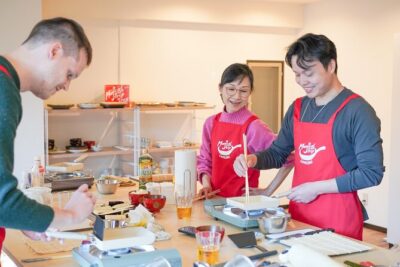
Tokyo Washoku 4-hour Cooking Class: From Market to Table
Read our review →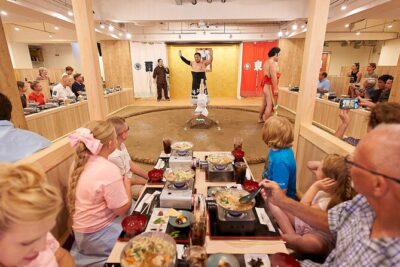
TokyoSumoShow, ChickenHotPot, and Mochi-Pounding by Pro Wrestlers
Read our review →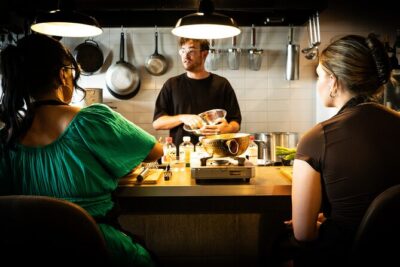
Professional Ramen & Gyoza with Ramen Chef in a restaurant!
Read our review →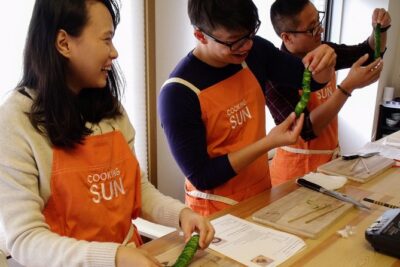
Small-Group Wagyu Beef and 7 Japanese Dishes Tokyo Cooking Class
Read our review →Browse the lists this tour appears in