
Reviewed · SAMURAI & NINJA EXPERIENCES
Samurai Training Tokyo Asakusa
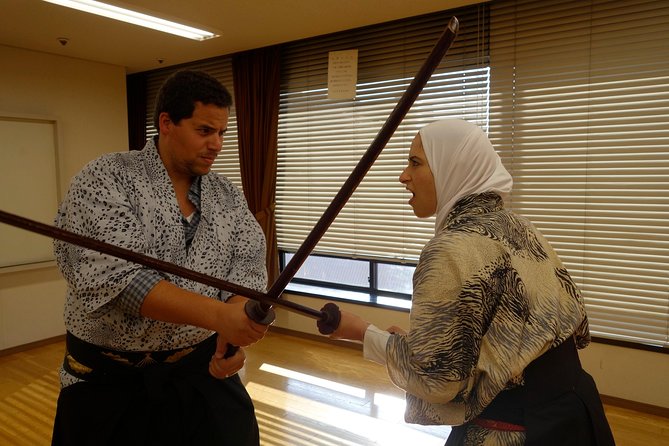
A samurai class in Asakusa gives you more than a costume photo. You learn how to draw and sheathe a katana, practice formal greetings and choreographed movements, then stage a short battle while the instructors record it. Jiro sensei leads the lesson, with an assistant helping with costumes, photos, and video.
I like the private format, which keeps the lesson personal and lets the instructor adjust the pace for children or first-timers. I also like the useful keepsakes: professional-style photos, video footage, an SD card or memory device, and a certificate with your photo. The main consideration is expectation. This is a fun introduction rather than a hard dojo workout, so martial artists seeking intense training may find it light.
In This Review
- Key points to know before booking
- What this Asakusa samurai class really offers
- Meeting in Hanakawado and getting changed
- The first sword movements: greetings, battou, and nattou
- Learning a choreographed samurai battle
- The photo and video session
- The certificate and final keepsakes
- Who will enjoy it most
- English support and instructor style
- Timing, booking, and cancellation details
- Is $85.89 a fair price?
- Should you book Samurai Training Tokyo Asakusa?
- FAQ
- How long does Samurai Training Tokyo Asakusa last?
- What is included in the price?
- What age can children be?
- Where does the activity begin and end?
- How many people can join one booking?
- What happens if I need to cancel?
Key points to know before booking
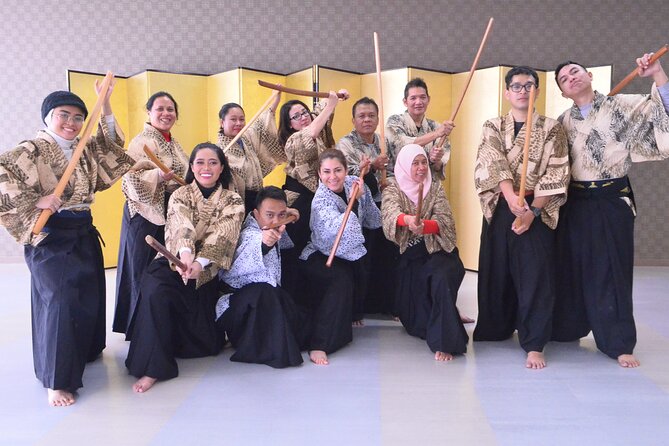
- Private class for up to 10 people: Only your group takes part, with personal instruction throughout.
- Katana basics and staged combat: You practice battou, nattou, kata, and choreographed battle movements.
- Full samurai costume included: You change into traditional clothing before the lesson and photo session.
- Strong choice for families: Children age six and up may join when accompanied by an adult.
- Photos, video, and certificate included: You receive images and footage, plus a certificate with your photo.
- Asakusa meeting point: The activity begins and ends near Hanakawado, close to public transportation.
What this Asakusa samurai class really offers
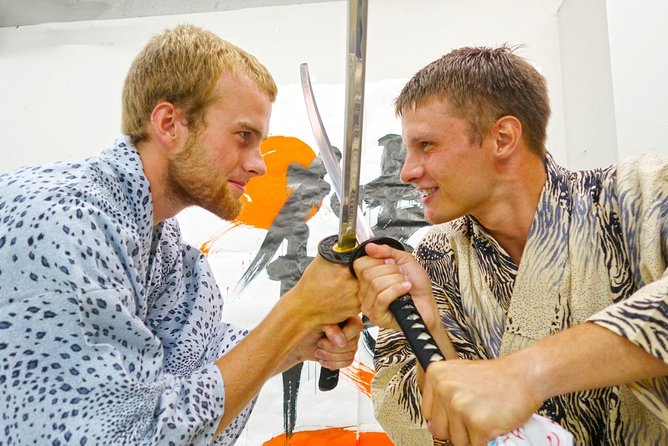
This experience is built for fun, photos, and a short lesson in samurai movement. It is not presented as a long martial arts course or a serious weapons qualification. You get a carefully staged taste of sword handling, taught in a way that works for people with no previous experience.
The class is supervised by Ukon Takafuji, Iemoto of Kenbu Ukon-ryu, also known as the Tachibana samurai kenbu school. That connection gives the activity a traditional framework, while the actual session remains friendly and accessible rather than formal or intimidating.
You can book alone, as a couple, with friends, or with your family. The private setup matters here. If your child needs extra help, or if you want more time to repeat a movement for the camera, the instructor can focus on your group instead of moving on to a large class.
The full activity takes about an hour, although one detailed description places the entire process closer to one to one and a half hours when meeting, changing, taking photos, and receiving your keepsakes are counted. I would leave a little breathing room before your next plan, especially if you are trying to fit this between temple visits and lunch.
More samurai and ninja sessions:
- Tokyo: Samurai Ninja Museum Guided tour and Experience
★ 4.6 · 1,010 reviews - Tokyo: Samurai Sword & Archery Class from Samurai Descendant
★ 5.0 · 603 reviews - Best Samurai Experience in Tokyo
★ 5.0 · 458 reviews
Meeting in Hanakawado and getting changed
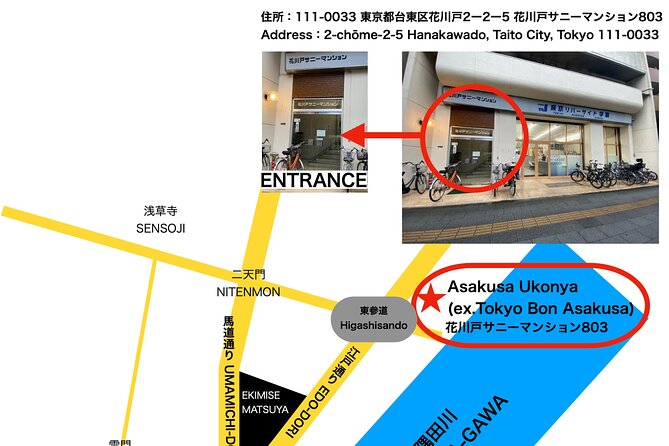
The published starting point is Hanakawado Sunny Mansion, at 2-chōme-2-5 Hanakawado, Taito City, Tokyo 111-0033. It is near public transportation, and the activity returns to the meeting point at the end.
One practical wrinkle is that the exact meeting place and training room can change with the number of participants. You are contacted at least two days before the reserved date with the final details. Read that message carefully and save it on your phone. One person arrived uncertain about where to meet, but once the staff made contact and escorted the group to the training building, the experience itself ran well.
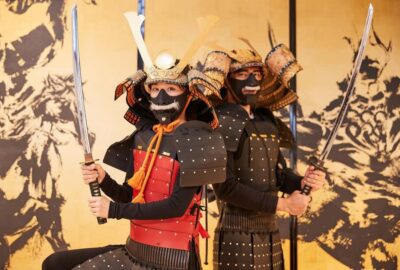
After gathering, you change into the supplied costume. The outfit is a major part of the appeal, particularly for children and teenagers. It turns the class from a plain instruction session into a small performance, and it gives you a clear visual record of the day.
The costume is for the activity, so wear clothes that are easy to change out of. The supplied information does not specify changing-room arrangements or footwear rules, so you should ask the provider if your clothing needs special consideration.
The first sword movements: greetings, battou, and nattou
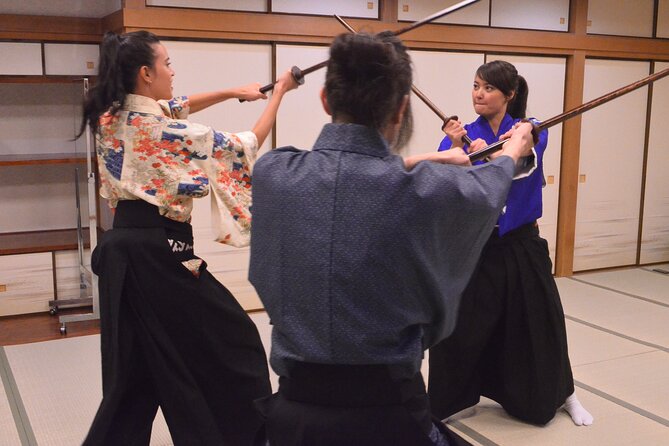
The class starts with greetings. This is a useful touch because the experience is not only about swinging a sword. You get a basic sense of the discipline and ceremony connected with samurai performance.
Next comes the sword belt and a first photo. The staff helps you belt the sword and arrange your costume before photographing you. This early picture gives you the classic samurai portrait before the more active part of the class begins.
The instructor then demonstrates battou, drawing the katana, and nattou, returning it to the scabbard. These movements require care and control. You are not simply waving a prop around. The lesson shows you how the sword is handled in a set sequence, then gives you a chance to repeat it.
You also work on kata, or a patterned series of movements. The structure helps beginners. Instead of trying to invent a sword routine, you follow clear steps and gradually link them together. One instructor may demonstrate slowly, then have you repeat the sequence until it looks presentable on camera.
Expect correction and encouragement rather than a tough athletic test. The class can make you work up a small sweat, but its goal is control, posture, timing, and presentation. If you have martial arts experience, you may recognize the basic principles quickly. If you have none, the patient teaching keeps the movements manageable.
Learning a choreographed samurai battle
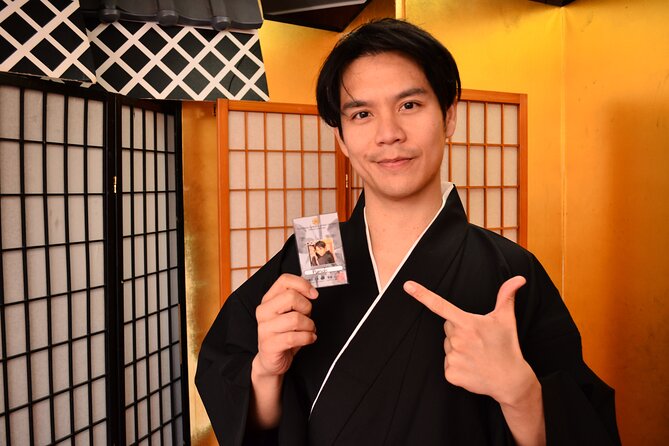
The sword-fighting section is staged practice, not free combat. You learn movements that resemble a samurai battle and perform them with the instructor or another person in your group.
This is where the private format pays off. Jiro has been praised for working directly with children, including pairing with an 11-year-old during the simulated combat. A good instructor can keep the action comfortable for a nervous child while still making it look dramatic.
The mock battle also brings some humor into the session. You will probably repeat movements, adjust your timing, and make a few imperfect cuts. That is part of the fun. The polished final video comes from turning those simple steps into a short scene.
Parents can take part instead of watching from the side. That matters because the activity is designed as a shared family memory, not a child drop-off class. Teenagers may especially enjoy having a set routine to practice afterward, while adults get the same chance to dress up and join the action.
Still, keep your expectations in check. The class does not claim to provide advanced sword fighting, a full workout, or a belt-level martial arts course. If someone in your group already holds a high martial arts rank, they may find the techniques introductory. That does not make the session pointless. It simply makes it best suited to entertainment, first exposure, and family participation.
More Asakusa visits:
- Tokyo: Japanese Dance Cabaret Theater Asakusa-Kaguwa Ticket
★ 4.8 · 2,270 reviews - Tokyo: Meiji Shrine, Asakusa, Skytree Bus Tour and Cruise
★ 4.7 · 1,986 reviews - Tokyo: Roll and Authentic Sushi Making Class in Asakusa
★ 4.9 · 1,957 reviews - Tokyo: Asakusa Walking Tour with Sensoji Temple Visit
★ 4.8 · 1,583 reviews
The photo and video session
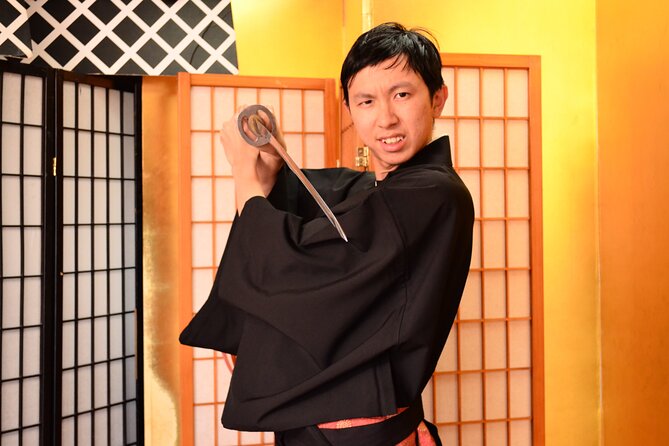
The camera work is one of the strongest practical features. The staff takes photos during the costume portion and the sword practice, then records the staged battle. You can also have video taken on your own phone or tablet if you allow the instructors to use it.
This solves a common problem with family activities. One parent does not have to sit out as the photographer. Everyone can take part, and the group can still leave with footage of the performance.
The photos are more than a quick snapshot at the entrance. The activity includes a dedicated photo session, and the instructor has been praised for taking polished pictures. At the end, you receive photo data on an SD card or similar memory device, along with a face photo and your certificate.
Check what device or storage format is provided when you book, since the descriptions refer to both an SD card and a memory device. If the staff records video on your phone, arrive with enough free storage and a charged battery. That is a small step, but it prevents an avoidable problem during the most entertaining part of the class.
The certificate and final keepsakes
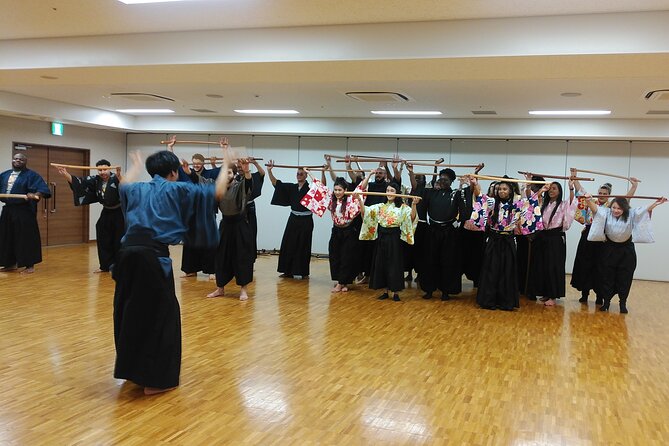
After the lesson, you change back into your clothes. You then receive a certificate of recognition with your photo, along with the photo data and a separate face photo.
The certificate is a playful souvenir rather than a professional samurai license. It works particularly well for children, who can keep it as proof of their Tokyo adventure. Families also get a physical reminder to pair with the digital photos and video.
The digital material adds real value to the $85.89 price per person. A basic costume photo can be inexpensive elsewhere, but here you receive instruction, costume rental, staged action, photography, video, and a certificate in one short appointment. The value is best for a group that will actually participate and use the images afterward.
For a solo visitor, the private setting and personal photos can still justify the price, but the cost feels easier to defend when shared by a family or couple. Since the class is private, you are paying for an exclusive session rather than joining a large group where the instructor must divide attention.
Who will enjoy it most
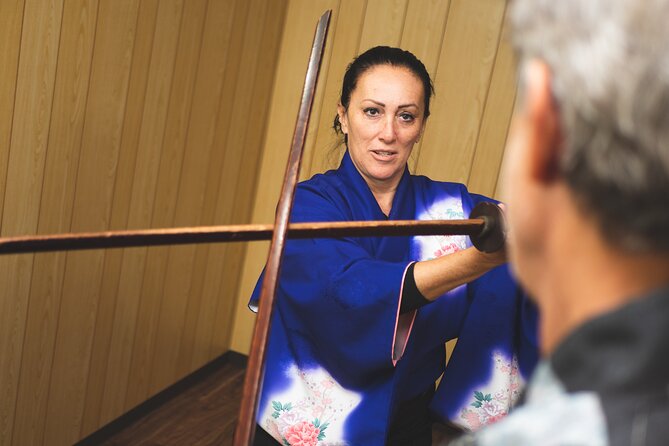
I would recommend this to families with children age six or older, couples seeking a playful Tokyo activity, and visitors who want a memorable photo session with some instruction attached.
It also suits a busy itinerary. At about an hour, you can place it between major Asakusa sights, although the changing and photo process may stretch the total time. The meeting point is convenient for a day in the neighborhood, so you can combine the class with other plans in the area.
Children must be accompanied by an adult, and the stated maximum is 10 people per booking. The activity requires moderate physical fitness. You will be standing, moving through sword positions, and performing repeated motions, so it is not a sit-down cultural talk.
Solo visitors are welcome. You do not need to arrive with a group, and the private structure means you will still receive individual attention. Couples can also use the session as a shared photo opportunity, especially if they want something different from the usual shrine and food stops.
English support and instructor style
The teaching team is used to international visitors. Jiro and his assistants have been described as friendly, patient, accommodating, and easy to understand in English. That matters during sword instruction, where a clear explanation is more important than a long speech.
The tone appears relaxed and encouraging. The instructor may laugh with your group, help a child feel at ease, and repeat a movement without making beginners feel awkward. At the same time, the opening greetings and formal sword motions give the activity enough structure to feel like more than dress-up.
You should still ask questions if a movement is unclear. The class is short, and the time moves quickly once you begin changing, posing, practicing, and filming. A little attention at the start helps you get more from the routine later.
Timing, booking, and cancellation details
This experience is often reserved well ahead of time, with bookings averaging about 48 days in advance. That suggests you should plan ahead if your Tokyo dates are fixed, particularly if you need a private session for a family.
Booking confirmation is sent within 48 hours, subject to availability. The provider requires a minimum number of participants for the activity to operate. If that minimum is not met and the experience is canceled, you are offered another date or experience, or a full refund.
The cancellation rules are not especially flexible close to the start. You receive a full refund if you cancel at least six full days before the local start time. Cancel two to six full days ahead and the refund is 50 percent. Less than two full days means no refund, and late changes are not accepted.
Is $85.89 a fair price?
At $85.89 per person, this is not the cheapest costume activity in Tokyo. The price makes more sense when you count the private lesson, instructor, outfit rental, staged battle, photos, video, and certificate.
I would not book it expecting advanced martial arts training. I would book it as a compact cultural activity with a strong entertainment angle and unusually good souvenirs. The included media is especially useful for families because the adults can participate rather than remain behind the camera.
The price is also easier to justify for a once-in-a-trip occasion, such as a birthday, anniversary, or family holiday. If your priority is a serious study of kenjutsu, you should seek a longer specialist course instead. If you want a guided, camera-friendly introduction that works for mixed ages, the package is more convincing.
Should you book Samurai Training Tokyo Asakusa?
Book it if you want a private, good-natured activity where everyone can dress as a samurai, learn a short routine, stage a battle, and take home photos and video. It is particularly well suited to families, and the age minimum of six lets younger children join when accompanied by an adult.
Skip it if you want demanding physical training or advanced sword instruction. For most visitors, though, the appeal is the combination of hands-on practice and lasting keepsakes. Keep your meeting details handy, allow more than exactly one hour, and arrive ready to participate. In Asakusa, this is a fun change of pace from temples and shopping, with enough ceremony to give the costume play some substance.
FAQ
How long does Samurai Training Tokyo Asakusa last?
The listed duration is about one hour. Including the meeting process, changing clothes, photos, video, and certificate, the full visit may take closer to one to one and a half hours.
What is included in the price?
The experience includes a local instructor, rental costume, pictures, and video footage. You also receive a certificate with your photo, photo data, and a face photo at the end.
What age can children be?
The minimum age is six. Children must be accompanied by an adult.
Where does the activity begin and end?
The published meeting point is Hanakawado Sunny Mansion, 2-chōme-2-5 Hanakawado, Taito City, Tokyo 111-0033. The activity ends back at the meeting point, although the exact meeting and training location may vary with the number of participants.
How many people can join one booking?
The maximum is 10 people per booking. It is a private activity, so only your group participates.
What happens if I need to cancel?
You can receive a full refund when canceling at least six full days before the local start time. Cancellations two to six full days ahead receive a 50 percent refund. Cancellations less than two full days before the start are not refunded.
New on our Tokyo list
- From Tokyo: Mount Fuji & Hakone Full Day Private Tour★ 4.9 · 25 reviews
- Tokyo Spectacular View Day-Cruise in 90 Minutes★ 5.0 · 25 reviews
- Real Tokyo Runner Club : Daikoku Car Meet Night Tour with JDM Car★ 5.0 · 25 reviews
- 2.5 Hour-Guided Cycle Tour in the Central Tokyo★ 5.0 · 25 reviews
- Ramen Making from Scratch +Akihabara Tour –Cooking Class★ 5.0 · 25 reviews
- [Self-Drive] Tokyo & Daikoku Custom Car Driving Tour★ 4.9 · 25 reviews
- Tokyo: 2-Hour Night Bike Tour of the City’s Hidden Gems★ 4.9 · 25 reviews
- Samurai themed Entertainment show in Shinjuku★ 4.5 · 25 reviews
Samurai & Ninja Experiences, compared.
Samurai Ninja Museum Guided tour and Experience
Read our review →
Samurai Sword & Archery Class from Samurai Descendant
Read our review →
Ninja Experience (Family Friendly) at Samurai Ninja Museum TOKYO
Read our review →
Samurai Entertainment Night Show in Kanda Shrine
Read our review →
Tokyo Sword Experience – includes Museum Ticket/Ninja Experience
Read our review →
Samurai Ninja Museum Asakusa: Samurai Sword Lesson & Tour
Read our review →
Ninja Samurai 2-hour hands-on lesson by Japanese master in Tokyo
Read our review →Browse the lists this tour appears in