
Reviewed · TEA CEREMONIES
Shibuya Authentic Tea Ceremony with experienced instructor
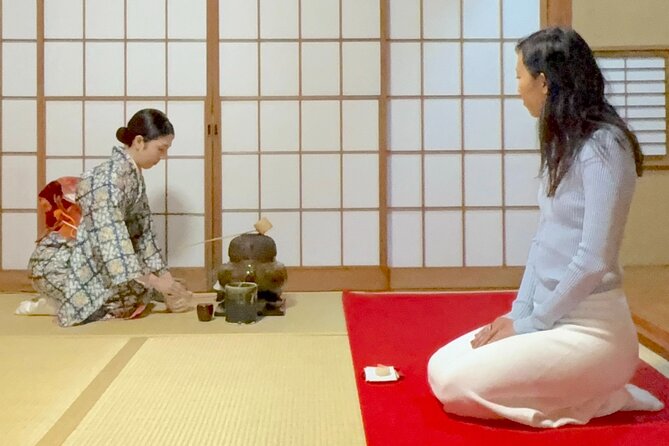
Shibuya’s neon streets can feel like a full-contact sport. This 50-minute tea ceremony gives you a quiet break in a small, old tea house on a side street near the action. You learn how matcha is made, watch a ritual with more than 500 years of history, taste a seasonal-style Japanese sweet, and prepare tea yourself.
I like the small group size, capped at eight, because tea ceremony is easier to follow when you are close to the instructor. I also like the hands-on finish: you choose a chawan, or tea bowl, and whisk your own matcha rather than simply watching a performance. The main consideration is time. At about 50 minutes, this is a compact introduction, not a full study of tea ceremony.
In This Review
- Key points to know before booking
- A quiet tea house near Shibuya’s busy center
- The opening lesson: tea, matcha, and the stone mill
- Watching a formal ceremony with a tea master
- Matcha and nerikiri: the tasting portion
- Making your own bowl of matcha
- Why the small group changes the experience
- The guide and the tone of the session
- Is $25.76 a good price?
- Who should book this Shibuya tea ceremony?
- My take: a smart cultural pause in Shibuya
- FAQ
- Where does the tea ceremony take place?
- How long does the experience last?
- Does the activity end at a different location?
- How many people can join the session?
- What happens at the beginning?
- Do I watch a traditional tea ceremony?
- Is Japanese tea and a sweet included?
- Can I prepare matcha myself?
- Can I choose my own tea bowl?
- What is the cancellation policy?
Key points to know before booking
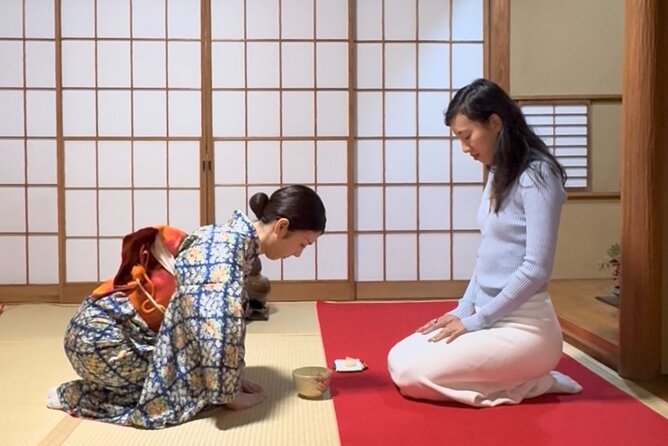
- A calm side street in Shibuya: The tea house offers a peaceful pause close to one of Tokyo’s busiest areas.
- Up to eight people: The small group makes the demonstration easier to see and the instruction more personal.
- A traditional stone mill: You get a look at how matcha is made before the ceremony begins.
- A 500-year-old ritual: A tea master demonstrates the formal preparation of matcha.
- Nerikiri with fresh tea: Your first bowl of matcha comes with a traditional Japanese sweet.
- Hands-on practice: You select a beautiful chawan and whisk your own bowl using traditional tools.
A quiet tea house near Shibuya’s busy center
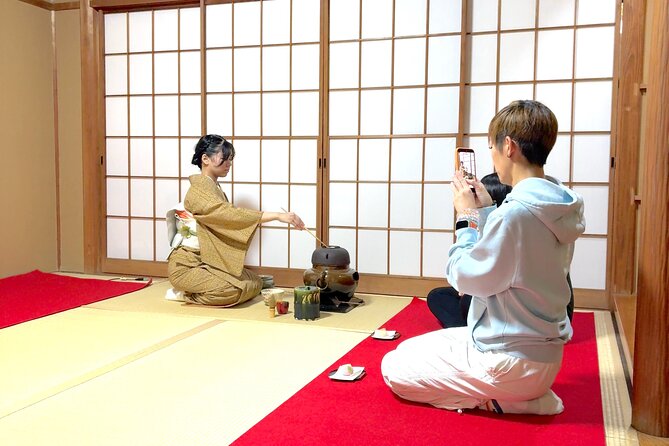
The setting is part of the appeal. The meeting point is at Manji Building, 1-chome 15 Dōgenzaka, Shibuya, Tokyo 150-0043. You remain at the same place for the entire activity, which keeps the logistics simple.
This is not a tea ceremony staged in a large theater or hotel room. The tea house is described as old and original, tucked along a small side street. That gives the experience a more intimate feel, especially after the noise and crowds around Shibuya Station and Dōgenzaka.
I would allow a little extra time to find the exact building. The address is specific, but the tea house is not presented as a large, highly visible attraction. Once you arrive, there is no transport between parts of the activity. You sit down, settle in, and let the pace change.
That change of pace matters. Japanese tea ceremony is not simply a way to drink powdered tea. The careful movements, the tools, the bowl, the sweet, and the way the tea is served all ask you to pay attention. Even in a short session, the quiet room helps you notice details that would be easy to miss in a busy sightseeing stop.
More tea rooms worth booking:
- Matcha Making Class in Tokyo with Authentic Japanese Sweets Set
★ 5.0 · 744 reviews - Tokyo: Traditional Tea Ceremony with a Tea Master
★ 5.0 · 528 reviews - Tokyo: Matcha Making Experience with Mochi Sweets in Asakusa
★ 4.9 · 388 reviews
The opening lesson: tea, matcha, and the stone mill
The experience begins with a short explanation of the history of tea in Japan. This gives you enough context to understand what comes next without turning the session into a long lecture.
You also get to see a small traditional stone mill used in the making of matcha. This is an especially useful detail for first-time visitors. Matcha is not just ordinary green tea stirred into water. It is a finely ground tea powder, and seeing the stone mill connects the finished drink to the work behind it.
The demonstration also gives you a chance to learn what makes matcha different from the loose-leaf tea commonly served in Japan. You will not simply be handed a bowl and told to drink. The session explains the drink before asking you to take part.
The history lesson is short, so you should not expect a detailed academic treatment of Japanese tea schools or every stage of tea production. That is a fair trade for a 50-minute activity. You get a clear introduction, then move quickly to the parts you can see, taste, and try.
Watching a formal ceremony with a tea master
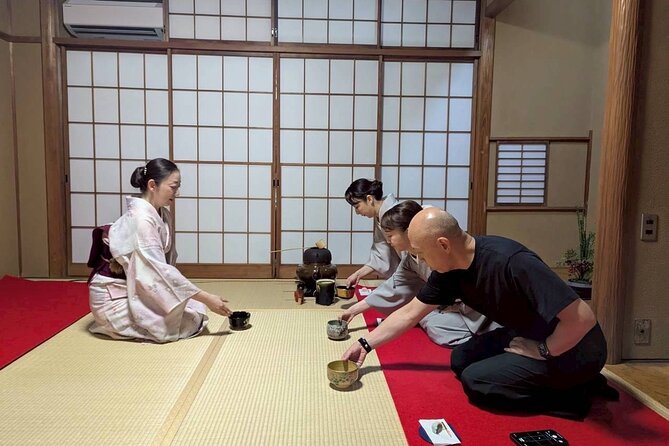
Next, the tea master performs the traditional tea-making ritual. The ceremony has a history of more than 500 years, and the formal movements are the heart of the experience.
Watch the small actions: how the tools are handled, how the tea is measured, how the whisk is used, and how the bowl is presented. The point is not speed. The ritual creates a measured rhythm, with each movement carrying purpose.
This demonstration is valuable even if you have no plan to study tea ceremony in depth. It shows the difference between making a quick cup of matcha and preparing it as part of a formal cultural practice. You see the ceremony before you attempt it, so the later hands-on portion feels less mysterious.
The hosts are described as friendly and well informed, and the instructor explains the meaning behind the customs in a welcoming way. The experience is conducted in English based on the supplied tour information, though the exact language arrangements are not otherwise detailed. If language is important to you, confirm it when booking.
Because the group is limited to eight, you should have a reasonable view of the demonstration. That cap is one of the stronger practical features here. In a crowded session, the fine movements of the ceremony can disappear behind heads or feel distant. A small room also makes it easier to ask a question when the explanation is not clear.
Matcha and nerikiri: the tasting portion
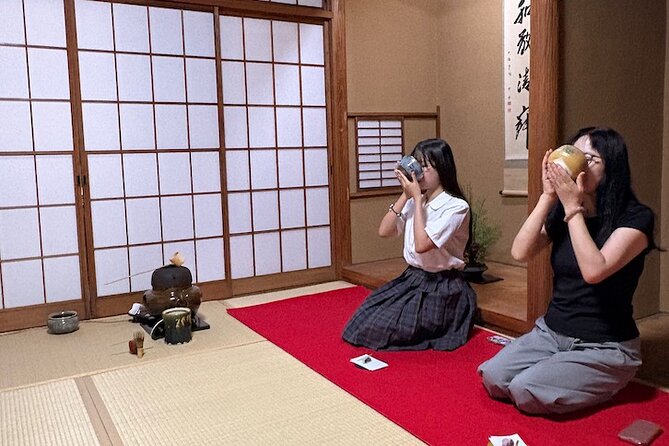
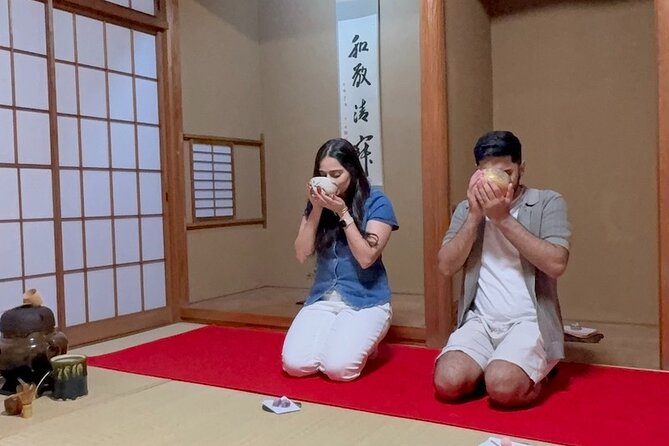
After the demonstration, you receive freshly prepared matcha with nerikiri. Nerikiri is a traditional Japanese sweet, often shaped with care and served in small portions alongside tea.
The sweet is not just an extra snack. In the tea ceremony tradition, it balances the taste of the matcha and prepares your palate for the drink. Matcha can taste grassy, earthy, or pleasantly bitter, especially if you are more familiar with sweetened tea drinks. Nerikiri gives you a gentle contrast.
This is also a good point to slow down and notice the bowl. Japanese tea culture pays close attention to the relationship between the tea, the vessel, the season, and the person being served. You do not need specialist knowledge to appreciate that connection. The instructor’s explanation gives you a starting point.
The food offering is modest. You should expect one traditional sweet with the tea, not a meal or a broad tasting menu. That is worth keeping in mind if you are comparing this with a longer food tour. The value lies in the cultural setting and the preparation, not in the amount of food.
More Shibuya plans:
- Official Street Go-Kart in Shibuya
★ 5.0 · 3,435 reviews - Tokyo: Street Kart Experience in Shibuya
★ 4.9 · 1,484 reviews - Shibuya Meltdown Nightlife Tour: All-You-Can-Drink Bar Hopping
★ 5.0 · 1,058 reviews - Shibuya Official Street Go-Kart in Shibuya Annex
★ 5.0 · 972 reviews
Making your own bowl of matcha
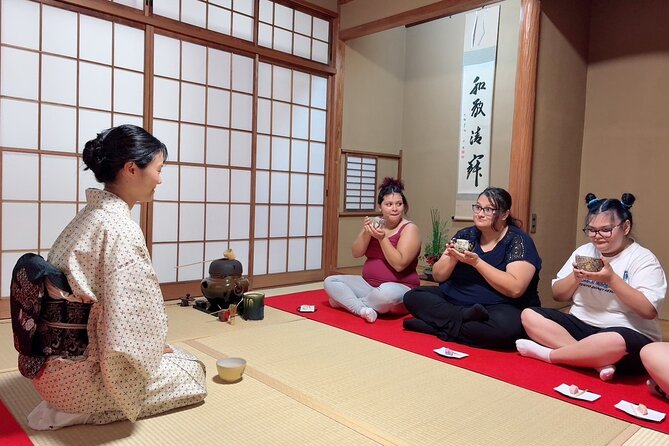
The final part is the most interactive. You use traditional tea tools to prepare your own matcha, following the method shown by the instructor.
You also choose your preferred chawan from a selection of beautiful tea bowls. This small choice adds personality to the activity. The bowl is not just a cup with a handle. Its shape, glaze, texture, and weight affect how the tea feels in your hands.
The practical skill is whisking the matcha into a smooth drink. You may already have seen bamboo whisks in shops or restaurants, but using one properly is different from watching a professional. You get a direct sense of the movement and the care required.
Do not worry about making a perfect bowl on your first attempt. The purpose is to understand the process and take part. You will have the instructor’s example in mind, traditional tools in front of you, and the freedom to try the technique yourself.
This hands-on section also gives the experience lasting value. After returning home, you can remember how the tea was prepared and try the method again. The tour does not state that a kit or matcha is included for home use, so you should not expect to leave with supplies. Still, you gain a technique that can be repeated if you later buy the necessary ingredients and tools.
Why the small group changes the experience
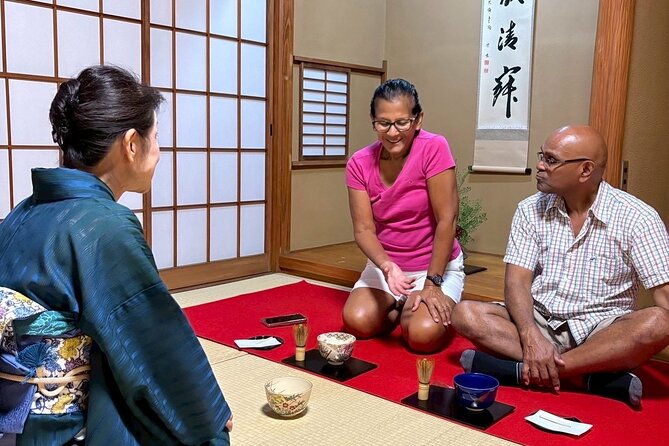
The activity allows a maximum of eight people. That is small enough to keep the ceremony personal without making the price feel like a private lesson.
A small group helps in three ways. First, you can see the tea master’s hands and tools more clearly. Second, the room is less likely to feel noisy or rushed. Third, the instructor can give simple guidance as each person prepares a bowl.
This format suits people who want to ask questions and take part. It may be less suitable if you want a completely private ceremony or an extended, highly formal session. The group is intimate, but it is still a shared activity.
The compact length is another trade-off. Fifty minutes fits neatly between Shibuya sightseeing, shopping, or a meal. You do not need to give up half a day. On the other hand, the session cannot cover every aspect of Japanese tea ceremony in detail. Think of it as a thoughtful first lesson, not a masterclass.
The guide and the tone of the session
The experience is led by an experienced Japanese tea master. One host named in the supplied information is Mai, who is described as kind and welcoming during the matcha experience.
That warm tone matters. Formal Japanese customs can seem intimidating if nobody explains what you are seeing. Here, the instruction is designed to make the ceremony approachable, even if this is your first contact with tea culture.
The tea house setting also supports the mood. The room is described as peaceful and relaxing, a place where you can step away from Shibuya’s noise for a short while. You should expect a calm cultural lesson rather than a loud entertainment show.
If you are interested in photography, be considerate. The supplied details do not specify photography rules, so ask the host before taking pictures during the formal ritual. The ceremony’s quiet rhythm is part of its value, and it is worth giving the demonstration your full attention.
Is $25.76 a good price?
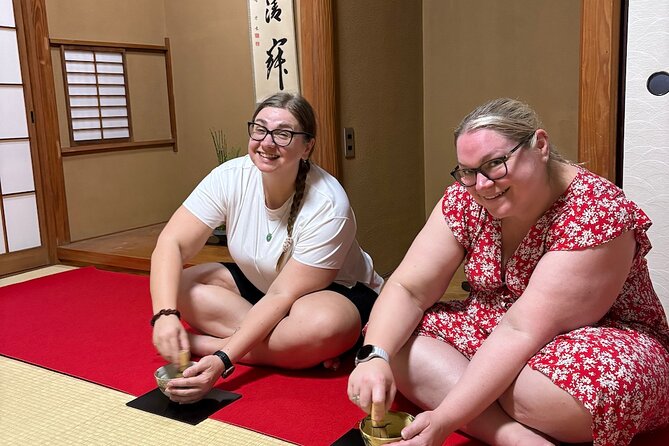
At $25.76 per person, this is a reasonable way to add a cultural activity to a Tokyo itinerary. You are paying for a guided explanation, a formal demonstration, matcha, nerikiri, use of traditional tools, and your own preparation practice.
The price looks particularly fair for a small group of up to eight. Large attractions can cost more while giving you less direct contact with an instructor. Here, the tea master is close enough for you to watch the details and follow the instructions.
Still, value depends on what you want. If your main goal is simply to drink matcha, you can find a cheaper cup in Tokyo. If you want a long ceremony, a full meal, several sweets, or a private lesson, this short activity may feel limited.
I see it as a good-value introduction for someone who wants more than a quick café stop but less than a formal half-day cultural program. The location also helps. You can pair it with time in Shibuya without spending hours crossing Tokyo.
Who should book this Shibuya tea ceremony?
I would recommend it to first-time visitors who want a clear, friendly introduction to Japanese tea culture. It also suits anyone who has already seen Shibuya’s famous crossing and wants a quieter activity nearby.
The experience works well for couples, families, and small groups of friends, provided everyone is comfortable sharing the session with other participants. The group limit keeps it from becoming impersonal.
It is especially good for you if you enjoy:
- Short cultural activities with a clear beginning and end
- Learning by watching, tasting, and doing
- Traditional Japanese arts and customs
- Calm indoor experiences during a busy city day
- Matcha, Japanese sweets, and beautiful tea bowls
You may want something else if you are looking for a full meal, a long historical lecture, or an advanced study of tea ceremony. The experience introduces the tradition well, but it does not promise an exhaustive course.
The booking includes a mobile ticket, and confirmation is provided at the time of booking. Free cancellation is available if you cancel at least 24 hours before the start time. Cancellations or changes made inside that window are not accepted for a refund.
My take: a smart cultural pause in Shibuya
I like this experience because it connects three things in a short time: explanation, observation, and practice. You learn about Japanese tea, watch a formal ceremony, taste matcha with nerikiri, then whisk your own bowl using the same kind of tools.
The strongest feature is the setting and scale. A small tea house on a quiet side street feels far removed from the surrounding city, while the group limit keeps the lesson personal. Mai and the other hosts bring a friendly tone that should help beginners feel at ease.
Book it if you want a calm, hands-on introduction and value authentic technique over a large production. Skip it if you want a long ceremony or substantial food. For $25.76 and about 50 minutes, it is a practical way to make room for Japanese culture during a busy Shibuya day.
FAQ
Where does the tea ceremony take place?
The meeting point is at Manji Building, 1-chome 15 Dōgenzaka, Shibuya, Tokyo 150-0043, Japan.
How long does the experience last?
The tea ceremony lasts approximately 50 minutes.
Does the activity end at a different location?
No. The activity ends back at the meeting point.
How many people can join the session?
The activity has a maximum of eight participants.
What happens at the beginning?
You hear a short explanation of the history of tea in Japan and see a small traditional stone mill used in making matcha.
Do I watch a traditional tea ceremony?
Yes. A Japanese tea master demonstrates a traditional tea-making ritual with more than 500 years of history.
Is Japanese tea and a sweet included?
Yes. You enjoy freshly prepared matcha with nerikiri, a traditional Japanese sweet.
Can I prepare matcha myself?
Yes. You use traditional tea tools to prepare your own bowl of matcha.
Can I choose my own tea bowl?
Yes. You can choose from a selection of chawan, the bowls used for matcha.
What is the cancellation policy?
You can cancel at least 24 hours before the start time for a full refund. Cancellations or changes made less than 24 hours before the start time are not accepted for a refund.
New on our Tokyo list
- From Tokyo: Mount Fuji & Hakone Full Day Private Tour★ 4.9 · 25 reviews
- Tokyo Spectacular View Day-Cruise in 90 Minutes★ 5.0 · 25 reviews
- Real Tokyo Runner Club : Daikoku Car Meet Night Tour with JDM Car★ 5.0 · 25 reviews
- 2.5 Hour-Guided Cycle Tour in the Central Tokyo★ 5.0 · 25 reviews
- Ramen Making from Scratch +Akihabara Tour –Cooking Class★ 5.0 · 25 reviews
- [Self-Drive] Tokyo & Daikoku Custom Car Driving Tour★ 4.9 · 25 reviews
- Tokyo: 2-Hour Night Bike Tour of the City’s Hidden Gems★ 4.9 · 25 reviews
- Buddha, Bamboo & Zen – Bespoke Kamakura Private Walking Tours★ 5.0 · 25 reviews
Tea Ceremonies, compared.

Matcha Making Class in Tokyo with Authentic Japanese Sweets Set
Read our review →
Matcha Making Experience with Mochi Sweets in Asakusa
Read our review →
Tea Ceremony Workshop in Tokyo by the Experienced Instrucor
Read our review →

Make Traditional Nerikiri Sweets & Matcha experience in Shibuya
Read our review →Browse the lists this tour appears in